
High-Volume Sheet Metal Manufacturing Services
What Is High-Volume Sheet Metal Manufacturing?
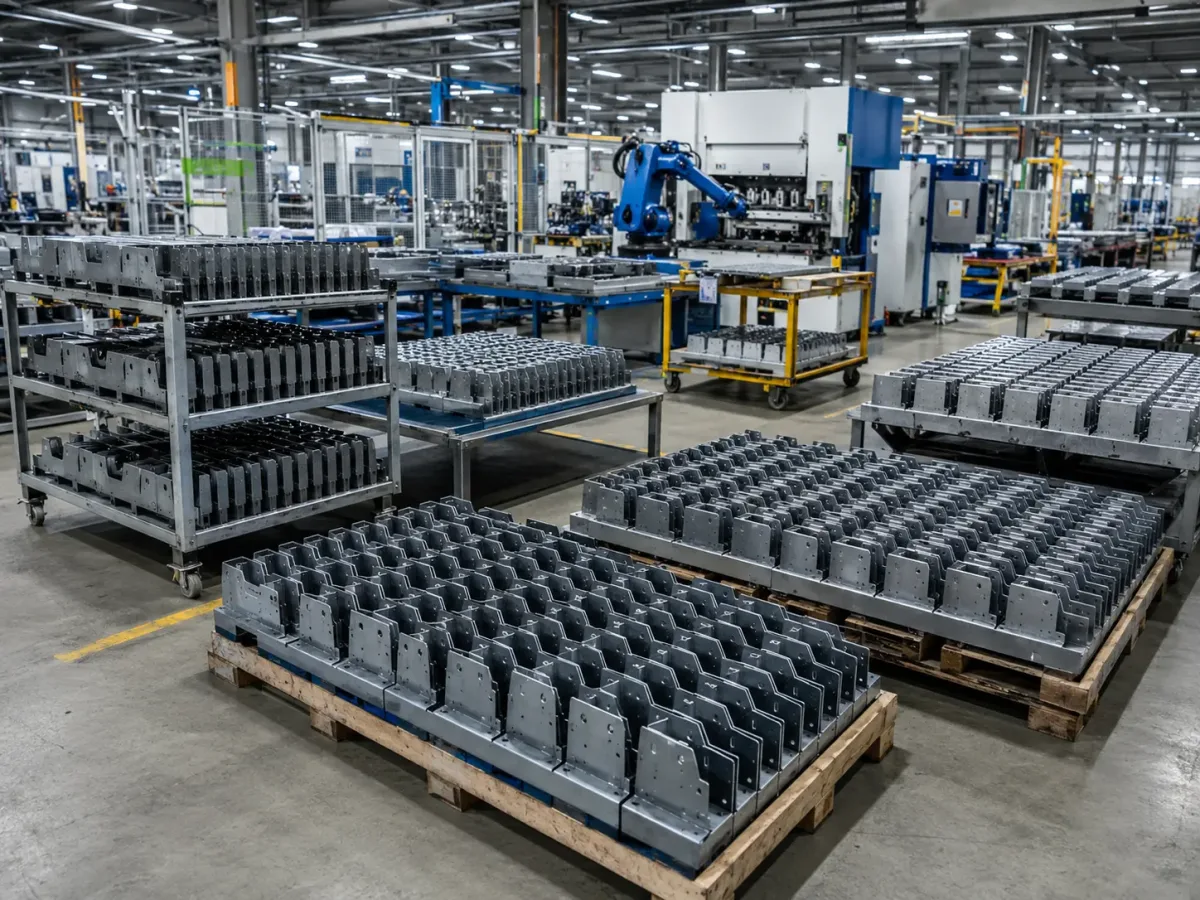
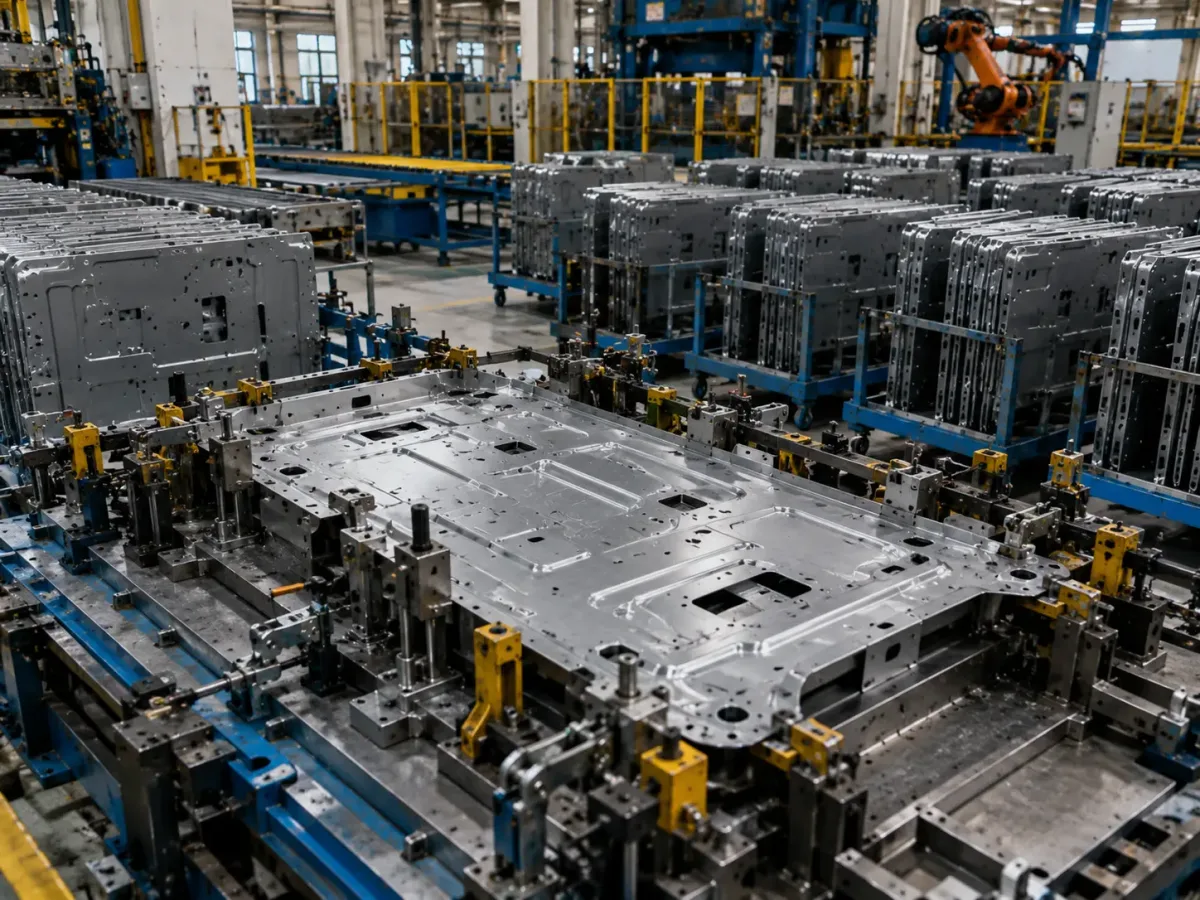
High-volume sheet metal manufacturing typically refers to continuous, standardized, large-scale production of thin-gauge metal—often using ~6 mm as a practical dividing line between sheet and plate, depending on the application.
Once the drawing revision is stable and changes are well controlled, production usually shifts toward a more line-based, automation-driven approach—using dedicated fixtures, takt-time operations, and, where it makes sense, die-based processes. The core goals in high-volume programs are higher throughput, lower unit cost (by spreading upfront investment across more parts), and more consistent results from batch to batch.
What Types of Projects Require High-Volume Sheet Metal Manufacturing?
The key isn’t just “more parts”—it’s bringing the program to a repeatable cadence and consistent output. When demand and revisions are stable, you can use automation, dedicated fixtures/tooling, and standardized operations to continuously produce large quantities of identical—or highly similar—parts and assemblies, with a production pace aligned to demand (often managed around takt time).
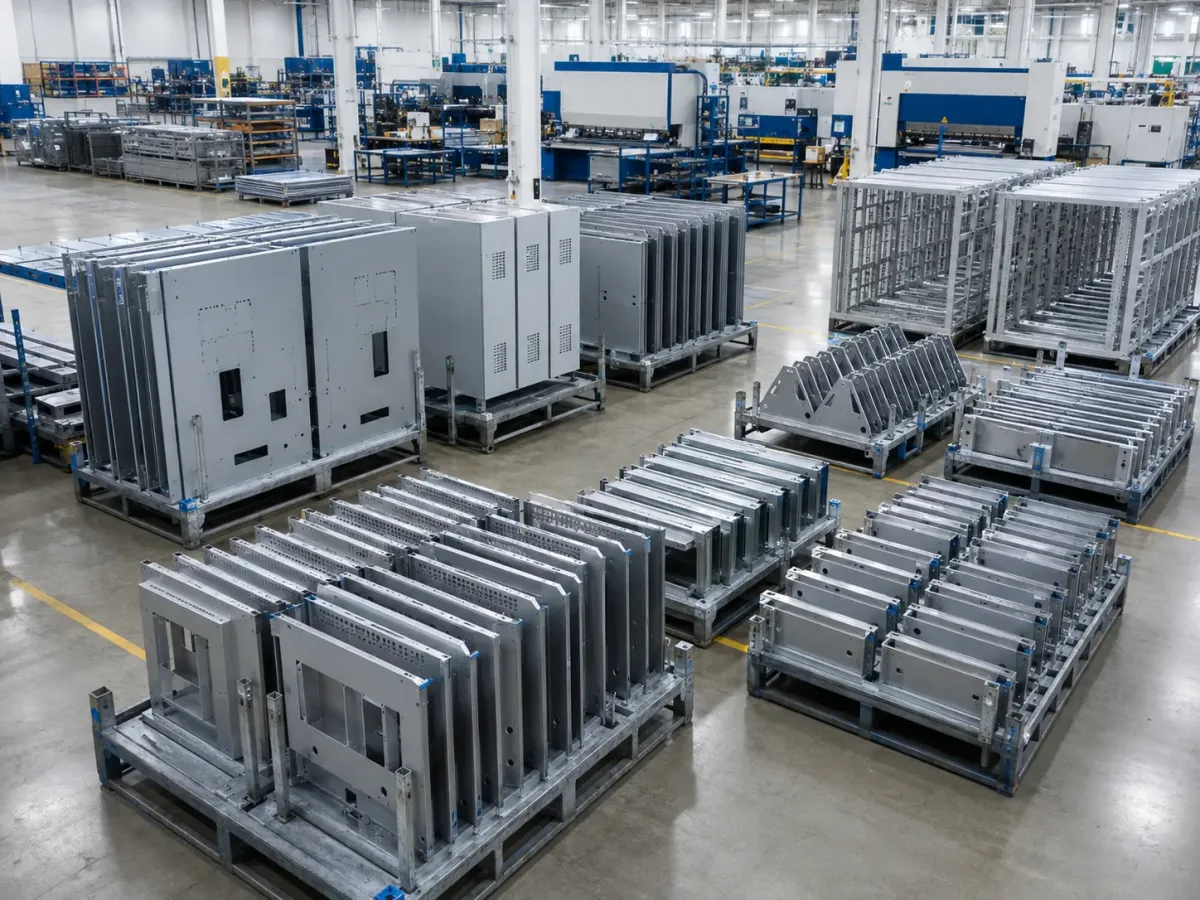
Best-Fit Projects for High-Volume Production
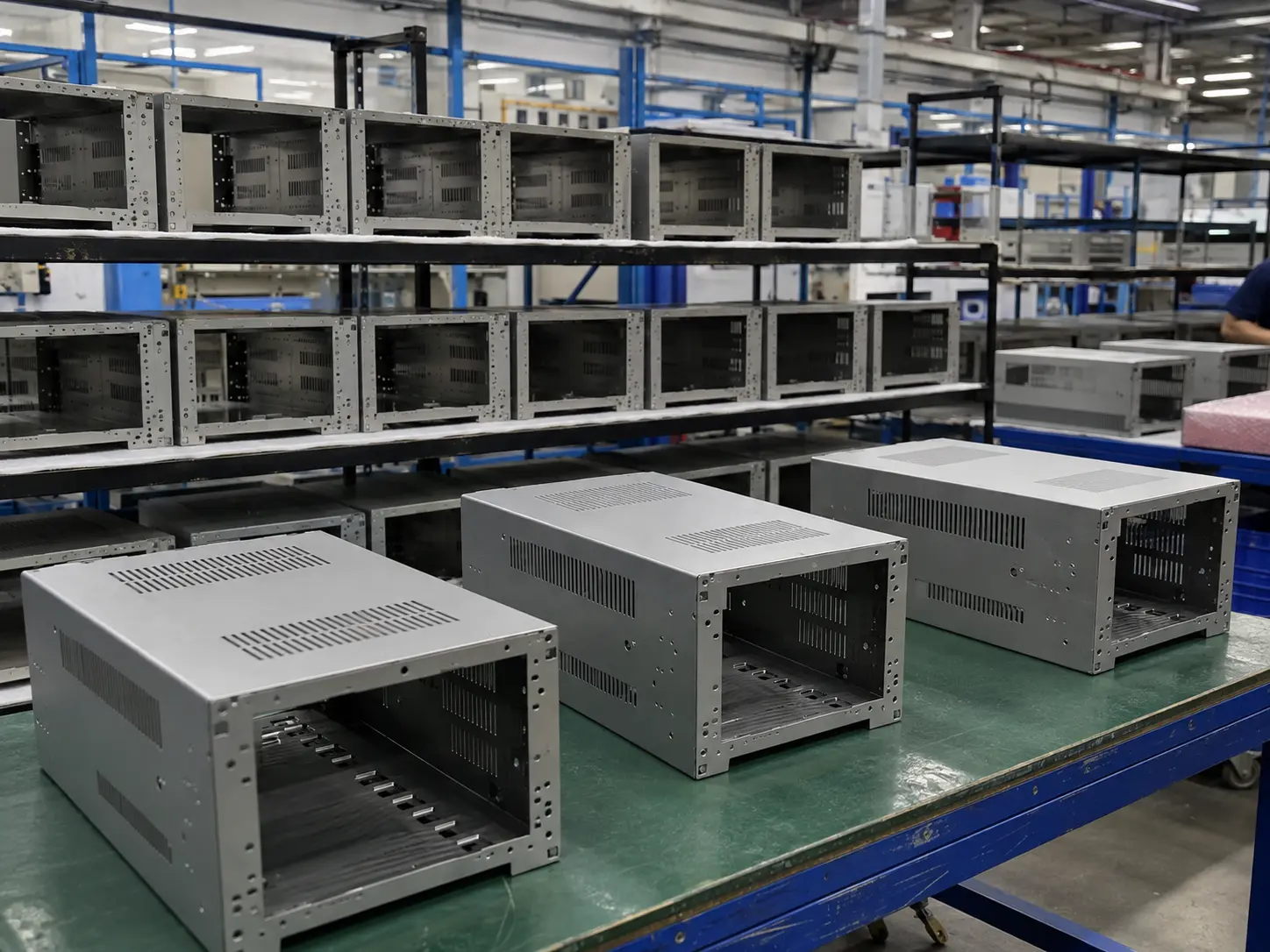
Electronics Enclosures
Racks, housings, control boxes, panels
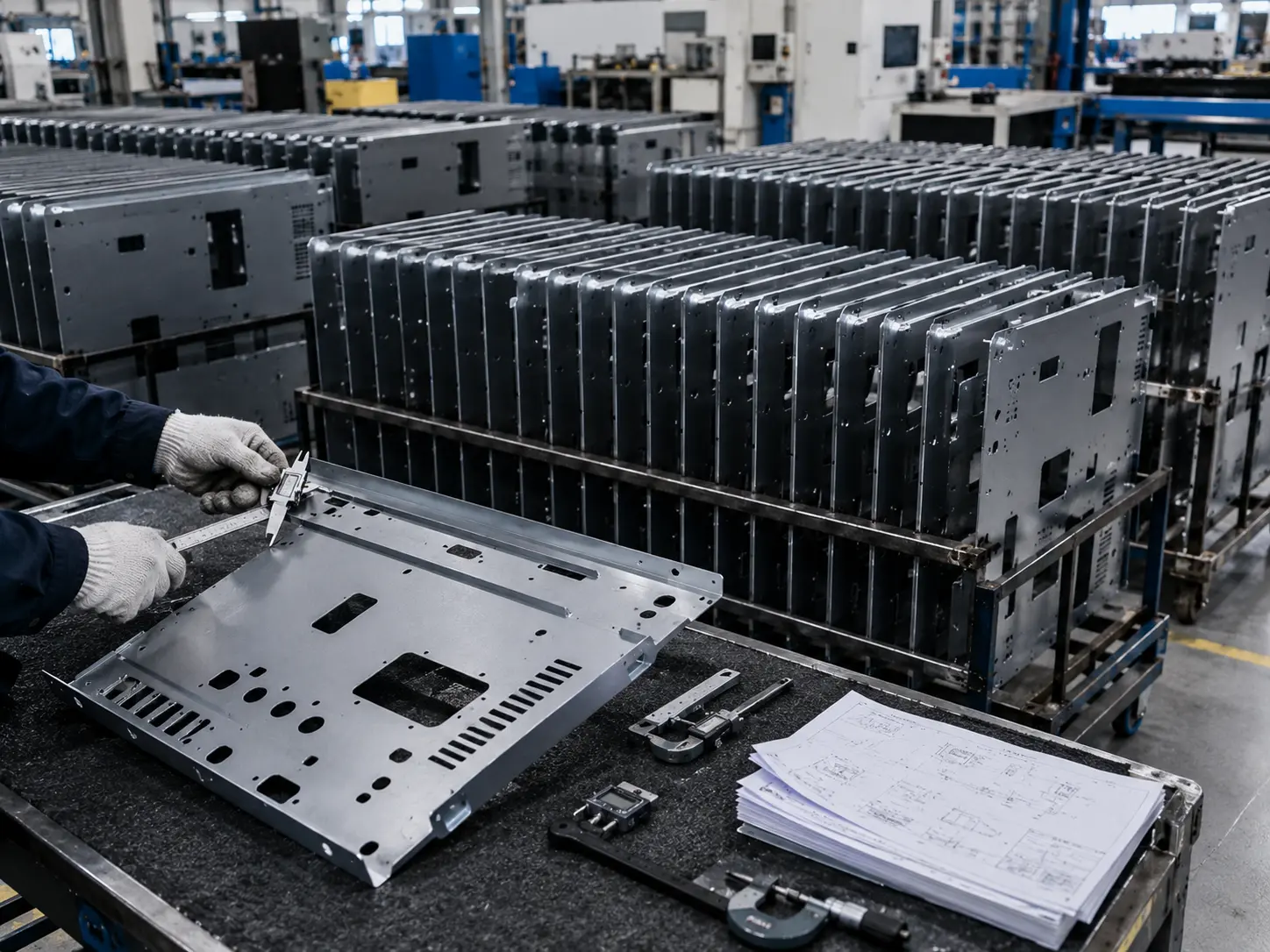
Automation Equipment Panels
Control panels, side panels, mounting plates, brackets
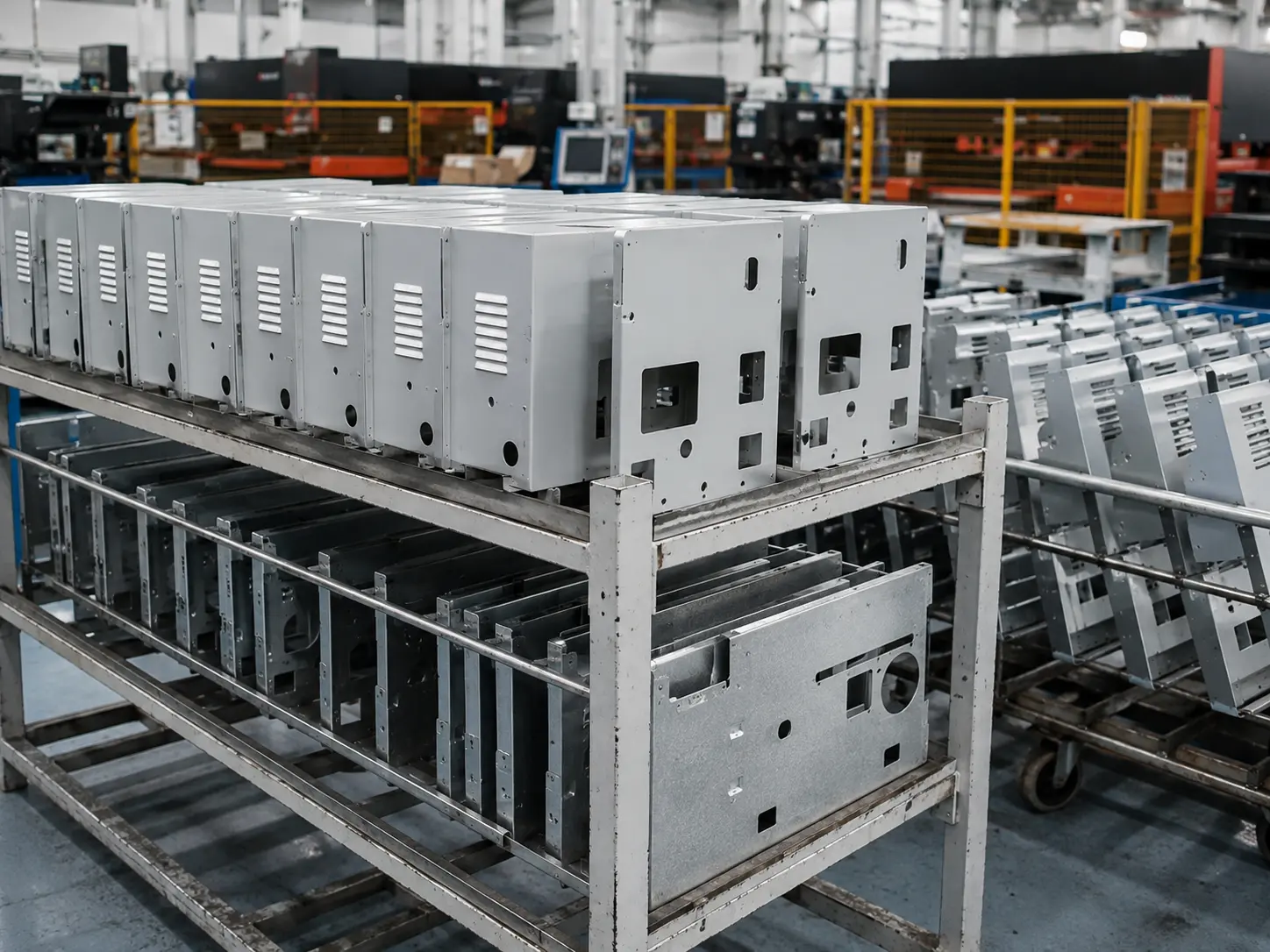
Machine Covers & Guards
Guards, shrouds, access panels, vented covers
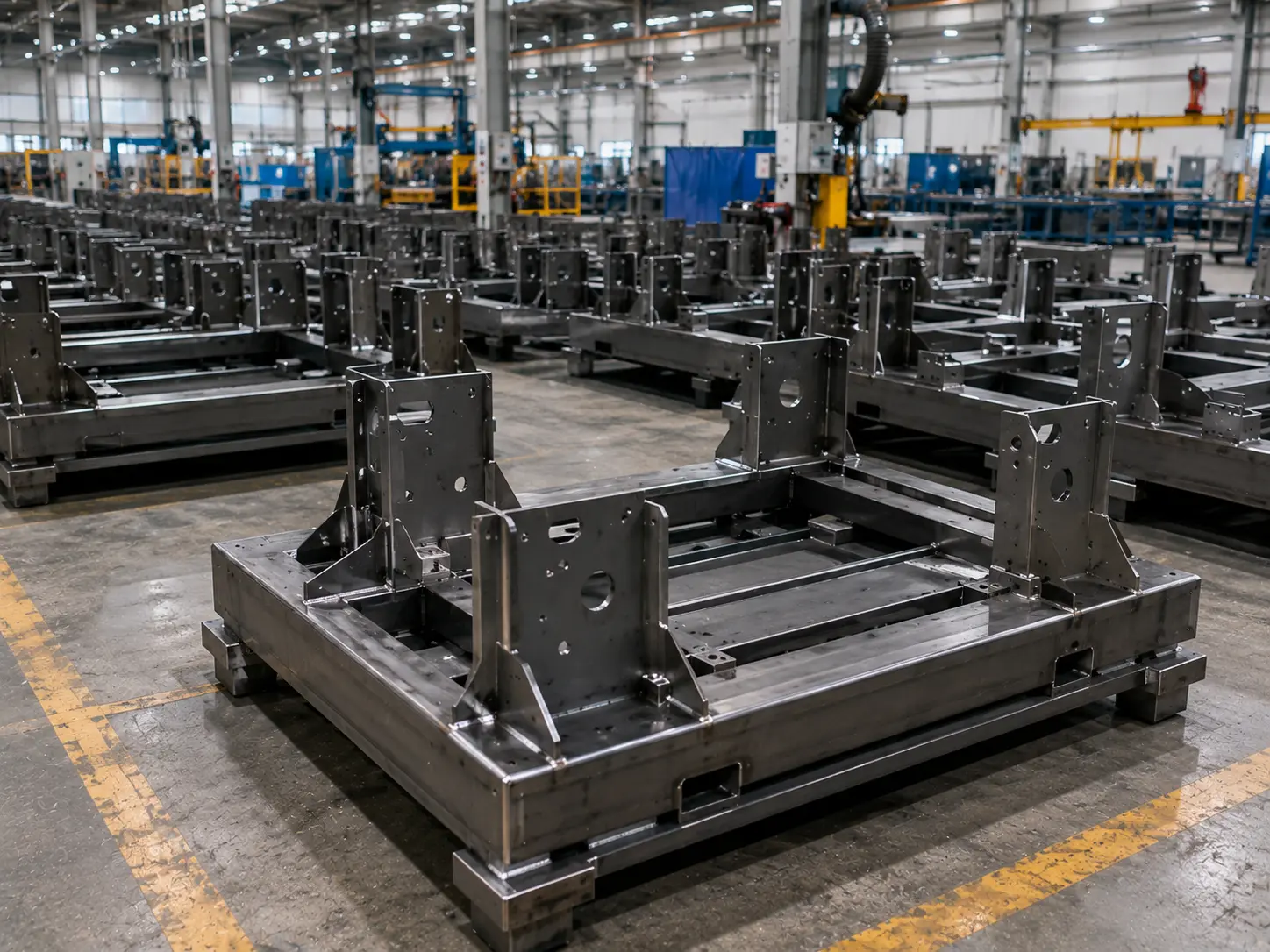
Structural Frames & Bases
Welded frames, base plates, support structures, machine bases
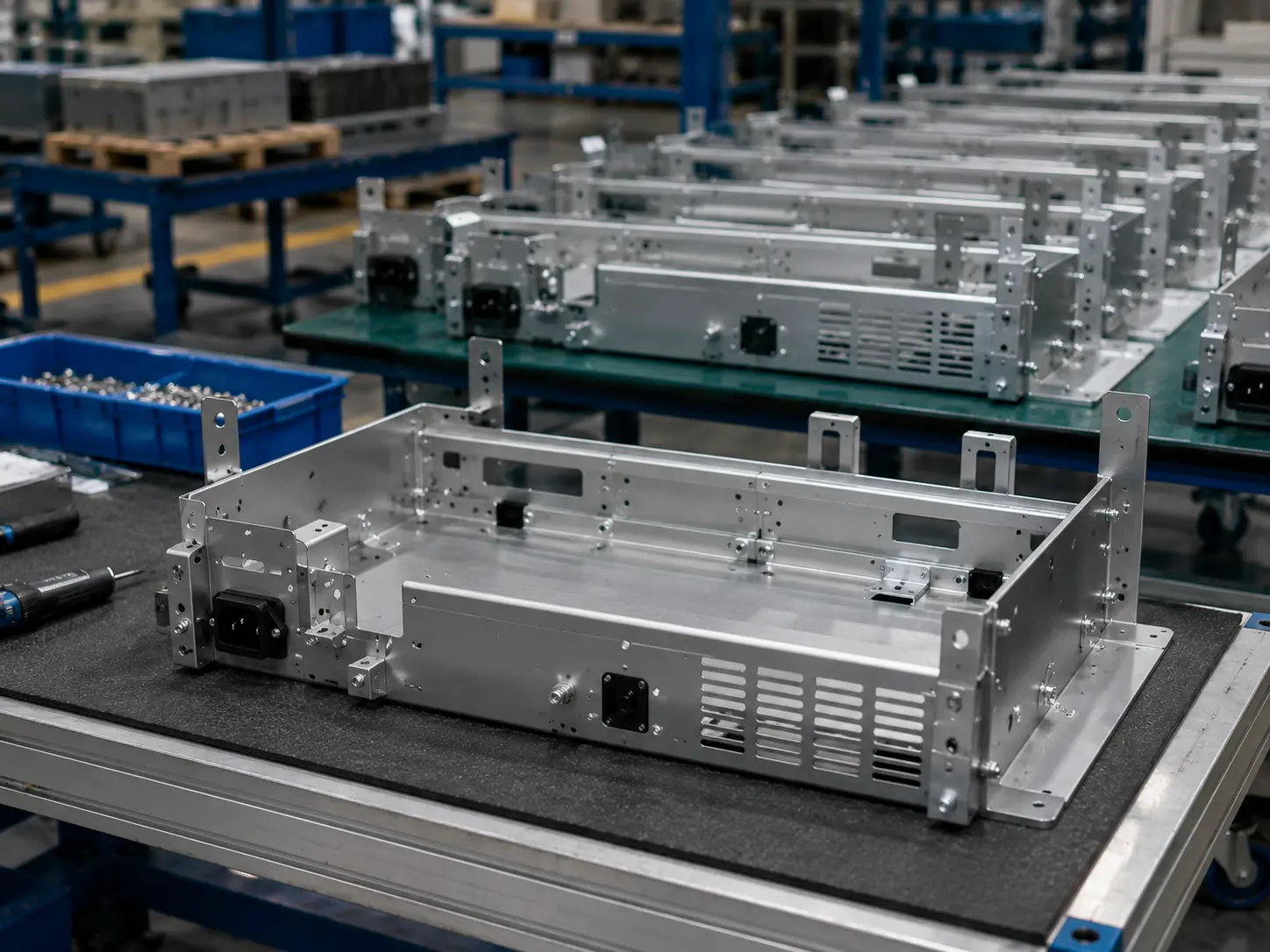
Repeat OEM Assemblies
Brackets, subassemblies, chassis components, repeat parts
How to Tell If Your Project Fits a High-Volume Model
(The more you match, the better the fit.)
- 1
Drawings repeat heavily and you need long-term rolling supply
- 2
Revisions are stable and engineering changes are infrequent
- 3
You’re unit-cost sensitive and willing to trade tooling/fixtures for lower long-run cost (scale benefits)
- 4
You require high interchangeability and assembly-to-assembly consistency
- 5
You need a steadier cadence with fewer changeovers—well suited to line-based organization
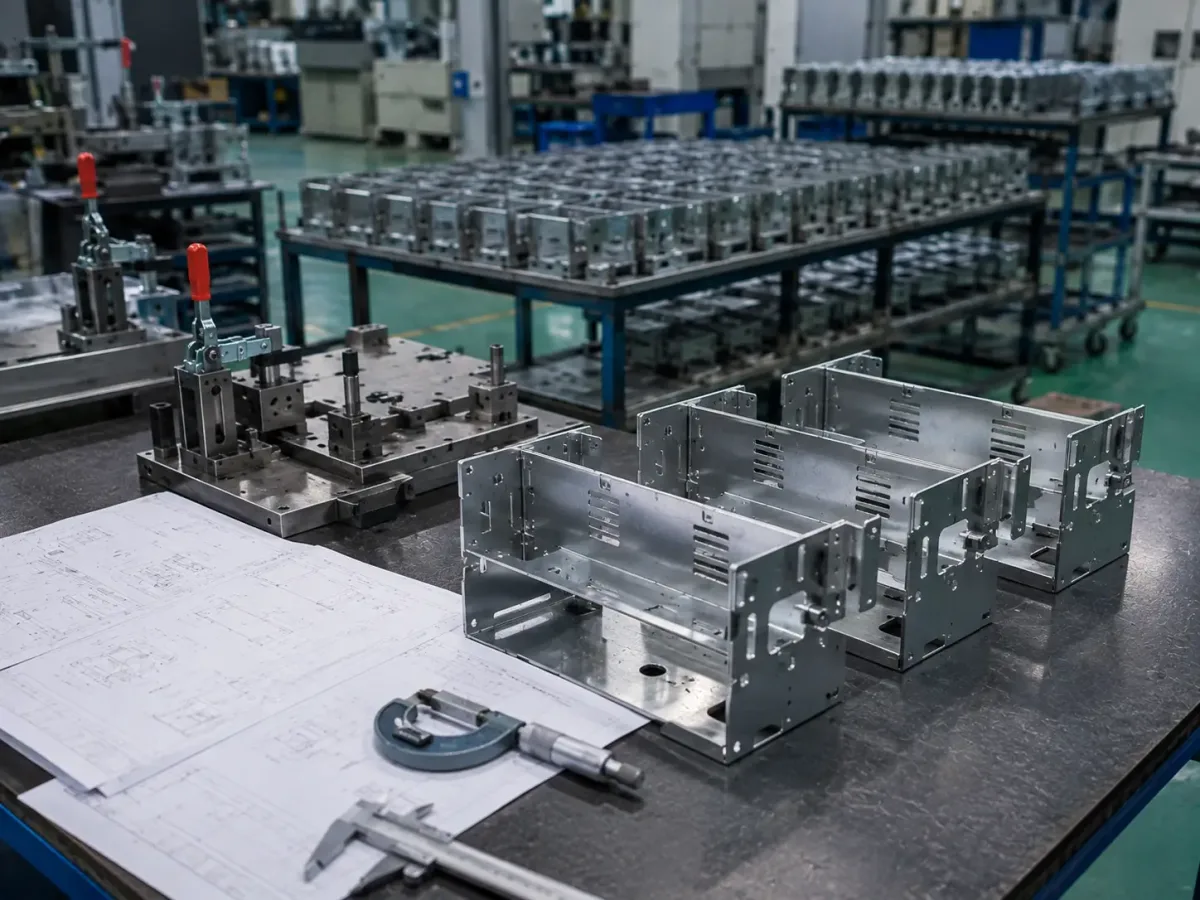
Why These Projects Fit High-Volume Sheet Metal
Because scaling isn’t about “stacking quantity”—it’s about eliminating uncertainty upfront:
Freeze revisions → define CTQs (Critical-to-Quality characteristics) → lock key datums with fixtures/tooling/dies → standardize operations to a repeatable cadence (takt)—so as volumes ramp, you consistently achieve better throughput and lower unit cost.
How do you choose the right
production process route?
We’ll recommend a manufacturing route based on your annual volume, CTQs (critical-to-quality characteristics), and revision-change frequency.
During Active Revision Cycles
Use a flexible route with laser cutting / CNC turret punching + press-brake forming.
Ideal for frequent revisions and faster validation.
During Ramp-Up
Introduce dedicated fixtures and work cells to lock in takt time and consistency early.
Once the Design Is Frozen and Demand Is Stable
Evaluate high-throughput routes such as stamping, roll forming, or deep drawing to reduce unit cost.
Production Route Comparison
| Production route | Typical process mix | Best-fit production stage | Upfront investment (dies/fixtures) |
Unit cost profile | Key design / process constraints |
|---|---|---|---|---|---|
|
Flexible route |
Laser / CNC turret punch + bending + general-purpose welding/assembly | Low to mid volume; frequent revisions | Low | Unit cost rises quickly as operation count increases | Hole-to-bend rules, tolerance stack-up, weld distortion; cosmetic consistency often needs fixture support |
|
Semi-tooled route |
CNC turret punch incl. forming / laser + dedicated fixtures + cell-based assembly | Mid to higher volume; stable structure | Medium | More stable cadence; costs can be driven down over time | CTQs need to be frozen earlier; fixture strategy sets the ceiling for repeatability |
|
Stamping route |
Blanking/forming dies + secondary bending/tapping/self-clinching | High volume; long-term stable design | High | Lowest unit cost; fastest throughput | Changes are expensive and slow; DFM must be solid up front |
|
Roll forming route |
Roll forming + punching / cutoff | Long, straight, constant-profile sections in high volume | High | Excellent unit economics; very high capacity | Once the cross-section is set, changes are difficult; first-article validation must be thorough |
|
Deep drawing route |
Deep drawing / forming + trimming / piercing | Bowl-/cup-/housing-type parts | High | Efficient for deep cavities; strong throughput | Material formability matters; wrinkling/cracking risk; allow time for die tryout and tuning |
Tooling Strategy & Production Economics
No Tooling / Minimal
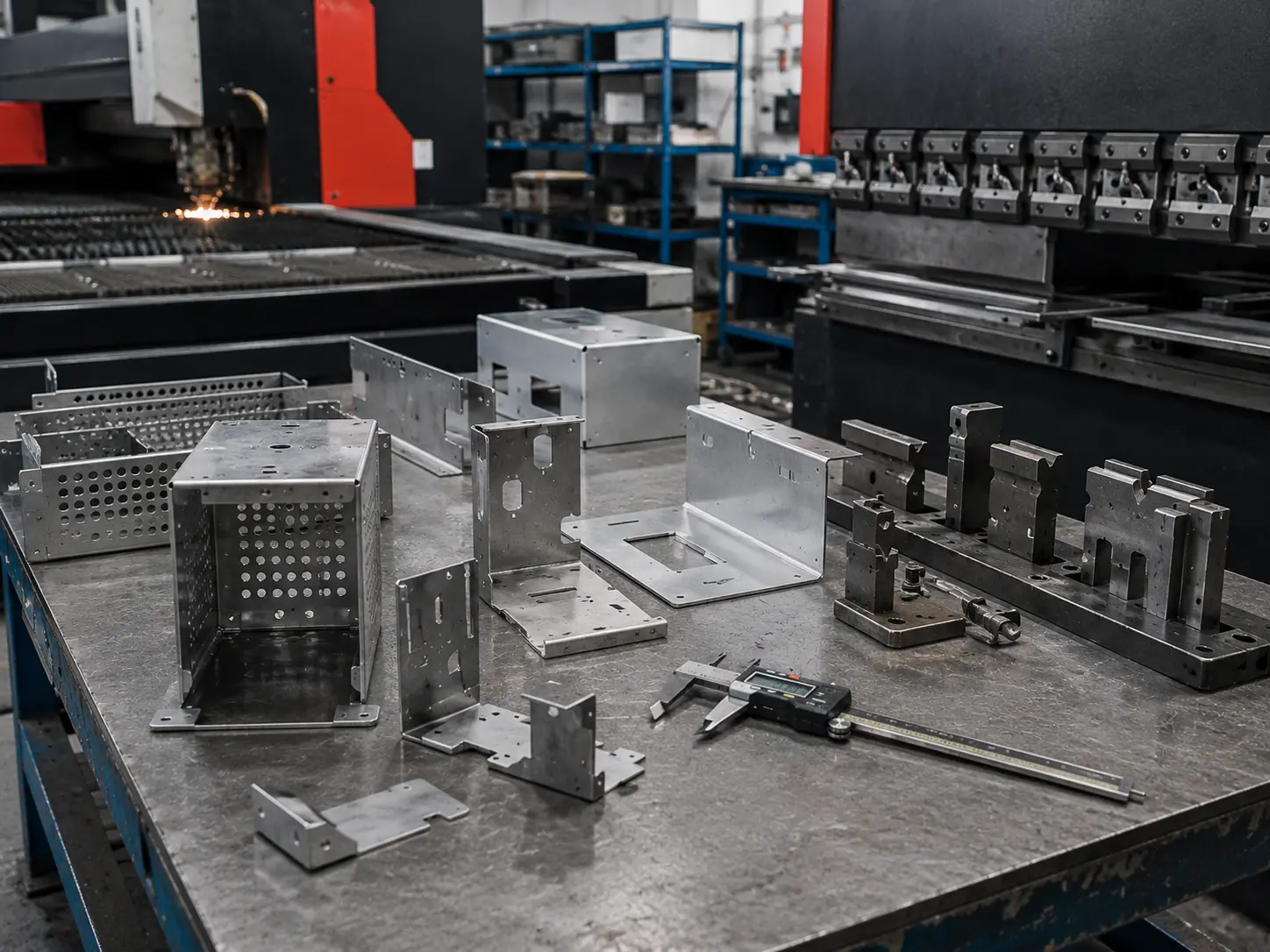
Ideal for prototypes and low volumes. Highest flexibility with minimal upfront investment, but typically the highest unit cost.
Soft Tooling
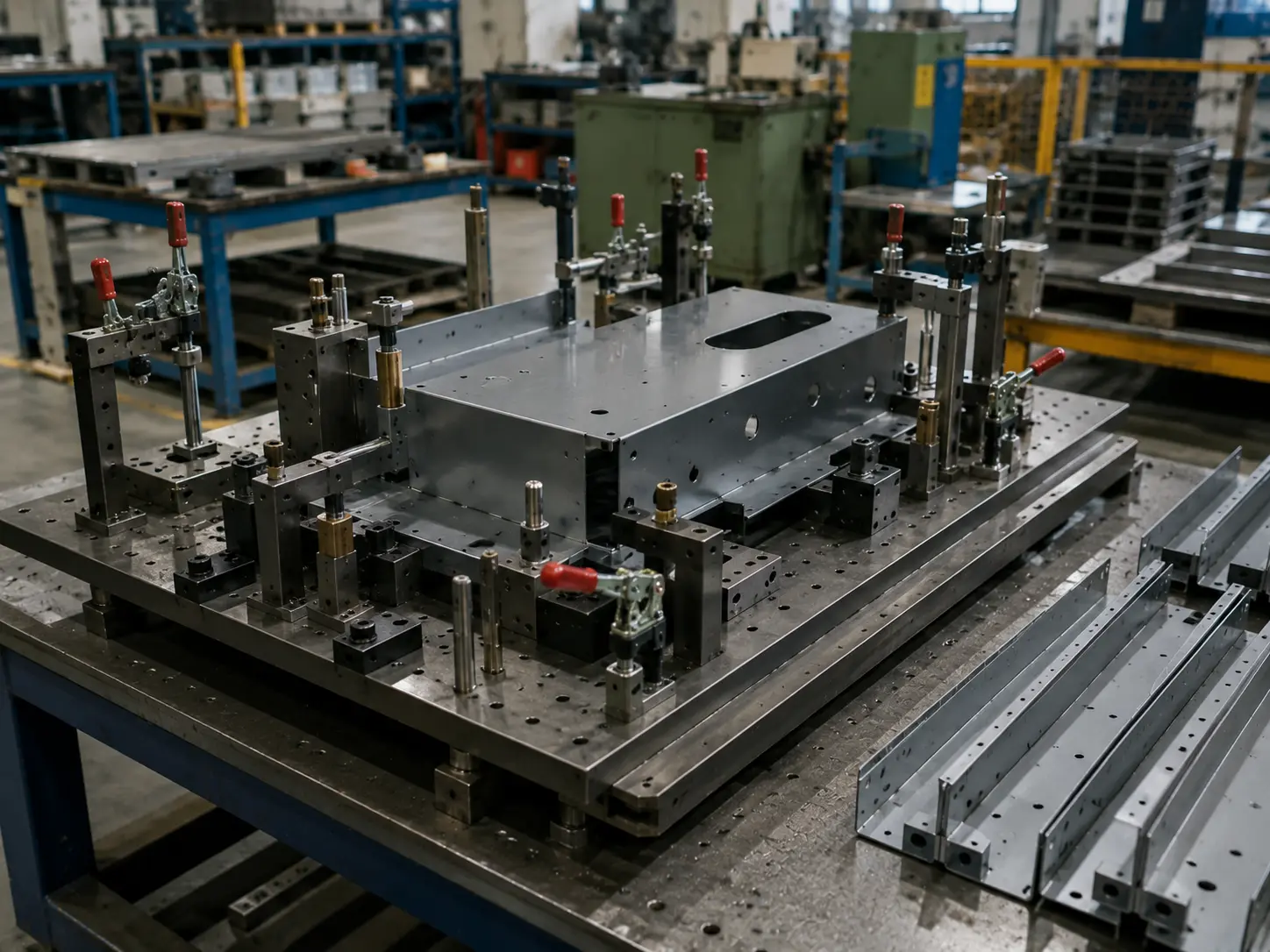
Lower investment with relatively quick lead times. A practical option for medium volumes where repeatability matters but full production tooling is not yet justified.
Dedicated Tooling
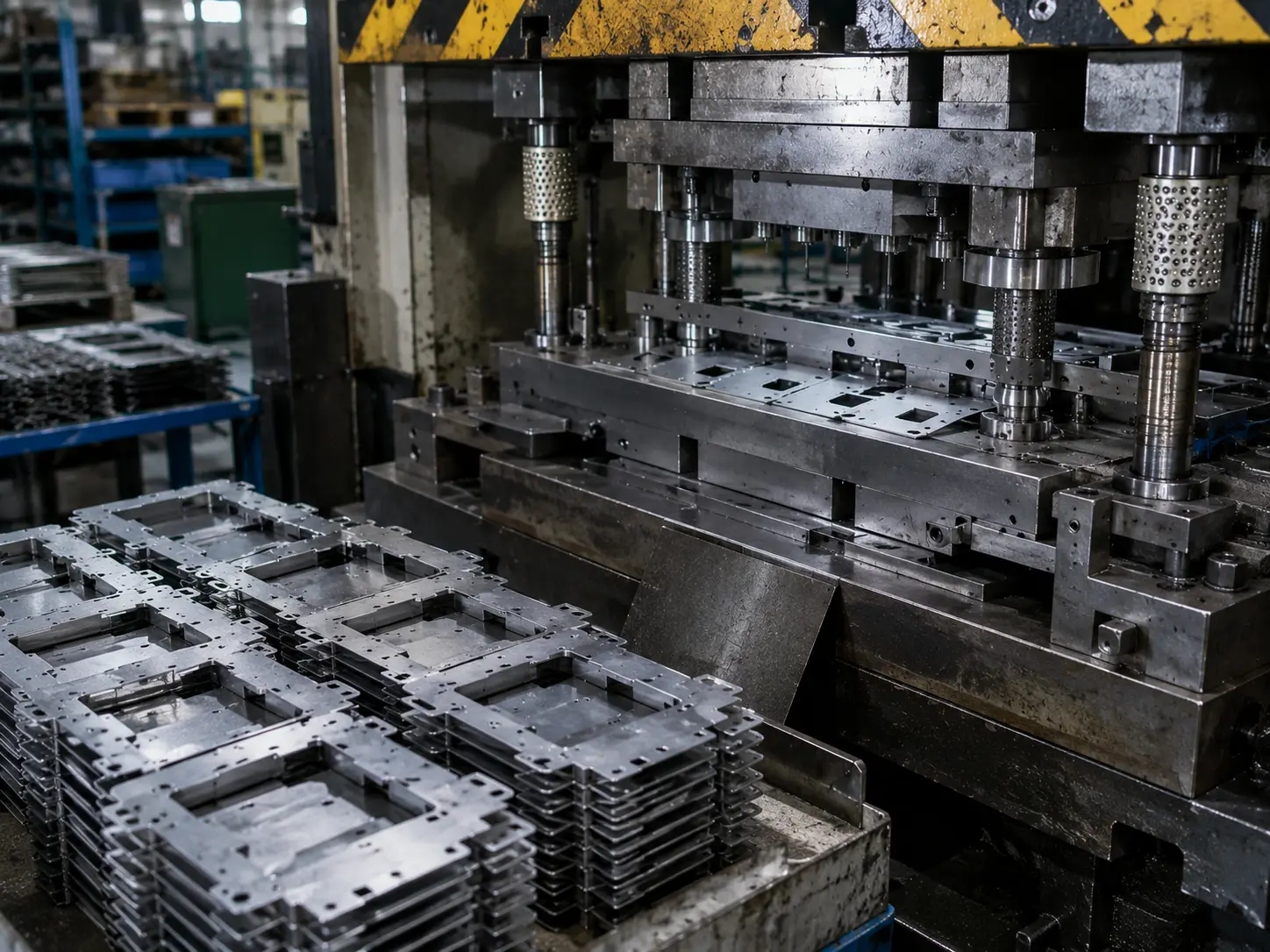
Higher upfront investment designed to deliver the lowest unit cost, stable repeatability and reliable long-term production.
Higher Unit Cost
Lowest Unit Cost
CTQ Control & Quality Consistency
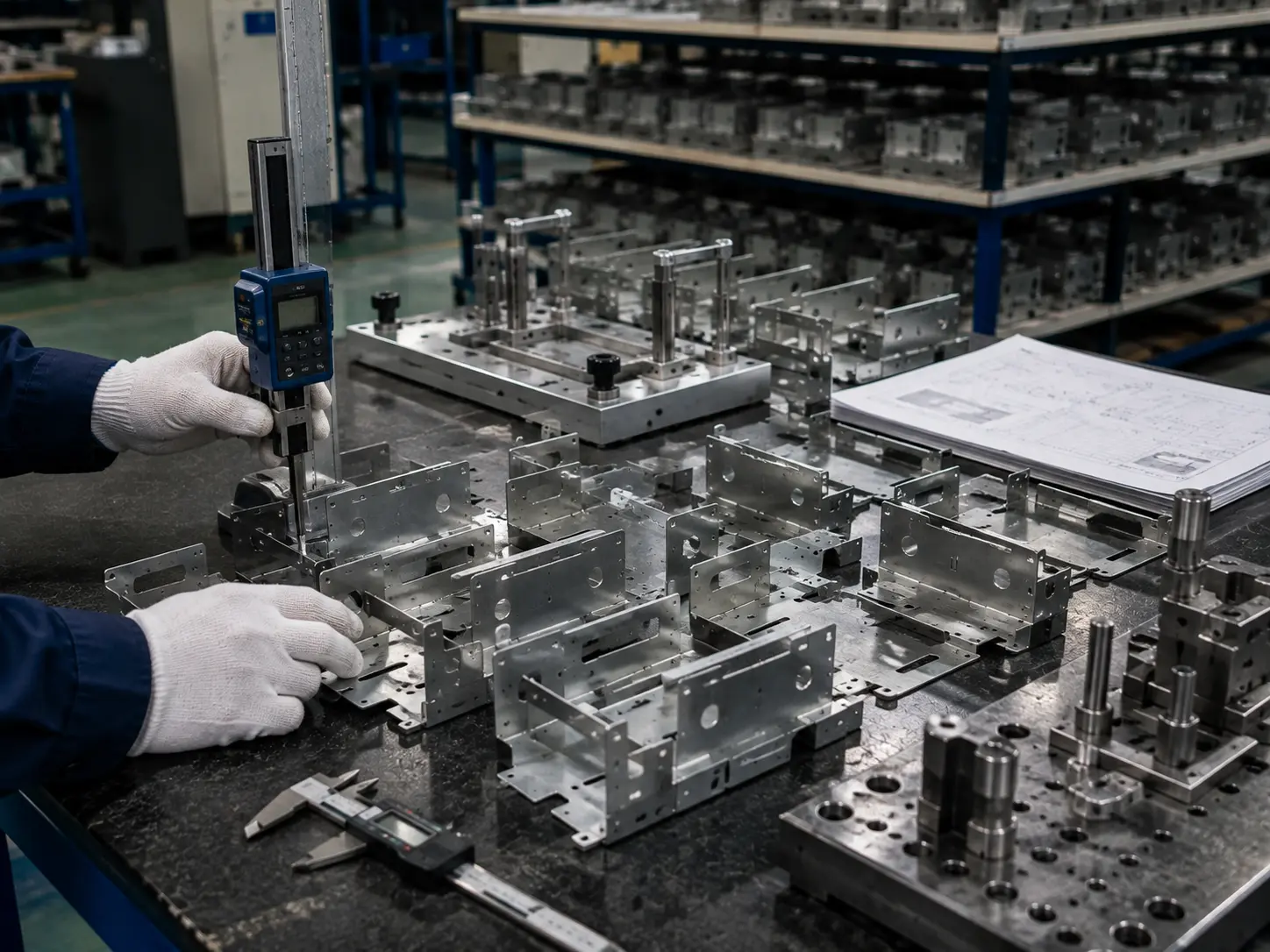
Key CTQ Parameters
| Bend Angle | ±0.5° typical |
| Hole Position | ±0.10 mm |
| Flatness | 0.5 mm / 500 mm |
| Edge Condition | Deburr per specification |
| Surface Finish | As specified |
| Cosmetic | Scratch & dent control |
Verification
Inspection
Inspection (FAI)
& Records

High-Volume Sheet Metal Manufacturing FAQs
