Smart Home Control Metal Enclosure
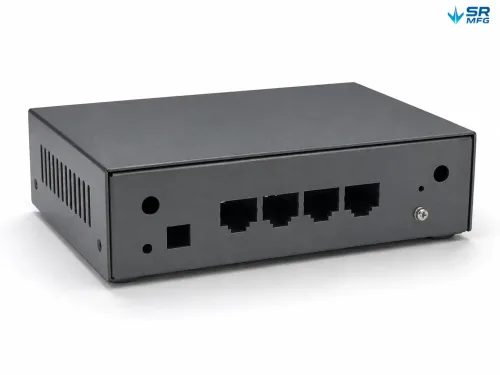
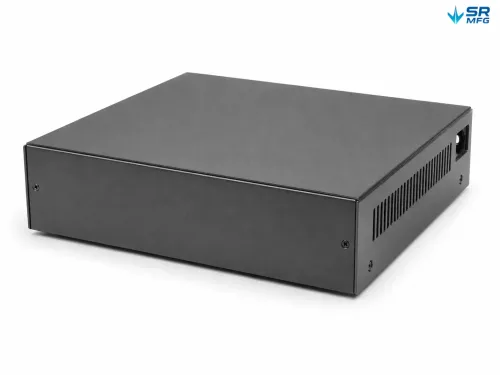
This is a custom sheet metal enclosure designed for smart home control panels, IoT gateways, and connected control devices. Each enclosure can be structurally designed according to your drawings and PCB layout, then manufactured to match the required interface positions, mounting method, and branded appearance.
- Custom manufactured according to drawings, samples, or PCB layouts
- Supports wall-mounted, desktop, and embedded installation structures
- Customizable interface cutouts, antenna positions, and ventilation structures
- Surface finishing, branding, and assembly support available
- Suitable for prototype development, small-batch production, and OEM mass production
Product Details
Product Specifications
| Parameter | Specification |
|---|---|
| Material Options | Aluminum alloy AL5052-H32, AL6061-T6, stainless steel SUS304, cold-rolled steel SPCC, galvanized steel SGCC |
| Sheet Thickness | 0.8 mm / 1.0 mm / 1.2 mm / 1.5 mm / 2.0 mm / 2.5 mm / 3.0 mm |
| Custom Dimensions L × W × H | Typical range: 80–400 mm × 60–300 mm × 25–120 mm; fully customized according to drawings |
| Laser Cutting Tolerance | ±0.1 mm standard / ±0.05 mm precision |
| Bending Tolerance | ±0.2° angle / ±0.15 mm dimension |
| Welding Methods | Argon arc welding / MIG welding / spot welding / riveting, selected according to material and design |
| Surface Roughness | Ra 1.6–3.2 µm after machining; can be further improved by polishing or brushing |
| Surface Finish Options | Anodizing Type II, powder coating with custom RAL colors, brushing, sandblasting, e-coating, silk-screen printing, laser marking |
| Protection Rating | Protection ratings can be designed according to project targets, such as IP54, IP65, IP67, or IP68. The final rating must be confirmed based on continuous sealing structure, cable entry design, ventilation solution, and test results. |
| Gasket Materials | Silicone / EPDM / conductive silicone for EMC shielding |
| EMC Shielding | Optional — conductive silicone gaskets combined with grounded enclosure design |
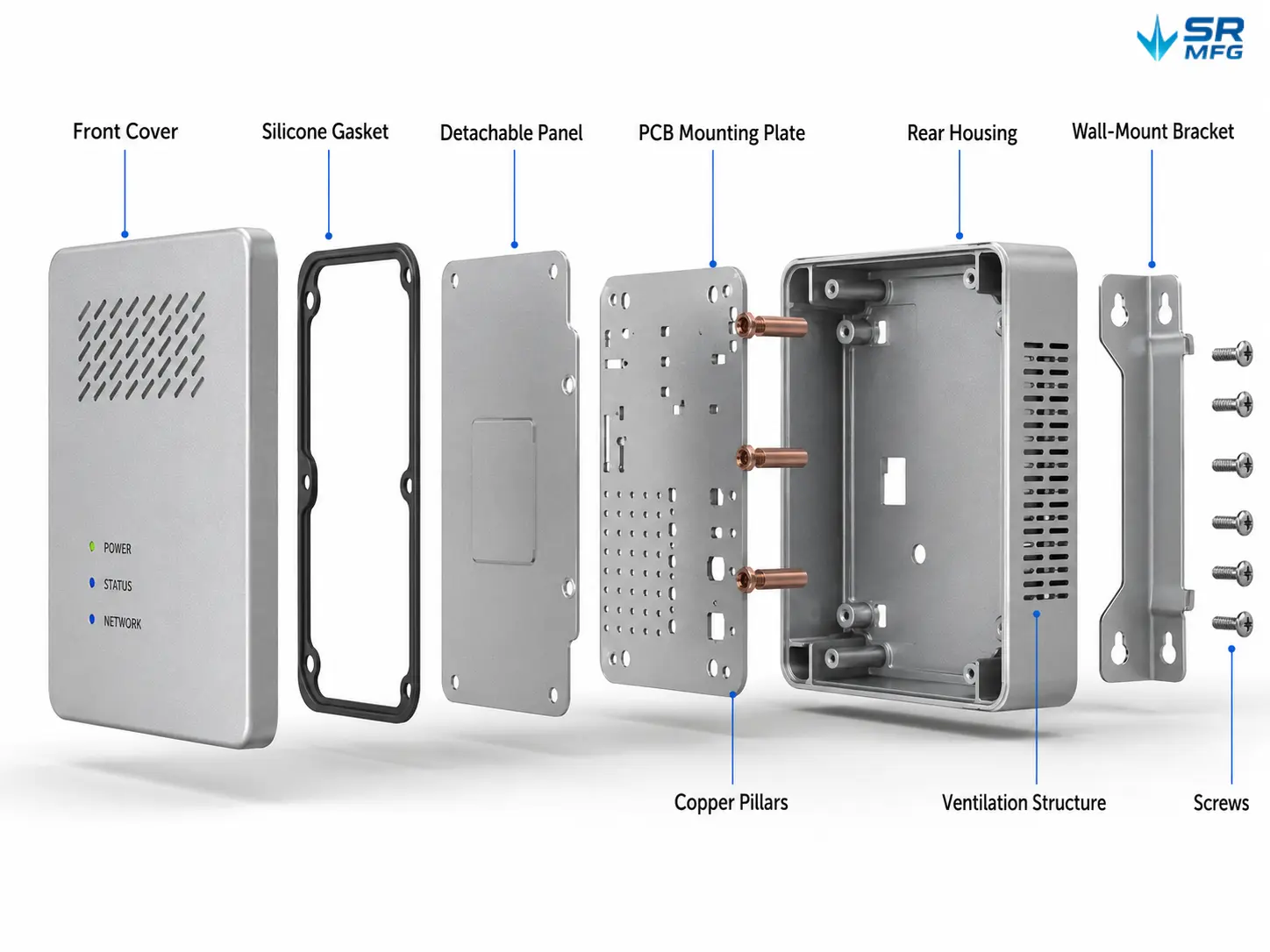
| Internal Standoffs | M2.5 / M3 / M4 brass or aluminum standoffs; customized spacing according to PCB hole layout |
| Operating Temperature Range | –20°C to +85°C standard; –40°C to +105°C extended range, depending on material selection |
| Deburring Standard | All touchable surfaces are fully chamfered, with no sharp edges or burrs |
| Prototype Lead Time | 5–7 working days after drawing confirmation |
| Production MOQ | From 100 pieces, depending on complexity and material |
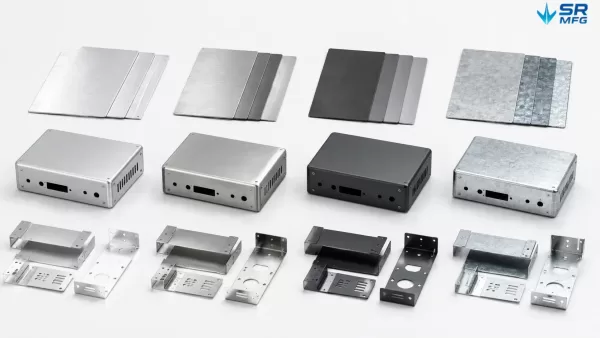
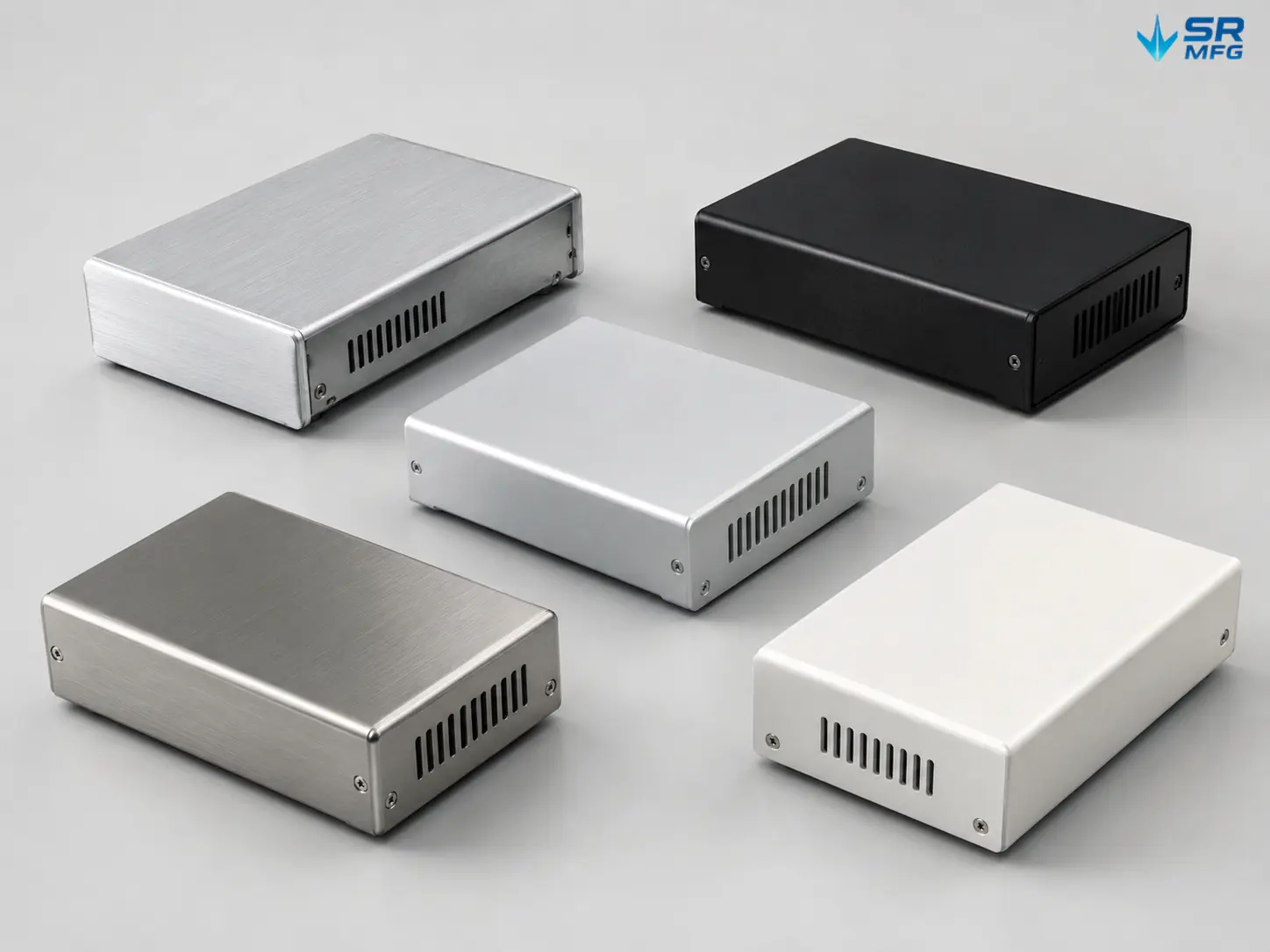
Material options can include aluminum alloy, stainless steel, cold-rolled steel, and galvanized steel according to project requirements.
What Is a Smart Home Control Metal Enclosure?
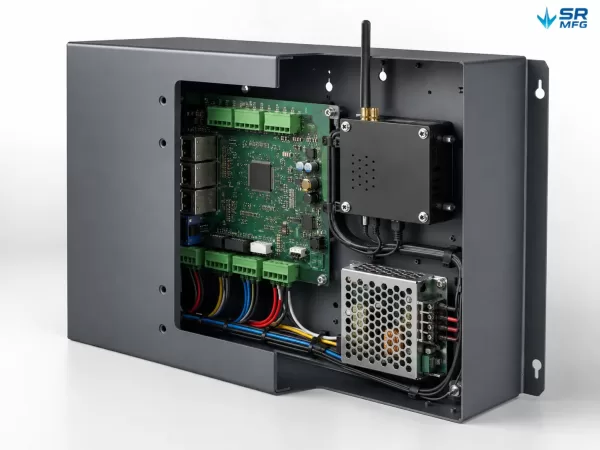
A smart home control metal enclosure protects internal electronics while supporting PCB layout, wiring, mounting, and device installation.
A smart home control metal enclosure is a custom sheet metal housing used to protect and mount control boards, IoT gateway modules, and other internal electronic components. Its main function is to protect the electronics, support the internal layout, and provide a reliable structure for installation.
A smart home control enclosure is not just a simple metal box. It needs to be a precisely manufactured enclosure supported by sheet metal DFM review around the PCB layout, port configuration, and deployment environment.
At SR MFG, our custom sheet metal fabrication for OEM enclosures is mainly built for B2B customers. Each enclosure is manufactured according to your drawings. If complete drawings are not available, we can also evaluate the structure based on your sample, PCB layout, or functional requirements. Instead of forcing your electronic components to fit a standard enclosure, we adjust the enclosure design around the structure of your device.
Fully Customized — Manufactured to Your Exact Specifications
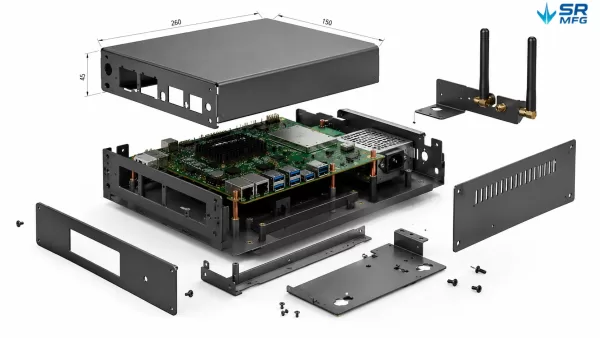
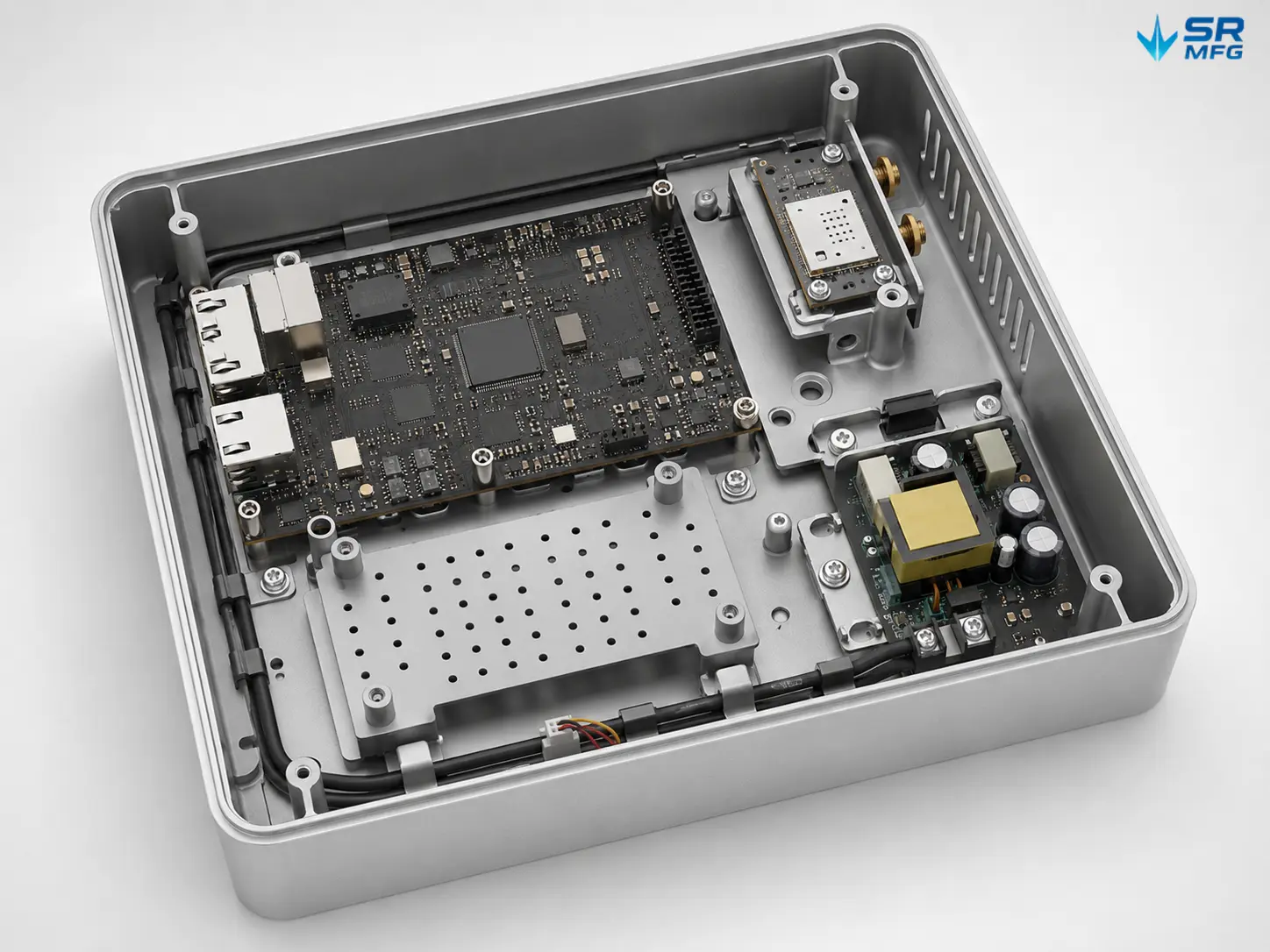
Custom enclosure features can include precise port cutouts, antenna positions, ventilation structures, PCB standoffs, mounting brackets, and branded front panels.
We customize every structural and functional detail of your smart home control metal housing according to your hardware design.
| Custom Dimension | What We Can Configure |
|---|---|
| External Dimensions | Length, width, and height customized according to your PCB layout and component arrangement |
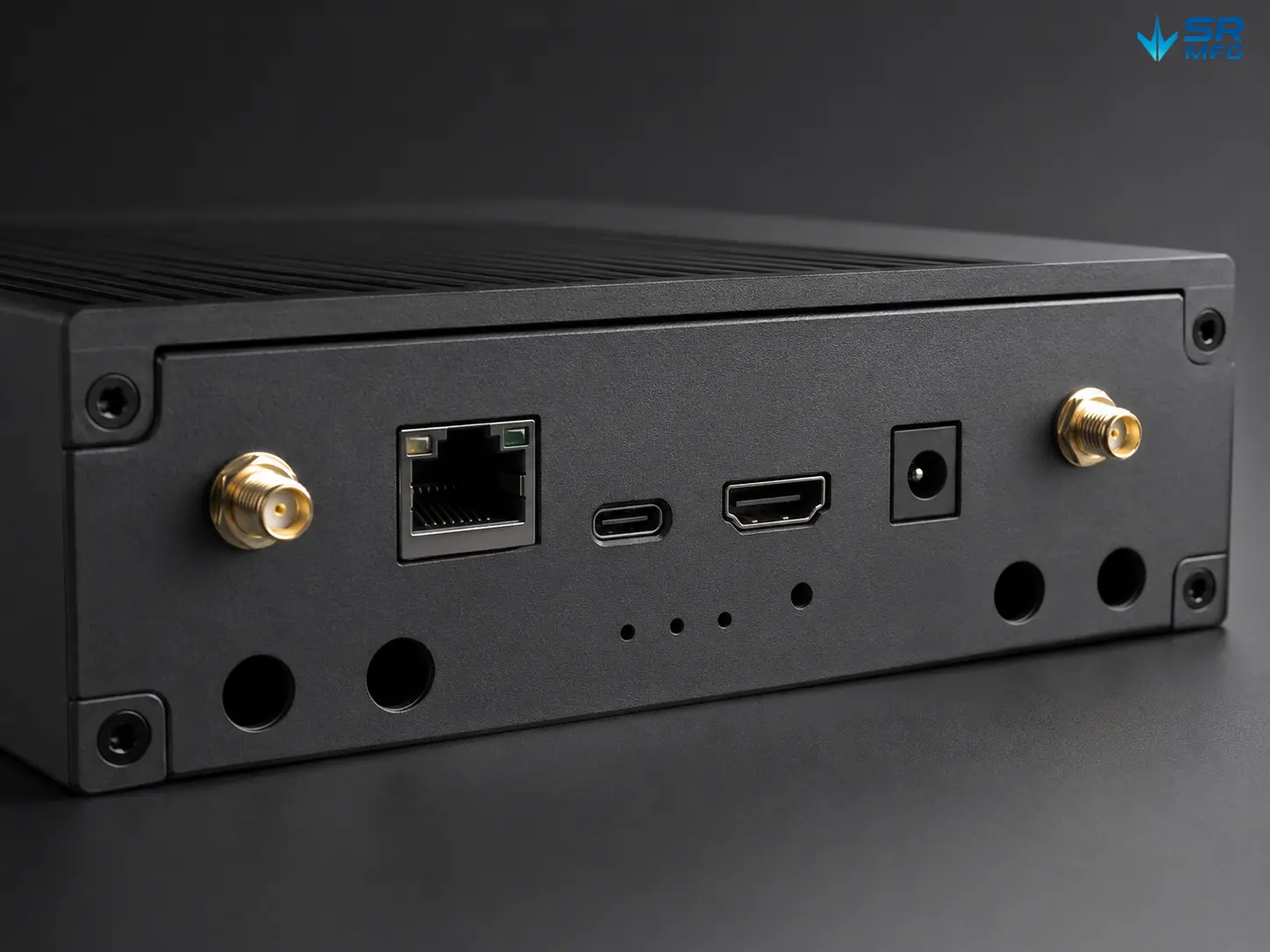
| Port Cutouts | Precision-cut openings for USB-A/C, RJ45, DC power ports, HDMI, SMA antenna connectors, power switches, LED indicators, and SIM card slots — fully manufactured according to drawings |
| Thermal Design | Honeycomb holes, slotted vents, or custom ventilation patterns to optimize natural convection or forced air cooling |
| Antenna Windows | For wireless devices, signal transmission can be optimized through external antenna holes, SMA/RP-SMA antenna interfaces, plastic antenna windows, or non-metallic inserts. Metal enclosures can shield Wi-Fi, Zigbee, Z-Wave, and Bluetooth signals, so internal antenna solutions must be evaluated separately. |
| Internal Structure | Brass or aluminum standoffs installed at specified spacing, PCB guide rails, partition panels for EMI isolation, cable channels, and wire harness fixing points |
| Mounting Configuration | Wall-mount keyhole slots, desktop anti-slip feet, rail clips, VESA-compatible holes, and recessed mounting bracket interfaces |
| Branding | Laser marking, silk-screen printing, raised or recessed logos, nameplate recesses, and serial number areas |
Note: If your design includes features not listed above, please send us your drawings. Our engineering team will evaluate each customization requirement based on manufacturing feasibility.
Designed for Smart Home Control and IoT Gateway Projects
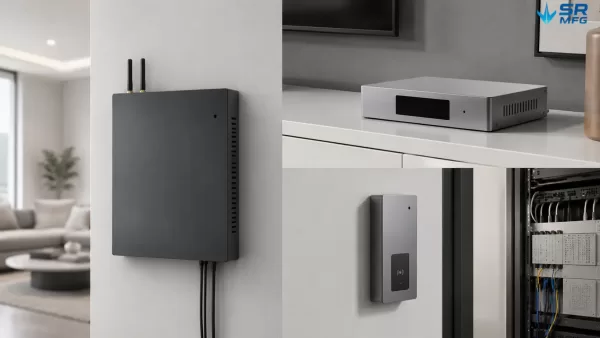
Custom metal enclosures can be used for smart home control panels, IoT gateways, sensor hubs, network control units, and access control equipment.
This type of enclosure is suitable for indoor or semi-protected smart device installation environments. It must support electronic assembly requirements while also maintaining a clean and professional appearance.
Common applications include:
- Smart home control enclosures
- IoT gateway metal enclosures
- Home automation control boxes
- Wall-mounted network control units
- Sensor hub enclosures
- Access control equipment housings
- Low-voltage smart device cabinets
- Router controller and communication equipment enclosures
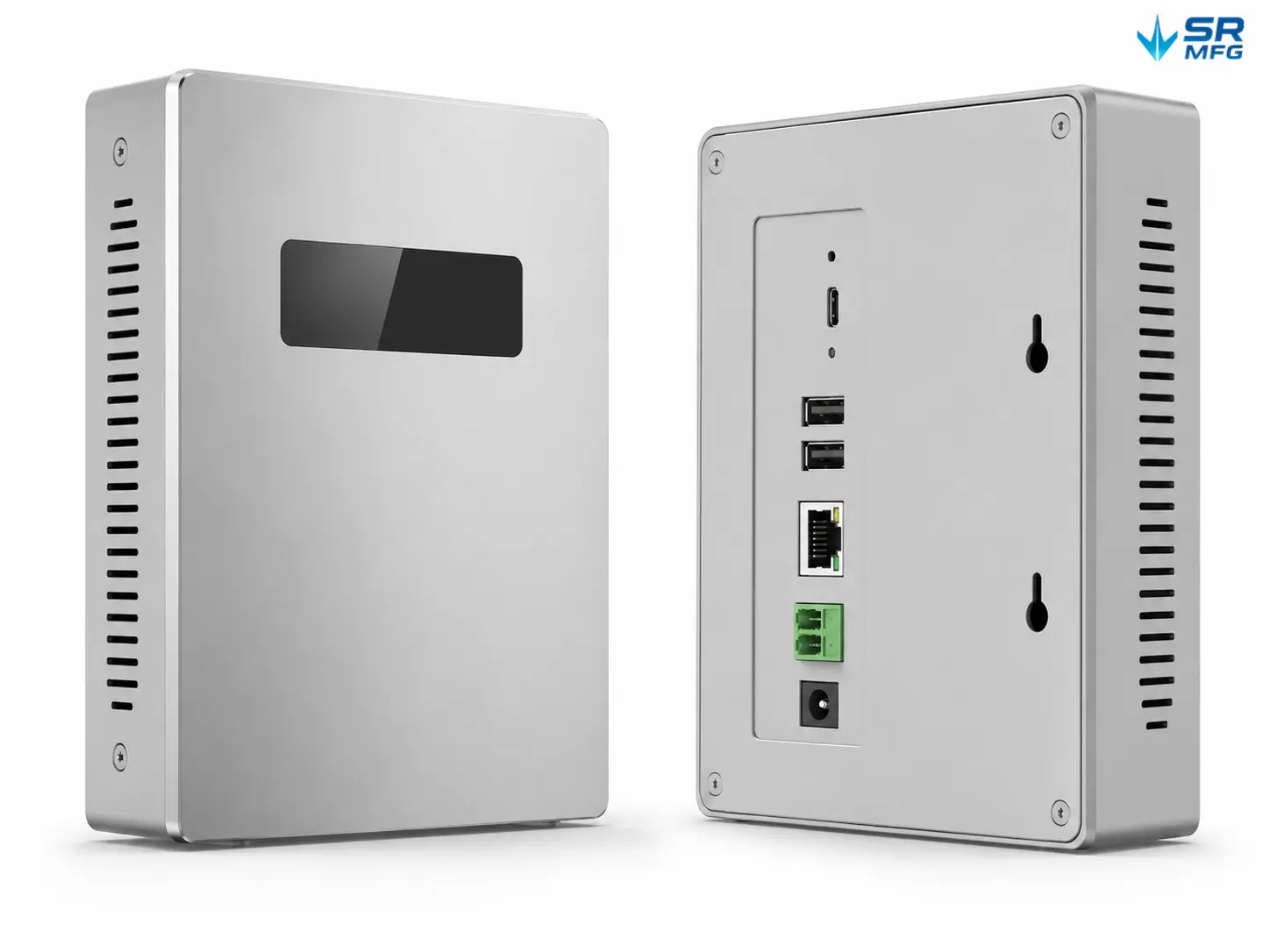
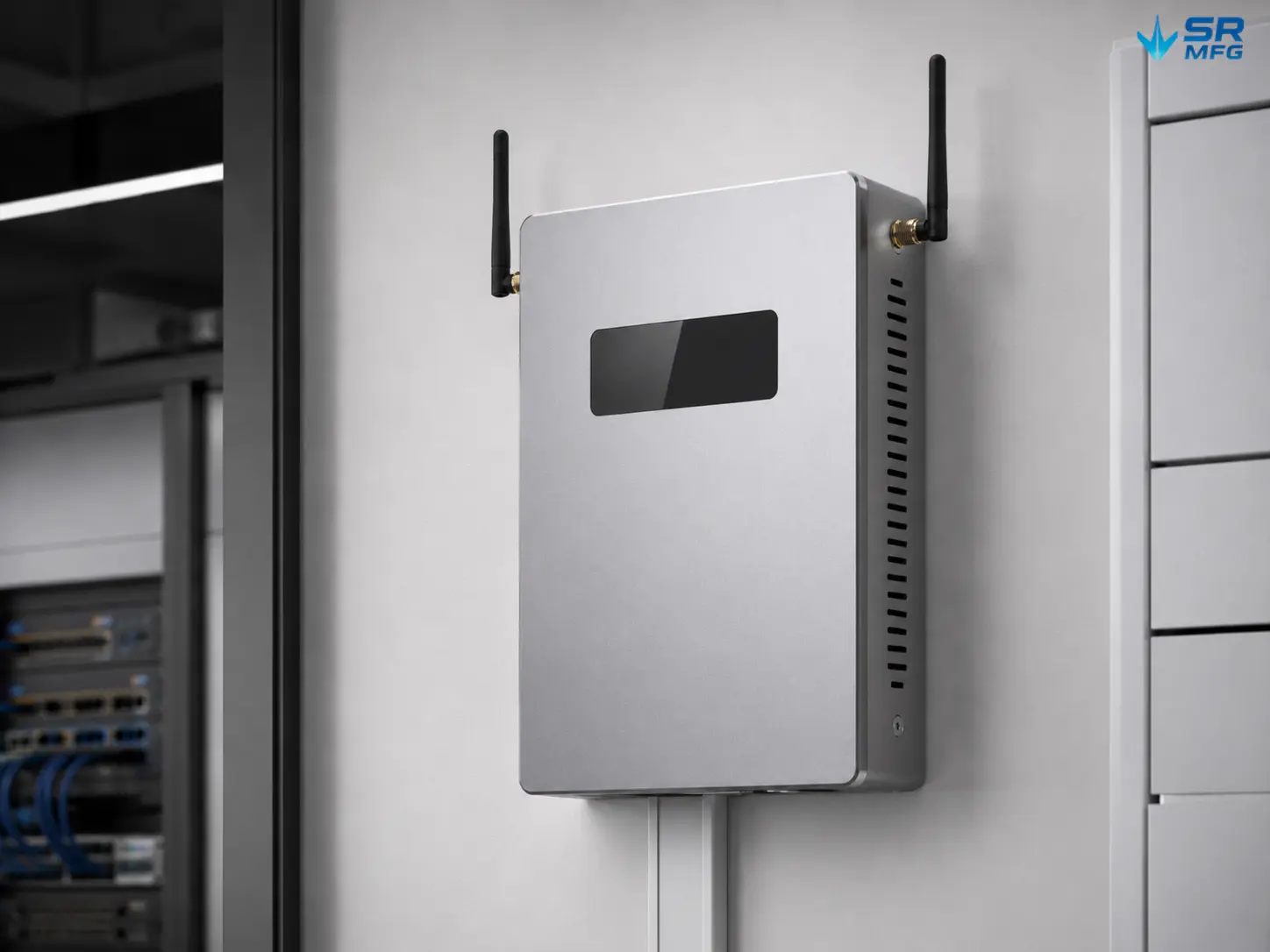
For example, a wall-mounted electrical control enclosure design usually requires a slim front panel with cable entry reserved at the rear. The internal structure should be designed together with PCB standoffs, ventilation positions, and external antenna layout.
A desktop IoT gateway enclosure focuses more on compact structure. The rear panel needs cutouts according to the connector layout, while the front cover can include a logo based on brand appearance requirements.
Enclosure Structure Customized Around Your Device Layout
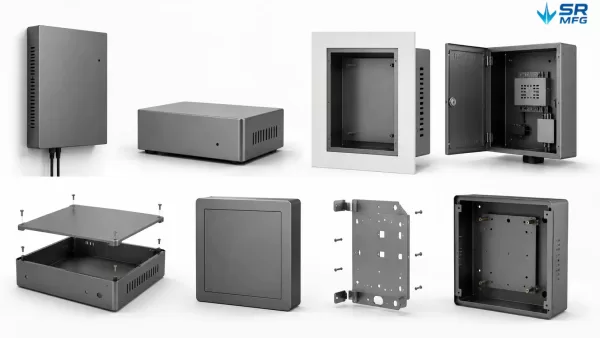
Enclosure structures can be customized for wall-mounted, desktop, recessed, hinged-door, screw-fixed, or internal mounting plate designs.
The structure of a smart home control enclosure should be determined by the internal electronic component layout, installation environment, and future maintenance method. Different projects may require different cover styles, mounting plate positions, and cable entry directions.
| Structural Option | Suitable Applications |
|---|---|
| Wall-Mounted Housing | Suitable for smart control panels, gateway devices, and control boxes installed on walls or low-voltage service panels |
| Desktop Metal Housing | Suitable for small gateways and control devices placed on desks or cabinet shelves |
| Recessed Enclosure | Suitable for low-profile installations embedded into walls or cabinets |
| Hinged Door Enclosure | Suitable for equipment that requires regular access to cables, modules, or maintenance areas |
| Screw-Fixed Cover | Suitable for compact electronic enclosures that require structural stability and tamper resistance |
| Flush Front Panel | Suitable for visible installations where a clean exterior appearance is important |
| Internal Mounting Plate | Suitable for projects that require flexible installation of PCBs, power modules, rail components, or cable clamps |
The enclosure can be designed as a multi-part sheet metal assembly structure. A common approach is to use a front cover and rear housing as the main body, then add removable panels, internal mounting plates, or separate wall-mount brackets as needed. This structure improves assembly efficiency and makes installation and maintenance easier.
Internal Mounting Design
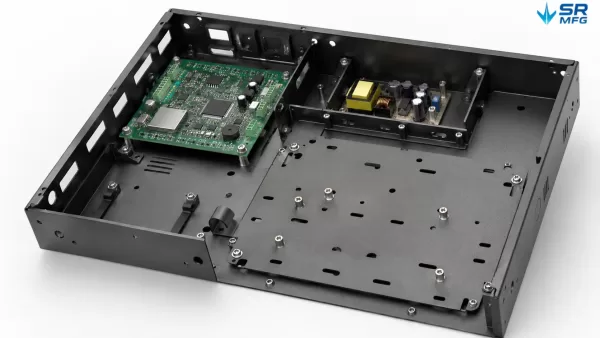
Internal mounting structures help secure PCB boards, organize wiring, separate functional areas, and improve assembly efficiency.
For a smart home control metal enclosure, the first priority is to ensure that electronic components are securely fixed. The internal layout should then reserve enough space for wiring, heat dissipation, and future maintenance. The internal structure directly affects the overall assembly efficiency of the finished device.
Internal mounting methods can be designed according to project requirements, such as:
- Mounting standoffs positioned according to PCB hole locations
- PEM fasteners or welded studs for improved assembly consistency
- Removable mounting plates for flexible module installation
- Dedicated mounting areas and cable routing space for power modules
- Small brackets for communication boards, relays, or antenna modules
- Cable fixing points to reduce stress on connectors
- Separated power areas, signal areas, and maintenance areas when required
For engineering projects, we recommend providing the PCB outline and mounting hole locations during the inquiry stage. If the project includes tall components, specific connector directions, or antenna layout requirements, please also provide this information for evaluation.
These details help us more accurately determine standoff height, cover clearance, and connector alignment.
Custom Port Cutouts and Cable Entry Design
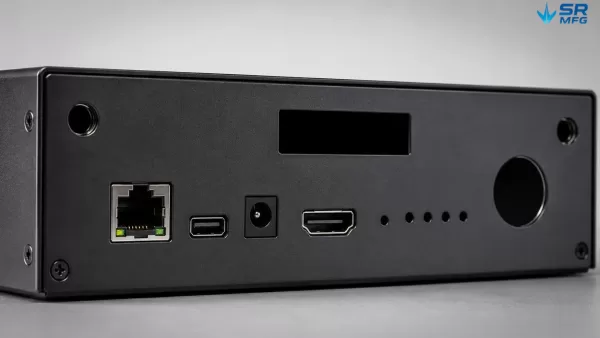
Port cutouts can be customized for network ports, USB service ports, power inputs, display windows, antenna holes, and protected cable entry.
Smart home control panels and IoT gateway enclosures usually require multiple connection areas. These areas often include network ports and power inputs, and may also involve USB service ports, status indicator lights, reset buttons, display windows, antenna holes, and cable exits.
Port placement affects not only the appearance of the enclosure, but also assembly efficiency and the convenience of on-site wiring.
| Cutout Type | Manufacturing Purpose |
|---|---|
| Ethernet / Network Port Cutouts | Used for network communication interfaces and gateway devices |
| USB / Service Port Openings | Used for maintenance, debugging, or device configuration |
| Power Input Holes | Used for DC jacks, terminals, power cables, or other power connection methods |
| Indicator Light Openings | Used for status light visibility and front panel indication |
| Button / Reset Holes | Used for reset, pairing, or maintenance operations |
| Display Window Openings | Used for small screens, labels, or transparent insert areas |
| Cable Entry Holes | Used for rear, bottom, side, or protected cable entry |
| Antenna Holes | Used for external antenna installation or RF cable routing |
Precision laser cutting for enclosure port cutouts, stamping, or CNC finishing can be selected depending on the structural complexity. After cutting, the edges are deburred, and corresponding markings can be added according to front panel requirements.
For visible front panels, edge quality, hole alignment, and marking position should be carefully confirmed before mass production to ensure the final appearance meets project requirements.
Ventilation and Thermal Design for Continuous Operation
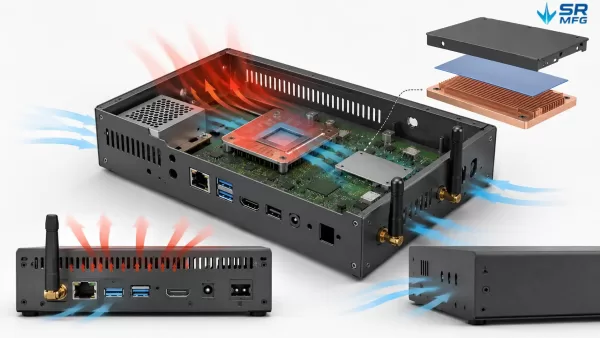
Ventilation layout should be designed around heat source locations, mounting direction, dust exposure, and protection requirements.
Smart control panels and IoT gateway devices are usually designed for long-term continuous operation. Processors and wireless modules are often the main heat-generating areas. If the device also includes a power supply or communication board, the thermal path should be considered during the enclosure design stage.
Available thermal management options include:
- Side or rear ventilation slots
- Louvered vents to control airflow direction
- Ventilation holes positioned away from cable entry areas
- Fan openings for high-heat-load devices
- Internal clearance around heat-generating components
- Contact surfaces for thermal pads or heat sinks
- Protected ventilation structures for semi-outdoor or equipment-room environments
The ventilation layout should first be determined according to component heat output, then adjusted based on installation direction, dust exposure, and enclosure protection requirements.
For many projects, thermal design is not simply about adding more ventilation holes. The key is to create an effective airflow path based on heat source location, mounting direction, and the actual operating environment.
Materials and Surface Finishes
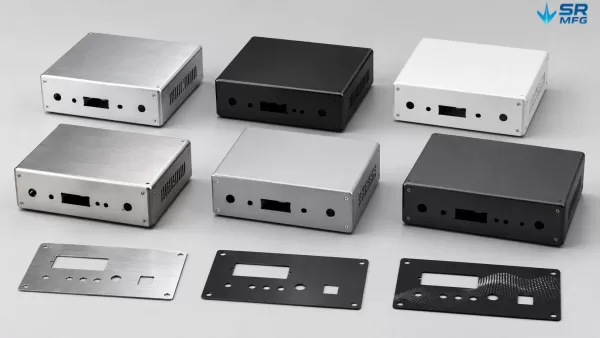
Custom enclosure materials and finishes can include aluminum alloy, stainless steel, cold-rolled steel, powder coating, anodizing, brushing, sandblasting, silk-screen printing, and laser marking.
Material selection should be based on structural strength, product weight, corrosion resistance, appearance requirements, and cost targets. Different installation environments may require different material and finishing solutions.
Material Comparison
| Feature | AL5052-H32 | AL6061-T6 | SUS304 | SPCC | SGCC |
|---|---|---|---|---|---|
| Density | 2.68 g/cm³ | 2.70 g/cm³ | 7.93 g/cm³ | 7.85 g/cm³ | 7.85 g/cm³ |
| Strength | Medium | High | High | Medium | Medium |
| Corrosion Resistance | Good | Good | Excellent | Low; requires coating protection | Medium; protected by zinc coating |
| Thermal Conductivity | Good | Good | Low | Medium | Medium |
| Formability | Excellent | Good | Medium | Excellent | Good |
| Surface Finishes | Anodizing, powder coating, brushing | Anodizing, powder coating, brushing | Brushing, e-coating, passivation | Powder coating, e-coating, electroplating | Powder coating, e-coating |
| Relative Cost | Medium | Medium to high | High | Low | Low to medium |
| Typical Applications | Desktop hub enclosures and lightweight consumer devices | Structural enclosures requiring higher rigidity | Outdoor-grade or industrial-grade equipment | Cost-sensitive indoor products with powder coating | Indoor products with moderate environmental exposure |
Sheet metal finishing should be selected according to the material and appearance requirements. Steel enclosures are typically suitable for powder coating, while aluminum enclosures can be anodized, brushed, or polished depending on the project.. For OEM products, silk-screen printing, laser marking, or custom color matching can also be added to the front panel.
Surface Finish Comparison
| Finish | Appearance | Durability | Typical Applications | Material Compatibility |
|---|---|---|---|---|
| Anodizing Type II | Smooth matte or glossy finish; natural, black, or custom colors | High surface hardness with excellent wear and corrosion resistance | Premium consumer devices and brand color matching | Aluminum alloy only |
| Powder Coating | Smooth or textured finish; full RAL color range | Good impact and corrosion resistance; thicker coating layer than anodizing | Products requiring specific brand colors or textured finishes | All metals |
| Brushing | Directional satin texture | Medium durability; improved fingerprint resistance with clear coating | Industrial or minimalist design styles | Aluminum alloy and stainless steel |
| Sandblasting | Uniform matte texture | Medium durability; ideal base layer for secondary coating | Pre-treatment before coating or standalone matte finish | All metals |
| E-Coating | Uniform thin film; black or clear | Excellent coverage for complex geometries with good corrosion resistance | Products with complex internal structures requiring full coverage | All metals |
| Silk-Screen Printing | Flat printed graphics and text | Medium durability; depends on ink type and substrate | Brand logos, regulatory markings, and port labels | All metals after coating |
| Laser Marking | Permanent marking; high contrast on anodized surfaces | Permanent, with no ink wear issue | Serial numbers, regulatory markings, and brand logos | Aluminum alloy and stainless steel |
Get a Custom Quote for Your Smart Home Control Enclosure
Send us your drawings, PCB layout, connector position diagram, antenna requirements, mounting method, material preference, surface finish requirements, and estimated quantity.
We can evaluate the manufacturability of your device structure and provide a quotation for prototype development or mass production.