
Hot-Rolled Carbon Steel Sheet
From 1.5 mm to 100 mm+
Ideal for fabrication
and structural work
High strength-to-cost ratio
for value-driven builds
Hot-Rolled Carbon Steel Basics
Rolling is one of the key forming methods used in steel production. Hot-rolled steel refers to steel that is shaped through continuous rolling at temperatures above its recrystallization point. In simple terms, steel billets or slabs are heated to a high temperature and then processed through multiple steps such as rolling, edge trimming, leveling, and cooling to produce steel sheet, plate, or coil.
The main feature of hot rolling is that steel has better ductility and lower resistance to deformation at high temperatures. This makes it more suitable for large-scale forming, while also helping improve production efficiency and reduce manufacturing costs. Compared with cold-rolled carbon steel, hot-rolled carbon steel offers clear advantages in lower cost, wider size availability, and better suitability for structural applications. However, it is generally less refined than cold-rolled steel in terms of surface finish, thickness accuracy, and overall appearance.
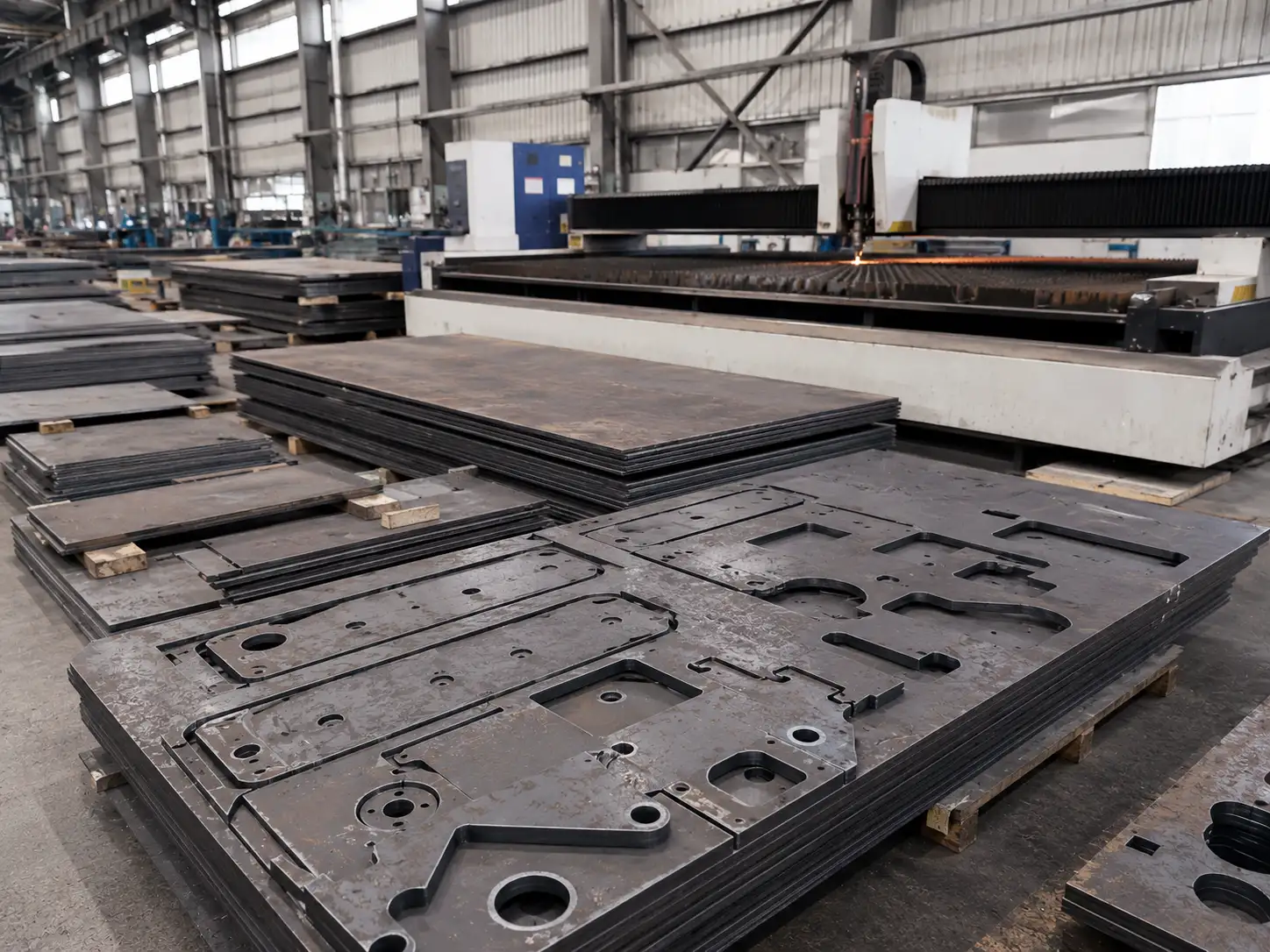
Key Characteristics of Hot-Rolled Carbon Steel Sheet and Plate
Standards for Hot-Rolled Carbon Steel Sheet and Plate
Hot-rolled carbon steel sheet and plate is a widely used base material, and different countries and regions have established their own standard systems for it. In actual sourcing and material selection, the most commonly referenced standards include China’s GB/T, U.S. ASTM, Japan’s JIS, Europe’s EN, and international ISO standards.
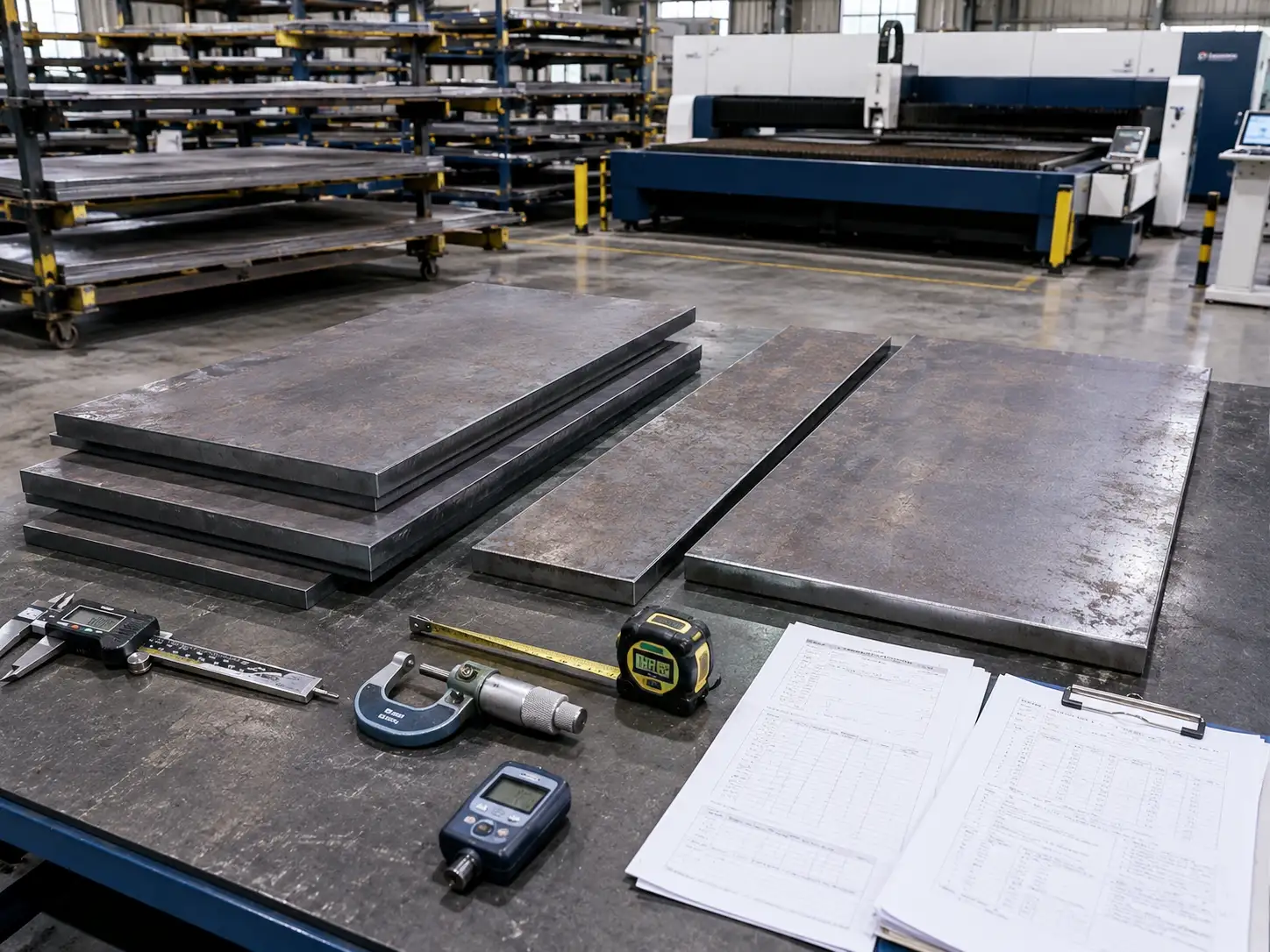
Common International Standards
| Standard System | Core Standards | Typical Applications | Common Grade Examples |
|---|---|---|---|
| China GB/T | GB/T 3274, GB/T 711, GB/T 700 | Domestic engineering, machinery, construction | Q235, Q355, 08Al |
| U.S. ASTM | ASTM A36, ASTM A1011, ASTM A572 | North American market, structural engineering, general manufacturing | A36, A572 Gr.50, A1011 CS |
| Japan JIS | JIS G 3131, JIS G 3101, JIS G 3106 | Asian market, home appliances, automotive, machinery | SS400, SPHC, SM490 |
| Europe EN | EN 10025 series, EN 10111 | EU market, bridges, construction, structural parts | S235JR, S355J2, DD11 |
| International ISO | ISO 3573, ISO 630 | International trade reference, general-purpose base standards | HR1, HR2 |
Approximate International Grade Cross-Reference
| Application Category | China GB/T | U.S. ASTM | Japan JIS | Europe EN | Typical Applications |
|---|---|---|---|---|---|
| General structural steel | Q235 | A36 | SS400 | S235JR | Steel structures, frames, brackets |
| High-strength structural steel | Q355 | A572 Gr.50 | SM490 | S355 series | Load-bearing structures, heavy equipment |
| General forming-grade steel sheet | SPHC | A1011 CS | SPHC | DD11 | General stampings and formed parts |
| Deep-drawing steel sheet | SPHD / SPHE | A1011 DS | SPHD / SPHE | DD12 / DD13 | Deep-drawn containers, automotive parts |
| Quality carbon steel | 20# / 45# | 1020 / 1045 | S20C / S45C | C20 / C45 | Machined parts, shafts, gears |
How to Choose the Right Grade of Hot-Rolled Steel for Sheet Metal Fabrication
Selection by Processing Method
| Processing Method | Recommended Steel Grades | Key Requirements |
|---|---|---|
| Bending / forming | Q235B, SPHC | Good ductility and moderate yield strength to reduce the risk of cracking during bending |
| Deep drawing | SPHD, SPHE | High elongation and low yield strength to minimize tearing and wrinkling |
| General stamping | SPHC, DD11 | Basic formability suitable for standard stamping applications |
| Welding | Q235B, Q355B | Good weldability to reduce the risk of weld cracking |
| Oxy-fuel / flame cutting | Q235, Q355 | Stable cutting performance for medium and heavy plate processing |
| Machining | 20#, 45# | Good machinability for turning, milling, and similar operations |
Selection by End Use
| Application | Recommended Steel Grades | Key Requirements |
|---|---|---|
| Structural steelwork | Q235B, Q355B | Strength, toughness, and structural stability |
| Machinery and equipment | Q235B, 45# | Strength, wear resistance, and processing versatility |
| Automotive manufacturing | SPHC, SPHD | Formability, elongation, and consistency |
| Home appliances | SPHC, DD11 | Formability, surface consistency, and suitability for subsequent coating |
| Pressure vessels | Q345R, Q370R | Strength, toughness, and pressure-bearing performance |
| Elevator cabins | Q235B, SPHC | Flatness, surface quality, and stable processing performance |
| Racking and storage systems | Q235B, Q355B | Load-bearing capacity and structural stability |
| Piping applications | Q235B, 20# | Strength, weldability, and service reliability |
| Cable trays | Q235B, galvanized steel | Strength and corrosion resistance |
| Electrical distribution cabinets | Q235B, SPHC | Structural strength, surface quality, and coating compatibility |
Note: If you are not sure which steel grade is best suited to your design and forming process, it is recommended to evaluate the choice based on the drawing requirements, service environment, surface finishing needs, and cost targets. When necessary, your engineering team should be involved in the material selection process.
Dimensional Specifications
General Size Range
| Parameter | Range | Common sizes | Notes |
|---|---|---|---|
| Thickness | 0.12–3.50 mm | 0.5 / 0.8 / 1.0 / 1.2 / 1.5 / 2.0 mm | Below 0.3 mm typically requires custom sourcing |
| Width | 400–1850 mm | 1000 / 1219 / 1250 / 1500 mm | Custom widths available per request |
| Sheet length | 1000–6000 mm | 2000 / 2438 / 3000 mm | 2438 mm = 8 ft |
| Coil weight | 3–20 tons | 5–15 tons | Custom coil weights available |
| Coil ID | 508 mm / 610 mm | 508 mm | Standard inner diameter |
Thickness Selection Guidelines
| Application | Recommended thickness (mm) | Why |
|---|---|---|
| Appliance housings | 0.5–0.8 | Lightweight while meeting strength needs |
| PC chassis / enclosures | 0.6–1.0 | Good balance of stiffness and cost |
| Automotive door panels | 0.7–0.8 | Supports deep draw requirements and surface quality |
| Automotive oil pans | 1.5–2.0 | Thicker wall for higher strength |
| Structural parts | 1.5–3.0 | Higher stiffness for load-bearing use |
Main Specifications of Hot-Rolled Carbon Steel Sheet and Plate
Surface Finish Classification
Chemical composition directly affects the weldability, formability, and mechanical performance of hot-rolled carbon steel, making it a key factor in material selection.
Reference Chemical Composition for Common Grades
| Grade | C% | Si% | Mn% | P% ≤ | S% ≤ | Carbon Equivalent Ceq (Reference) |
|---|---|---|---|---|---|---|
| Q235 | 0.14–0.22 | ≤0.30 | 0.30–0.65 | 0.045 | 0.045 | ≤0.36 |
| Q355 | ≤0.20 | ≤0.50 | ≤1.70 | 0.035 | 0.035 | ≤0.42 |
| Q420 | ≤0.20 | ≤0.50 | ≤1.70 | 0.035 | 0.030 | ≤0.45 |
| SPHC | ≤0.15 | – | ≤0.60 | 0.050 | 0.050 | ≤0.35 |
| SPHD | ≤0.10 | – | ≤0.50 | 0.040 | 0.040 | ≤0.30 |
| SPHE | ≤0.08 | – | ≤0.40 | 0.030 | 0.030 | ≤0.25 |
| 20# | 0.17–0.23 | 0.17–0.37 | 0.35–0.65 | 0.035 | 0.035 | ≤0.40 |
| 45# | 0.42–0.50 | 0.17–0.37 | 0.50–0.80 | 0.035 | 0.035 | ≤0.55 |
Key Points for Composition Control
- The higher the carbon content, the higher the strength tends to be, but ductility and weldability usually decrease.
- The higher the carbon equivalent (Ceq), the greater the risk of weld cracking, and some materials may require preheating before welding.
- Lower P and S content generally helps improve toughness and crack resistance.
Mechanical Properties
Mechanical properties directly reflect the load-bearing capacity and service suitability of hot-rolled carbon steel. The differences between grades can be significant.
Reference Mechanical Properties for Common Grades
| Grade | Yield Strength MPa | Tensile Strength MPa | Elongation A% | Impact Energy J (20°C) | Hardness HBW |
|---|---|---|---|---|---|
| Q235 | ≥235 | 370–500 | ≥26 | ≥27 | ≤160 |
| Q355 | ≥355 | 470–630 | ≥22 | ≥34 | ≤180 |
| Q420 | ≥420 | 520–680 | ≥19 | ≥34 | ≤200 |
| SPHC | ≥205 | 270–410 | ≥31 | – | ≤60 |
| SPHD | ≥195 | 270–390 | ≥36 | – | ≤55 |
| SPHE | ≥175 | 270–390 | ≥39 | – | ≤50 |
| 20# | ≥245 | 410–550 | ≥25 | – | ≤156 |
| 45# | ≥355 | 590–730 | ≥16 | – | ≤229 |
Key Points for Property Selection
- Yield strength mainly determines load-bearing capacity and should be selected based on structural design requirements.
- Materials with higher elongation are better suited to deep drawing and complex forming.
- Impact performance should be evaluated according to the service temperature and actual operating environment.
Dimensional Specifications
Hot-rolled carbon steel sheet and plate is available in a wide range of sizes, making it suitable for different thickness categories and application scenarios.
| Category | Thickness Range | Width Range | Length Range | Typical Applications |
|---|---|---|---|---|
| Thin sheet | 0.8–3.0 mm | 600–2000 mm | 1000–6000 mm | Home appliances, automotive parts |
| Medium plate | 3.0–12 mm | 600–2500 mm | 1000–12000 mm | Frames, structural parts |
| Heavy plate | 12–25 mm | 600–3000 mm | 2000–12000 mm | Building structures, pressure vessels |
| Extra-heavy plate | 25–100 mm | 600–4000 mm | 2000–12000 mm | Heavy equipment, bridges |
| Ultra-heavy plate | 100–400 mm | 1000–4000 mm | 2000–12000 mm | Shipbuilding, energy equipment |
Dimensional Tolerances
Dimensional tolerances affect assembly quality, processing stability, and material cost. In actual procurement, the appropriate tolerance class should be selected based on product requirements.
Reference Thickness Tolerances
| Thickness Range (mm) | Standard Precision | Higher Precision | High Precision |
|---|---|---|---|
| 0.8–1.5 | ±0.18 | ±0.13 | ±0.10 |
| 1.5–2.5 | ±0.22 | ±0.16 | ±0.12 |
| 2.5–4.0 | ±0.30 | ±0.22 | ±0.18 |
| 4.0–6.0 | ±0.40 | ±0.30 | ±0.25 |
| 6.0–8.0 | ±0.50 | ±0.38 | ±0.32 |
| 8.0–12 | ±0.60 | ±0.45 | ±0.38 |
| 12–16 | ±0.70 | ±0.52 | ±0.44 |
| 16–25 | ±0.80 | ±0.60 | ±0.50 |
| 25–40 | ±0.90 | ±0.68 | ±0.58 |
| 40–80 | ±1.10 | ±0.82 | ±0.70 |
Surface Characteristics of Hot-Rolled Steel
The surface characteristics of hot-rolled steel sheet and plate are mainly determined by the high-temperature rolling process and typically show the following features:
| Feature Category | Typical Appearance | Cause | Key Influencing Factors |
|---|---|---|---|
| Mill scale | Blue-black or dark gray oxide layer | High-temperature oxidation reaction | Rolling temperature, cooling rate |
| Surface color | Dark gray or blue-gray | Variation in oxide layer condition | Cooling method, environmental conditions |
| Surface roughness | Relatively high | Roll surface condition and process effects | Roll roughness, reduction ratio |
| Rolling marks | Distributed along the rolling direction | Formed by contact with the rolls | Roll surface condition |
| Thickness variation | Localized unevenness | Differences in rolling process control | Temperature distribution, equipment condition |
| Surface hardening | Localized work hardening | Plastic deformation during rolling | Reduction ratio, rolling temperature |
Common Delivery Conditions
The common delivery conditions of hot-rolled sheet and plate can affect both downstream processing and surface finishing methods.
| Delivery Condition | Common Designation | Treatment Method | Surface Characteristics | Typical Applications |
|---|---|---|---|---|
| As hot rolled | HR | Delivered directly after hot rolling | Mill scale retained, darker surface color | General structural parts, welded structures |
| Pickled | PO or pickled sheet | Mill scale removed, often with optional oiling | Cleaner surface, more uniform color | Stamped parts, painted parts, precision sheet metal components |
| Shot blasted | Shot Blasting | Surface cleaning treatment | More uniform surface, better for further processing | Welded structures, pre-paint surface preparation |
| Oiled | Oiled | Surface protected with anti-rust oil | Helps prevent rust during storage and transport | Short-term storage and transportation protection |
Characteristics of Pickled Hot-Rolled Steel
Pickled hot-rolled steel is produced by removing the mill scale from standard hot-rolled steel through a pickling process. Compared with ordinary hot-rolled steel, it typically offers a cleaner surface, better suitability for painting and coating, and more stable forming and welding performance. For this reason, it is commonly used in precision sheet metal parts, painted components, and products that require better surface consistency.
In general, pickled hot-rolled steel costs more than standard hot-rolled steel. However, in volume production, it can often reduce hidden costs related to rust removal, grinding, rework, and surface defects.
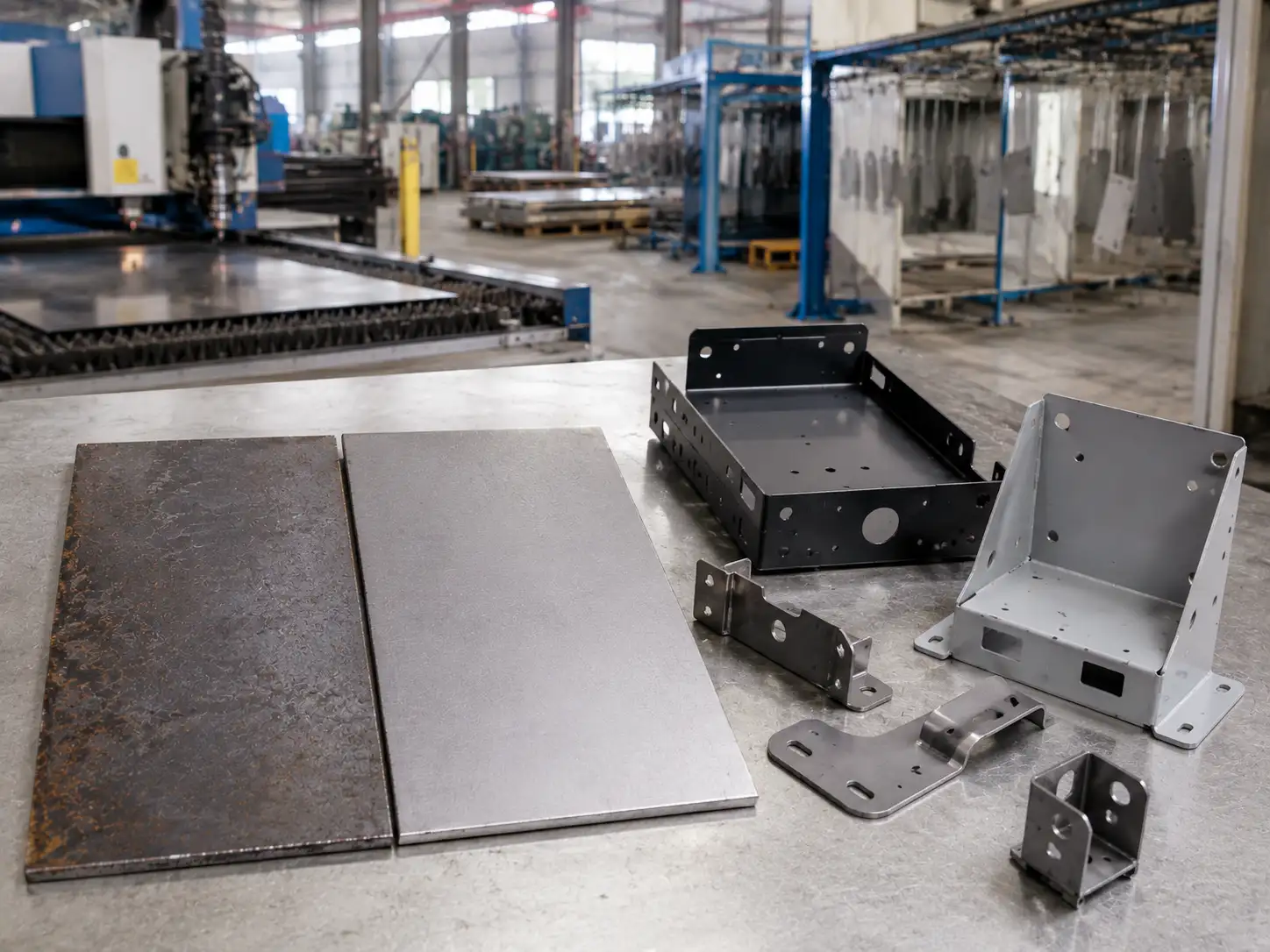
Common Surface Defects
| Defect Type | Appearance | Cause | Severity | Inspection Method |
|---|---|---|---|---|
| Mill scale peeling | Localized spots with exposed base metal | Poor adhesion of mill scale | Moderate | Visual inspection |
| Pitting | Small surface depressions | Roll wear, inclusions, or similar issues | Moderate | Visual or microscopic inspection |
| Scratches | Linear grooves | Contact damage from rollers or machinery | Minor to moderate | Visual inspection |
| Cracks | Surface splitting | Abnormal material stress or process stress | Severe | Visual inspection or non-destructive testing |
| Scabs | Raised areas on the surface | Slab defects or rolling defects | Severe | Visual inspection |
| Waviness | Undulations along the rolling direction | Unstable shape control during rolling | Moderate | Flatness measurement |
| Indentations | Localized dents | Damaged rolls or impact damage | Moderate | Visual inspection |
| Edge defects | Edge cracking or burrs | Abnormal trimming or poor strip shape | Moderate | Visual inspection |
Compatibility with Sheet Metal Fabrication Processes
With its advantages in cost, strength, and size availability, hot-rolled carbon steel sheet and plate is highly practical for sheet metal fabrication. However, different grades and surface conditions vary in how well they perform in specific processes. When selecting a material, it is important to consider the part structure, precision requirements, and any downstream surface finishing processes as a whole.
| Fabrication Process | Recommended Grades | Compatibility | Key Performance Requirements | Recommended Thickness Range |
|---|---|---|---|---|
| Bending / forming | Q235B, SPHC | High | Good ductility and moderate yield strength | 0.8–12 mm |
| Deep drawing | SPHD, SPHE | High | High elongation and low yield strength | 0.8–4 mm |
| General stamping | Q235B, SPHC | Relatively high | Stable basic formability | 0.8–6 mm |
| Welding | Q235B, Q355B | High | Good weldability and low risk of cracking | 2–30 mm |
| Laser cutting | Q235, Q355 | High | Stable cutting performance | 0.8–25 mm |
| Plasma cutting | Q235, Q355 | Relatively high | Suitable for medium-thickness plate cutting | 2–25 mm |
| Flame cutting | Q355, Q420 | Moderate | Suitable for thicker plate | 10–100 mm |
| Machining | 20#, 45# | Relatively high | Good machinability | 10–50 mm |
| Waterjet cutting | Various grades | High | No heat-affected zone | 0.8–100 mm |
Surface Finishing Processes
Surface treatment for hot-rolled carbon steel plays a critical role in improving corrosion resistance, surface consistency, and service life. It is an essential step in transforming raw material into a finished product.
| Finishing Process | Primary Purpose | Typical Applications | Main Characteristics | Cost Level |
|---|---|---|---|---|
| Mechanical descaling | Remove mill scale and rust | Standard hot-rolled steel | Simple equipment, suitable for basic surface preparation | Low |
| Pickling | Remove mill scale | Thin sheet and light-gauge plate | Cleaner surface, better for downstream processing | Medium |
| Shot blasting | Surface cleaning and improved adhesion | Medium plate, heavy plate, structural parts | Well suited for pre-paint preparation | Medium |
| Hot-dip galvanizing | Improve corrosion resistance | Outdoor parts, anti-corrosion applications | Strong corrosion protection | Medium to high |
| Electro-galvanizing | Provide a thin zinc protective layer | Thin sheet metal parts | More uniform appearance | Medium to high |
| Powder coating | Surface protection and decoration | Structural parts, cabinet components | Commonly used for indoor and outdoor equipment housings | Medium |
| Electrophoretic coating | Fine protective coating | Precision parts, appearance parts | Uniform coating, suitable for volume production | Medium to high |
| Phosphating | Pre-treatment before painting | Parts that require coating | Improves coating adhesion | Low to medium |
