
316L Molybdenum-BearingAustenitic Stainless Steel
Corrosion
Resistance
Weldability
Chloride
Resistance
316L Molybdenum-Bearing Austenitic Stainless Steel: The Basics
316L stainless steel is an ultra-low-carbon, molybdenum-bearing austenitic stainless steel. It can be understood as a derivative of 304 stainless steel and the low-carbon version within the 316 stainless steel family. By adding 2%–3% molybdenum and strictly limiting carbon content to C ≤ 0.03%, 316L achieves improved corrosion resistance.
Why is 316L described as a molybdenum-bearing austenitic stainless steel? Because it builds on the chromium-nickel system by adding molybdenum, which improves the material’s resistance to pitting and crevice corrosion. The “L” stands for low carbon, meaning the maximum carbon content is tightly controlled at ≤ 0.03%, which helps reduce risks associated with welding.
The development path of this material family can be viewed as 304 → 316 → 316L. Although all three are austenitic stainless steels, they differ clearly in terms of where and how they are best used.
The Core Material Properties of 316L
What makes 316L especially valued is its corrosion resistance, which is one of the main reasons it is so widely used in engineering applications. That said, corrosion resistance is only its standout feature. Its real strength lies in its overall balance across multiple performance areas.
Standards and Common Grade Designations for 316L
On engineering drawings, purchase orders, and material certificates, 316L may appear under different names or designation systems. For that reason, it is worth being familiar with the common standards to make sure the material being purchased is actually correct.
| Standard System | Grade / Number | Common Designation | Notes |
|---|---|---|---|
| ASTM / UNS | UNS S31603 | 316L, S31603, ASTM 316L | The most widely used system. Plate is typically specified under A240, while pipe is commonly covered by A312. |
| Europe | Werkstoff-Nr. 1.4404 | EN 1.4404, X2CrNiMo17-12-2 | European standard; elemental limits may be stricter in some cases. |
| China GB | 022Cr17Ni12Mo2 | 316L, S31603, 022Cr17Ni12Mo2 | New Chinese grade designation; the unified code system aligns with UNS. |
| Japan JIS | SUS316L | SUS316L, JIS 316L | Japanese standard; composition is broadly consistent with ASTM. |
| UK BS | 316S31 / 316S16 | 316S31 (roughly equivalent to 1.4404) | British standard, now gradually being replaced by EN standards. |
Processing Performance of 316L in Sheet Metal Fabrication
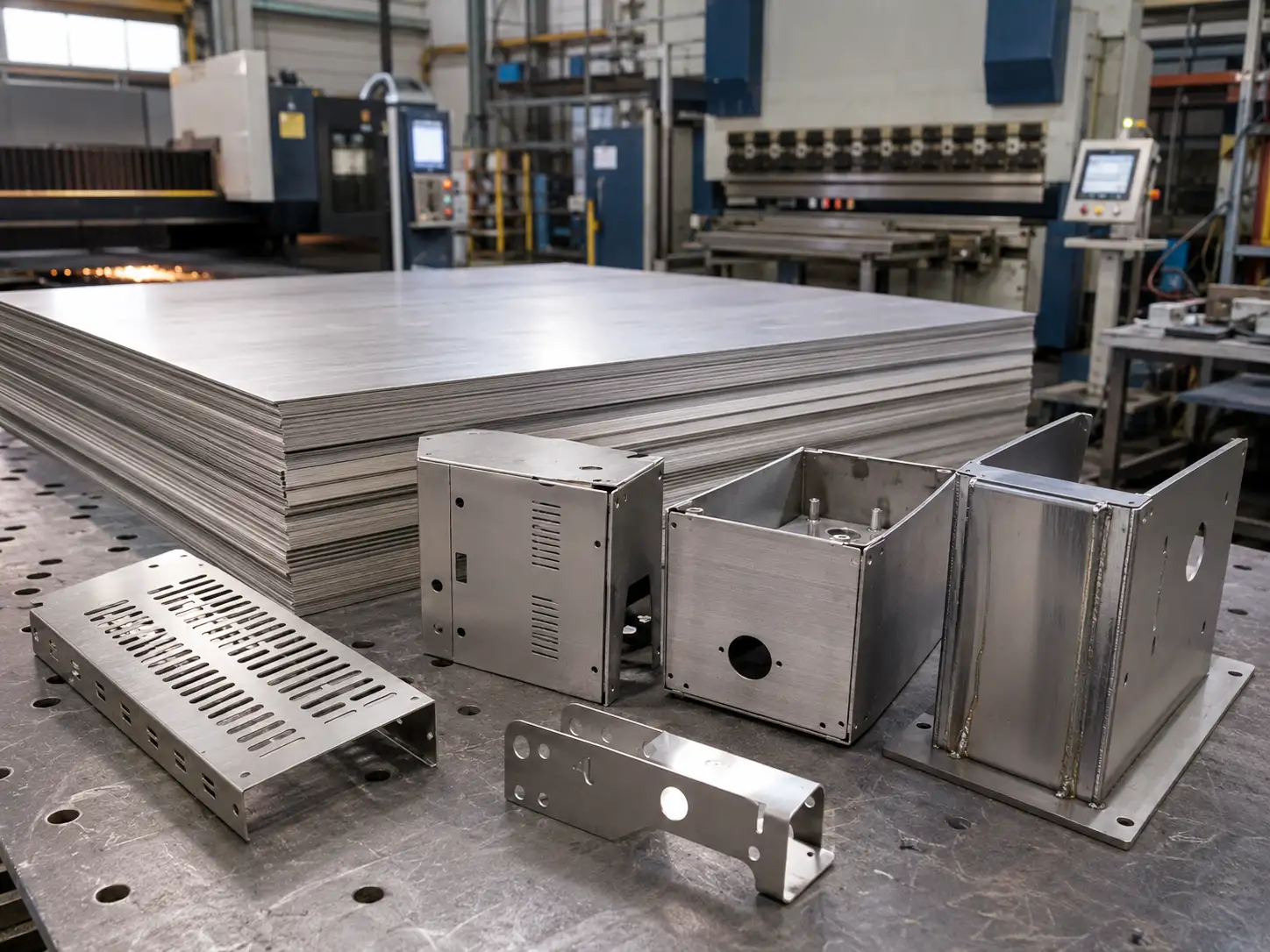
In metal fabrication, the processing behavior of 316L has a direct impact on both production quality and efficiency. Although 316L offers good manufacturability, it requires tighter process control than more commonly used materials such as 304 stainless steel. Different operations call for different control measures. At this stage, the focus shifts from material data on paper to what actually happens on the shop floor.
Common 316L Processing Steps and Key Control Points
| Process | 316L Processing Characteristics | Key Control Points |
|---|---|---|
| Laser Cutting | 316L cuts cleanly but requires careful control of heat input and edge oxidation. | Use suitable cutting parameters and assist gas according to the required edge quality; protect visible surfaces from scratches. |
| Bending | 316L has stronger springback than mild steel and work-hardens during forming. | Allow for springback, use an appropriate bend radius, and avoid excessively tight bends that may increase cracking risk. |
| Stamping / Forming | Good ductility makes 316L suitable for forming, but work hardening and galling can occur during repeated deformation. | Use suitable lubrication, controlled forming steps, and clean tooling surfaces. |
| Welding | 316L has good weldability and is commonly processed by TIG, MIG, and laser welding. | Control heat input and distortion, maintain joint cleanliness, and remove weld discoloration when corrosion resistance is important. |
| Grinding & Finishing | Surface contamination or embedded carbon steel particles can reduce corrosion performance. | Use dedicated stainless-steel tools and abrasives, and avoid cross-contamination from carbon steel processing. |
| Pickling / Passivation | Welding and thermal processing can disturb the protective surface condition. | Use appropriate post-weld cleaning, pickling, or passivation when required by the application and specification. |
The main challenge in 316L fabrication is not whether the material can be processed, but how well heat input, work hardening, surface protection, and contamination are controlled throughout production.
Common Application Scenarios for 316L and the Logic Behind Its Use
316L is widely used across many industries, including food processing, pharmaceuticals, laboratories, chemical processing, medical equipment, and a wide range of welded vessels and fabricated assemblies. These industries do not choose 316L simply because it is seen as a premium material, but because each application has its own priorities when it comes to material selection. In essence, material selection is about reducing the risk of failure under specific service conditions.
Typical 316L Applications and Why It Is Chosen
| Application | Typical Requirements | Why 316L Is Chosen | Additional Points to Confirm |
|---|---|---|---|
| Food processing equipment | Non-toxic, easy to clean, corrosion-resistant, suitable for CIP/SIP | Smooth surface, good resistance to mild acids and alkalis, and strong post-weld corrosion resistance | Type of food media, cleaning process, and whether FDA or NSF certification is required |
| Medical and pharmaceutical equipment | Biocompatibility, high cleanliness, sterilization resistance | Good biocompatibility, surface finish can reach Ra ≤ 0.4 μm, and suitable for high-temperature sterilization | Whether implant-grade material is required, and compliance with regulations such as FDA or USP |
| Water treatment and chemical equipment | Resistance to chloride pitting, acids, and alkalis | Molybdenum improves chloride resistance and offers good performance in a range of chemical media | Media concentration and temperature, and whether a higher-grade corrosion-resistant alloy is needed |
| Coastal facilities and equipment | Salt spray resistance, marine atmospheric corrosion resistance | Offers 3-5 times the salt spray resistance of 304 in many applications | Whether the part will be directly immersed in seawater, service temperature, and maintenance interval |
| Welded enclosures and structural fabrications | Post-weld corrosion resistance, good formability | The low-carbon design helps prevent intergranular corrosion, while maintaining good formability | Welding procedure qualification and compliance with pressure vessel or structural codes |
| Laboratory equipment | Resistance to chemical reagents, easy cleaning | Resistant to many common chemical reagents and easy to polish | The exact reagents involved, and whether a more specialized corrosion-resistant material is required |
Note: In practice, material selection is not based on performance match alone. Other factors also matter, including cost, availability, and processing difficulty. In most cases, 316L costs around 20-30% more than 304, but from a full life-cycle perspective, 316L often offers a longer service life and may provide better long-term value.
304, 316, 316L, and duplex stainless steels each have a clearly defined performance range. A proper understanding of their differences makes it much easier to select the most suitable material for a given application.
Material Selection Comparison: 304 / 316 / 316L / Duplex Stainless Steel
| Material | Corrosion Resistance | Weldability | Formability | Relative Cost | Best-Suited Project Types |
|---|---|---|---|---|---|
| 304 | Suitable for general environments and mild corrosion | Good, though sensitization may occur after welding | Excellent | Baseline (100%) | Indoor equipment, freshwater systems, food processing in non-aggressive environments, architectural decoration |
| 316 | Better corrosion resistance than 304, with molybdenum added | Good; thicker sections may require post-weld heat treatment | Excellent | About 1.2× that of 304 | High-temperature equipment, non-welded corrosion-resistant parts, thin-wall welded structures |
| 316L | Excellent pitting resistance and chloride resistance | Excellent, with no post-weld heat treatment required in many cases | Excellent | About 1.3-1.5× that of 304 | Welded structures, marine engineering, chemical equipment, food and pharmaceutical sanitary equipment |
| Duplex 2205 | Excellent resistance to pitting and stress corrosion cracking | Usable, but requires tighter process control | Moderate, with stronger work hardening tendency | About 1.8-2× that of 304 | Seawater desalination, high-pressure piping, aggressive chemical service, and lightweight structural design |
What Else Should Purchasing and Engineering Confirm When Selecting 316L for a Project?
Once 316L stainless steel has been chosen as the raw material for a project, it may seem as though the main decision has already been made. In reality, however, the work is not finished yet. Even after 316L has been specified, several details still need to be clearly defined in the purchasing documents and technical agreement to ensure the final product performs as intended and avoids unnecessary problems.
316L Project Material Selection Checklist
| Item to Confirm | Why It Matters | Potential Problems If Overlooked |
|---|---|---|
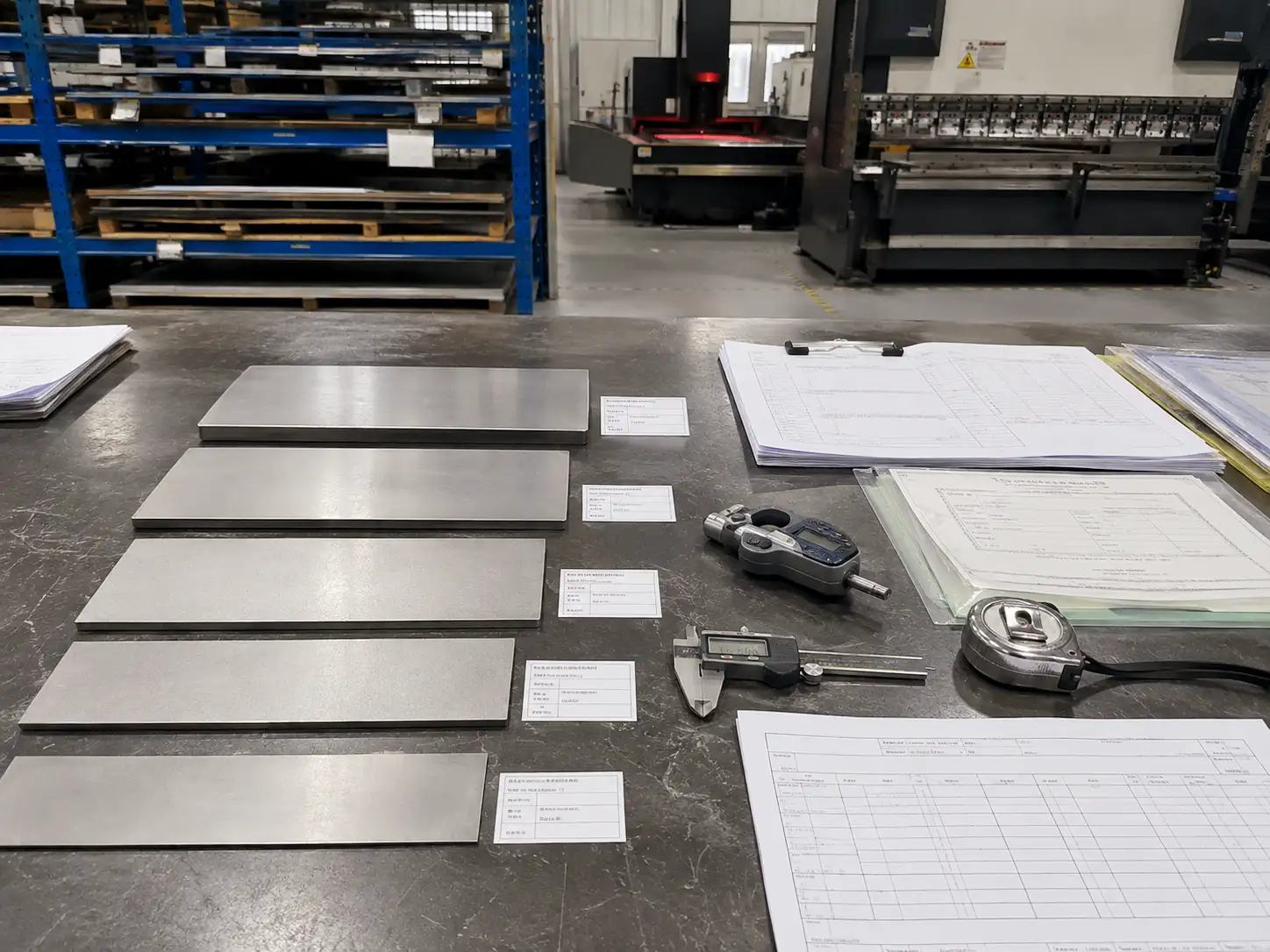
| Grade + standard + delivery condition | Different standards and delivery conditions can lead to significant differences in material performance | Material may fail to meet requirements, leading to welding issues or in-service failure |
| Sheet thickness and surface finish | These directly affect manufacturability, cost, and appearance | Processing difficulties, unacceptable appearance, or insufficient corrosion resistance |
| Post-weld pickling and passivation | The weld and heat-affected zone are more vulnerable to corrosion | Pitting near the weld, intergranular corrosion, or early leakage |
| Service environment | Chlorides, crevices, and temperature fluctuations can accelerate corrosion | Material failure within the design life, or even safety-related incidents |
| Application-specific priorities | Cosmetic parts, structural parts, and welded parts each have different requirements | Critical performance may fall short, affecting function or safety |
| Supplier qualifications | Helps ensure material traceability and batch-to-batch consistency | Quality variation, lack of traceability, and unclear accountability |
| Completeness of material certification | Confirms that the material complies with the required standards | Non-compliant material, failed inspection, rework, or scrap |
