
Complete Guide to 201 Low-Nickel Austenitic Stainless Steel (200 Series)
Lower nickel content
reduces material cost
Excellent for typical
sheet metal forming
Suitable
Performs well in dry
indoor environments
Type 201 Low-Nickel Austenitic Stainless Steel (200 Series): Basic Knowledge
201 stainless steel is a low-nickel austenitic stainless steel in the 200 series. It was developed in a specific historical context as a material with a clear substitution purpose. First introduced in the 1950s, it was designed to reduce nickel consumption in response to nickel shortages, using manganese to partially replace nickel and lessen reliance on imported nickel.
Why is it classified as part of the 200 series? The answer mainly lies in its alloy design concept. In the global market, stainless steels are commonly grouped into the 200 series and the 300 series. One of the most familiar 300-series grades is 304, the classic chromium-nickel austenitic stainless steel. The 200 series, by contrast, reduces nickel content through the addition of manganese and nitrogen while still maintaining an austenitic structure. That is why 201 is regarded as one of the most representative grades in the 200 series.
Why is it called a “low-nickel austenitic stainless steel”? Because low nickel content is its defining characteristic. Compared with the widely used 304 stainless steel, 201 typically contains only about 3.5%–5.5% nickel, while its manganese content is increased to around 5.5%–7.5%.
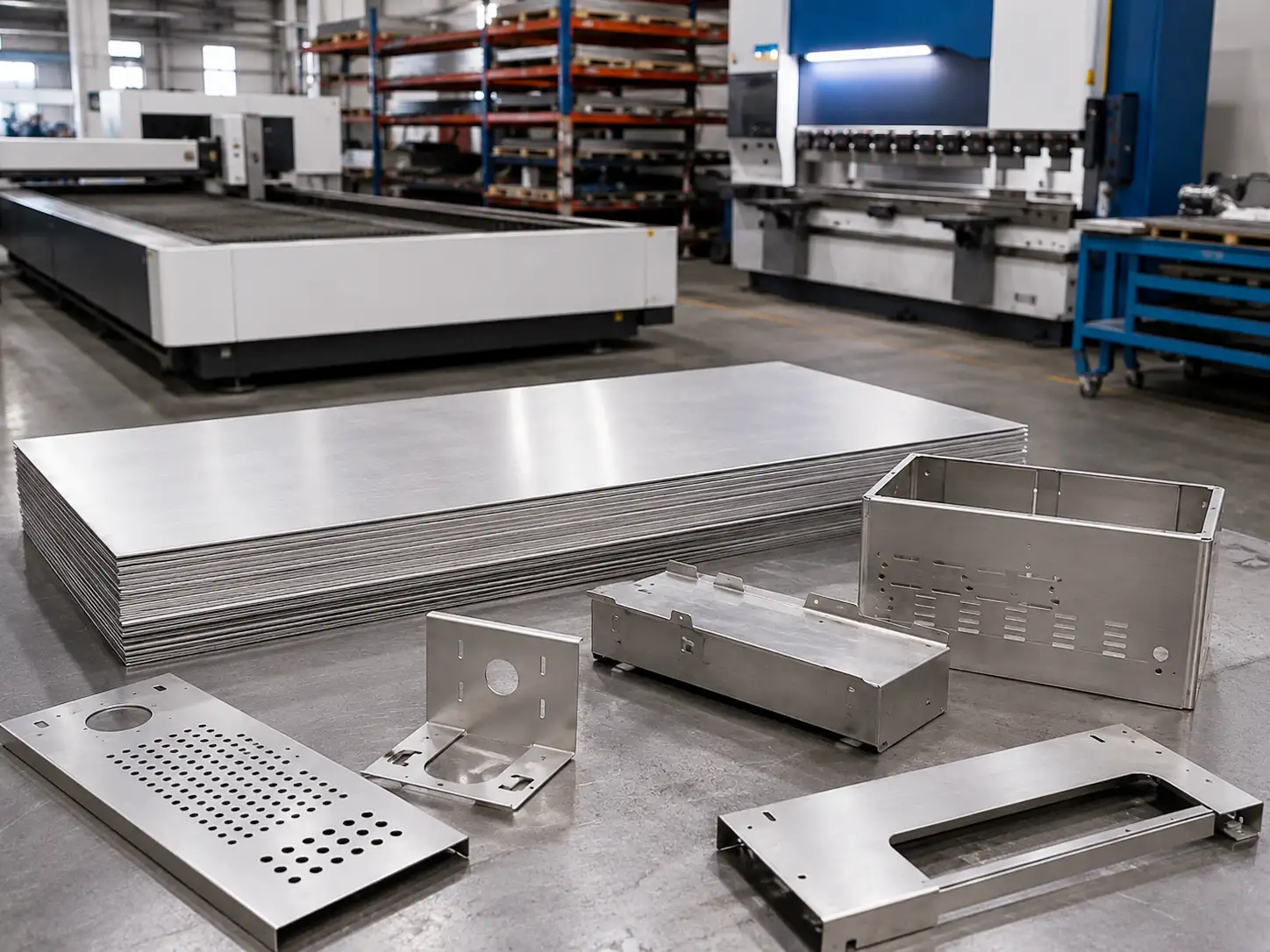
Main Performance Characteristics of 201 Low-Nickel Austenitic Stainless Steel
From an engineering point of view, the real-world performance of 201 can be summed up quite simply: it offers strength, appearance, and cost advantages, but it is less forgiving than 304 when the service environment becomes more demanding.
Standards, Grade Designations, and Market Terminology for 201 Low-Nickel Austenitic Stainless Steel
When purchasing 201 stainless steel or researching related information, you will often come across different names and designations. Different countries use different grade systems, and in the market, various commercial labels are also used to distinguish one version from another.
| Standard / System | Common Designation | Notes |
|---|---|---|
| ASTM / AISI / UNS | 201 / S20100 | Common designation in North America |
| EN | 1.4372 / X12CrMnNiN17-7-5 | Common European equivalent |
| GB/T 20878 | 12Cr17Mn6Ni5N | One of the common Chinese equivalents |
| Asian trade documents / market usage | J1 / J2 / J3 / J4 / J5 | Mostly commercial grading terms, not unified international standards |
Composition Characteristics and Alloy Design Logic of 201 Low-Nickel Austenitic Stainless Steel
Core Design Concept: Using Manganese and Nitrogen to Stabilize Austenite
Austenitic stainless steels require austenite-stabilizing elements to maintain their crystal structure. In 304, this role is mainly played by nickel. In 201, however, part of that function is taken over by manganese and nitrogen. More specifically:
- Manganese helps reduce the cost of forming the austenitic structure and, within a certain range, also contributes to austenite stability.
- Nitrogen is a highly effective austenite stabilizer, and even a small addition can significantly increase strength.
- Although carbon is not present at a high level in 201, it is also one of the elements that helps stabilize austenite.
Why This Matters for Cost Control
Nickel is one of the most expensive alloying elements in stainless steel, while manganese is far less costly. By lowering the nickel content, 201 can be produced at a more controlled cost. When nickel prices fluctuate sharply, this cost advantage becomes even more apparent. For projects that are sensitive to material cost but still require a certain level of performance, 201 can be a very attractive option.
Typical Composition Comparison: 201 vs. 304
| Grade | Chromium (Cr) | Nickel (Ni) | Manganese (Mn) | Carbon (C) | Nitrogen (N) | Brief Description |
|---|---|---|---|---|---|---|
| 201 | 16–18% | 3.5–5.5% | 5.5–7.5% | ≤0.15% | ≤0.25% | Low-nickel design, using manganese and nitrogen to stabilize the austenitic structure |
| 304 | 18–20% | 8–10.5% | ≤2% | ≤0.08% | ≤0.1% | Traditional austenitic design with better corrosion resistance |
Fabrication Performance of 201 Low-Nickel Austenitic Stainless Steel in Sheet Metal Processing
For those planning to fabricate with 201, its behavior during processing is understandably one of the main concerns.
Compatibility of 201 Stainless Steel with Common Fabrication Processes
| Fabrication Process | Suitability | Notes |
|---|---|---|
| Laser cutting | ★★★★★ | Good cut quality; slight edge hardening may occur |
| Stamping / forming | ★★★★☆ | Strong work-hardening tendency; cracking risk should be evaluated for deep drawing |
| Bending | ★★★★☆ | Slightly higher springback; a larger bend radius is recommended |
| TIG / MIG welding | ★★★★☆ | Good weld quality; the heat-affected zone may require post-treatment |
| Resistance spot welding | ★★★★☆ | Suitable; some discoloration may occur around the weld area |
| Mechanical polishing | ★★★★★ | Good compatibility; finish can be similar to 304 |
| Brushing | ★★★★★ | One of the most common surface finishes |
| Pickling / passivation | ★★★★☆ | Feasible, but uniformity and safe handling need attention |
201 cannot fully replace 304, but in the right applications, it can offer a more balanced cost solution. For interior decorative parts, general enclosure components, and cost-sensitive non-critical structural parts, 201 is still worth considering.
| Application Type | Suitability | Notes |
|---|---|---|
| Interior decoration | ✅ Recommended | Elevator interiors, ceilings, screens, and similar applications |
| General furniture | ✅ Recommended | Bookshelves, storage racks, and other non-humid indoor uses |
| Appliance housings | ✅ Recommended (in some cases) | Back panels, bases, and other non-critical parts |
| Outdoor architectural decoration | ⚠️ Use with caution | May be considered in dry regions; not recommended for humid coastal areas |
| Kitchen sinks | ⚠️ Limited suitability | Acceptable for lower-end products; 304 is preferred for higher-end applications |
| Coastal outdoor facilities | ❌ Not recommended | Salt spray corrosion risk is too high |
| Food processing equipment | ❌ Not recommended | Must comply with food safety standards |
| Medical devices | ❌ Not recommended | Medical-grade material requirements apply |
| Chemical vessels / piping | ❌ Not recommended | More aggressive media require higher-grade materials |
| Swimming pool facilities | ❌ Not recommended | Not suitable for high-chloride, high-humidity environments |
How to Choose Between 201 Low-Nickel Austenitic Stainless Steel and 304 Stainless Steel
To be honest, price is the biggest attraction of 201. In most cases, the market price of 201 is about 20%–50% lower than that of 304. But when selecting materials for a project, price should never be the only factor. The service environment, expected lifespan, appearance requirements, budget, and fabrication method all need to be considered together.
201 vs. 304 Material Selection Comparison
| Comparison Item | 201 | 304 | Selection Guidance |
|---|---|---|---|
| Cost logic | Better suited to budget-sensitive projects | Material cost is usually higher | If budget is the priority, 201 can be evaluated first |
| Corrosion margin | Moderate | More stable and more versatile | For humid or salt spray environments, 304 is the safer choice |
| Cold work hardening | More pronounced | Relatively milder | 201 requires more careful evaluation for complex forming |
| Weldability | Weldable, but with less processing margin | More forgiving | If welding is a major part of the project, 304 / 304L is usually preferred |
| Long-term appearance stability | Depends on environment and post-treatment | Usually more stable | If long-term appearance matters, 304 is generally the better option |
| Typical applications | Indoor use, mild environments, cost-reduction projects | General-purpose environments and higher-performance applications | Do not look only at unit price; consider the full service life and operating conditions |
What Should Be Confirmed When Purchasing 201 Low-Nickel Austenitic Stainless Steel?
Once the material direction has been defined, the procurement stage becomes just as important. The 201 stainless steel market can be somewhat inconsistent, and materials sold under different names by different suppliers may vary noticeably in performance. That is why the following points should be clearly confirmed.
Procurement Checklist for 201 Stainless Steel
| Item | What Needs to Be Confirmed | Impact on Cost / Quality / Lead Time |
|---|---|---|
| Standard system | ASTM, EN, GB, or customer-specified standard | Determines whether the material definition is clear and consistent |
| Sheet thickness and tolerance | Nominal thickness, allowable deviation, flatness | Affects bending accuracy and assembly consistency |
| Surface finish | 2B, BA, HL, etc. | Affects appearance and the cost of downstream finishing |
| Processing requirements | Whether welding, deep drawing, or continuous bending is required | Affects process suitability and sampling approach |
| Service environment | Indoor, outdoor, coastal, humid, salt spray, etc. | Determines whether 201 is suitable at all |
| Appearance grade | Brushing direction, surface consistency, acceptable defects | Affects yield rate and rework rate |
| Material and compliance documents | Material certificate, RoHS, REACH, etc. | Affects delivery completeness and compliance |
| Batch consistency | Whether the same batch and same surface grade are required | Affects production stability in mass manufacturing |
