
T2/T3 (Pure Copper / Red Copper)
Electrical
Conductivity
Thermal
Conductivity
Formability
T2/T3 Pure Copper: The Basics
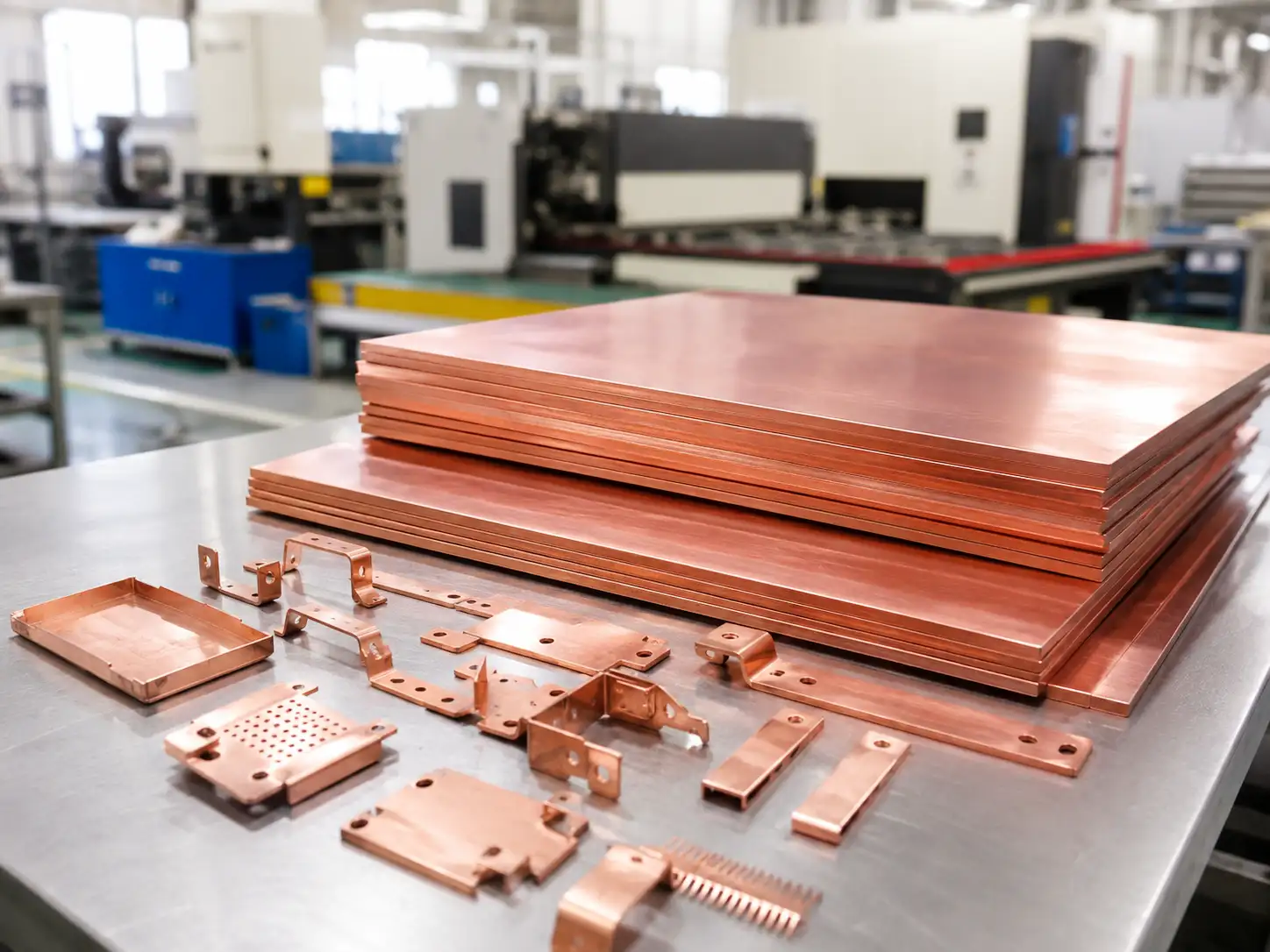
Both T2 and T3 belong to the category of commercially pure copper. In the market, they are also commonly referred to as pure copper, red copper, or purple copper. In practice, these names generally refer to the same material family, with the differences coming mainly from naming conventions and usage context.
Pure copper is an industrial copper material with a very high copper content. Because the surface develops a reddish tone after oxidation, it is often called red copper or purple copper. T2 and T3 are grade designations defined under Chinese standards for pure copper. The “T” stands for copper, while the number indicates the purity level. The smaller the number, the higher the purity.
Grade Overview
| Grade | Common Names | Material Category | Main Identification Point | Best Starting Point For |
|---|---|---|---|---|
| T2 | No. 2 pure copper, red copper, purple copper | Commercially pure copper | Copper content ≥ 99.90%, excellent electrical and thermal conductivity | Buyers sourcing parts with clear conductivity or heat transfer requirements |
| T3 | No. 3 pure copper, red copper | Commercially pure copper | Copper content ≥ 99.70%, more cost-effective | Structural parts, general conductive parts, and cost-sensitive projects |
Differences Between T2 and T3 Pure Copper
The main difference between T2 and T3 lies in their purity level, which directly affects how they perform in real applications.
T2 vs. T3 Comparison
| Item | T2 | T3 | Impact on Purchasing Decisions |
|---|---|---|---|
| Chemical composition grade | Cu+Ag ≥ 99.90% | Cu+Ag ≥ 99.70% | The clearer the conductivity or thermal target, the more important it is to confirm T2 first |
| Typical application tendency | Current-carrying parts, terminals, busbars, heat dissipation parts | General pure copper parts, parts that require performance limits to be confirmed first | If the drawing only says “pure copper,” suppliers will usually ask about the intended use |
| Fit for conductivity requirements | More often treated as the preferred option in cross-standard projects | Better confirmed against actual test data or project requirements first | It is best to state the target conductivity directly in the RFQ |
| Processing focus | Formability, edge quality, surface protection | Formability, edge quality, surface protection | Both grades should be evaluated together with temper and thickness |
| Purchasing notes | Often corresponds to C11000 / C1100 | Recommended to confirm composition, temper, and end use item by item | The more complete the drawing information, the faster and more reliable the quotation |
How to Evaluate the Key Specifications of T2/T3 Pure Copper
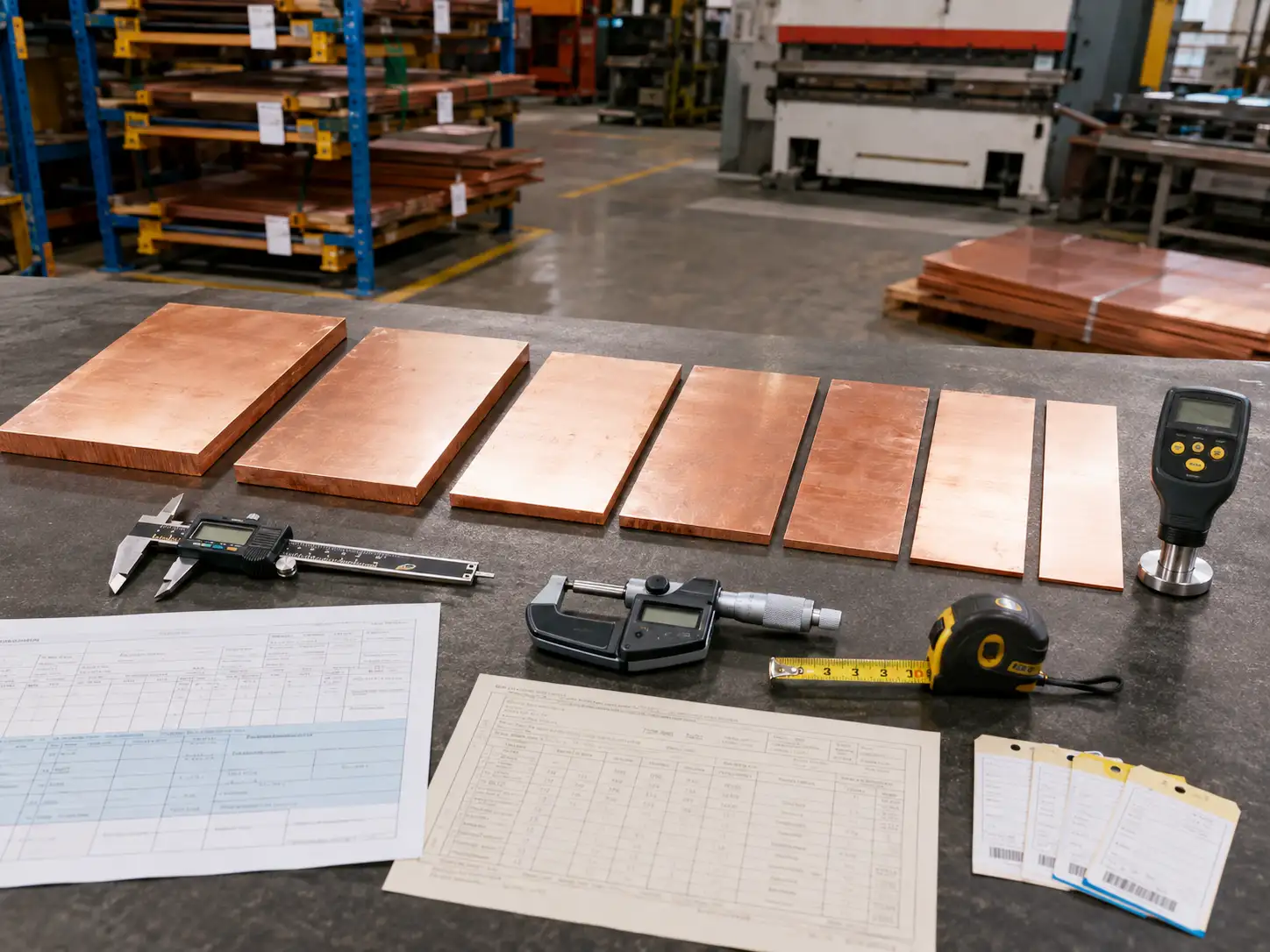
Chemical composition determines the material’s core characteristics and performance ceiling. For pure copper, copper content is the key indicator, while impurity control affects both conductivity and fabrication performance. Bismuth and lead can impair hot-working performance. Antimony and arsenic can reduce electrical conductivity. Excessive oxygen content can also create a risk of hydrogen embrittlement in reducing atmospheres. These values help you confirm whether the material meets the baseline requirements of your project.
Chemical Composition
| Grade | Cu+Ag | Key Impurity Limits | Notes |
|---|---|---|---|
| T2 | ≥ 99.90% | Bi ≤ 0.001%, Sb ≤ 0.002%, As ≤ 0.002%, Fe ≤ 0.005%, Pb ≤ 0.005%, S ≤ 0.005% | Higher purity grade, better suited for projects with demanding electrical or thermal conductivity requirements |
| T3 | ≥ 99.70% | Bi ≤ 0.002%, Pb ≤ 0.01% | If the drawing specifies T3, it is best to define the temper and intended application at the same time |
Physical Properties
| Property | Typical Value or Range | What It Means for Sheet Metal Parts |
|---|---|---|
| Electrical conductivity | T2 in annealed temper is commonly referenced at close to 100% IACS. For T3 and other tempers, actual values should be confirmed against the material certificate or test data. | Useful for initial material selection for current-carrying parts, contact parts, and conductive connectors |
| Thermal conductivity | Pure copper offers very high thermal conductivity. The exact value should be confirmed based on grade, temper, and test method. | Suitable for heat sinks, thermal base plates, and heat spreaders |
| Density | 8.9 to 8.92 g/cm³ | Makes it easier to estimate part weight, blank weight, and packaging requirements in advance |
| Melting point | Approx. 1083°C | Heat input should be considered early when planning welding, brazing, or heat treatment |
| Coefficient of thermal expansion | 17.6 to 17.7 × 10⁻⁶ /K | Dimensional change should be accounted for in assembly tolerances, elevated-temperature service, and thermal cycling conditions |
Mechanical Properties by Temper
| Temper | Tensile Strength | Yield Strength | Elongation | Bendability | Suitable Part Types |
|---|---|---|---|---|---|
| O / Soft | 179 to 262 MPa | Approx. 69 MPa | Approx. 35% | Well suited to small-radius bending and deep drawing | Complex bent parts, drawn parts, and conductive parts with more intricate geometries |
| H02 / 1/2 Hard | 255 to 317 MPa | Approx. 255 MPa | Approx. 20% | Suitable for general bending | Terminals, support tabs, and parts that need a balance of strength and formability |
| H04 / Hard | 297 to 359 MPa | Approx. 310 MPa | Approx. 8% | Better suited to light forming and flat parts | Flat conductive parts and sheet components with higher rigidity requirements |
Is T2/T3 Pure Copper Suitable for Sheet Metal Parts?
Blanking and Punching
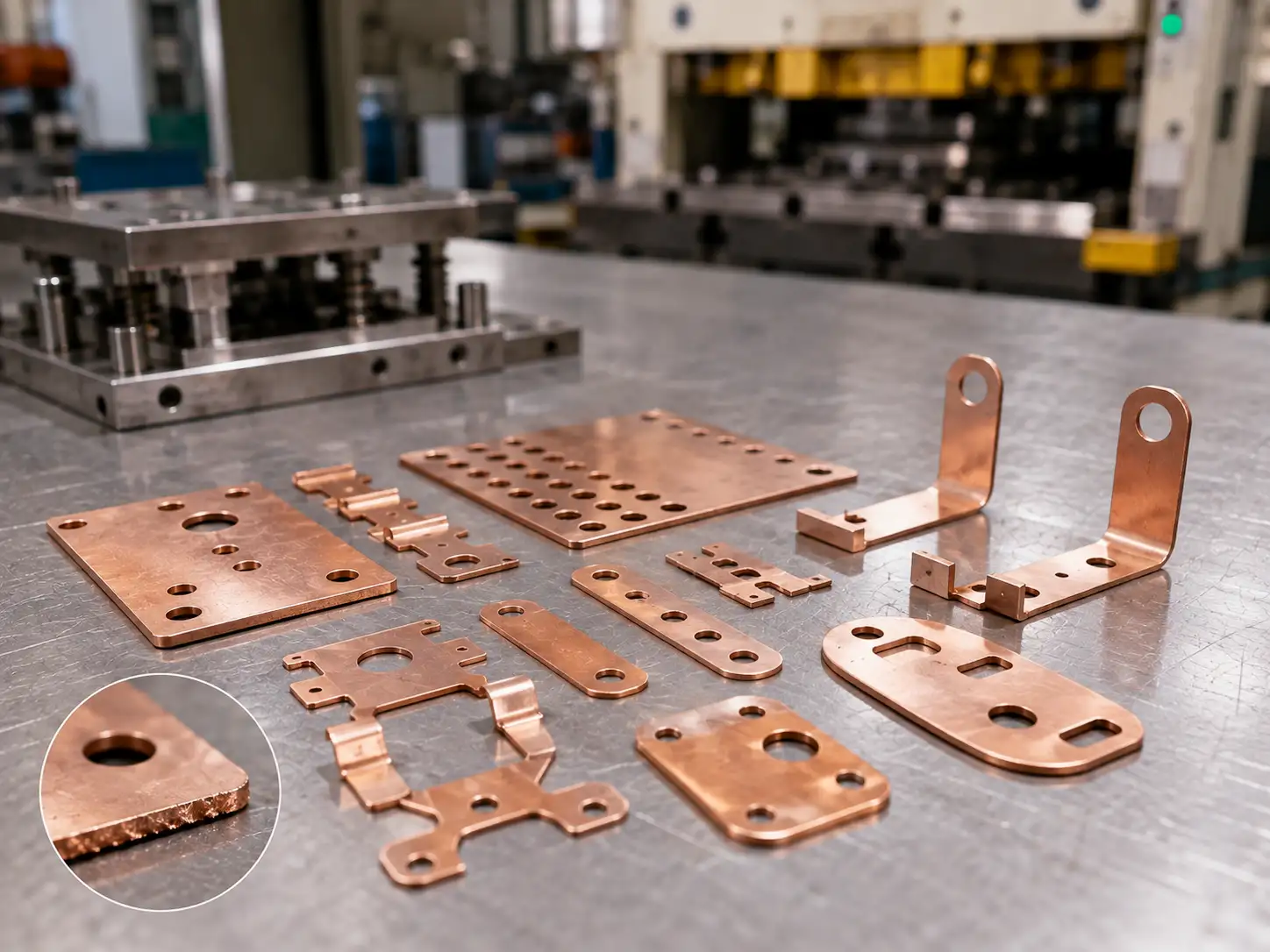
Pure copper is relatively soft, so burrs can form easily during stamping and laser cutting. In high-speed stamping, die clearance control and punch edge sharpness are especially important. Its high thermal conductivity also allows heat to dissipate quickly during cutting, which means laser cutting requires more carefully tuned process parameters.
Bending and Forming
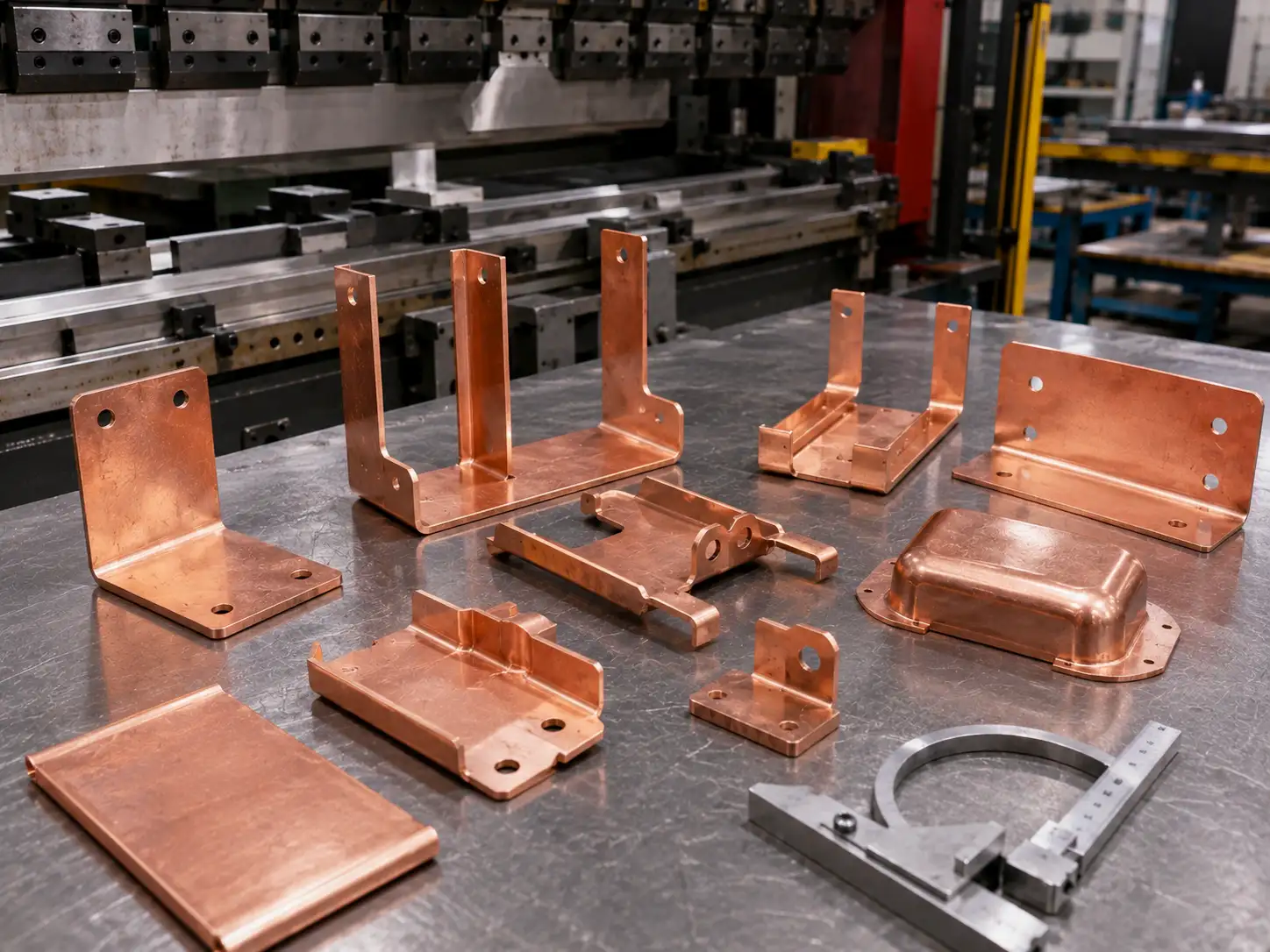
Pure copper has excellent cold-working properties, and bending is one of its main forming methods. However, bend performance is strongly affected by temper, material thickness, inside bend radius, and grain direction. These factors can make a noticeable difference in the final result. During prototyping, you should confirm these details with the supplier in advance, especially when the part has tight dimensional tolerances or appearance requirements.
Welding, Brazing, and Assembly
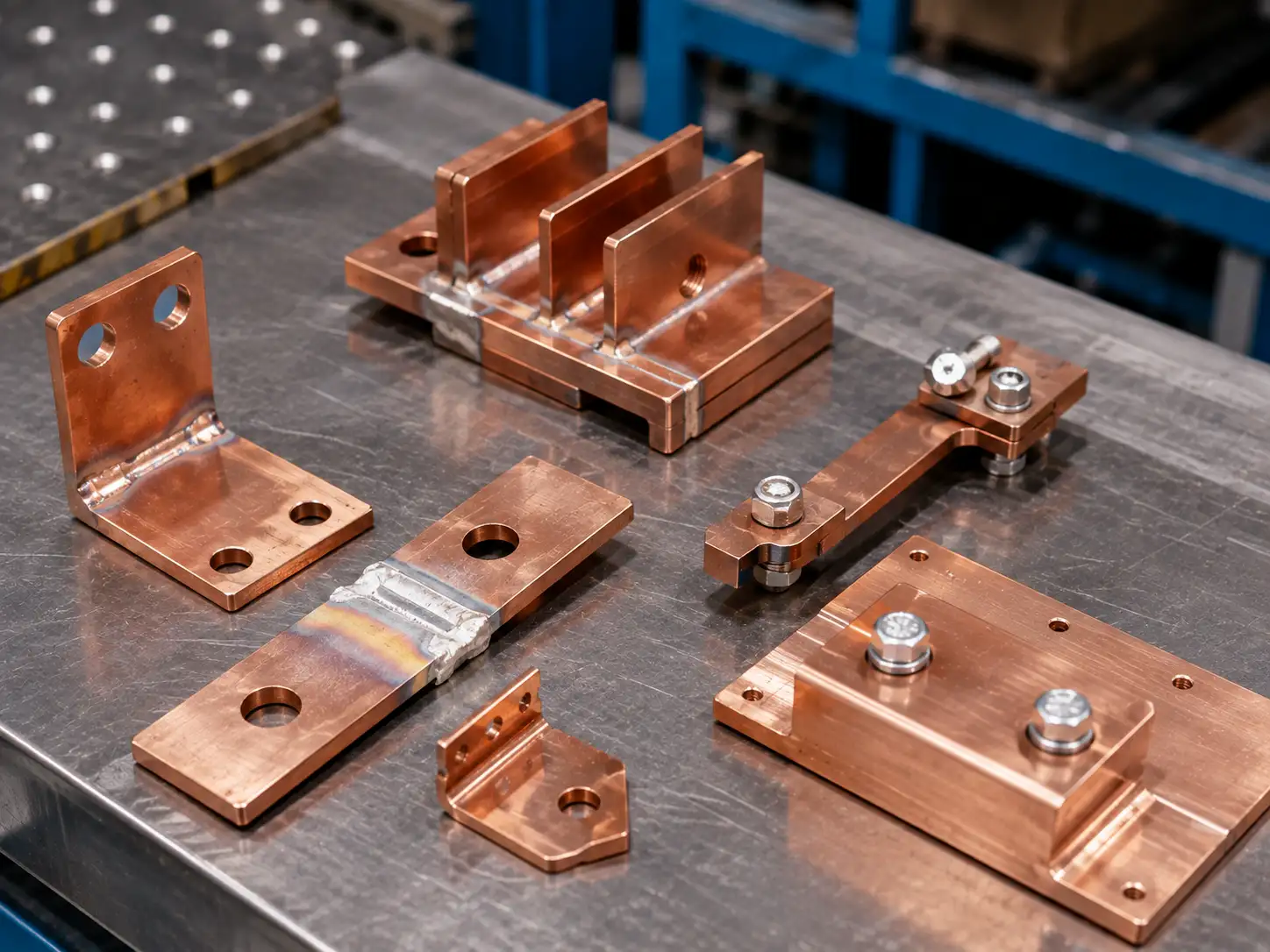
Both T2 and T3 offer good brazing and soft soldering performance. One point that requires special attention is the risk of hydrogen embrittlement in these grades, particularly with T3. They should not be annealed, welded, or otherwise processed in a reducing atmosphere at elevated temperatures, especially above 370°C.
Appearance and Surface Protection
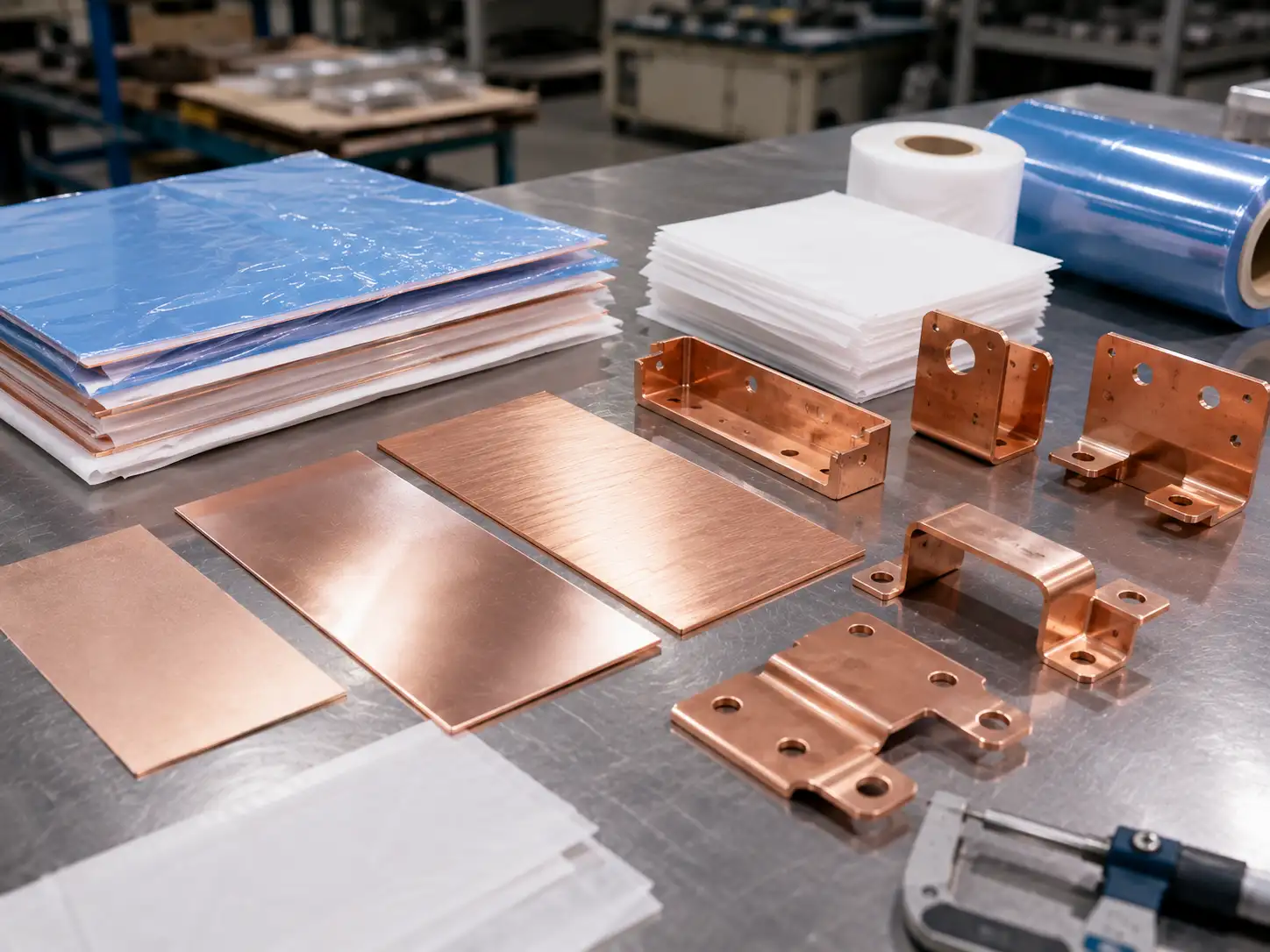
Scratches on the raw material, oxidation-related color variation, and handling damage during fabrication all need to be tightly controlled. When sourcing, it is best to define the required surface standard in advance, such as brushed or mirror finish, whether slight color variation is acceptable, and what kind of protective packaging is required, such as film protection or interleaving paper.
Sheet Metal Process Compatibility
| Process | Suitability | Main Risk Points | Design or Purchasing Recommendations |
|---|---|---|---|
| Blanking / Punching | High | Burrs, edge indentation, surface scuffing | Specify thickness, tolerance, hole-edge function, and surface protection requirements |
| Bending / Forming | High | Springback, bend cracking, grain direction effects | Specify temper, inside radius, and bend direction, and prioritize sample validation |
| Soft Soldering / Brazing | High | Heat-affected zone discoloration, local distortion | Clearly define weld area location and post-weld requirements |
| Shielded Gas Welding / Laser Welding / Resistance Welding | Medium | Narrower processing window and tighter heat input control | Confirm process feasibility with the supplier in advance |
| Surface Finishing / Plating | High | Pretreatment control and appearance consistency | Define the final appearance standard and plating target clearly |
Common Sheet Metal Applications for T2/T3 Pure Copper
In sheet metal fabrication, T2 and T3 are most commonly used for three types of parts: conductive components, thermal management components, and copper parts that need to balance appearance with function. Other applications do exist, but these three are the most typical.
Application Fit Guide
| Application | More Common Choice | Why | Information to Add When Placing an Order |
|---|---|---|---|
| Busbars, terminals, contact clips, conductive connectors | T2 | Clear high-conductivity requirement and easier communication across standards | Conductivity target, temper, hole-edge conductivity requirements, plating requirements |
| Heat sinks, thermal base plates, heat spreaders | T2 | Thermal conductivity data is more clearly established and engineering references are more widely available | Heat flow direction, flatness, thickness tolerance, downstream assembly method |
| Shielding parts, functional covers, copper parts with appearance requirements | T2 or T3 | Depends on conductivity target, appearance standard, and purchasing conditions | Surface acceptance standard, protective film method, color variation standard, packaging method |
RFQ Checklist
| Item | Information the Customer Should Provide | Why It Matters |
|---|---|---|
| Grade | T2 or T3 | Defines the material category and purity level from the start |
| Reference standard | GB/T 5231, ASTM B152, or the standard specified on the drawing | Helps the supplier work directly to the correct specification |
| Thickness, size, and quantity | Sheet thickness, flat pattern size, order volume, annual demand | Affects material utilization, process planning, and pricing structure |
| Delivery temper | Soft, half-hard, hard, or the temper specified on the drawing | Directly affects bendability, strength, and conductivity expectations |
| Electrical or thermal requirements | IACS, MS/m, temperature rise conditions, heat flow requirements | Determines the material selection and testing approach |
| Surface requirements | Protective film, brushed finish, polishing, plating, allowable color variation | Affects the process route and acceptance criteria |
| Whether the part is cosmetic | State whether the part needs to be controlled to an appearance standard | Affects scratch control, dent control, packaging, and inspection method |
| Secondary operations | Bending, welding, riveting, screen printing, plating, and so on | Affects temper selection and upstream process planning |
| Documentation requirements | Material certificate, conductivity test, dimensional report, first article report | Affects inspection cost and delivery documentation |
| Packaging requirements | Individual separation, vacuum packaging, anti-oxidation protection, pallet method | Directly affects the surface condition on arrival |
