
H62/H59 Brass
& Formability
Machinability
Resistance
H62/H59 Brass:The Basics
Both H62 and H59 belong to the category of standard brass grades for general fabrication. In metalworking, brass is a copper-zinc alloy, and it is the most widely used type within the copper-zinc alloy family.
The naming rule for standard brass is straightforward: the letter “H” stands for brass, and the number that follows indicates the copper content. For example, H62 means the copper content is about 62%, while H59 means the copper content is about 59%.
Both of these brass grades have an alpha-plus-beta dual-phase structure. Within a certain zinc-content range, copper-zinc alloys form two different phases. The alpha phase is a solid solution of zinc in copper, which gives the material good ductility. The beta phase is a solid solution based on the CuZn electron compound. It has good plasticity at elevated temperatures, while at room temperature it tends to show higher hardness.
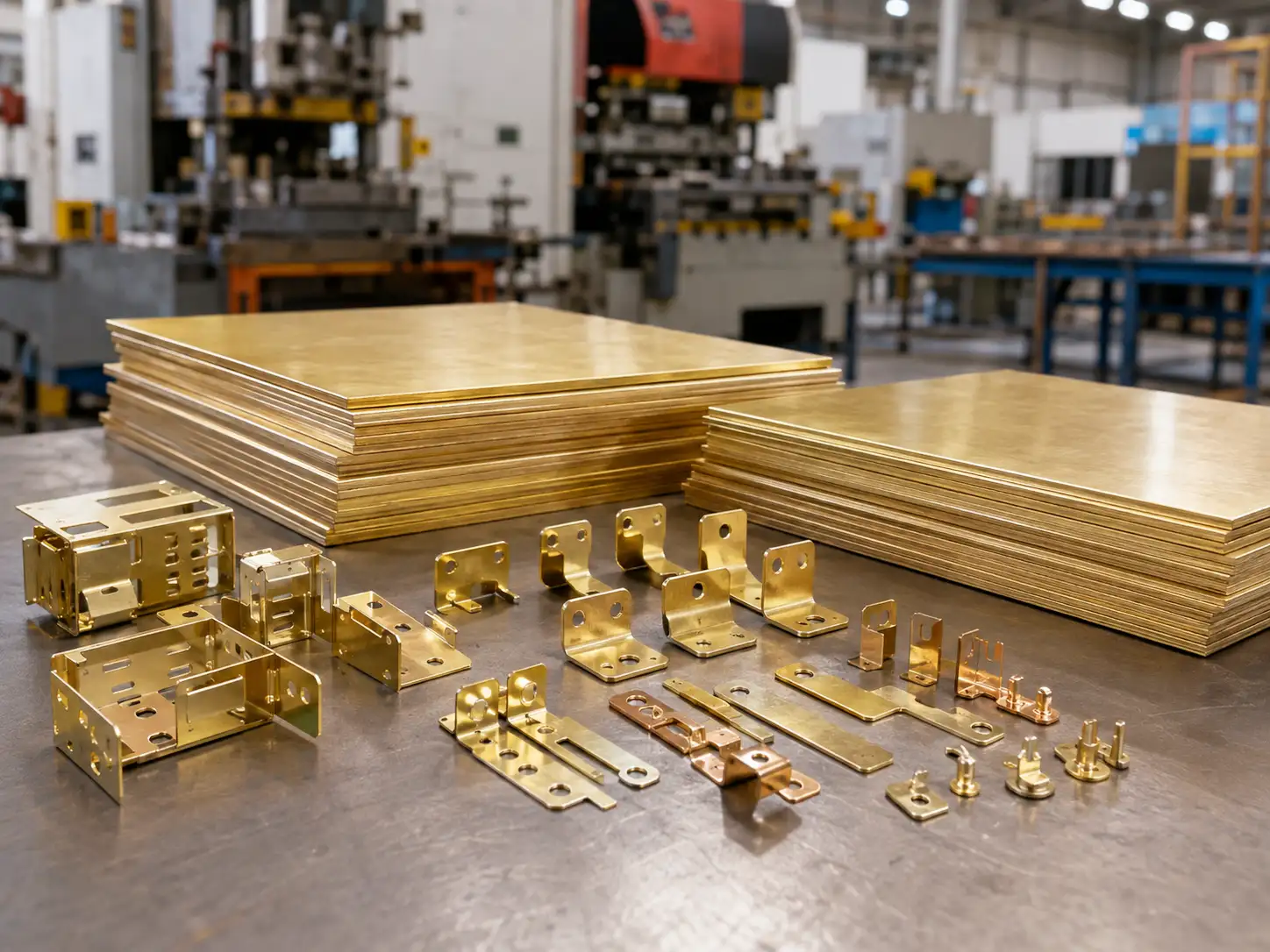
What Are the Differences Between H62 and H59 Brass?
The biggest difference between H62 and H59 comes from the change in the copper-to-zinc ratio, which directly affects how the material performs.
Material Selection Comparison
| Comparison Factor | H62 Tends Toward | H59 Tends Toward | More Suitable Project Types |
|---|---|---|---|
| Composition | Higher copper content | Higher zinc content | Start with forming requirements, then weigh strength and cost |
| Strength and hardness | Medium to high, with clear improvement depending on temper | Higher, with a stronger tendency toward increased hardness | Fasteners, hardware, and load-bearing parts are more likely to consider H59 |
| Ductility and formability | Wider cold-forming window | Better suited to hot working | Deep drawing, flanging, and complex bending are more likely to favor H62 |
| Machining behavior | Machinable, with balanced overall performance | Slightly more direct cutting response | H59 is often worth considering when tapping, slot milling, or machining makes up a large share of the process |
| Cost profile | Higher copper content, so material cost is usually higher | Usually more cost-efficient | Cost-sensitive projects are more likely to include H59 in the shortlist |
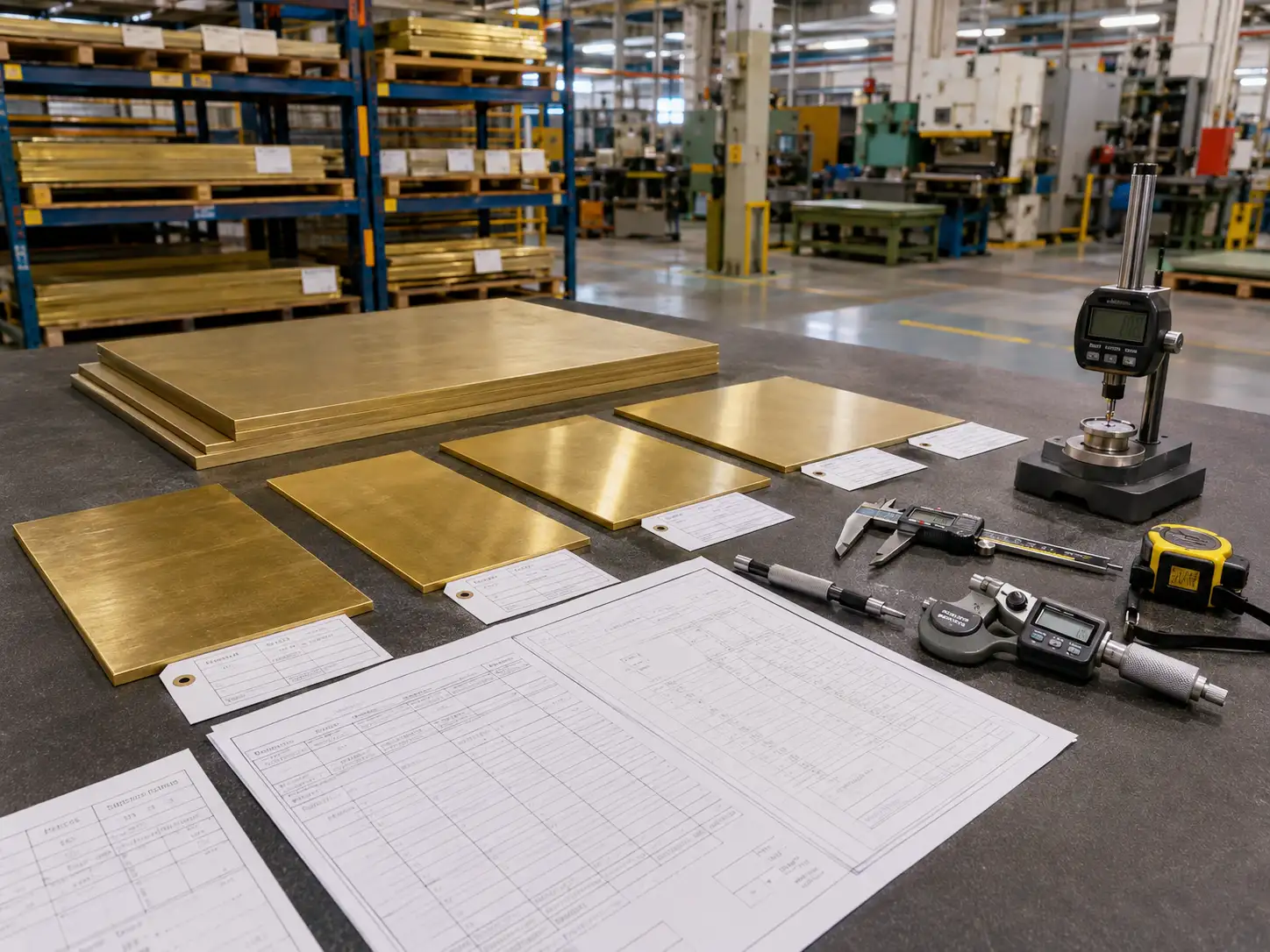
Chemical Composition
| Element | H62 Brass | H59 Brass |
|---|---|---|
| Copper (Cu) | 60.5%–63.5% | 57.0%–60.0% |
| Zinc (Zn) | Balance | Balance |
| Lead (Pb) | ≤ 0.08% | ≤ 0.5% |
| Iron (Fe) | ≤ 0.15% | ≤ 0.3% |
| Bismuth (Bi) | ≤ 0.002% | ≤ 0.003% |
| Phosphorus (P) | ≤ 0.01% | ≤ 0.01% |
| Total impurities | ≤ 0.5% | ≤ 1.0% |
Note: H59 has a higher upper limit for lead content, at around 0.5%. Lead can improve machinability, but it may also create environmental compliance concerns. If you require an environmentally compliant lead-free brass, this should be clearly specified in advance.
Common Approximate International Equivalents
| Country/Region | H62 Equivalent | H59 Equivalent |
|---|---|---|
| China (GB) | H62 | H59 |
| United States (ASTM) | C27400 | C28000 |
| Germany (DIN) | CuZn37 | CuZn40 |
| Japan (JIS) | C2800 | C2801 |
| International (ISO) | CuZn37 | CuZn40 |
| European Union (EN) | CW508L | CW507L |
Performance Properties
| Property | H62 Brass | H59 Brass |
|---|---|---|
| Density | 8.43–8.47 g/cm³ | Approx. 8.45 g/cm³ |
| Melting point | 905–930°C | Approx. 900–920°C |
| Thermal conductivity | 110–120 W/(m·K) | Approx. 105 W/(m·K) |
| Electrical conductivity | 25%–30% IACS | Approx. 28% IACS |
| Tensile strength, annealed | 300–350 MPa | 300–350 MPa |
| Tensile strength, hard temper | ≥400 MPa, can exceed 500 MPa | 400–450 MPa |
| Yield strength, annealed | Approx. 100 MPa | Approx. 120 MPa |
| Yield strength, hard temper | 200–230 MPa | 280–310 MPa |
| Elongation, annealed | ≥38% | ≥25% |
| Elongation, hard temper | ≥10% | 10%–15% |
| Brinell hardness, annealed | Approx. 55 HB | Approx. 65 HB |
| Brinell hardness, hard temper | 100–120 HB | 160–180 HB |
| Coefficient of thermal expansion | 20.6 × 10⁻⁶/°C | Approx. 20.5 × 10⁻⁶/°C |
| Elastic modulus | Approx. 100 GPa | Approx. 100 GPa |
What Sheet Metal Fabrication Processes Are H62/H59 Brass Suitable For?
Brass is one of the copper alloys that sheet metal fabricators most like to work with. It offers good workability, an attractive appearance, and, just as importantly, a cost profile that fits high-volume production well. That said, H62 and H59 do differ in performance, so their suitability can vary depending on the process.
Process Compatibility
| Process Type | H62 Performance | H59 Performance | Key Processing Considerations |
|---|---|---|---|
| Laser cutting | Suitable for precision cutting, more common in thin-gauge parts | Also suitable for precision cutting, but pierce start and heat input control are more critical | Reflectivity, thermal conductivity, heat tint on edges, and burr control |
| CNC punching / stamping | Better suited to cold stamping, flanging, and embossing | More often used for blanking and hot-forming applications | Die clearance, lubrication, and the cracking window at cut edges |
| Bending | Allows more flexibility in inside radius control | A more conservative bend radius is recommended | Grain direction, temper, springback, and bend sequence |
| Drilling / tapping / milling | Machinable, with balanced overall performance | Machining response is usually more direct | Tool sharpness, chip evacuation, and burr control |
| Soft soldering / brazing | High compatibility | High compatibility | Joint cleanliness and heat-affected-zone discoloration |
| Arc welding processes | Feasible | Feasible | Heat input, spatter, and post-weld surface finishing |
Note: Whether you choose H62 or H59, stress-relief annealing is generally recommended after cold working to reduce residual stress. A typical practice is to hold the material at 300 to 400°C for 1 to 2 hours.
Key Points for Surface Finishing and Appearance Control of H62/H59 Brass
In practice, there are four main things to watch when it comes to brass surface finishing and appearance control.
- First, surface cleanliness matters. Any residue left from fabrication can affect both the finishing result and the final appearance of the part.
- Second, oxidation and discoloration need attention. The time from raw material release to completed fabrication can be relatively long, and the longer brass is exposed to air, the more noticeable the discoloration can become. It is best to keep production moving efficiently or use appropriate protective measures.
- Third, scratches and dents must be controlled carefully. Brass is relatively soft, so any handling or transport issue can leave visible surface damage. Proper protection is essential.
- Fourth, batch consistency should be considered. Different material batches may show slight color variation, so for large-volume production, it is usually better to use material from the same batch whenever possible.
Surface Treatment Options
| Treatment Method | Typical Application | Effect | Environmental Profile | Cost |
|---|---|---|---|---|
| Natural oxidation | Internal parts, low-requirement applications | Basic protection | Excellent | Very low |
| Mechanical polishing | All brass parts | Improves gloss | Good | Medium |
| Chemical polishing | High-volume processing of complex shapes | Rapid brightening | Fair | Medium |
| Electropolishing | Precision parts with high appearance requirements | Mirror-like finish | Fair | Higher |
| Chromium-free passivation | General protection | Tarnish resistance for 24 to 72 hours | Excellent | Low |
| BTA treatment | Electronic components | Strong anti-tarnish protection | Excellent | Low |
| Nickel / chrome plating | Bathroom hardware, decorative parts | Long-term protection | Fair | High |
| Electroless nickel plating | Precision components | High corrosion resistance | Fair | Higher |
| Tin plating | Electronic soldering parts | Good solderability | Fair | Medium |
| Clear lacquer coating | Outdoor decorative parts | Long-term protection | Fair | Medium |
| VCI packaging | Storage and transportation | Temporary rust prevention | Excellent | Low |
Typical Applications
| Application Area | Typical Parts | Recommended Material | Why It Is Chosen |
|---|---|---|---|
| Mechanical fasteners | Bolts, screws, nuts | H62 preferred | Good machinability and sufficient strength |
| Structural load-bearing parts | Bushings, sleeves, flanges | H59 preferred | Higher strength and lower cost |
| Architectural hardware and decorative parts | Door locks, hinges, handles | H62 preferred | Better appearance and good workability |
| Plumbing fittings | Valves, pipe fittings, elbows | H62 preferred | Good resistance to freshwater corrosion and weldable |
| Electronic connectors | Terminals, switches, conductive strips | H62 preferred | Better conductivity and better formability |
| Radiator components | Heat dissipation fins, tubing | H62 preferred | Better thermal conductivity |
| Automotive parts | Fasteners, tubing parts | Both can be used | Selection depends on strength requirements |
| Musical instrument parts | Reeds, tuning pegs, mouthpieces | H62 preferred | Better acoustic performance |
| Decorative and artistic parts | Medals, lighting fixtures, sculptures | Both can be used | Attractive appearance |
| Hot-forged parts | Complex structural parts | H59 preferred | Excellent hot-working performance |
How Should You Choose Between H62 and H59 Brass?
Quick Selection Guide
| Requirement Type | Recommended Material | Why |
|---|---|---|
| Complex cold forming or deep drawing | H62 | Better ductility and less risk of cracking |
| Cost-sensitive projects with limited budget | H59 | Higher zinc content and lower material cost |
| High-strength structural parts | H59 | Higher strength and better wear resistance |
| High surface finish requirements | H62 | More even color and easier to polish |
| Electronics or welding applications | H62 | Slightly better conductivity and better weldability |
| Freshwater or atmospheric environments | Both can be used | Selection should be based on the full application requirements |
| Coastal or highly corrosive environments | H62 is generally the better choice | Relatively better corrosion resistance |
| Hot forging or hot extrusion | H59 | Excellent hot-working performance |
| Strict EU or environmental compliance requirements | H62 | Lower lead content |
| Standard specifications commonly used in North America | Both can be used | Clear corresponding standard grades are available |
What Information Should You Provide in an RFQ for H62/H59 Brass Parts?
The purpose of the checklist below is to help you provide all the key details up front, so suppliers can quote faster and evaluate both samples and mass production more smoothly.
RFQ Information Checklist
| Information Category | Required / Recommended | Example |
|---|---|---|
| Material grade | Required | H62, C28000, CuZn37 |
| Material temper | Required | Soft (M), hard (Y), half-hard (Y2) |
| Product form | Required | Sheet, strip, bar, tube, custom profile |
| Dimensions | Required | Thickness × width × length, diameter, wall thickness |
| Quantity | Required | 500 pcs, 2 tons, 5 tons per month |
| Chemical composition requirements | Recommended | Lead-free, low lead, special impurity limits |
| Mechanical property requirements | Recommended | Tensile strength ≥ 400 MPa, hardness ≤ 110 HB |
| Surface condition | Recommended | Polished, pickled, brushed, bright finish |
| Dimensional tolerances | Recommended | ±0.05 mm, ±3% thickness |
| Lead time requirement | Recommended | Within 3 weeks, before the end of the month, urgent order |
| Quality requirements | Recommended | Material certificate, third-party inspection report |
| Certification requirements | Recommended | RoHS, REACH, IATF 16949 |
| Application description | Recommended | Radiator component, automotive connector |
