
TA1/TA2 (Commercially Pure Titanium)
Corrosion Resistance
(High Strength-to-Weight)
Formability
Weldability
TA1/TA2 (Commercially Pure Titanium): Basics
Commercially pure titanium refers to industrial titanium with a titanium content above 99%. It is divided into several grades based on impurity content and mechanical properties. Under the Chinese national standard system, TA1 and TA2 are the two most commonly used grades of commercially pure titanium, corresponding respectively to ASTM Grade 1 and Grade 2.
Both TA1 and TA2 belong to the alpha titanium family. They are titanium-based materials whose strength, ductility, and processing behavior are defined by controlling the levels of interstitial and impurity elements such as oxygen, iron, carbon, nitrogen, and hydrogen.
Titanium has a density of about 4.5 g/cm³, which is only about 57% that of steel.
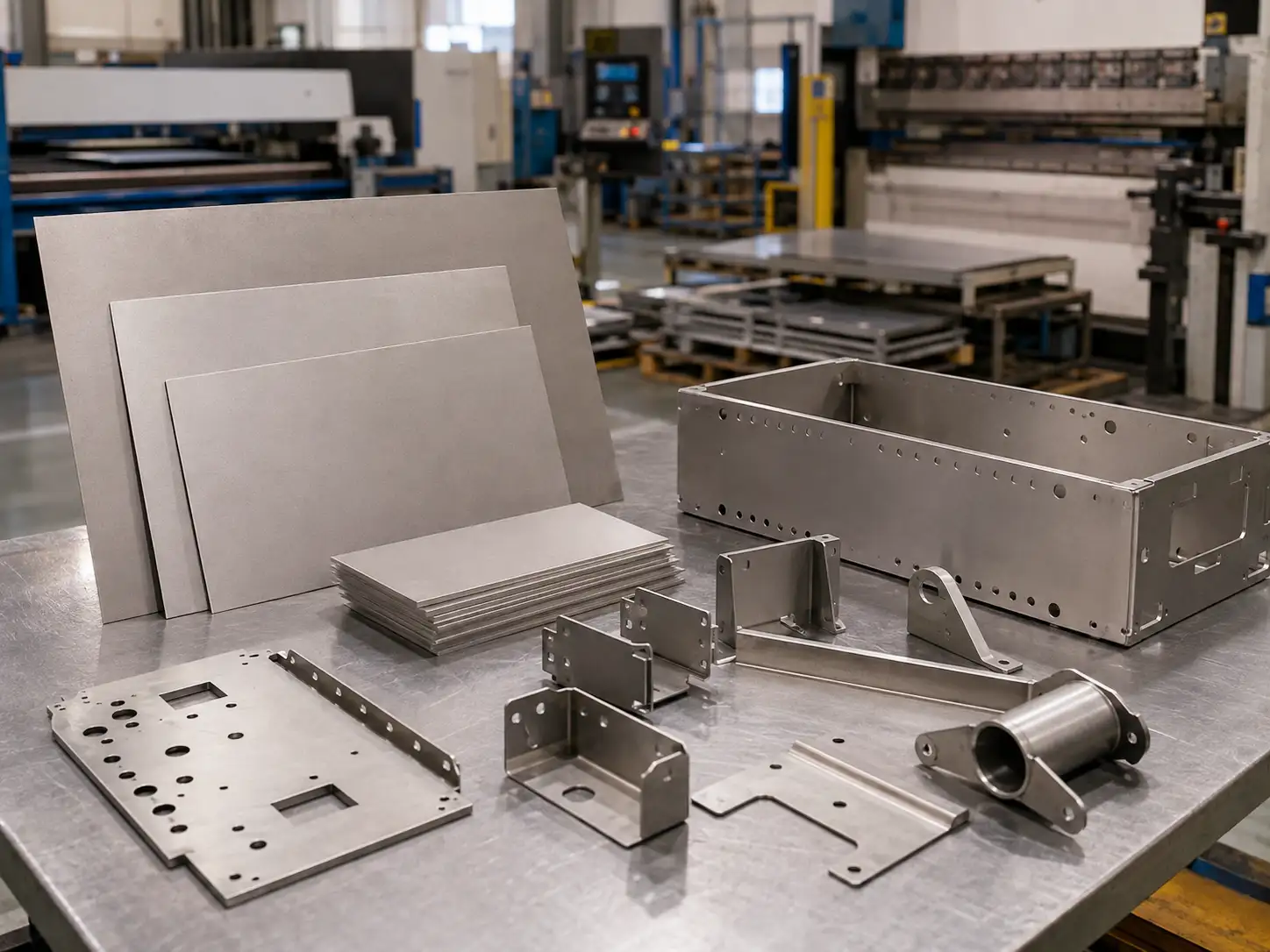
Basic Overview of TA1/TA2 Commercially Pure Titanium
| Item | TA1 | TA2 |
|---|---|---|
| Material category | Commercially pure titanium | Commercially pure titanium |
| Material positioning | More focused on formability | More balanced between strength and general industrial use |
| Typical characteristics | Higher purity control and better ductility | Higher strength and broader industrial versatility |
| Typical value | Complex forming, clean environments, lightweight parts | Chemical processing, marine use, heat exchange, welded structural parts |
| Common overseas description | Commonly understood as Grade 1 | Commonly understood as Grade 2 |
How TA1/TA2 Correspond to Grade 1 / Grade 2
TA1 corresponds to ASTM Grade 1. In the international market, this grade is known for its very high purity and outstanding formability.
TA2 corresponds to ASTM Grade 2, which is the most widely used grade in the global commercially pure titanium market because it offers a practical balance between cost, strength, and ductility.
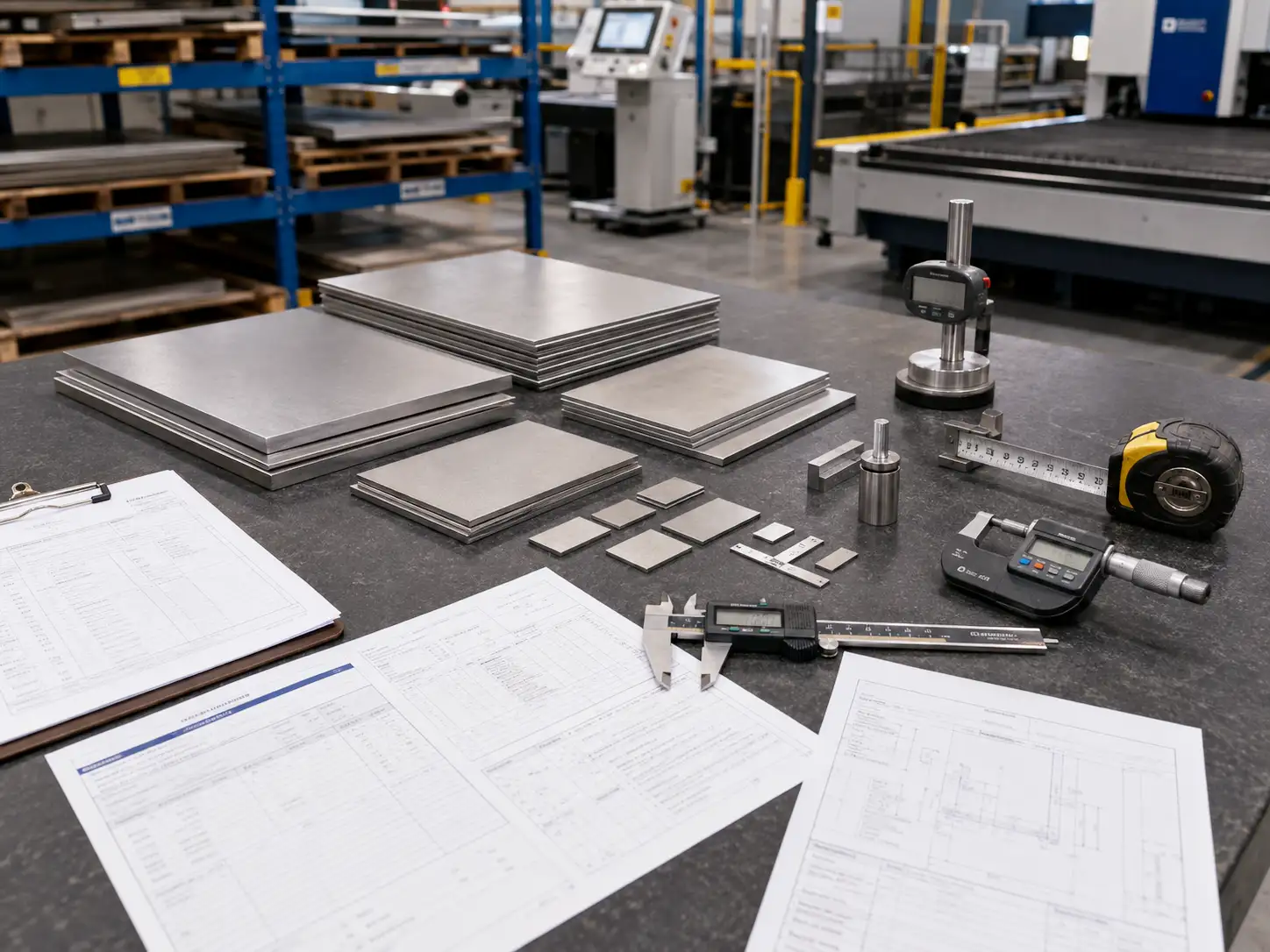
Understanding the Correspondence Between TA1/TA2 and Grade 1 / Grade 2
| Chinese Grade | Common Overseas Description | Common UNS Grade | Communication Recommendation |
|---|---|---|---|
| TA1 | Grade 1 | R50250 | State the governing standard and product form clearly on drawings, RFQs, and material certificate requirements |
| TA2 | Grade 2 | R50400 | Confirm the minimum mechanical property requirements, thickness range, and surface requirements before quotation |
Note: Different standards may contain small differences in data values and parameter ranges. Even when the grade equivalency is correct, the actual project requirements should always be based on the specific standard and grade defined for that project.
What Is the Difference Between TA1 and TA2?
The main difference between TA1 and TA2 lies in how tightly impurity elements are controlled. TA1 has stricter upper limits on interstitial elements such as oxygen, nitrogen, and carbon, which gives it higher purity and provides clear advantages in ductility and formability. TA2 allows a slightly wider impurity range, delivers higher strength, and offers a more balanced overall performance profile.
TA1 is better suited to projects involving complex part geometry, multiple bends, or deep drawing.
TA2 is better suited to general structural and functional parts that require a certain level of strength while still maintaining good corrosion resistance.
Quick Comparison of TA1 and TA2 for Material Selection
| Selection Factor | TA1 (Grade 1) | TA2 (Grade 2) |
|---|---|---|
| Tensile strength range | ≥240 MPa | ≥345 MPa |
| Yield strength range | ≥138–140 MPa | ≥275 MPa |
| Elongation range | ≥24% | ≥20% |
| Oxygen control | Very low (≤0.18%) | Low (≤0.25%) |
| Core advantage | Highest ductility and best forming limit | Better strength and stronger overall cost-performance balance |
| Recommended process direction | Deep drawing, complex bending, tight flanging | General sheet metal forming, structural part fabrication |
| Recommended applications | Medical implants, deep-cavity parts, explosive-bonded clad plate layers | Pressure vessels, piping fittings, heat exchangers |
Chemical Composition and Key Performance Parameters of TA1/TA2 Commercially Pure Titanium
Chemical composition, mechanical properties, and physical properties are the foundation of engineering design decisions.
Reference Chemical Composition of TA1/TA2
| Element | TA1 (Grade 1) Maximum Content | TA2 (Grade 2) Maximum Content |
|---|---|---|
| Titanium (Ti) | ≥99.5% | ≥99.2% |
| Oxygen (O) | ≤0.18% | ≤0.25% |
| Iron (Fe) | ≤0.20% | ≤0.30% |
| Carbon (C) | ≤0.08% | ≤0.08% |
| Nitrogen (N) | ≤0.03% | ≤0.03% |
| Hydrogen (H) | ≤0.015% | ≤0.015% |
Key Physical and Mechanical Properties of TA1/TA2
| Property | TA1 Reference | TA2 Reference | Engineering Significance |
|---|---|---|---|
| Density, g/cm³ | Approx. 4.5 to 4.51 | Approx. 4.5 to 4.51 | Suitable for lightweight design and shipping weight control |
| Melting point, °C | Approx. 1670 | Approx. 1660 | Important for evaluating welding and hot-working windows |
| Coefficient of thermal expansion, /K | Approx. 8.4×10⁻⁶ to 8.6×10⁻⁶ | Approx. 8.4×10⁻⁶ to 8.6×10⁻⁶ | Helps maintain dimensional stability under temperature variation |
| Elastic modulus, GPa | Approx. 105 to 106 | Approx. 105 to 110 | Relevant to springback and stiffness evaluation after forming |
| Tensile strength, MPa | Typical lower limit for annealed sheet is about 240 | Typical lower limit for annealed sheet is about 345 to 400 | Affects structural load capacity and material selection limits |
| Yield strength, MPa | Starts at about 138 to 140 | Starts at about 275 | Affects springback control and structural safety margin |
| Elongation, % | Commonly about 24 to 30 or higher | Commonly about 20 to 25 or higher | Affects the workable window for bending, forming, and deep drawing |
| Thermal conductivity, W/m·K | Approx. 17 to 22 | Approx. 17 to 22 | Affects heat input and evaluation of the heat-affected zone during welding |
Common Sheet Metal Process Compatibility for TA1/TA2
| Process | TA1 | TA2 | Engineering Considerations |
|---|---|---|---|
| Laser cutting | Suitable | Suitable | Pay attention to heat input, cut-edge quality, and heat tint control |
| Bending | Better suited to complex bending | Suitable for general bending | Focus on springback, inside radius setting, and surface protection |
| Stamping and forming | Suitable | Suitable | Pay attention to die surface condition, lubrication, and forming depth |
| Deep drawing | Better | Good | TA1 has a clear advantage in ductility |
| Welding | Suitable | Suitable | Inert gas shielding, cleanliness, and heat-affected zone control are critical |
| Brushing, polishing, and protective film management | Suitable | Suitable | For cosmetic parts, scratch prevention and packaging planning should be addressed early |
Typical Applications of TA1/TA2 and Material Selection Logic
Typical Applications and Recommended Use of TA1/TA2
| Application | Recommended Material | Why It Is Recommended |
|---|---|---|
| Medical implants | TA1 (Grade 1) | Higher purity supports biocompatibility, and its excellent ductility is well suited to complex implant shapes |
| Plate heat exchangers | TA1 (Grade 1) | Excellent formability supports precise corrugated structures, while thin-wall design improves heat transfer efficiency |
| Deep-drawn parts | TA1 (Grade 1) | High elongation and reduction of area allow larger drawing ratios and fewer forming steps |
| Cladding for explosive-bonded plates | TA1 (Grade 1) | Higher purity helps ensure stable bonding quality at the clad interface |
| Pressure vessels | TA2 (Grade 2) | Higher strength meets pressure-bearing requirements, while corrosion resistance supports long-term safe operation |
| Chemical piping systems | TA2 (Grade 2) | Offers a balanced overall performance profile for a wide range of corrosive media |
| Aerospace structural parts | TA2 (Grade 2) | Its strength advantage, combined with low weight, helps meet aerospace requirements |
| Heat exchangers | TA2 (Grade 2) | The combination of good heat-transfer performance and corrosion resistance suits heat-exchange service well |
| Marine seawater systems | TA2 (Grade 2) | Excellent seawater corrosion resistance makes it suitable for long-term marine use |
| General industrial sheet metal parts | TA2 (Grade 2) | Strong overall cost-performance balance with good fabrication adaptability |
What Information Should You Provide in an RFQ for TA1/TA2 to Help the Supplier Quote Faster?
TA1/TA2 RFQ Submission Checklist
| Item | Recommended Information to Provide | Value for Faster Quotation |
|---|---|---|
| Material grade and standard | TA1 or TA2, with the applicable standard clearly stated | Helps the supplier confirm the material specification quickly |
| Product form | Sheet, coil, cut part, bent part, welded assembly | Makes it easier to match the right raw material and manufacturing route |
| Thickness, dimensions, and quantity | Part size, sheet thickness, order quantity, annual demand | Helps calculate material utilization and volume-based cost |
| Drawings | 2D drawing, 3D file, revision number | Supports process evaluation and flat-pattern calculation |
| Forming and welding requirements | Bend locations, forming depth, welding method, appearance requirements | Helps determine the workable processing window for TA1 or TA2 |
| Service environment | Medium, temperature, seawater or chemical exposure, indoor or outdoor use | Helps assess corrosion limits and guide material selection |
| Surface requirements | Brushed finish, polishing, protective film, acceptable color variation and scratch standard | Helps define surface protection and packaging arrangements |
| Inspection and documentation | Material certificate, dimensional report, appearance standard, third-party testing requirements | Helps align quality and delivery requirements in one step |
| Delivery requirements | Sampling lead time, production schedule, packaging, shipping method, destination | Helps evaluate production planning and logistics cost |
