
TA7 Heat-Resistant Alpha Titanium Alloy
Resistance
Stability
Weldability
at Elevated Temp.
TA7 Heat-Resistant Alpha Titanium Alloy: Basic Overview
TA7 is one of the classic alpha titanium alloys in the Chinese titanium alloy system. Its composition-based designation is Ti-5Al-2.5Sn. It uses titanium as the base metal, with about 5% aluminum and 2.5% tin added. Within its usual service temperature range, the microstructure is predominantly alpha phase, which gives it good thermal stability. As the temperature approaches or exceeds the beta transus, the microstructure begins to transform.
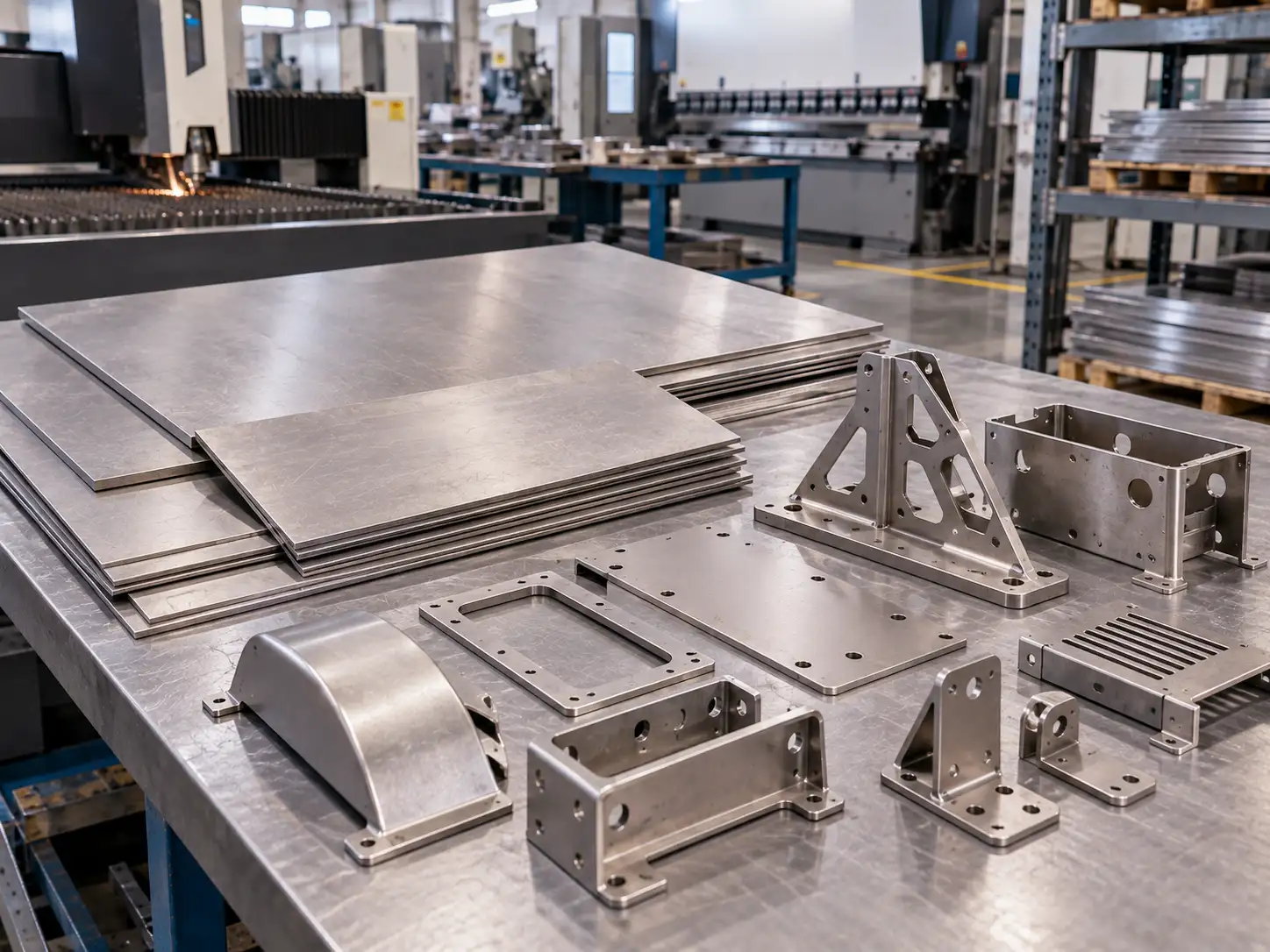
What International Grades and Standards Correspond to TA7 Heat-Resistant Alpha Titanium Alloy?
The common international name for TA7 is Ti-5Al-2.5Sn, which is the composition-based designation. Different countries and standards systems use different naming conventions. For example, ASTM identifies it as Grade 6, while GOST refers to it as VT20.
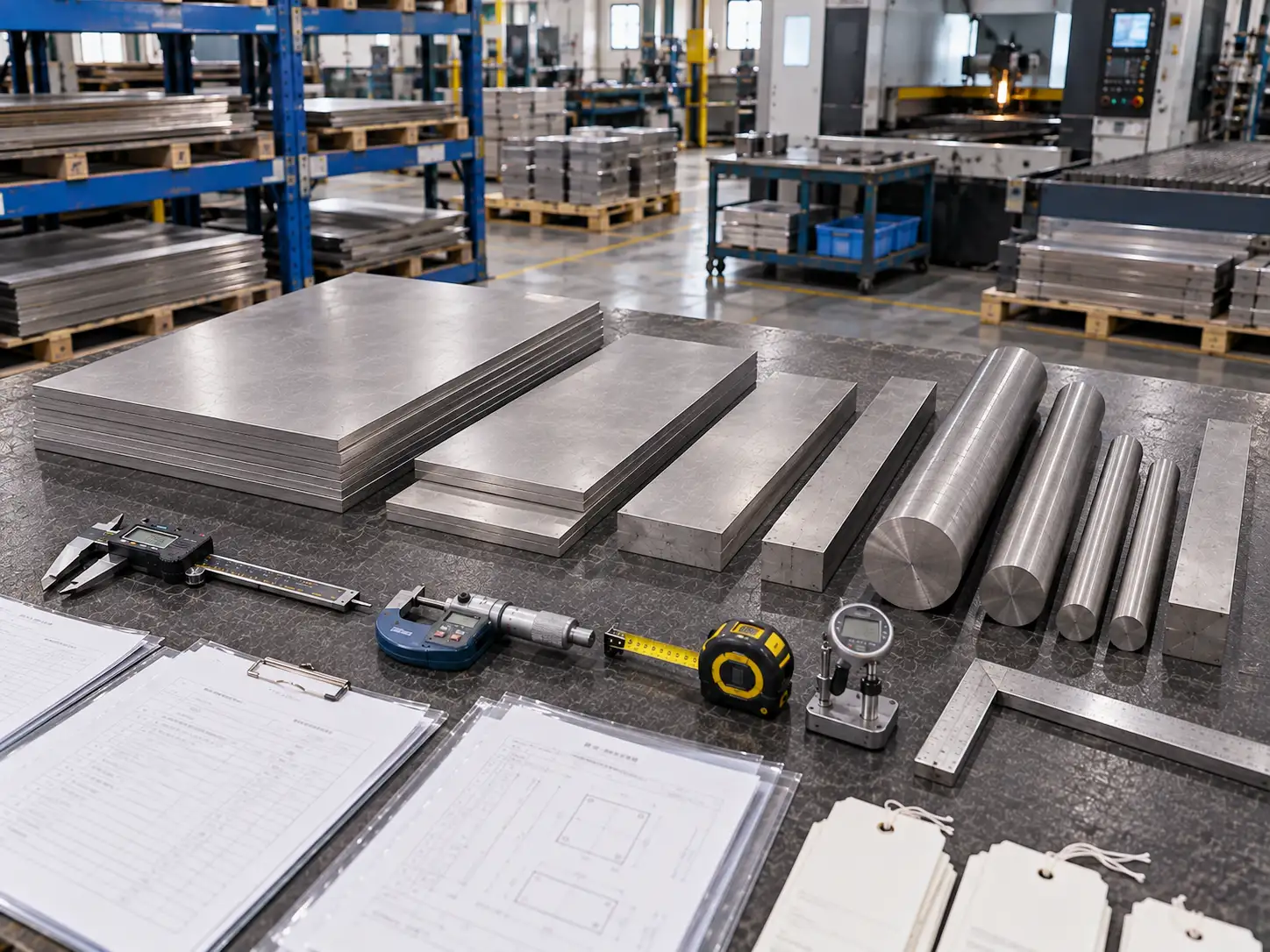
Common International Grade and Standard Equivalents for TA7 Heat-Resistant Alpha Titanium Alloy
| Chinese Grade | Common International Name | ASTM Grade | UNS Number | Common Product Forms | Value in Purchasing Communication |
|---|---|---|---|---|---|
| TA7 | Ti-5Al-2.5Sn | Grade 6 | R54520 | Sheet, strip, bar, forgings, tube, welding wire | Basic reference for aligning Chinese and international grade systems |
| TA7 | Ti-5Al-2.5Sn ELI | Grade 6 ELI | R54520 | Sheet, bar, ultra-low-interstitial version | Special grade for low-temperature or high-reliability applications |
| TA7, used as reference | AMS 4910 / AMS 4926 | — | — | Sheet, bar, rings | Directly referenced standards in aerospace supply chains |
| TA7, used as reference | MIL-T-9046 / MIL-T-9047 | — | — | Sheet, bar | Specification basis for military procurement projects |
| TA7, used as reference | GOST VT20 | — | — | Various semi-finished forms | Useful for technical alignment in Russian-speaking markets |
Chemical Composition and Microstructural Characteristics of TA7 Heat-Resistant Alpha Titanium Alloy
The chemical composition of TA7 heat-resistant alpha titanium alloy is designed around alpha-phase stabilization and solid-solution strengthening. Titanium provides the material with its lightweight foundation and inherent corrosion resistance.
Chemical Composition Range of TA7 Heat-Resistant Alpha Titanium Alloy
| Element | Content Range | Main Effect on Performance |
|---|---|---|
| Titanium (Ti) | Balance | Base structure, providing low weight and baseline corrosion resistance |
| Aluminum (Al) | 4.0%–6.0% | Stabilizes the alpha phase, increases room-temperature and elevated-temperature strength, and reduces density |
| Tin (Sn) | 2.0%–3.0% | Solid-solution strengthens the alpha phase, improves hot-workability, and lowers the ductile-to-brittle transition temperature |
| Iron (Fe) | ≤0.50%, typically ≤0.30% | Impurity element; excessive content can reduce ductility |
| Oxygen (O) | ≤0.20% | Interstitial element; moderate levels can increase strength, but reduce low-temperature toughness |
| Carbon (C) | ≤0.10%, typically ≤0.08% | Impurity element that affects thermal stability |
| Nitrogen (N) | ≤0.05% | Interstitial element; poor control can lead to embrittlement |
| Hydrogen (H) | ≤0.015% | Interstitial element that must be tightly controlled to prevent hydrogen embrittlement |
| Silicon (Si) | ≤0.15%, typically ≤0.05% | Impurity element; excessive content can impair high-temperature performance |
Key Parameters and Performance Data of TA7 Heat-Resistant Alpha Titanium Alloy
The data below is based on typical values in the annealed condition. Actual values may vary depending on product form and size, so the specific inspection report for the required specification should always take precedence.
Core Physical Properties of TA7 Heat-Resistant Alpha Titanium Alloy
| Parameter | Typical Value or Range | Why It Matters in Material Selection |
|---|---|---|
| Density | 4.48 g/cm³ | A baseline value for lightweight design; when combined with strength, it defines the alloy’s specific-strength advantage |
| Melting point | Approx. 1590°C | A reference limit for high-temperature capability and an important factor in setting the hot-working window |
| Beta transus temperature | 1040–1090°C | A critical boundary for hot-working and heat-treatment temperature control |
| Recommended service temperature | -253°C to 500°C, up to 800°C for short-term exposure | Defines the applicable temperature range and is the first checkpoint for matching the material to service conditions |
| Elastic modulus | Approx. 110 GPa | A key stiffness parameter; at about half the stiffness of steel, it directly affects deformation control |
| Thermal stability | Excellent, with no alpha-to-beta phase transformation during normal service | A key safeguard for long-term high-temperature use, since the microstructure remains stable under thermal cycling |
Mechanical and Thermal Property Table for TA7 Heat-Resistant Alpha Titanium Alloy
| Property | Typical Value or Range | Impact on Sheet Metal Fabrication |
|---|---|---|
| Tensile strength | 830–970 MPa | A design basis for forming force and die loading; higher strength may require higher-tonnage equipment |
| Yield strength | 780–897 MPa | Used to assess wrinkling risk and springback control in forming |
| Elongation after fracture | 10%–20%, depending on thickness | A limiting factor for maximum forming depth; thin sheet is generally more formable than thicker material |
| Hardness | Approx. 36 HRC, or 320 HB | A reference for selecting cutting parameters and die materials |
| Thermal conductivity | 7.8 W/(m·K) | Makes heat dissipation during cutting and welding more difficult, so effective cooling is essential |
| Coefficient of thermal expansion | 9.4–9.7 μm/(m·°C) | A basis for dimensional compensation in hot forming and welding |
| Specific heat capacity | Approx. 0.53 J/(g·°C) | Used in calculating heating power and soak time during thermal processing |
| Creep performance | At 500°C and 150 MPa, creep after 1000 hours is ≤0.35% | A benchmark for evaluating long-term deformation in high-temperature load-bearing parts |
The processing behavior of TA7 is closely related to its single-phase alpha structure. It offers excellent weldability, but its cold-forming capability is relatively limited. As a result, many sheet metal forming operations need to be evaluated and carried out under heated conditions.
Sheet Metal Process Compatibility of TA7 Heat-Resistant Alpha Titanium Alloy
| Process Type | Suitability | Main Risk Points | Key Supplier Evaluation Points |
|---|---|---|---|
| Laser cutting | High | Edge oxidation, heat-affected-zone control | Gas shielding system on the equipment, cutting parameter database |
| Plasma cutting | Medium to high | Cut-edge squareness, width of the heat-affected zone | Equipment accuracy, bevel-processing capability |
| Waterjet cutting | High | Edge burrs, risk of trapped inclusions | Waterjet equipment capacity, post-processing capability |
| Stamping | Medium | High die load, significant springback, demanding lubrication requirements | Press tonnage, die design and manufacturing experience |
| Bending | Medium | Large springback, risk of edge cracking | Press brake tonnage and accuracy, warm-bending capability |
| Hot forming | High | Temperature control, surface oxidation, consistency of microstructure and properties | Temperature-control accuracy of hot-forming equipment, furnace uniformity, process database |
| Stretch forming | Medium to high | Wall thinning, cracking risk, lubrication requirements | Stretch-die design capability, experience with warm stretch forming |
| Welding | Very high | Failure of gas shielding, weld contamination, residual stress | Welding equipment and process qualifications, welder certification, inert-gas supply capability |
| Straightening / sizing | Medium | Springback control, dimensional accuracy | Tooling design and build capability, in-process measurement capability |
| Surface pretreatment before finishing | Medium to high | Risk of hydrogen contamination, pickling-solution ratio control | Surface-treatment equipment, process-control documentation, wastewater-treatment capability |
What Types of Parts and Service Conditions Is TA7 Heat-Resistant Alpha Titanium Alloy Suitable For?
The performance profile of TA7 is well suited to structural parts used at medium to elevated temperatures below 500°C, large welded sheet metal parts that require stable weld quality, cryogenic and deep-cryogenic equipment, and parts that need a combination of low weight and corrosion resistance.
That said, the room-temperature strength of TA7 is only moderate within the titanium alloy family. If your project places a stronger emphasis on strength and the temperature requirement is less demanding, an alpha-beta titanium alloy such as Ti-6Al-4V / Grade 5 may be a better fit.
Typical Parts and Service Conditions for TA7 Heat-Resistant Alpha Titanium Alloy
| Part Type | Service Characteristics | Key Selection Considerations |
|---|---|---|
| Aero-engine compressor parts | Medium temperature up to 500°C, cyclic loading, vibration | Retention of elevated-temperature strength, fatigue performance, thermal stability |
| Rocket fuel tanks and piping | Cryogenic service, such as liquid hydrogen or liquid oxygen temperatures, high pressure, internal pressure loading | Low-temperature toughness, weld gas tightness, microstructural uniformity |
| Aircraft structural shells and panels | Room temperature and medium temperature, aerodynamic loads, assembly stress | Formability, weld quality, specific strength, weight reduction |
| Pressure vessels and heat exchangers | Internal and external pressure differential, temperature gradients, corrosive media | Strength, weld reliability, corrosion resistance, required wall thickness |
| Missile body structural parts | Transient medium-temperature exposure, rapid pressurization, structural stiffness requirements | Thermal stability, toughness at high strain rate |
| Marine and chemical equipment parts | Atmospheric or seawater corrosion, long-term loading | Corrosion resistance, long-term stability of welded joints |
| Cryogenic engineering vessels | Ultra-low temperatures from -196°C to -253°C | Ductile-to-brittle transition temperature, low-temperature ductility, low-temperature weld performance |
What Information Should Be Prepared Before Sending an RFQ for TA7 Heat-Resistant Alpha Titanium Alloy?
The more complete your RFQ information is, the more accurate the supplier’s quotation will be. It also allows for a fuller process evaluation and usually leads to a faster response.
TA7 Heat-Resistant Alpha Titanium Alloy RFQ Checklist
| Item | Recommended Information to Provide | Value for Quotation and Process Evaluation |
|---|---|---|
| Material grade and standard | TA7 / Ti-5Al-2.5Sn / Grade 6, with the relevant ASTM, AMS, or MIL specification number | Establishes the material baseline and avoids grade ambiguity |
| Product form and dimensions | Sheet, bar, or forging, with thickness, width, length, and tolerance requirements | Enables accurate evaluation of raw material sourcing and machining allowance |
| Drawings and revision level | Engineering drawings showing all dimensions, tolerances, surface requirements, and welding symbols | The core basis for process planning and manufacturability review |
| Forming requirements | Forming method, part complexity, and dimensional accuracy requirements | Helps assess the process route, equipment capability, and tooling needs |
| Welding requirements | Weld type, welding method, inspection standard, and filler-metal compatibility requirements | Helps evaluate welding qualifications, procedure qualification time, and cost |
| Surface requirements | Surface condition, roughness, oxide-layer limits, and any downstream finishing requirements | Defines the surface-treatment route and inspection criteria |
| Quantity and annual demand | Initial order quantity, estimated annual volume, and phased delivery plan | Helps plan capacity and raw material preparation, and may reduce unit cost |
| Lead time requirements | Target delivery date or delivery window, including any acceptable split-shipment plan | Helps assess scheduling feasibility and response speed |
| Inspection requirements | Inspection type, sampling plan, acceptance criteria, and applicable standard | Clarifies the scope of quality control and related cost |
| Certification and compliance | Required certificate types, country-of-origin requirements, and industry-specific certifications | Ensures supply-chain compliance and supports import or project audit requirements |
| Packaging and shipping | Packaging standard, marking requirements, and shipping method | Helps protect delivery quality and reduce transport damage |
| Material condition and traceability requirements | Annealed condition or other special condition, interstitial-element grade, and traceability depth | Supports cost evaluation for special requirements and quality assurance |
