Custom Sheet Metal Parts with PEM Nuts
Custom sheet metal parts with installed PEM nuts and self-clinching fasteners are mainly used for fastening and assembly structures in OEM equipment. At SR MFG, we manufacture custom sheet metal components and press PEM self-clinching nuts into the parts, delivering them as ready-to-assemble integrated components.
- Manufactured according to customer 2D drawings, 3D CAD files, or samples
- Supports PEM nuts, self-clinching nuts, press-fit studs, standoffs, and project-specified fasteners
- Integrated laser cutting, punching, bending, PEM insertion, surface finishing, and inspection
- Ideal for creating reliable threaded mounting points in thin sheet metal structures
- Custom quotation based on material, surface finish, quantity, and hardware requirements
Product Details
Product Specifications
| Specification Item | Value / Range |
|---|---|
| Sheet Metal Material Options | SPCC / SPHC cold-rolled steel, SUS 304 / SUS 316 stainless steel, AL 5052 / AL 6061 aluminum alloy, SGCC galvanized steel |
| Sheet Thickness | 0.5 mm – 6.0 mm, depending on material and fastener selection |
| Laser Cutting Accuracy | ±0.1 mm standard; ±0.05 mm available upon request |
| Bending Angle Accuracy | ±0.5° standard; ±0.3° available upon request |
| PEM Mounting Hole Tolerance | According to PEM recommended standards, equivalent to H12–H13 accuracy grade |
| Minimum Edge Distance Requirement | According to the PEM recommended minimum value for each fastener series; verified during the DFM stage |
| Applicable Sheet Hardness | Steel: HRB ≤ 70 · Stainless steel: HRB ≤ 60 · Aluminum: HRB ≤ 50, depending on the PEM fastener series |
| Push-Out Performance | Varies by fastener series, thread size, and sheet material; test data can be provided based on configuration |
| Torque-Out Performance | Varies by fastener series, thread size, and sheet material; test data can be provided based on configuration |
| Flatness After PEM Insertion | Flush back side with no protrusion beyond the sheet surface |
| Dimensional Inspection Methods | CMM inspection, optical measurement, go/no-go gauges |
| Corrosion Testing | Salt spray testing available upon customer request, with optional durations from 48 h to 1000 h |
| Accepted Drawing Formats | STEP, IGES, DXF, DWG, PDF |
Custom Sheet Metal Parts with Installed PEM Nuts
SR MFG custom sheet metal parts with PEM nuts are designed for projects that require strong, stable, and repeatable threaded mounting points in formed sheet metal structures.
We can not only manufacture the sheet metal parts themselves, but also install the required self-clinching fasteners during the production process. This reduces the customer’s secondary assembly work.
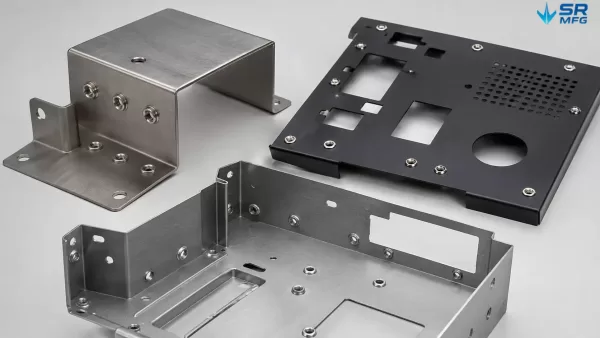
Custom sheet metal parts with PEM nuts can be used for threaded mounting points in equipment brackets, control panels and chassis structures.
This helps buyers lower secondary assembly costs, improve part consistency, and simplify the final installation process.
These parts are commonly used for:
- Equipment mounting brackets
- Electrical and electronic equipment panels
- Internal structural parts for control boxes
- Chassis and frame components
- Equipment covers and access panels
- Mounting plates for PCB, modules, rails, or internal devices
- Custom sheet metal assemblies requiring built-in threaded points
Structural Design for Reliable Threaded Mounting Points
When the sheet metal is too thin for direct tapping, or when the final assembly requires permanent threaded connection points, PEM nuts and self-clinching fasteners are usually a better solution.
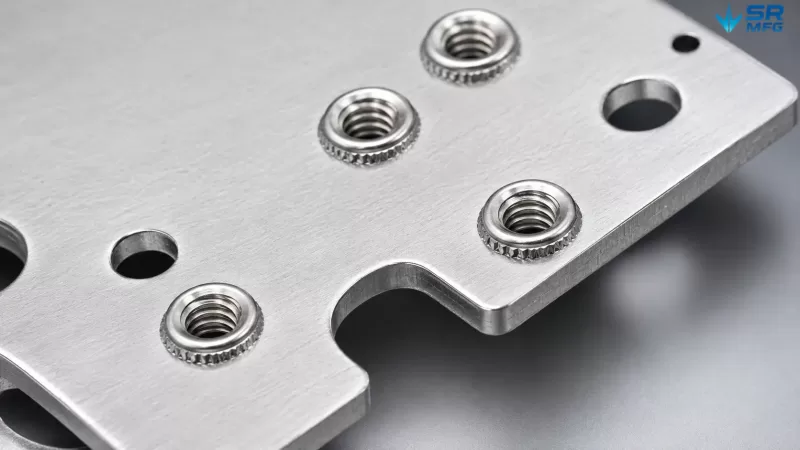
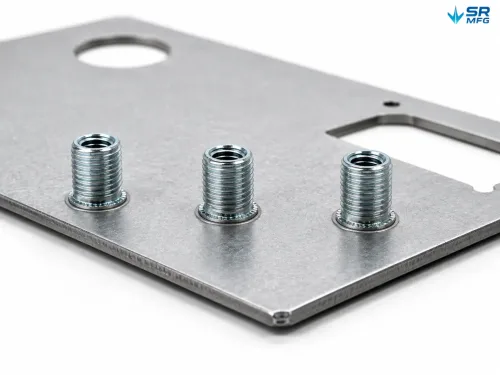
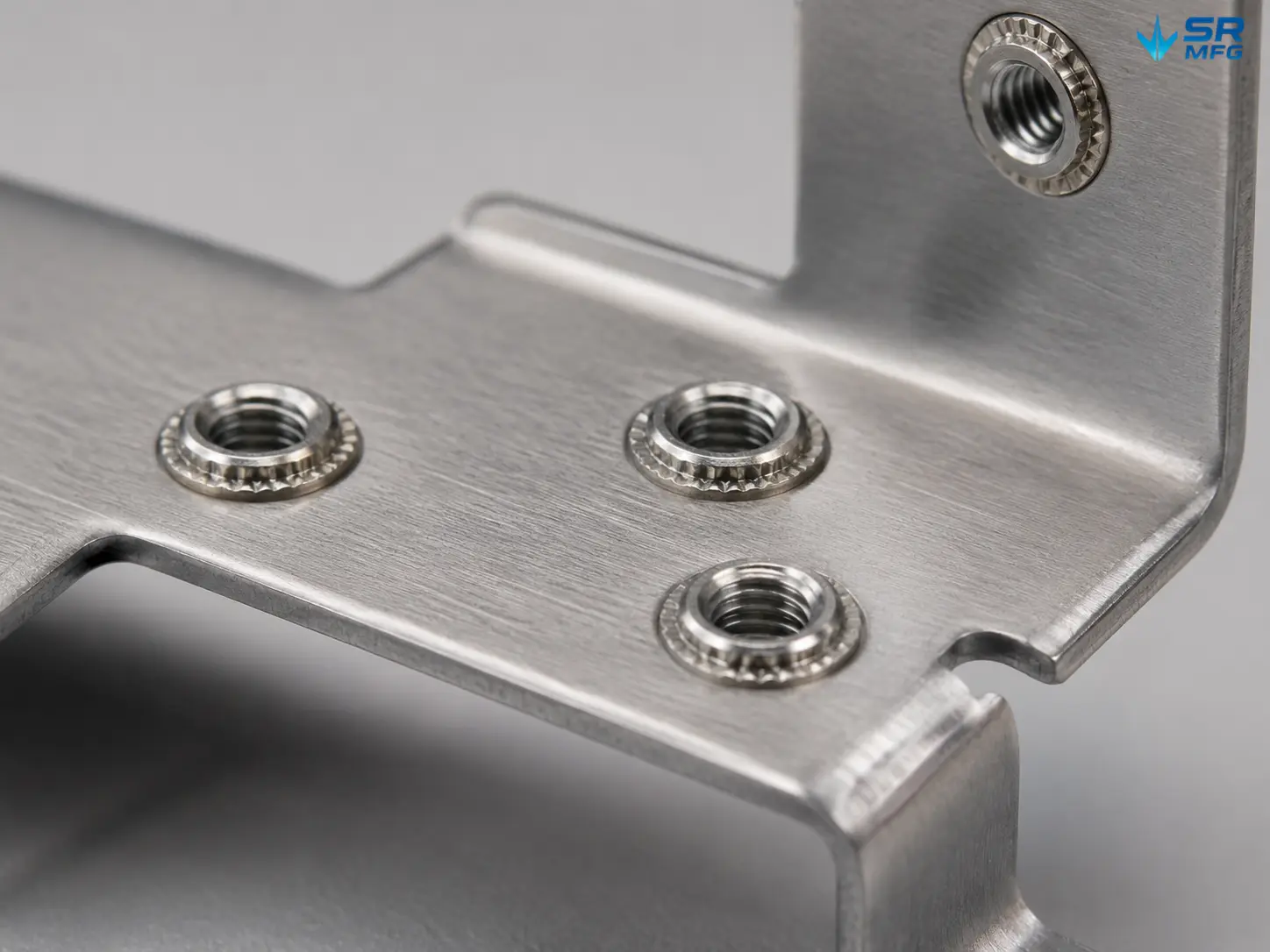
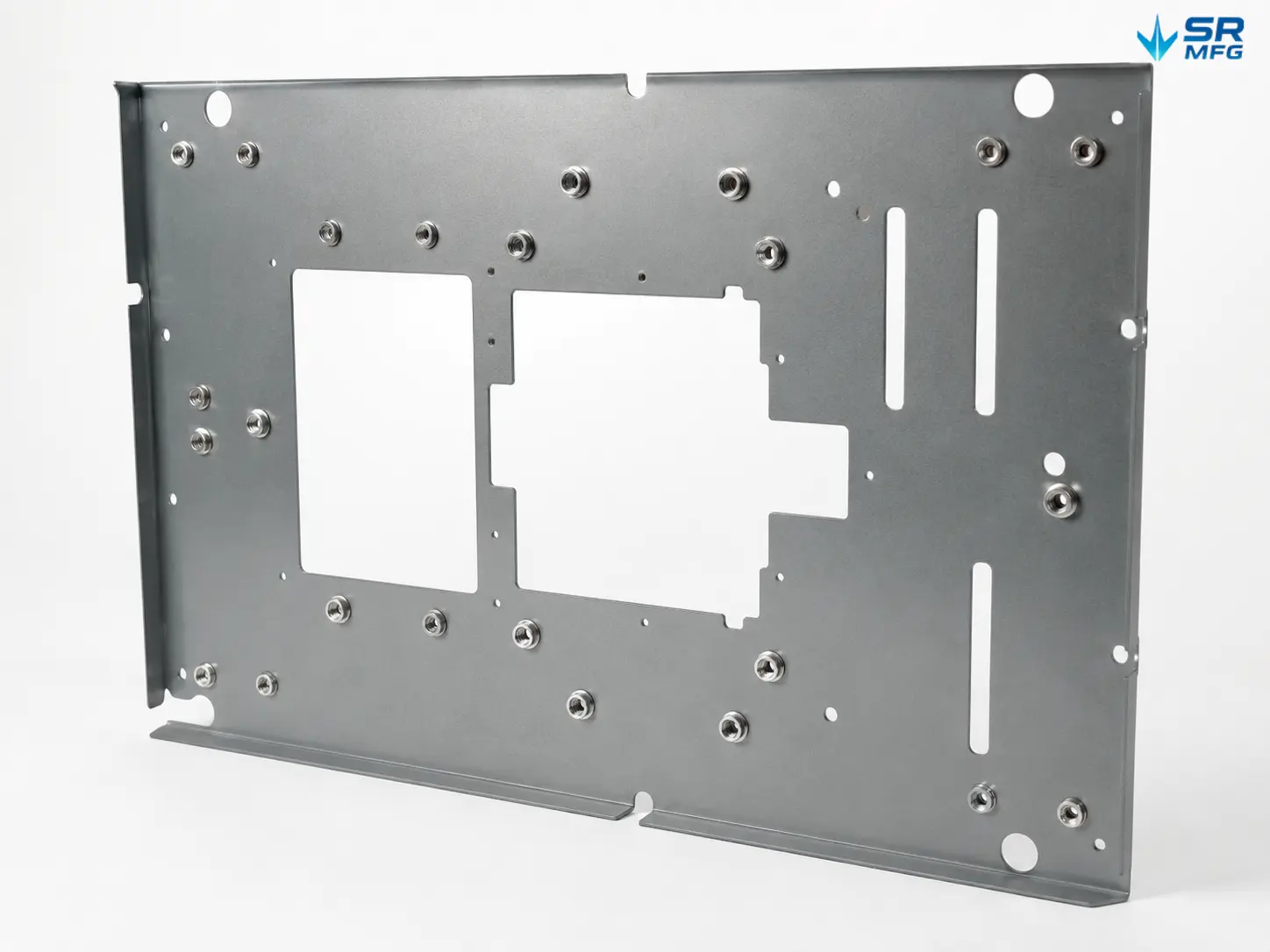
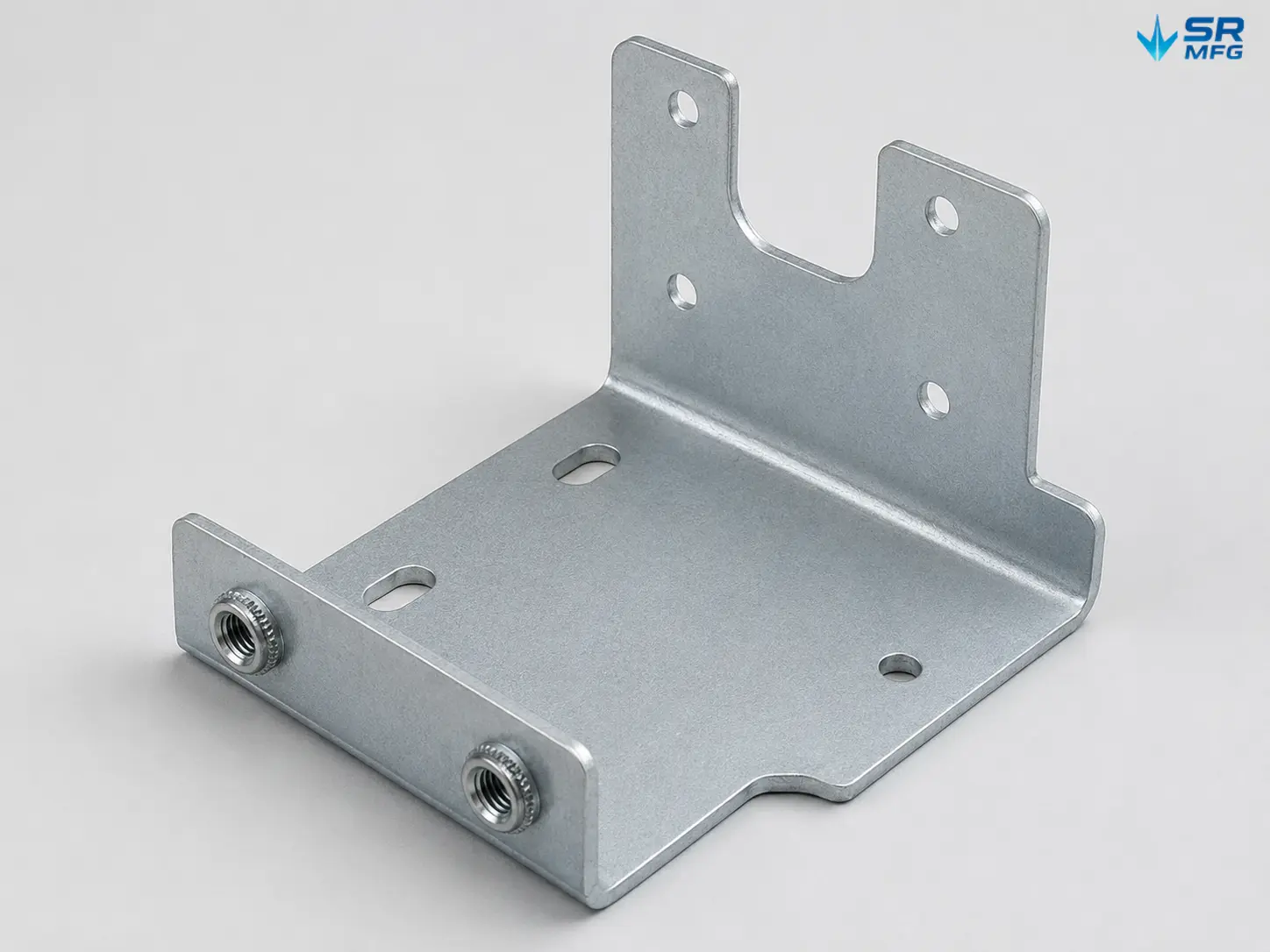
Close-up view of PEM nuts inserted into a precision sheet metal part.
For OEM buyers, the key is not only the nut itself, but also the stability of the complete manufacturing process.
Final quality depends on:
- Accurate hole machining
- Proper material and sheet thickness evaluation
- Correct insert position and orientation
- Stable and controlled PEM insertion process
- Reasonable surface finishing arrangement
- Post-process thread and appearance inspection
For example, a control panel may require multiple PEM nuts installed on the back side to secure brackets, covers, PCB supports, or internal rails. If the insert positions are inconsistent, final assembly may become difficult and may even require rework.
Our manufacturing process considers hardware insertion and the complete sheet metal fabrication sequence together, helping ensure reliable assembly performance.
Types of Sheet Metal Parts with PEM Nuts We Can Produce
| Part Type | Common Use |
|---|---|
| Sheet Metal Brackets | Threaded mounting points for equipment, frames, panels, or support structures |
| Mounting Plates | PEM nuts for internal modules, rails, PCB supports, or equipment fixing |
| Sheet Metal Panels | Back-side self-clinching nuts for covers, handles, hinges, or internal part installation |
| Chassis Components | Integrated nuts, studs, or standoffs for electronic and industrial equipment assembly |
| Equipment Covers | Fixed threaded points for removable covers and maintenance access areas |
| Custom Frames | Self-clinching hardware for connection, positioning, or secondary assembly |
| Semi-Assembled Components | Sheet metal parts with installed hardware, ready to enter the customer’s final assembly process |
Material and Hardware Compatibility
The base material affects insert retention strength, surface finishing, sheet metal bending performance, and final assembly quality. Before production, we evaluate the material, sheet thickness, hardware type, and insert position.
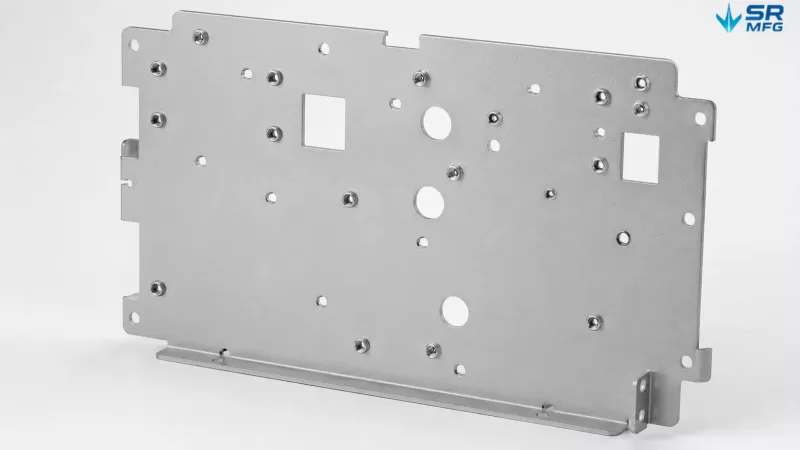
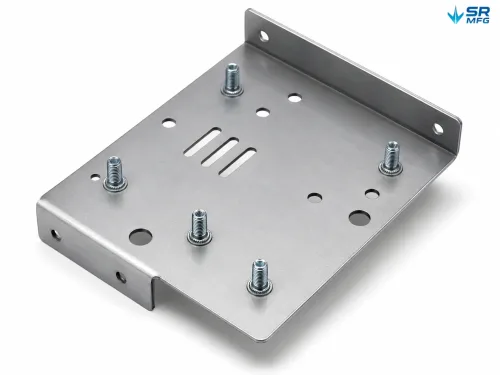
Rear-side view of a sheet metal mounting plate with multiple installed PEM nuts.
| Material Option | Manufacturing Consideration |
|---|---|
| Aluminum Sheet | Lightweight and commonly used for electronic equipment and structural parts; hardware selection and surface finishing sequence must be confirmed |
| Stainless Steel Sheet | Good corrosion resistance; material hardness and insert compatibility need careful evaluation |
| Carbon Steel Sheet | Commonly used for brackets, frames, covers, and structural parts; usually combined with painting, powder coating, or plating |
| Galvanized Steel Sheet | Suitable for functional parts requiring basic corrosion resistance; PEM insertion and surface finishing requirements should be confirmed |
| Copper or Conductive Sheet Metal Materials | Used for specific electrical or shielding applications; insert and surface treatment compatibility must be verified |
| Project-Specified Materials | Can be evaluated according to drawings, application environment, and hardware requirements |
Material compatibility is not just a simple material list. Part structure, hole position, edge distance, bending distance, and final assembly load all affect whether the PEM hardware insertion will be reliable.
Hole Machining and Insert Position Control
PEM nuts rely on accurate hole machining. The hole size must match the selected fastener type, and the relationship between the hole position, edges, bends, adjacent holes, and visible surfaces must be properly considered.
We can process mounting holes through:
- Laser cutting
- CNC punching
- Drilling
- Secondary hole finishing when required
- Deburring before PEM insertion
When a part contains multiple threaded mounting points, insert position control becomes especially important. Even a small positional deviation may affect assembly alignment, screw engagement, or the final product fit.
To support accurate quotation, we recommend providing:
- Hardware type or PEM nut requirements
- Thread size requirements
- Number of inserts
- Clinching side or installation direction
- Visible surface requirements
- Mating parts or assembly function description, if available
Surface Finishing and Assembly Options
When sheet metal parts include PEM nuts or threaded inserts, sheet metal finishing services need to be planned in advance because coating, plating, or painting may affect thread condition, appearance, and assembly performance.. Coating, plating, or painting may affect the thread condition, appearance, and assembly performance.
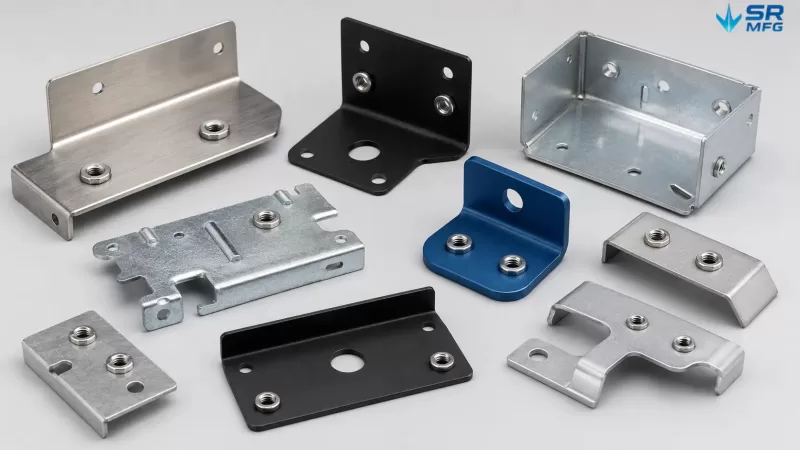
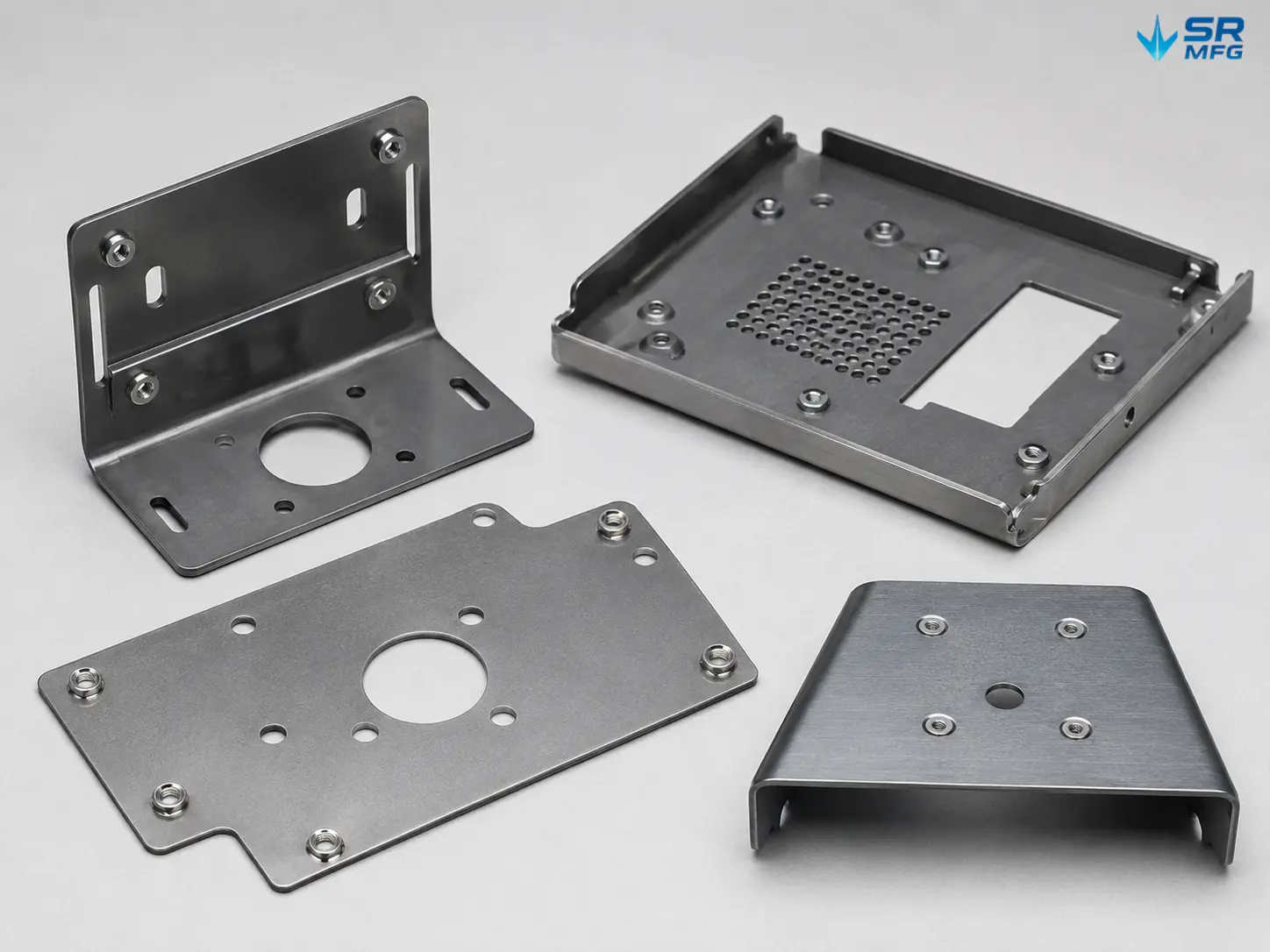
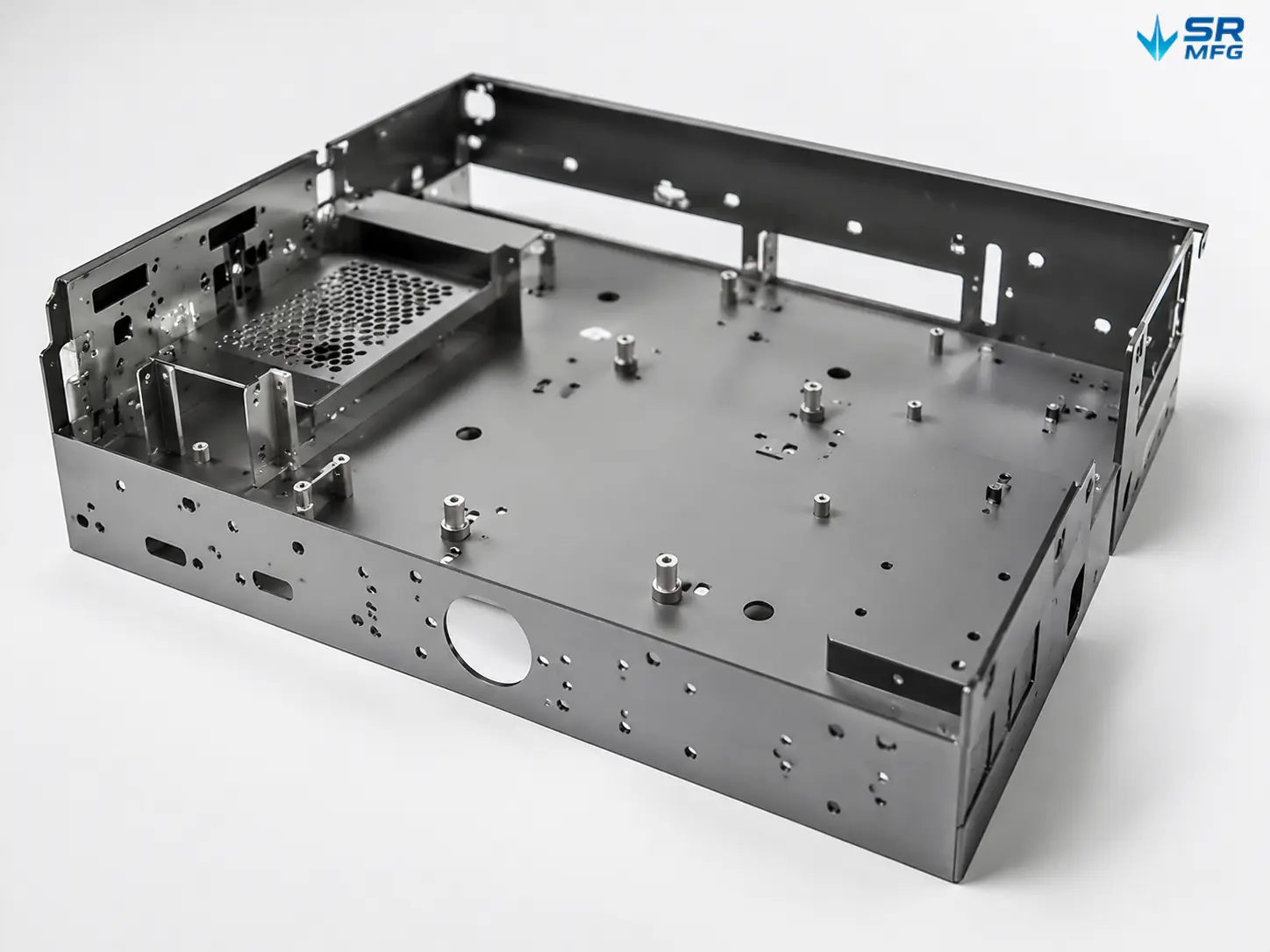
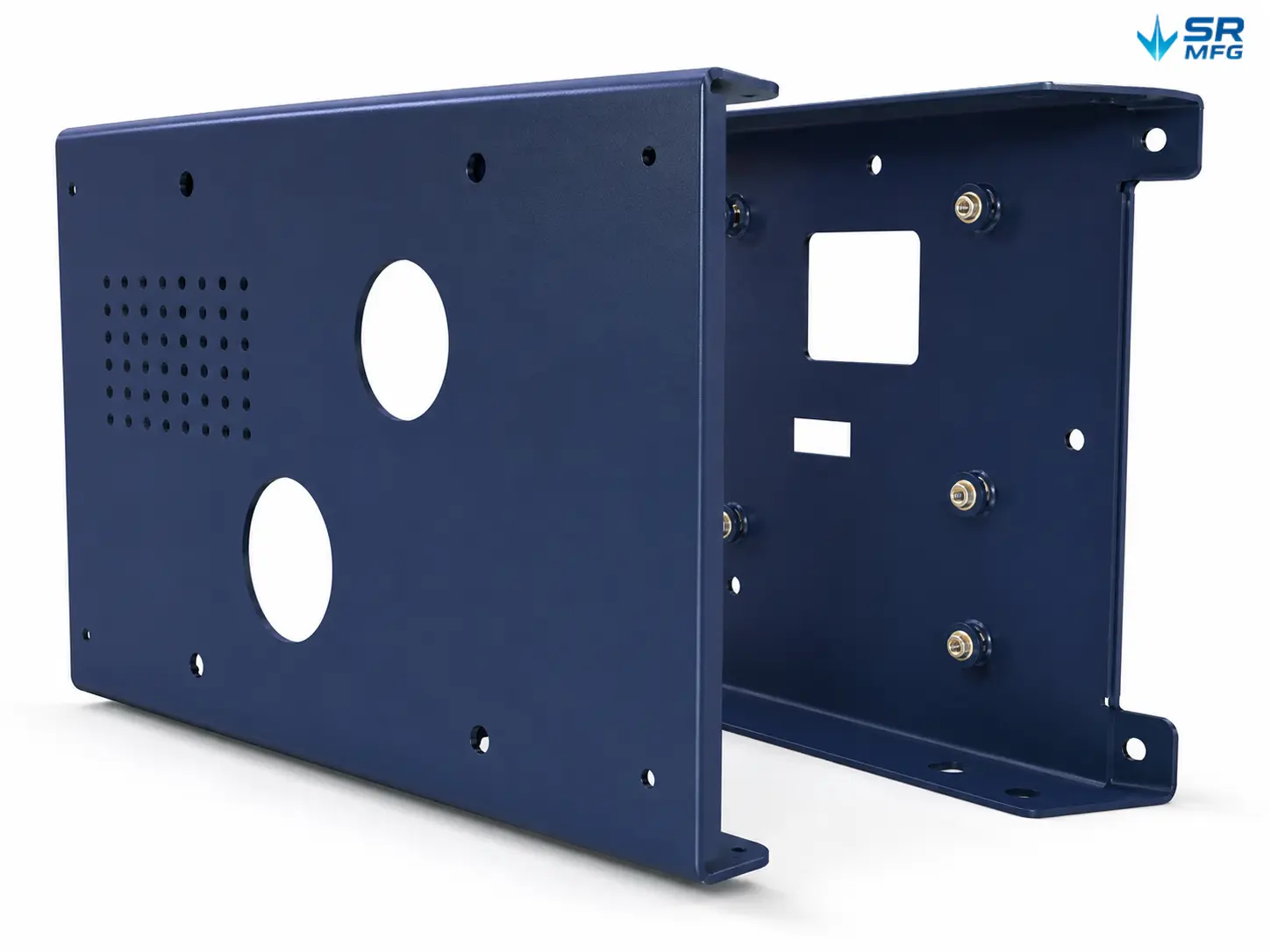
Sheet metal samples with installed PEM nuts showing different material and finish options.
Available surface finishing options include:
- Powder coating
- Anodizing
- Electroplating
- Brushing
- Painting
- Passivation
- Sandblasting or pretreatment
- Project-specific custom surface finishes
If the finished part needs to be assembled directly with screws, thread protection, masking, or post-finish thread inspection can be discussed according to project requirements.
We can also deliver products at different assembly levels:
- Sheet metal parts with PEM hardware installed only
- Finished parts with surface treatment and installed PEM nuts
- Semi-assembled components with additional brackets, panels, or hardware
- Project-based sheet metal assemblies ready for the customer’s installation process
Common Application Scenarios
PEM nut integration services are used across multiple industries where thin sheet metal parts require threaded mounting points without the disadvantages of welding or direct tapping.
| Industry | Typical Applications |
|---|---|
| Consumer Electronics | Device enclosures, laptop housings, and internal brackets with PCB standoff mounting points |
| Communication and Networking Equipment | Rack-mount panels, server chassis, and cable management brackets |
| Industrial Control | Control panel base plates, junction box components, and DIN rail mounting hardware |
| Automotive Electronics | ECU housings, sensor brackets, and interior component mounting points |
| Medical Devices | Equipment enclosures, instrument panels, and diagnostic equipment frames |
| LED and Lighting | Light fixture mounting plates, heat sink brackets, and driver housing components |
In each application, the core value is the same: threaded connection points are built into the part during manufacturing, rather than added later.
FAQ
Get a Quote for Custom Sheet Metal Parts with PEM Nuts
Please send us your drawings, CAD files, samples, or hardware BOM. We can provide a custom quotation based on your project requirements.
To help us evaluate your sheet metal RFQ accurately, please provide as much information as possible, including material, sheet thickness, PEM nut type, thread requirements, insert position, surface finish, quantity, and any inspection or assembly requirements.