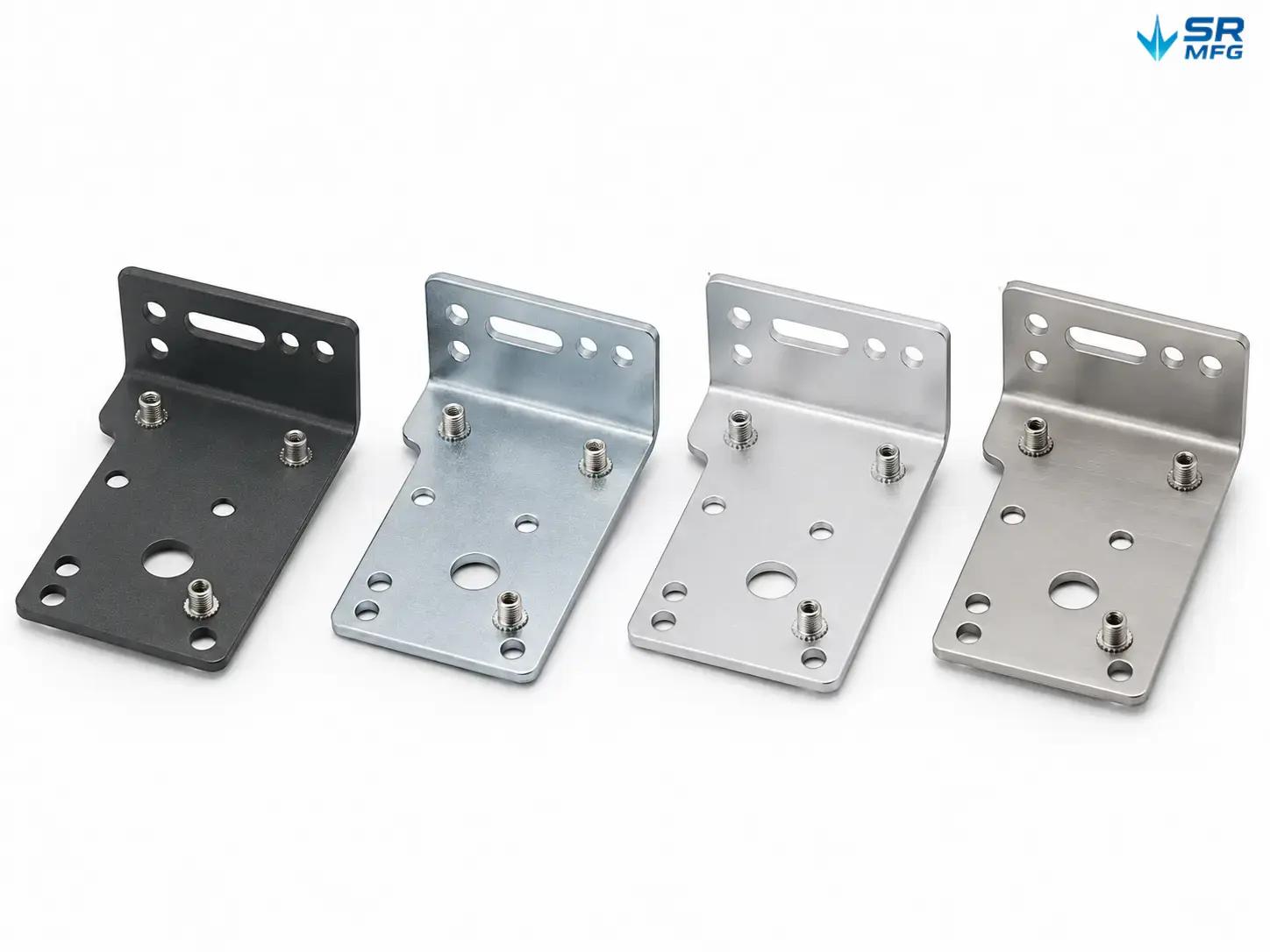
Sheet Metal Parts with PEM Studs
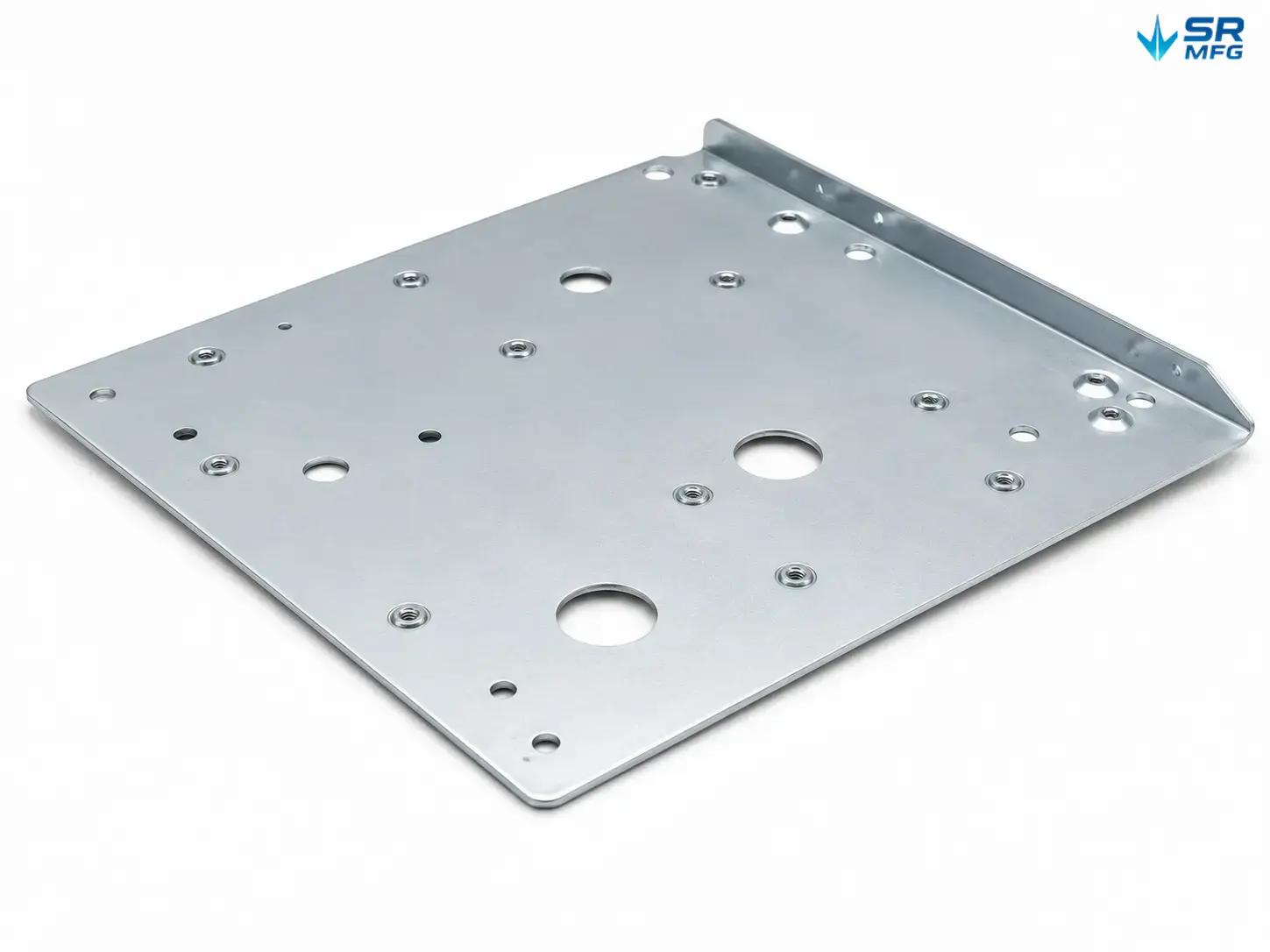
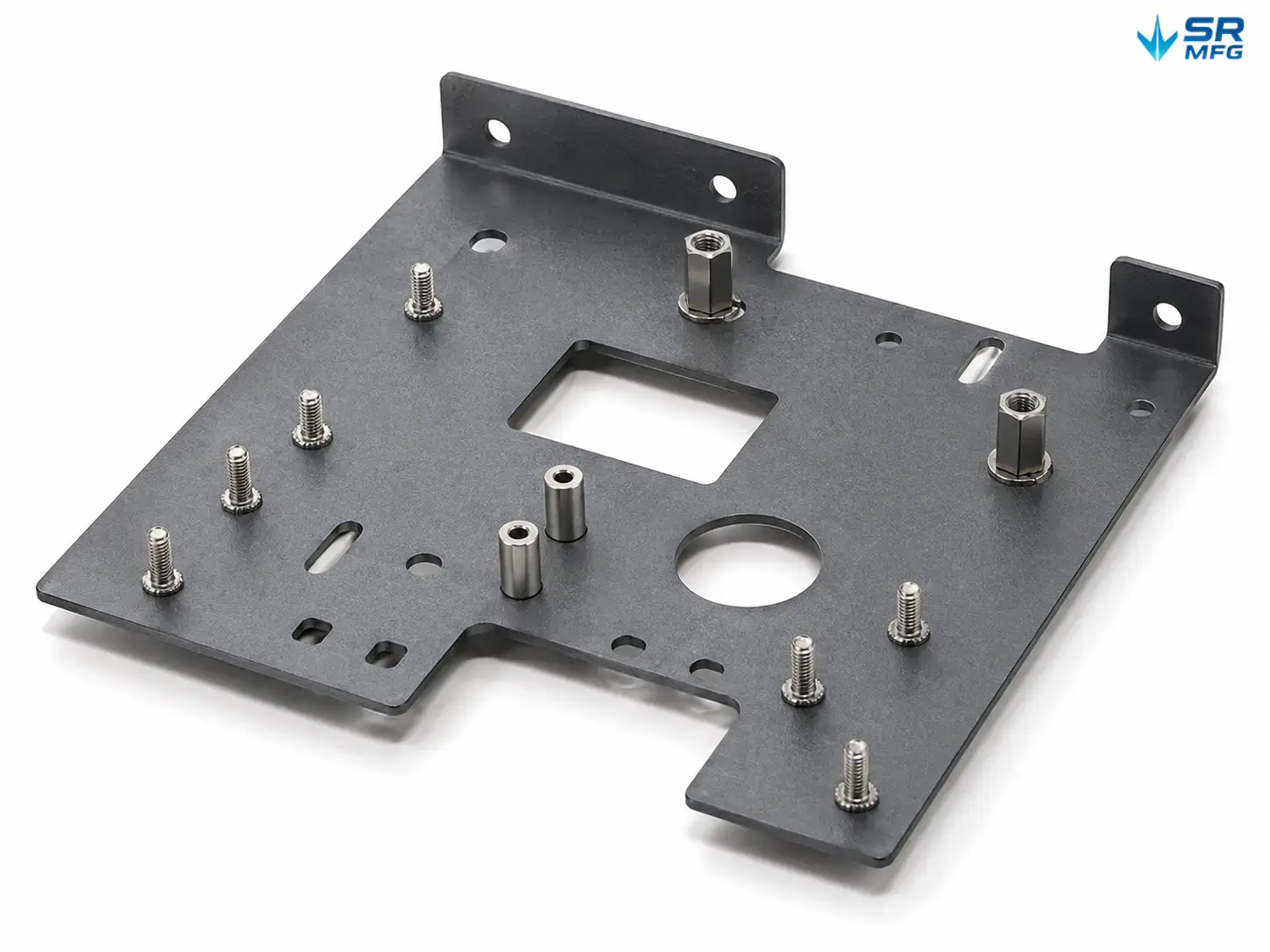
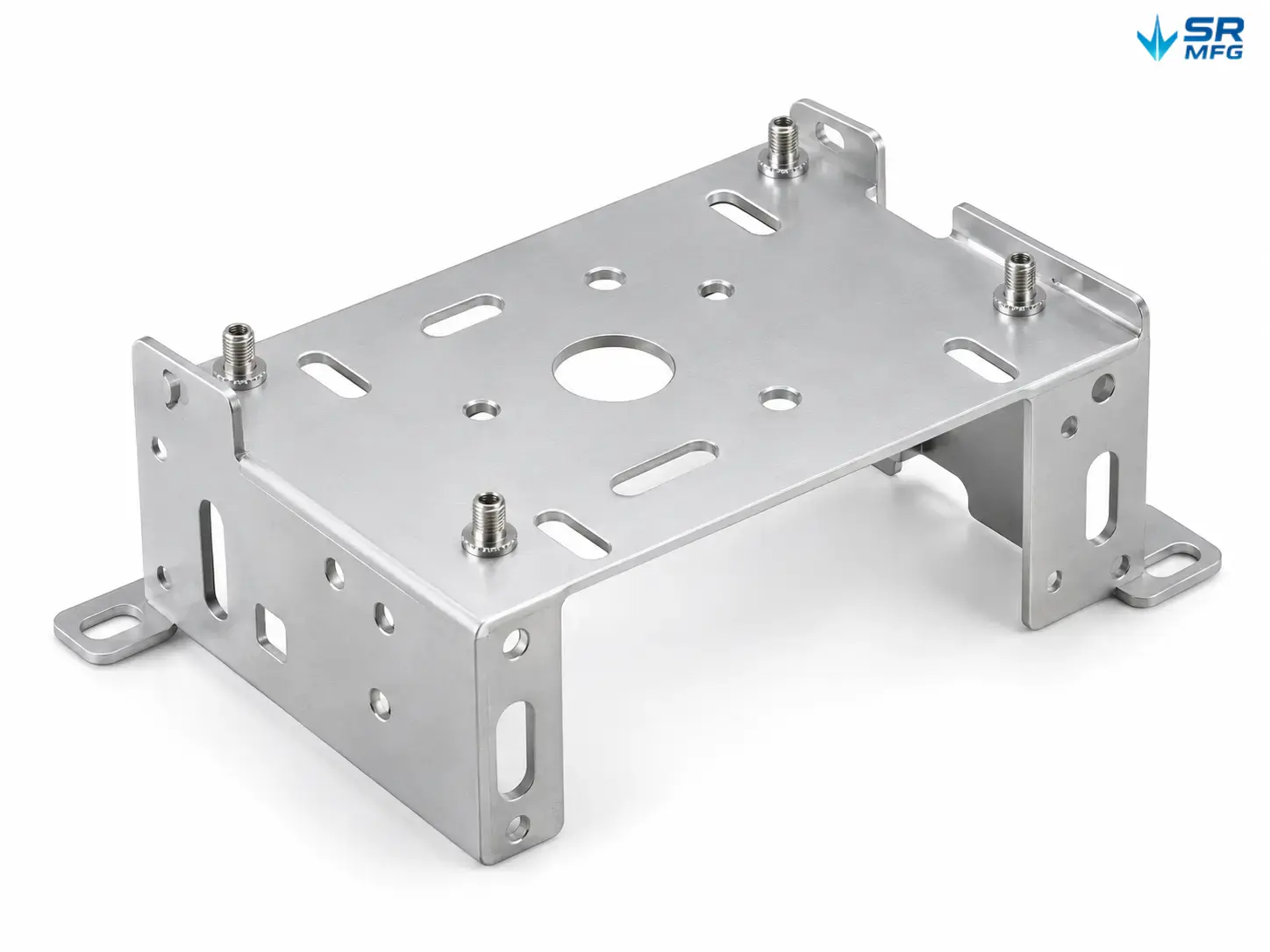
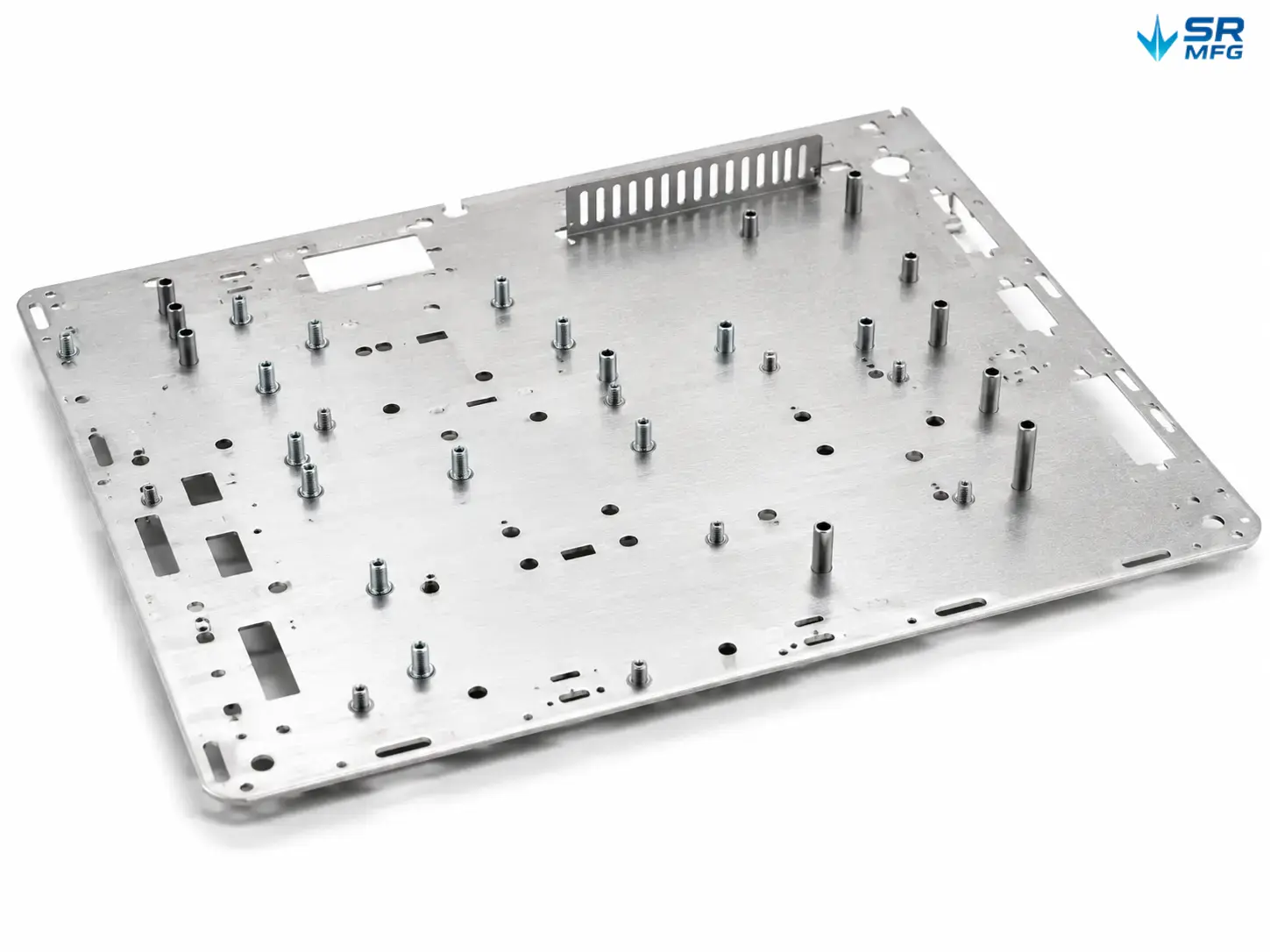
Custom sheet metal parts with self-clinching PEM studs — manufactured to your drawings, with all fasteners installed in-house and delivered ready for assembly.
- Base Materials: Carbon steel, stainless steel (304/316), aluminum (5052/6061), copper
- Sheet Thickness: 0.5 mm–6.0 mm
- Stud Types: Threaded studs, unthreaded standoffs, floating standoffs (UNC / UNF / Metric)
- Tolerance: Standard ±0.1 mm; tighter tolerances available upon request
Submit your drawings for a free DFM review and receive a quotation within 24 hours.
Product Details
Base Material Specifications
| Parameter | Options / Range |
|---|---|
| Material Types | Cold-rolled steel (SPCC/DC01), hot-rolled steel (SPHC), stainless steel (SUS 304, SUS 316), aluminum (5052-H32, 6061-T6), copper (C110) |
| Sheet Thickness | 0.5 mm–6.0 mm, depending on material |
| Material Selection Guidelines | Carbon steel for cost-sensitive structural parts; stainless steel for corrosion-resistant applications; aluminum for lightweight designs; copper for parts requiring electrical conductivity |
PEM Stud Specifications
| Parameter | Details |
|---|---|
| Stud Types | Self-clinching threaded studs, self-clinching unthreaded standoffs, self-clinching floating standoffs |
| Metric Thread Sizes | M2.5, M3, M4, M5, M6, M8, M10 |
| Imperial Thread Sizes | #4-40, #6-32, #8-32, #10-32, 1/4″-20, 5/16″-18, 3/8″-16 |
| Stud Materials | Carbon steel with zinc plating, 300-series stainless steel, brass |
| Minimum Sheet Thickness | Varies by fastener size — M3/M4 typically require ≥0.040″ (1.0 mm); M6 and larger typically require ≥0.060″ (1.5 mm) |
| Recommended Hole Tolerance | Per the manufacturer’s specified mounting-hole requirements for each PEM fastener |
Self-Clinching Fastener Performance
| Parameter | Description |
|---|---|
| Pushout Strength | Tested in accordance with applicable PEM / IFI standards; actual values depend on fastener size, fastener material, sheet material, and sheet thickness |
| Torque-Out Resistance | Tested in accordance with applicable PEM / IFI standards; especially important in applications subject to rotational loading |
| Installation Force Monitoring | Calibrated self-clinching presses with force feedback are used to verify installation |
| Performance Documentation | Available upon request for qualification and validation requirements |
Dimensional and Fabrication Tolerances
| Parameter | Standard | Achievable |
|---|---|---|
| Linear Dimensions | ±0.1 mm | ±0.05 mm upon request |
| Hole Position | ±0.1 mm | ±0.05 mm for critical mounting holes |
| Bend Angle | ±1° | ±0.5° with precision bending |
| Flatness | ≤0.2 mm / 100 mm | Tighter requirements available upon request |
| Burr Height | ≤0.1 mm after deburring | Edge finishing available |
Surface Finish Options
| Surface Finish | Typical Applications |
|---|---|
| Powder Coating | General corrosion protection and cosmetic finishing; RAL / Pantone color matching available |
| Zinc Plating | Cost-effective corrosion protection for carbon steel parts |
| Anodizing (Type II / Type III) | For aluminum parts; available for decorative finishes or hard anodized surfaces |
| Passivation | For stainless steel; removes free iron and improves corrosion resistance |
| Wet Painting | Custom colors and textures; suitable for larger components |
| Nickel Plating | Improves wear resistance and provides moderate corrosion protection with a decorative finish |
Quality Control
| Inspection Stage | Inspection Method |
|---|---|
| Incoming Material Inspection | Material certificates are reviewed; sheet dimensions are inspected on a sampling basis |
| In-Process Inspection — Cutting and Forming | First-article inspection followed by scheduled dimensional checks during production |
| Self-Clinching Stud Installation | Installation force is monitored; each stud is checked for proper seating, secure installation, and positional alignment |
| Final Inspection | Dimensional verification using CMMs / calipers, thread inspection, sampled fastener-retention testing, surface-finish inspection, and visual inspection |
| Documentation | Inspection reports available upon request; Certificates of Conformance (COC) can be supplied with shipment |
Ordering Information
| Parameter | Details |
|---|---|
| Drawing Formats | PDF, DWG, DXF, STEP, IGES, SolidWorks (SLDPRT / SLDDRW) |
| MOQ | No strict minimum order quantity — prototypes and production quantities are supported |
| Prototype Lead Time | 3–5 business days |
| Production Lead Time | 7–15 business days, depending on complexity, quantity, and surface finish |
| Shipping | Worldwide shipping; packaging tailored to customer requirements |
| Payment Terms | Negotiated based on order size and business relationship |
What We Can Manufacture
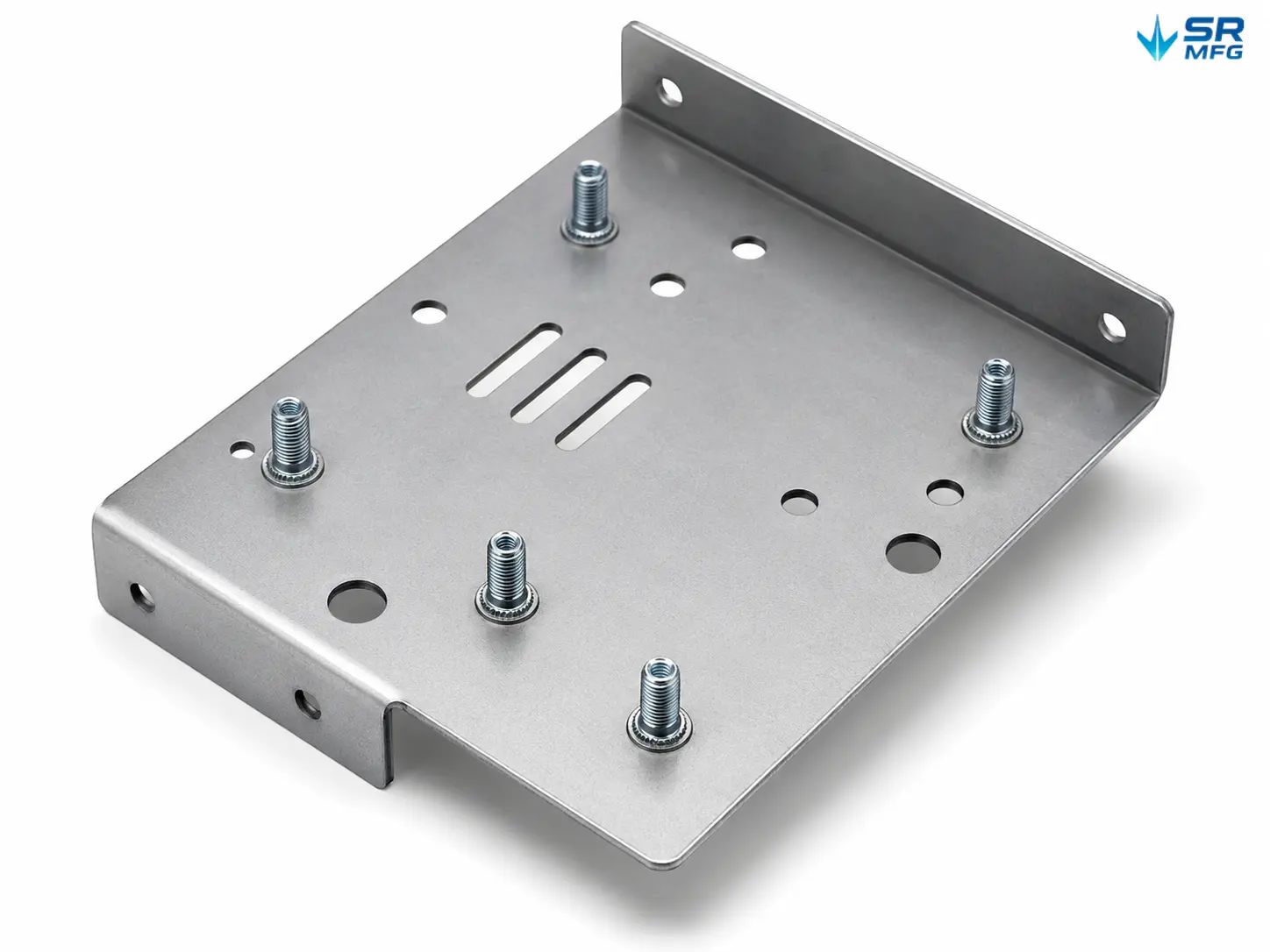
We manufacture custom sheet metal parts with self-clinching PEM studs, built entirely to your technical requirements.
Whether you need a single prototype bracket or a production run of 10,000 enclosures, every part starts with your drawing and is delivered as a finished, assembly-ready component.
Because self-clinching fastener installation is completed in-house, you get a true one-stop manufacturing solution.
There is no need to outsource fastener installation, coordinate multiple suppliers, or manage quality issues caused by separating sheet metal fabrication from hardware installation.
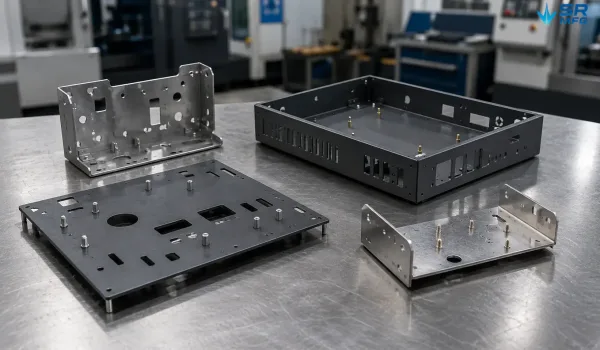
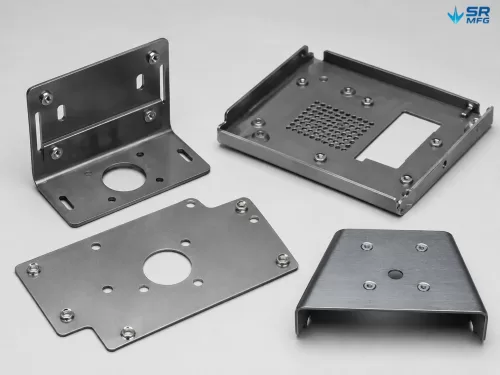
Custom brackets, mounting panels, and enclosure components delivered with self-clinching studs and standoffs already installed.
How Self-Clinching Studs Work
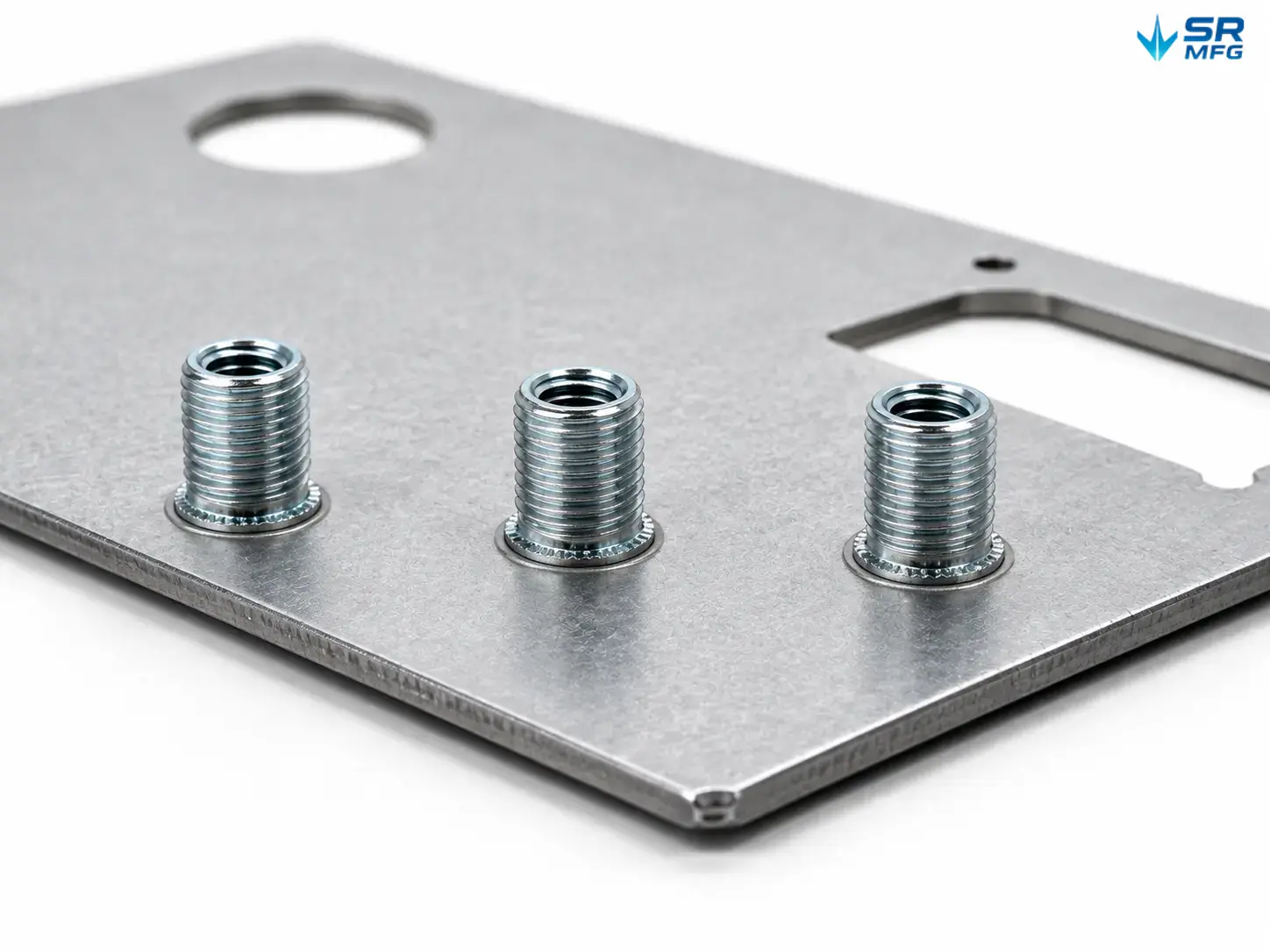
Self-clinching studs are installed by pressing them into precisely prepared mounting holes in sheet metal.
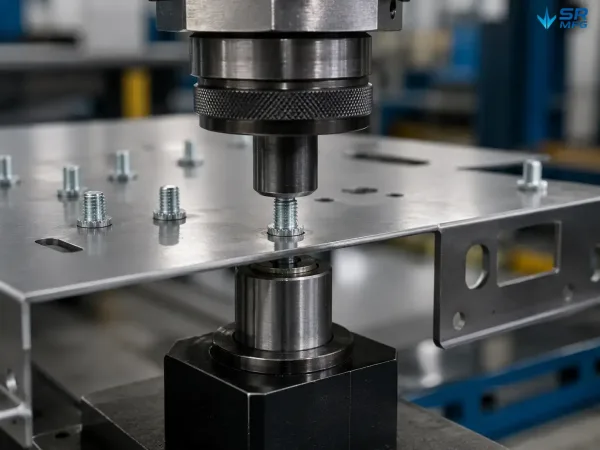
A controlled press installs the self-clinching stud into a precisely prepared mounting hole.
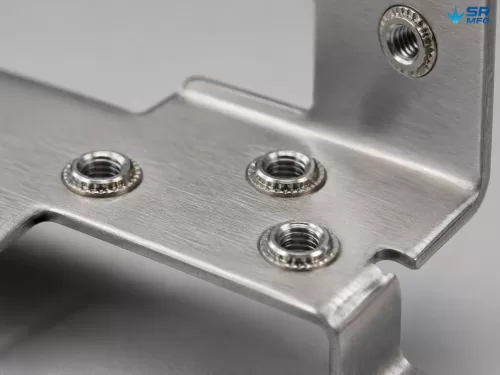
During installation, the fastener’s knurled or serrated clinching section displaces and embeds itself into the surrounding sheet material, creating a permanent mechanical lock.
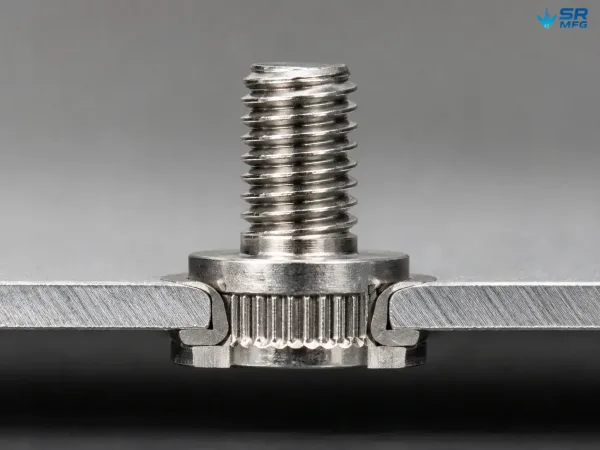
The clinching section of the stud displaces the surrounding sheet material to create a permanent mechanical lock.
The entire process requires:
No welding, no heat-affected zone, and no heat distortion in the surrounding sheet metal.
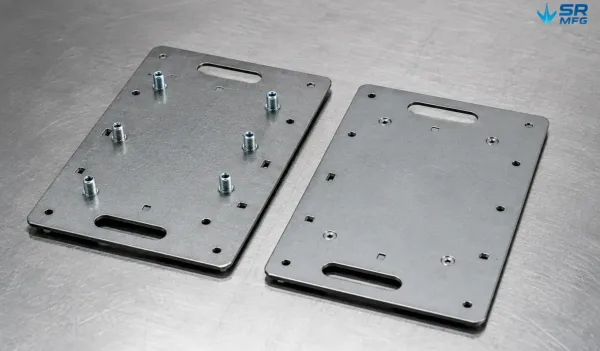
The stud is securely installed while the reverse side of the sheet remains flat and free from weld distortion.
This provides three major advantages:
- A flush reverse side. The opposite side of the panel remains essentially flush, which is especially important for enclosures, racks, and mounting panels that need to sit flat against walls, rails, or other components.
- More consistent mechanical strength. Self-clinching studs provide stable and repeatable pushout and torque-out performance in volume production, without the operator-dependent variability often associated with welded studs.
- No post-weld finishing. There is no weld spatter to grind, no heat discoloration to remove, and no need to straighten sheet metal distorted by welding.
For applications that require threaded mounting points in thin sheet metal — such as server racks, control cabinets, telecommunications enclosures, and medical equipment frames — self-clinching fasteners are a widely used and highly effective solution.
Typical Applications
- Server Racks and Data Cabinets — Threaded studs for mounting rails, cable-management components, and equipment trays
- Electrical Enclosures and Control Panels — Fastening points for DIN rails, terminal blocks, and internal components
- Telecommunications Enclosures — High-density self-clinching fastener layouts for PCB support and grounding / shielding connections
- Medical Equipment Frames — Suitable for precision assemblies that require repeated removal and reassembly
- LED Lighting Assemblies — Mounting points for drivers and heat sinks inside thin-sheet housings
- Industrial Automation Equipment — Brackets and mounting plates with captive fasteners for sensors, actuators, and other components
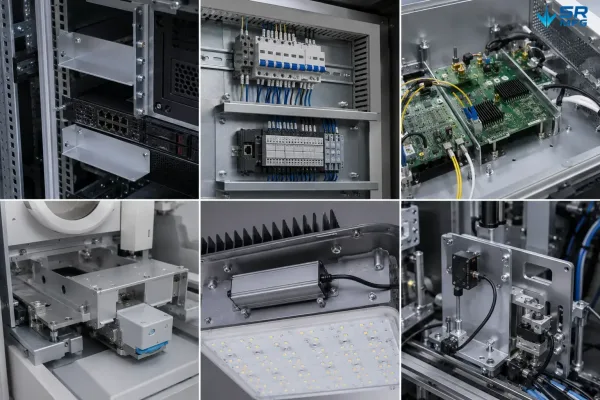
Self-clinching fasteners provide permanent mounting points in server, electrical, telecom, medical, lighting, and automation equipment.
Why Choose Us
- One-Stop Sheet Metal Manufacturing. Laser cutting, bending, self-clinching fastener installation, surface finishing, and assembly are coordinated through one supplier.
- In-House PEM Stud Installation. Calibrated self-clinching equipment is used to control installation force according to fastener specifications, with pushout and torque-out retention performance verified as required.
- DFM First. We review your drawings before quotation to identify design issues that could create manufacturing problems or unnecessary cost.
- Flexible Order Quantities. From a single prototype to production runs of 50,000 parts, we support both low-volume and high-volume requirements without rigid MOQ restrictions.
- Responsive Engineering Support. Questions about stud selection, material compatibility, installation requirements, or structural optimization are typically answered by our engineering team within one business day.
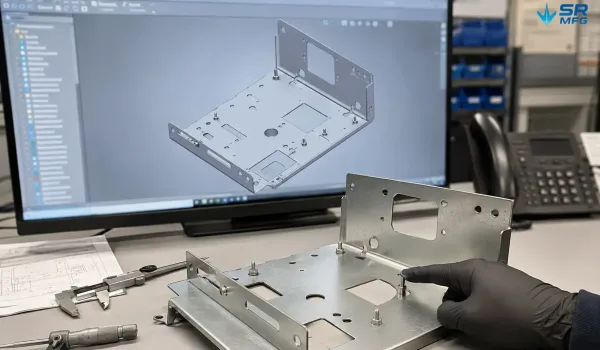
Fastener locations are reviewed for adequate clearance from bends, edges, and nearby features before production.