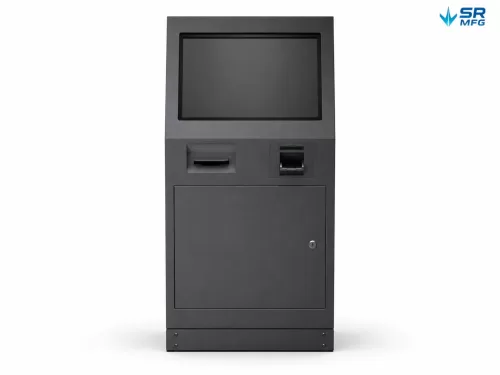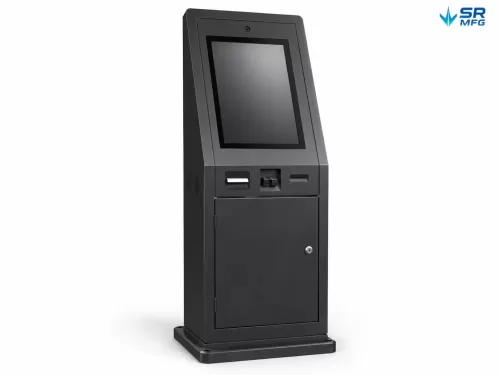
Outdoor Self-Service Kiosk Enclosure
We manufacture custom outdoor kiosk cabinets in cold-rolled steel, galvanized steel, 304 / 316 stainless steel, and aluminum alloy, specifically designed for self-service terminals, digital signage, payment terminals, and information display equipment deployed in exposed outdoor environments.
Core Capabilities:
- Cabinet Materials: Cold-rolled steel / galvanized steel / SS304 / SS316 / aluminum alloy — selected to match your installation environment
- Protection Ratings: IP54 to IP66 — protection against rain and dust, with options suitable for washdown environments
- Custom Fabrication: Dimensions, display cutouts, peripheral openings, internal layouts, and branding — all manufactured to your drawings
- Vandal-Resistant Construction: Tempered glass or laminated safety glass, concealed hinges, tamper-resistant hardware
- Thermal Management: Natural ventilation, filtered fan compartments, sunshades, and heater provisions
Typical Applications: Self-service terminals, outdoor digital signage, payment terminals, wayfinding displays, security terminals, and EV charging interface terminals.
Lead Time: Prototypes: 7–15 working days · Mass production: 20–35 working days
Product Details
| Specification | Value / Range |
|---|---|
| Cabinet Sheet Thickness | 1.2 mm / 1.5 mm / 2.0 mm, adjusted according to cabinet size |
| Door Panel Thickness | 1.5 mm / 2.0 mm / 2.5 mm |
| Mounting Plate Thickness | 1.5 mm / 2.0 mm, galvanized steel or stainless steel |
| Sheet Thickness & Size Recommendation | ≤800 mm: 1.2 mm · 800–1500 mm: 1.5 mm · ≥1500 mm: 2.0 mm+ |
| Maximum Single-Piece Size | Up to 2200 × 1200 × 800 mm (W × D × H); larger sizes can be manufactured using sectional assembly |
| Minimum Custom Size | 200 × 200 × 150 mm, subject to design review |
| Laser Cutting Tolerance | ±0.1 mm |
| CNC Bending Tolerance | ±0.15 mm |
| Assembly Tolerance | ±0.2 mm |
| Powder Coating Thickness | Standard 60–80 µm DFT / Enhanced outdoor grade 100–120 µm DFT |
| Salt Spray Performance (ASTM B117) | Standard 500 hours / Enhanced system 1000+ hours |
| IP Protection Rating | IP54 / IP55 / IP65 / IP66, tested according to IEC 60529 |
| Impact Resistance Rating | IK08, standard tempered glass / IK10, laminated glass / IK10+, polycarbonate overlay |
| Operating Temperature Range | Standard −20°C to +55°C / Extended −30°C to +60°C / −40°C to +70°C with heating and active cooling |
| Wind Load Resistance | Standard installation up to 120 km/h / Reinforced installation up to 150 km/h |
| Display Compatibility | 10″ to 65″, with custom cutouts based on the display model and VESA mounting compatibility |
| Peripheral Cutout Capability | Barcode scanner / receipt printer / card reader / NFC reader / coin acceptor / camera / speaker / fingerprint module |
| Natural Ventilation | Side louvers + removable G4-grade dust filters |
| Forced Ventilation | Reserved fan compartment, filtered air intake + exhaust, axial fans rated at least IP55 |
| Door Hold-Open Angle | 90°, integrated hinge mechanism |
| Grounding | Internal grounding terminal + grounding point compliant with IEC 60204-1 |
| Certifications | ISO 9001 · CE (EN 62208) · RoHS · UL, available upon request |
| Prototype Lead Time | 7–15 working days |
| Mass Production Lead Time | 20–35 working days, depending on quantity and complexity |
| MOQ | Prototype: 1 piece · Mass production: project-dependent |
| Packaging | Carton + EPE foam / wooden crate / plywood pallet, export standard |
Enclosure Structure — Three Functional Zones
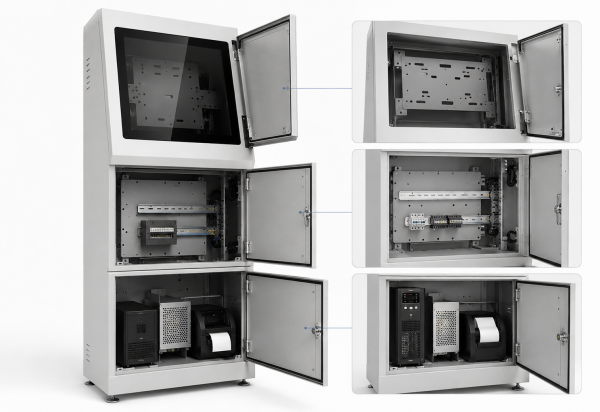
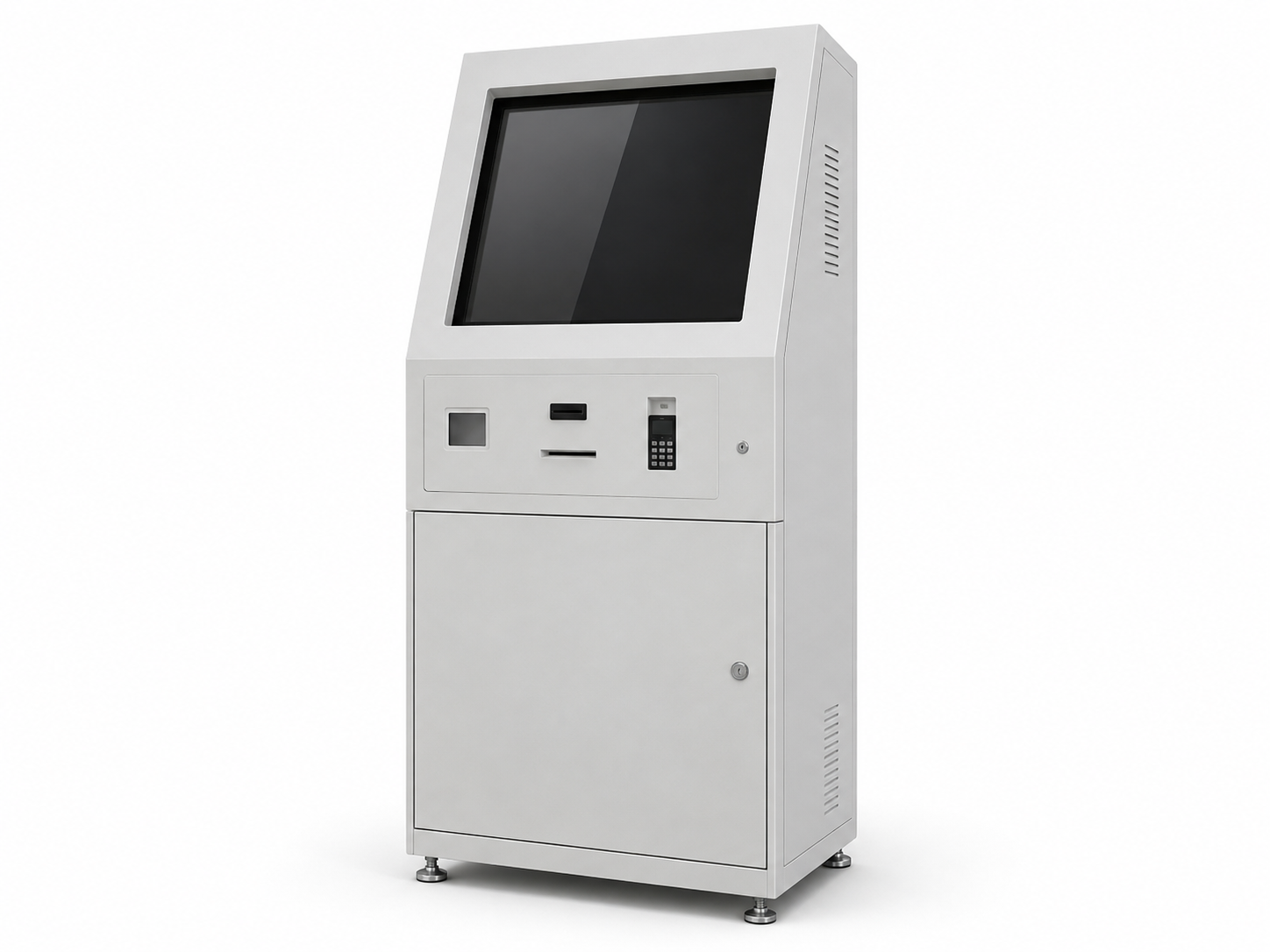
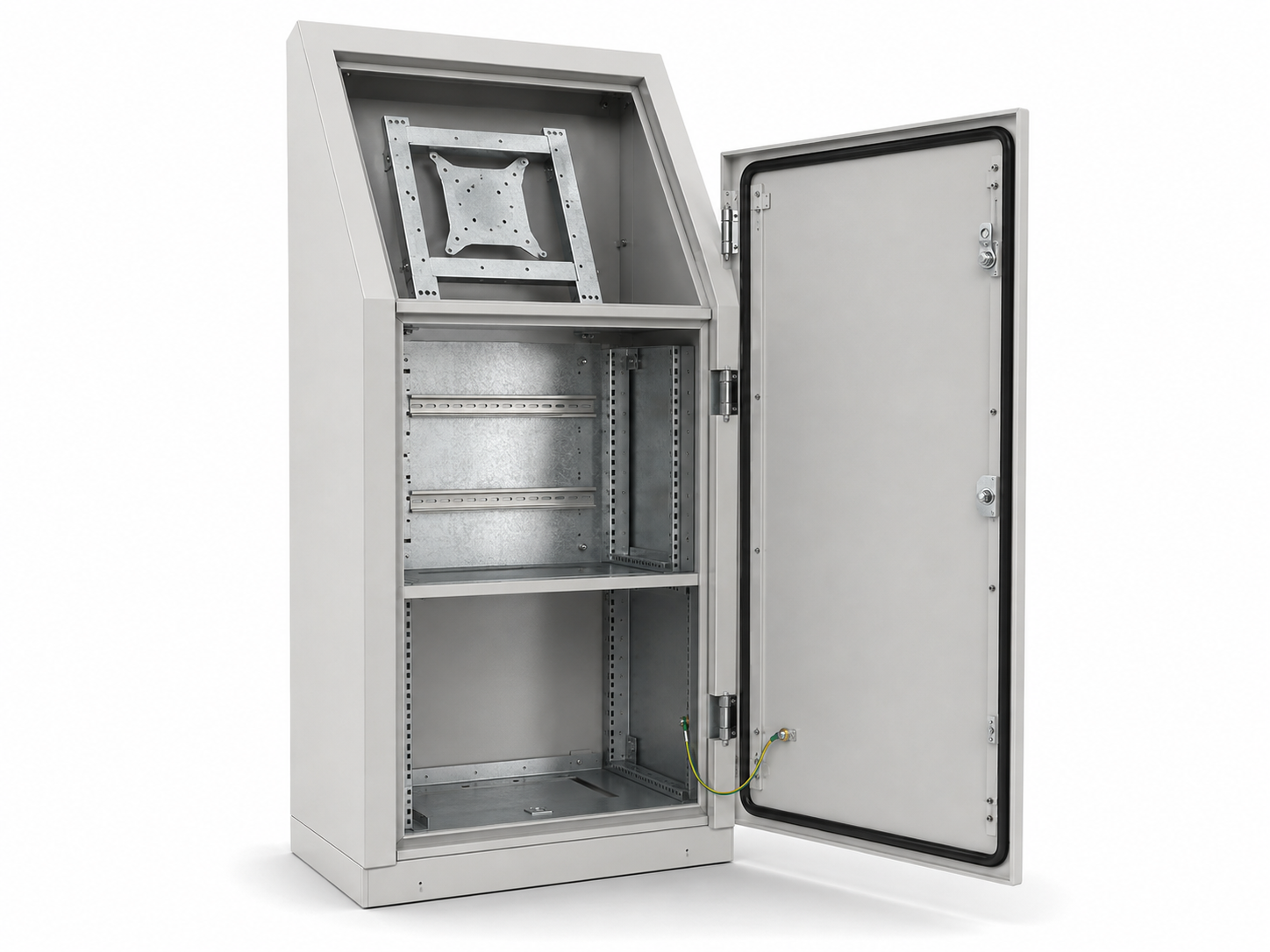
The image shows the upper display area, middle equipment compartment, and lower service compartment inside the cabinet.
Every outdoor self-service kiosk metal cabinet we manufacture is designed around three independent functional zones. This layout is not for appearance; it is designed to meet the practical requirements of electronics, wiring, and maintenance access inside a sealed outdoor enclosure.
Upper Zone — Display Mounting Area
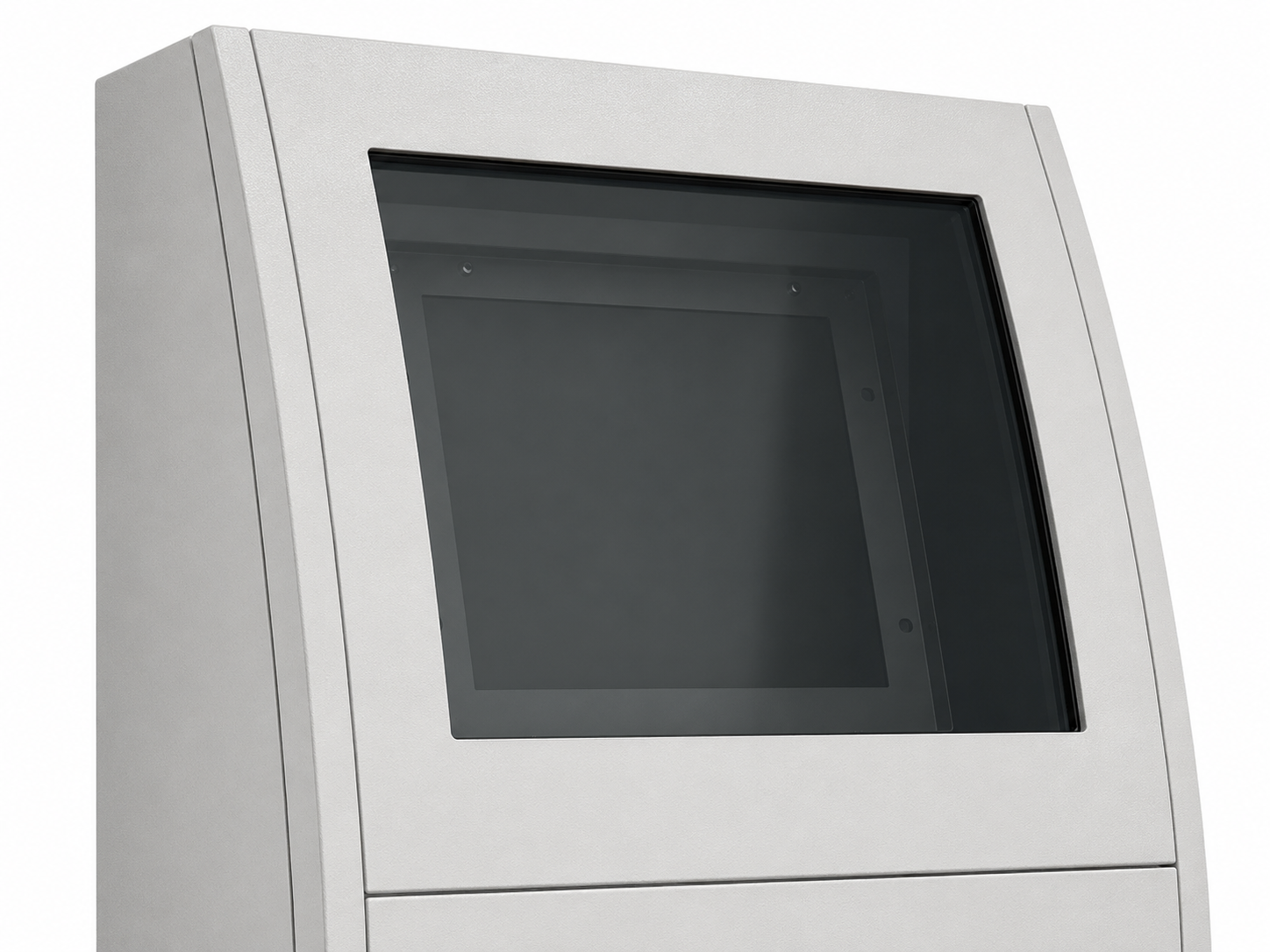
The upper front section of the cabinet is designed around the display. We create the cutout according to your screen dimensions, with common display sizes ranging from 10″ to 65″. An angled front panel can also be used to reduce glare caused by direct sunlight and improve outdoor readability. VESA-compatible display brackets can be welded or installed internally. Depending on security requirements, tempered glass, laminated safety glass, or polycarbonate can be used to create a waterproof sealed viewing window that protects the display while maintaining good optical clarity.
Middle Zone — Equipment Compartment
The equipment compartment is located behind or below the display. Pre-punched cable routing holes, DIN rail mounting points, and internal shelves can be used to install industrial PCs, media players, routers, and control boards. This area is structurally separated from the display compartment to allow independent thermal management. Internal cable ducts organize wiring and prevent cables from obstructing airflow paths.
Lower Zone — Service Compartment
The bottom of the cabinet contains a lockable service compartment. It can accommodate power supplies, UPS units, thermal printers, coin acceptors, or other application-specific equipment. Heavy-duty hinges with a 90° door hold-open mechanism keep the door open during maintenance. Floor-standing models can be equipped with adjustable feet, while wall-mounted models are secured to the mounting surface using anchor brackets.
This three-zone structure allows installation and maintenance personnel to service one area independently without disturbing the others. It also simplifies manufacturing—the three zones can be produced and assembled separately before final integration.
Standard Configuration
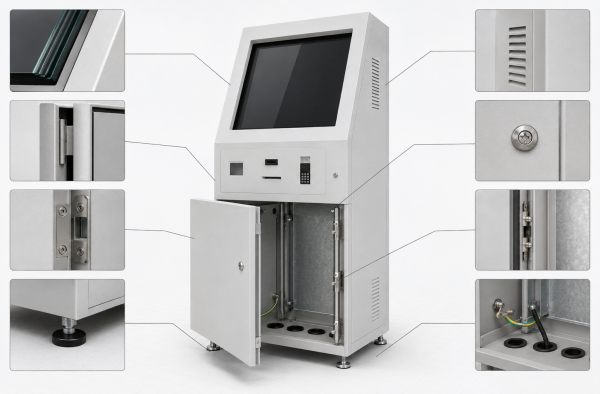
Each enclosure is supplied with the following components installed:
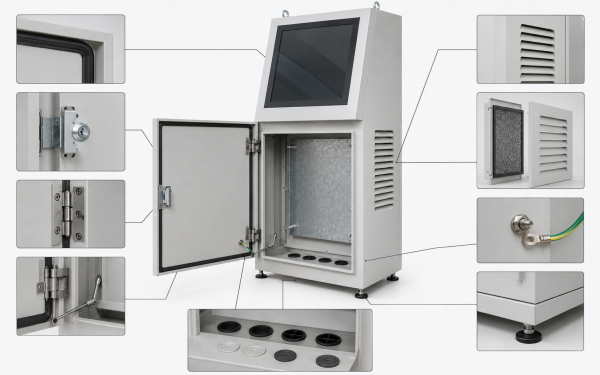
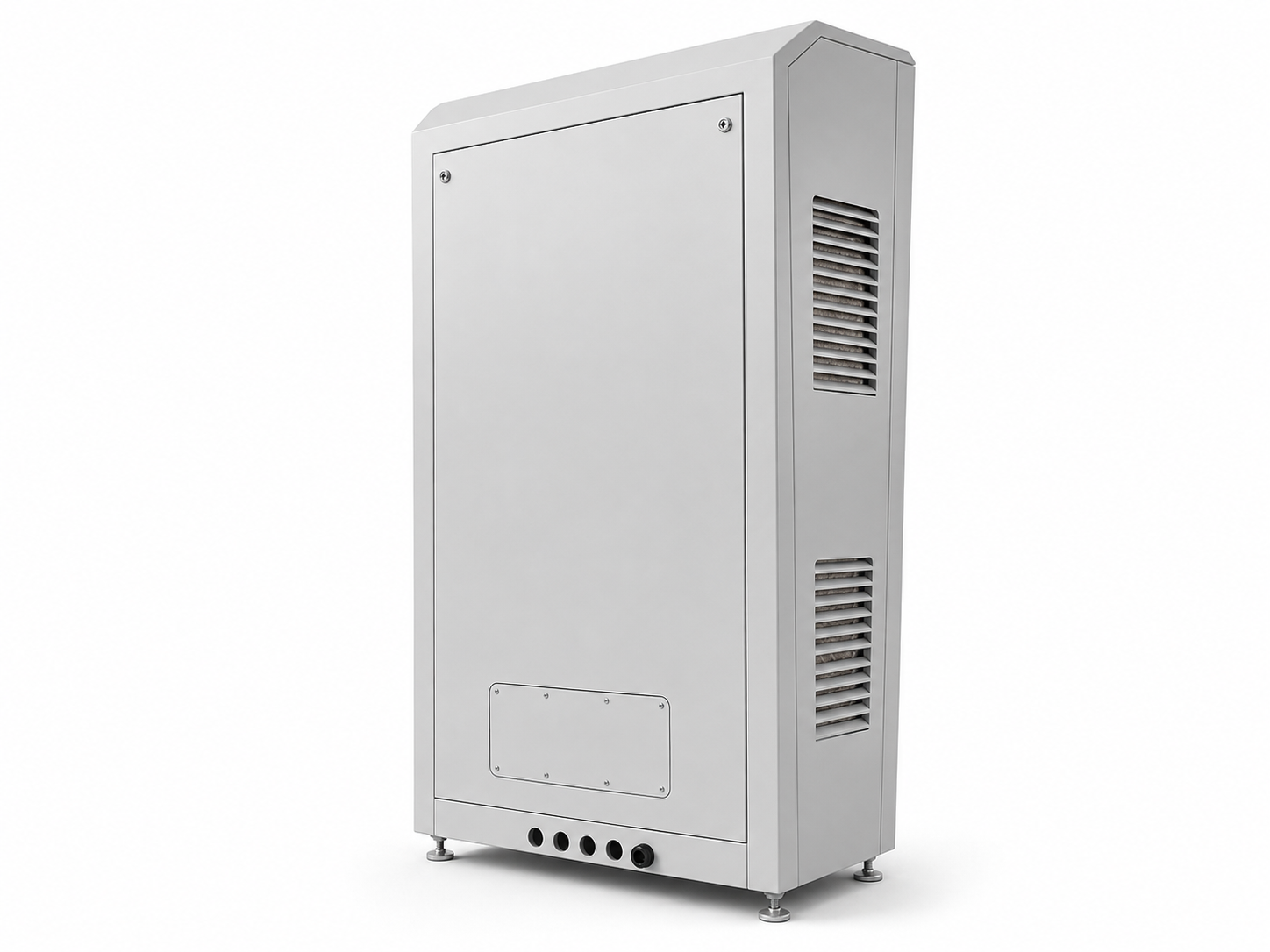
The image shows the standard mounting plate, gasket, hinges, lock, ventilation, grounding, and cable-entry components.
- Welded steel frame construction, with fully welded seams ground smooth
- Internal mounting plate, made from galvanized steel or stainless steel depending on material selection
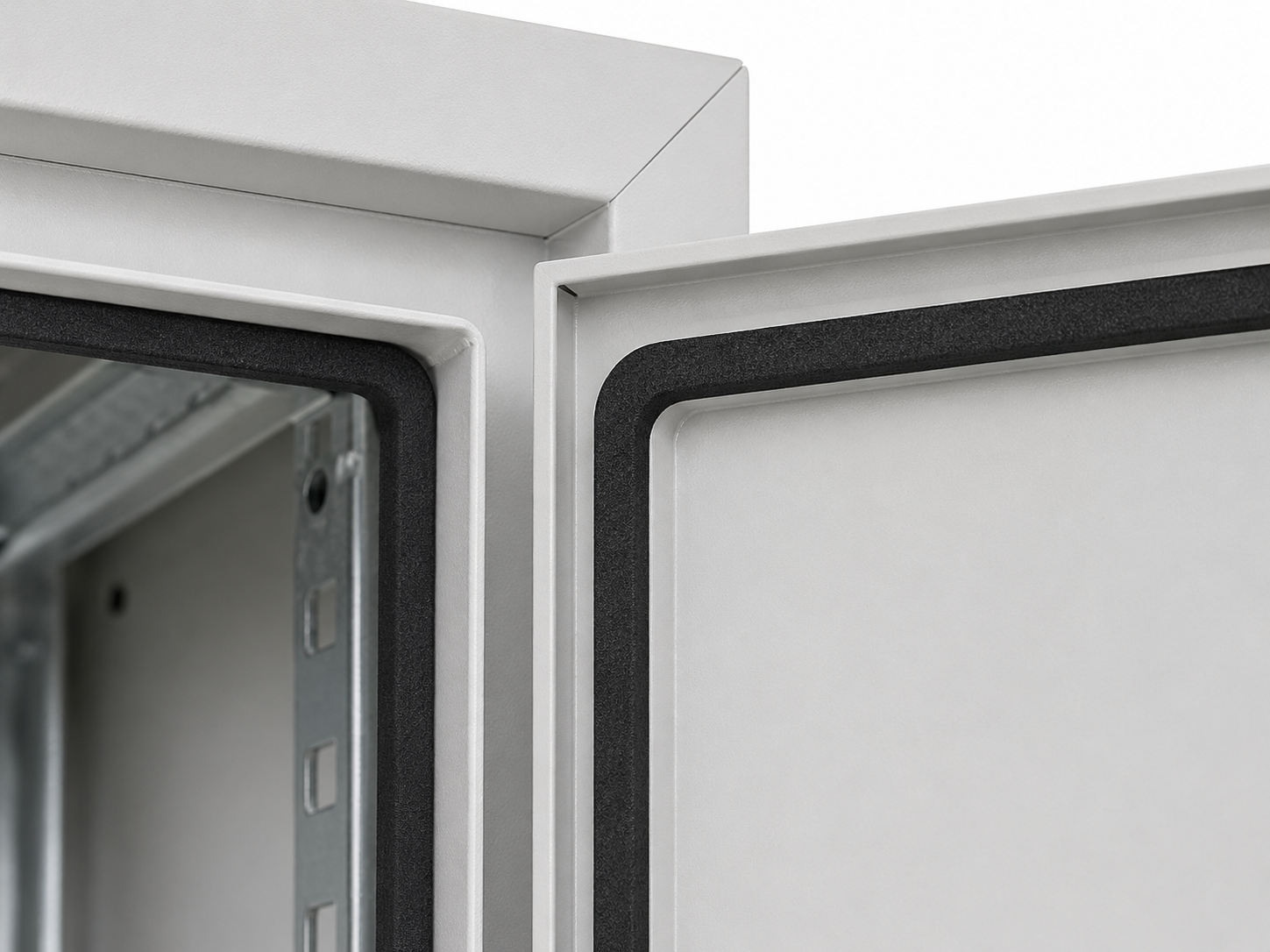
- EPDM foam gasket — continuous perimeter sealing for IP protection
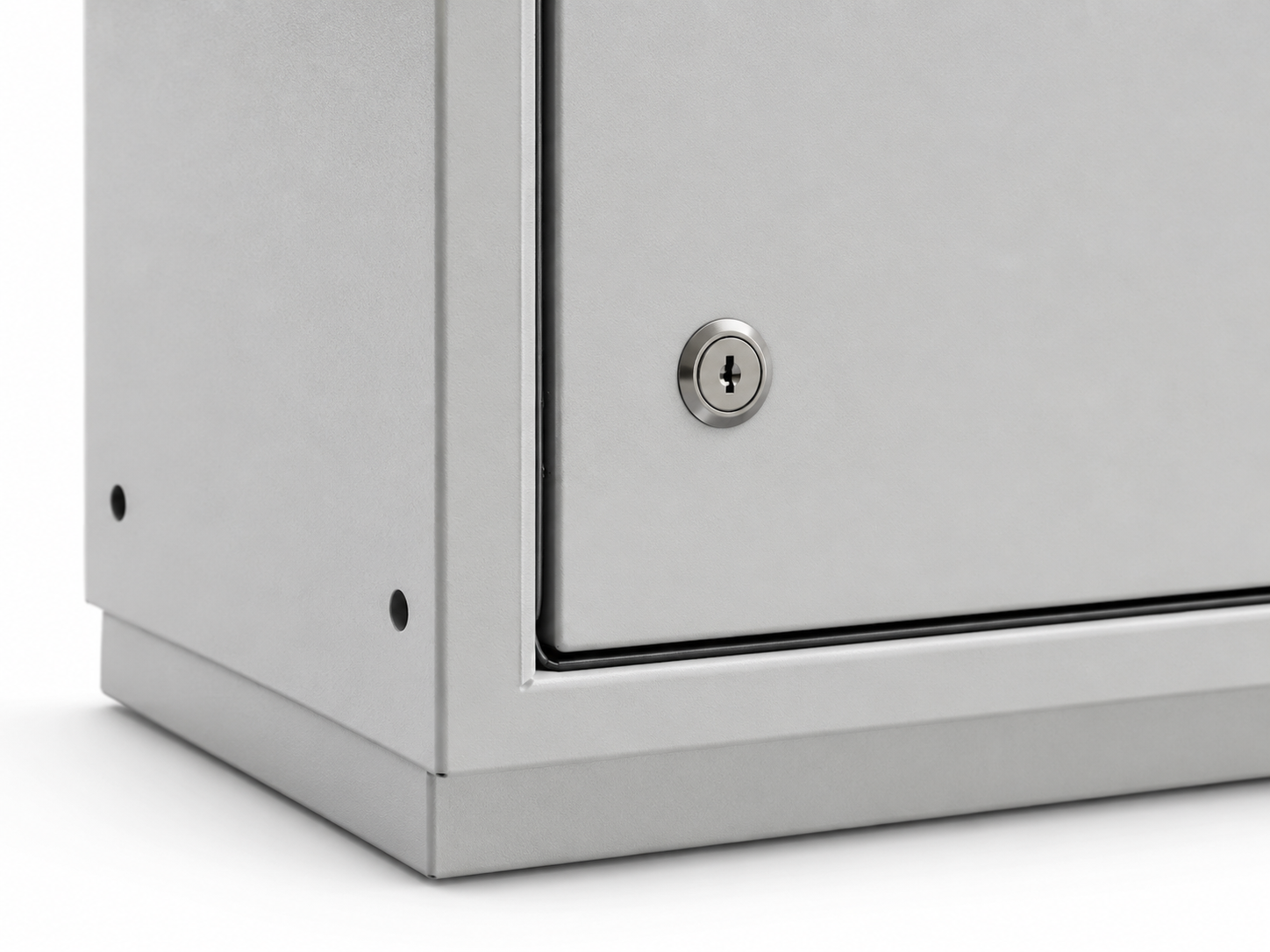
- Security locks, with triangular locks, Yale locks, or electronic locks available
- Heavy-duty hinges with a 90° door hold-open mechanism
- Grounding terminal and grounding point to meet electrical safety requirements
- Louvered ventilation openings with removable dust filters
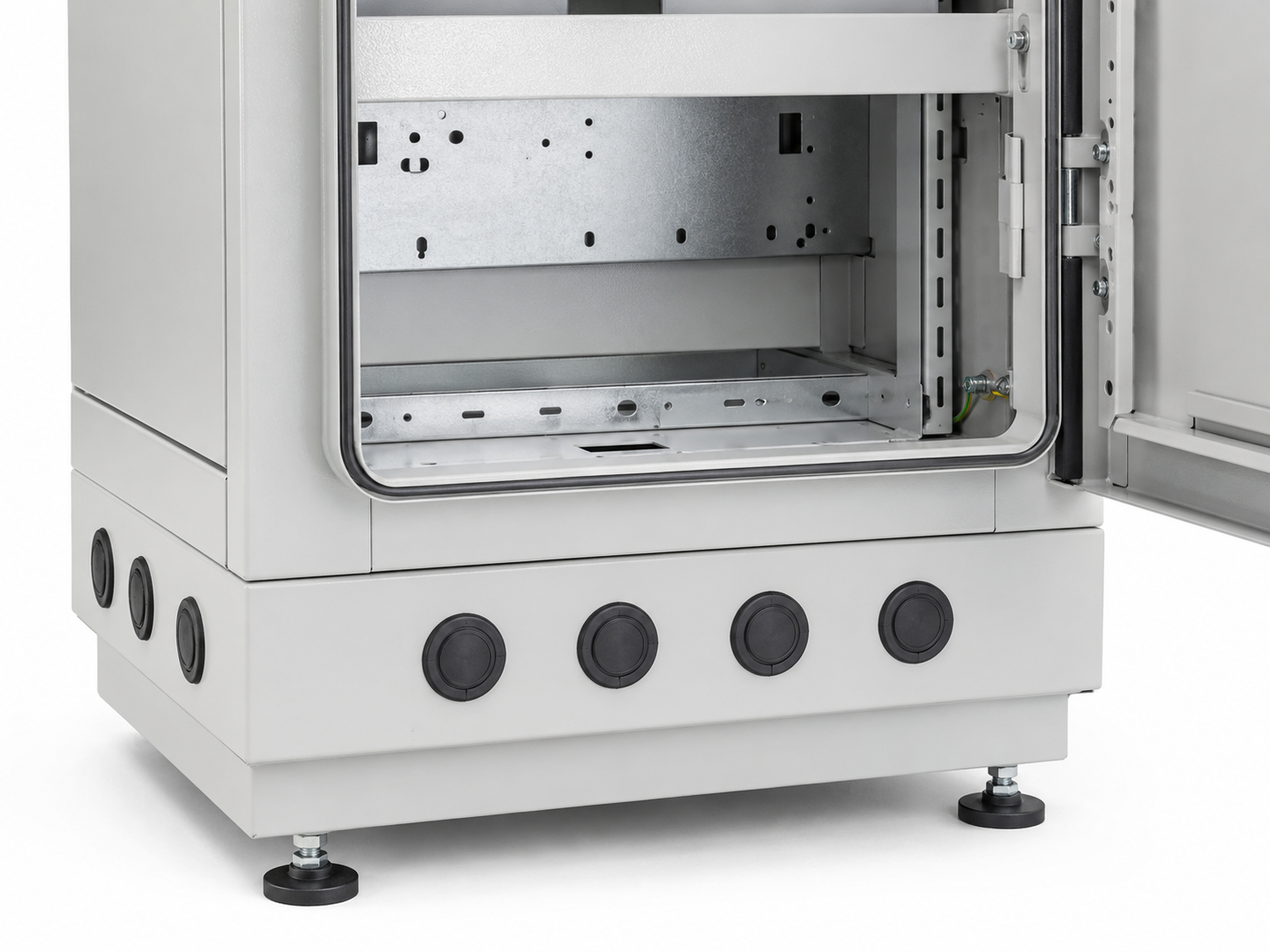
- Cable-entry knockouts with rubber grommets, with positions and quantities arranged according to drawings
- Adjustable feet for floor-standing models and mounting brackets for wall-mounted models
- Door stay to secure the door in the open position during maintenance
The following can also be added at the quotation stage: fan assemblies with filtered air inlets, top sunshades, internal DIN rails, cable glands, surge protectors, and thermostatically controlled heaters.
Material Selection Guide — Matching the Installation Environment
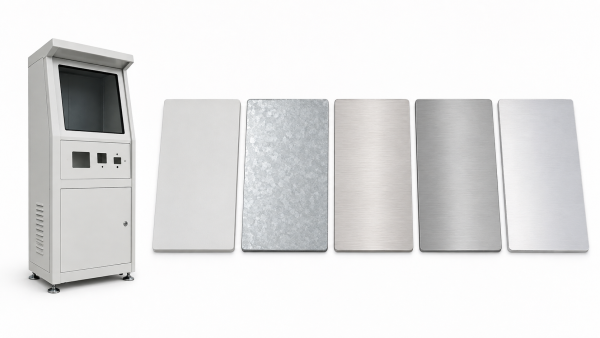
The image compares the main sheet metal materials available for outdoor kiosk cabinet construction.
Selecting the right enclosure material is one of the most important decisions in an outdoor kiosk project. The consequences of choosing the wrong material usually do not appear on the first day. Instead, corrosion, pitting, or coating failure may develop after two or three years of service, eventually affecting the integrity of the cabinet.
| Material | Typical Environment | Recommended IP Rating | Description |
|---|---|---|---|
| Cold-Rolled Steel (SPCC) + Powder Coating | Indoor / sheltered outdoor environments | IP54–IP55 | Lowest cost. Any outdoor use requires high-quality powder coating with a dry film thickness of 60–80 µm. Not suitable for coastal or industrial corrosive environments. |
| Galvanized Steel (SGCC) + Powder Coating | General outdoor / urban installations | IP55–IP65 | The galvanized substrate provides a sacrificial zinc protective layer beneath the powder coating. This dual-layer protection system extends service life in moderate climates. |
| 304 Stainless Steel + Passivation or Powder Coating | Outdoor / humid / light industrial environments | IP65–IP66 | The chromium oxide passive layer provides resistance to atmospheric corrosion. Suitable for most outdoor environments, but not recommended for coastal or chemically corrosive areas. |
| 316 Stainless Steel + Passivation | Coastal / marine / chemical / high-chloride environments | IP66 | The addition of 2–3% molybdenum improves resistance to chloride pitting and crevice corrosion. Recommended for installations within 5 km of seawater or in chemical environments. |
| Aluminum Alloy (5052 / 6061) + Anodizing or Powder Coating | Weight-sensitive / wall-mounted / mobile equipment | IP54–IP65 |
Approximately one-third the weight of steel. The natural oxide layer provides basic corrosion resistance, while Type II or Type III anodizing can further improve hardness and wear resistance.
For most conventional outdoor kiosk projects in urban streets, shopping centers, and transportation hubs, galvanized steel with powder coating generally provides the best balance of cost, durability, and fabrication flexibility.
If the installation location has a direct line of sight to seawater, upgrading to 316 stainless steel is recommended. The material cost is higher, but replacing an entire enclosure that has failed due to corrosion is far more expensive.
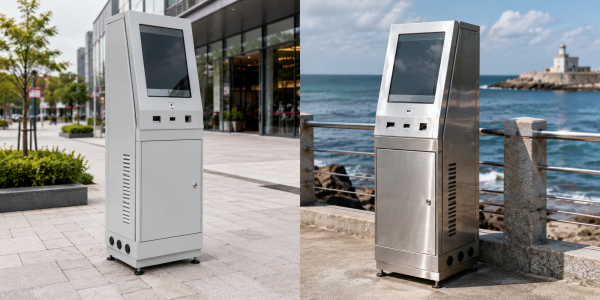
The image compares a powder-coated galvanized steel kiosk in an urban setting with a 316 stainless steel kiosk in a coastal setting.
Thermal Management — Protecting Electronics in Outdoor Environments
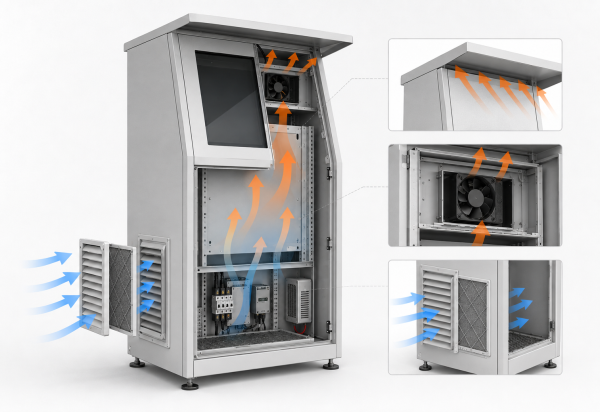
The image shows natural airflow, filtered fan ventilation, a sunshade, and heater provision inside the kiosk cabinet.
Under direct sunlight, the internal temperature of an outdoor cabinet can rise 15–25°C above the ambient temperature. Electronic components also continuously generate heat. Without proper thermal management, components will age and fail more quickly, and display brightness will also decline.
Natural Ventilation
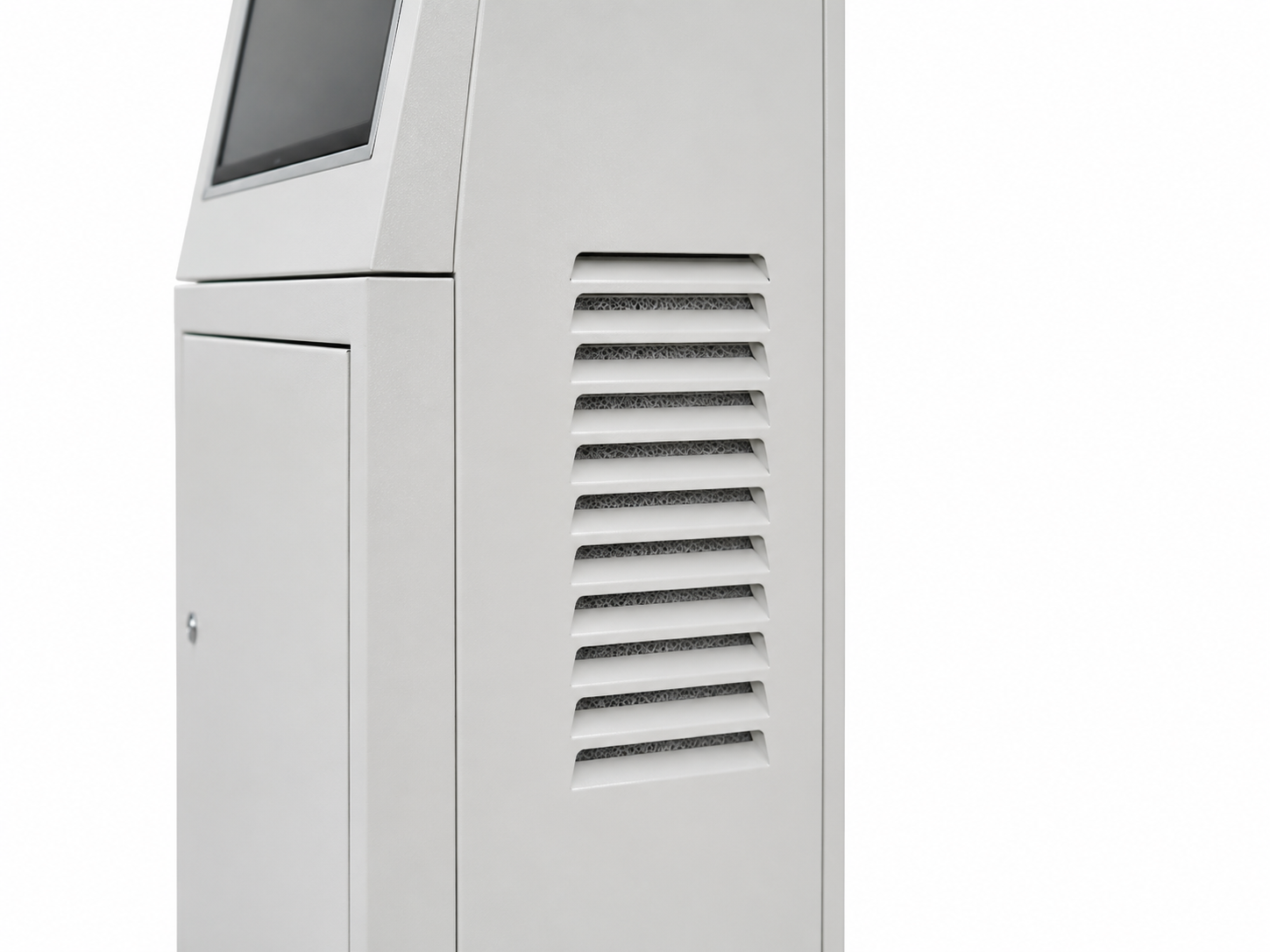
Louvered vents are positioned on opposite sides of the cabinet to create cross-flow ventilation. Each vent is fitted with a removable G4-grade or higher dust filter. This configuration is suitable for moderate climates where the ambient temperature remains below 35°C and the total heat output of the internal electronics is below 100 W.
Forced Ventilation
For higher heat loads or hotter regions, a reserved fan compartment can be incorporated into the cabinet, with a filtered air intake at the bottom and an exhaust outlet at the top. We recommend axial fans rated at least IP55 and suitable for continuous outdoor operation. Fan speed can be controlled by a thermostat to reduce noise and energy consumption during cooler periods.
Sunshades and Rain Canopies
A sunshade welded or bolted to the top of the cabinet can reduce solar radiation on the front surface by approximately 40–60%. For wall-mounted installations, the top canopy can also be extended to provide both shade and rain protection.
Heater Provision
For installation areas where winter temperatures fall below −20°C, a thermostatically controlled internal heater can be added to prevent condensation and keep the LCD display within its normal operating temperature range. Heating power is calculated according to the cabinet’s internal volume and the target minimum temperature.
The thermal management system is integrated directly into the cabinet structure during the custom sheet metal fabrication stage—ventilation openings are laser-cut before welding, fan mounting holes are punched in advance, and fan power cable routing is planned together with the main wiring rather than added later after a closed enclosure has already been completed.
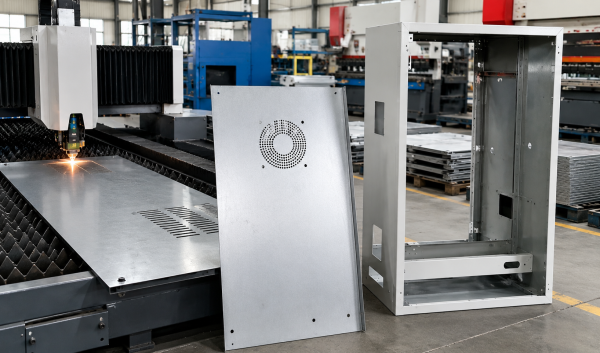
The image shows ventilation openings, fan mounting holes, and cable-routing features integrated during sheet metal fabrication.
Security Design — Engineered for Public-Space Deployment
The image shows the concealed hinge, reinforced lock area, safety glazing, tamper-resistant fasteners, and protected cable entry.
Kiosk cabinets used in outdoor equipment applications and public areas face very different security risks from industrial cabinets used in controlled factory environments. The design must deter opportunistic vandalism without making routine maintenance difficult for authorized service personnel.
Locking Systems
Three standard lock types are available for different deployment scenarios: triangular locks, commonly used in European public infrastructure; Yale locks, suitable for standard commercial projects; and electronic locks, suitable for networked equipment requiring access logs and remote authorization. All locks can be configured for keyed-alike or keyed-different management.
Pry-Resistant Construction
Concealed hinges prevent hinge pins from being exposed externally, leaving no obvious leverage point for pry bars. Reinforced latch plates distribute impact loads across the entire door frame rather than concentrating them at the lock position. For high-risk locations, three-point cam locks can be used to secure the upper, middle, and lower sections of the door simultaneously.
Transparent Panel Options
Standard 5–8 mm tempered glass can withstand general impact. For higher-risk environments, laminated safety glass can be used—a glass, polycarbonate, and glass composite structure that remains intact even if broken. Anti-glare coatings can reduce outdoor reflections and improve readability while maintaining optical clarity.
Tamper-Resistant Fasteners
External fasteners can use non-standard drive types such as security Torx with center pins, pin hex, or two-hole screws. They cannot be easily removed with ordinary tools, reducing the risk of unauthorized disassembly.
Cable Security
Cable entry can be routed through concealed cable channels or underground conduits. For exposed installations, armored cables and tamper-resistant cable glands can be used to reduce the risk of cable theft or intentional cutting.