
AA 7075-T6 (7xxx Series, Ultra-High-Strength Aluminum-Zinc-Magnesium-Copper Alloy)
Strength
Excellent strength-
to-weight ratio
Machinability
Optimized for CNC
and precision parts
Performance
Reliable under cyclic
and dynamic loads
(T6 Temper)
Engineered for maximum
strength and stability
AA 7075-T6 (7xxx Series, Ultra-High-Strength Aluminum-Zinc-Magnesium-Copper Alloy): The Basics
AA 7075-T6 belongs to the 7xxx series of aluminum alloys. The defining feature of the 7xxx series is the use of zinc, magnesium, and copper as the principal alloying elements in the aluminum matrix. The interaction of these elements, combined with carefully controlled heat treatment, gives AA 7075-T6 a strength level far beyond that of ordinary aluminum alloys.
The suffix T6 refers to its temper. The “T” indicates that the alloy has been strengthened by heat treatment, and the “6” means it has been solution heat treated and then artificially aged. In practical terms, the material is first held at around 450°C for several hours so the alloying elements dissolve uniformly into the aluminum matrix, then rapidly quenched to retain a supersaturated condition, and finally aged at around 120°C for about 24 hours so that fine precipitates form evenly throughout the material. This process drives 7075 to its peak strength condition, which is why it is known as an ultra-high-strength aluminum-zinc-magnesium-copper alloy.
That description is well earned. Among all aluminum alloy families, the 7xxx series generally sits at the top end of the strength range.
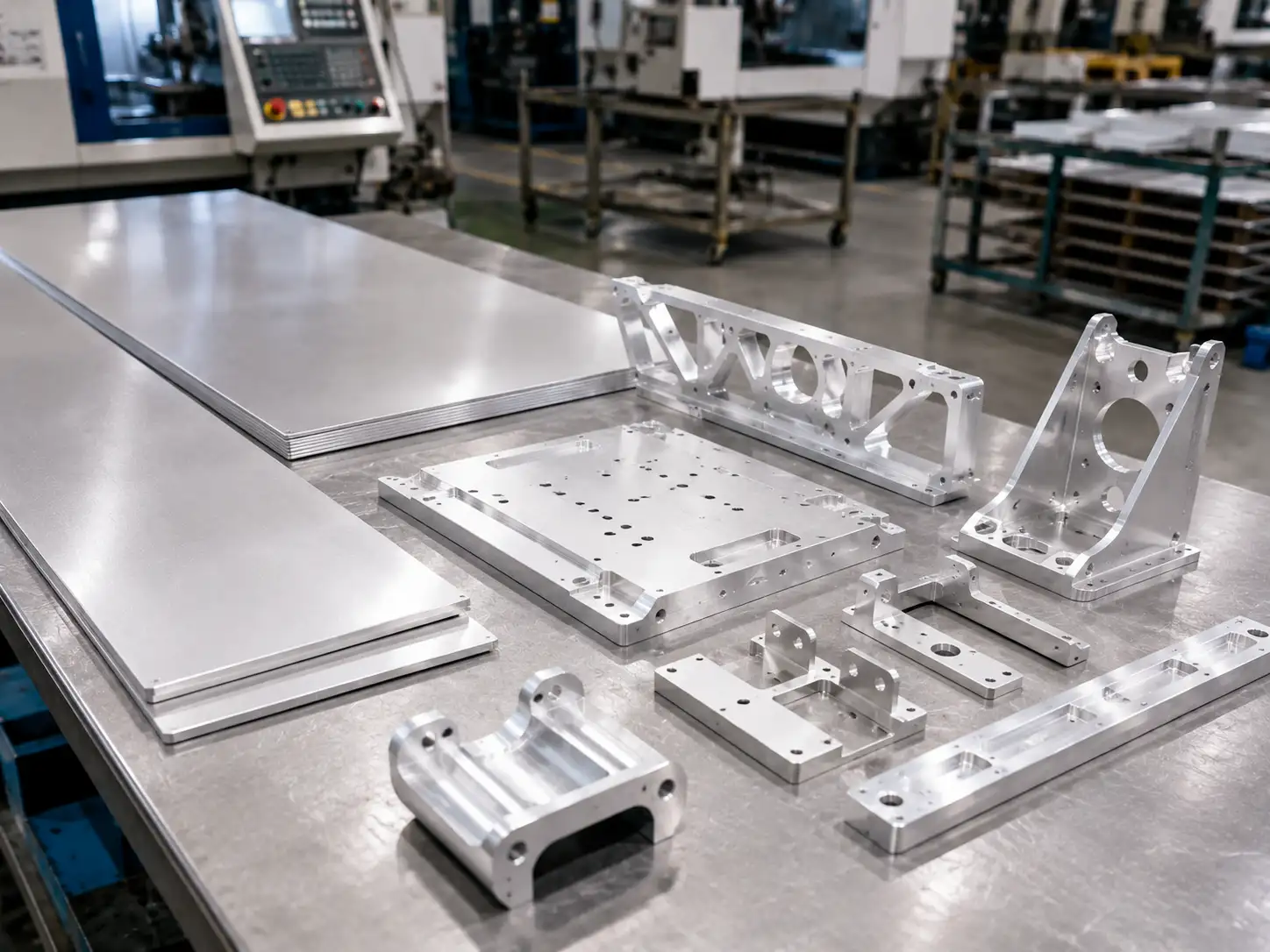
Core Performance Limits of AA 7075-T6
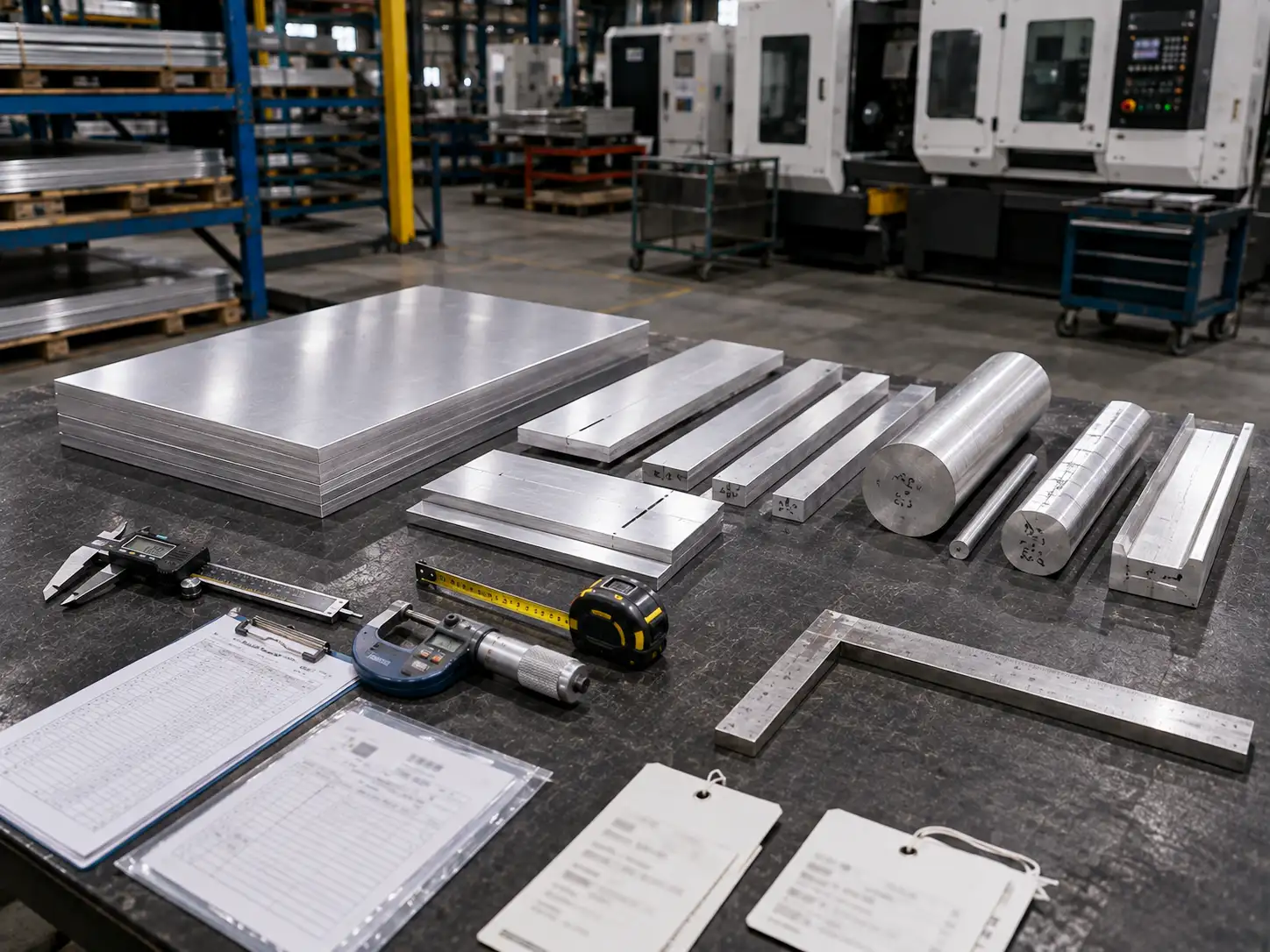
Common 7075 Grades and Tempers
| Grade / Temper | Simple Explanation |
|---|---|
| 7075-T6 | Solution heat treated and artificially aged; peak-strength condition and the most common general supply temper |
| 7075-T651 | T6 with stress relief by stretching; less machining distortion, commonly used for plate |
| 7075-T73 / T7351 | Overaged temper; gives up some strength in exchange for better stress corrosion resistance |
| 7075-T76 / T7651 | Between T6 and T73; balances strength and corrosion resistance |
| 7075-O | Annealed temper; soft and better suited to forming before later heat treatment |
Key Processing and Manufacturing Considerations for AA 7075-T6
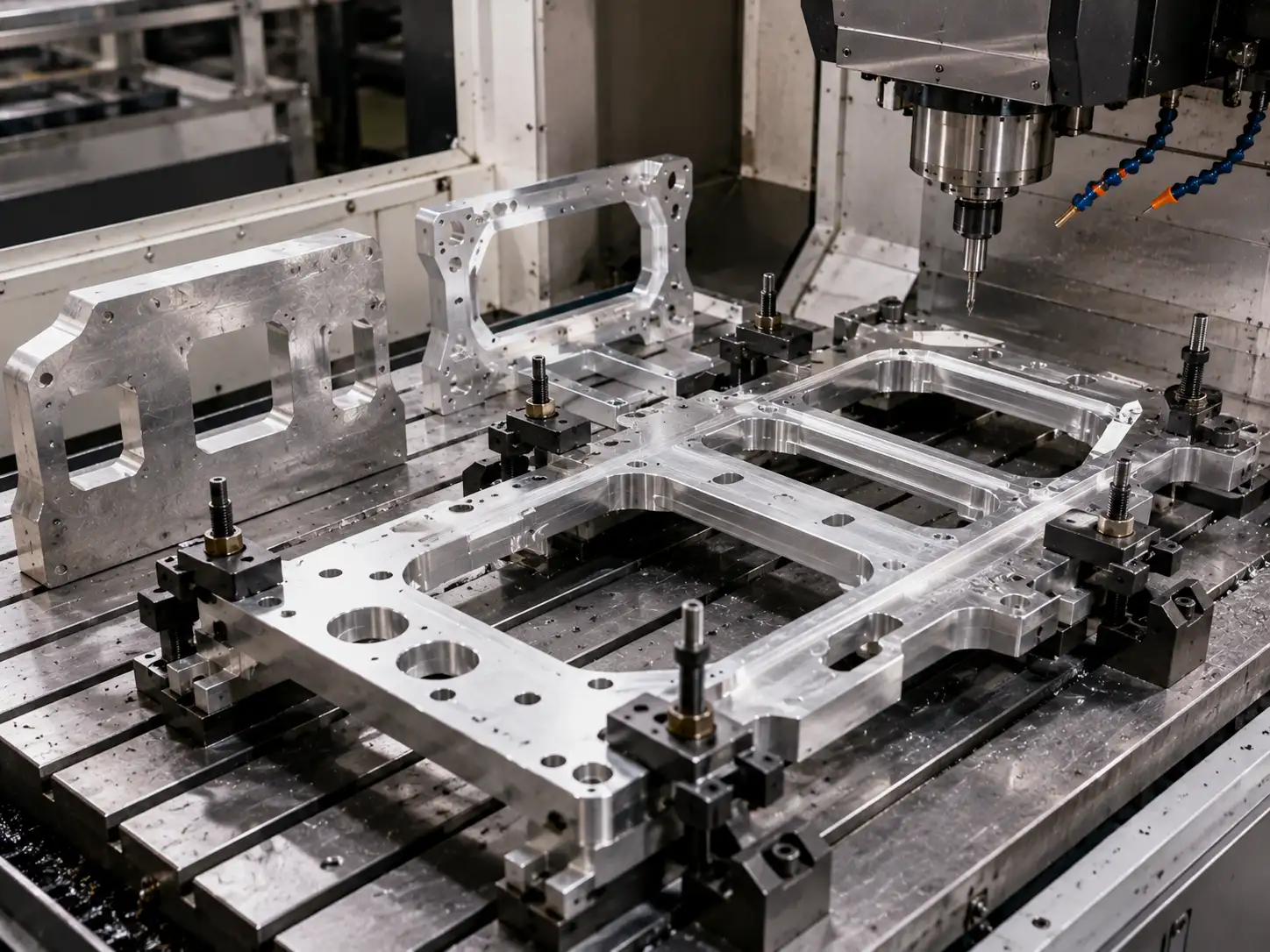
Machining distortion control
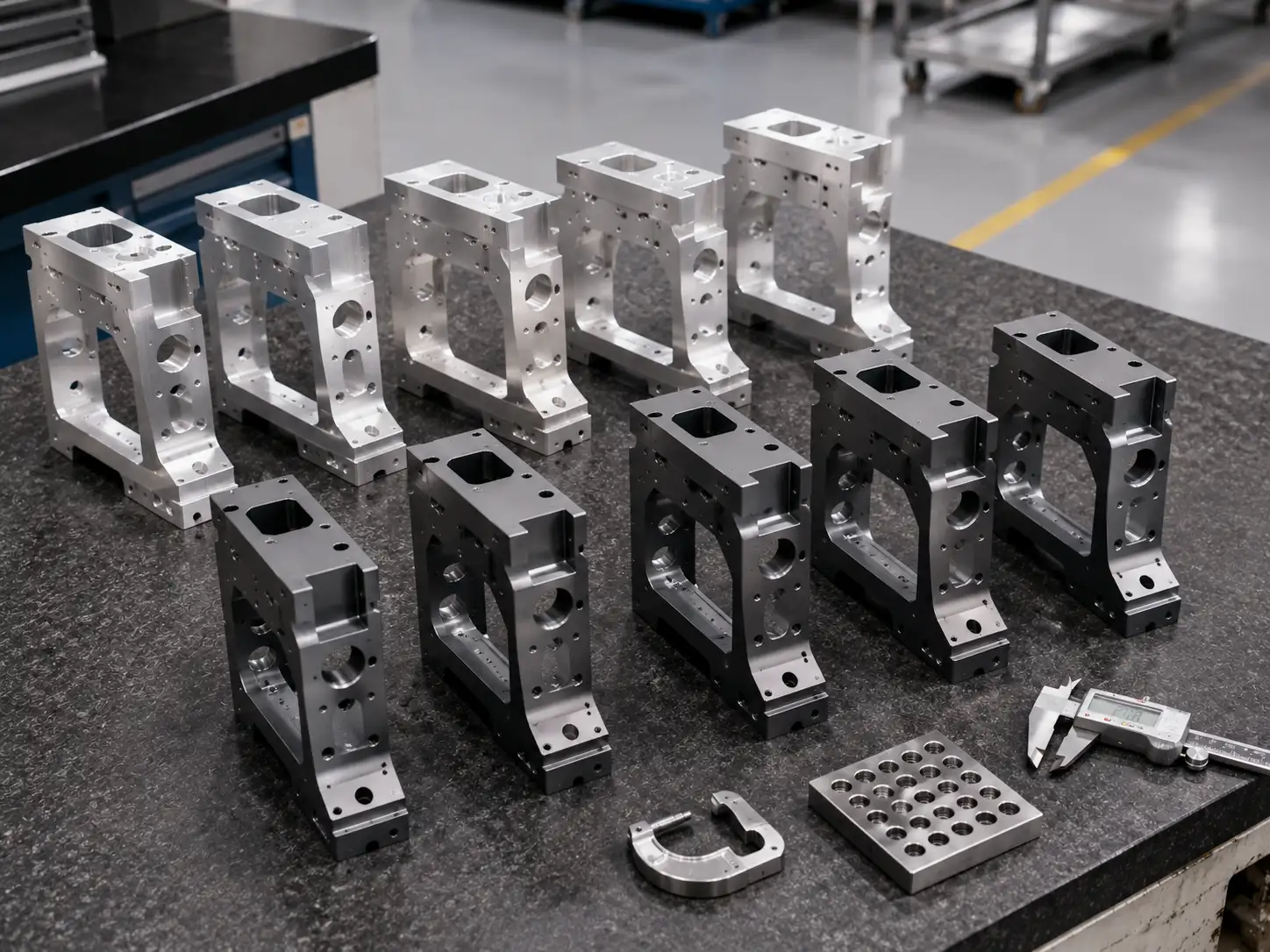
Because of its internal residual stress and high strength, AA 7075-T6 can distort when machining thin-walled or geometrically complex parts. Common strategies include symmetrical machining, staged stock removal, and low-stress fixturing. For parts with especially tight tolerances, a stress-relief anneal may be introduced between rough machining and finish machining.
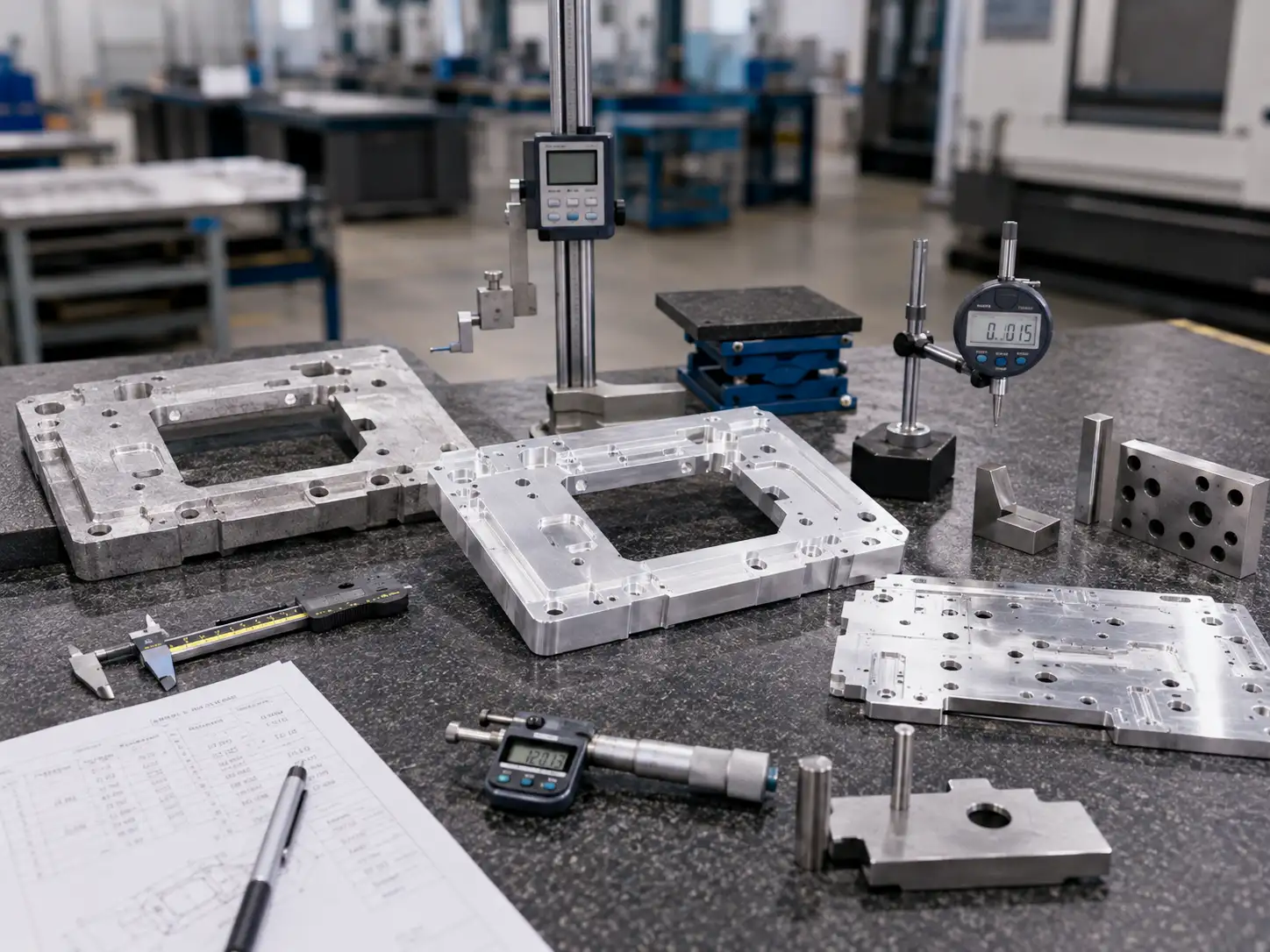
Dimensional stability after heat treatment
In the T6 temper, if a large amount of material is removed during later machining, or if the part is heated unevenly, residual stresses may be released and cause slight dimensional movement. For parts with extremely demanding fit and tolerance requirements, T651 is sometimes preferred because the added stress-relief stretching step provides a better starting point for dimensional stability.
Impact of surface treatment
Before anodizing or applying other surface treatments, it is important to account for possible dimensional growth from coating thickness as well as appearance consistency. Drawings should clearly state whether critical fit dimensions apply before or after surface treatment. Compared with 6xxx series alloys, 7075 is more challenging when it comes to color uniformity after anodizing, so acceptance criteria should be agreed with the supplier in advance.
Choice of joining method
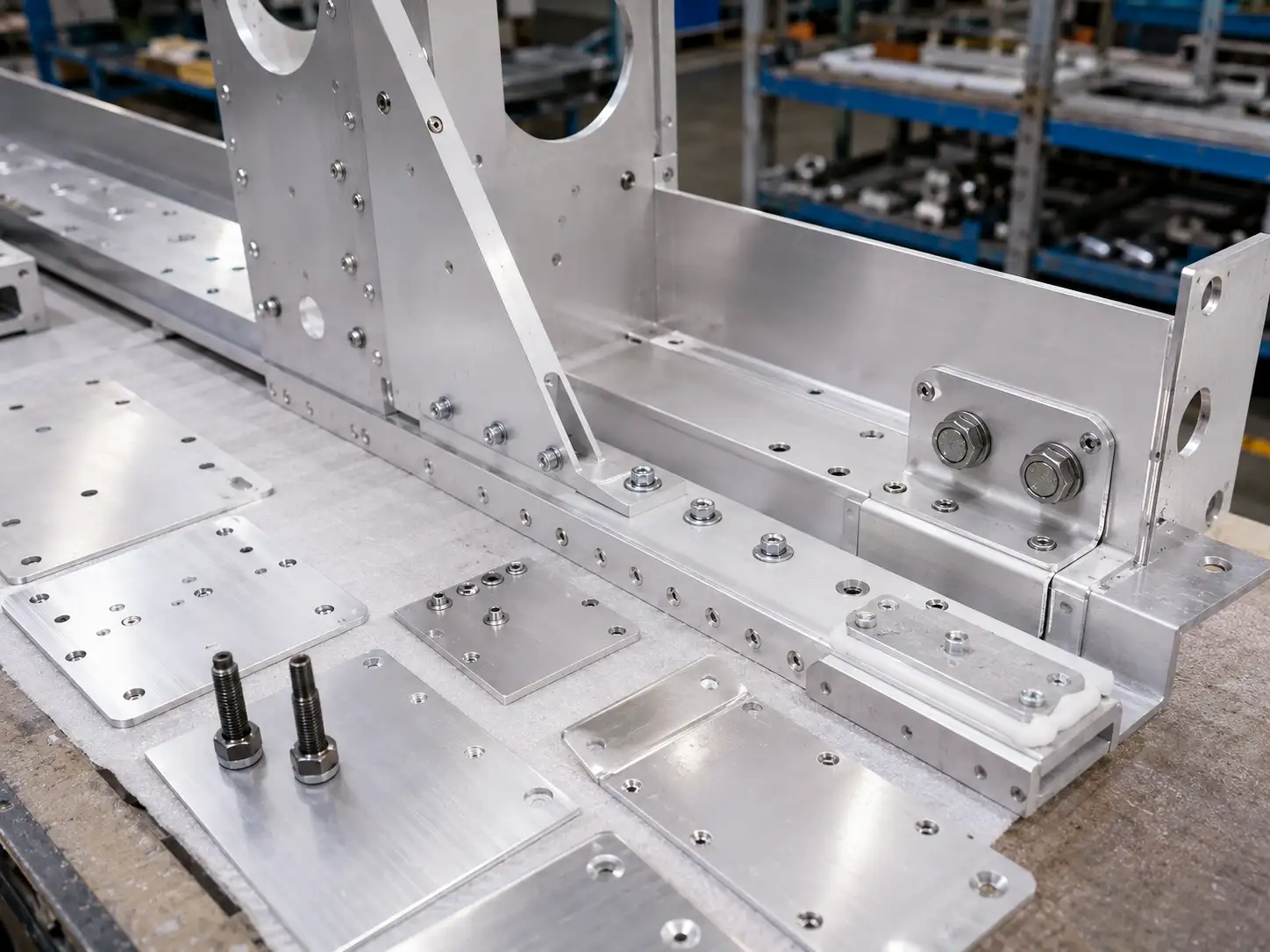
Given its welding limitations, permanent joining is usually better handled through rivets or high-strength bolted mechanical joints. For non-structural sealing or attached components, high-performance structural adhesives may also be suitable. In all cases, the joint design should avoid introducing excessive stress concentration.
What Types of Parts and Project Conditions Is AA 7075-T6 Suitable For?
AA 7075-T6 is not a universal material. It is best considered when the project calls for high load capacity, high-strength support, lightweighting, minimal welding, and only moderate corrosion-resistance demands.
Typical Part Applications
| Part Type | Recommendation Level | Why It Makes Sense |
|---|---|---|
| High-strength brackets and connecting blocks | Highly recommended | High-load structural parts, usually machined, where the material’s properties can be fully utilized |
| Fixture bodies and locating blocks | Highly recommended | Good choice where stiffness, stability, and wear resistance all matter |
| Load-bearing parts in motion mechanisms | Highly recommended | Well suited to cyclic loading and fatigue service, where fatigue performance and specific strength are critical |
| Lightweight structural parts | Recommended | For weight-sensitive structures, its high specific strength helps reduce mass |
| Aerospace structural components | Recommended | Good fit for high-stress parts such as wing and fuselage framework components |
| Mold plates / tooling plates | Recommended | High strength, good machinability, and polishability make it suitable for plastic molds and low-pressure die-casting molds |
| Welded structural parts | Not recommended | Poor weldability and major strength loss in the weld area |
| Parts exposed to marine environments | Use with caution | Corrosion resistance is only moderate, so protective treatment or a different temper may be needed |
Material selection can be frustrating at times. A common example is wanting the strength of AA 7075-T6, while being less satisfied with its weldability or cost. In cases like that, it makes sense to look at a practical substitute: a material with broadly similar performance, where a certain trade-off is acceptable.
The following are useful alternatives to consider:
| Option | Main Reason to Consider It | Best-Suited Applications |
|---|---|---|
| 7075-T651 | Better dimensional stability in machining | High-precision parts and applications where distortion must be tightly controlled |
| 7075-T73 / T7351 | Better stress corrosion resistance | Corrosive environments and parts under sustained tensile stress |
| 6061-T6 / 6082-T6 | Better weldability and more balanced total cost | Welded structures, cost-sensitive projects, and applications with moderate strength requirements |
| 5052-H32 / 5083-H112 | Better formability and corrosion resistance | Sheet metal forming, marine environments, and welded structures |
| 7050-T7451 | Better through-thickness property consistency in large sections | Thick plate, large forgings, and large high-stress components |
| 2024-T3 / T351 | Strong fatigue performance and good damage tolerance | Fatigue-critical aerospace parts and structures requiring higher damage tolerance |
What Project Conditions Should Be Confirmed Before Purchasing or Sampling?
For 7075, load conditions, manufacturing route, temper, surface treatment, and traceability requirements all need to be clearly defined from the start. With this alloy, the specified temper is closely tied to later dimensional stability, and both the material certificate and the heat treatment certification directly affect incoming inspection and any follow-up accountability.
| Item to Confirm | Key Question | Example Answer | Impact on Material Selection or Procurement |
|---|---|---|---|
| Part function | Is the part primarily load-bearing, or is appearance or formability the main concern? | Load-bearing part | Makes 7075 a more likely candidate |
| Load type | Static, cyclic, or impact loading? | Cyclic loading | Fatigue and structural details need to be built into the design from the start |
| Manufacturing route | Primarily CNC machining, or forging followed by machining? | Mainly CNC machining | Plate or bar stock may be the preferred starting form |
| Stock removal volume | How much material will be removed, and are there thin walls or deep cavities? | High removal volume | T651 or T7351 becomes the more suitable temper choice |
| Joining method | Bolted, riveted, pinned, or welded? | Mainly bolted joints | Better aligned with the strengths of 7075 |
| Surface treatment | Anodizing, coating, chromate conversion, or as-machined finish? | Hard anodizing | Dimensional allowance and appearance criteria should be defined early |
| Dimensional requirements | How tight are the flatness, position, or concentricity requirements? | Flatness 0.05 mm | The process plan should allow for staged rough and finish machining |
| Batch traceability | Are material certificates and heat treatment records required? | Full batch traceability required | Certification requirements should be written clearly into the purchase order |
| Service environment | Indoor, outdoor, humid, or salt spray exposure? | Humid environment | It may be better to evaluate T73 / T7351 or specify stronger surface protection |
