
Hot-Dip Galvanized Steel (HDG)
Protection
Zinc coating forms a durable barrier against rust.
& Weldability
Compatible with most sheet metal fabrication processes.
& Long-Lasting
Lower maintenance and total cost over the product life.
Hot-Dip Galvanized Steel Basics
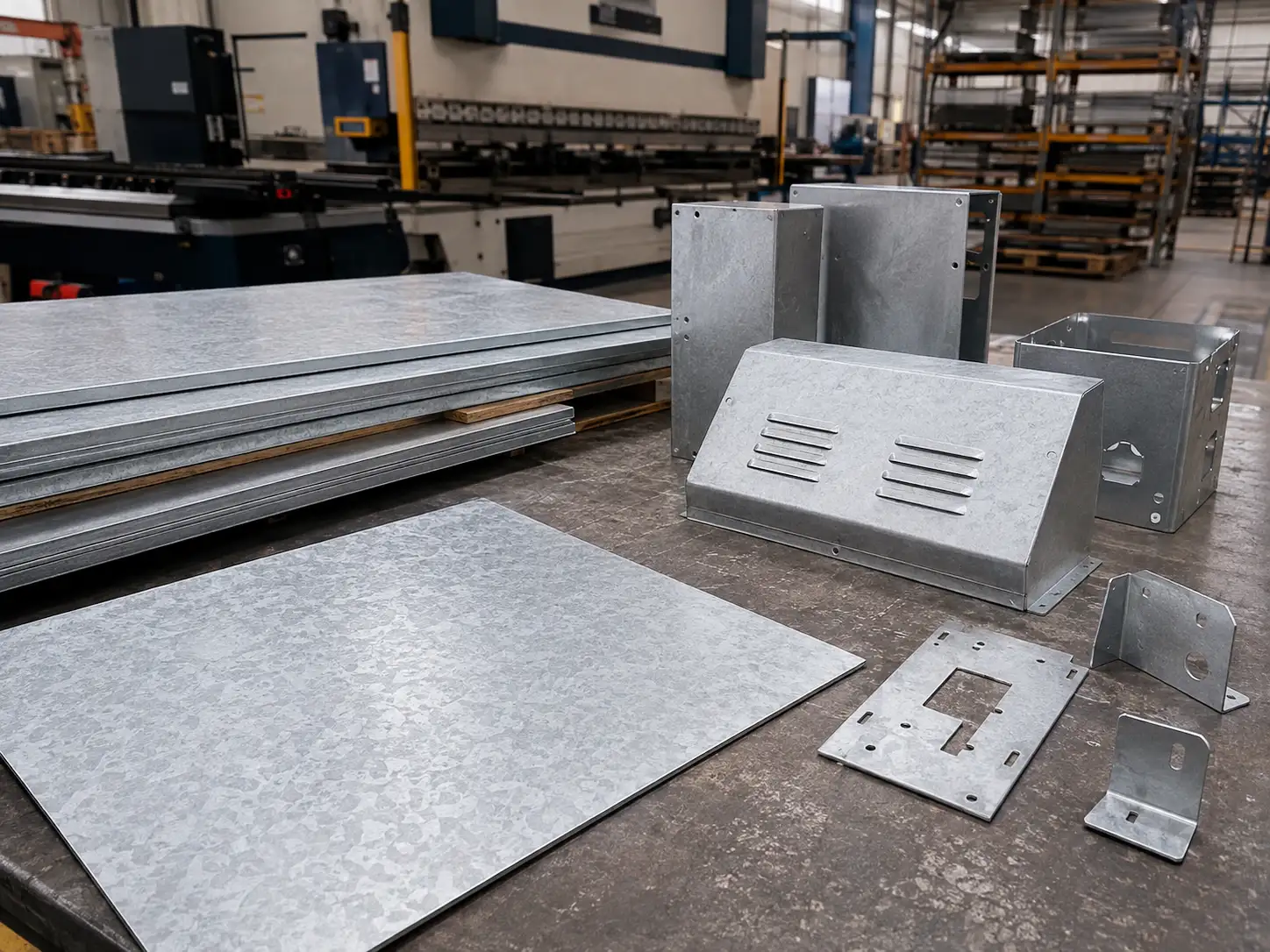
Hot-dip galvanized steel is a sheet steel product made by applying a zinc or zinc-alloy coating to the surface of steel strip through a continuous hot-dip galvanizing process.
Its production generally involves three core stages: pre-treatment, hot-dip galvanizing, and post-treatment. The corrosion resistance of HDG comes mainly from its dual protection mechanism. One is the barrier protection provided by the zinc coating, which isolates the steel from corrosive media. The other is sacrificial protection, in which the zinc corrodes first to protect the base steel. Together, these two mechanisms give HDG a long service life even in harsh environments.
How It Differs from Other Materials
| Comparison Factor | HDG (Hot-Dip Galvanized Steel) | Electro-Galvanized Steel (EG) | Cold-Rolled Steel | Stainless Steel |
|---|---|---|---|---|
| Coating thickness | 60–120 μm | 5–25 μm | No coating | Chromium-containing alloy |
| Corrosion resistance | Very high (sacrificial protection) | Moderate | Poor | Excellent (passive film protection) |
| Processing cost | Medium | Relatively high | Low | High |
| Weldability | Requires specialized processing | Good | Excellent | Relatively poor |
| Typical applications | Structural steelwork, automotive chassis | Appliance housings, electronic products | General structural parts | Highly corrosive environments |
Core Material Properties of Hot-Dip Galvanized Steel
Hot-dip galvanized steel offers an excellent overall performance profile, which is why it is widely used in industrial protection applications. Its core properties span several key areas, and these characteristics directly affect both material selection and processing methods.
Standards and Grade Systems for Hot-Dip Galvanized Steel
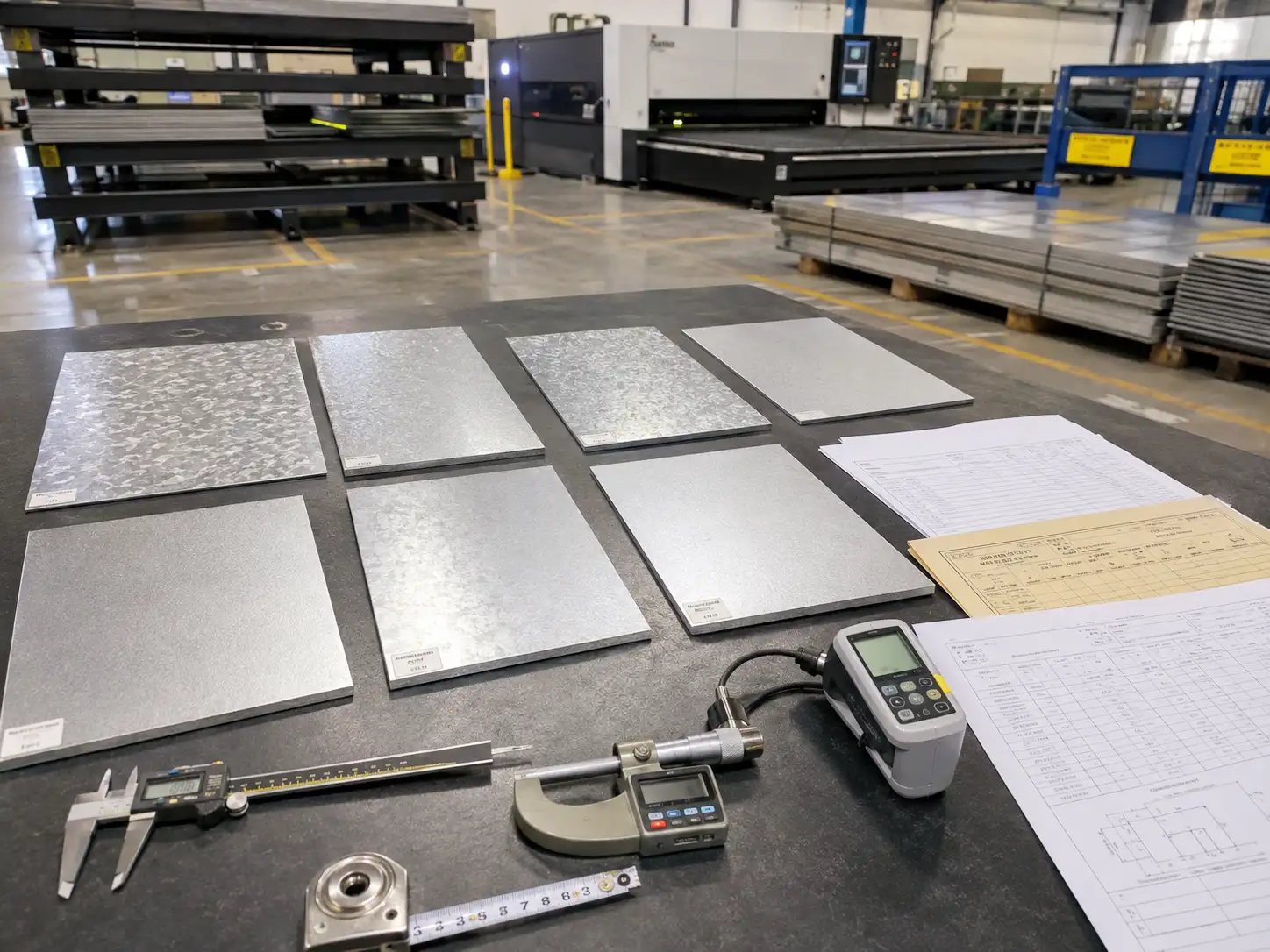
Hot-dip galvanized steel is governed by different standard systems around the world. Understanding these standards is especially important, because each system differs in grade designation, coating weight, and performance requirements. Below are the major HDG standard systems commonly used worldwide:
| Standard System | Standard Number | Issuing Organization | Main Characteristics | Typical Regions of Use |
|---|---|---|---|---|
| Chinese Standard | GB/T 2518-2019 | Standardization Administration of China | Based on European standards, with additional requirements tailored to the Chinese market and stronger emphasis on construction applications | China |
| European Standard | EN 10346:2015 | European Committee for Standardization (CEN) | More detailed classification system, covering construction product regulations | European Economic Area |
| American Standard | ASTM A653/A653M | ASTM International | Focuses more on yield strength grades, with coating weight expressed in ounces | North America |
| Japanese Standard | JIS G 3302 | Japanese Industrial Standards Committee | Straightforward classification, practical orientation, and a relatively longer update cycle | Japan and parts of East Asia |
| International Standard | ISO 3575, ISO 4998 | International Organization for Standardization (ISO) | Broad applicability, designed to support international trade coordination | Global |
Note: The correspondence between different standards is for reference only. In actual applications, you should always consult the specific standard itself when comparing technical parameters.
How to Choose the Right Hot-Dip Galvanized Steel Grade and Coating for Your Project
When selecting hot-dip galvanized steel (HDG), thickness alone is not enough. You also need to consider four key factors at the same time: the service environment, the fabrication process, the appearance requirements, and any subsequent surface finishing. A thicker coating is not always better. While a heavier coating provides stronger corrosion protection, it can also make fabrication more difficult.
Recommended Coating Weights and Specifications by Application
| Service Environment | Recommended Coating Range | Recommended Substrate / Specification | Selection Guidance |
|---|---|---|---|
| Dry indoor environment | Z100–Z140 | DX51D / SGCC, 0.6–1.5 mm | Prioritizes cost efficiency and general manufacturability |
| Indoor environments with condensation or light corrosion | Z140–Z200 | DX51D / DX52D, 0.8–2.0 mm | Commonly used for cabinets and equipment housings |
| General outdoor environment | Z200–Z275 | DX51D, S250GD, 1.0–2.5 mm | Offers a good overall balance of performance |
| Outdoor applications with higher corrosion resistance requirements | Z275 and above | S250GD / S350GD, 1.5–3.0 mm | More commonly used for brackets and structural parts |
| Parts to be powder coated or painted | Z100–Z200 or ZF | Substrates with a more stable surface finish or skin-passed surface | Pay close attention to pre-treatment and coating adhesion |
| Deep drawing or complex bending | Moderate coating weight preferred | DX52D–DX54D, SGCD series | Do not automatically choose the heaviest coating; prioritize forming stability |
Note: This table is intended as a general engineering selection reference. Actual material availability and specification ranges may vary by supplier.
Common Specifications and Processing Requirements for Hot-Dip Galvanized Steel (HDG)
Hot-dip galvanized steel (HDG) is available in standardized size ranges and comes with clearly defined processing requirements. In the market, thin-gauge HDG is most commonly supplied in coil and cut sheet form. Most suppliers offer material in the 0.4–3.0 mm range, although thicker structural grades are also available. Exact specifications may vary somewhat from one supplier to another.
Common Specification Reference Table
| Item | Typical Range | Common Sizes | Notes |
|---|---|---|---|
| Thickness | 0.4–3.0 mm is most common | 0.5 / 0.8 / 1.0 / 1.2 / 1.5 / 2.0 mm | Home appliances and general sheet metal applications are mostly concentrated in thinner gauges |
| Sheet width / coil width | Depends on the mill | 1000 / 1219 / 1250 mm are common | Should be considered together with material utilization during blanking |
| Coating weight | Z100–Z275 is common, with some products available up to Z600 | Z140, Z200, Z275 are commonly used | The heavier the coating, the better the corrosion resistance |
| Surface finish | Regular spangle, minimized spangle, skin-passed | Standard finish, improved finish | Affects appearance and paint performance |
| Post-treatment | Passivation, oiling, chrome-free passivation, etc. | Depends on mill supply | Affects storage, white rust prevention, and downstream processing |
Processing Requirement Reference Table
| Processing Method | Recommended Practice | Key Considerations |
|---|---|---|
| Bending | Confirm the minimum inside bend radius first | Heavier coatings or higher-strength grades require extra care to avoid overly small bend radii |
| Stamping | Use forming-grade substrate whenever possible | Tool lubrication and coating wear need to be controlled |
| Laser cutting | Use low-spatter settings and stable shielding gas | Cut edges lose their full zinc coating and may require touch-up protection |
| Spot welding | Adjust welding current and electrode pressure separately | The zinc coating can affect electrode life |
| Powder coating / painting | Carry out proper degreasing and surface pre-treatment | This directly affects adhesion and appearance consistency |
During sheet metal fabrication, hot-dip galvanized steel (HDG) requires process parameters to be adjusted to account for its special material characteristics. Different fabrication methods place different demands on coating protection, so it is important to understand the material’s process compatibility, potential issues, and the corresponding process recommendations.
HDG Compatibility with Common Fabrication Processes
| Process Type | Compatibility | Common Issues | Process Recommendations |
|---|---|---|---|
| Laser cutting | Good | Exposed cut edges, localized burn damage | Apply corrosion protection compensation to critical edges |
| Stamping | Good | Coating scratches, tool wear | Use forming-grade material and control lubrication |
| Bending | Good | Coating stretch on the outer bend radius | Control the bend radius and pay attention to the rolling direction |
| Welding | Feasible | Fume generation, spatter, electrode wear | Set up a dedicated welding window for HDG |
| Powder coating / painting | Good | Poor adhesion, pinholes | Carry out degreasing, phosphating, or other suitable pre-treatment |
| Passivation / oiling | Common | Compatibility with downstream cleaning | Confirm the post-treatment type based on the final manufacturing process |
Surface Condition and Quality Control of Hot-Dip Galvanized Steel (HDG)
The surface condition of hot-dip galvanized steel (HDG) has a direct impact on corrosion resistance, appearance, and downstream processing performance. Understanding the different surface finishes, common defects, and inspection methods is essential for maintaining product quality.
Surface Finish Comparison
| Surface Finish | Appearance | Typical Applications | Key Considerations |
|---|---|---|---|
| Regular spangle | Visible crystal pattern with a strong industrial look | General structural parts, internal components | Appearance consistency is usually moderate |
| Minimized spangle / small spangle | More uniform surface appearance | General appearance parts | Slightly higher cost |
| Skin-passed / temper rolled | Smoother and more even surface | Painted parts, home appliance components, cabinet parts | Better suited to applications with higher surface quality requirements |
| Passivated surface | Better resistance to white rust | Projects with longer storage or transportation cycles | Compatibility with subsequent coating processes should be confirmed |
| Oiled surface | Better forming lubrication and short-term protection | Stamped and bent parts | Must be cleaned before painting or coating |
Common Surface Issues and Inspection Methods
| Issue Type | Typical Appearance | Possible Causes | Inspection Method |
|---|---|---|---|
| White rust / storage staining | White, gray-white, or dark deposits | Moist storage conditions, poor ventilation | Visual inspection, storage and transport traceability review |
| Bare spots / uncoated areas | Local areas without zinc coating | Substrate contamination, process abnormalities | Visual inspection, localized reinspection |
| Surface roughness / inclusions | Rough feel, localized particles | Substrate condition issues or coating process abnormalities | Visual inspection and magnified examination |
| Insufficient coating weight | Reduced corrosion service life | Coating control below target level | Coating mass testing in accordance with ASTM A90/A90M |
| Surface waviness / forming marks | Becomes visible before painting | Inadequate skin-passing or stress during storage and handling | Visual inspection, sample verification |
Cost Structure and Material Selection Balance for Hot-Dip Galvanized Steel (HDG)
Because coating weight directly affects both cost and service life, our usual approach is to evaluate the service environment, target lifespan, and any subsequent surface finishing together rather than looking at the material in isolation.
Material Cost vs. Total Cost Comparison
| Material Type | Initial Cost | Corrosion Resistance | Need for Additional Treatment | Overall Cost Characteristics |
|---|---|---|---|---|
| Cold-rolled steel (CR) | Low | Low | Usually requires painting or electroplating | Best suited to indoor applications and projects with low corrosion-resistance requirements |
| Hot-dip galvanized steel (HDG) | Medium | Medium to high | Can be used as-is or further coated | Best overall balance and the most widely used option |
| Electro-galvanized steel (EG/ZE) | Medium | Moderately low | Commonly used for parts with higher surface appearance requirements | Better appearance, but less suitable for outdoor use than HDG |
| Stainless steel | High | High | Usually does not require additional coating | More reliable in highly corrosive environments, but comes with a higher budget requirement |
