
QAl9-4 Aluminum Bronze
Resistance
Resistance
Performance
QAl9-4 Aluminum Bronze: Basic Overview
QAl9-4 aluminum bronze belongs to the copper-aluminum-iron alloy system. It is a classic grade within the aluminum bronze family and, more broadly, part of the copper alloy category.
Copper serves as the base metal, while different alloying elements create branches such as bronze, brass, and cupronickel.
In aluminum bronze, aluminum is the primary alloying element. It gives the alloy strong corrosion resistance and a solid strength foundation. Iron reacts with aluminum to form fine FeAl₃ particles, which significantly improve hardness, strength, and wear resistance.
In the grade designation, Q stands for bronze, Al indicates aluminum as the main alloying element, 9 means the aluminum content is about 9%, and 4 means the iron content is about 4%.
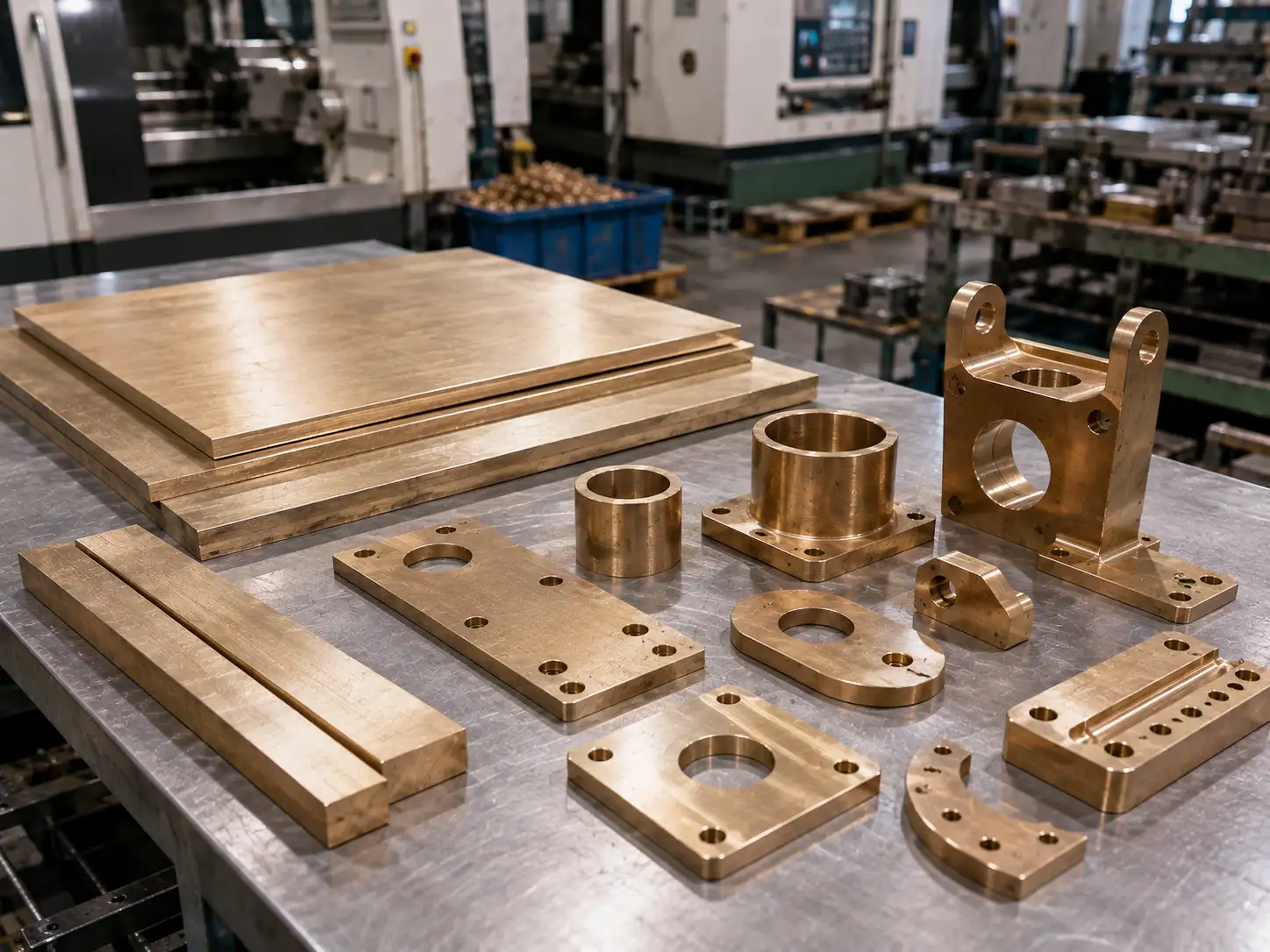
Quick Identification Guide for QAl9-4 Aluminum Bronze
| Item | Suggested Description | Why It Matters for Project Evaluation |
|---|---|---|
| Material category | Iron-bearing aluminum bronze, high-strength copper-based wear-resistant alloy | Helps confirm early that it is intended for high-load, wear-resistant, and corrosion-resistant applications |
| Main alloy characteristics | Copper base, aluminum as the primary strengthening element, iron contributing to strengthening and microstructural stability | Makes it easier to understand how it differs from standard brass and tin bronze |
| Common product forms | Bar, forgings, plate, profiles, and related semi-finished stock | Helps define the manufacturing route earlier |
| Typical applications | Bushings, valve components, guide parts, pump and valve parts, wear-resistant mating components | Allows customers to compare it quickly with their own project needs |
| Common terms used in purchasing discussions | High-strength wear-resistant copper alloy, aluminum bronze, QAl9-4, 9% aluminum bronze | Improves communication efficiency across teams |
Performance Advantages of QAl9-4 Aluminum Bronze
The main advantage of aluminum bronze is its ability to maintain stable performance under severe service conditions involving heavy loads, corrosion, and friction. It combines strength, wear resistance, and corrosion resistance in one material, which is especially important for projects that need to meet several performance demands at the same time.
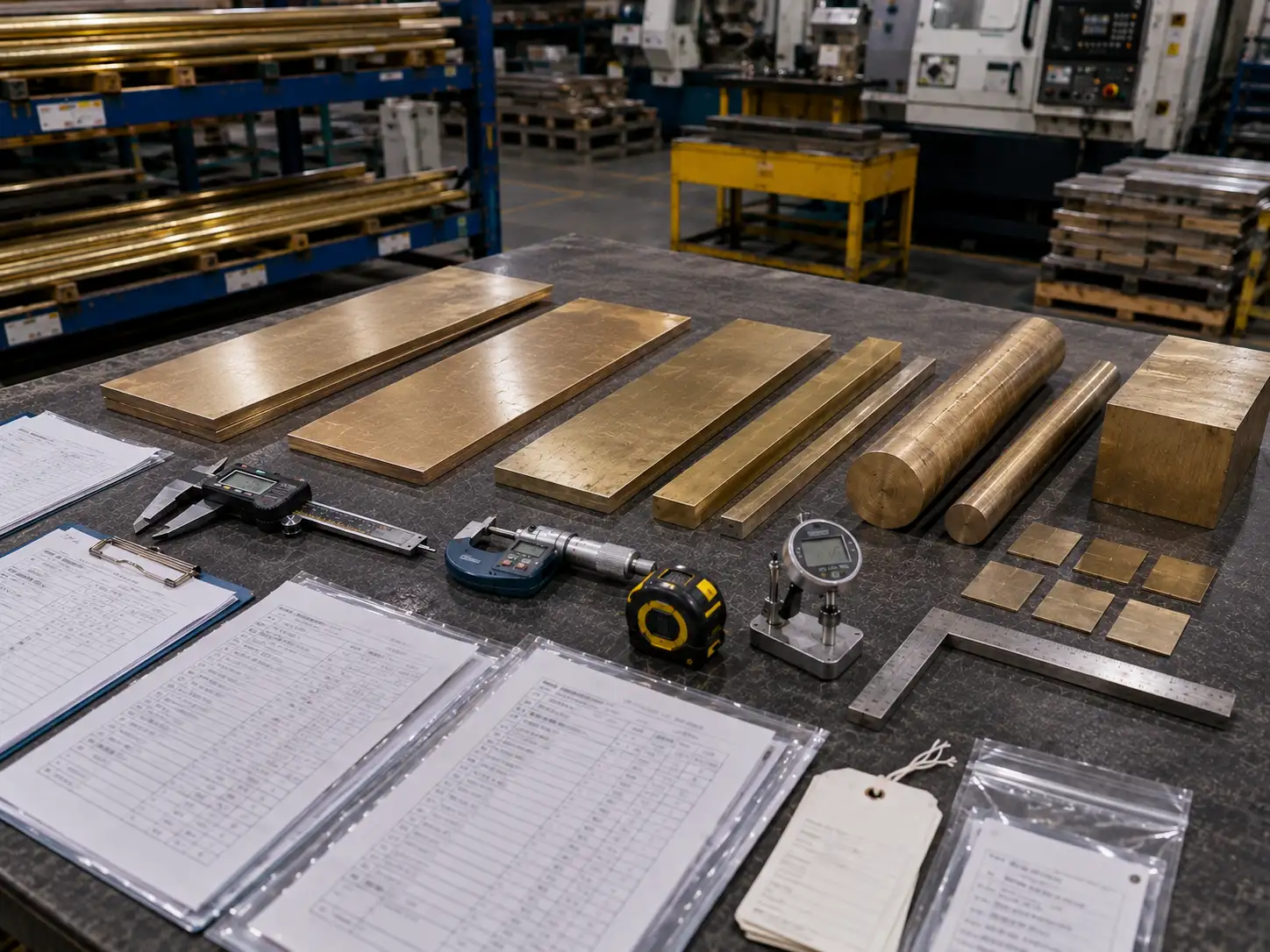
QAl9-4 Aluminum Bronze Grade and Standards Identification
| Item | Suggested Content | Why It Matters for Purchasing or Engineering Decisions |
|---|---|---|
| Chinese grade | QAl9-4 (wrought), ZCuAl9Fe4 (cast) | Standard designation commonly used in domestic purchasing and technical documents |
| Common English material descriptions | Aluminum Bronze 9-4, Al-Bronze 9-4 | Common wording used by overseas suppliers and on engineering drawings |
| Relevant standards systems | China GB/T, US ASTM/UNS, Germany DIN | Helps confirm material source and inspection basis |
| Common international reference designations | C95400 (US cast), C95410 (US wrought), CuAl10Fe3 (German) | Useful grade references for international projects |
| Points to confirm when reviewing drawings | Governing standard, material condition, and required composition range | Helps avoid material mismatch caused by differences between standards |
Data and Key Parameters of QAl9-4 Aluminum Bronze
| Parameter | Suggested Content | What Customers Usually Use It to Evaluate |
|---|---|---|
| Chemical composition range | Cu balance, Al about 8.0% to 10.0%, Fe about 2.0% to 4.0% | Whether the material system is correct |
| Strength profile | Commonly used in high-strength, load-bearing copper alloy applications | Load capacity and expected service life |
| Hardness profile | Typically higher than standard brass and some general bronzes | Wear resistance and machining window |
| Wear performance | Suitable for sliding fits and medium- to high-load wear conditions | Suitability for bushings, sleeves, and guide parts |
| Corrosion performance | Suitable for fresh water, salt water, and many industrial media | Compatibility with the service environment |
| Galling resistance | Friendly to mating parts and well suited for pairing with steel | Service life of friction pairs and maintenance interval |
| Thermal and electrical characteristics | Moderate, with more emphasis on structural function than conductivity | Whether it is suitable as a primary conductive material |
| Differences by material condition | Product form and temper can affect hardness, machinability, and dimensional stability | Sample route and volume-production process planning |
What Types of Parts Is QAl9-4 Aluminum Bronze Suitable For?
QAl9-4 is better suited to projects that require long service life, wear resistance, and reliable performance in corrosive environments. These characteristics make it a common choice in marine, mechanical, and petrochemical applications.
Common Parts and Application Scenarios for QAl9-4 Aluminum Bronze
| Part Type | Typical Service Condition | Main Reason for Choosing QAl9-4 |
|---|---|---|
| Bushing | Rotating shaft support, seawater lubrication | Good wear resistance, corrosion resistance, and sufficient load capacity |
| Sleeve | Heavy-load support, positioning, and guidance | High strength and good dimensional stability |
| Valve stem | High-pressure fluid control, repeated opening and closing | Good galling resistance, wear resistance, and corrosion resistance |
| Valve seat | Sealing fit, high-temperature media | Corrosion resistance, heat resistance, and erosion resistance |
| Guide part | Reciprocating positioning, precision fit | Low coefficient of friction and self-lubricating behavior |
| Wear-resistant mating part | Heavy-load friction, high-frequency movement | Low wear rate and long service life |
| Pump and valve component | Fluid transport, corrosive media | Good corrosion resistance, wear resistance, and overall reliability |
To evaluate the machinability of QAl9-4 aluminum bronze, the first step is to confirm which starting stock and process route are best suited to your part.
Quick Process Compatibility Guide for QAl9-4 Aluminum Bronze
| Process Type | Suitability | Project Advantage | What Should Be Confirmed Early |
|---|---|---|---|
| Machining from bar stock | High | Well suited to rotational parts such as bushings, valve stems, and guide parts | Tool life, surface roughness, concentricity |
| Post-machining of forgings | High | Suitable for thicker, more heavily loaded parts | Forging route, machining allowance, microstructural consistency |
| Drilling and tapping | Medium to high | Suitable for valve-body accessories and joining structures | Chip evacuation, hole-wall quality, thread integrity |
| Hot forming | Medium to high | Helpful for complex preform shapes and load-bearing components | Hot-working window and subsequent dimensional correction |
| Welded joining | Medium | Can be used for some structural joints and repair work | Joint design, heat input, post-weld correction |
| Surface finishing | High | Beneficial for controlling mating parts and sealing surfaces | Tool-mark direction, roughness, fit dimensions |
What Should You Confirm Before Selecting QAl9-4 Aluminum Bronze?
QAl9-4 Aluminum Bronze Selection Checklist
| Item to Confirm | Why It Matters | Impact on Processing and Delivery |
|---|---|---|
| Material condition and supply form | Determines the manufacturing route and performance profile | Affects machining efficiency, cost, and lead time |
| Dimensions and machining allowance | Determines starting stock selection and process planning | Affects material utilization and production pace |
| Service medium | Determines corrosion-resistance requirements and long-term service suitability | Affects confidence in material selection and validation priorities |
| Mating material | Determines the logic for galling resistance and wear behavior | Affects surface requirements and service life of the fit |
| Load conditions | Determines strength requirements and structural safety margin | Affects part section design and process route |
| Service life target | Determines the required material and process level | Affects the depth of sample validation |
| Surface requirements | Determines finishing and inspection methods | Affects cost, production pace, and packaging |
| Inspection requirements and quality documents | Determines the acceptance standard and delivery scope | Affects project communication efficiency |
