
Ti80 Near-Alpha High-Strength Titanium Alloy
Elevated Temperature
Creep Resistance
Performance
Titanium Alloy
Ti80 Titanium Alloy: Basic Overview
Ti80 is a high-strength near-alpha titanium alloy developed specifically for demanding structural applications in marine engineering and pressure-bearing environments. Its nominal composition is Ti-6Al-3Nb-2Zr-1Mo. The alloy is based on titanium, with aluminum, niobium, zirconium, and molybdenum added to improve overall performance. Aluminum is the main alpha stabilizer, while niobium, zirconium, and molybdenum contribute to strength, corrosion resistance, and microstructural stability.
In the annealed condition, near-alpha titanium alloys consist mainly of alpha phase with a small amount of beta phase. This microstructural profile gives Ti80 a well-balanced combination of properties. It is especially well suited to environments that involve long-term seawater exposure together with high structural loading.
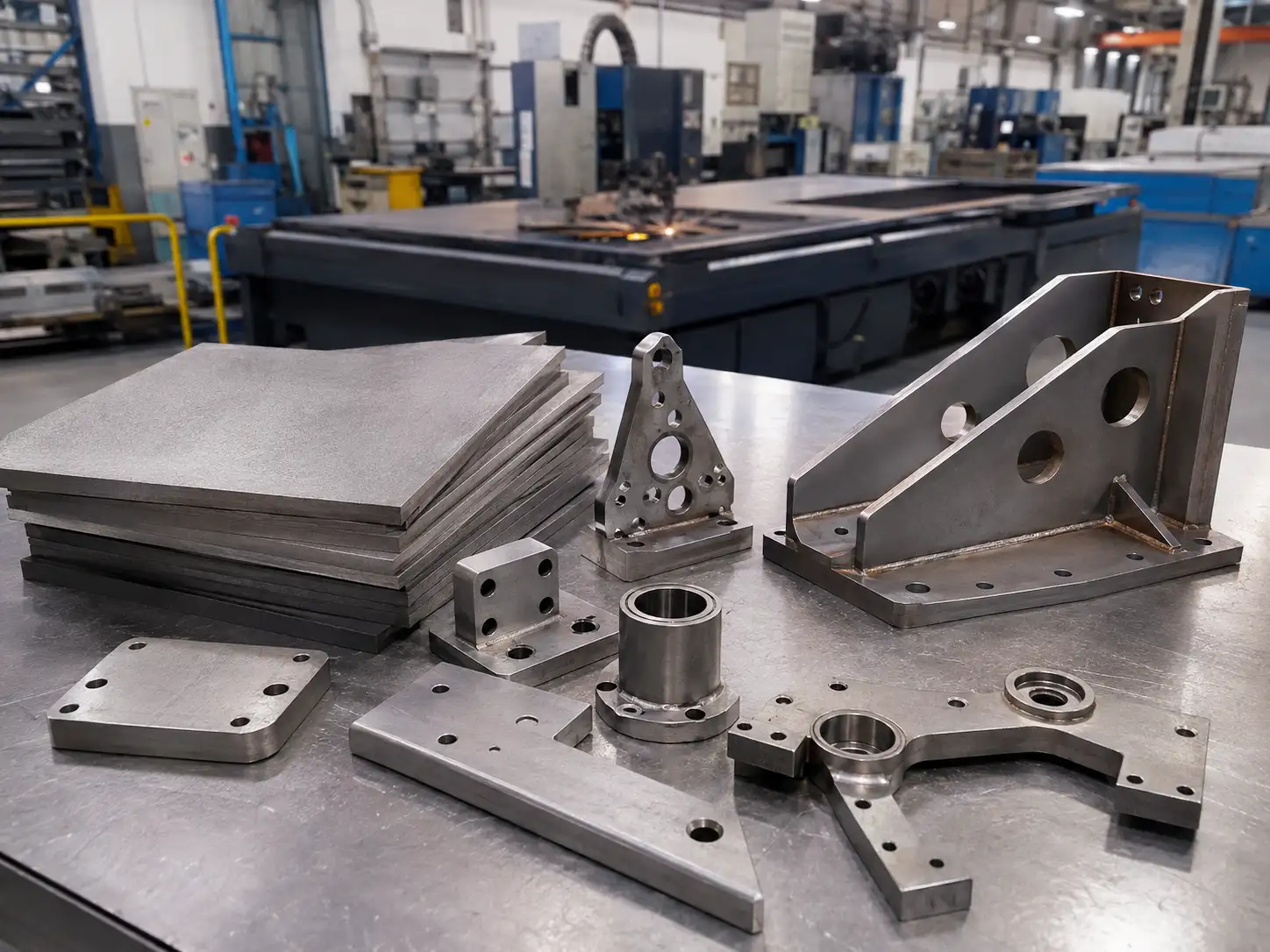
Quick Overview of Ti80 Alloy
| Item | Ti80 Alloy Overview |
|---|---|
| Material type | Near-alpha titanium alloy |
| Nominal composition | Ti-6Al-3Nb-2Zr-1Mo |
| Main advantages | High strength, low weight, corrosion resistance in marine environments, good weldability |
| Typical application areas | Marine engineering, pressure-bearing parts, welded titanium structures |
| Common supply forms | Sheet, bar, tube, forgings, machined parts |
| Fabrication suitability | With proper process control, it can be laser cut, bent, welded, machined, and surface finished |
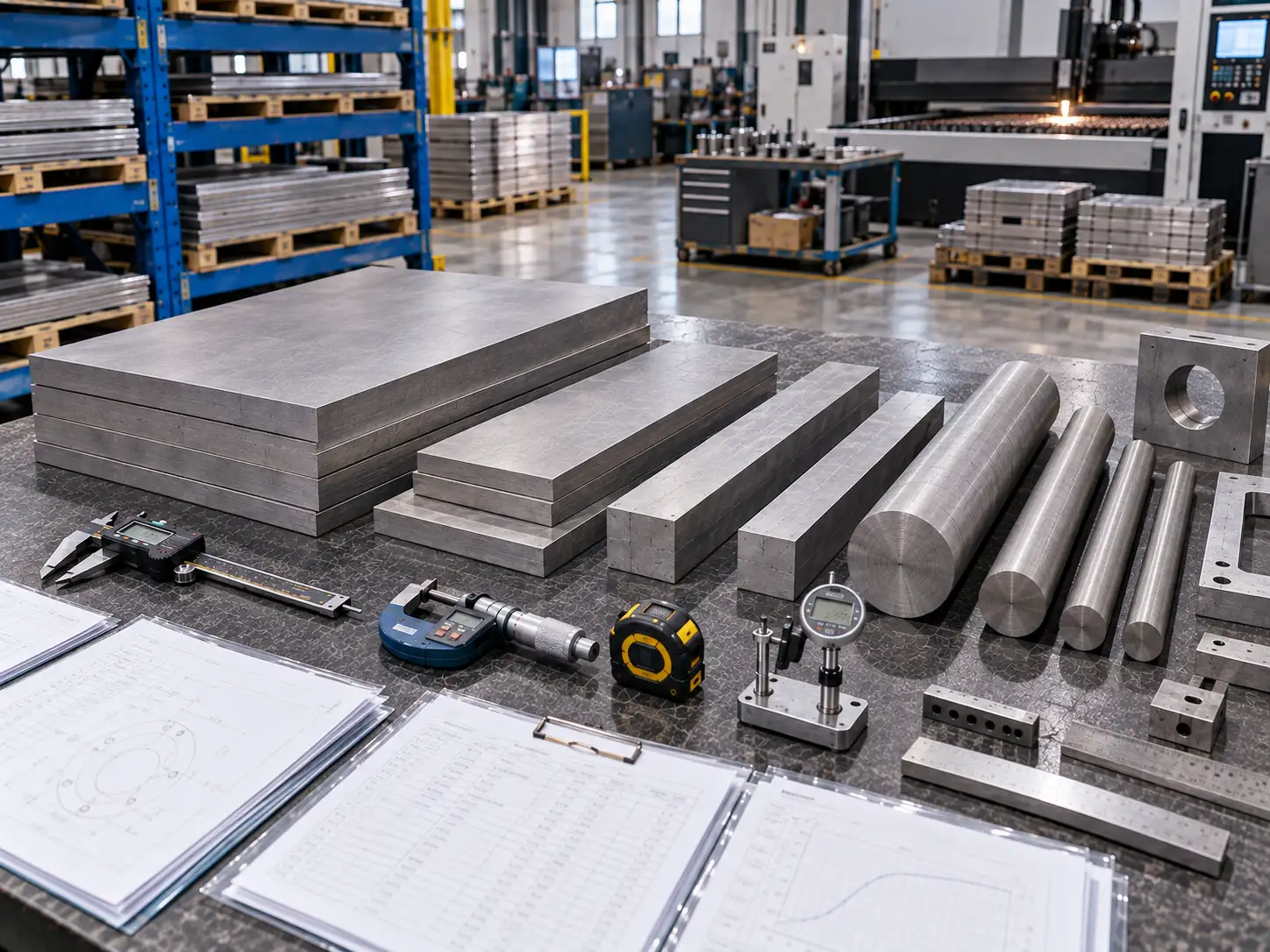
Chemical Composition of Ti80
| Element | Content Range, wt.% | Role in the Alloy |
|---|---|---|
| Aluminum (Al) | 5.5–6.5 | Alpha stabilizer, provides solid-solution strengthening |
| Niobium (Nb) | 2.5–3.5 | Beta stabilizer, improves corrosion resistance |
| Zirconium (Zr) | 1.5–2.5 | Neutral element, supports strength and corrosion performance |
| Molybdenum (Mo) | 0.6–1.5 | Beta stabilizer, improves elevated-temperature stability |
| Iron (Fe) | ≤0.25 | Impurity element |
| Silicon (Si) | ≤0.15 | Impurity element |
| Carbon (C) | ≤0.10 | Impurity element |
| Nitrogen (N) | ≤0.05 | Impurity element |
| Hydrogen (H) | ≤0.015 | Impurity element |
| Oxygen (O) | ≤0.15 | Impurity element, affects strength |
| Titanium (Ti) | Balance | Base metal |
Mechanical Properties of Ti80 Titanium Alloy
| Property | Typical Range | Condition |
|---|---|---|
| Ultimate tensile strength | 900–1100 MPa | Annealed |
| Yield strength, 0.2% offset | 800–950 MPa | Annealed |
| Elongation | 10–22% | Annealed |
| Reduction of area | 25–45% | Annealed |
| Ultimate tensile strength | 1080–1130 MPa | Solution treated and aged |
| Yield strength, 0.2% offset | 870–1012 MPa | Solution treated and aged |
| Elongation | 7–10% | Solution treated and aged |
| Impact toughness at 0°C | 54–72 J | Annealed |
| Elastic modulus | 110–120 GPa | Room temperature |
| Hardness | 300–350 HV | Annealed |
Ti80 Performance Overview
| Characteristic | Description |
|---|---|
| High specific strength | Tensile strength of 900–1100 MPa, with a density of about 4.51 g/cm³ |
| Low density | About 57% of the density of steel |
| Marine corrosion resistance | Excellent resistance to seawater and marine atmosphere |
| Toughness and impact performance | Good impact toughness at both room temperature and low temperature |
| Weldability | Good weldability when proper shielding and cleanliness are maintained |
| Creep resistance | Suitable for elevated-temperature service up to about 550–600°C |
| Microstructure sensitivity | Properties depend on heat treatment and processing route |
Reference Guide to Ti80 Corrosion Resistance in Service
| Environment | Corrosion Behavior | Application Guidance |
|---|---|---|
| Seawater | Excellent corrosion resistance, with very low weight loss | Suitable for long-term marine exposure |
| Marine atmosphere | Very good corrosion resistance | Suitable for marine structural components |
| Chloride solutions | Good corrosion resistance | Suitable for chemical processing and offshore equipment |
| Reducing acids | Moderate to limited corrosion resistance | Specific conditions should be verified before use |
| Hot seawater | Good corrosion resistance at moderate temperatures | Suitable for heat exchangers and cooling systems |
| Corrosion-wear conditions | Wear can accelerate corrosion, so design precautions are needed | Moving parts in seawater may require added wear protection |
Use in Sheet Metal Fabrication
Ti80 Fabrication Considerations
| Process | Key Considerations |
|---|---|
| Laser cutting | Use inert gas shielding, control heat input, and prevent cut-edge oxidation |
| CNC bending | Account for significant springback, plan bend radii carefully, and consider hot forming for complex shapes |
| Tooling and fixtures | Use dedicated titanium-processing tooling and avoid contamination from carbon steel or iron |
| Pre-weld preparation | Clean the surface thoroughly and remove all oxide scale, oil, and contaminants |
| Heat input control | Keep heat input as low as possible to prevent grain growth and property changes |
| Surface protection | Protect the surface from scratches, iron contamination, and oxide scale formation |
| Deburring and finishing | Remove all burrs and sharp edges, then apply the appropriate surface finish |
Machining
Ti80 Machining Considerations
| Machining Aspect | Recommendation |
|---|---|
| Cutting tools | Use carbide tools with appropriate coatings and keep them sharp |
| Cutting speed | Lower than for steel; turning operations are typically in the range of 30-60 m/min |
| Feed rate | Medium to relatively high; avoid light feeds that may cause work hardening |
| Coolant | Use plenty of water-soluble coolant or cutting fluid |
| Tool runout | Minimize it with rigid fixturing and short tool overhang |
| Burr control | Use sharp tools and proper cutting geometry, and plan for a deburring step |
| Thread and hole quality | Use drills and taps designed for titanium; use peck drilling for deep holes |
| Tolerance planning | Account for thermal expansion and possible deformation during machining |
Ti80 Application Areas
| Application Category | Typical Components | Key Requirements |
|---|---|---|
| Marine structural parts | Hull components, seawater piping, valve bodies | Seawater corrosion resistance, high strength |
| Deep-sea equipment | Pressure hulls for submersibles, deep-sea development equipment | High pressure resistance, corrosion resistance, weldability |
| Pressure vessels | High-pressure vessels, titanium pressure housings | High strength, reliable welding, pressure integrity |
| Shipbuilding | Welded structural parts, fasteners, shafts | Strength, corrosion resistance, fatigue performance |
| Offshore equipment | Platforms, risers, subsea components | Seawater corrosion resistance, long service life |
| Chemical processing | Heat exchangers, reaction vessels, piping | Corrosion resistance in aggressive media |
| Aerospace | High-temperature structural components | High specific strength, creep resistance |
Ti80 Compared with Common Titanium Alloys and Metal Alternatives
Ti80 Compared with Other Common Materials
| Material | Strength | Density | Corrosion Resistance | Weldability | Typical Cost |
|---|---|---|---|---|---|
| Ti80 | 900–1100 MPa tensile strength | ~4.51 g/cm³ | Excellent in seawater | Good with proper process control | Higher than more common titanium grades |
| Ti-6Al-4V | 895–1200 MPa tensile strength | ~4.43 g/cm³ | Very good | Good | Medium to high |
| Commercially Pure Titanium, Grade 2 | 345–480 MPa tensile strength | ~4.51 g/cm³ | Excellent | Excellent | Medium |
| Stainless Steel, 316L | 480–620 MPa tensile strength | ~8.0 g/cm³ | Good, but limited in chloride environments | Excellent | Medium |
| Aluminum Alloy, 6061-T6 | 290–310 MPa tensile strength | ~2.7 g/cm³ | Good, but not suitable for seawater without protection | Good | Low to medium |
When Should You Choose Ti80?
Situations Where Ti80 May Be a Good Choice
| Situation | Reason |
|---|---|
| Strength, corrosion resistance, and weight reduction all matter | Ti80 offers a strong balance of all three |
| The application involves marine service or pressure-bearing conditions | It was developed specifically for marine and pressure-related service |
| A welded titanium structure is required | It offers good weldability when the correct process is used |
| Long-term durability matters | Excellent corrosion resistance supports a long service life |
| Expected service temperature reaches 550–600°C | Its near-alpha structure provides good creep resistance |
Situations Where Other Materials May Be More Suitable
| Situation | Reason |
|---|---|
| Cost is the main concern | Titanium alloys are more expensive than steel or aluminum |
| The part is only a simple low-load bracket | A lower-cost material may already be sufficient |
| The service environment does not require titanium-level performance | It is worth asking whether titanium is truly necessary |
| Material availability is limited | Ti80 may have a longer lead time than more common grades |
| The design can be optimized around a more widely available material | Ti-6Al-4V or another grade may be a practical alternative |
