
Complete Guide to Type 430 Ferritic Stainless Steel
Corrosion
Resistance
Formability
Stainless
Steel
Type 430 Ferritic Stainless Steel: The Basics
Type 430 ferritic stainless steel is one of the more commonly used ferritic stainless steels and belongs to the 400 series family. It is a chromium-based ferritic stainless steel, with chromium content typically in the 16–18% range. It contains little to no nickel.
Why is 430 classified as “ferritic”? Because its crystal structure is body-centered cubic (BCC), which remains stable at room temperature and gives 430 its magnetic properties. Whether or not it has been cold worked, 430 remains magnetic and can be attracted by a magnet. It also has a relatively low coefficient of thermal expansion—about 60% of that of 304—which gives it better thermal stability.
Within the stainless steel family, 430 is generally characterized by moderate corrosion resistance, good workability, and cost efficiency. It is especially well suited to dry indoor environments, budget-sensitive applications, and projects that require magnetic properties or economical high-volume production.
Composition and Microstructural Characteristics of Type 430 Ferritic Stainless Steel
The composition of 430 is relatively simple. As noted above, its key feature is its 16–18% chromium content, which is the main source of its corrosion resistance. Chromium forms a dense Cr₂O₃ passive film on the steel surface. Although this film is only a few nanometers thick, it has a self-healing ability: when the surface is scratched or damaged, it can rapidly reform in an oxidizing environment, helping prevent corrosive elements from penetrating deeper into the material.
How the Ferritic Structure Affects Performance
Note: Because of its lower alloying level and near absence of nickel, the corrosion resistance of 430 is noticeably lower than that of 304.
Key Performance Limits of Type 430 Ferritic Stainless Steel
The main advantage of 430 is that it can perform reliably in mildly corrosive environments, which makes it a cost-effective alternative to 304 in the right applications. That said, it is generally better suited to indoor use. Its performance limits are also quite clear. 430 performs well in nitric acid and some organic acids, and its corrosion resistance can improve further when the surface is well polished. However, it is less resistant than 304 to pitting and crevice corrosion, and its outdoor performance is more limited, which is one of the main reasons it is more commonly used in indoor environments.
| Property | Performance of 430 | Typical Applications | Notes for Use |
|---|---|---|---|
| Atmospheric corrosion resistance | Good; excellent in dry indoor environments | Interior decorative parts, appliance housings, interior architectural panels | Protective coating is recommended for outdoor high-humidity environments |
| Resistance to mildly corrosive media | Good resistance to dilute nitric acid and weak organic acids | Food containers, kitchen equipment, chemical containers for non-aggressive media | Avoid reducing acids such as hydrochloric acid and sulfuric acid |
| Pitting / crevice corrosion resistance | Lower than 304; sensitive in chloride-containing environments | Low-chloride applications or short-term saltwater exposure | Use with caution in high-chloride environments, or upgrade to 316 or 444 |
| Stress corrosion cracking resistance | Excellent; almost immune | Environments involving chlorides plus tensile stress | This is a key advantage over 304 |
| Heat resistance / oxidation resistance | Good; suitable for continuous service up to 815°C | Automotive exhaust systems, oven liners, furnace components | Avoid the 475°C embrittlement range; for service above 900°C, consider 310 or 446 |
| Magnetism | Ferromagnetic in all conditions | Induction-compatible products, magnetic attachment, electromagnetic shielding | Not suitable for applications requiring non-magnetic materials |
| Decorative surface quality | Good; can be polished or brushed | Decorative parts, appliance panels, kitchenware | Polishing can also improve corrosion resistance |
| Cost | Low; typically 60–70% of the cost of 304 | Budget-sensitive, high-volume production | Cost-effective, but environmental suitability still needs to be evaluated |
Real-World Fabrication Performance of Type 430 Ferritic Stainless Steel
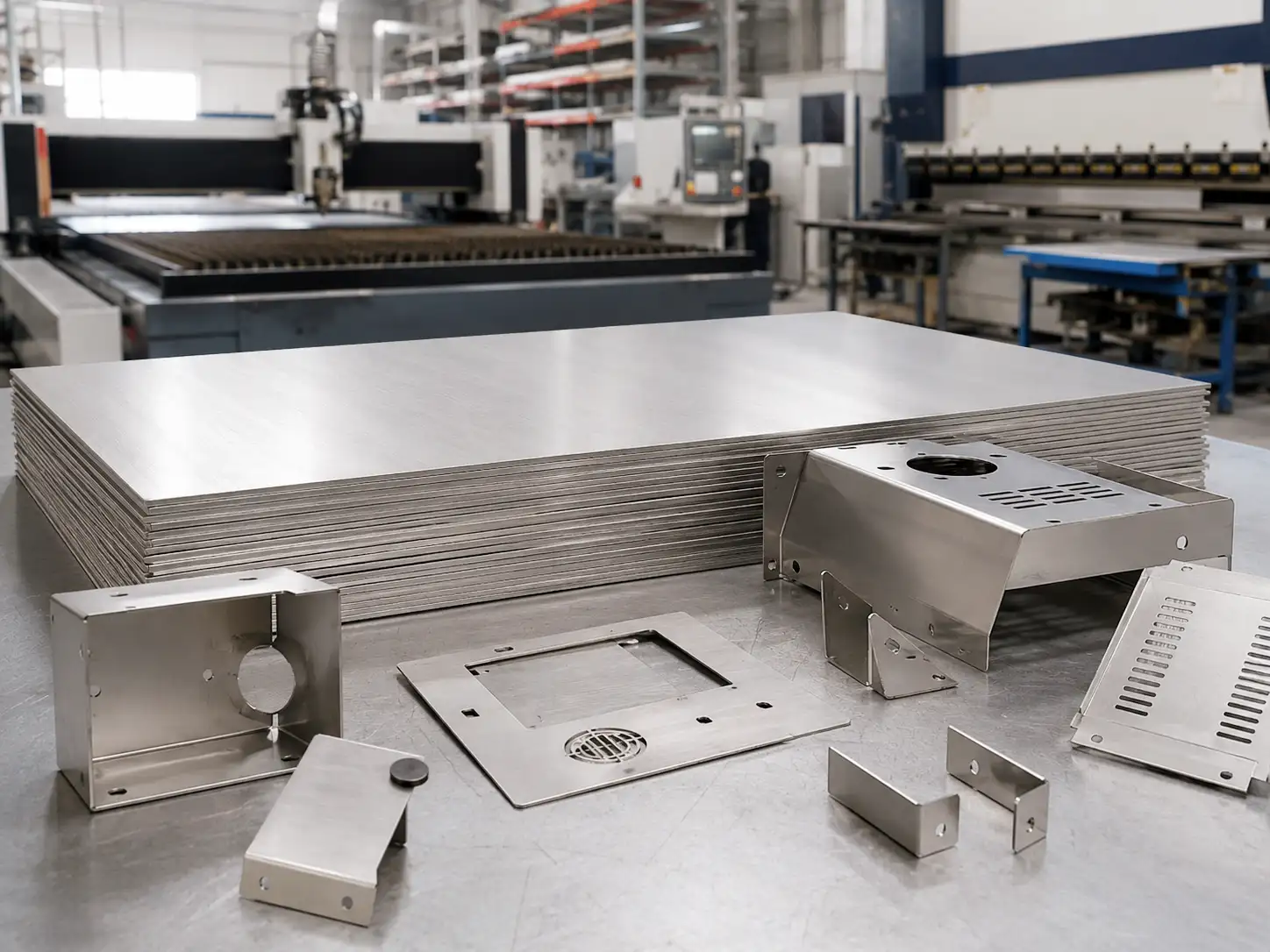
Type 430 shows several distinct characteristics in sheet metal fabrication. In cold forming, annealed 430 offers good ductility and formability. For surface finishing, it can be supplied in a range of finishes, including 2B, BA, HL (hairline), and mirror finish. Welding, however, is one of 430’s weaker areas. Where weldability is a priority, grades such as 430Ti or 304 are often a better choice.
Quick Reference: Key Processing Considerations for Type 430 Stainless Steel
| Processing Method | Key Considerations |
|---|---|
| Cold bending / forming | Minimum bend radius should be at least 2.5 times the sheet thickness; intermediate annealing may be needed for complex forming |
| Stamping / deep drawing | Elongation is limited, so annealed material is recommended and excessive deformation should be avoided |
| Machining | Better machinability than 304; free-machining grade 430F can significantly improve efficiency |
| Surface finishing | Supports a wide range of finishes, including 2B, BA, HL, and mirror finish |
| Welding | Preheat to 150–200°C; post-weld annealing at 760–815°C; ER430 or ER308L filler wire is commonly recommended |
The question is not which material is more “advanced,” but which one is the better fit for your project. Each of these grades has its own strengths.
| Grade | Main Characteristics | How It Differs from 430 | Better-Suited Applications |
|---|---|---|---|
| 430 / 1.4016 | Classic standard ferritic stainless steel | Balanced in cost, appearance, and general formability | Indoor parts, appliance components, general appearance parts |
| 304 / 1.4301 | Classic austenitic stainless steel | Better corrosion resistance, weldability, and cold formability than 430 | More demanding environments and projects involving more welding |
| 430Ti / 1.4520 | Stabilized ferritic stainless steel | Better suited to stamping, deep drawing, and more complex shapes | Countertop components, complex stamped parts |
| 439 / 1.4510 | Stabilized ferritic stainless steel | Better corrosion resistance, formability, and weldability than 430 | Welded parts, exhaust components, and upgraded replacement applications |
| 441 / 1.4509 | Stabilized ferritic stainless steel | Further improved welding performance, high-temperature oxidation resistance, and overall balance of properties | Higher-temperature service or more demanding operating conditions |
What Types of Projects Is Type 430 Ferritic Stainless Steel Suitable For?
The key to selecting 430 is fit. The goal is to align the material’s performance limits with the actual demands of the application environment.
| Project Type | Is 430 Suitable? | Main Reason | Suggested Alternative |
|---|---|---|---|
| Appliance exterior parts | ✅ Suitable | Indoor environment, cost-sensitive, magnetic properties acceptable | — |
| Kitchen equipment | ✅ Suitable | Food-safe, good thermal conductivity, compatible with induction applications | Choose 304 for long-term exposure to acids or alkalis |
| Interior decorative parts | ✅ Suitable | Mild environment, good decorative appearance, low cost | Choose 304 for coastal or high-humidity environments |
| General enclosures and panels | ✅ Suitable | Indoor use, non-corrosive environment, cost-effective | Choose 304 for outdoor or chemical environments |
| Budget-sensitive projects | ✅ Suitable | High cost-performance ratio, well suited to high-volume production | — |
| High-chloride environments (seawater, brine) | ❌ Not recommended | Chlorides can trigger pitting; corrosion resistance is not sufficient | 304, 316, or 444 |
| Continuously humid environments | ❌ Not recommended | Moisture accelerates corrosion and increases the risk of surface rusting | 304, or 430 with a coating |
| Heavily welded structures | ❌ Not recommended | Reduced toughness in the weld HAZ and a higher risk of intergranular corrosion | 430Ti, 439, 441, or 304 |
| Strong acid or strong alkali environments | ❌ Not recommended | Not suitable for reducing acids or concentrated alkalis | 316, duplex stainless steel, or nickel-based alloys |
| Non-magnetic applications | ❌ Not recommended | 430 is magnetic | 304 or 316 |
| Automotive exhaust systems | ⚠️ Partially suitable | 430 can be used in lower-temperature sections; higher-temperature sections are better served by 439 or 441 | 439 or 441 |
When Purchasing 430 Sheet, What Should Be Confirmed Besides Simply Writing “430”?
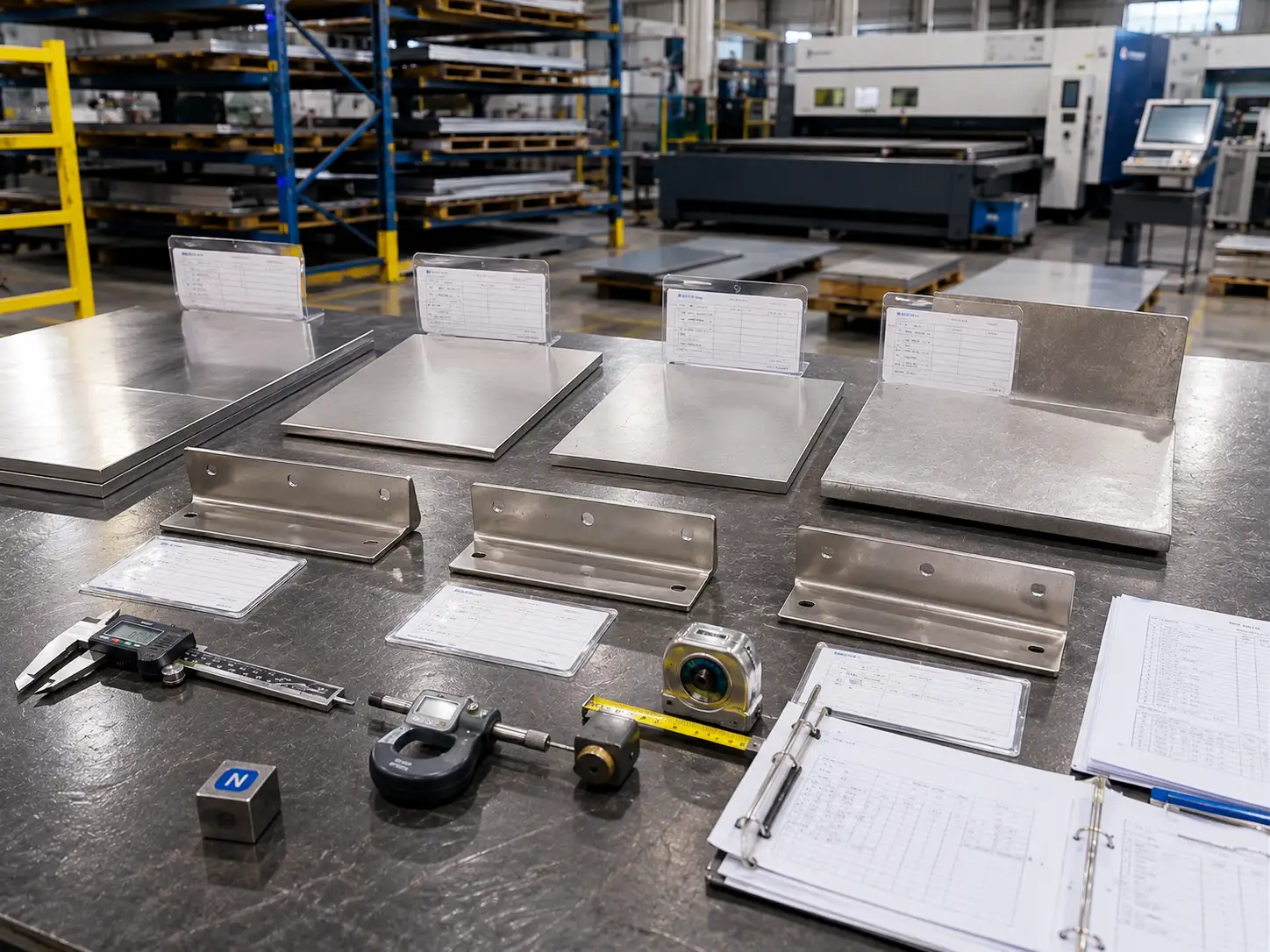
Once your project has decided to use and purchase 430 stainless steel, it is not enough to write only “430 stainless steel” on the order. A vague specification like that can easily lead to problems later on. The performance of 430 can be influenced by several factors, so each of the following points should be confirmed one by one during procurement.
Procurement Checklist
| Item to Confirm | Why It Matters | Potential Problems If Overlooked |
|---|---|---|
| Applicable standard (ASTM / EN / GB / JIS) | Different standards may have different chemical composition and performance requirements | Material may not match expectations, leading to processing issues |
| Delivery condition (annealed / cold rolled / hot rolled) | The delivery condition determines ductility and strength | Cracking during processing or abnormal springback |
| Thickness and tolerance | Affects tooling design and assembly accuracy | Improper assembly gaps or out-of-tolerance dimensions |
| Surface finish (2B / BA / HL, etc.) | Affects appearance, corrosion resistance, and cost | Inconsistent appearance or inadequate corrosion resistance |
| Whether welding or deep drawing is required | Standard 430 has limited weldability and deep-drawing performance | Weld cracking or forming failure |
| Service environment | The environment determines whether the material is suitable | Rusting, corrosion, or insufficient service life |
| Batch-to-batch consistency | Especially important for decorative parts with high appearance requirements | Inconsistent appearance and customer complaints |
| Material certificate | Provides the basis for quality traceability | No traceability in the event of a quality dispute |
| Protective film requirement | Helps prevent scratches during transport and processing | Surface scratches and rework |
| Special requirements (food, medical, etc.) | Required for industry-specific standards and regulatory compliance | Failure to meet industry or regulatory requirements |
