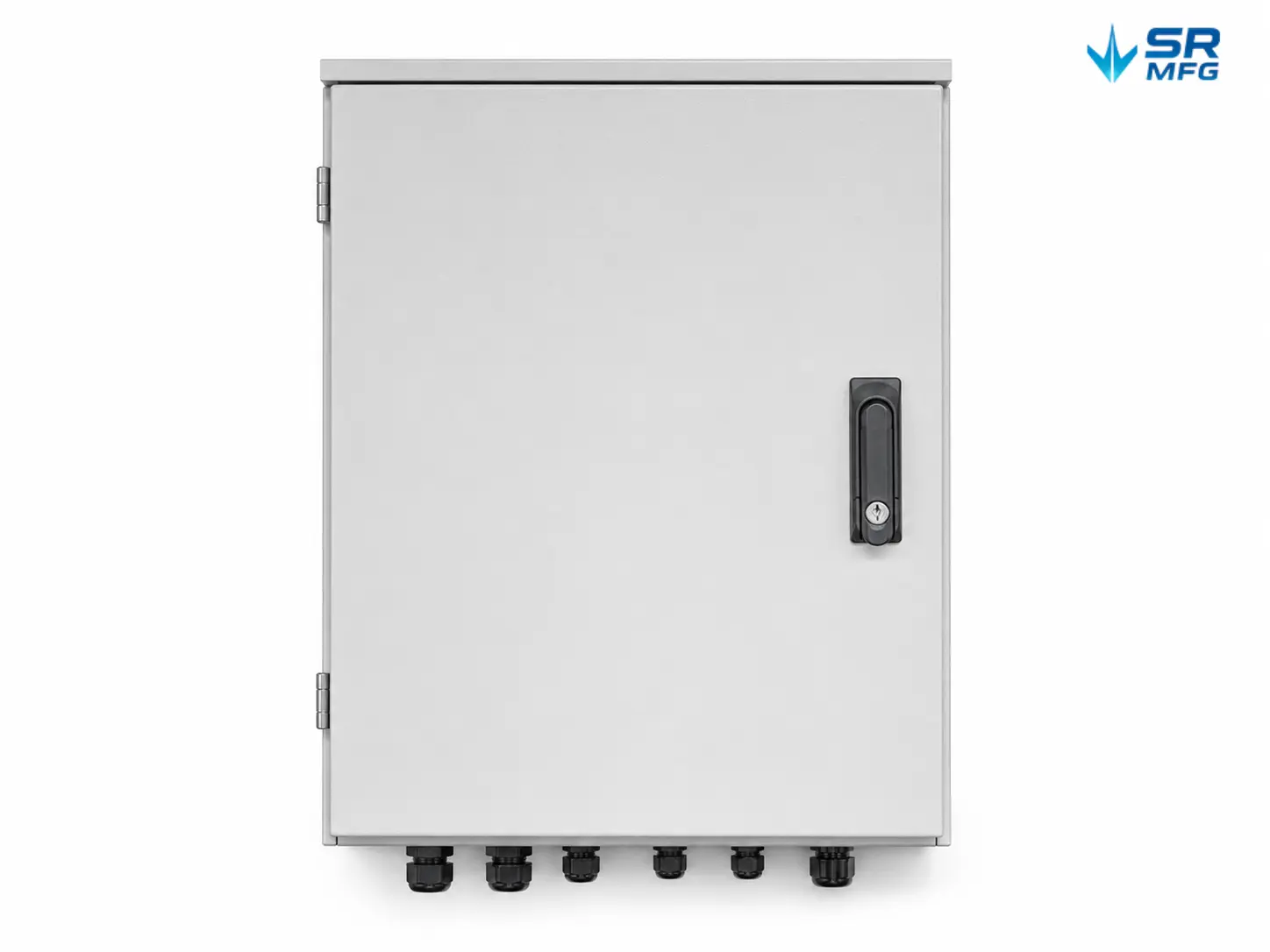
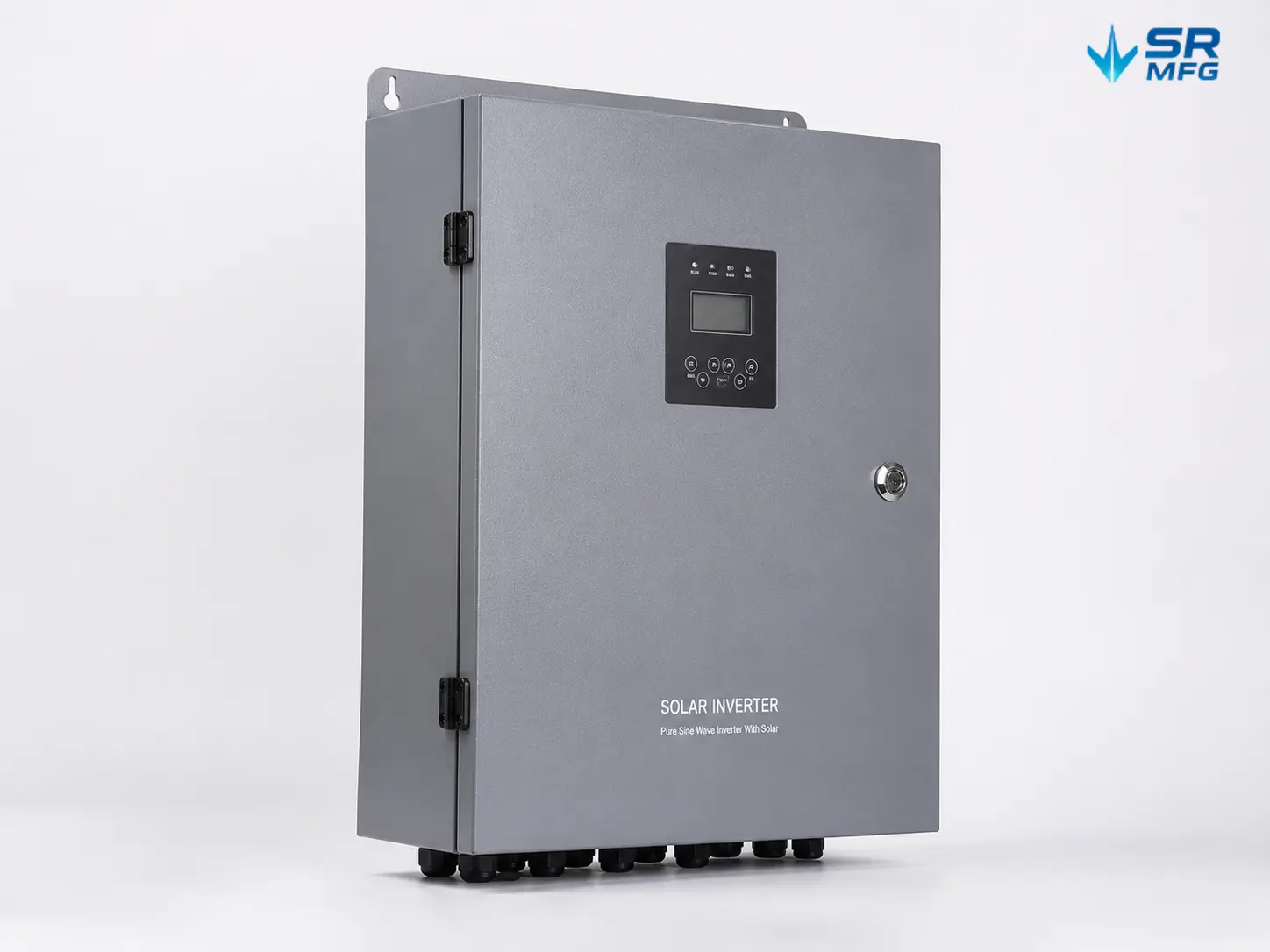
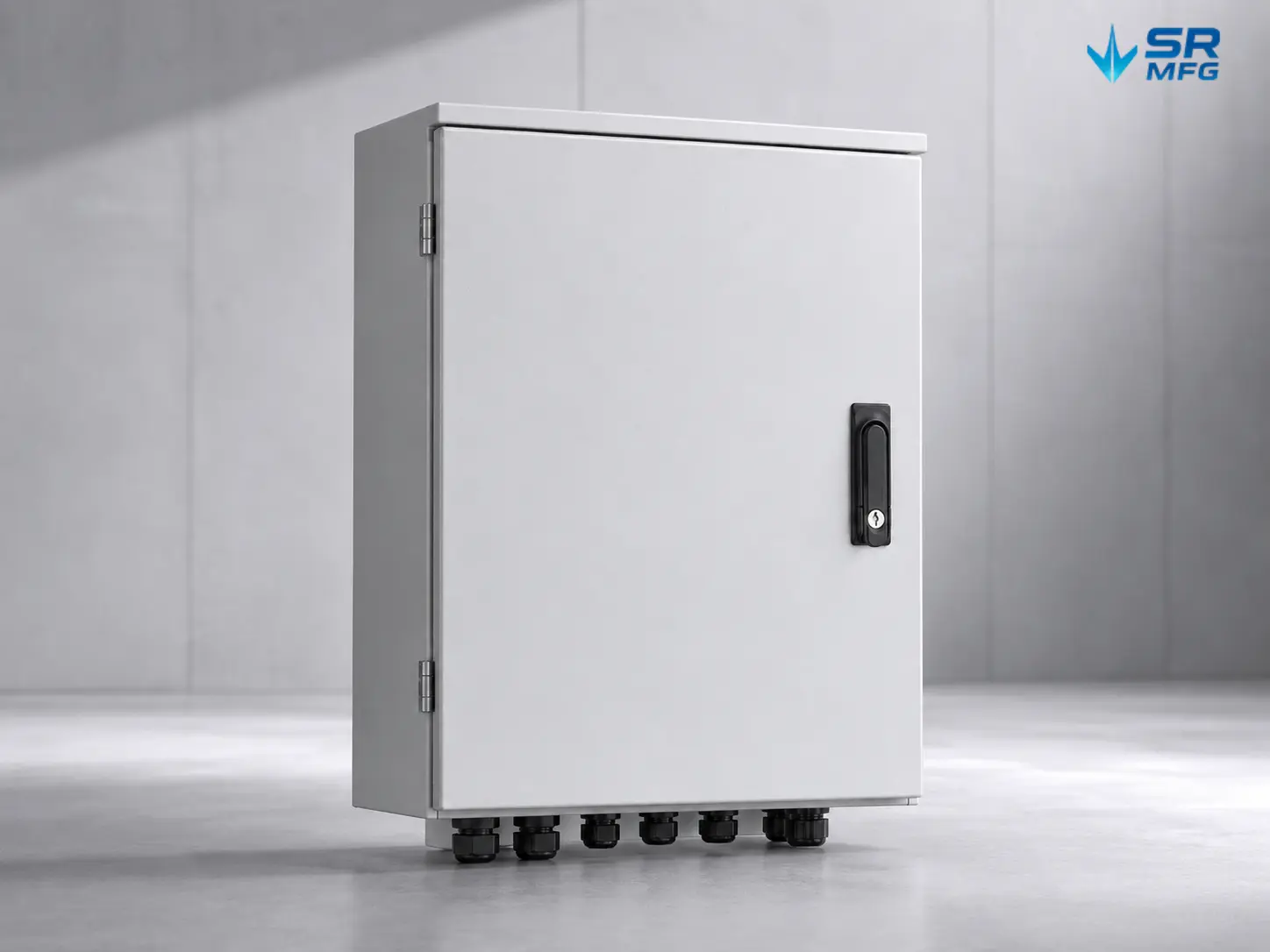
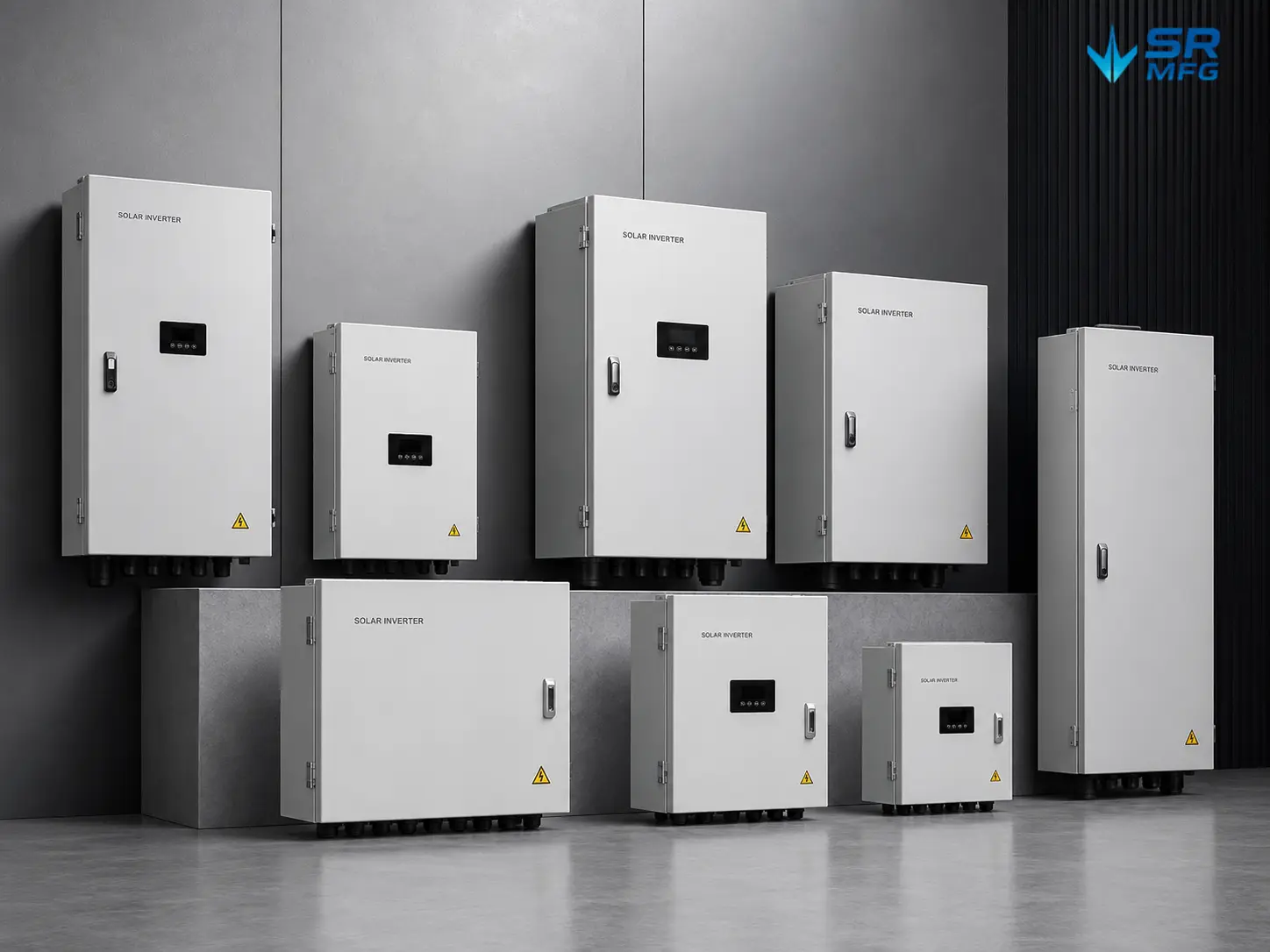
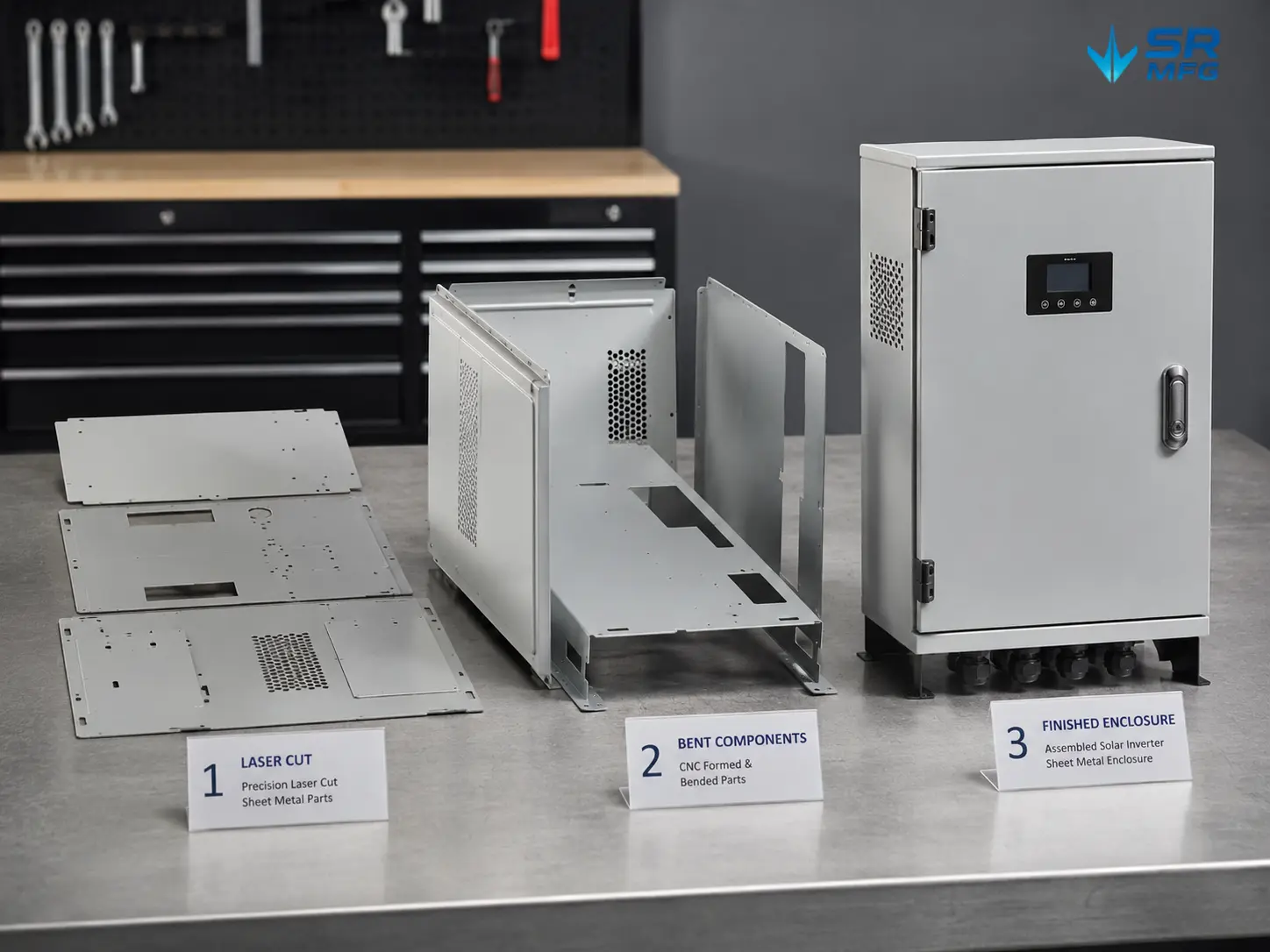
Solar Inverter Sheet Metal Enclosures
SR MFG provides custom sheet metal enclosures for solar inverter manufacturers, helping products achieve reliable protection, strong structural support and effective heat management.
- Manufactured according to sheet metal technical drawings and 3D files or physical samples
- Supports different sizes, structures, material thicknesses and mounting methods
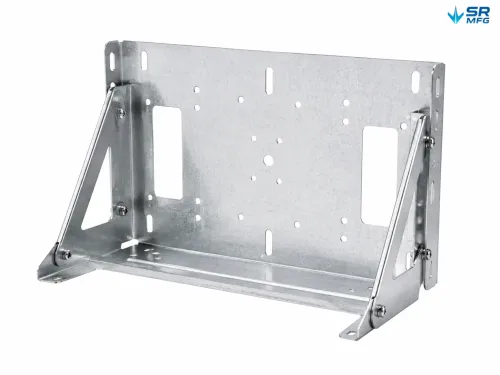
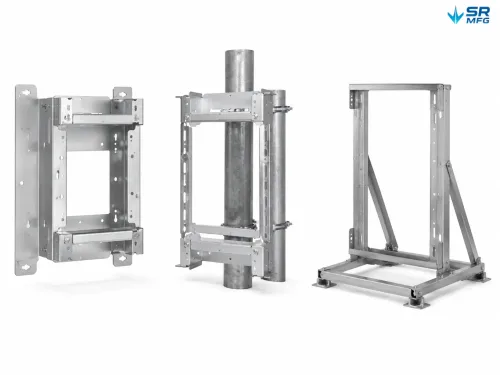
- Works with customers to design cable entry holes, ventilation openings, mounting brackets, door panels and internal mounting plates
- Structures can be adjusted for outdoor, indoor, grid-tied, hybrid inverter and energy storage system applications
- Helps customers balance function, cost, production efficiency and product appearance
| Material | Aluminum, Carbon steel, Galvanized sheet, Stainless steel |
|---|---|
| Process | assembly, bending, Laser cutting, stamping, welding |
| Surface Finish | painting, Polishing, Powder coating |
Product Details
What Is a Solar Inverter Sheet Metal Enclosure?
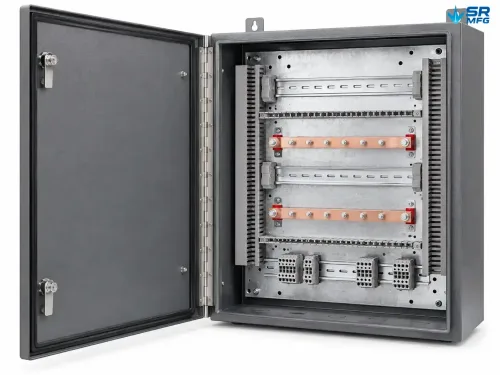
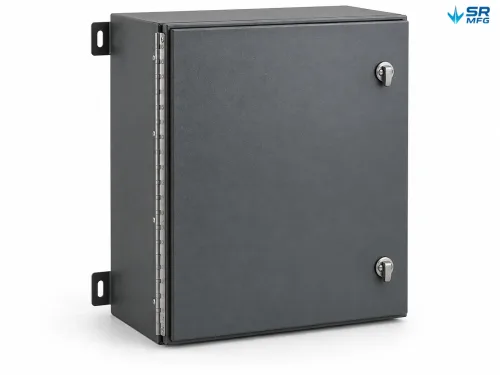
A solar inverter sheet metal enclosure is a custom sheet metal enclosure fabrication for solar power equipment. It is mainly used to protect the internal components of a solar inverter system.
Inside the enclosure, there are usually parts such as PCBs, power modules, terminals, cooling fans, filters and connectors. These components need a strong metal housing to help the inverter operate safely and reliably over the long term.
A solar inverter enclosure normally needs to meet several key requirements.
Protection
It helps protect the internal parts from physical impact, handling stress and installation pressure.
Dust and water resistance
It helps block dust, particles and moisture that may cause short circuits. This makes the enclosure more suitable for long-term outdoor use.
Heat dissipation
The enclosure needs to support airflow, ventilation paths and fan installation. This helps prevent the inverter from overheating and stopping operation.
Easy installation
Mounting brackets, fixing holes and structural features are needed to make installation simpler and more efficient.
Brand appearance and product consistency
For OEM manufacturers and power equipment brands, consistent shape, surface finish, colour and logo placement are important for improving the overall product image.
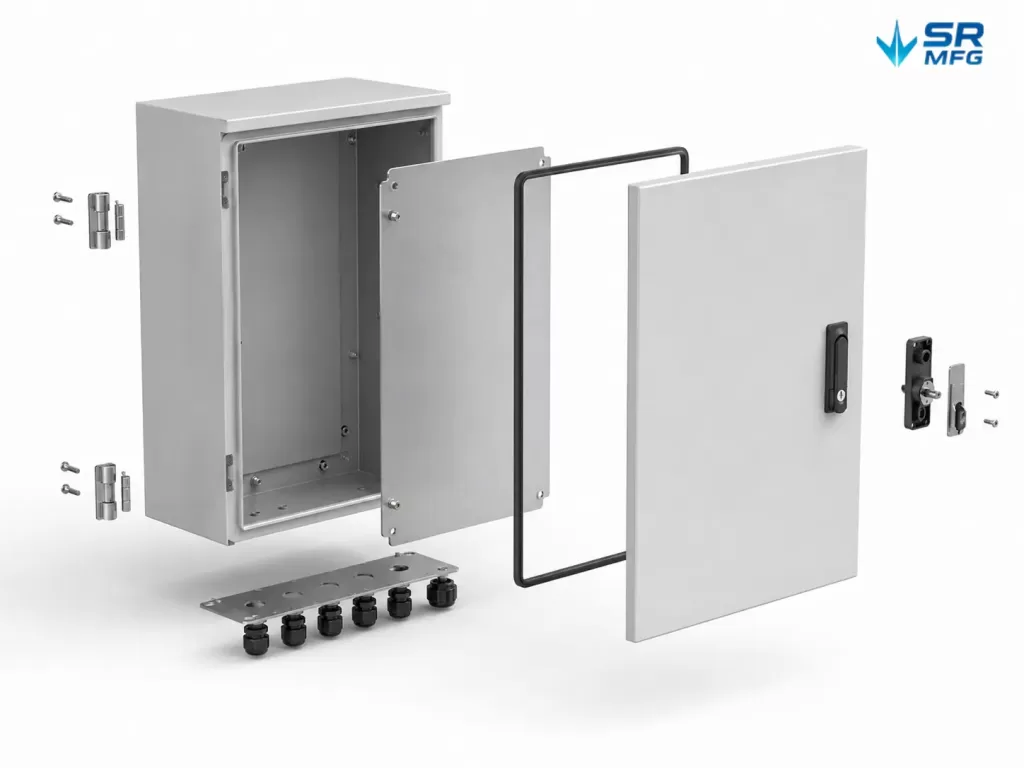
Key Design Requirements for Solar Inverter Enclosures
The design of a solar inverter enclosure is different from that of a standard electrical box. Solar inverters are often used outdoors, but they should usually be installed away from strong direct sunlight, with enough space left for heat dissipation.
Power conversion also generates heat during operation. So the enclosure design must consider both environmental protection and thermal performance.
| Design Requirement | Why It Matters for Solar Inverters |
|---|---|
| Outdoor protection | Helps protect internal electronic components from rain, dust and weather exposure |
| Heat dissipation | Supports stable operation of power electronic components |
| Structural strength | Helps the enclosure withstand installation, transport and long-term use |
| Cable and connector layout | Makes wiring, installation and maintenance easier |
| Sealing design | Supports the higher protection levels required for outdoor applications |
| Surface treatment | Improves corrosion resistance and product appearance |
Materials
Choosing the right material is important for the performance, durability and cost control of a solar inverter sheet metal enclosure. Common material options and their best applications include:
| Material Option | Best Application |
|---|---|
| Galvanised steel | Cost-sensitive outdoor or indoor inverter enclosures |
| Stainless steel | Harsh, humid or corrosive environments |
| Aluminium alloy | Lightweight inverter housings with good corrosion resistance |
| Cold rolled steel | Indoor or protected installation environments, usually with surface treatment |
Surface Treatment Options
Sheet metal finishing for solar inverter enclosures affects much more than appearance. It also directly influences the enclosure’s corrosion resistance, weather resistance and service life in outdoor environments.
Common surface treatment options for inverter enclosures include:
- Powder coating
The most widely used coating method for sheet metal enclosures. It offers strong adhesion, even coverage and good weather resistance. - Wet painting
Suitable for projects that require specific colour matching or multi-colour finishes. - Anodising
Aluminium anodising for corrosion-resistant enclosure parts is commonly used for aluminium parts to improve surface hardness and corrosion resistance. - Brushing or polishing
Used for stainless steel enclosures to create a clean, refined surface finish. - Custom colour matching
Available according to customer brand requirements, including RAL colours or Pantone colours. - Salt spray or corrosion resistance testing
Available when the project requires validation of outdoor durability.
Thermal Management Solutions
A solar inverter generates heat during power conversion. If this heat is not removed effectively, the internal components may overheat, which can lead to reduced performance, a shorter service life or unexpected shutdown.
Common heat dissipation solutions include:
- Ventilation openings
Allow natural airflow to pass through the enclosure and remove heat generated by internal components. - Louvres
Angled ventilation covers that allow air to enter and exit while helping to limit the entry of water and dust. - Fan and filter mounting positions
Reserved installation areas for forced air cooling systems, with filters to help block debris. - Heat sink integration
Provides mounting space or contact surfaces for heat sinks used with power modules. - Internal airflow space
Leaves enough clearance between components so air can move freely inside the enclosure.
Applications
Solar inverter enclosures are widely used in sheet metal solutions for energy and power equipment. Each application has different requirements for size, protection, heat dissipation and mounting method. SR MFG custom manufactures sheet metal inverter enclosures according to the specific needs of your project.
| Application | Description |
|---|---|
| Residential solar inverter systems | Compact enclosures for home rooftop installations, with a focus on a clean appearance and space-saving design |
| Commercial rooftop solar systems | Larger enclosures for multi-string or three-phase inverters, with more focus on heat dissipation and wiring space |
| Large ground-mounted PV power stations | Heavy-duty enclosures for central inverters and power station equipment, requiring high structural strength and weather resistance |
| Hybrid inverter systems | Enclosures designed for inverters with battery management functions, supporting multi-module installation layouts |
| Energy storage cabinets | Metal structures for battery management systems and power conversion units, with a focus on internal separation and cable management |
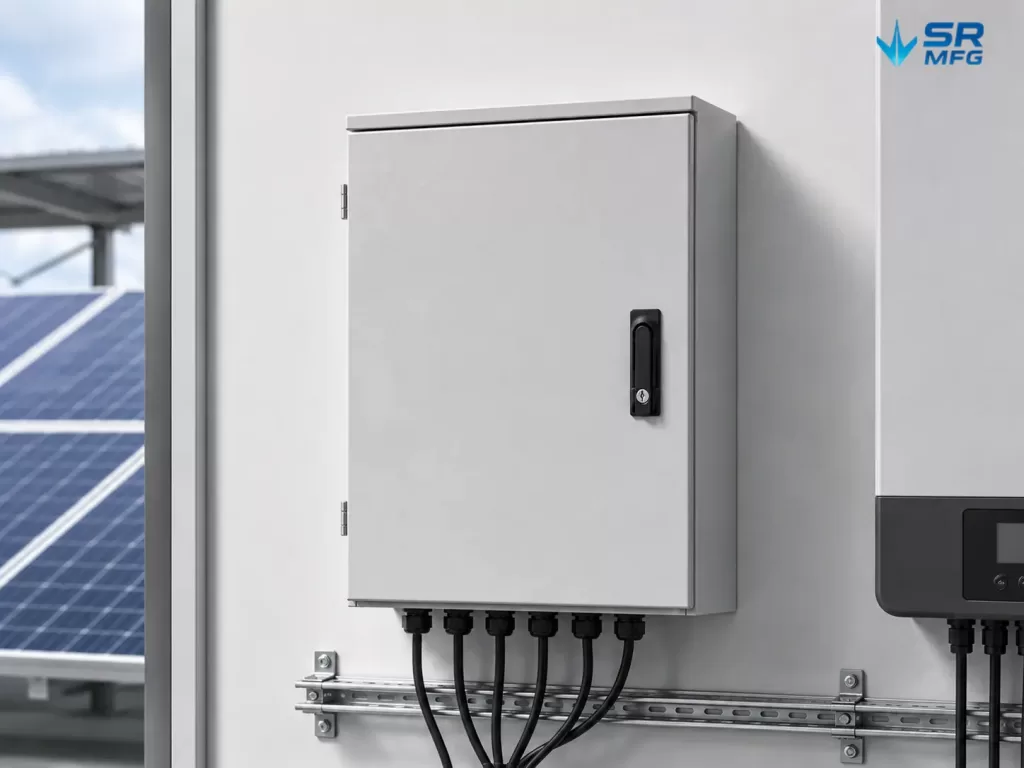
| Outdoor power control units | Outdoor control box enclosures for power distribution equipment are used for charge controllers, combiner boxes and power distribution equipment, with a focus on protection rating and flexible installation |
Our Manufacturing Capabilities
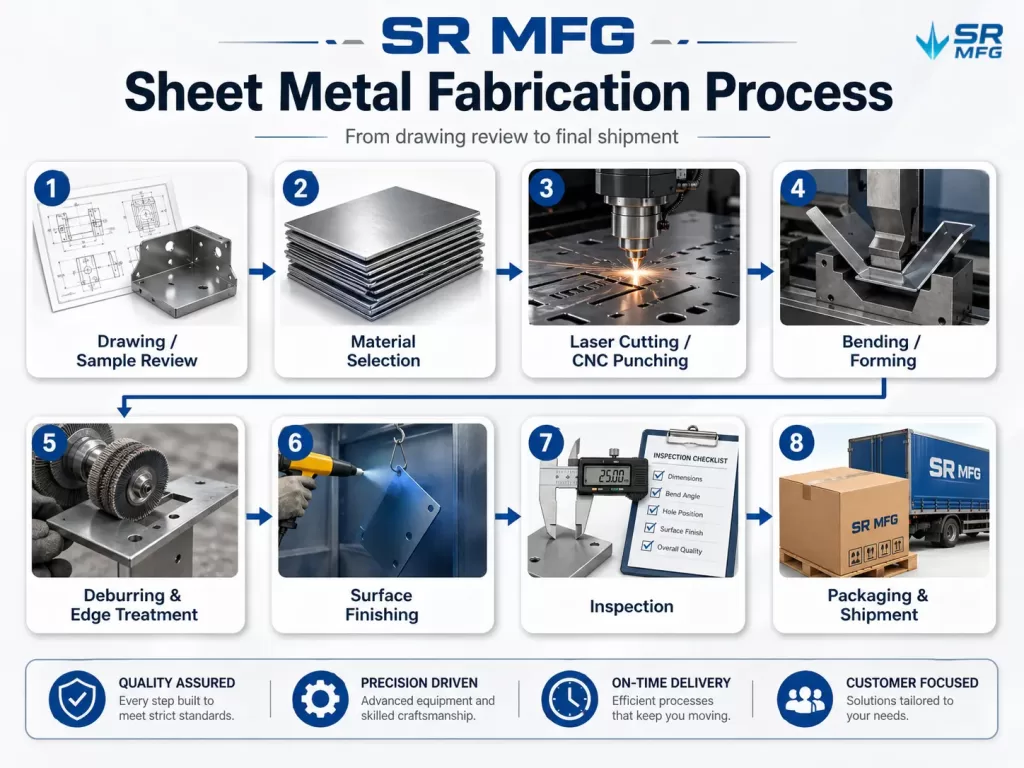
SR MFG supports the full manufacturing process for solar inverter sheet metal enclosures, from drawing review to finished product packaging and shipment.
Our production process includes:
Drawing Review and DFM Support
We review the sheet metal DFM review and optimisation and provide suggestions when needed.
Laser Cutting or Punching
Sheet metal blanks are accurately cut according to the approved design.
Bending and Forming
CNC press brakes are used to bend flat sheet metal blanks into three-dimensional enclosure structures.
Welding and Assembly
Panels are joined, and brackets, studs and internal hardware are added as required.
Grinding and Surface Preparation
Weld seams are ground, and the surface is prepared for the next finishing process.
Powder Coating or Other Surface Treatment
The selected surface finish is applied to provide both protection and a consistent product appearance.
Inspection and Packaging
Quality control and inspection before enclosure shipment includes dimensions, coating quality and assembly fit before the finished enclosures are packed and shipped.
FAQ
What files are needed for a custom solar inverter enclosure quotation?
We accept 2D drawings in DWG, DXF or PDF format, as well as 3D files such as STEP, IGES and SLDPRT. Please also provide the material type, sheet thickness, surface treatment, quantity, and any special requirements such as IP rating or assembly needs. The more details you provide, the faster and more accurate the quotation will be.
Can SR MFG manufacture solar inverter enclosures based on a sample?
Yes. If you send us a physical sample, our team can review it, measure it and prepare production drawings for your confirmation before manufacturing begins. This is a common option for buyers who already have an existing product and need a new production supplier.
Can the enclosure be designed for outdoor installation?
Yes. We can build outdoor inverter enclosures by selecting suitable materials, applying weather-resistant finishes and adding sealing features according to the installation environment and target protection rating. The details will be confirmed during the design review stage.
Can I customise cable holes, brackets and mounting plates?
Yes. These are among the most common custom requirements we handle. Cable gland positions, bracket shapes, mounting plate layouts and connector cut-outs can all be customised according to your drawing specifications.
What affects the cost of a solar inverter sheet metal enclosure?
The cost is influenced by the material type and thickness, enclosure size, structural complexity, surface treatment requirements, dimensional tolerances, order quantity and assembly complexity. Providing detailed drawings and a clear volume plan helps us offer a more competitive quotation.
Do you support prototyping and mass production?
Yes. We support both prototype production for design validation and batch production for long-term supply. Many customers begin with a prototype batch and then move to larger production orders once the design is finalised.