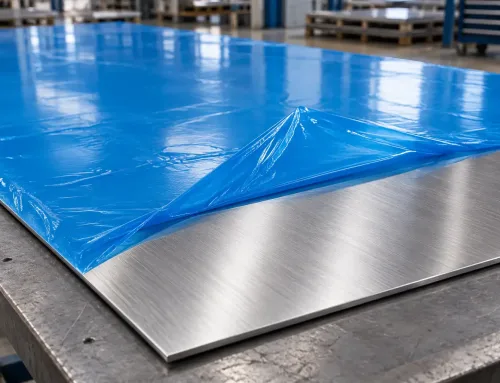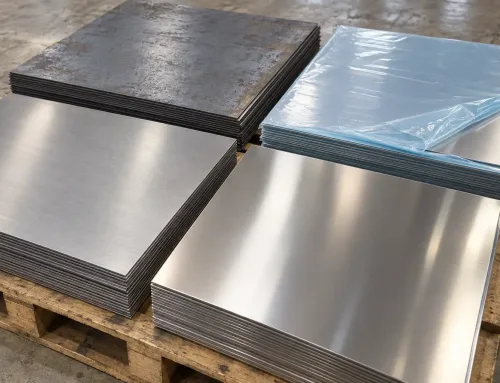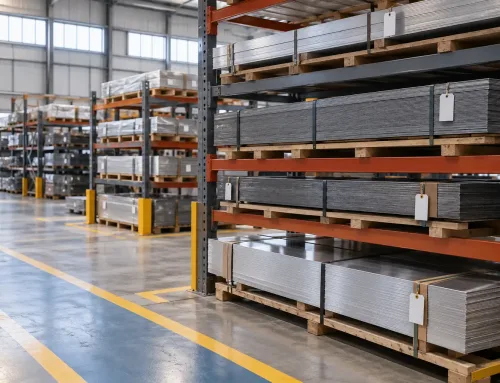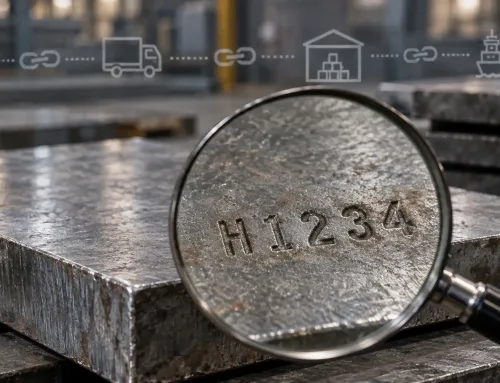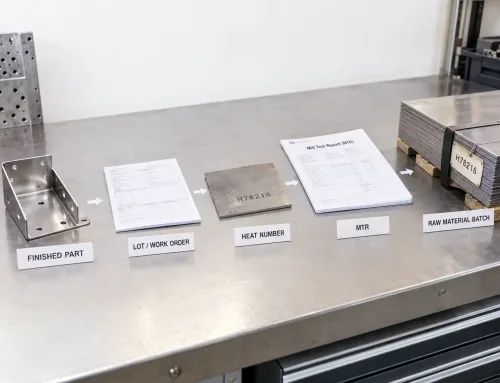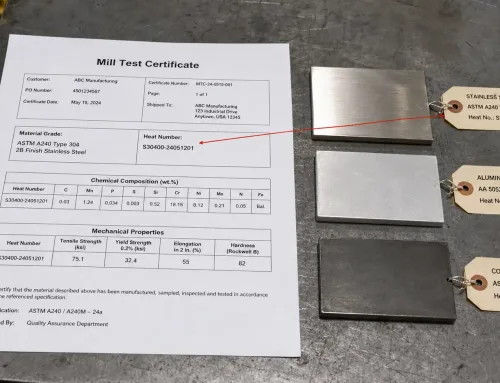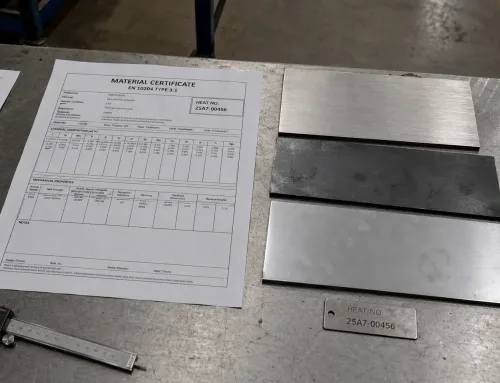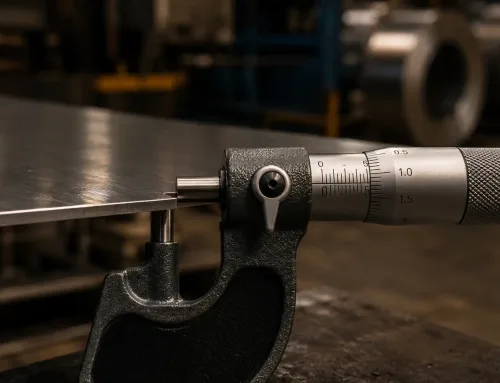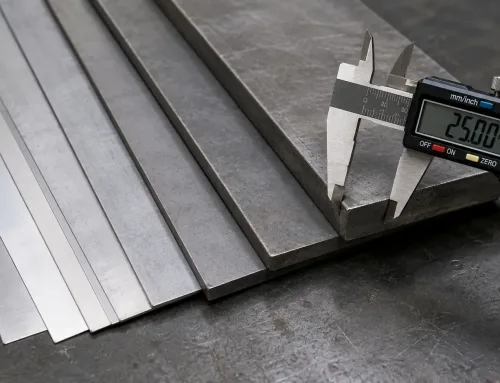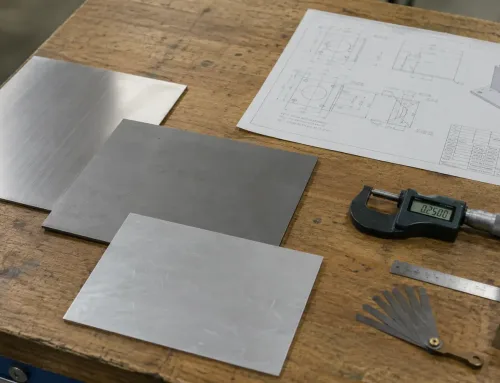

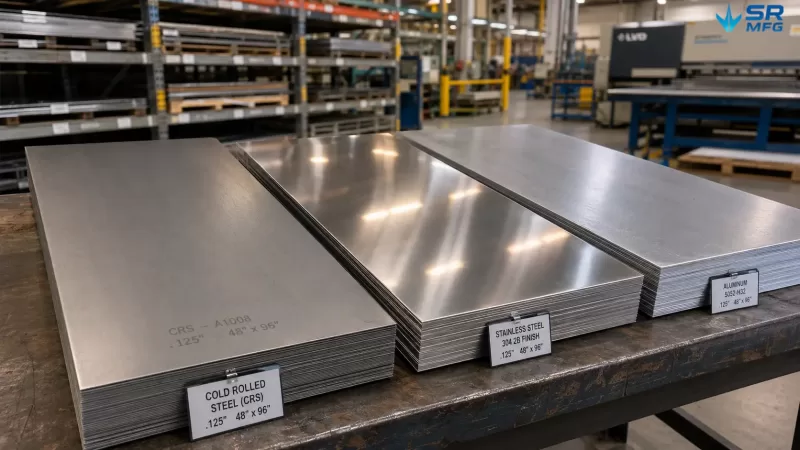
Stacked carbon steel, stainless steel, and aluminum sheets with visible mill stamps.
A material grade is a standardized classification of a material based on its chemical composition, mechanical properties, and manufacturing process.
In sheet metal fabrication projects, the material grade plays a critical role in determining whether a part can be produced consistently, reliably, and to the required performance standard.
Common material grade classification systems include ASTM and SAE/AISI in the United States, EN standards in the European Union, JIS standards in Japan, and GB standards in China.
What Does Material Grade Mean?
In manufacturing, a material grade usually refers to a specific specification within a broader material category, defined according to a recognized standard.
For example, stainless steel is a material type. SUS304, SUS316L, and SUS430 are different grades within that material category. Each grade has clearly defined ranges for chemical composition and minimum requirements for mechanical properties.
This term is often confused with related concepts. Understanding the differences can help prevent specification errors in drawings, quotations, and procurement documents.
- Grade vs. Alloy: An alloy describes the base elemental composition, such as an aluminum-magnesium alloy. A grade defines the specific standardized specification of that alloy, such as AL5052.
- Grade vs. Temper: Temper, such as O, H14, or T6, describes the work-hardening or heat-treatment condition of aluminum and copper alloys. A complete material callout should include both the grade and temper. For example, AL5052-H32 specifies both the material grade and its temper condition.
- Grade vs. Surface Quality Level: Surface quality levels, such as A/B/C/D/E, describe the acceptable appearance standard of the sheet surface, not the material specification itself. These are often confused during purchasing discussions.
- Grade vs. Quality: Quality refers to the degree to which a material meets requirements. Grade is a technical classification. A lower-grade material can still be considered high quality if it consistently meets the requirements of that grade.
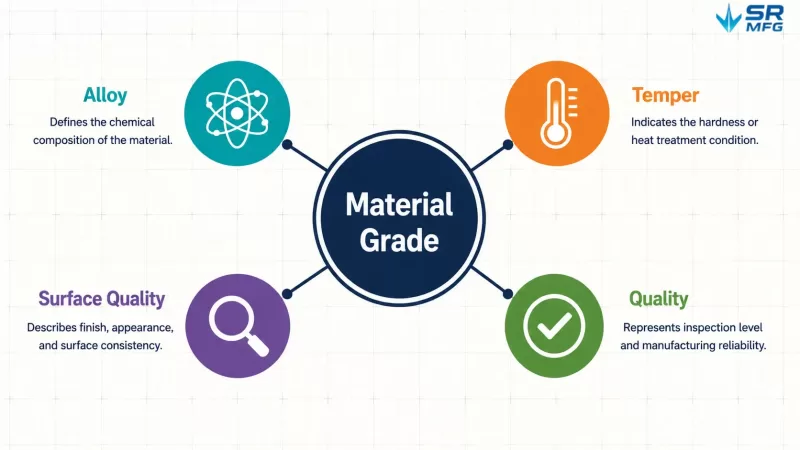
Infographic showing how Material Grade relates to Alloy, Temper, Surface Quality, and Quality.
Why Material Grade Matters in Sheet Metal Fabrication
Selecting the wrong sheet metal material grade can create serious manufacturing and performance problems. For example:
Carbon steel with insufficient elongation may crack during bending.
Stainless steel without proper consideration of springback may lead to inconsistent bending angles.
Using galvanized steel for parts that require powder coating may increase unnecessary costs.
Using uncoated carbon steel in outdoor environments may lead to corrosion within only a few months.
A practical example is specifying SUS316L instead of SUS304 for an indoor electronic enclosure. This may increase material costs by approximately 25%–40%, but provide no functional benefit, because an indoor environment does not require the enhanced molybdenum-based corrosion resistance of 316 stainless steel.
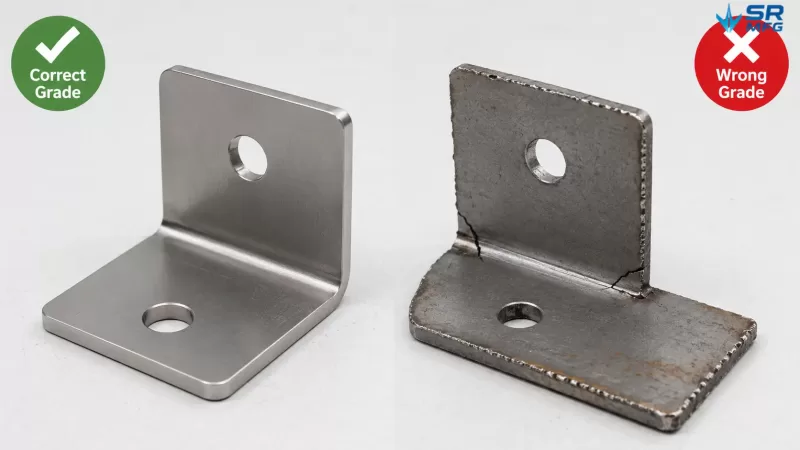
Side-by-side comparison of a correctly bent bracket and a cracked bracket from wrong grade selection.
Major Material Grade Classification Systems
Different countries and industries use different standards organizations to define material grades. When sourcing custom sheet metal parts globally, understanding these systems and their approximate equivalents is important.
ASTM / SAE / AISI Standards — United States
ASTM material grades use an alphanumeric format. For example, ASTM A36 refers to structural carbon steel, while ASTM A240 covers stainless steel sheet and plate.
The SAE/AISI numbering system uses four-digit codes. The first two digits indicate the alloy series. For example, 10xx refers to plain carbon steel, 3xx refers to chromium-nickel stainless steel, and 4xx refers to chromium stainless steel.
UNS, or the Unified Numbering System, can also be used as a cross-reference between different material numbering systems.
EN Standards — European Union
EN material grades combine name-based codes and numerical codes.
For carbon structural steel, the format is usually S + minimum yield strength + quality designation, such as S235JR.
For stainless steel, a numerical code such as 1.4301 is often used together with a chemical-symbol-based name, such as X5CrNi18-10.
JIS Standards — Japan
JIS material grades are widely used across East Asian and Southeast Asian supply chains.
Common sheet metal material grades include SPCC for commercial cold-rolled steel, SGCC for galvanized steel, SUS304 for austenitic stainless steel, and A5052 for aluminum-magnesium alloy.
Many global manufacturers recognize JIS grades even outside Japan.
GB Standards — China
GB material grades use a “Q + yield strength” format for carbon steel, such as Q235B.
For stainless steel and alloy steel, GB standards use numerical or composition-based codes. For example, 06Cr19Ni10 is commonly considered an equivalent stainless steel grade to 304.
GB grades are gradually aligning with EN and ISO equivalent standards, but tolerance specifications and inspection standards may still differ. Direct substitution should always be verified before production.
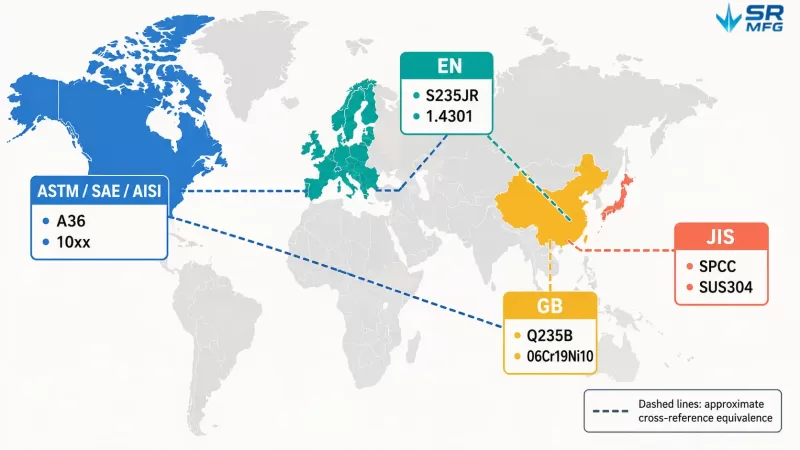
World map highlighting ASTM, EN, JIS, and GB classification systems by region.
Cross-Standard Material Grade Equivalents
The table below shows common sheet metal material grades and their approximate equivalents across different standards. These equivalents are approximate. Before substitution, always confirm the chemical composition, mechanical property range, and applicable testing requirements, especially for safety-critical or regulated applications.
| Material Grade / Standard | Approximate Equivalent Grade | Common Sheet Metal Applications |
|---|---|---|
| SPCC (JIS) / DC01 (EN) / A1008 CS (ASTM) | Approximately equivalent | Brackets, enclosures, internal components |
| SGCC (JIS) / DX51D (EN) / A653 CS Type B (ASTM) | Approximately equivalent | Outdoor cabinets, HVAC ducts, electrical enclosures |
| Q235B (GB) / S235JR (EN) / A36 (ASTM) | Approximately equivalent | Frames, supports, structural brackets |
| SUS304 (JIS) / 1.4301 (EN) / Type 304 (ASTM) | Approximately equivalent | Food equipment, medical enclosures, decorative panels |
| SUS316 (JIS) / 1.4401 (EN) / Type 316 (ASTM) | Approximately equivalent | Marine, chemical, and highly corrosive environments |
| AL5052-H32 (ASTM/JIS) | — | Lightweight enclosures, bent brackets, marine parts |
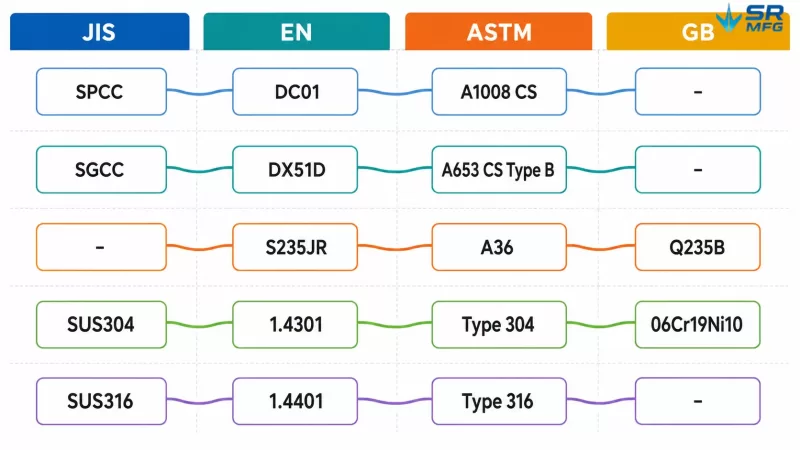
Cross-standard equivalence chart connecting JIS, EN, ASTM, and GB grade names by color-coded rows.
Common Material Grades in Sheet Metal Fabrication
Carbon Steel
Cold-rolled steel sheet grades such as SPCC / DC01 / ASTM A1008 CS offer good formability and low material cost, making them suitable for internal brackets, base plates, and non-visible sheet metal components.
SGCC / DX51D / ASTM A653 CS Type B include a hot-dip galvanized zinc coating for built-in corrosion protection. These grades are commonly used for outdoor control box enclosures, HVAC ductwork, and electrical cabinets.
Stainless Steel
SUS304 / 1.4301 / ASTM A240 Type 304 is the most widely used stainless steel grade in sheet metal fabrication. It provides a strong balance of corrosion resistance, formability, and weldability.
SUS316 / 1.4401 contains added molybdenum, making it suitable for marine environments, chemical processing applications, and high-corrosion conditions. However, it comes at a higher material cost.
SUS430 / 1.4016 is a ferritic stainless steel. It is magnetic and more cost-effective than 304 stainless steel. It is commonly used for decorative parts, appliance panels, and applications where extremely high corrosion resistance is not required.
Aluminum Alloys
AL5052-H32 is one of the most commonly used aluminum sheet grades. It offers moderate strength, excellent corrosion resistance, and good formability, making it suitable for bending, forming, and drawing operations.
AL6061-T6 provides higher strength and is heat-treatable, but it is less suitable for small-radius bending because of its lower ductility in the T6 temper condition.
When specifying aluminum, the temper should always be listed together with the alloy grade to ensure consistent forming results.
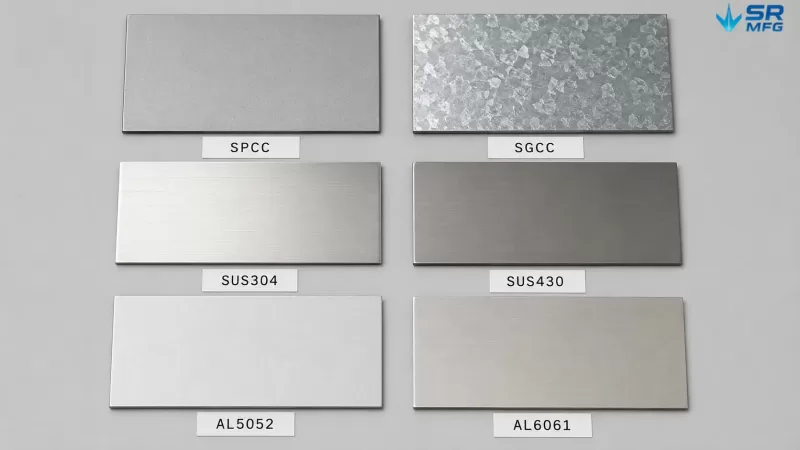
Six sheet metal samples showing visual differences between SPCC, SGCC, SUS304, SUS430, AL5052, and AL6061.
How Material Grade Affects Sheet Metal Forming Processes
This relationship is important, but it is often overlooked in general material selection guides. In sheet metal manufacturing, the material grade affects every major fabrication process.
Bending
Different material grades have significantly different sheet metal bending requirements, especially for minimum bend radius, springback, and forming stability. Soft low-carbon steel may allow a 1T bend radius, while stainless steel usually requires 2T–3T.
Springback also varies by grade. SUS304 stainless steel has noticeably greater springback than carbon steel, so over-bending compensation is required during press brake programming.
For aluminum, the temper condition is critical. AL5052-H32 provides reliable bending performance, while AL6061-T6 may crack under tight-radius bending.
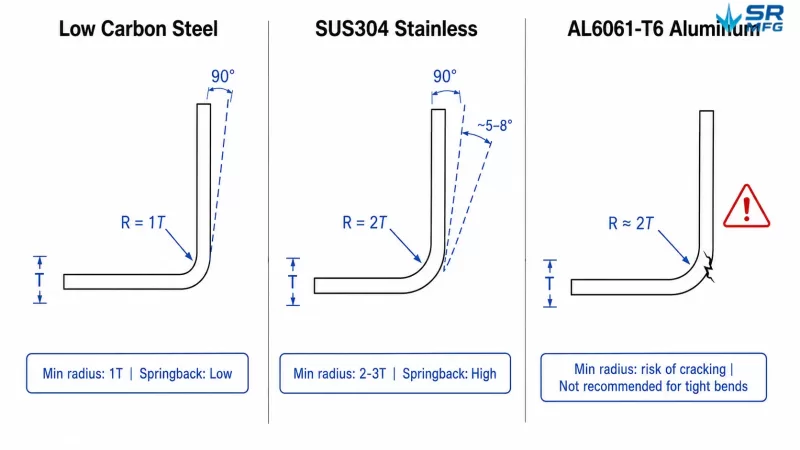
Cross-section diagram comparing bend radius and springback for carbon steel, SUS304, and AL6061-T6.
Laser Cutting
Most sheet metal grades can achieve good cutting quality on modern fiber laser cutting machines. However, highly reflective materials such as aluminum and copper may require higher laser power or specialized optical components.
High-carbon steel and alloy steel may form a harder heat-affected zone (HAZ), which can affect downstream bending performance.
Stamping
Harder material grades accelerate punch and die wear. Deep drawing requires high-elongation grades such as DC04 / SPCE deep drawing steel, rather than standard commercial-grade steel.
Welding
Low-carbon steel is generally easy to weld.
Austenitic stainless steels, such as 304 and 316, offer good weldability but require the correct filler material.
Aluminum welding requires the filler alloy to match the base material grade. For example, 6061 is commonly welded with ER4043, while 5052 is commonly welded with ER5356.
Material Grade and Surface Finishing Compatibility
The selected sheet metal surface finishing process must be compatible with the material grade. Otherwise, it may cause poor coating adhesion, corrosion, or appearance defects.
- Carbon Steel: Suitable for powder coating, electro-galvanizing, zinc coating, chromate conversion coating, and e-coating. Bare carbon steel corrodes quickly, so exposed parts require a protective coating.
- Stainless Steel: Usually treated with passivation after stainless steel fabrication, using citric acid or nitric acid. Electropolishing is used for high-cleanliness or decorative applications. Stainless steel generally does not require galvanizing or painting, because these finishes can reduce the value of stainless steel’s inherent corrosion resistance.
- Aluminum: Compatible with anodizing, especially sulfuric acid anodizing, as well as chromate conversion coating, also known as Alodine or chemical film, powder coating, and wet painting. It is important to note that anodized appearance varies by alloy. 6061 usually produces a more consistent anodized finish than 5052.
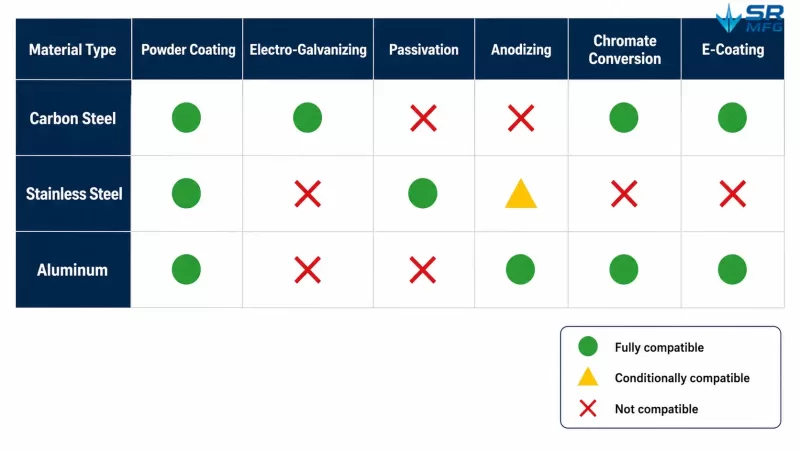
Compatibility matrix pairing carbon steel, stainless, and aluminum with six surface treatments.
Material Grade and Dimensional Tolerances
Material grade affects achievable tolerances, especially for bent features.
Within the same material family, harder grades usually show greater springback and wider angular tolerance ranges.
Flatness and thickness tolerances are defined by material supply standards, such as ASTM A568 for steel sheet and EN 10051 for uncoated flat products. These tolerances may vary depending on the material grade and delivery condition.
When tight tolerances are required, both the material grade and the relevant supply standard should be specified on the engineering drawing.
How to Specify Material Grade on Engineering Drawings
The best practice for material callouts on engineering drawings is to clearly specify the standard, grade, and temper or condition.
Examples include:
“ASTM A240 Type 304, annealed”
“AL5052-H32 per ASTM B209”
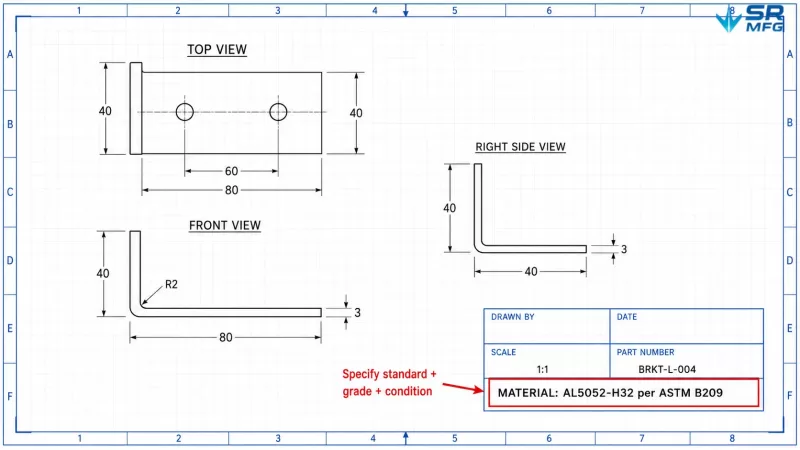
Engineering drawing snippet with material callout “AL5052-H32 per ASTM B209” highlighted in the title block.
Avoid vague callouts such as “stainless steel” or “aluminum”. These leave the material selection to the supplier and may result in inconsistent parts across different production batches.
If equivalent grades from different standards are allowed, the drawing should state this clearly. For example:
“SUS304 or equivalent, including 1.4301 or ASTM A240 Type 304.”
For visible parts, the drawing should also include surface quality or cosmetic surface requirements. For example:
“Visible surfaces shall be Class A surfaces. Scratches, dents, and color differences shall follow the appearance inspection standard confirmed by both parties.”
If JIS G3141 is referenced, the material should be specified according to its quality symbol, temper designation, and surface finish symbol, such as SPCC-SD or SPCC-SB.
The Role of Material Grade in Procurement
Cost Logic
In general, material cost follows this order:
Carbon steel < galvanized steel < 430 stainless steel < 304 stainless steel < 316 stainless steel < specialty aluminum < copper / brass
Even for the same grade, prices from different mills may vary by ±5%–15% depending on origin, certification requirements, and order quantity.
Lead Time
Common grades such as SPCC, SUS304, and AL5052 are usually available from stock and can support faster delivery.
Non-standard thicknesses, narrow-specification grades, or materials requiring mill test certificates may add 2–6 weeks to the lead time.
Grade Substitution and Cost Optimization
When a product does not require the full performance of the specified grade, material substitution can reduce cost.
For example, replacing SUS304 with SUS430 in non-corrosive indoor applications may reduce material cost by 15%–25%.
Switching a bent bracket from AL6061-T6 to AL5052-H32 can reduce scrap and improve formability.
However, material substitutions should always be confirmed with the customer’s engineering team. For safety-critical or regulated products, materials should never be substituted without approval.
Common Mistakes When Selecting Material Grades
1. Assuming a Higher Grade Is Always Better
Over-specifying material grades can create unnecessary cost. Specifying SUS316 for an indoor bracket that only requires SUS304 is one of the most common avoidable expenses.
2. Confusing Grade with Quality
A material can be 304 stainless steel, but if the supplier does not consistently meet the required specification, it may still be a low-quality material.
3. Omitting the Temper for Aluminum
Specifying only “AL5052” without listing the temper, such as H32, H34, or O, is incomplete. This can lead to inconsistent forming results.
4. Assuming Cross-Standard Equivalents Are Exact
ASTM A36 and EN S235JR have slightly different chemical composition ranges. For critical applications, equivalency should be verified before substitution.
5. Ignoring Downstream Processes
A grade selected only for strength may create practical problems during bending, welding, or coating.
6. Ignoring Surface Quality Level
Choosing the correct material grade is not enough for visible panels. If the wrong surface quality level is selected, such as using a B-side surface instead of an A-side surface, visible defects may appear after painting or powder coating.
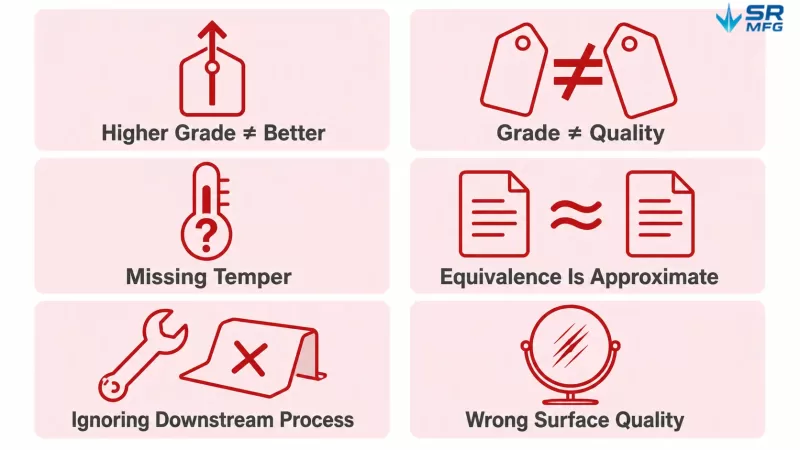
Six warning cards illustrating common material grade selection mistakes.
Material Grade Quick Reference Table
| Application Scenario | Recommended Grade | Reason for Recommendation |
|---|---|---|
| Indoor enclosures with no corrosion risk | SPCC / DC01 | Low cost and good formability |
| Outdoor enclosures with moderate corrosion exposure | SGCC (Z275) | Built-in galvanized corrosion protection |
| Food and medical equipment enclosures | SUS304 / 1.4301 | Corrosion-resistant, hygienic, and weldable |
| Chemical or marine environments | SUS316 / 1.4401 | Molybdenum content improves corrosion resistance |
| Lightweight bent brackets | AL5052-H32 | Good strength-to-weight ratio and excellent formability |
| Heavy-duty structural frames | Q235B / S235JR / A36 | High structural strength and broad material availability |
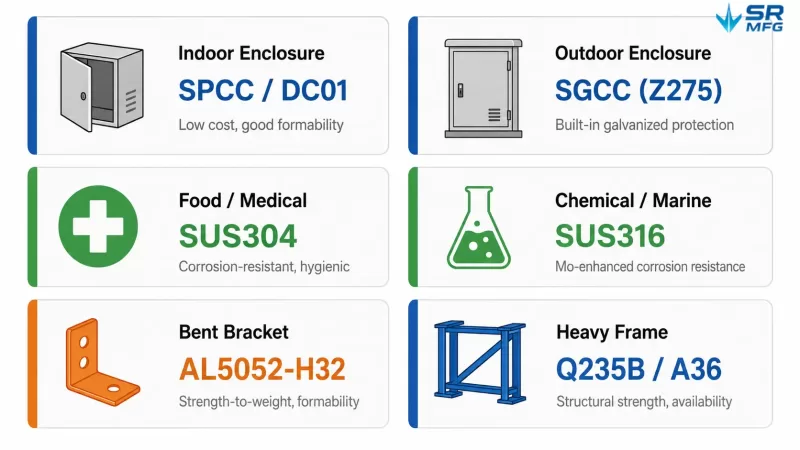
Quick-reference cards recommending material grades for six sheet metal application scenarios.