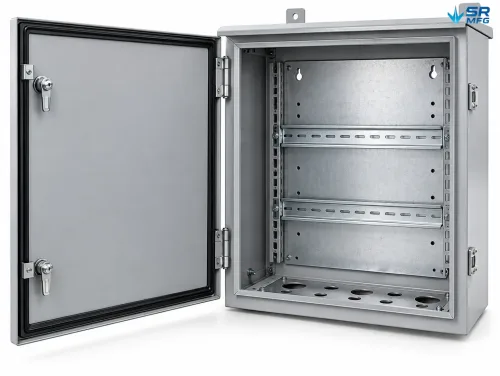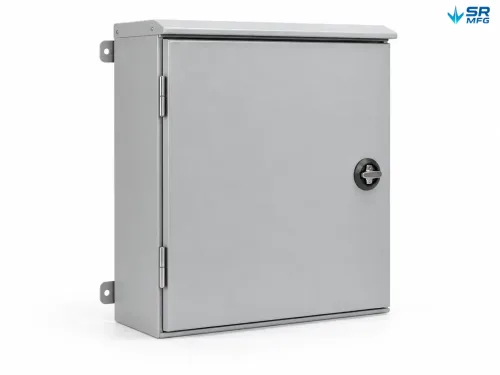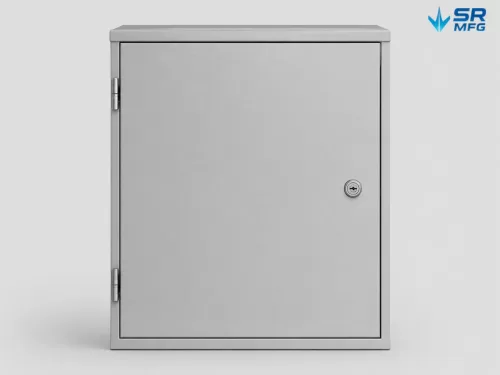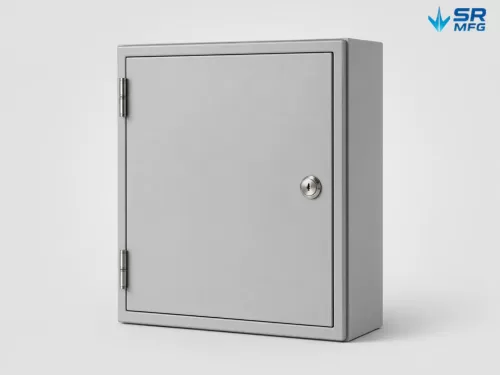
Outdoor Junction Box Enclosure
Every outdoor junction box enclosure is manufactured in-house by SR-MFG, giving us direct control over material selection, fabrication, welding, finishing, assembly, and quality inspection.
- Available materials include 304 stainless steel, 316 stainless steel, cold-rolled steel, and 5052 aluminum
- Continuous seam-welded enclosure construction
- Dual-channel gasket sealing
- Available protection levels from IP54 to IP67
- Every component can be customized for OEM applications
Product Details
| Parameter | Specification |
|---|---|
| Enclosure Material | Carbon Steel / 304 Stainless Steel / 316 Stainless Steel |
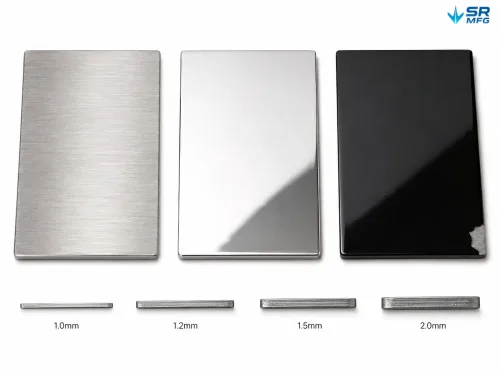
| Enclosure Sheet Thickness | 1.0 mm / 1.2 mm / 1.5 mm / 2.0 mm, selected according to enclosure size and application |
| Door Sheet Thickness | 1.2 mm / 1.5 mm / 2.0 mm, matched to the enclosure body thickness |
| Mounting Plate Material | Galvanized Steel, standard / Stainless Steel, optional |
| Mounting Plate Thickness | 1.5 mm / 2.0 mm / 2.5 mm |
| IP Rating | IP66, standard / IP67 available on request |
| NEMA Rating | NEMA 4X, standard / NEMA 3R / NEMA 4 optional |
| Impact Resistance | IK08 / IK10, depending on sheet thickness and reinforcement structure |
| Seal Material | EPDM, standard, −40°C to +120°C / Silicone, −60°C to +200°C / PU Foam |
| Welding Method | Continuous welding with smooth-ground seams, TIG / MIG |
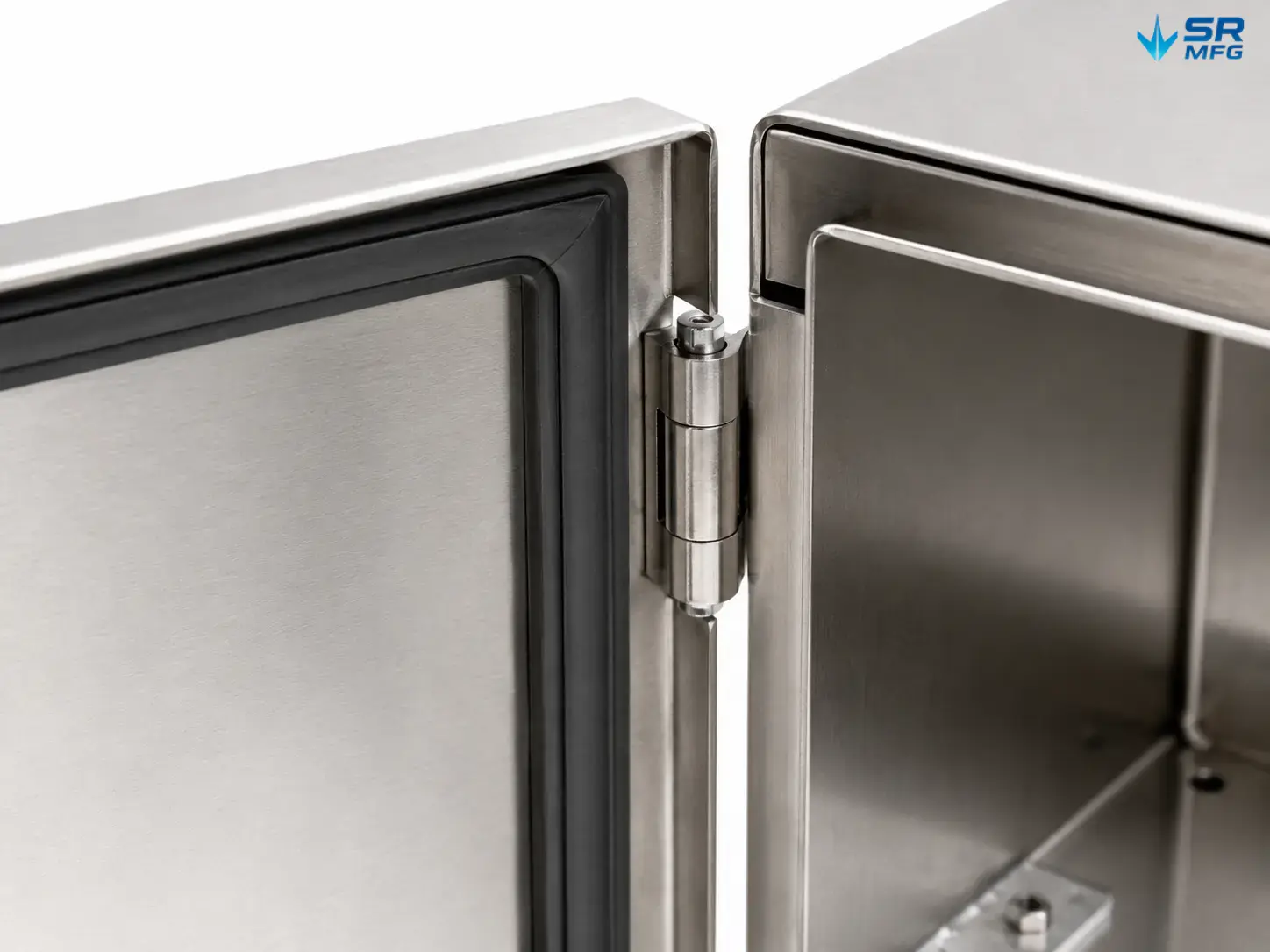
| Hinge Type | Internal hinge, removable pin, 120° opening |
| Hinge Material | 304 Stainless Steel / Zinc Alloy |
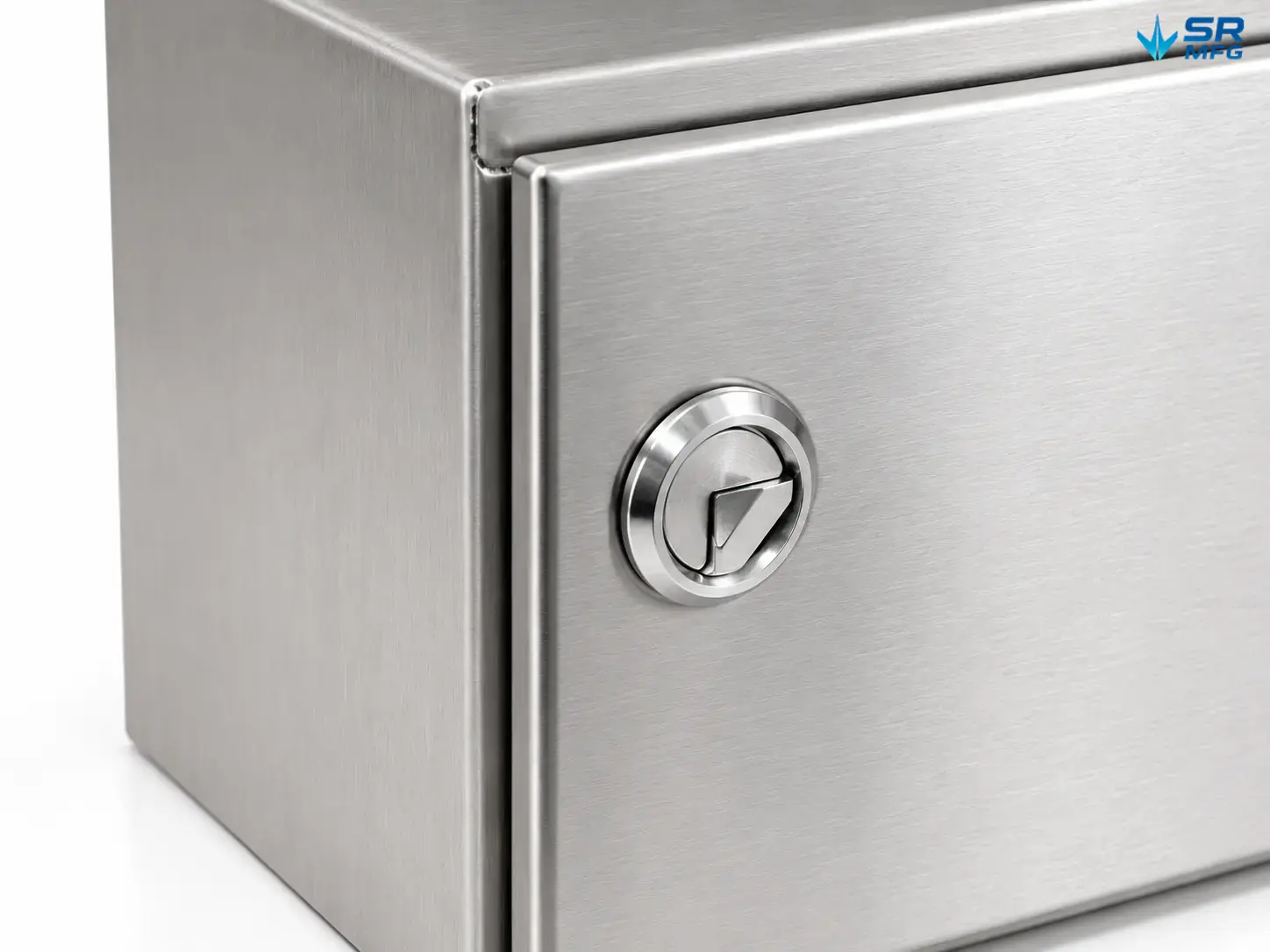
| Lock Type | Quarter-turn latch, standard / Keyed cam lock / Padlock hasp |
| Surface Finish | Epoxy polyester powder coating / Hot-dip galvanizing / Brushed stainless steel |
| Operating Temperature | EPDM seal: −40°C to +85°C; Silicone seal: −60°C to +200°C |
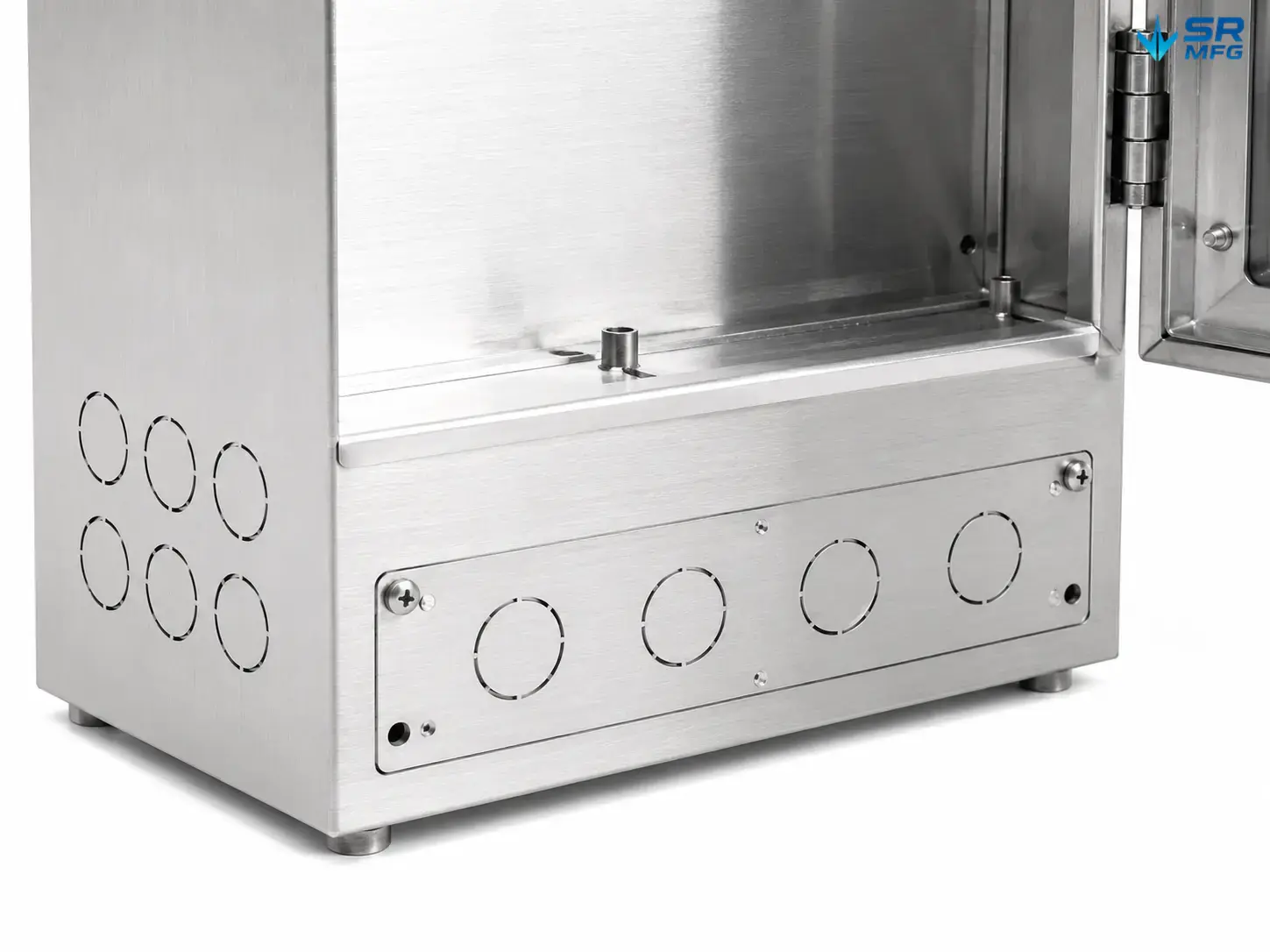
| Cable Entry | Pre-scored knockouts on the bottom and sides / Custom cutouts |
| Grounding | Pre-installed grounding studs on the door and enclosure body |
| Certifications | CE / RoHS / UL 508A available on request / IEC 60529 |
| Standard Product Lead Time | 3–5 business days |
| Custom Product Lead Time | 15–20 business days, depending on complexity |
Built for Outdoor Electrical Protection
An outdoor junction box enclosure protects cable splices, terminal blocks, and field wiring connections from rain, dust, UV exposure, and mechanical impact. Unlike plastic enclosures that can become brittle over time, metal enclosures maintain their structural integrity through repeated temperature cycles while also providing inherent electromagnetic shielding for sensitive circuits.
We manufacture these enclosures through custom sheet metal fabrication using cold-rolled steel or stainless steel sheet, formed on CNC press brakes and continuously welded to create a sealed, rigid enclosure structure. Each enclosure is designed to house electrical components in exposed environments, from utility pole junction points and solar array combiner boxes to industrial field wiring connections.
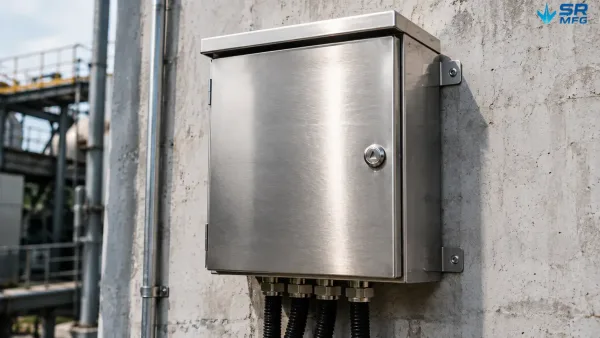
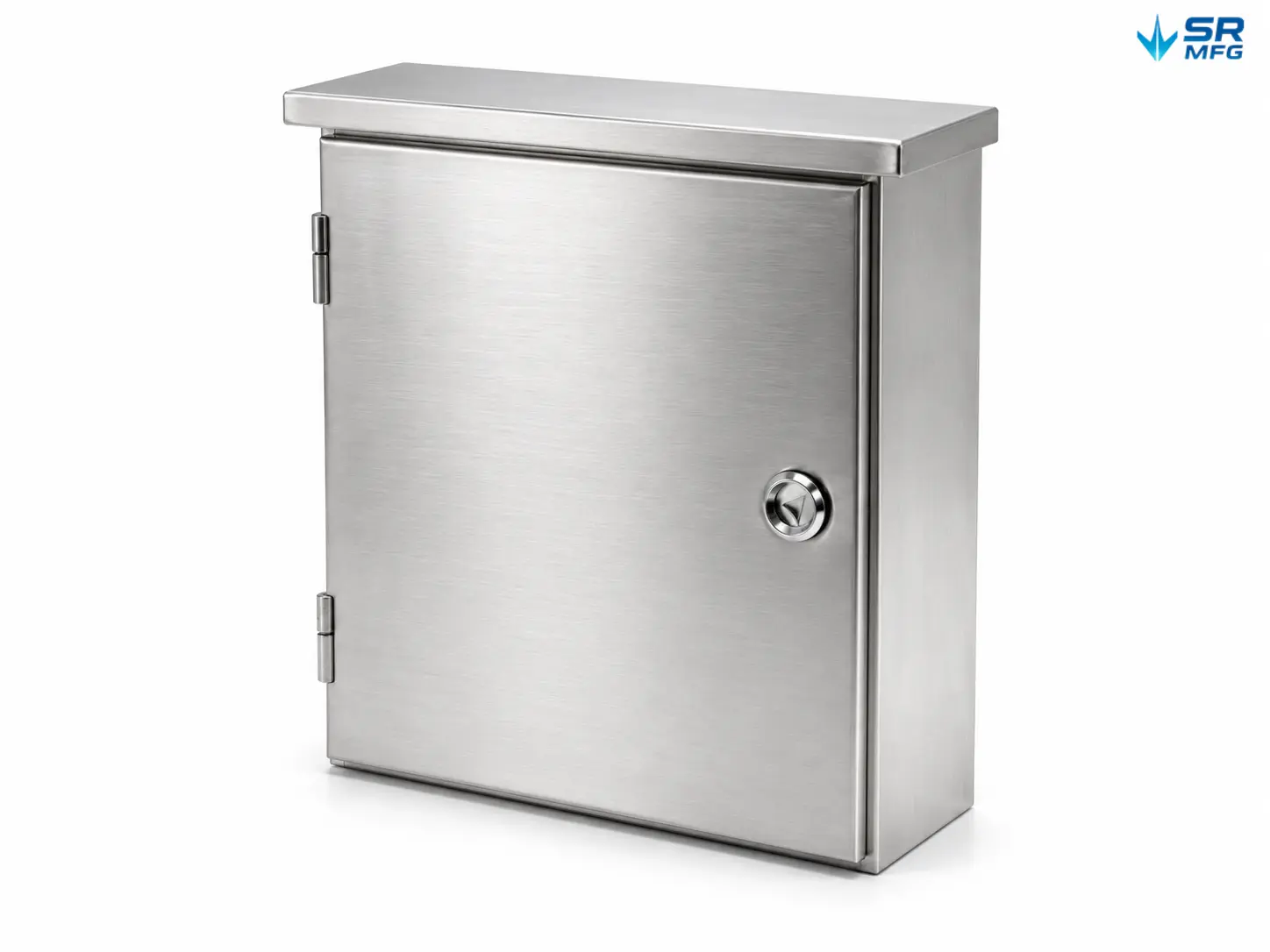
This image shows an outdoor junction box enclosure protecting electrical connections in an exposed industrial environment.
Material Selection: Choosing the Right Steel for Your Environment
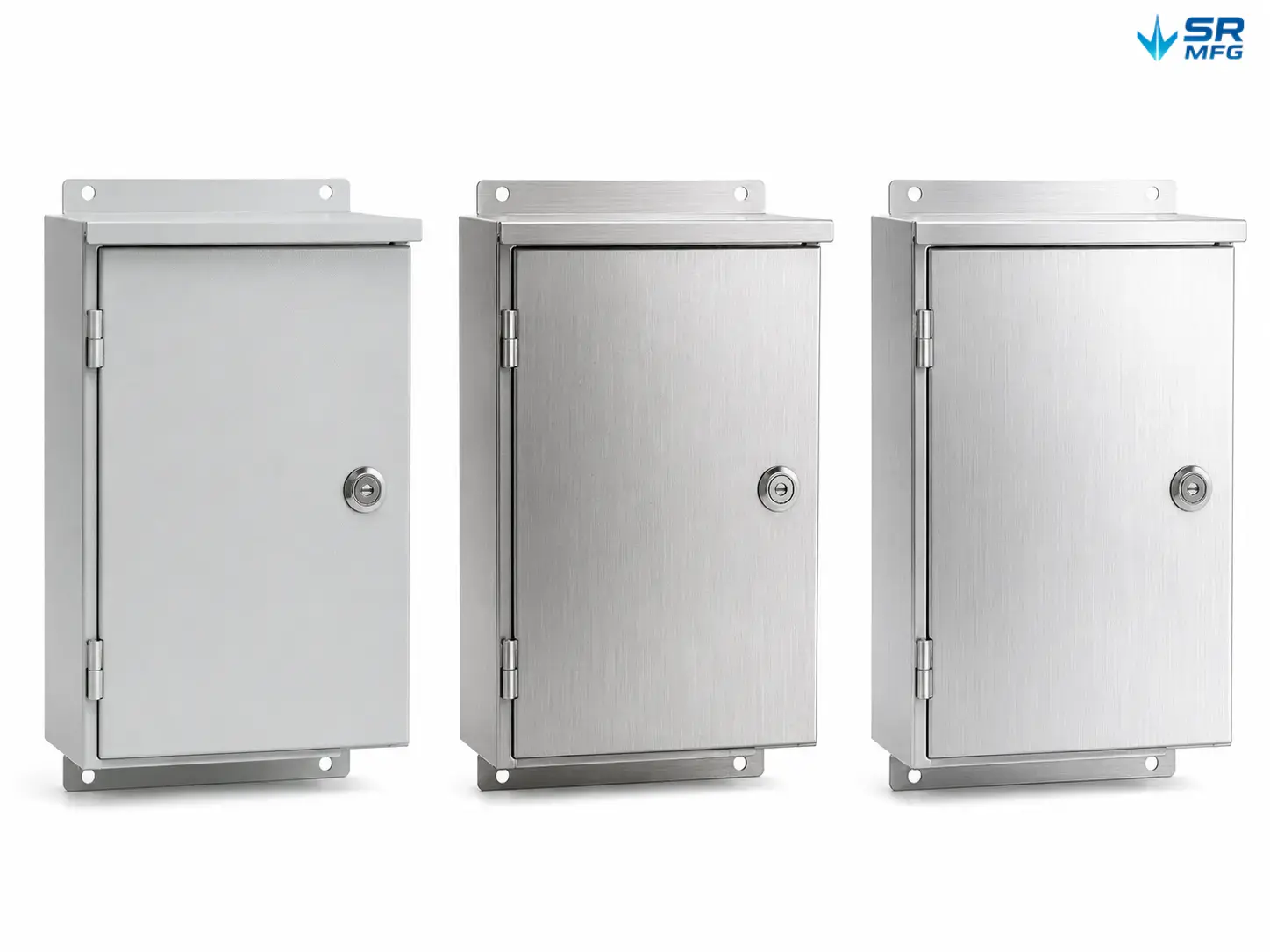
The material you choose directly affects corrosion resistance, weight, cost, and service life. The three standard material options are compared below:
| Property | Carbon Steel | 304 Stainless Steel | 316 Stainless Steel |
|---|---|---|---|
| Corrosion Resistance | Moderate, with protective coating | High | Very High |
| Best For | General outdoor and sheltered industrial environments | Coastal, food-grade, and chemically exposed environments | Marine, offshore, and highly corrosive chemical environments |
| Surface Treatment | Powder coating or galvanizing | Brushed or passivated | Brushed or electropolished |
| Relative Cost | Baseline | Approx. 1.8× | Approx. 2.5× |
| Typical Sheet Thickness | 1.0–2.0 mm | 1.0–2.0 mm | 1.2–2.0 mm |
For most outdoor installations in temperate climates, powder-coated carbon steel provides reliable performance at the lowest cost.
Where salt spray, chemical washdown, or hygiene requirements are present, 304 stainless steel is typically the standard upgrade.
For marine environments or applications exposed to chlorides and acids, 316 stainless steel provides the longest service life.
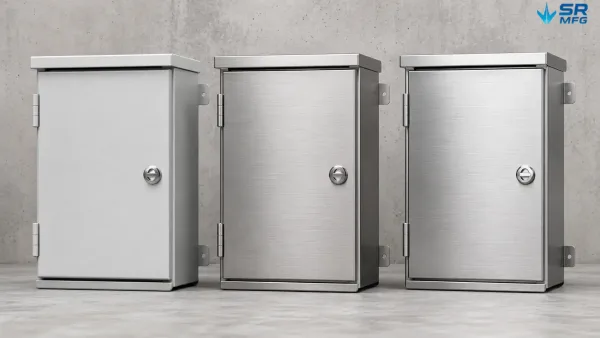
This image compares three material options for the same outdoor junction box enclosure.
If you are unsure which material is best for your project, send us details of your installation environment and we will recommend the most suitable configuration.
IP66 / NEMA 4X Sealing System
The sealing system is what separates an outdoor-rated enclosure from a basic metal box. Our sealing design uses a continuous gasket seated in a fully formed channel around the entire door perimeter.
· Gasket Materials: EPDM for general outdoor use, −40°C to +120°C; silicone for a wider temperature range, −60°C to +200°C; polyurethane foam for high compression recovery
· Seal Design: Continuous perimeter sealing channel with no gaps at the corners and no adhesive-dependent joints
· Compression Control: Uniform screw or latch torque ensures consistent gasket compression across the entire door surface
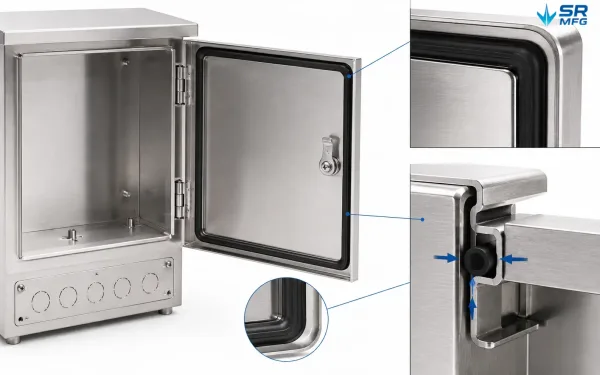
This image shows how the continuous gasket seals the enclosure door against dust and water.
This sealing design provides IP66 protection as standard, meaning the enclosure is completely dust-tight and resistant to powerful water jets from any direction.
For applications requiring temporary immersion protection, IP67 configurations are available on request.
NEMA 4X adds corrosion resistance requirements to dust and water protection and is one of the most commonly specified ratings for outdoor electrical projects in North America.
Door, Hinge & Locking Design
The access design affects everyday usability, maintenance frequency, and site security. We offer three door configurations:
Single Hinged Door
Suitable for standard enclosures up to 600 mm wide. Internal hinges provide a 120° opening angle for full access to the interior. The hinges are removable, allowing the door swing direction to be reversed or modified on site.
Double Hinged Door
Suitable for enclosures wider than 600 mm. Two doors with a center sealing strip provide full access to the enclosure interior without requiring a door swing radius greater than the enclosure depth.
Screw Cover
Suitable for compact enclosures or installations where access is infrequent. This design offers a lower profile, fewer moving parts, and lower cost.
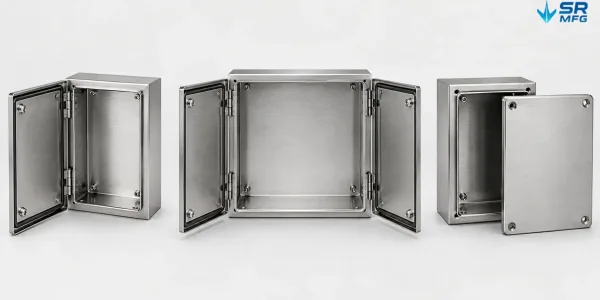
This image compares three door configurations available for outdoor junction box enclosures.
For security, quarter-turn latches are fitted as standard. They are tool-operated and provide a degree of tamper resistance. Keyed cam locks and padlock hasps are also available.
For enclosures 600 mm or taller, door stiffeners are added to prevent long-term bowing that could reduce gasket compression and compromise sealing performance.
Interior Configuration & Cable Entry
The enclosure interior is designed to accommodate field-installed electrical components. Standard and optional internal features include:
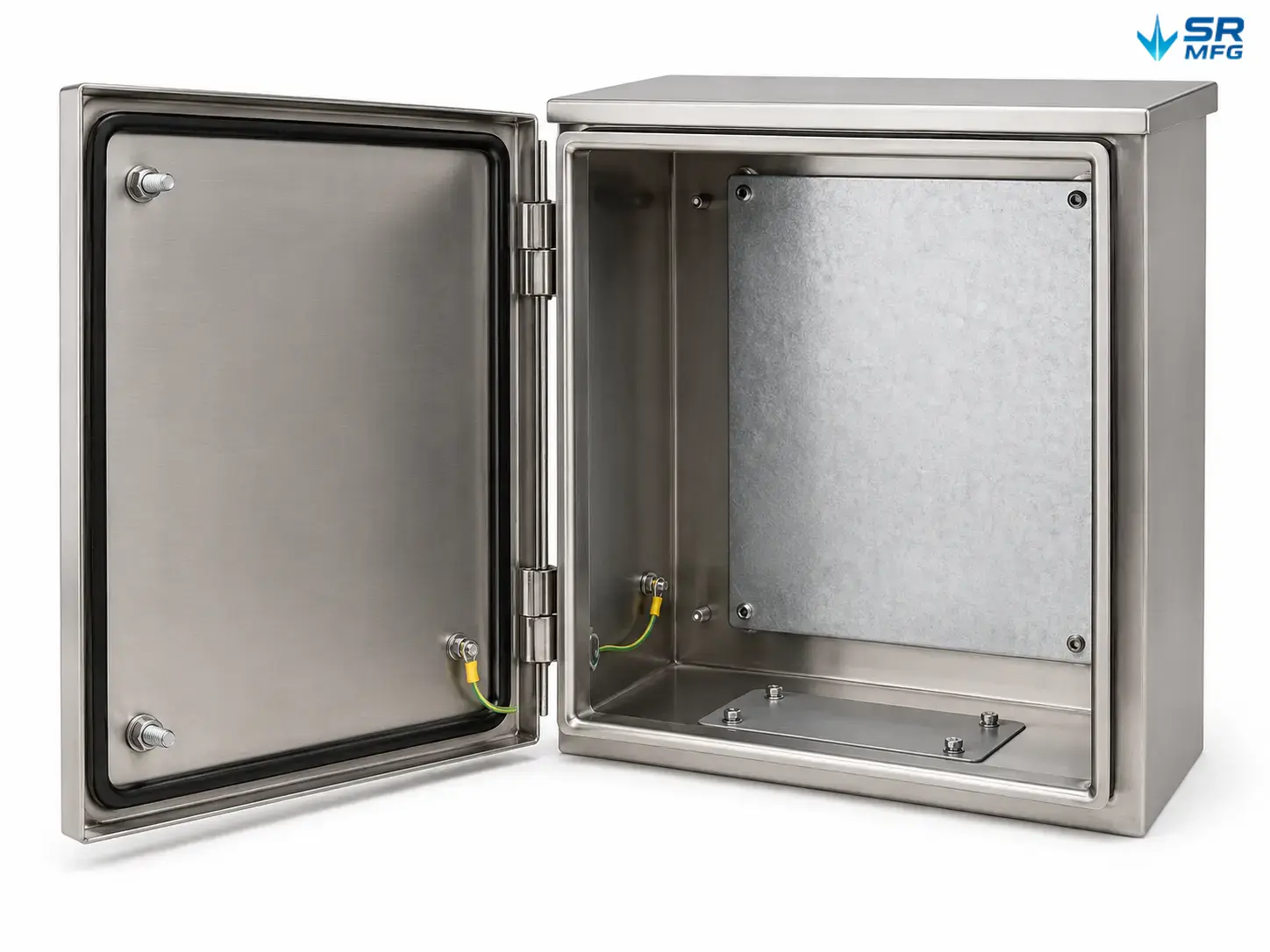
· Mounting Plate — Removable galvanized steel plate with adjustable mounting depth using welded studs. Plate thickness ranges from 1.5 mm to 2.5 mm depending on the expected load.
· DIN Rail Support — Pre-drilled mounting points for 35 mm DIN rail installation for circuit breakers, relays, and terminal blocks.
· Terminal Block Mounting — Bracket positions can be configured for DIN-rail-mounted or panel-mounted terminal blocks.
· Cable Entry — Pre-scored knockouts can be provided on the bottom and sides of the enclosure. Custom rectangular, round, or threaded gland holes can also be produced to match your cable gland specifications.
· Gland Plate — A removable gland plate is installed at the bottom of the enclosure, allowing cable gland holes to be drilled on site without compromising the seal of the main enclosure body.
· Grounding — Grounding studs are pre-installed on both the door and enclosure body for protective earthing in accordance with IEC 60204-1.
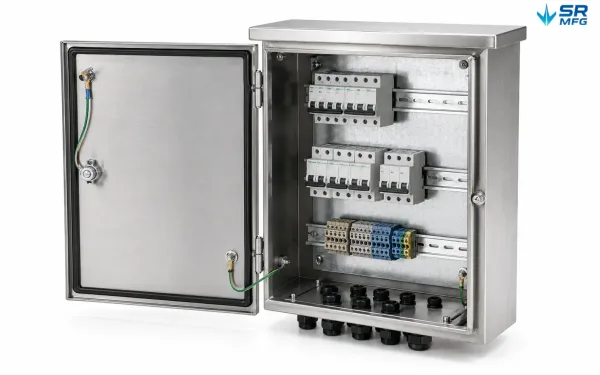
This image shows the mounting plate, DIN rail, terminal blocks, gland plate, and grounding points inside the enclosure.
The internal layout can be customized. Send us your component layout drawing and we can configure the mounting plate, cutouts, and DIN rail positions accordingly.
Custom Enclosure Solutions
Standard sizes cover the most common installation requirements. For custom junction boxes and related outdoor control box enclosures requiring specific dimensions, cutouts, or internal configurations, we manufacture according to your specifications.
| Customization Area | Available Options |
|---|---|
| Dimensions | Any combination of height, width, and depth within our forming capabilities |
| Cutouts | CNC-punched or laser-cut round holes, slots, and rectangular openings |
| Surface Finish | Powder coating with RAL color matching; hot-dip galvanizing; brushing; anodizing |
| Internal Layout | Mounting plate hole patterns, DIN rail positions, terminal block brackets, gland plates |
| Door & Lock | Hinge type, lock type, handle style, viewing window |
| Branding | Silk-screened logos, laser-engraved labels, embossed nameplates |
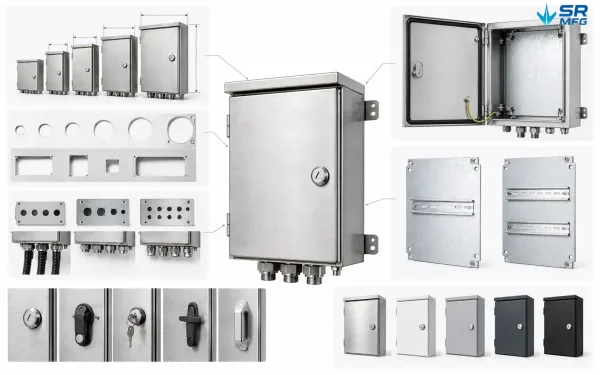
This image shows the main customization options available for an outdoor junction box enclosure.
Customization Process:
- Submit your drawing, sketch, or dimensional requirements.
- Our engineering team reviews the design for manufacturability at no charge.
- We provide a detailed quotation, lead time, and DFM recommendations.
- Once approved, prototype production typically takes 5–7 working days, followed by mass production.
This image shows the manufacturing workflow used to produce custom outdoor junction box enclosures.
We accept CAD files in DWG, DXF, STEP, and IGES formats. If you only have a sketch or dimensional table, we can also create a CAD model for your review.
Applications
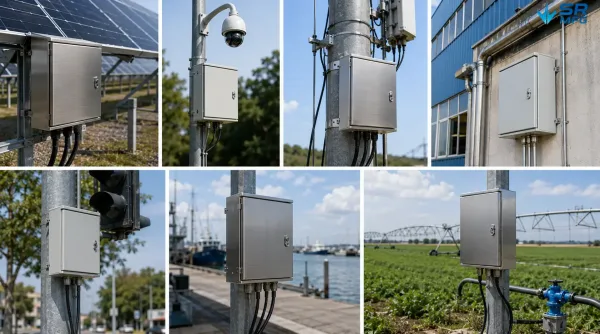
Across electrical industry applications, metal junction box enclosures are widely used wherever electrical connections need to be protected in outdoor or harsh environments while remaining accessible for maintenance:
· Solar & Renewable Energy — Combiner box enclosures, inverter junction points, and DC wiring splices in ground-mounted or rooftop solar arrays
· CCTV & Security Systems — Camera power and signal junctions, as well as outdoor access control wiring points
· Telecommunications — Outdoor fiber splice enclosures, antenna feed junction boxes, and base station wiring
· Industrial Automation — Field device wiring, sensor junction points, and motor starter enclosures installed on factory exteriors
· Infrastructure & Transportation — Traffic signal junction boxes, street lighting control boxes, and railway signaling enclosures
· Marine & Coastal Environments — Dock power distribution, offshore platform wiring, and harbor lighting junction boxes; 316 stainless steel is recommended
· Agriculture & Irrigation — Pump control junctions, field sensor wiring, and outdoor power distribution for irrigation systems
Each application has different requirements for material, sealing performance, and internal configuration. Tell us about your application and we will recommend the right setup.