Machine Mounting Base Plates
Custom machine mounting base plates transfer equipment weight, bolt forces, and operating vibration into the floor, bench, or supporting frame. The plate is not a generic steel blank—it is the critical interface between your machine and the foundation and must stay aligned after installation.
We fabricate mounting base plates and equipment base plates to your drawing or agreed dimensions:
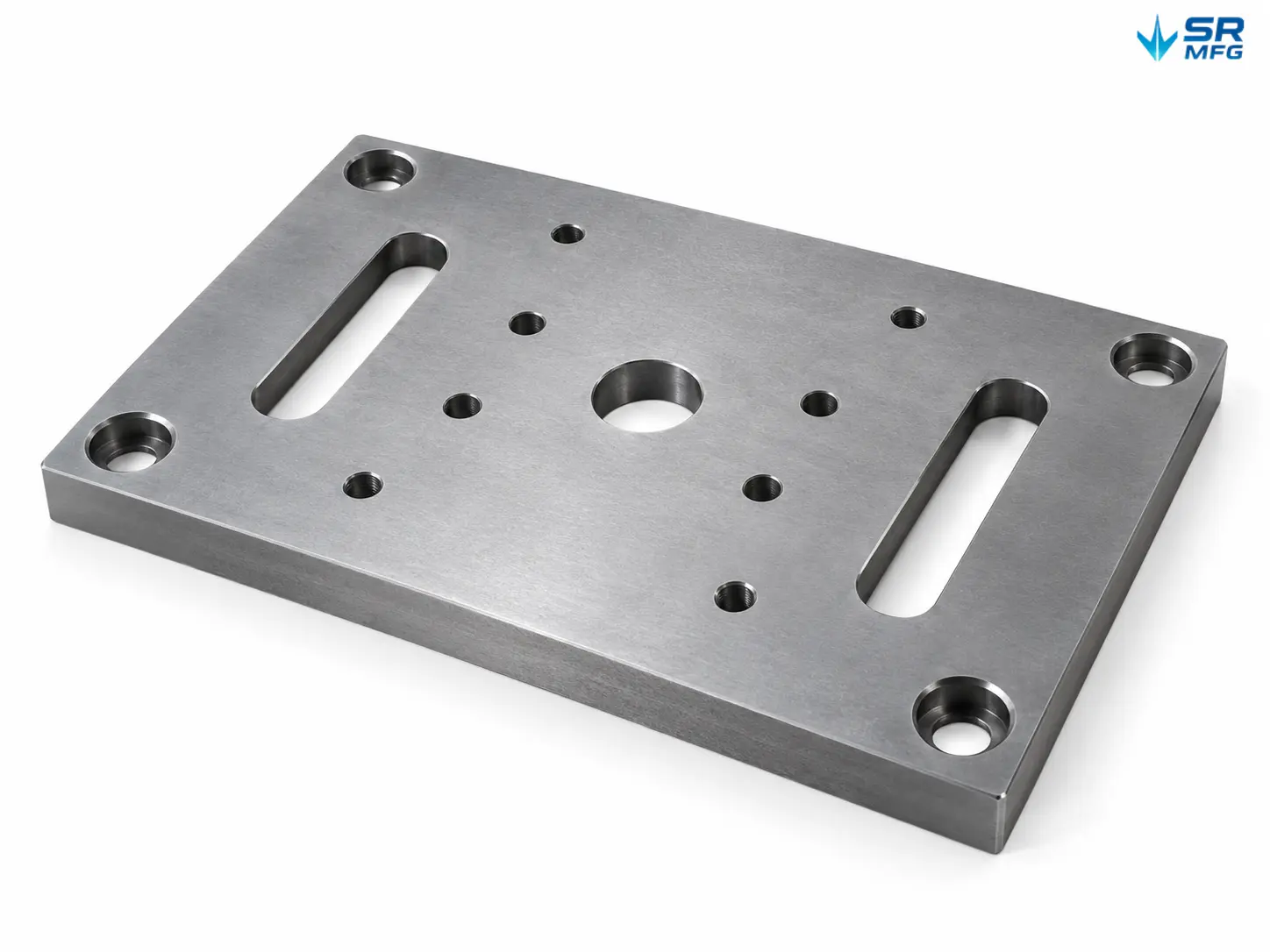
- Flat plates for direct bolt-down
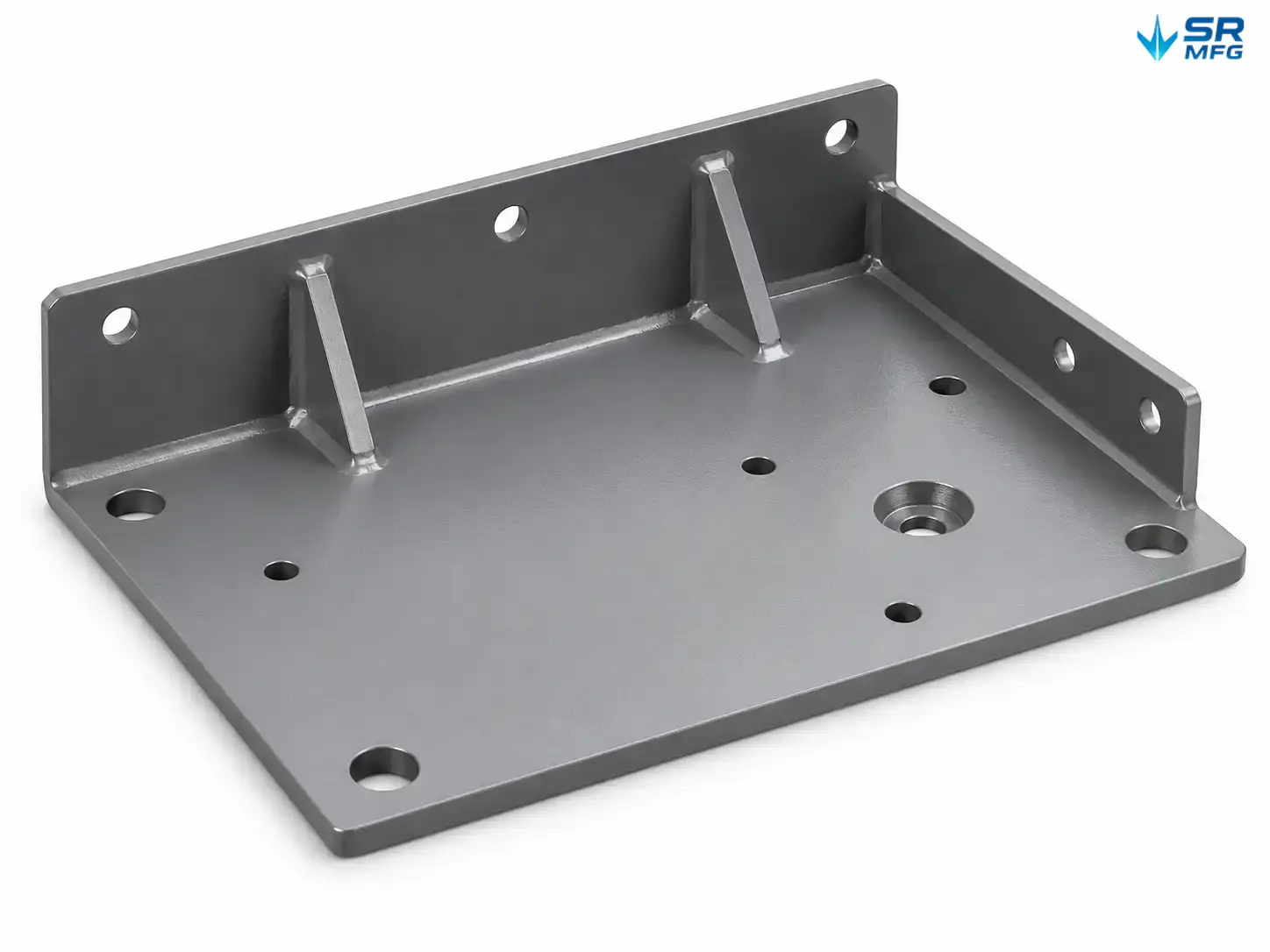
- Formed or reinforced plates where stiffness matters
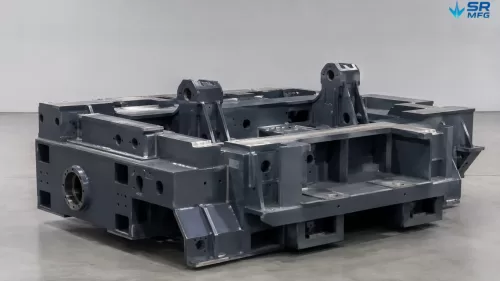
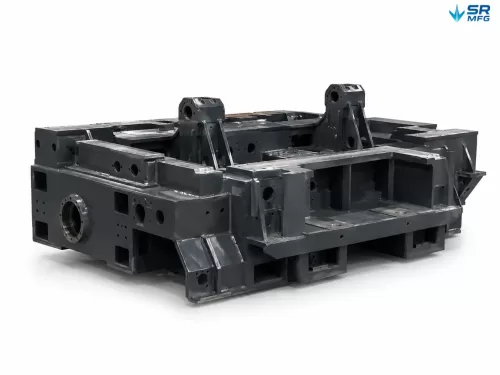
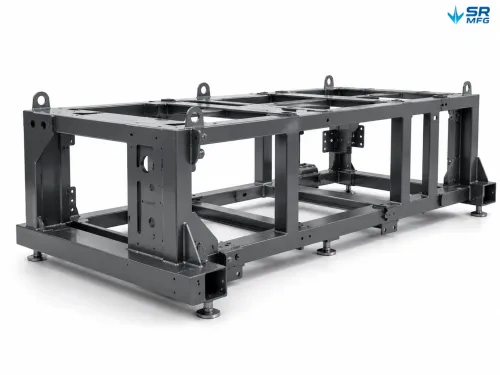
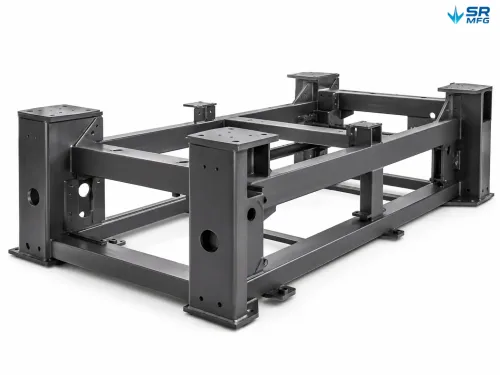
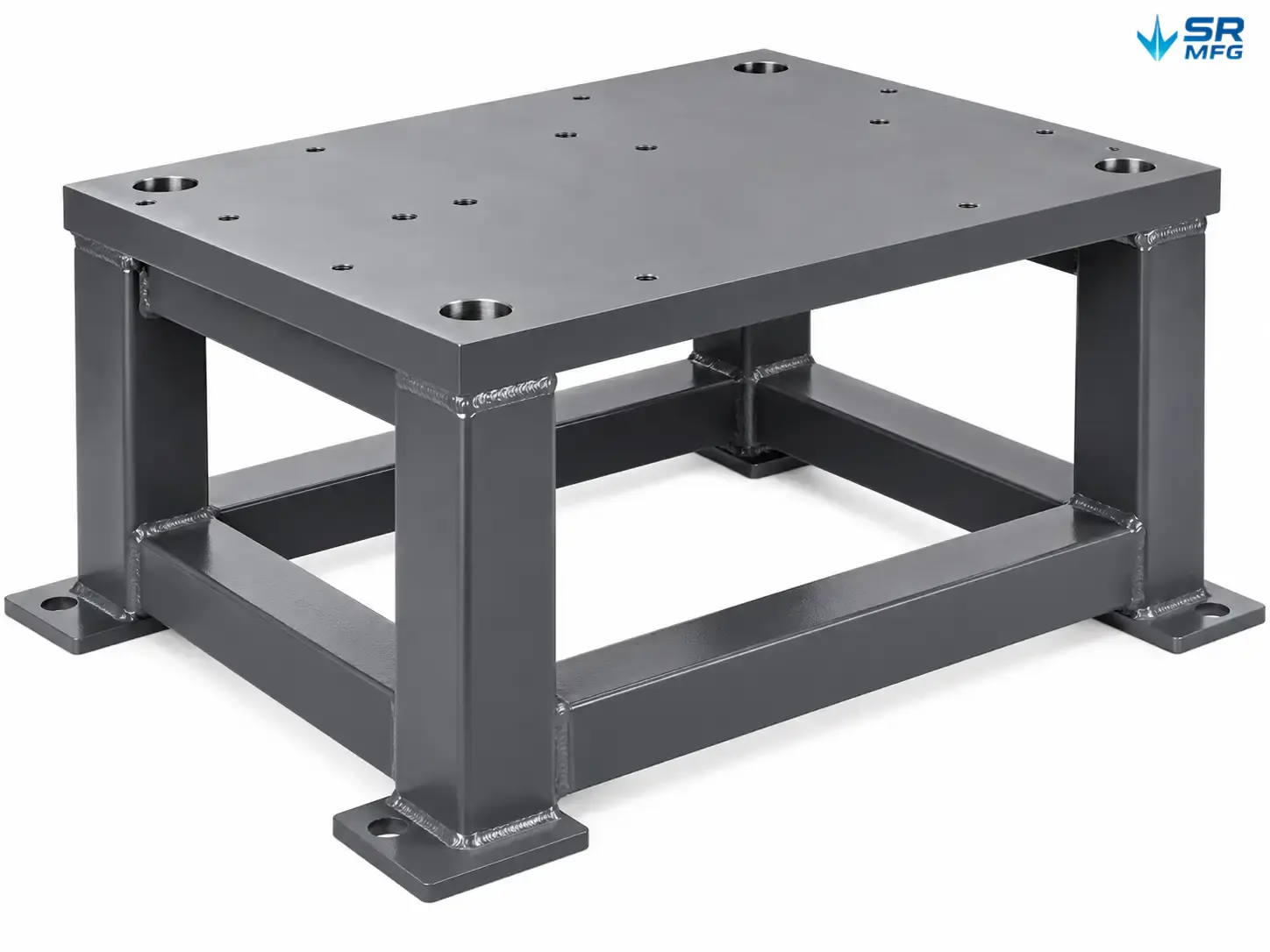
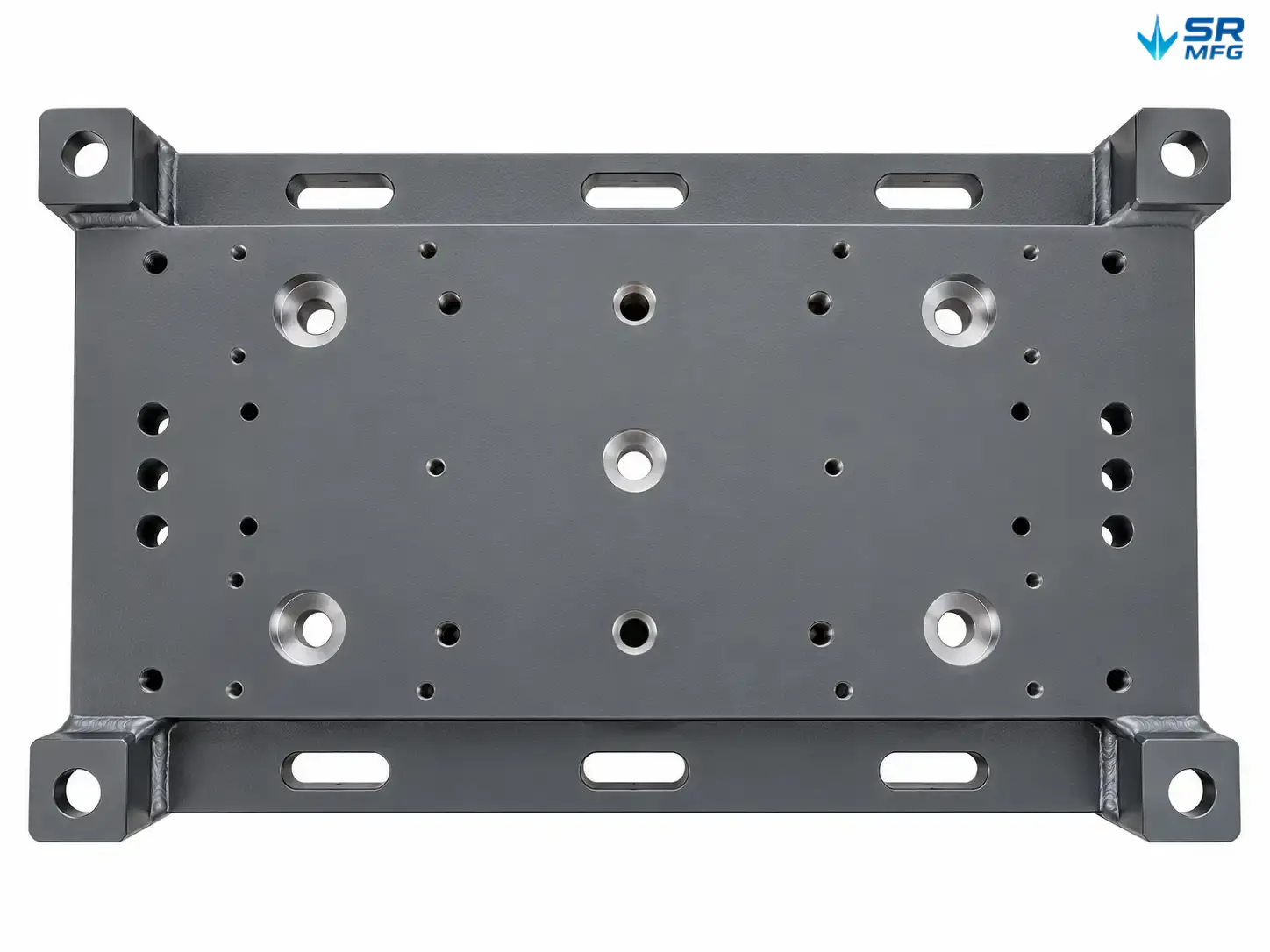
- Welded base frames when a single plate cannot carry the structure alone
Product Details
| Item | Options |
|---|---|
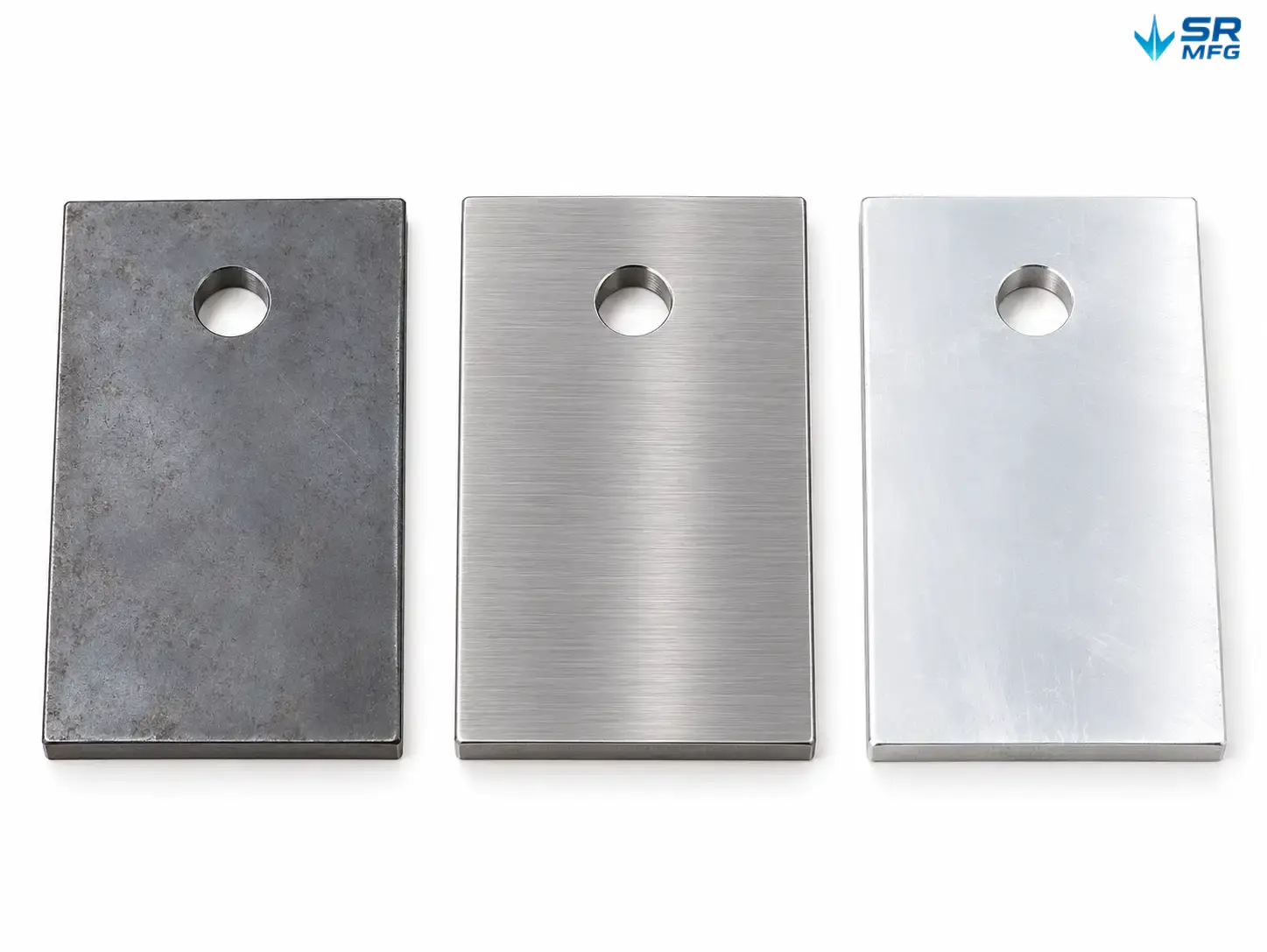
| Materials | Carbon steel, stainless steel, aluminum — grade selected to load and environment |
| Structure | Flat / formed-reinforced / welded machine base |
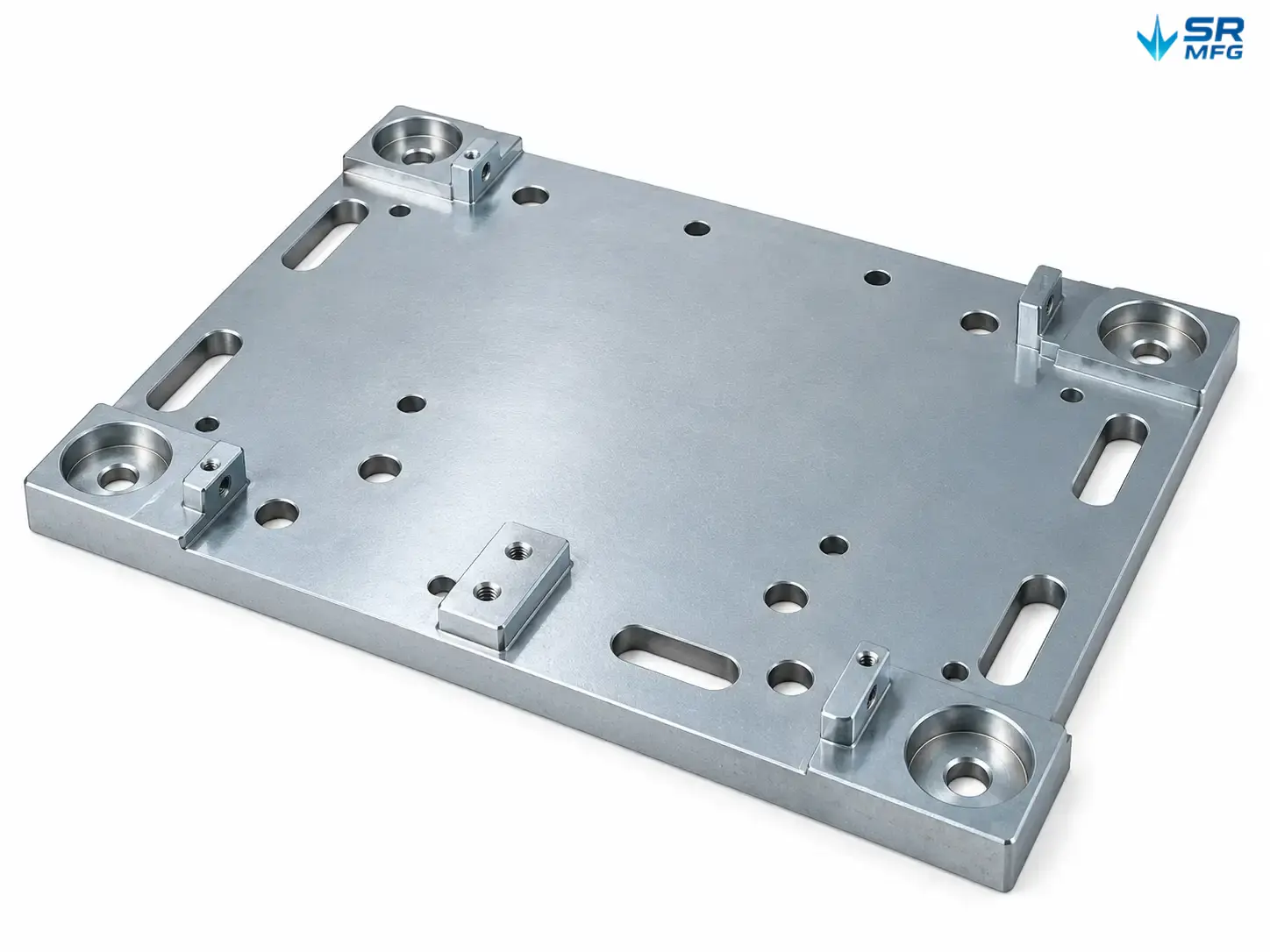
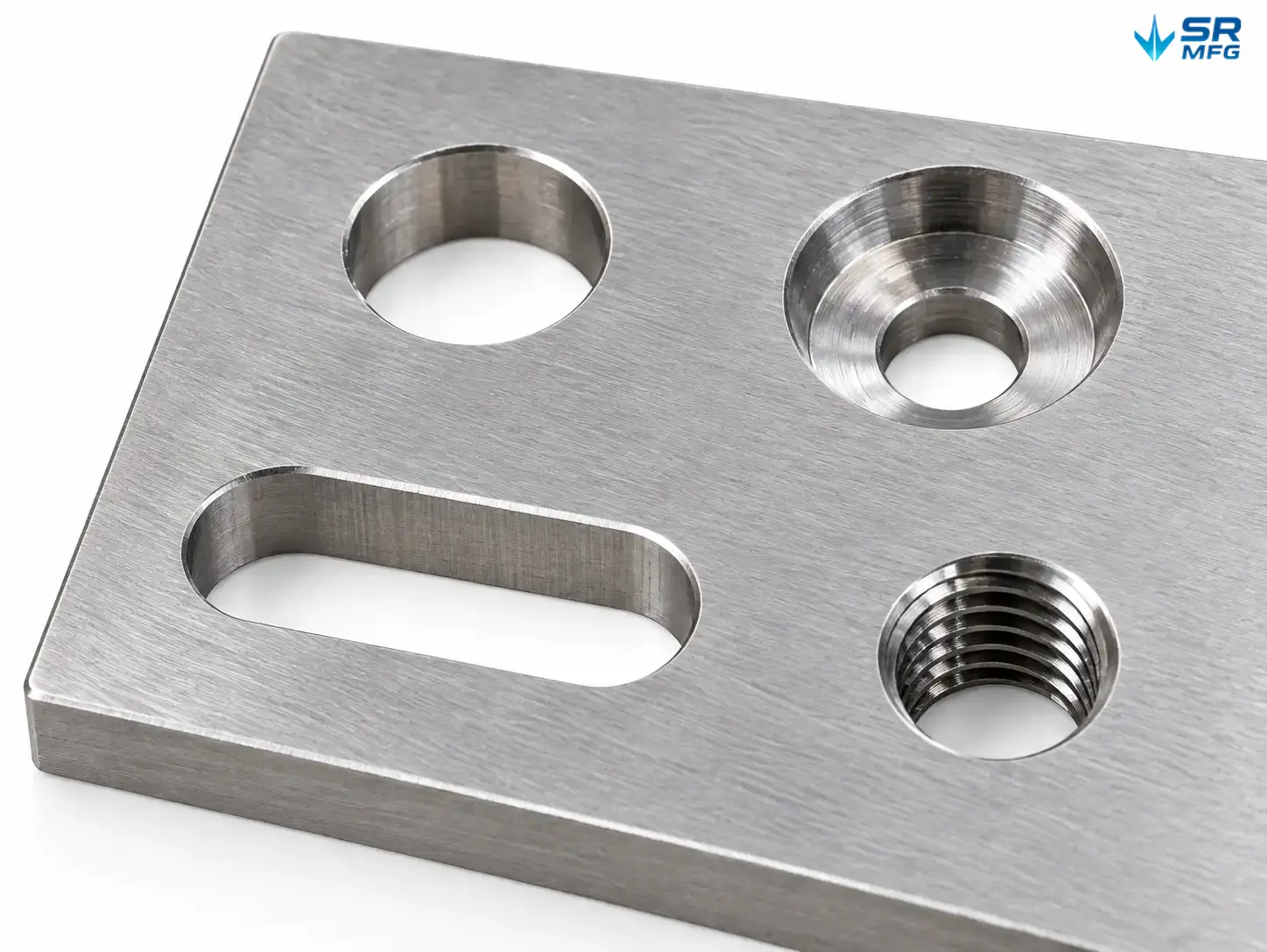
| Mounting interfaces | Through holes, counterbores, slots, threaded holes, anchor patterns |
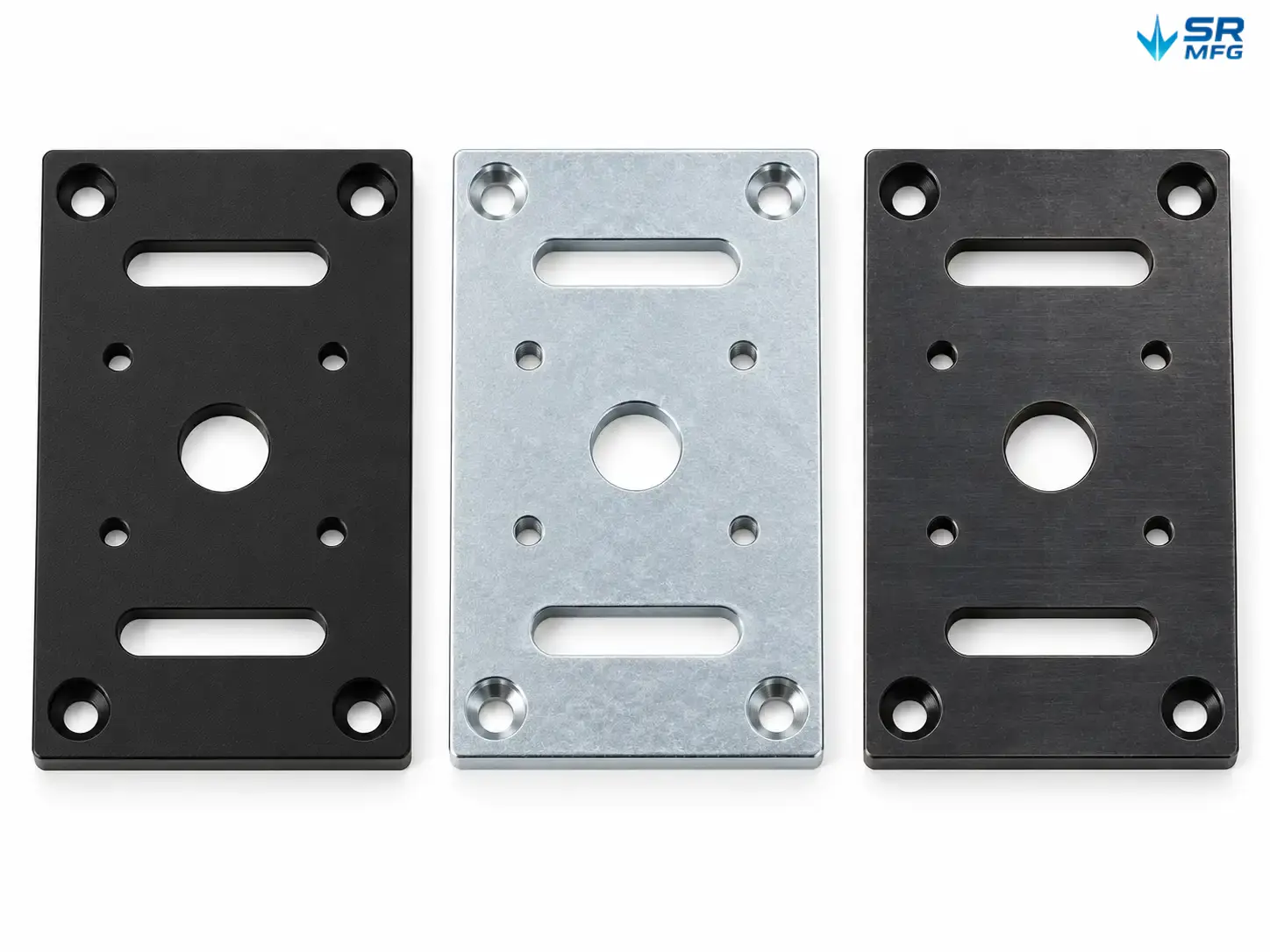
| Surface finish | Powder coat, industrial paint, zinc, black oxide, stainless finish |
| Process | Laser/plasma cut → form/weld → machine → finish → inspect |
| Orders | Prototype, small batch, and repeat production |
Provide a drawing or key dimensions for DFM review and a custom quote.
Choose the Right Base Plate Structure
| Structure | When it fits | What we control |
|---|---|---|
| Flat mounting plate | Direct equipment bolt-down, simple layouts | Thickness, outline, hole pattern, flatness |
| Formed / reinforced plate | Higher stiffness without a full weldment | Bend lines, stiffener layout, hole clearance |
| Welded machine base | Heavy equipment, motors, pumps, frames | Frame members, plate-to-frame welds, mounting faces |
| Base with leveling or anchor interface | Concrete floors or uneven foundations | Anchor holes, leveling pad seats, shim-friendly faces |
Select the structure first. Material, thickness, and hole layout follow from load, span, and how the equipment attaches.
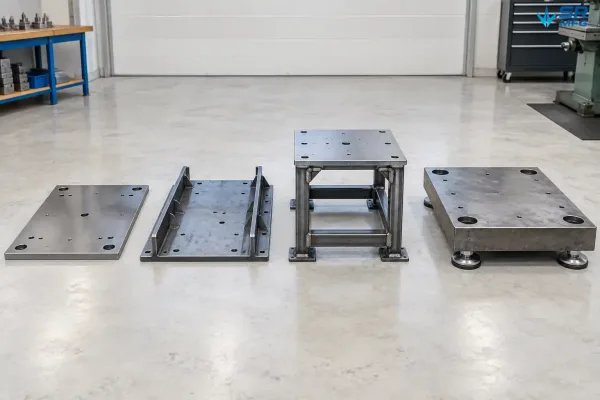
Four base plate structures side by side: flat, formed-reinforced, welded frame, and anchor/leveling-ready.
Mounting Interfaces We Machine
Your equipment already has a bolt pattern. The base plate has to match it—or you redesign the machine.
- Through holes for bolts and studs
- Counterbores for flush or recessed fasteners
- Slotted holes for lateral adjustment during install
- Threaded holes where the plate becomes the fastener base
- Anchor bolt patterns for concrete and structural steel
- Side-mount or edge holes for frames and brackets
Send a hole-pattern drawing or sample plate. We reverse the layout when needed and confirm clearance before cutting.
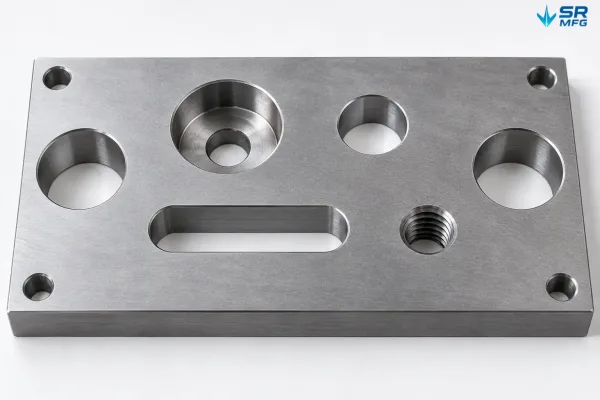
Common mounting interfaces machined on base plates: through, counterbore, slot, thread, and anchor layout.
Materials & Surface Protection
Material choice follows load path, corrosion exposure, and weldability—not a one-size default.
| Working condition | Typical direction |
|---|---|
| Indoor machine bases, general industrial | Carbon steel + paint or powder coat |
| Washdown, outdoor, or humid areas | Stainless steel or coated carbon steel |
| Weight-sensitive or non-magnetic needs | Aluminum + appropriate finish |
| Chemical or coastal exposure | Specified grade + protective finish system |
Apply surface treatment after machining when possible so fastener faces stay clean. If threads or ground faces must remain bare, mark them on the drawing.
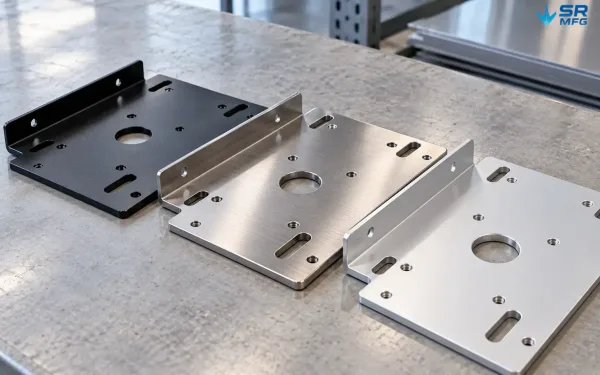
Material and finish pairings for indoor, washdown, lightweight, and corrosive environments.
How We Manufacture
- Drawing review — thickness, hole spacing, bend access, and weld sequence before quoting
- Cutting — laser or plasma for outline, slots, and rough holes
- Forming & welding — flanges, stiffeners, and frames as required
- Machining — final holes, threads, counterbores, and mounting faces to drawing
- Finishing — agreed coating or plating system
- Inspection — dimensions, hole positions, and flatness against order requirements
One facility covers cut-to-finish, so plate, weldment, and machining do not bounce between shops.
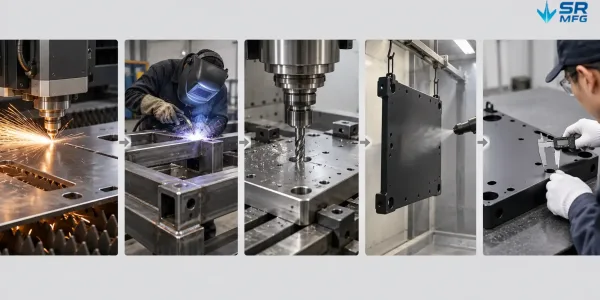
Manufacturing sequence for machine base plates: cut, form/weld, machine, finish, and inspect.
Built to Your Drawing
We work from production drawings, marked-up PDFs, 3D models, or a physical sample.
For a fast quote, include:
- Equipment weight or static load
- Bolt pattern or hole coordinates
- Desired material and environment
- Quantity and target delivery window
- Whether leveling hardware or anchors are included
Tolerance, flatness, and inspection level are confirmed per project. Tighter controls add process steps—we state what is required before production starts.
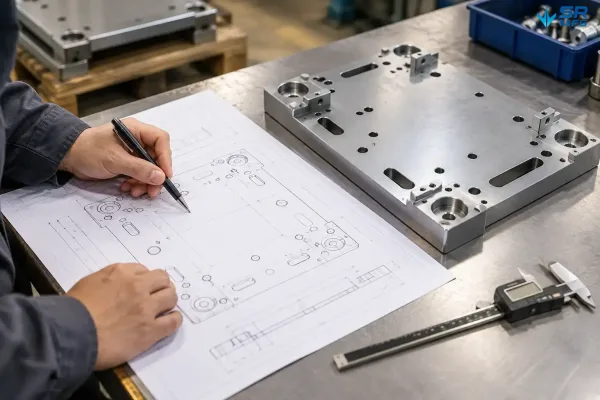
Drawing review and hole-pattern matching before fabrication of a custom mounting base plate.
Quality & Inspection
Inspection matches the part’s job. A simple bolt-down plate may need outline and hole checks. A precision machine base may need flatness, parallelism, and hole-position verification.
- Dimensional inspection against the drawing
- Hole position and thread gauge checks
- Flatness / parallelism on mounting faces
- First-article inspection for new designs
- Material certificates on request
We do not invent test reports. If a report or standard reference is required, include it in the RFQ so it is planned into the job.
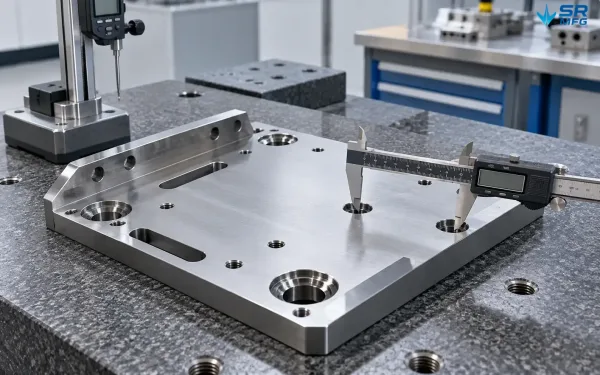
Inspection of plate dimensions, hole positions, and mounting face flatness.
Typical Applications
| Application | What matters |
|---|---|
| Floor-mounted equipment | Anchor pattern, plate stiffness, grout or bolt-down |
| Motor & pump bases | Bolt-circle accuracy, alignment, leveling |
| Frames & weldments | Load transfer from structure to machine |
| Retrofit / replacement plates | Matching legacy hole maps without field rework |
| Automation cells | Repeatable mounting for robots, gantries, tooling |
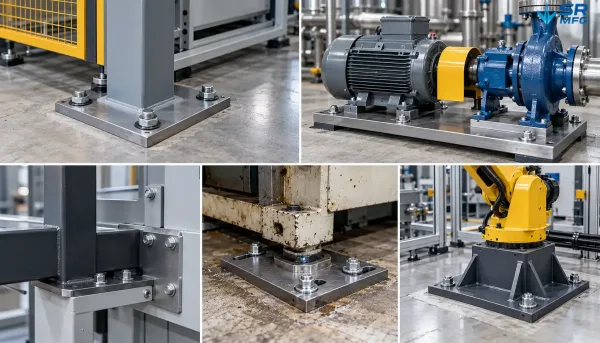
Application set: floor-mounted equipment, motor/pump base, frame support, retrofit plate, and automation mount.
Scenario Note
A common project: an integrator needs a mounting plate under a conveyor drive or small press, with a fixed motor footprint and an irregular floor anchor set.
- Cut from medium-thickness carbon steel
- Holes machined to the motor bolt circle and floor anchors
- Edges deburred, then powder coated
- Repeat orders keep the same hole map so spares drop in without re-drilling on site
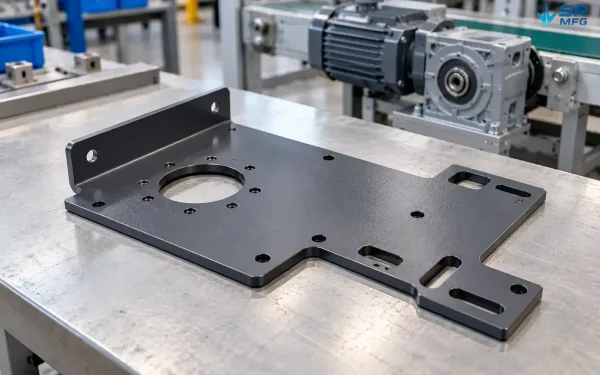
Scenario plate: motor bolt-circle holes, irregular floor anchors, deburred edges, powder-coated finish.
FAQs
Request a quote with your drawing, load notes, material preference, quantity, and finish. Engineering reviews manufacturability first—then you get a custom price, not a generic stock number.