Network Device Metal Housings
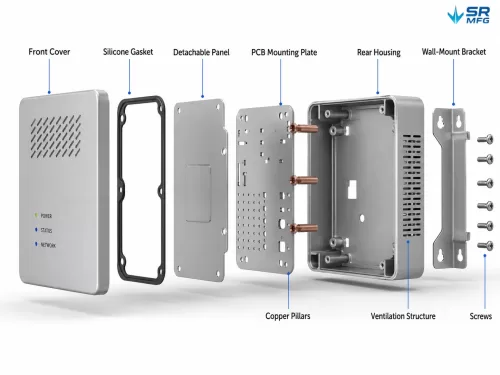
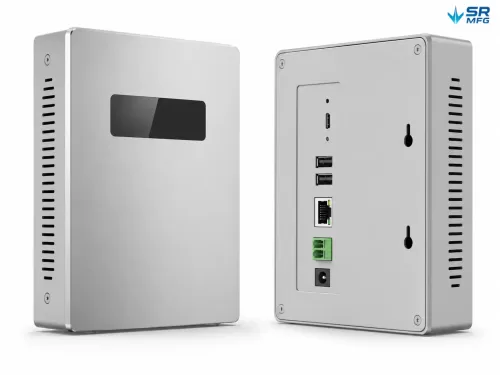
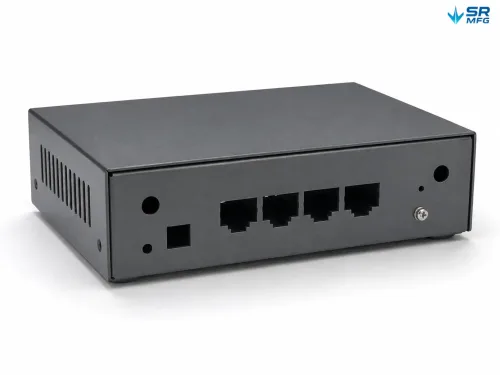
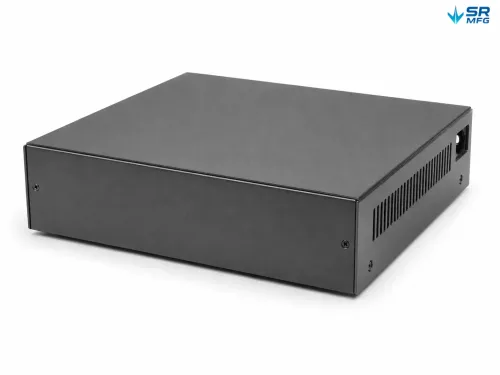
We manufacture custom sheet metal enclosures for WiFi routers, wireless access points, network gateways, CPE devices, and industrial networking equipment. Each housing is produced to your technical drawings or developed around your equipment’s dimensions, mounting needs, and operating environment.
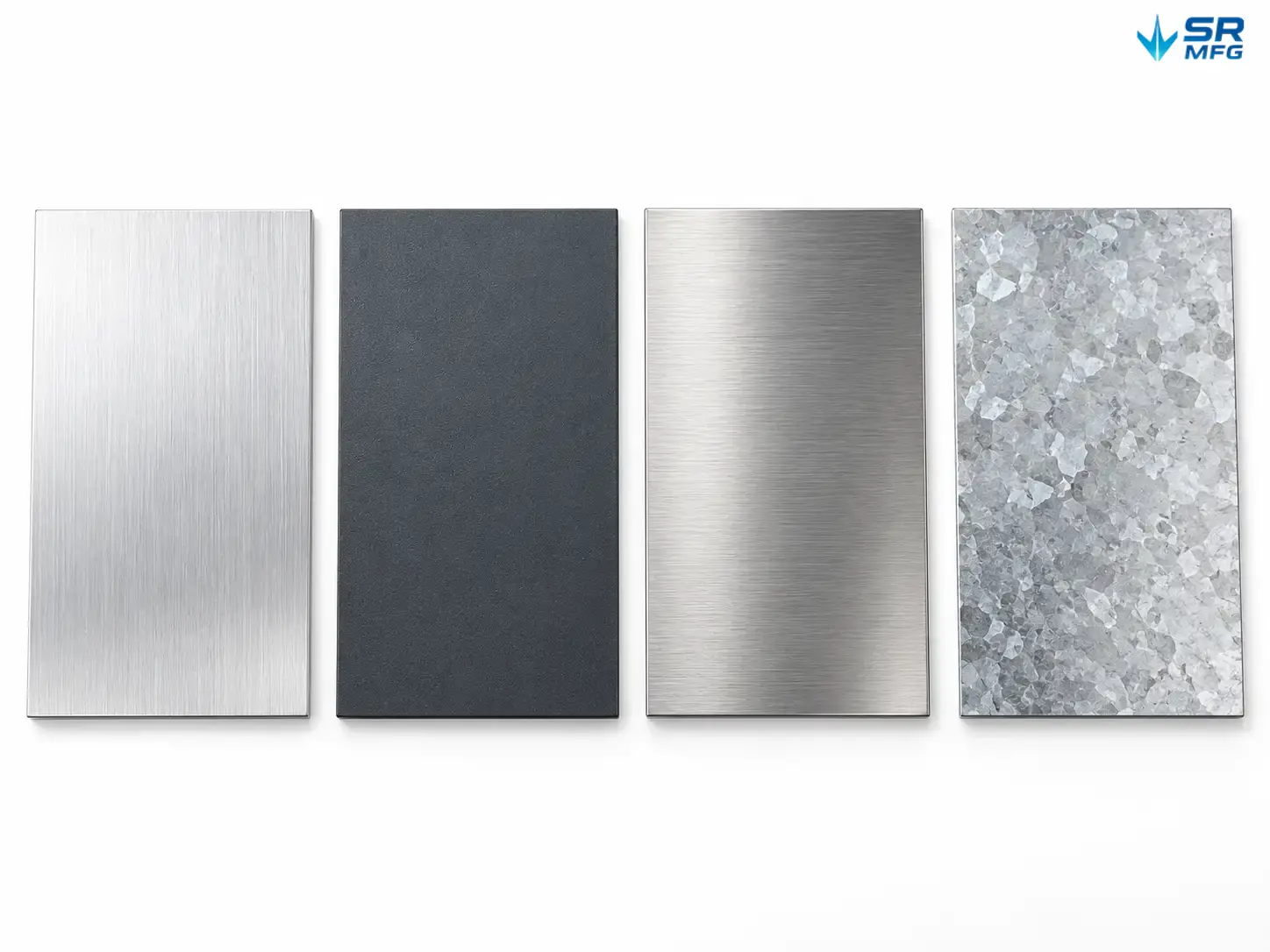
- Material Options: Aluminum, cold-rolled steel, stainless steel, or galvanized steel — selected to match the installation environment
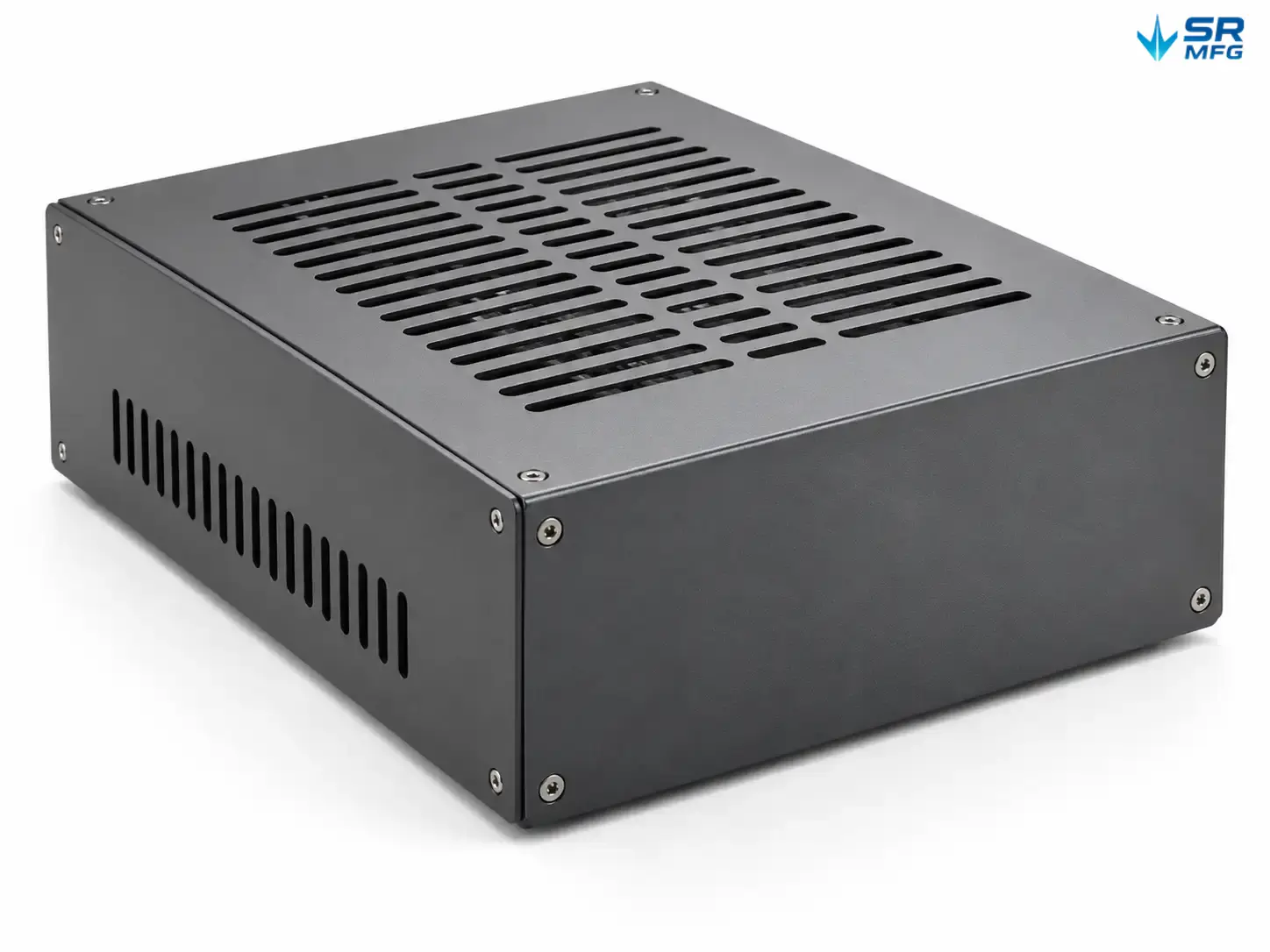
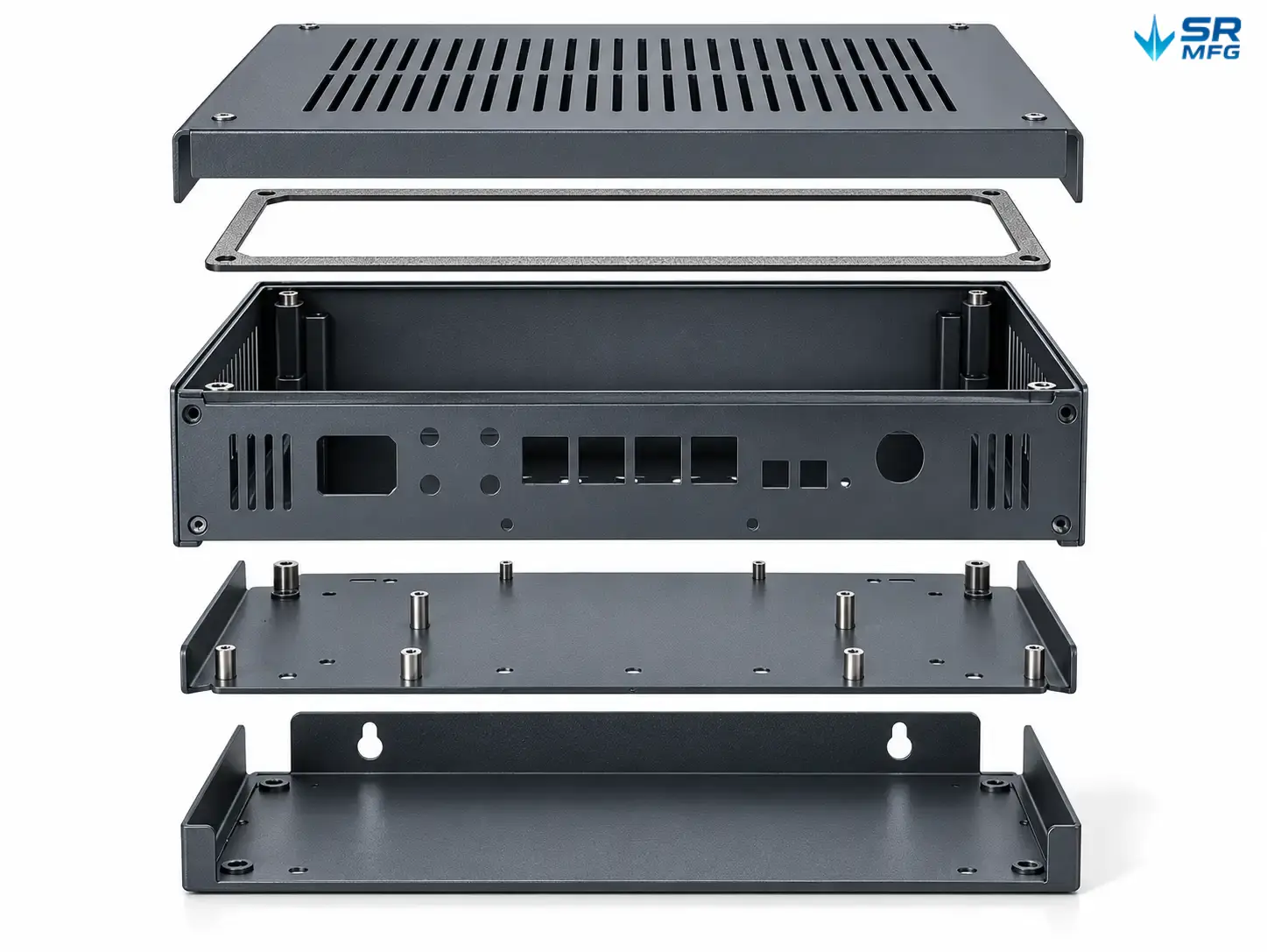
- Thermal Management: Ventilation layouts positioned around PCB heat sources, with optional integrated heat sinks and internal airflow channels
- EMI Shielding: Conductive gasket grooves, grounding studs, and controlled overlapping seam structures
- IP Protection: IP54 / IP65 / IP67 achieved through gasket design and sealed connector openings
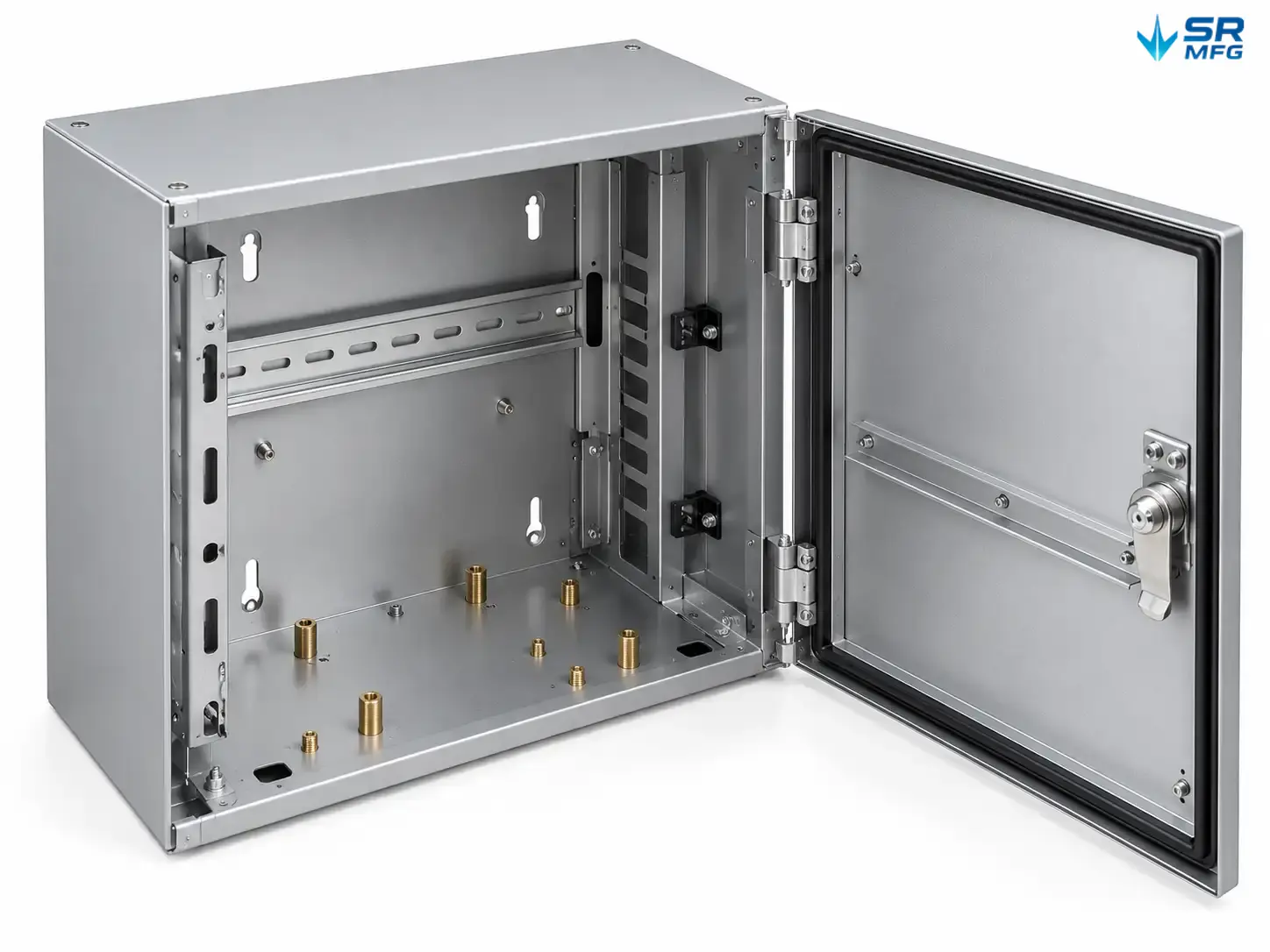
- Internal Mounting: Self-clinching PCB standoffs, DIN rail slots, and cable-management features integrated directly into the sheet metal body
Send your drawings or key dimensions for a fabrication quote. Prototypes in 5–7 business days. Production quantities supported with no fixed minimum order.
Product Details
| Parameter | Details |
|---|---|
| Product Type | Custom sheet metal enclosures for network and communication equipment |
| Base Materials | Aluminum (5052 / 6061), cold-rolled steel (SPCC), stainless steel (304 / 316), galvanized steel |
| Material Thickness | 0.8–2.0 mm, selected per structural and thermal requirements |
| Cutting Process | Fiber laser cutting — cut-edge surface finish Ra 3.2 μm or better |
| Bending Process | CNC press brake forming — angle tolerance ±0.5°, inside bend radius ≈ 1× material thickness |
| Welding Process | TIG welding (aluminum, stainless steel), MIG welding (steel), spot welding (thin-sheet assemblies) |
| Hole Position Tolerance | ±0.1 mm relative to datum |
| Flatness After Bending | ≤0.15 mm / 100 mm on mating surfaces and PCB contact areas |
| Surface Finish Options | Powder coating (60–80 μm), anodizing (Type II / Type III), e-coating, screen printing, laser engraving |
| Powder Coat Colors | Any RAL or Pantone; custom color matching available |
| Salt Spray Resistance | Powder-coated steel: 240–500 hrs per ASTM B117; anodized aluminum: 500+ hrs |
| IP Protection | IP54 / IP65 / IP67 via gasket design, controlled seams, and sealed connector openings |
| EMI Shielding Features | Conductive gasket grooves, grounding studs, overlapping flange seams (fastener spacing ≤30 mm) |
| Internal Mounting | Self-clinching brass standoffs (M3 / M4), threaded inserts, DIN rail slots, wall-mount keyholes |
| Thermal Management | Custom ventilation layouts, welded heat sinks, flat thermal-interface surfaces |
| Logo & Marking | Screen printing, laser engraving, embossing, adhesive labels |
| Prototype Lead Time | 5–7 business days after drawing approval |
| Production Lead Time | 15–25 business days depending on quantity and process complexity |
| Prototype MOQ | 1 piece |
| Production MOQ | No fixed MOQ — evaluated per material and process requirements |
| Accepted Drawing Formats | DWG, DXF, STEP, IGES, PDF, dimensioned hand sketches |
| Quality Inspection | CMM / caliper dimensional inspection, coating thickness & adhesion testing, assembly-fit checks, visual inspection |
| Packaging | Anti-rust paper + foam inserts + corrugated cartons; custom packaging available |
Network Device Metal Enclosures Engineered Around Your Equipment
Network equipment manufacturers and system integrators need metal housings that fit their PCB precisely, manage heat from internal components, and protect electronics in the actual installation environment. Every enclosure is fabricated to your drawings or developed from your equipment dimensions, connector layout, and mounting requirements.
The production workflow covers drawing review, material selection, precision cutting, forming, welding, surface finishing, assembly, and inspection. We do not force your design into catalog-standard sizes or ask you to adapt your product to fit a stock enclosure.
1. Thermal Management Designed Around Heat Sources
Plastic housings trap heat. A properly designed aluminum enclosure can passively dissipate approximately 15–25 W through its own surface area — enough for many consumer-grade and medium-power enterprise routers without an internal fan.
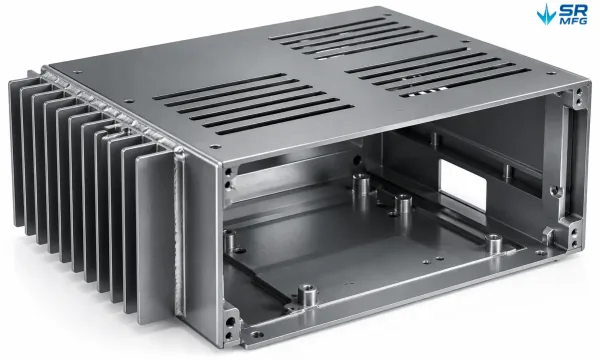
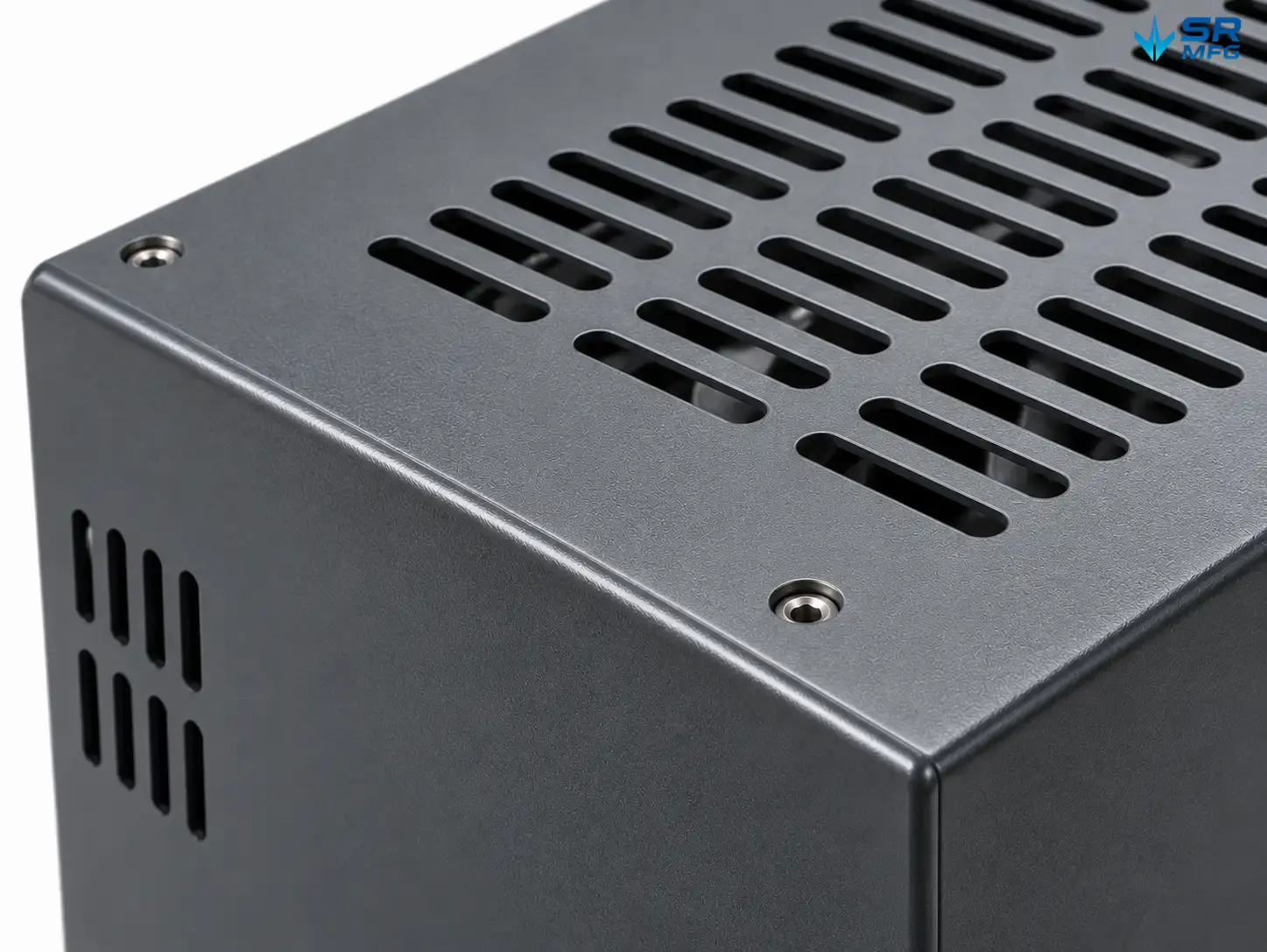
A custom aluminum enclosure with laser-cut ventilation slots positioned around PCB heat sources and welded heat sink fins on the exterior wall, enabling passive heat dissipation without an internal fan.
Ventilation openings are positioned according to actual heat-source locations on the PCB rather than generic perforation patterns:
- Ventilation Layout — Openings arranged around heat-generating chips, power modules, and other hot spots to maximize convective efficiency
- Welded Aluminum Heat Sinks — Cooling fins welded or riveted to the enclosure wall increase the effective dissipation area
- Internal Airflow Channels — Formed during the bending process, these channels guide natural convection from intake to exhaust around internal components
- Thermal Interface Surfaces — Mounting faces can be flattened or machined so PCB heat sources conduct directly into the enclosure wall
For higher-power devices, fan-mount provisions and filter cutouts can be integrated into the sheet metal structure. The metal body itself also provides structural rigidity — a 1.2 mm aluminum enclosure withstands shipping loads, wall-mounting forces, and long-term vibration that would eventually crack or deform a thin-walled plastic housing.
2. Material Selection for Network Equipment Housings
The right base material depends on installation environment, corrosion exposure, and allowable weight:
| Material | Key Properties | Recommended For |
|---|---|---|
| Aluminum (5052 / 6061) | Lightweight, excellent thermal conductivity, corrosion resistant | Desktop routers, wall-mounted wireless APs, indoor equipment |
| Cold-Rolled Steel (SPCC) | High strength, cost-effective, easy to powder coat | High-volume consumer routers, indoor network gateways |
| Stainless Steel (304 / 316) | Superior corrosion resistance in demanding environments | Industrial, coastal, or humid installations |
| Galvanized Steel | Zinc-coated protection at economical cost | Semi-outdoor equipment, cost-sensitive projects |
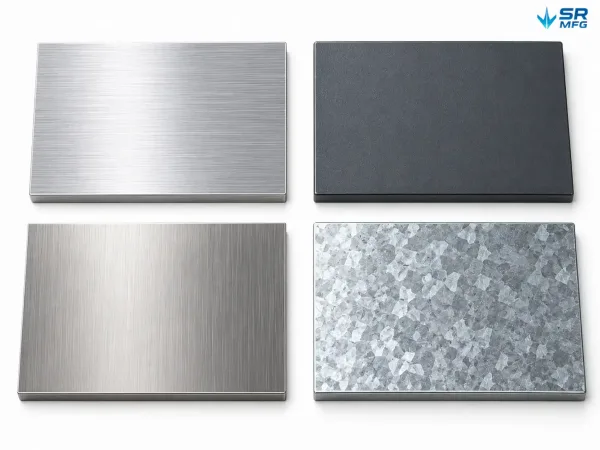
Four base material options for custom network device enclosures: lightweight aluminum, cost-effective cold-rolled steel, corrosion-resistant stainless steel, and galvanized steel for semi-outdoor use.
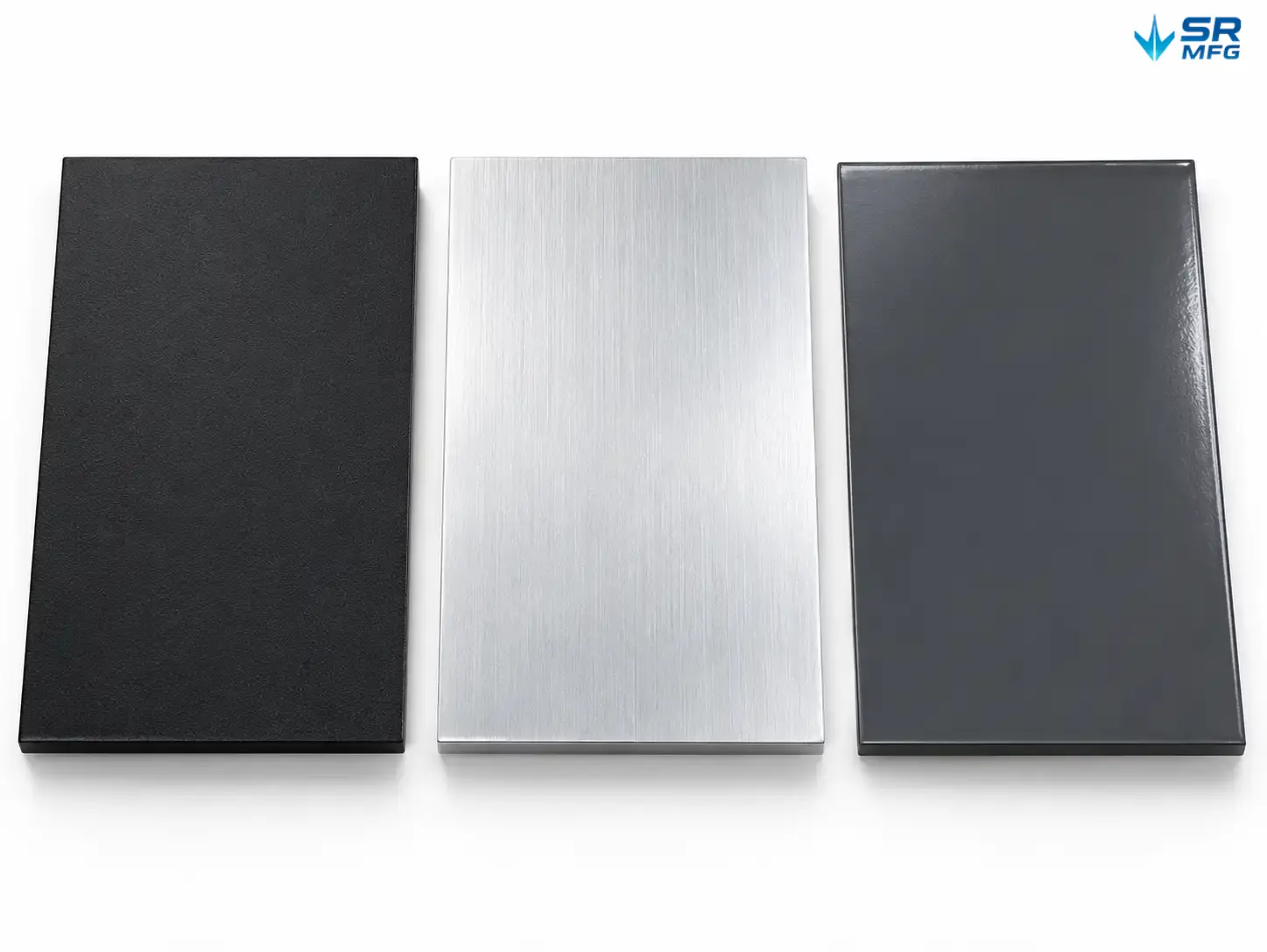
Surface finishing affects both appearance and long-term durability:
- Powder Coating — Uniform coverage in any RAL color at 60–80 μm thickness
- Anodizing — For aluminum housings; Type II for decorative color, Type III hard anodizing for high-wear applications
- E-Coating — Uniform coverage on complex geometries; commonly used on steel enclosures
- Passivation — Enhances corrosion resistance on stainless steel surfaces
3. Internal Mounting and Assembly Features
Internal structure matters as much as the exterior. Poor mounting design slows assembly and increases field failure risk. All mounting features are integrated directly into the sheet metal body:
PCB Mounting
- Self-clinching brass standoffs (M3 / M4) installed with hydraulic insertion equipment — pull-out resistance exceeding 50 kgf
- Threaded inserts for boards requiring repeated removal during maintenance
- Standoff heights customized to PCB clearance requirements
Rail and Bracket Mounting
- 35 mm DIN rail slots punched or laser-cut into the back panel
- Wall-mount keyholes for vertical surface installation
- Ceiling-mount flanges for wireless access points
Cable and Connector Management
- Strain-relief cable gland openings sized for standard PG or metric M-series glands
- Internal cable channels formed during bending
- Welded studs as cable-tie anchor points
Connector Sealing
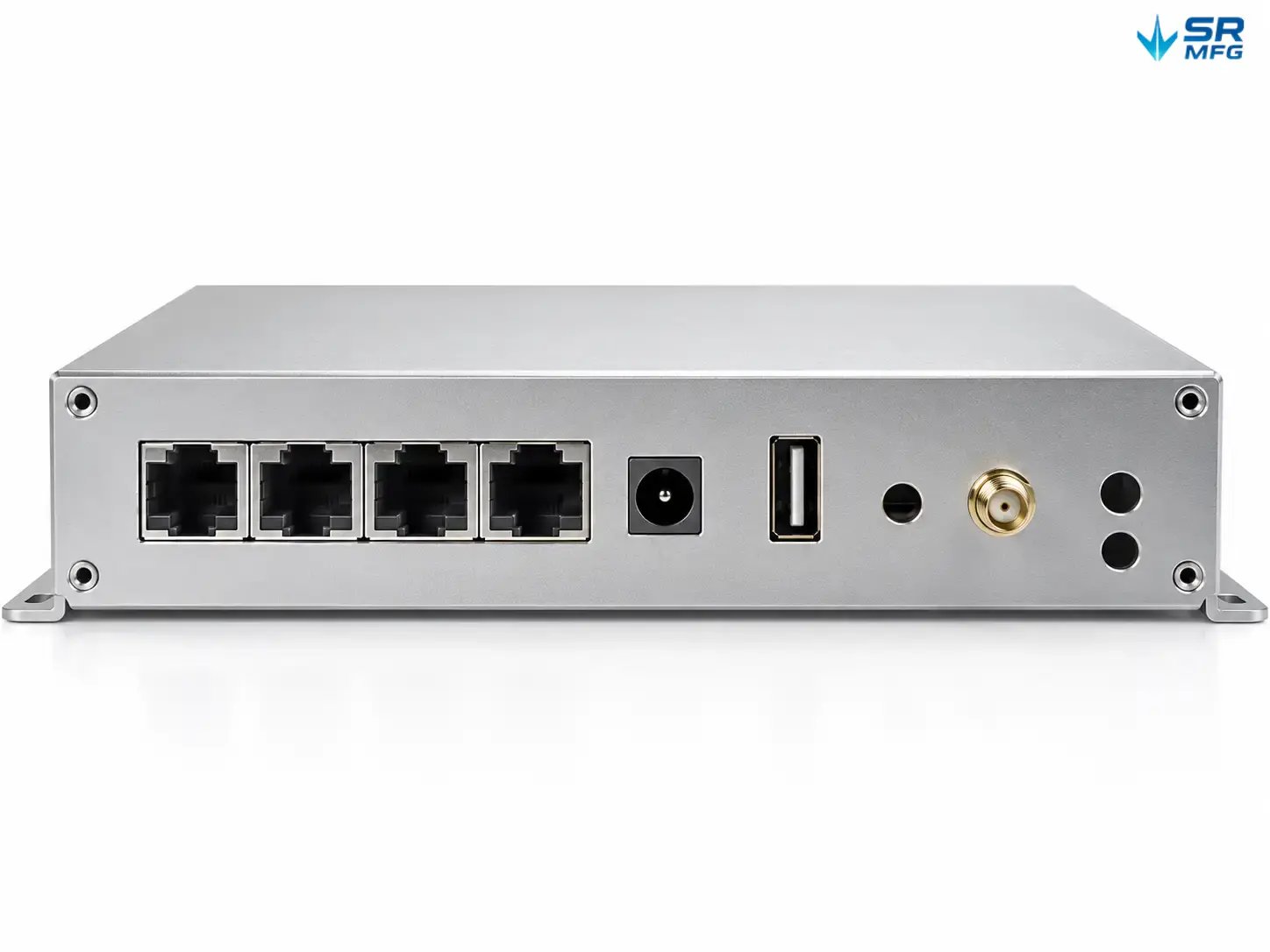
- Openings for rubber sealing plugs on unused RJ45, USB, or SMA ports
- Gasketed connector cutouts machined to specified connector profiles
- Waterproof RJ45 and DC power openings for outdoor-rated assemblies
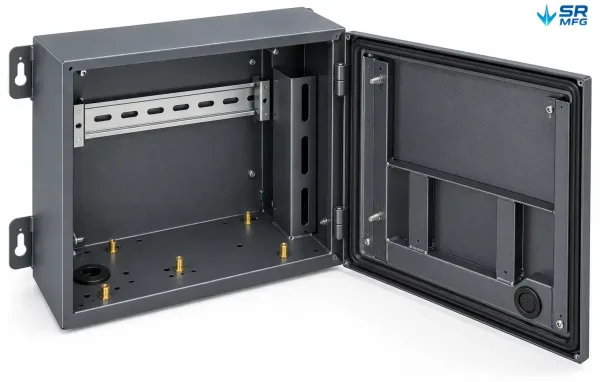
The interior of a custom sheet metal enclosure with self-clinching brass PCB standoffs, a DIN rail mounting slot, formed cable management channels, and sealed connector openings — all integrated into the metal body during fabrication.
If your PCB uses a non-standard mounting-hole pattern, send the board outline or PCB drawing. We adjust the enclosure and standoff locations to fit your PCB — not the other way around.
4. EMI Shielding and IP Sealing
Network equipment typically must meet EMC (electromagnetic compatibility) requirements. Enclosure design directly influences both electromagnetic emissions and immunity.
EMI Shielding Design:
- Conductive gasket grooves — CNC-machined grooves around panel seams accommodate beryllium-copper fingerstock or metal-mesh-over-silicone conductive gaskets
- Grounding studs — Welded at multiple locations to create low-impedance grounding paths
- Controlled panel seams — Overlapping flange joints with fastener spacing within 30 mm reduce RF leakage
- Shielded connector openings — D-sub, SMA, and N-type connector openings include flange contact surfaces for grounding
IP Sealing Design:
| Rating | Protection | Typical Structure |
|---|---|---|
| IP54 | Dust and splash water | Continuous groove + silicone gasket |
| IP65 | Dust-tight, water jets | Dual-seam sealing + controlled gasket compression |
| IP67 | Dust-tight, temporary immersion | Perimeter gasket + tongue-and-groove + waterproof connectors |
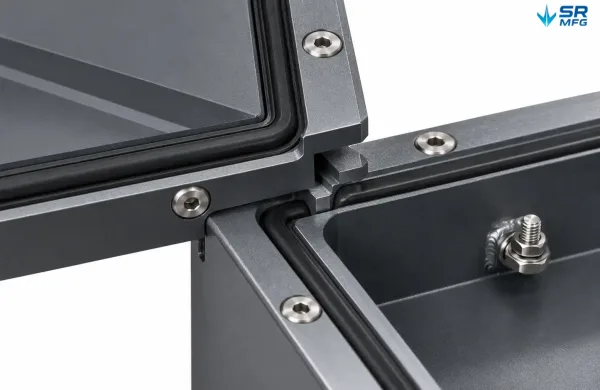
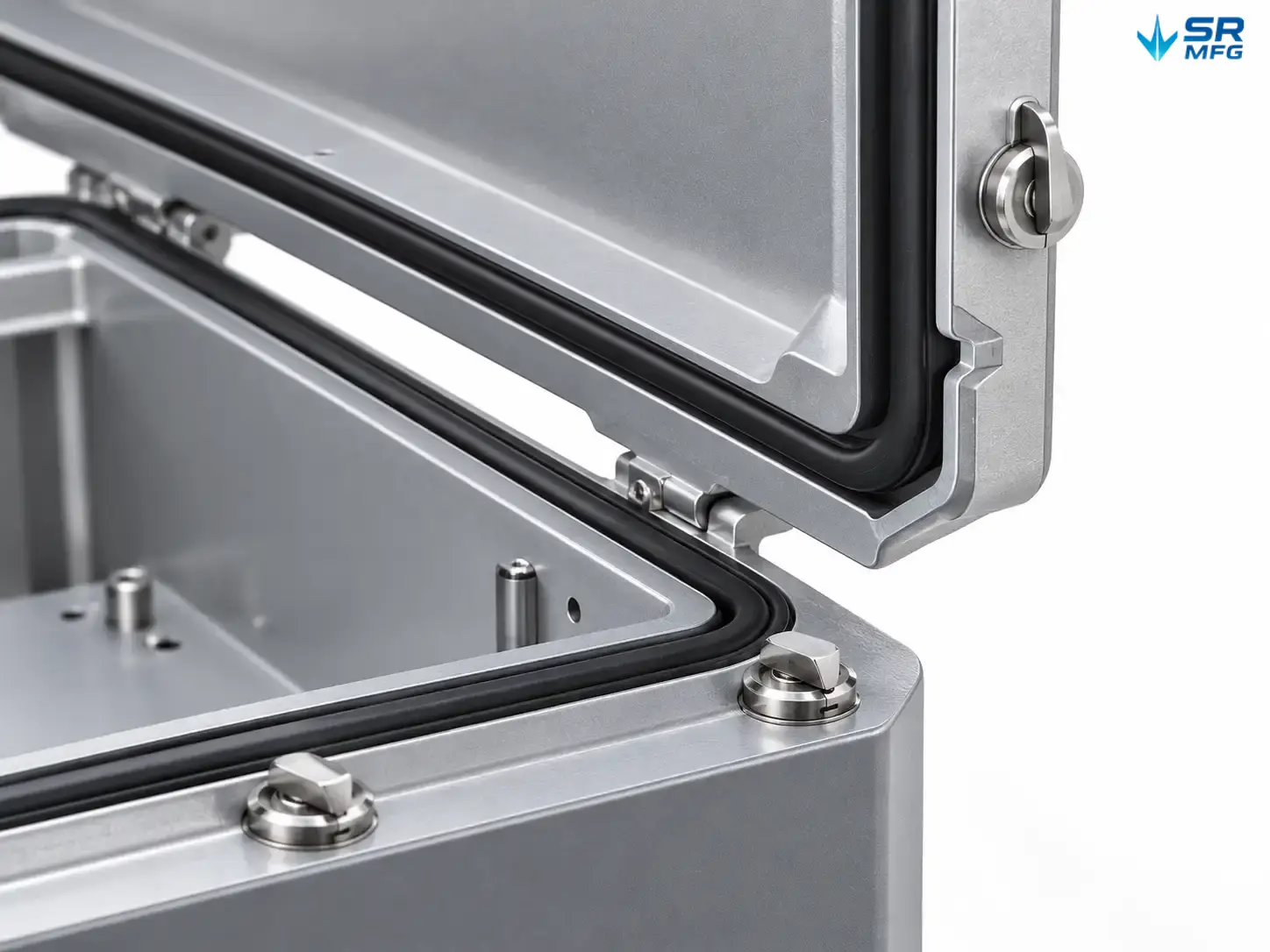
A close-up of the enclosure sealing edge showing a continuous silicone gasket in a CNC-machined groove, an overlapping flange seam with controlled fastener spacing, and grounding stud positions for EMI shielding and IP65/IP67 protection.
Actual sealing performance depends on gasket material, compression ratio, enclosure geometry, and fastener torque. The gasket profile is selected based on the target IP rating and enclosure design.
5. Typical Applications
| Equipment Type | Enclosure Design Focus |
|---|---|
| Enterprise WiFi Access Points | Ceiling- or wall-mounted aluminum, PoE connector openings, optional integrated heat sinks |
| Home WiFi Routers | Compact desktop steel or aluminum, ventilation slots, clean surface finish |
| Outdoor Wireless Bridges & CPE | IP65/IP67 sealed, antenna feed-through openings, UV-resistant finish |
| Industrial IoT Gateways | DIN rail-compatible, wide-temperature materials, factory-grade EMI shielding |
| 5G CPE & Small-Cell Housings | Aluminum with integrated heat sinks, antenna mounting, waterproofing provisions |
| NVR / DVR Enclosures | Rack- or wall-mounted, hard-drive vibration isolation, multiple connector cutouts |
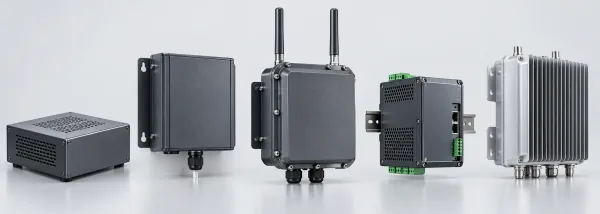
Custom sheet metal enclosures across typical network equipment applications: enterprise WiFi access points, home routers, outdoor CPE and wireless bridges, industrial IoT gateways, and 5G small-cell housings — each configured for its installation environment.