Sheet Metal Parts with Clinch Fasteners
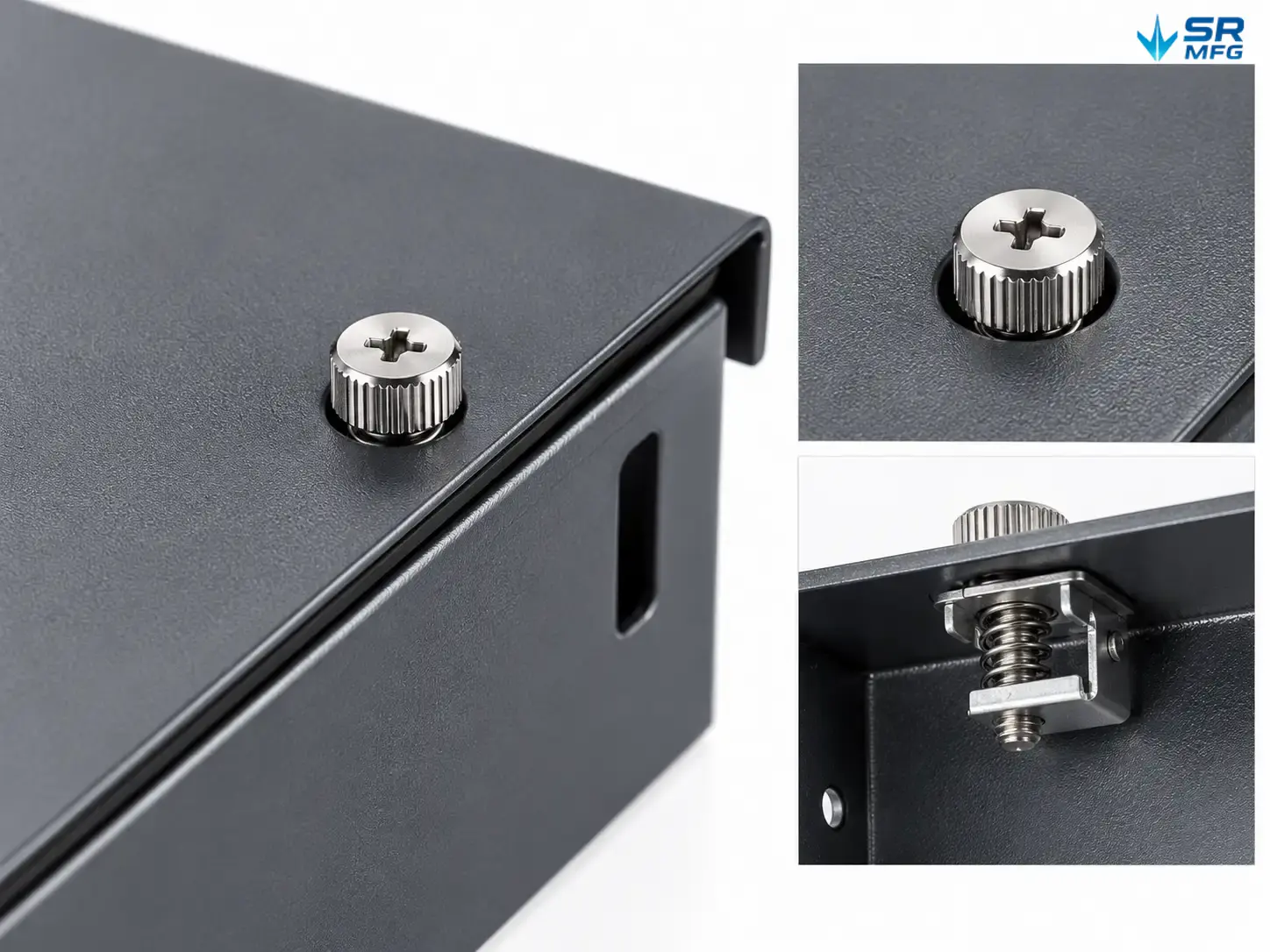
We manufacture custom sheet metal parts with integrated clinch fasteners — self-clinching nuts, studs, standoffs, and captive panel screws pressed directly into sheet metal structures. From laser cutting and bending through fastener installation, surface finishing, and quality inspection, the entire process is completed in a single facility.
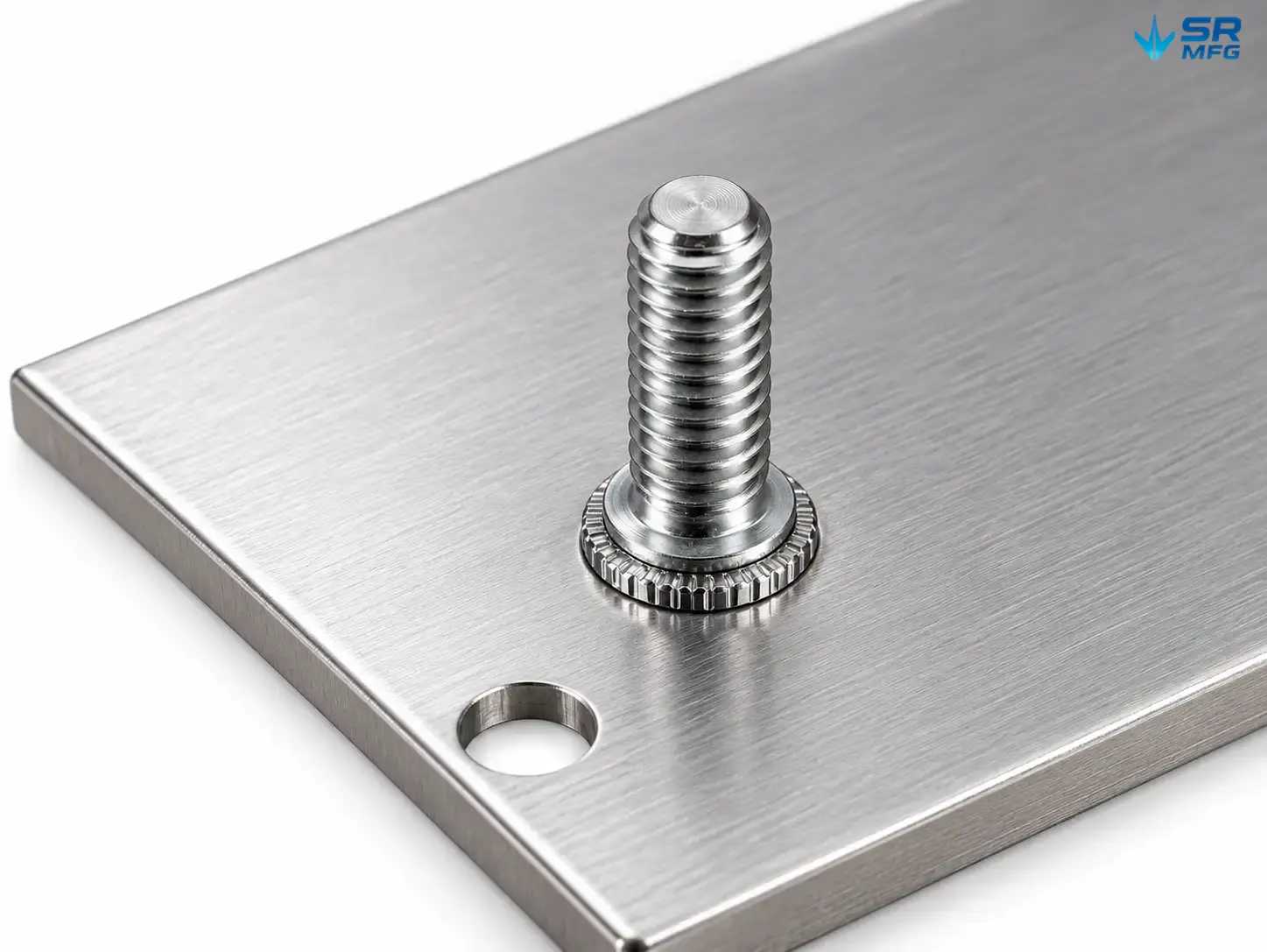
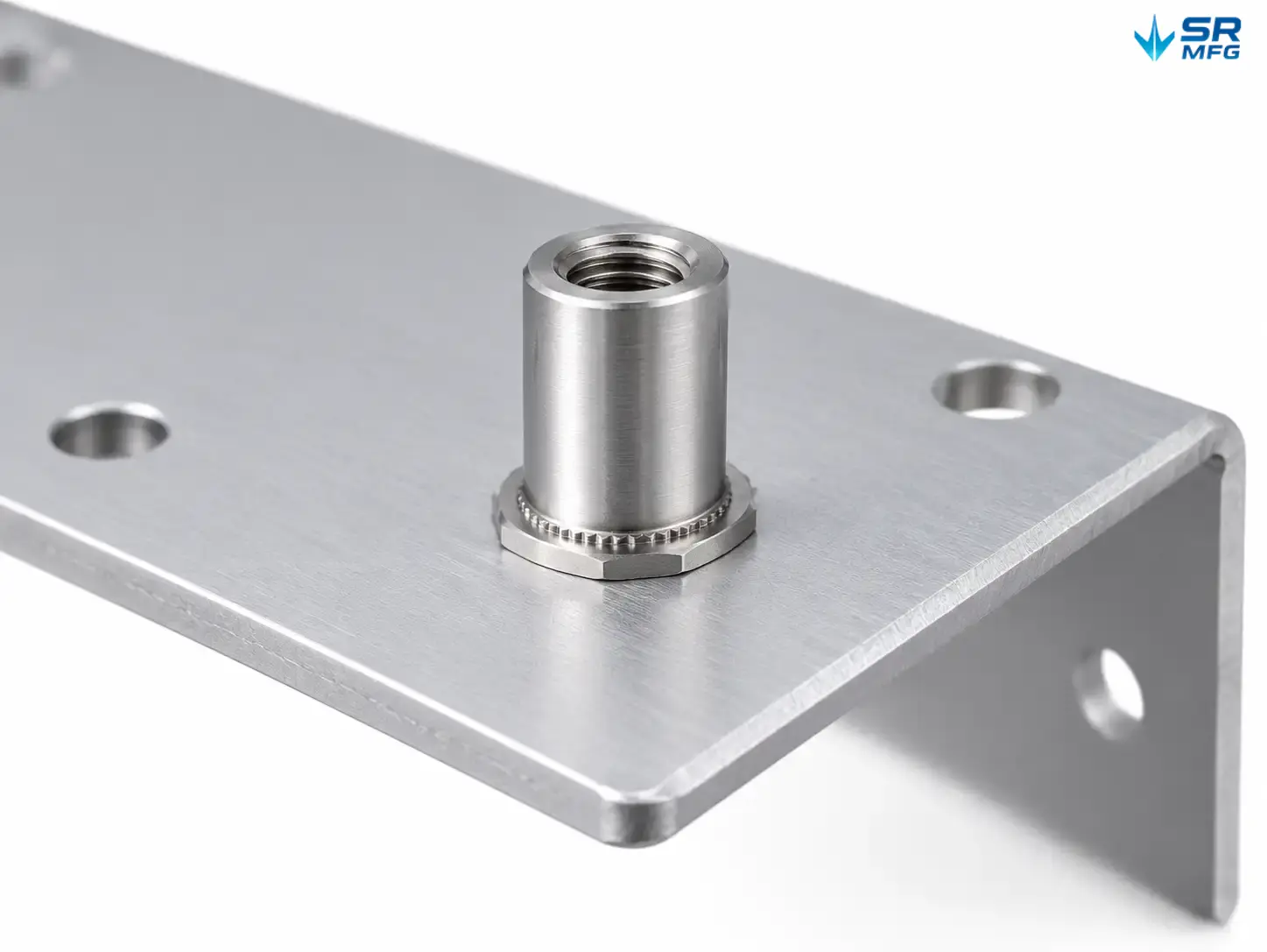
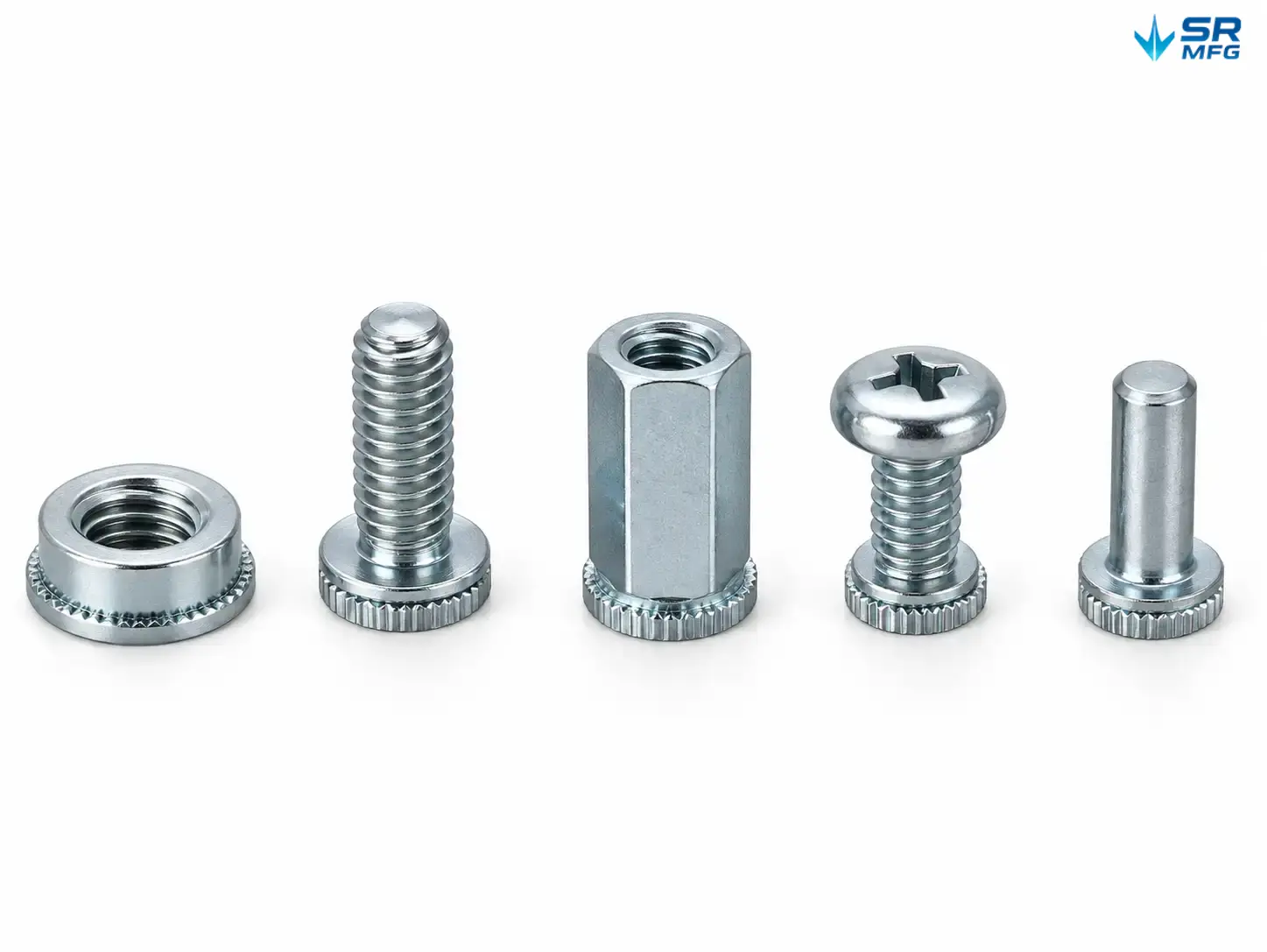
- Fastener types: Self-clinching nuts, self-clinching studs, self-clinching standoffs, captive panel screws, self-clinching pins.
- Materials: Carbon steel, stainless steel, and aluminum alloy — selected to match the application requirements.
- Thread range: Metric and imperial threads available; exact specifications confirmed per fastener type.
- Process flow: Laser cutting → bending / welding → fastener press installation → surface finishing → quality inspection.
- Order types: Prototype runs, small batches, and ongoing production.
Send us your drawing — we will review it for manufacturability (DFM) and provide a custom quote.
Product Details
| Specification | Details |
|---|---|
| Sheet metal material | Cold-rolled steel, stainless steel, aluminum alloy, galvanized steel; other grades available on request |
| Sheet thickness (fabrication) | 0.5–6.0 mm, depending on process and material |
| Min. sheet thickness (clinch installation) | Determined by fastener type and size; confirmed during DFM review |
| Clinch fastener types | Self-clinching nuts, studs, standoffs, captive panel screws, pins |
| Thread size range | Metric M2–M12; Imperial #4-40 to 3/8-16; range varies by fastener type |
| Fastener material | Carbon steel (zinc-plated), stainless steel, aluminum alloy, brass |
| Hole diameter & tolerance | Per fastener manufacturer specification; confirmed during DFM review |
| Min. edge distance | Typically 1–2× hole diameter, depending on fastener type; confirmed per design |
| Min. fastener spacing | Confirmed during DFM review based on fastener size and sheet thickness |
| Sheet hardness requirement | Sheet metal should typically be ~20 HRC (Rockwell B) softer than the fastener |
| Installation method | Press-installed using precision equipment with controlled force |
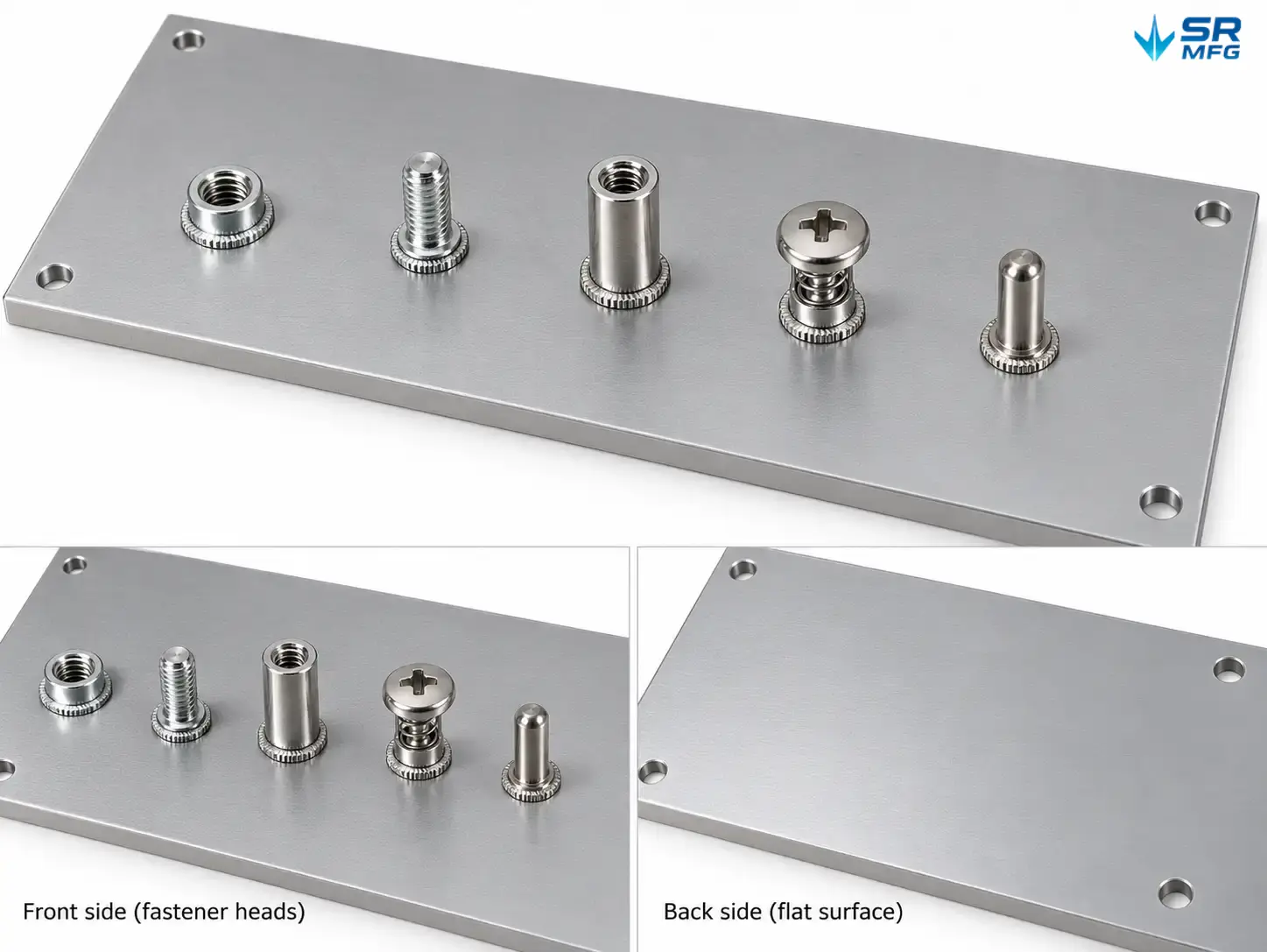
| Backside profile | Flush or low-profile; no protrusion on the reverse side |
| Surface finish options | Powder coating, zinc plating, anodizing, painting, passivation, or customer-specified |
| Finish / installation sequence | Fastener installation before or after surface treatment — coordinated per project |
| Quality inspection | Push-out resistance test, torque-out resistance test, visual inspection, dimensional verification |
| Max part size | Custom to customer drawing; large-format parts supported |
| Flatness & positional accuracy | Per application requirement or drawing; tighter tolerances quoted separately |
| Accepted drawing formats | STEP, DXF, IGES, DWG, PDF |
| Order types | Prototype, small batch, production runs |
| Quotation lead time | Typically within 24 hours of receiving complete specifications |
Sheet Metal Fabrication with Integrated Clinch Fasteners
Parts that require strong, repeatable bolted connections in thin sheet metal commonly use self-clinching fasteners — also known as clinch nuts, press-in fasteners, or PEM-style inserts.
Unlike weld nuts or tapping directly into material that is too thin to hold a thread, clinch fasteners are pressed into pre-machined holes using dedicated installation equipment, forming a secure mechanical bond with the sheet metal panel.
We handle both sheet metal fabrication and clinch fastener installation in a single facility. Laser cutting, bending, welding, fastener press installation, surface finishing, and quality inspection are all coordinated under one roof — so fastener positions, panel geometry, and surface quality stay aligned throughout the process.
1. What Are Sheet Metal Parts with Clinch Fasteners?
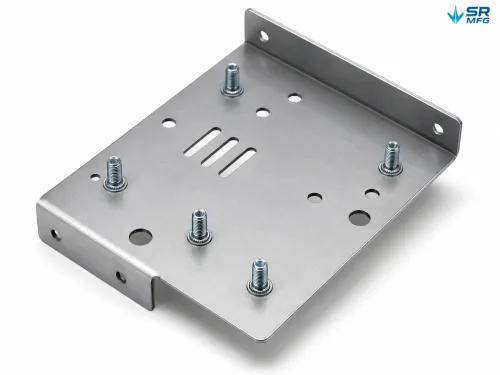
Sheet metal parts with clinch fasteners are fabricated metal panels, brackets, enclosures, or chassis in which self-clinching nuts, studs, standoffs, or captive screws are installed into pre-machined holes at designated positions.
These fasteners provide machine threads in thin sheet material where direct tapping is impractical, and they resist push-out and rotation under assembly loads.
Once fabrication is complete, the parts are ready for bolted assembly — no weld-nut fixtures, no loose hardware, and no secondary tapping operations required.
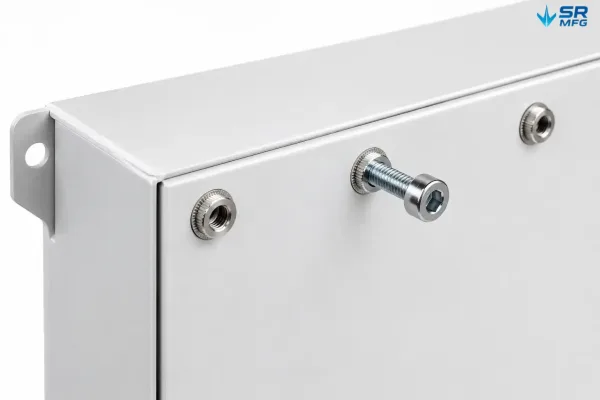
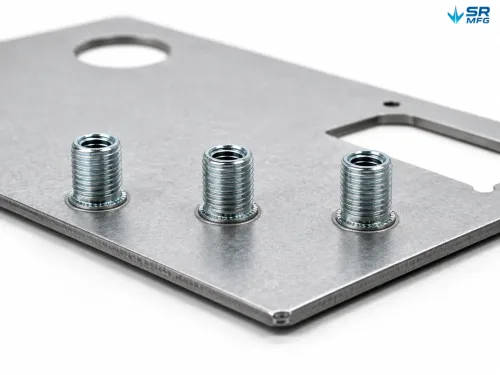
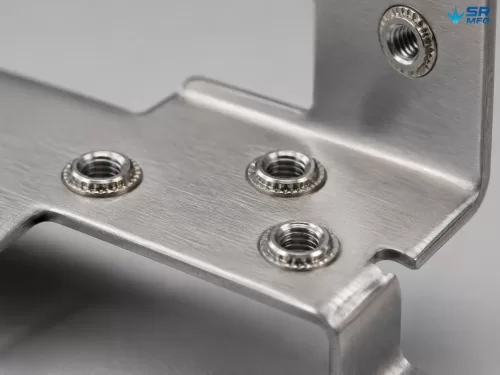
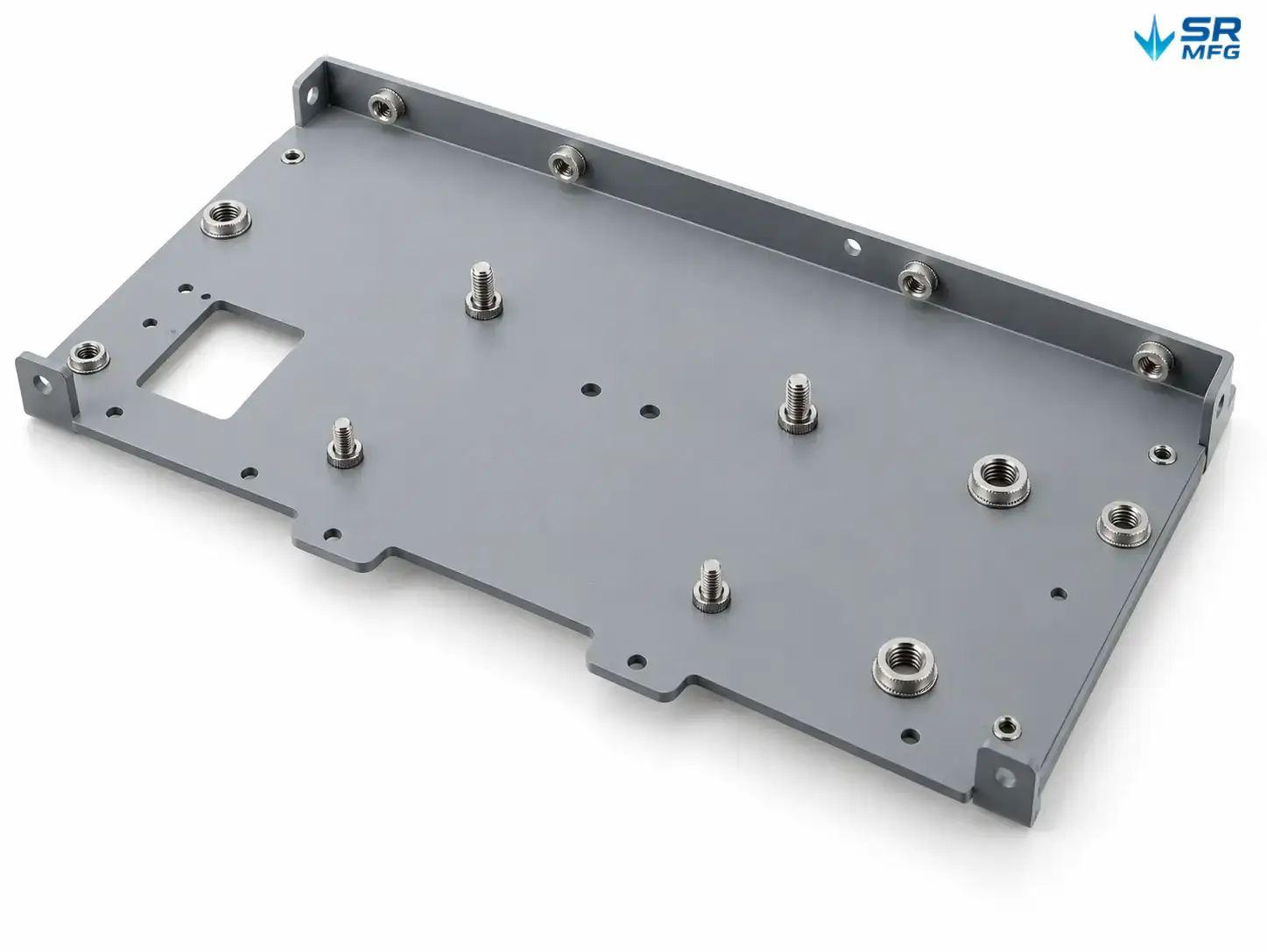
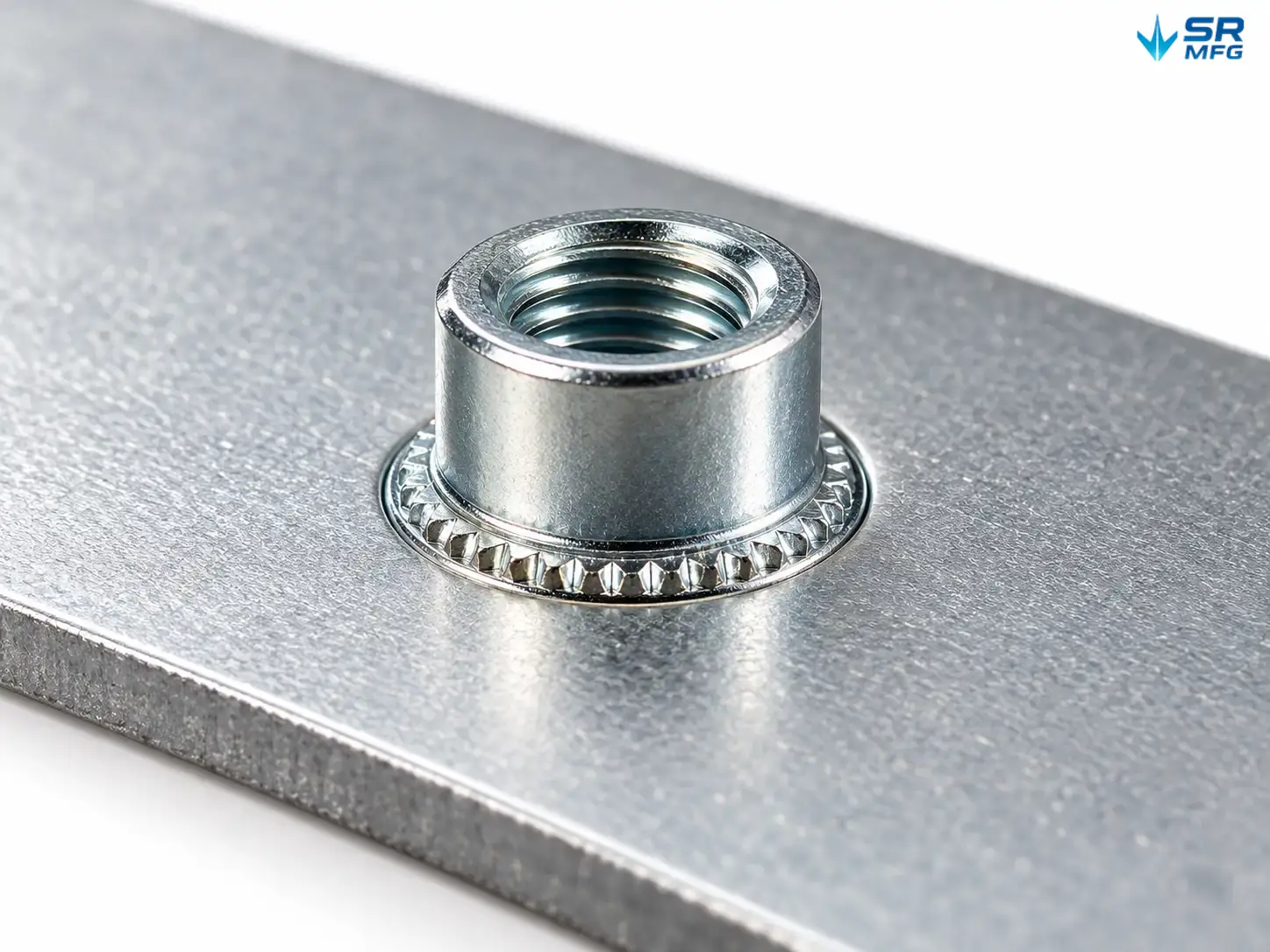
Self-clinching nuts installed in a finished panel — the part is ready for bolted assembly with no additional hardware or tapping required.
2. How Self-Clinching Fasteners Work
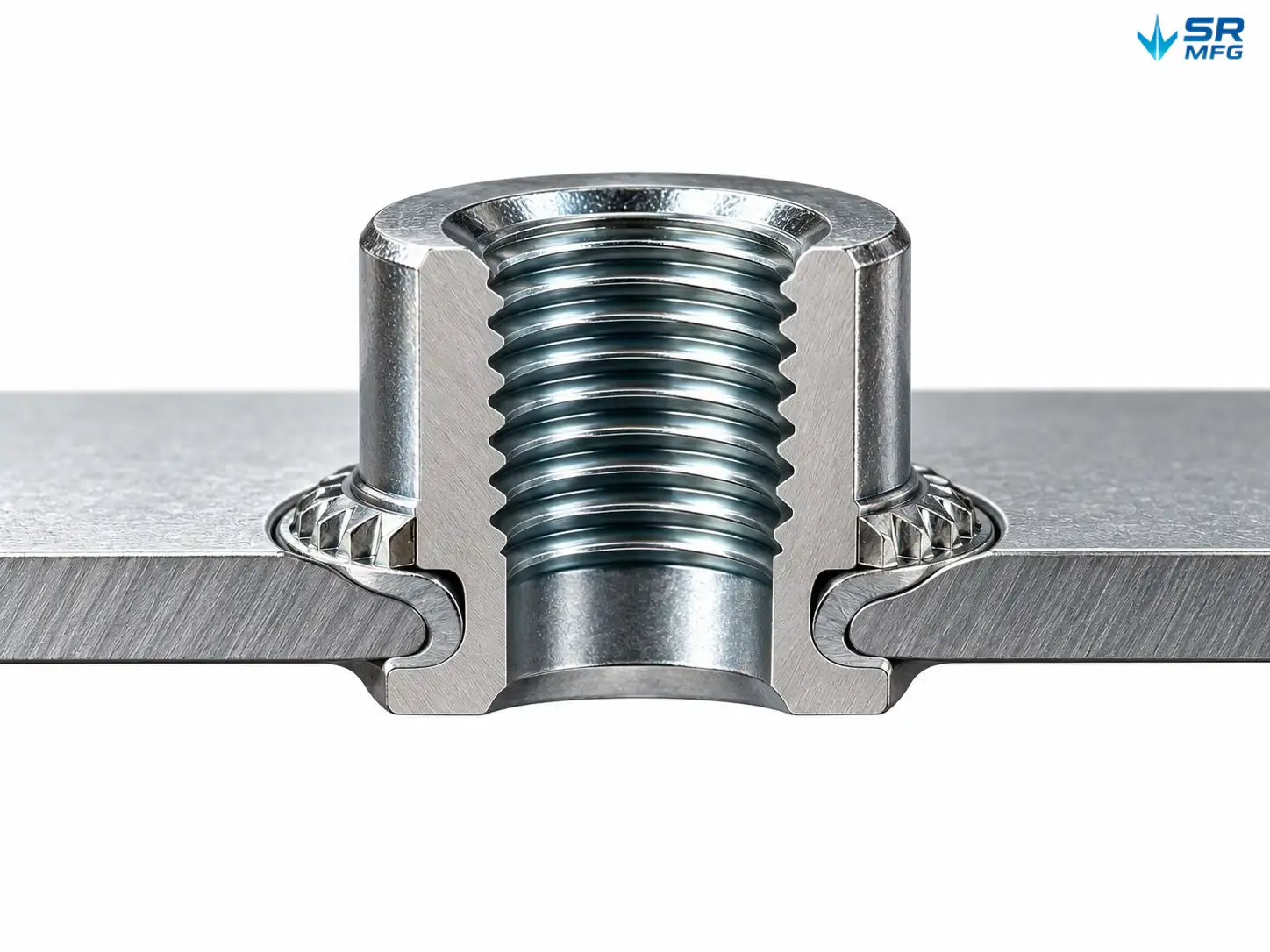
Self-clinching fasteners rely on the principle of cold plastic deformation of metal.
The fastener shank typically features an annular groove (undercut) and a knurled or serrated collar. When the installation press forces the fastener into a correctly sized pre-punched hole, the sheet metal undergoes localized plastic deformation and flows into the annular groove.
At the same time, the knurling or serration embeds into the panel surface, preventing the fastener from rotating.
The result is a mechanically locked fastener that resists both push-out and torque-out — permanently integrated into the sheet metal panel.
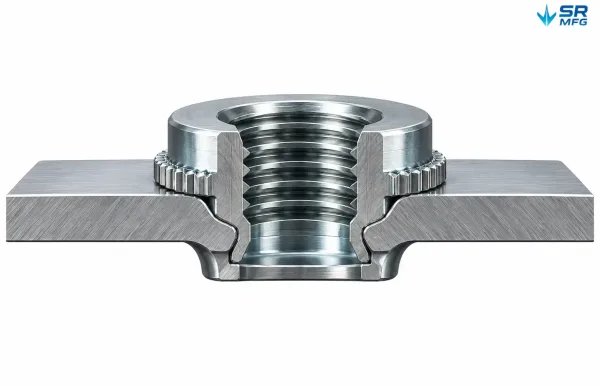
Cross-section view showing sheet metal material flowing into the fastener’s annular groove and knurling embedded in the panel surface — the two features that resist push-out and rotation.
Because the entire installation uses mechanical pressure rather than heat, it avoids the thermal distortion, weld spatter, and discoloration commonly caused by welding. With the right fastener selection, the backside of the panel stays clean and flat — especially important when the part must sit flush against another surface or meet cosmetic appearance requirements.
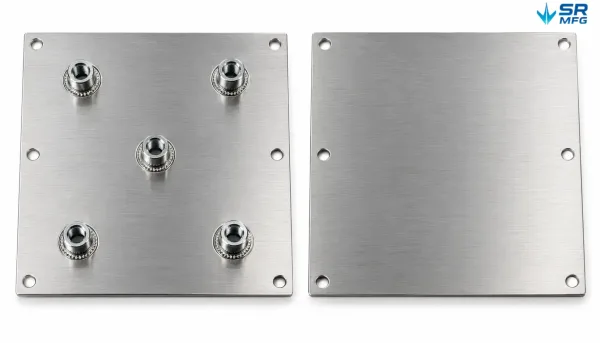
The reverse side of the panel after installation — completely flat and free of protrusions, weld marks, or discoloration.
3. Our Fabrication and Installation Capabilities
We integrate sheet metal manufacturing with press-installed fastener technology into a single production workflow.
Sheet metal fabrication
Laser cutting, punching, CNC bending, and welding to customer drawings.
Clinch fastener installation
Self-clinching nuts, studs, standoffs, panel screws, and pins pressed into specified positions.
Surface finishing
Powder coating, electroplating, anodizing, or painting — with fastener installation sequence coordinated to the finish system.
Quality inspection
Push-out and torque-out resistance verification, plus visual and dimensional inspection.
DFM (Design for Manufacturability) review
Before production begins, we review the drawing for key parameters including hole diameter, edge distance, and fastener spacing.
This integrated approach eliminates the coordination issues that arise when fabrication and fastener installation are split between separate suppliers.
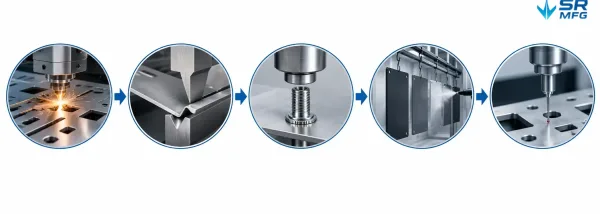
Our integrated workflow — from laser cutting through fastener press installation, surface finishing, and quality inspection, all under one roof.
4. Typical Applications
Wherever strong, reusable threaded connections are needed in thin sheet metal, self-clinching fasteners find their place.
| Application | Primary role of the clinch fastener |
|---|---|
| Electrical enclosures and control panels | Provides threaded mounting points for covers, DIN rails, and internal components |
| Telecom racks and server chassis | Creates standoff mounting points for PCBs and modules |
| Automotive interior and structural panels | Forms reliable attachment points without welding on visible surfaces |
| Medical equipment housings | Delivers clean, flush-mounted threads for panels requiring frequent access |
| Industrial machine panels and guards | Enables removable panel fastening in thin gauge material |
| HVAC and appliance panels | Provides threaded anchors in sheet too thin for tapping |
| Consumer electronics chassis | Mounts PCB standoffs and electronic components |
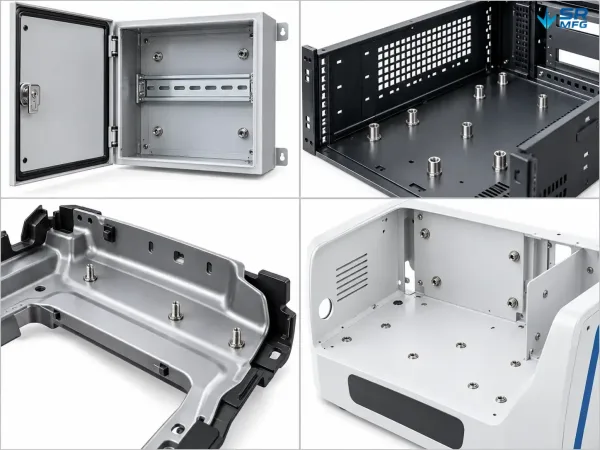
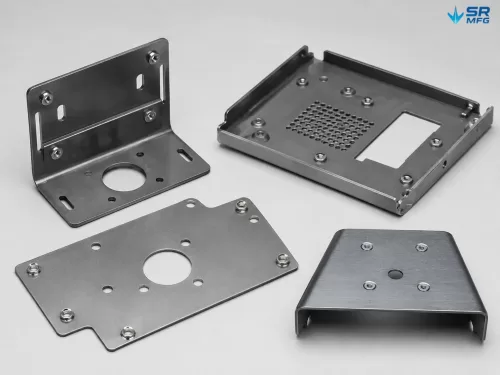
Sheet metal parts with clinch fasteners in real-world use — from electrical enclosures and server chassis to automotive panels and medical equipment housings.