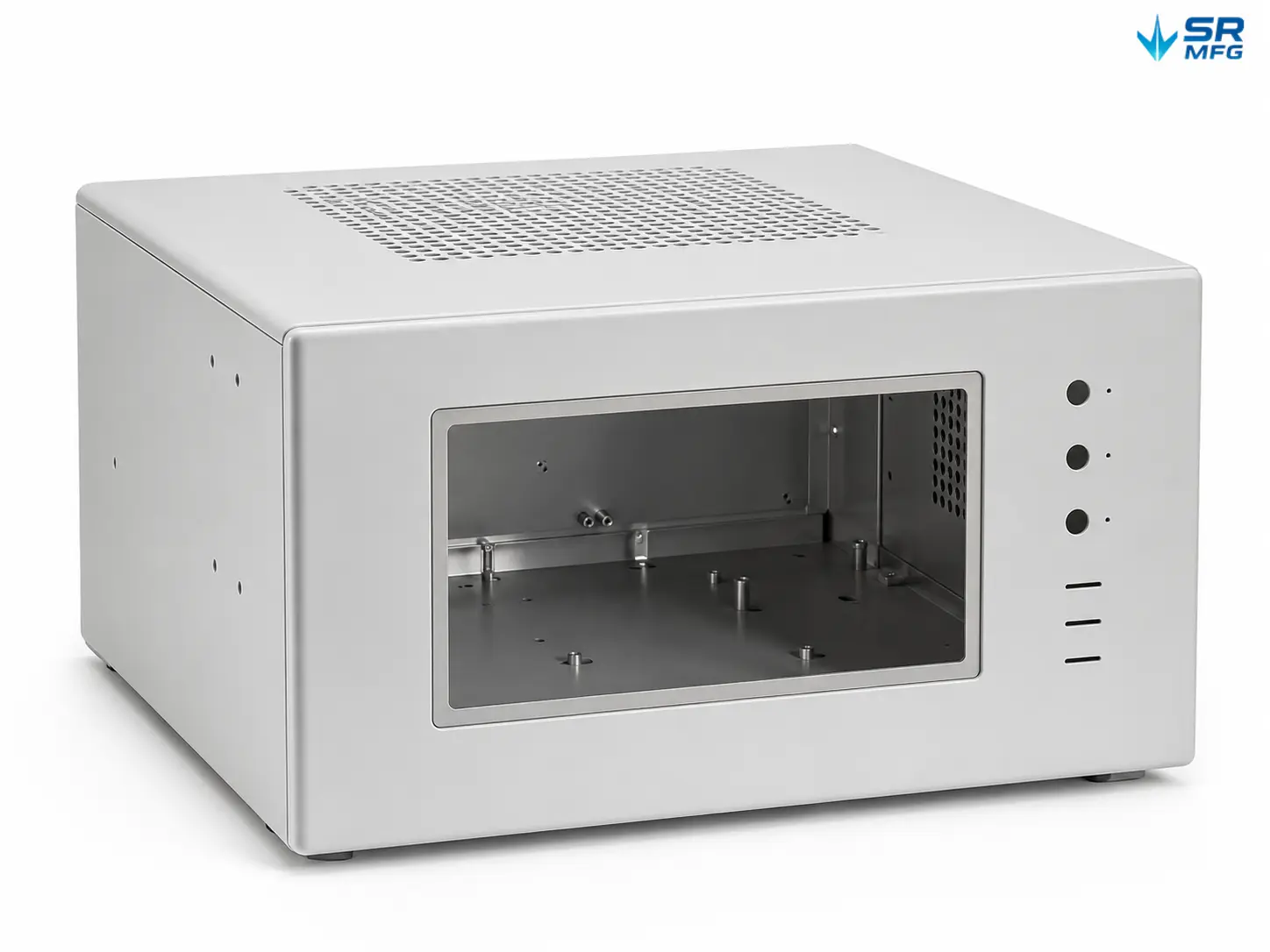
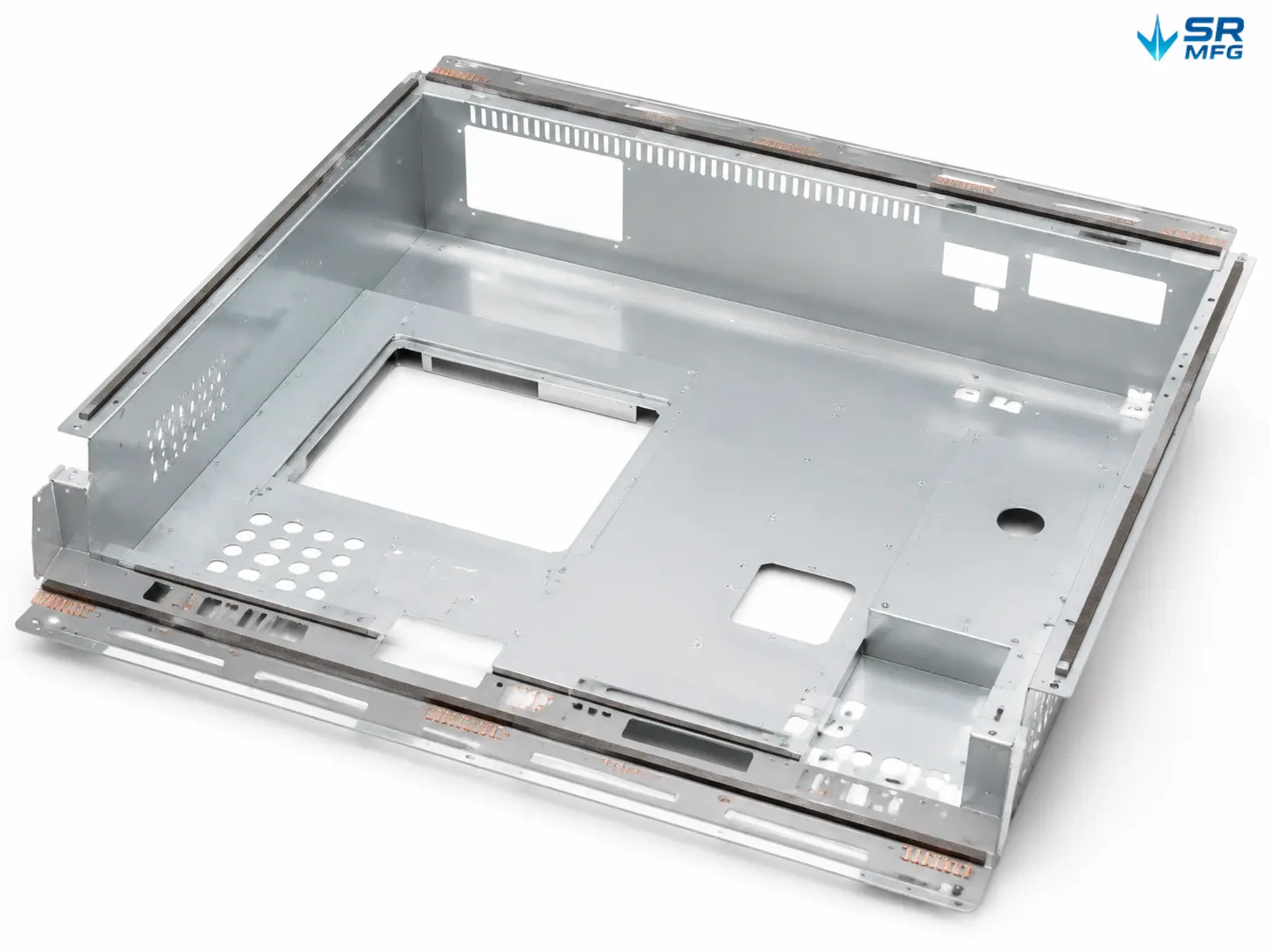
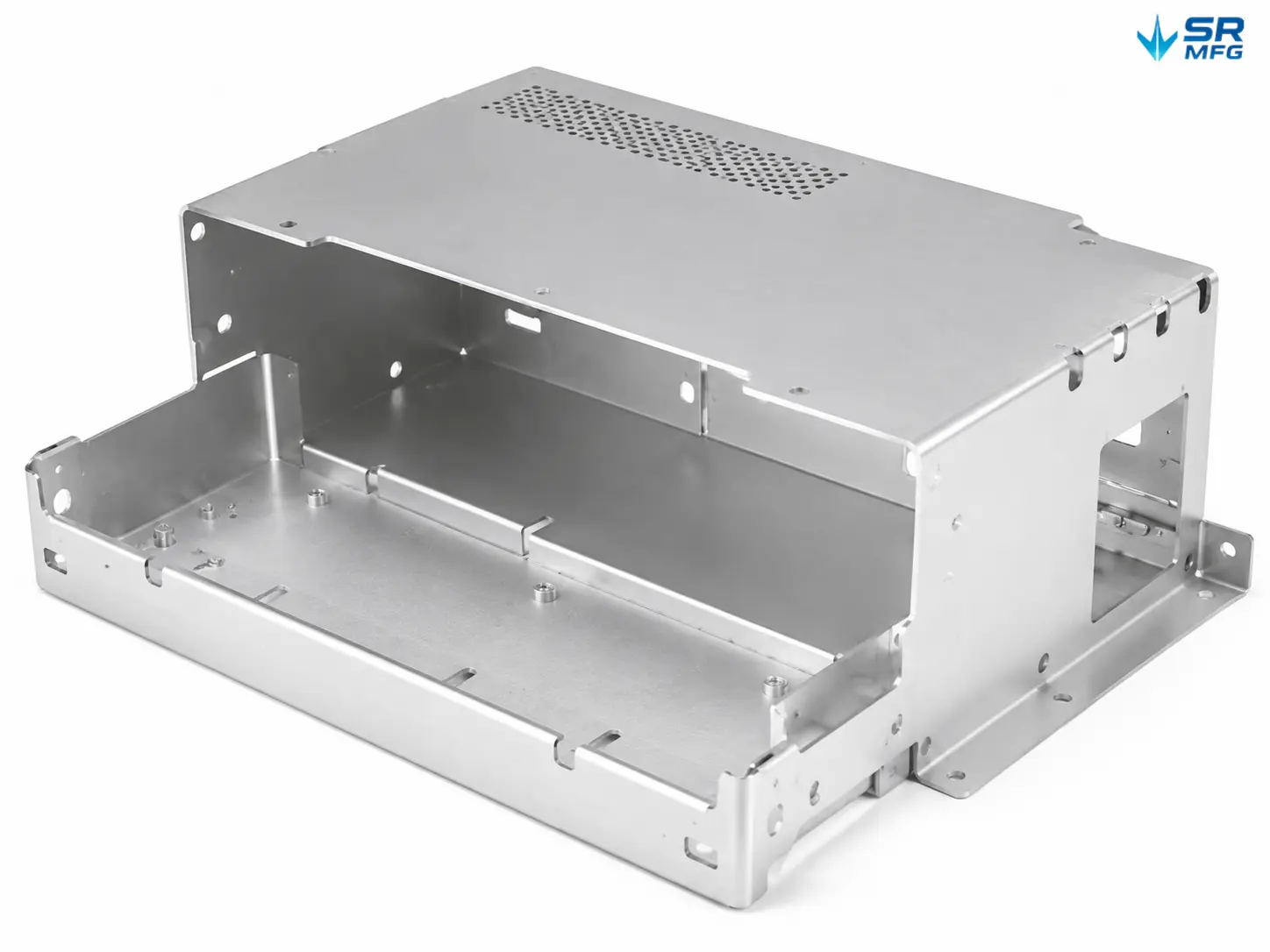
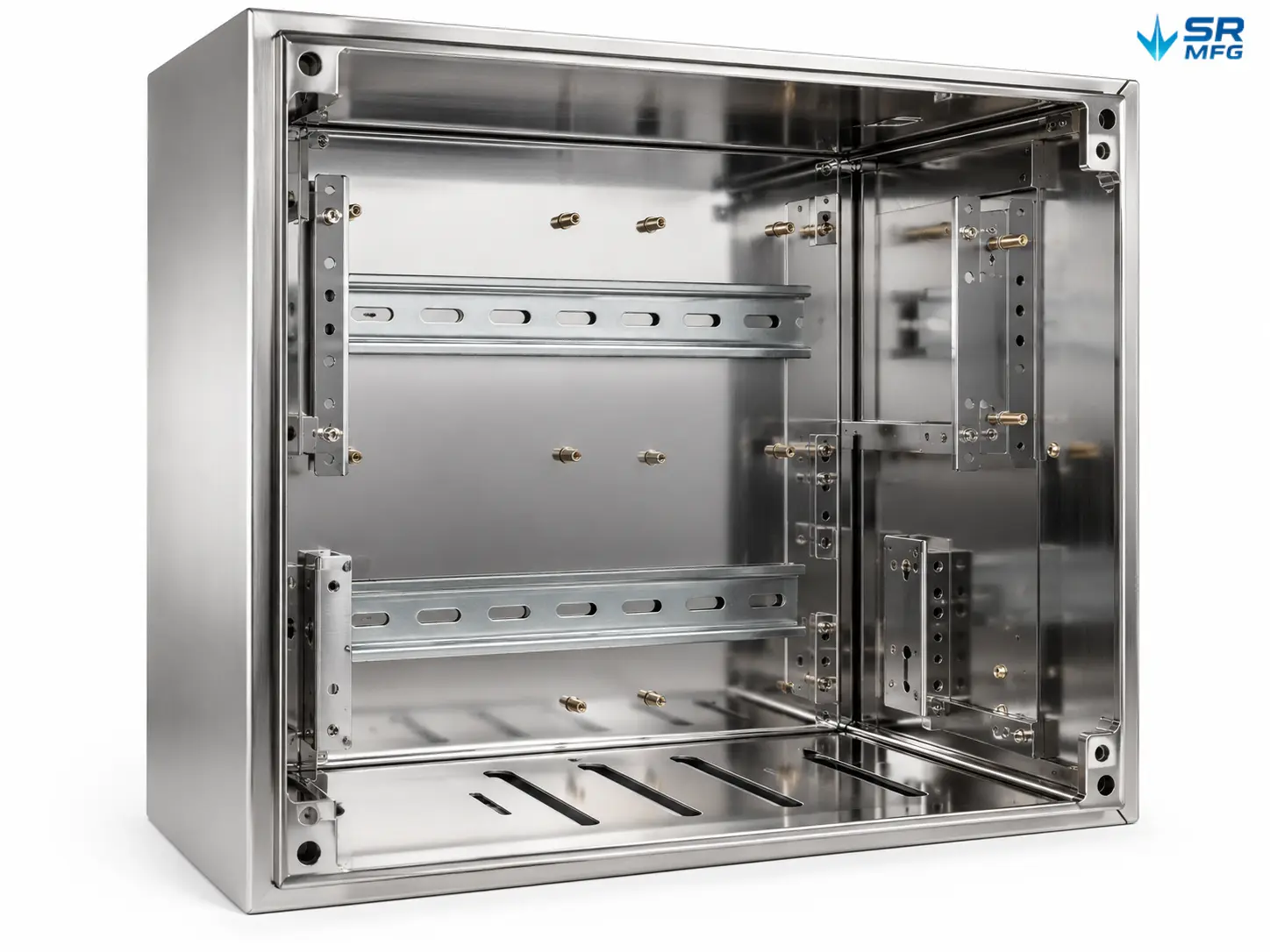
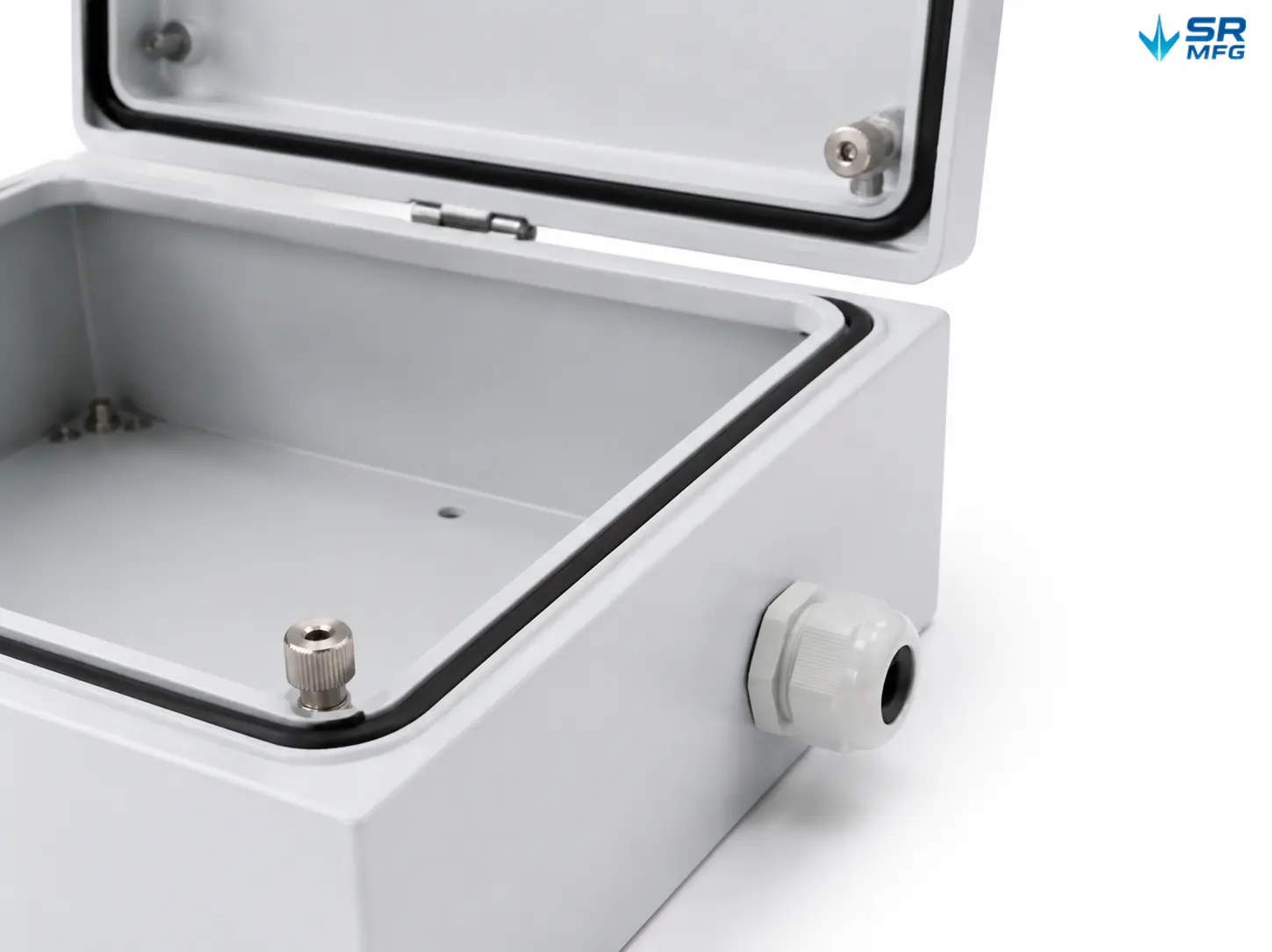
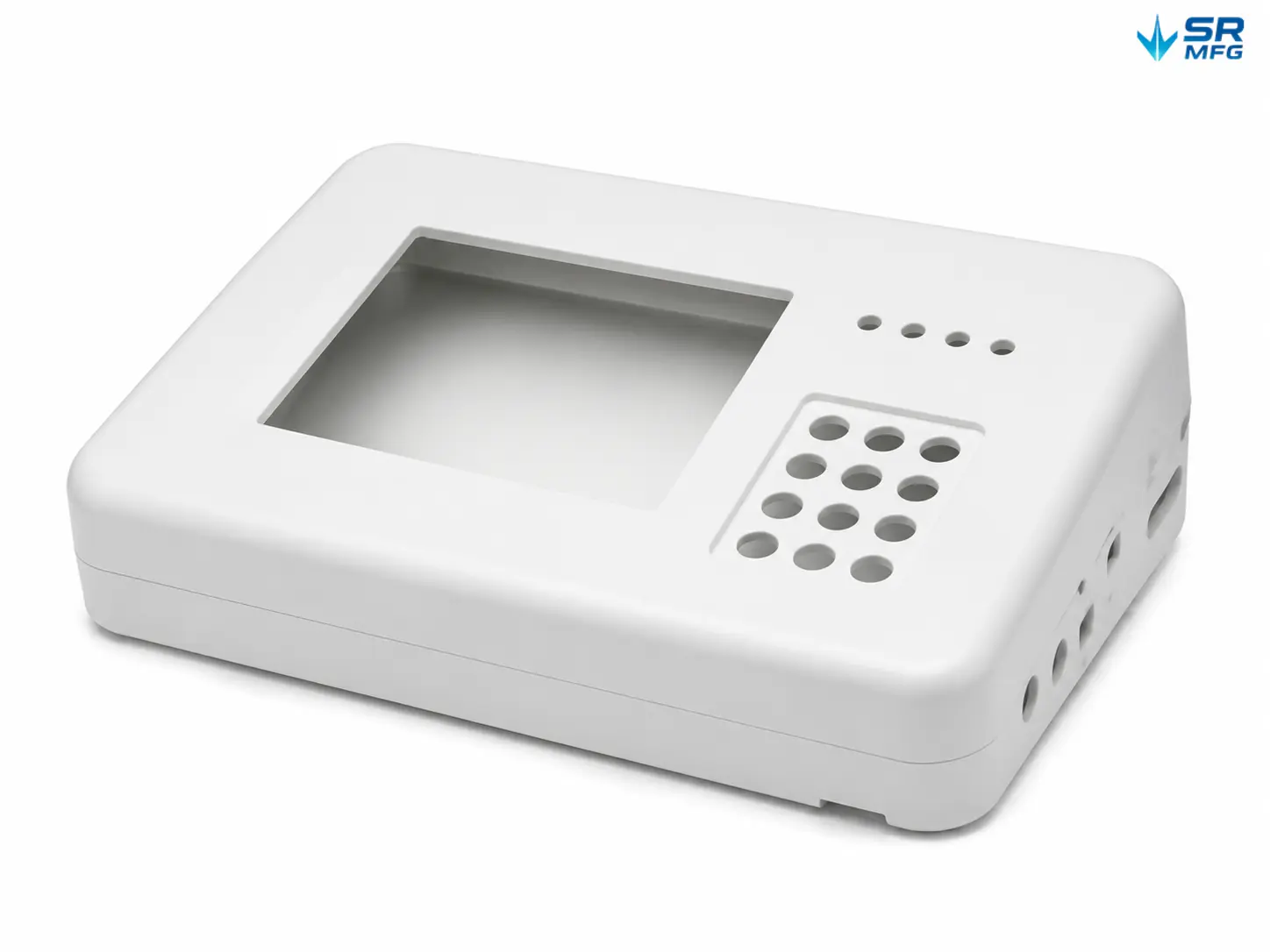
Custom Diagnostic System Housings
Bespoke sheet metal enclosures engineered for diagnostic analyzers, laboratory instruments, patient monitoring systems, and medical imaging equipment. Manufactured to your exact drawing specifications using laser cutting (±0.05 mm), CNC bending, and seamless TIG welding.
- Materials: Stainless steel (304/316L) · Aluminum alloy (5052/6061) · Cold-rolled steel sheet · Galvanized steel sheet
- Finishes: Powder coating · Electropolishing · Anodizing · Passivation · Brushed finish
- Protection Rating: IP22–IP66 · Optional EMI/RFI shielding
- Certifications: ISO 13485 · ISO 9001 · IEC 60601-1 · RoHS · CE
⏱ Prototype lead time: 5–10 business days · Production lead time: 15–30 business days Accepted file formats: STEP, IGES, DWG, DXF, PDF, SolidWorks
Product Details
| Parameter | Specification | Notes |
|---|---|---|
| Material Thickness | 0.5 mm – 6.0 mm | Thicker stock available for structural chassis |
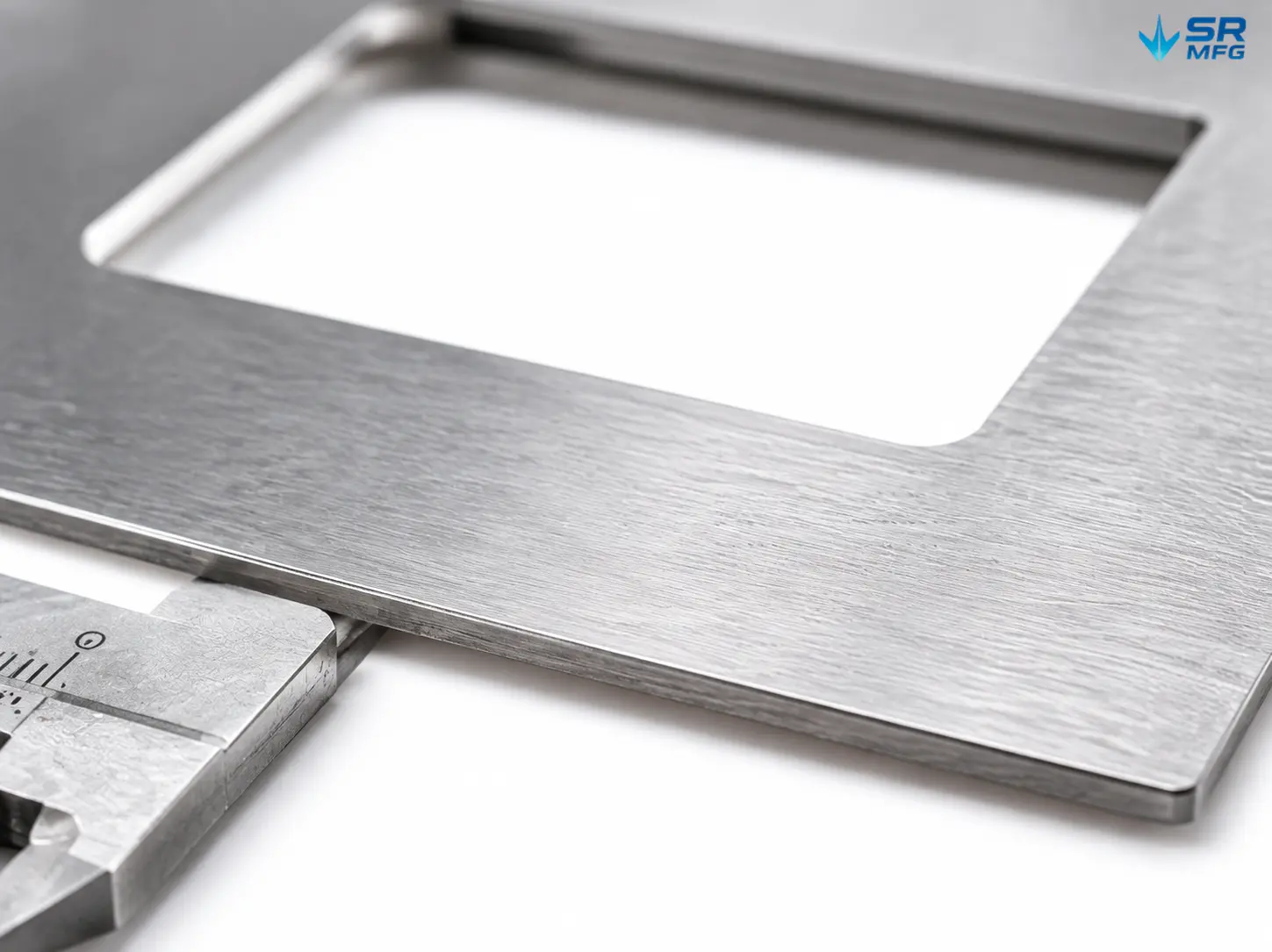
| Laser Cutting Precision | ±0.05 mm | Burr-free edges; precision fit for mating components |
| CNC Bending Precision | ±0.1° (angle) | Consistent bend angles across production runs |
| Welding & Assembly Accuracy | ±0.2 mm | Includes post-weld dimensional verification |
| Surface Roughness | Ra ≤ 0.8 µm (electropolished) | Standard brushed finish: Ra ≤ 1.6 µm |
| Surface Flatness | ±0.1 mm / 100 mm | Critical for display and HMI mounting |
| IP Protection Rating | IP22 – IP66 | Sealed gasket joints; sealed cable entries |
| EMI Shielding Effectiveness | >40 dB attenuation (typical) | Designed to IEC 60601-1-2 requirements |
| Powder Coat Thickness | 60 – 80 µm | FDA-compliant and antimicrobial options available |
| Anodizing | Type II (decorative) / Type III (hard coat) | For aluminum alloy components |
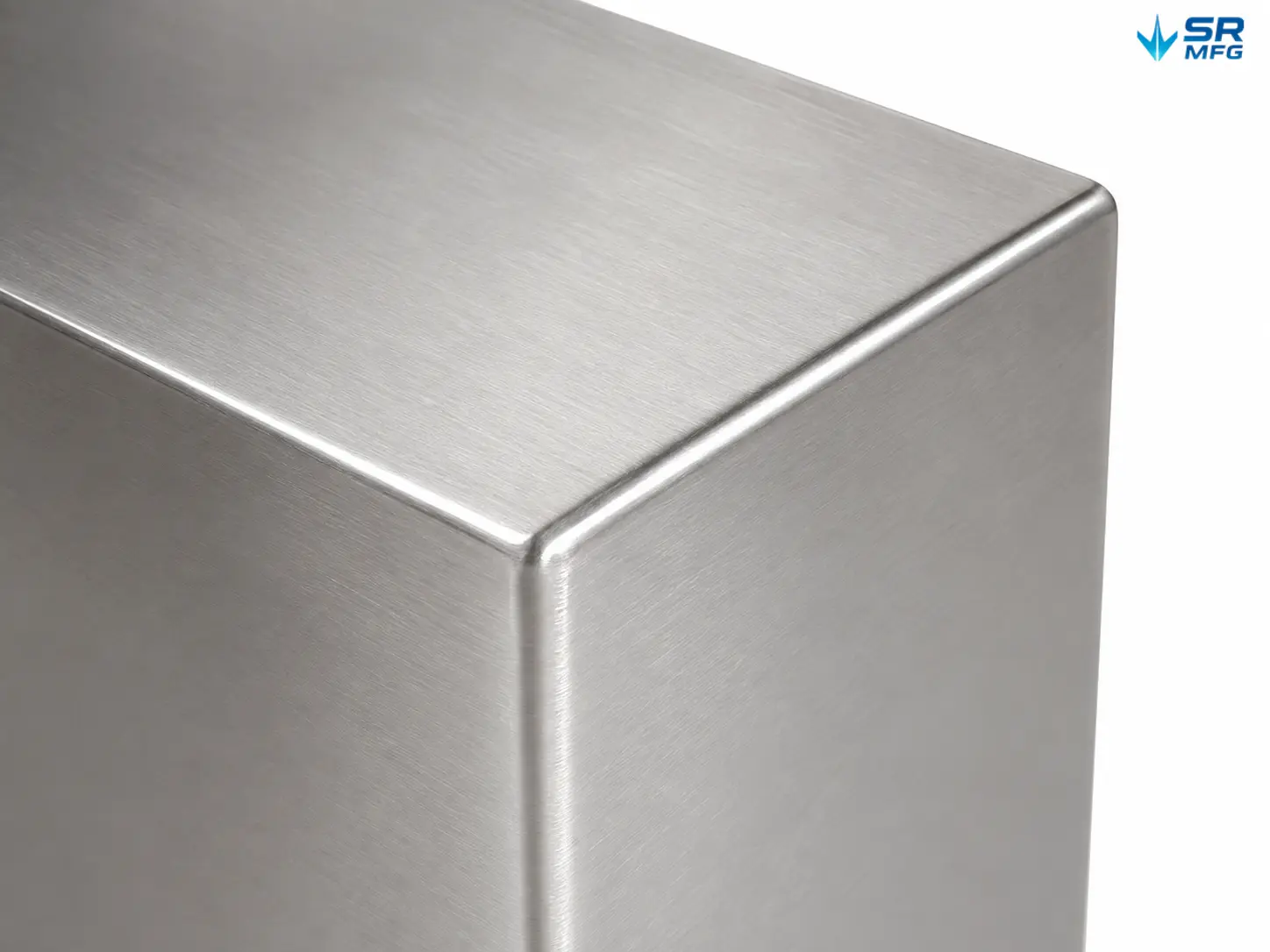
| Welding Methods | Sheet metal welding using TIG, MIG, or laser — seamless, ground flush | Certified welders; continuous weld seams |
| Edge Treatment | Deburred; radius R ≥ 1 mm | Medical-grade safety geometry |
| Cleanroom Compatibility | ISO 7 / ISO 8 | Optional low-particulate surface treatment |
| Compliance Certifications | ISO 13485, ISO 9001, IEC 60601-1, RoHS, CE | Full regulatory documentation support |
| Traceability | 100% lot traceability; DHR support | Material certificates and FAI reports available |
| Prototype Lead Time | 5 – 10 business days | Depends on complexity and finish |
| Production Lead Time | 15 – 30 business days | Depends on volume and process requirements |
| Minimum Order Quantity | No MOQ for prototypes | Production MOQ confirmed per project |
Built for the Equipment Your Customers Trust
The enclosure of a diagnostic system is the first component a clinician touches, the surface a lab technician wipes down every day, and the first impression an inspector forms when evaluating your equipment. Before anyone looks at the screen, the housing already represents your brand. Poor manufacturing — misaligned panels, rough welds, cheap-looking coatings — undermines the value of the technology inside. Precision manufacturing does the opposite.
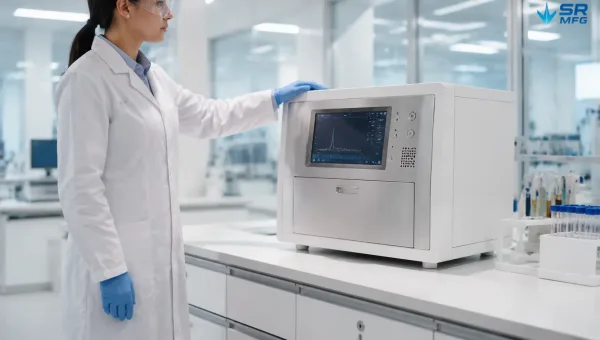
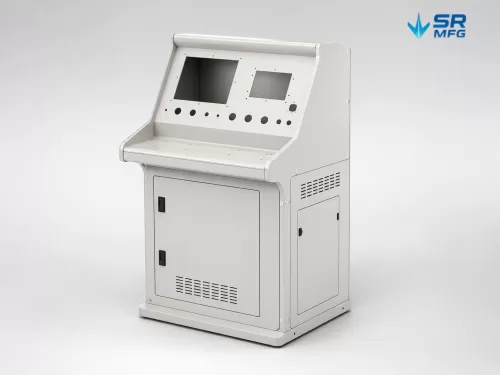
This image shows a diagnostic system enclosure in a professional clinical setting, illustrating how the housing is the first physical touchpoint that represents your brand to clinicians and lab technicians.
We provide medical & healthcare sheet metal solutions for diagnostic analyzers, imaging consoles, laboratory instruments, patient monitors, and point-of-care testing (POCT) devices. From single-piece prototypes to sustained production runs, every housing is built strictly to your drawings and standards.
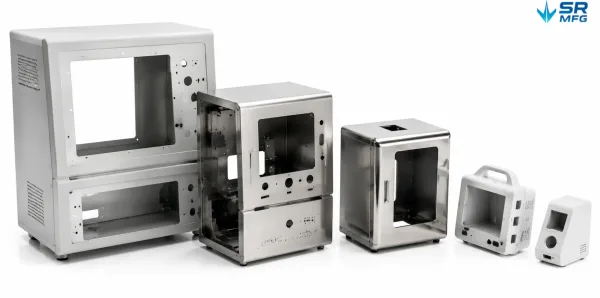
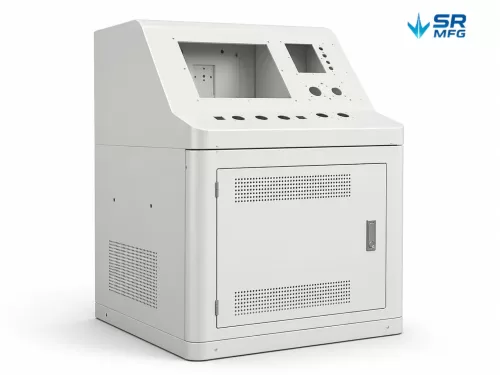
This image displays the range of custom enclosure types manufactured for different diagnostic platforms — from large imaging console housings to compact POCT device enclosures.
Equipment Types We Cover
Every diagnostic platform has its own structural demands. We tailor our manufacturing to the specific requirements of your equipment:
- Diagnostic Analyzers — Modular enclosures with internal bracket systems for easy component installation and service access
- Imaging System Consoles — Large-format panels with EMI shielding and precision-machined mounting surfaces
- Laboratory instrument enclosures — Chemically resistant stainless steel housings with smooth, easy-to-decontaminate surfaces
- Patient Monitoring Devices — Lightweight housings with clean aesthetics and integrated cable management
- Point-of-Care Testing (POCT) Devices — Compact enclosures with precise cutouts for displays, fluid interfaces, and sensor modules
- Medical Carts & Workstations — Welded frame structures with coatings that withstand daily disinfection wiping
- OEM Medical Devices — Fully custom housings built to your drawings, samples, or project specifications
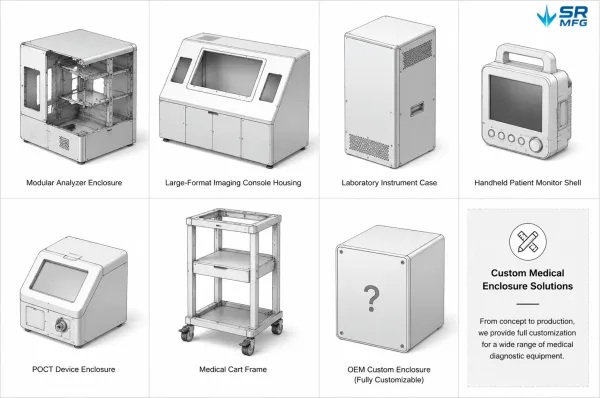
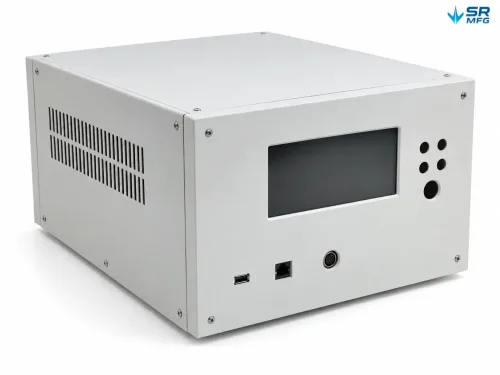
This image provides a visual overview of the seven diagnostic equipment categories and the distinct enclosure designs tailored to each application.
Don’t see your equipment listed? Send us your layout drawing. We engineer around your device — not the other way around.
Design Elements We Focus On
A diagnostic housing is far more than a metal box. The internal architecture determines whether your assembly team works efficiently or fights the enclosure every day. We design around your actual product layout:
- Internal Mounting Structures — Brackets, standoffs, and rails positioned precisely to your PCB and module layout
- Display & Interface Cutouts — Precision openings for HMI screens, touch panels, buttons, and indicator lights
- Cable Routing — Designed pathways and tie-down points to keep wiring organized, accessible, and serviceable
- Thermal Management — Ventilation and heat dissipation designed around your thermal load
- Service Access — Removable panels, hinged doors, and quick-release fasteners that allow maintenance without full disassembly
- Grounding & Bonding — Integrated ground points for electrical safety compliance
- Safety Geometry — Radiused transitions, deburred edges, no internal sharp surfaces
- Cleanability — Smooth, seamless exterior surfaces compatible with hospital-grade disinfectants
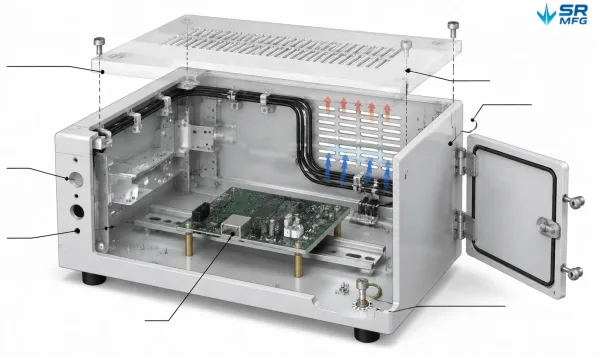
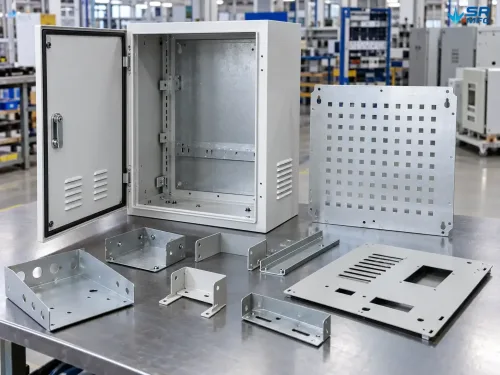
This image illustrates the key internal design elements of a custom diagnostic enclosure, including mounting structures, cable routing channels, ventilation, service panels, and safety geometry.
All of these are reviewed during the DFM (Design for Manufacturability) analysis — before a single part is cut.
Why Manufacturing Quality Matters
| What Poor Manufacturing Looks Like | What Precision Manufacturing Delivers |
|---|---|
| Panels don’t align | Consistent, even panel gaps on every unit |
| Visible weld beads on exterior surfaces | Seamless, ground-flush joins you can’t feel with your hand |
| Powder coat chips during shipping | Durable, hospital-grade coatings that survive real-world handling |
| HMI cutout is slightly off-center | ±0.05 mm precision; components fit perfectly |
| Sharp edges inside the enclosure | Deburred, radiused, safe for technicians |
| Assembly team spends hours adjusting parts | Parts go together cleanly, first time |
| Customers question product quality | Professional appearance that builds brand confidence |
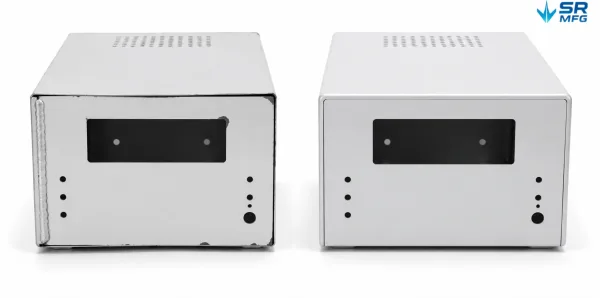
This image compares the visible differences between a poorly manufactured enclosure (left) and a precision-manufactured enclosure (right), highlighting panel alignment, weld quality, and surface finish.
The price of a housing is one number. The cost of rework, delayed market entry, and lost customer confidence is another.