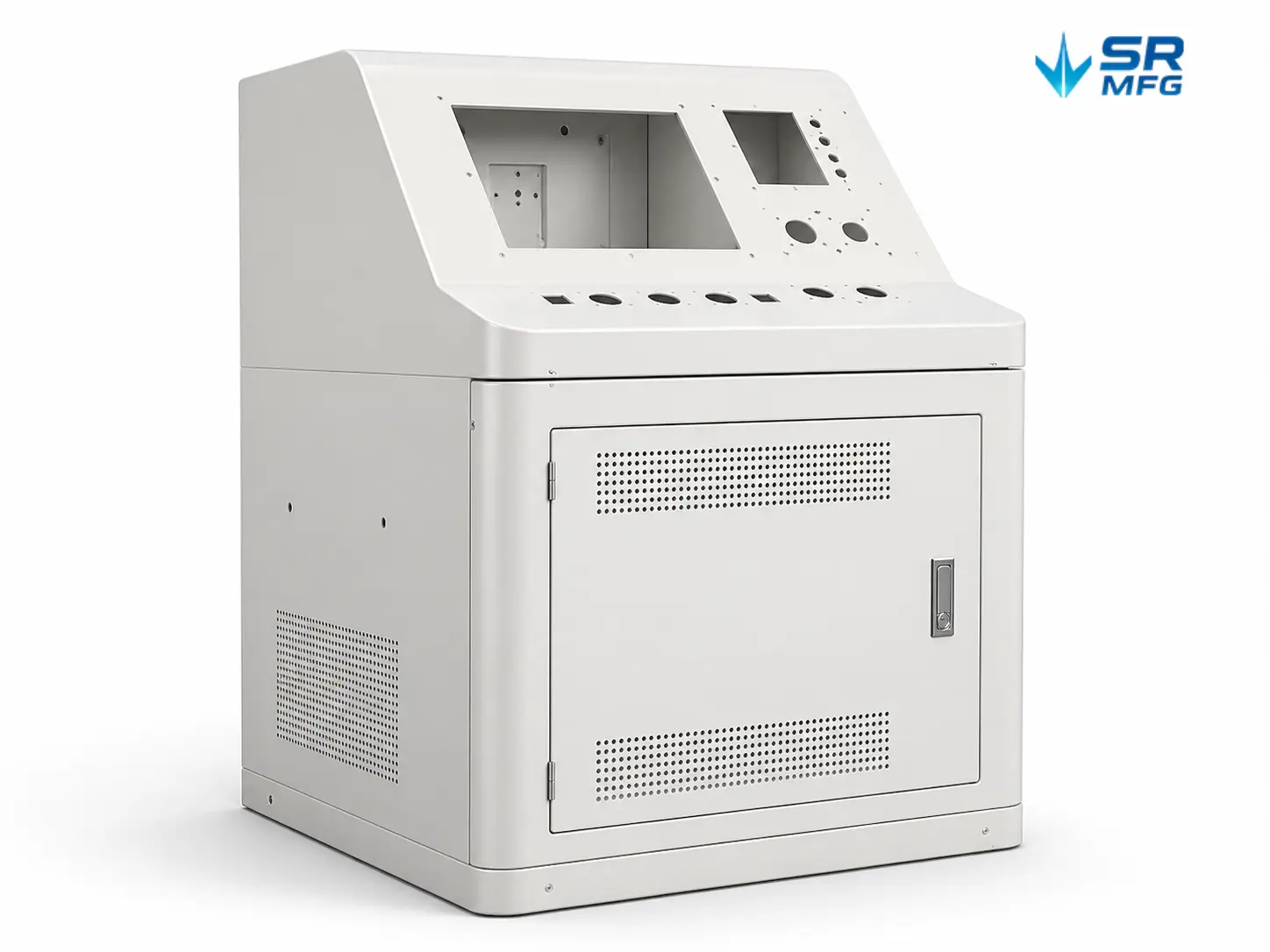
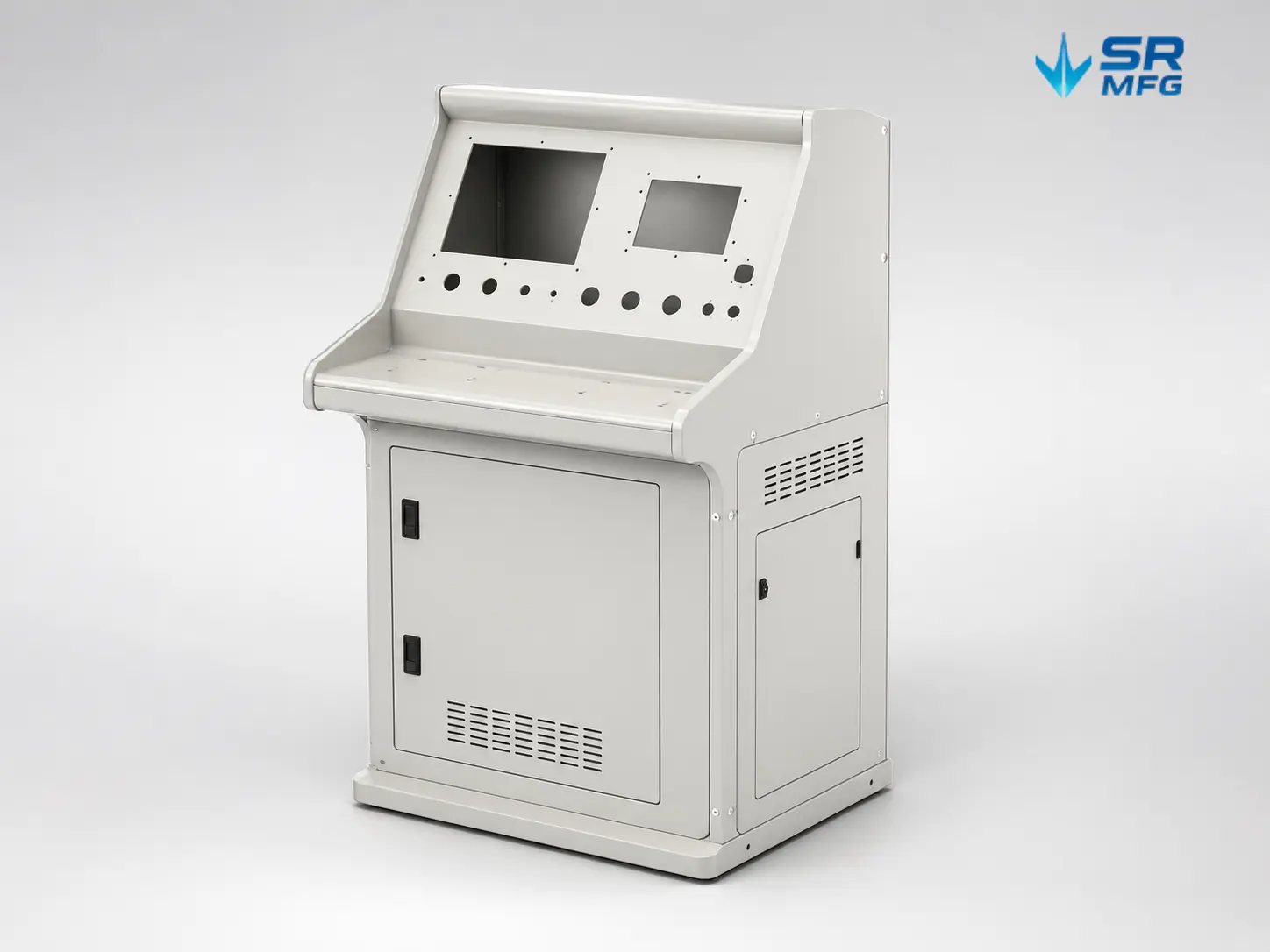
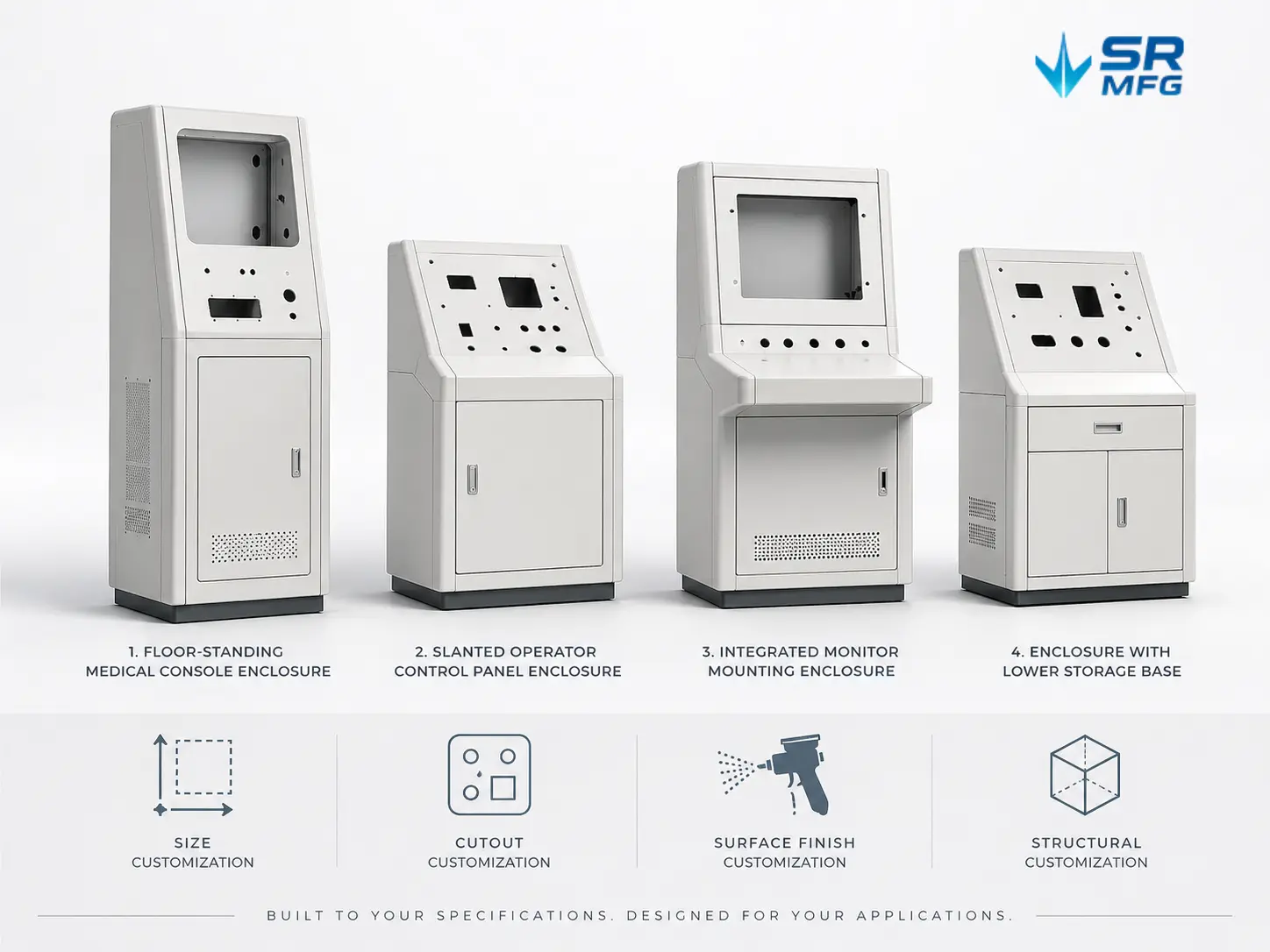
Medical Console Enclosures
SR MFG provides custom medical console enclosure manufacturing for medical device OEMs and related teams. Whether your project requires a compact operator console housing or a full-size assembled console structure, we can manufacture it to match your specifications.
- Available materials include cold-rolled steel, stainless steel, and aluminum
- Custom monitor cutouts and control-area layouts are supported
- Surface finishes can be selected to match medical equipment appearance requirements
- Suitable for a wide range of medical equipment enclosure projects
- OEM customization and stable volume production are supported
| Material | Aluminum, Carbon steel, Stainless steel |
|---|---|
| Process | assembly, bending, Laser cutting, stamping, welding |
| Surface Finish | anodizing, Powder coating, Wire drawing |
Product Details
What Is a Medical Console Enclosure?
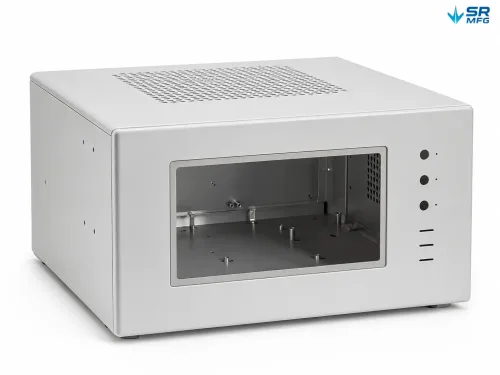
A medical console enclosure is the outer housing or structural frame that surrounds the functional core of a medical device. It integrates the control panel, display, internal components, and service access points into one complete physical structure. It provides operators with a clear working interface while helping protect the internal components from damage.
A medical console enclosure is not a fixed, standardized product. Project requirements can range from compact metal housings to large assembled structures. The final configuration depends on the medical device itself, the operating environment, and the functional requirements of the product, which is why many projects require custom OEM sheet metal enclosure manufacturing.
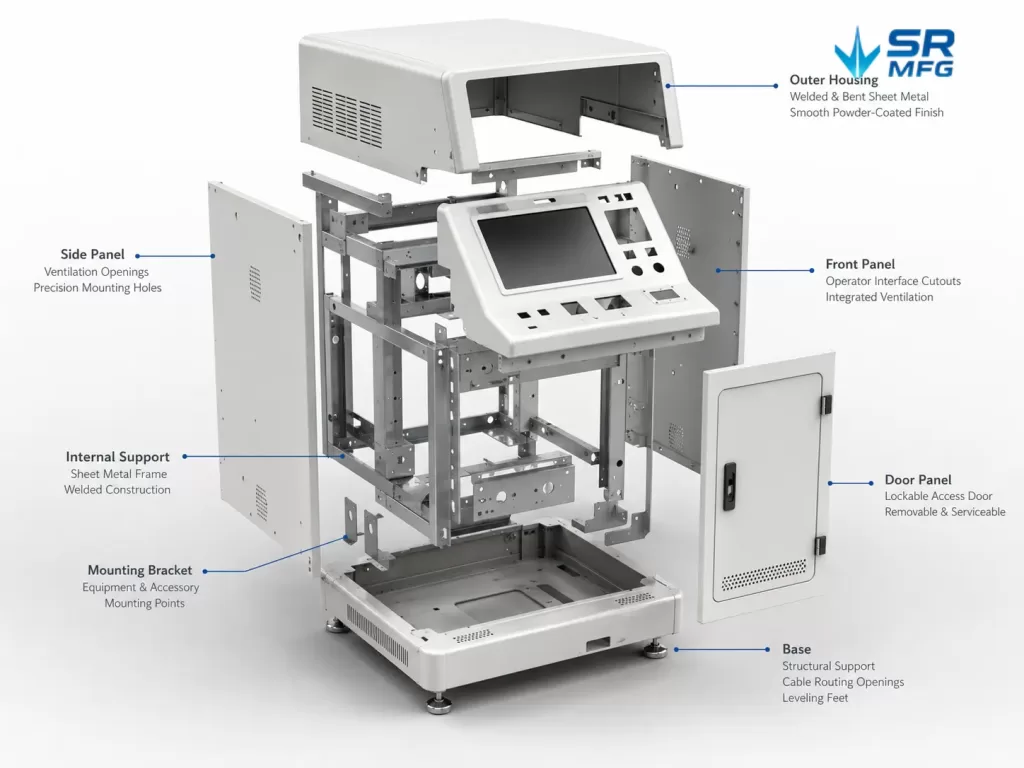
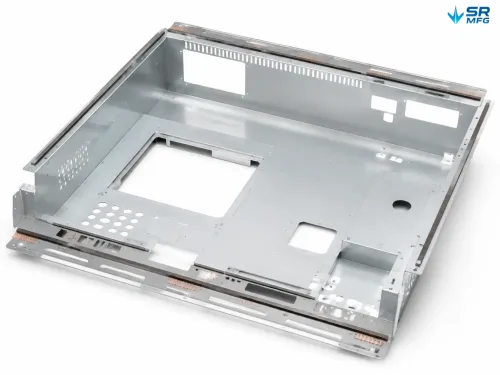
Schematic Diagram of the Chassis Structure of the Medical Equipment Console
Basic Specifications of a Medical Console Enclosure
| Item | Typical Range or Options |
|---|---|
| Materials | Cold-rolled steel, stainless steel, aluminum alloy |
| Sheet thickness | Selected according to enclosure size, strength requirements, and internal equipment layout |
| Enclosure size | Custom based on the application and internal component arrangement |
| Structural type | Welded structure, modular structure, or assembled structure |
| Surface finish | Powder coating, brushed finish, anodizing, and other project-specific options |
| Access features | Doors, removable panels, service openings, operator interface cutouts |
| Hardware options | Hinges, locks, handles, inserts, studs, mounting hardware |
| Assembly support | Sub-assembly or full enclosure assembly support |
| Production stage | Prototype, pilot run, or mass production order |
| Custom features | Cutouts, brackets, internal supports, branding areas, special mounting features |
Common Applications of Medical Console Enclosures
Medical console enclosures are used across a wide range of medical and healthcare sheet metal solutions. Their exact form varies from project to project based on customer requirements, but the core need is usually the same: a reliable, well-fitted enclosure that supports device function and serves operators effectively in the intended environment.
Common application areas include:
- Diagnostic and imaging support consoles
Enclosures for control stations, display units, and operator interfaces used alongside imaging and scanning systems - Medical monitoring equipment enclosures
Housings for bedside monitors, central monitoring stations, and patient data display systems - Laboratory and clinical workstation enclosures
Console structures for laboratory instruments, sample-processing equipment, and clinical analysis systems - Operator control interfaces
Front panels and console housings designed around switches, touchscreens, keyboards, and status indicators - Mobile or fixed medical equipment console structures
Enclosures for wheeled equipment, cart-based systems, or floor-mounted devices
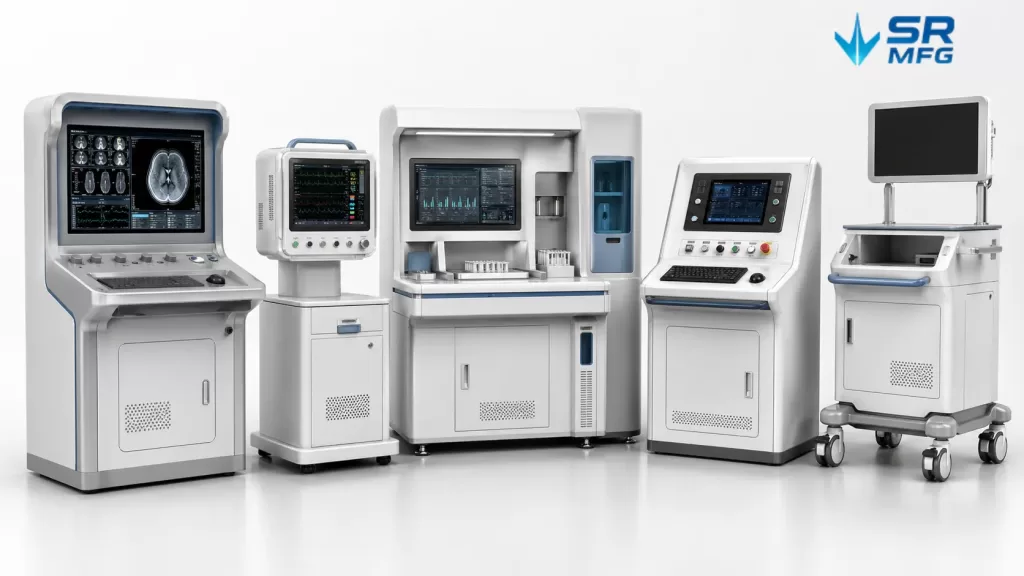
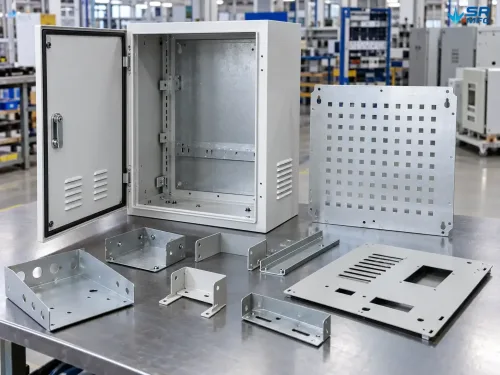
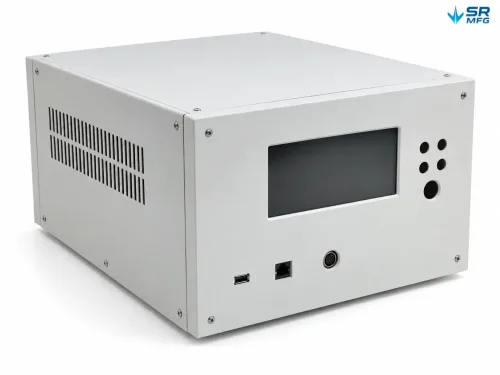
Application Scenarios of Medical Equipment Console Chassis
Material Options for Medical Console Enclosures
During the quotation stage, we review your drawings and application details to determine the most suitable material option for the project. If you already have a defined material specification, we will manufacture according to your requirements. If you are still evaluating options, we can also provide recommendations based on experience from similar projects.
Quick Material Comparison
| Material | Typical Advantages | Common Project Direction |
|---|---|---|
| Cold-rolled steel | Cold-rolled steel for powder-coated console enclosures Good balance of strength and cost | Powder-coated console enclosures |
| Stainless steel | stainless steel sheet metal fabrication for clean medical equipment panels Corrosion resistance and a clean surface appearance | Harsh environments or projects with specific appearance requirements |
| Aluminum | Lower weight and good manufacturability for certain structural parts | Weight-sensitive projects or applications with special surface finish requirements |
Manufacturing Processes
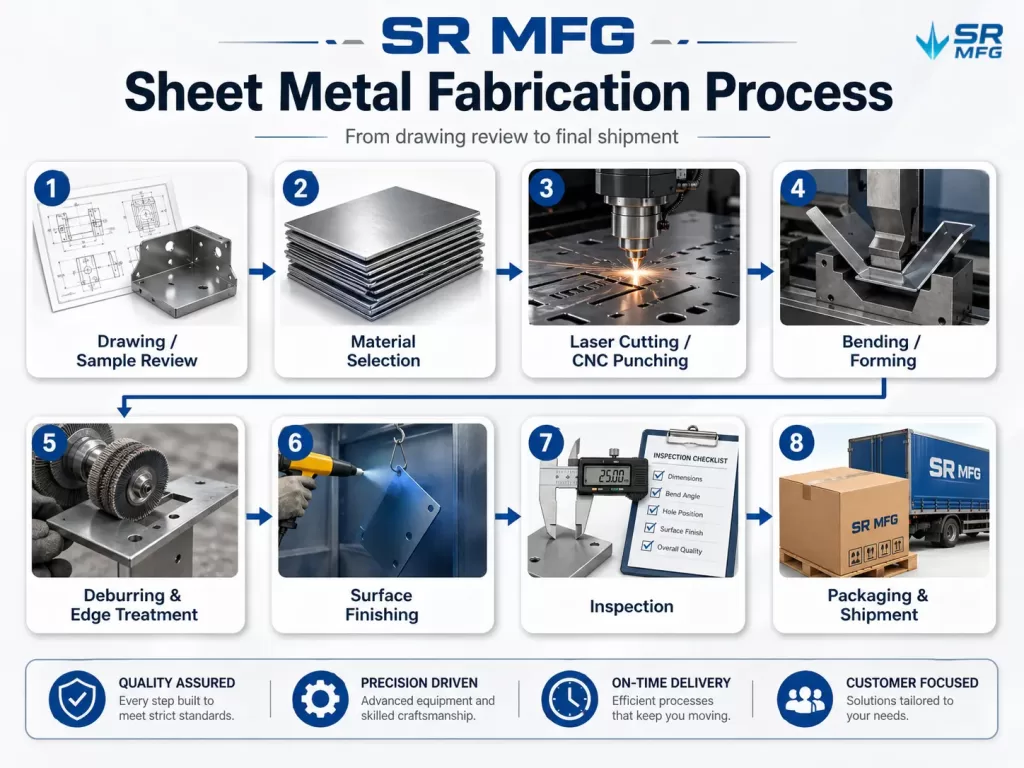
The manufacturing methods used for medical console enclosures are usually selected according to the design requirements, but most projects rely on the following processes:
Laser cutting
Used for precision laser cutting for panel profiles, cutouts and mounting holes, as well as other parts that require high repeat accuracy.
CNC punching
Suitable for repeated hole patterns, louver features, or standardized functional openings.
CNC bending
Used to turn flat cut parts into formed components with the angles, flanges, and contours required for enclosure structures.
Welding
Used to join individual parts into a complete structural assembly according to the design requirements.
Hardware insertion
Used to install PEM nuts, self-clinching studs and standoffs for enclosure parts into enclosure parts.
Mechanical assembly
Used to combine finished components into a complete or near-complete enclosure assembly.
Surface Finish Options and Appearance Requirements
Surface finishing affects more than just the protective performance of a medical console enclosure. It also has a direct impact on the equipment’s appearance and on how easy it is to clean during daily use.
| Finish Type | Typical Visual Effect | Common Project Applications |
|---|---|---|
| Powder coating | Durable coated surface with flexible color options | General medical console exterior parts |
| Brushed stainless steel finish | Clean metallic appearance | Visible stainless steel panels |
| Anodized finish | Controlled surface appearance for aluminum | Aluminum enclosure components |
Custom Options for SR MFG Medical Console Projects
The most common customization options include:
- Custom dimensions and enclosure proportions
Manufactured to your specified width, depth, height, and overall envelope dimensions; - Cutouts for displays, controllers, switches, ports, and connectors
Cut and formed to the exact positions defined in your layout drawing; - Internal brackets, partitions, shelves, and support members
Used to carry PCBs, power modules, mechanical parts, and subassemblies inside the enclosure; - Service doors, removable panels, locks, and maintenance features
Configured around operator and service access needs, allowing internal access without dismantling the entire unit; - Mounting points for electronic or mechanical components
Studs, standoff supports, and tapped holes placed where internal components need to be installed; - Branding areas, label areas, and project-specific appearance details
Space reserved for logos, regulatory markings, product labels, and identification features; - Partial assembly, kitted supply, or more complete enclosure assembly support
Defined according to how much assembly work you want completed before shipment;
FAQ
Can a medical console enclosure be developed based only on customer drawings?
Yes. We regularly manufacture enclosures based on customer drawings. If you already have 2D or 3D files, we can move directly into a manufacturability review and quotation stage. If the design is still in development, we can also work from reference samples or preliminary layout sketches.
Can the enclosure be supplied as a welded structure, an assembled unit, or a modular design?
Yes, all three options are available. The best approach depends on your equipment layout, service access requirements, and installation preferences. Welded structures are suitable for projects that need a single rigid housing, while assembled and modular designs are often easier to maintain and transport. We confirm the most suitable solution during the project review stage.
Can the visible outer panels and the internal support parts use different materials?
Yes. It is very common to use one material or surface finish for the visible exterior panels and another material for the internal brackets and supports. This helps balance appearance, cost, and structural performance. The material combination is reviewed during project planning.
Can you support prototype quantities before a production order?
Yes. We support prototype builds and pilot quantities before full production, so you can confirm fit, appearance, and function before committing to a larger order. Prototype parts are produced using the same drawings and process approach planned for production.
Can special packaging be arranged for finished enclosures with appearance-sensitive surfaces?
Yes. We use protective separation materials, edge protection, and structured packaging methods suitable for appearance-sensitive assembled enclosures. The final packaging plan is confirmed during production review based on the product characteristics and shipping method.