EV Charging Equipment
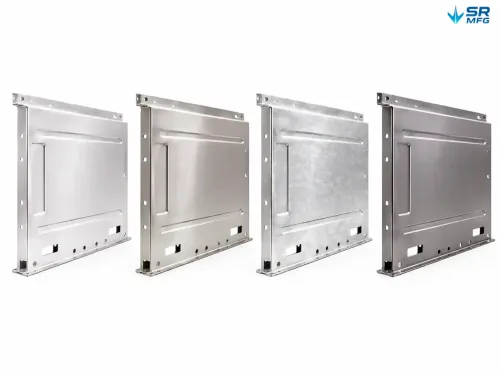
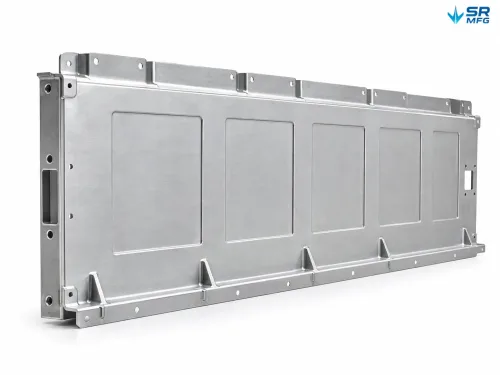
Custom sheet metal enclosures for EV charging stations — wall-mount housings, pedestal cabinets, dual-port enclosures, and floor-standing cabinets fabricated to your drawing. We provide laser cutting, bending, welding, and surface finishing for steel and aluminum charger housings rated for outdoor installation.
- Structure types: Wall-mount, pedestal, dual-port, floor-standing
- Materials: Cold-rolled steel, galvanized steel, stainless steel, aluminum alloy
- Surface finishes: Powder coating, hot-dip galvanizing, anodizing, brushed stainless
- Custom work: Cutouts, internal mounting layouts, logo marking, color matching
- From drawing to delivery: Prototype to mass production with inspection reports
→ Send your drawing or specifications for a custom quote within 2 business days.
Product Details
| Specification | Value |
|---|---|
| Product Type | EV charging equipment sheet metal enclosure / housing / cabinet |
| Enclosure Structures | Wall-mount, pedestal, dual-port, floor-standing |
| Material Options | SPCC cold-rolled steel, SGCC galvanized steel, SUS304/316 stainless steel, 5052/6061 aluminum alloy |
| Material Thickness | 1.0 – 3.0 mm (determined by structural and protection requirements) |
| Max Enclosure Size | Up to 2000 mm (H) × 800 mm (W) × 600 mm (D) per cabinet; larger on review |
| Dimensional Tolerance | Per drawing; standard sheet metal tolerances (±0.2 mm general; ±0.1 mm on critical features) |
| Surface Finishes | Powder coating (RAL), hot-dip galvanizing, liquid paint, anodizing, brushed stainless, passivation |
| Powder Coating Thickness | 50 – 120 μm (verified per batch) |
| Salt Spray Resistance | 200 – 1,000+ hours depending on material and finish combination |
| Protection Structure Options | EPDM / silicone gasket; quarter-turn, padlock, or electronic latch; drainage valve; pressure-equalization vent |
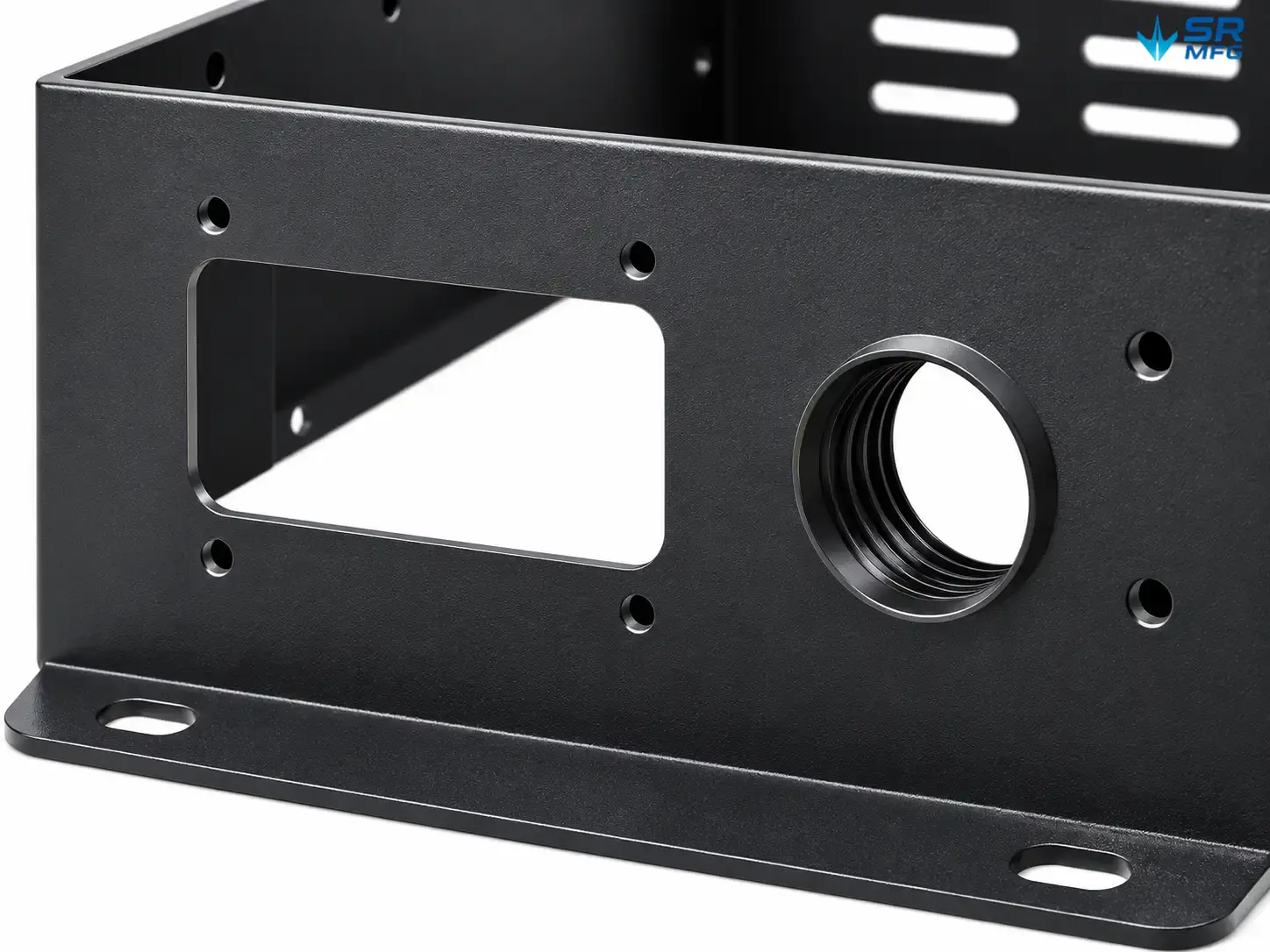
| Cutout Capability | Connector panels, display windows, cable gland holes (PG/M), ventilation louvers, button holes, grounding points |
| Internal Structure Options | Mounting backplate, DIN rail slots, cable management troughs, terminal block areas, fan mounting patterns |
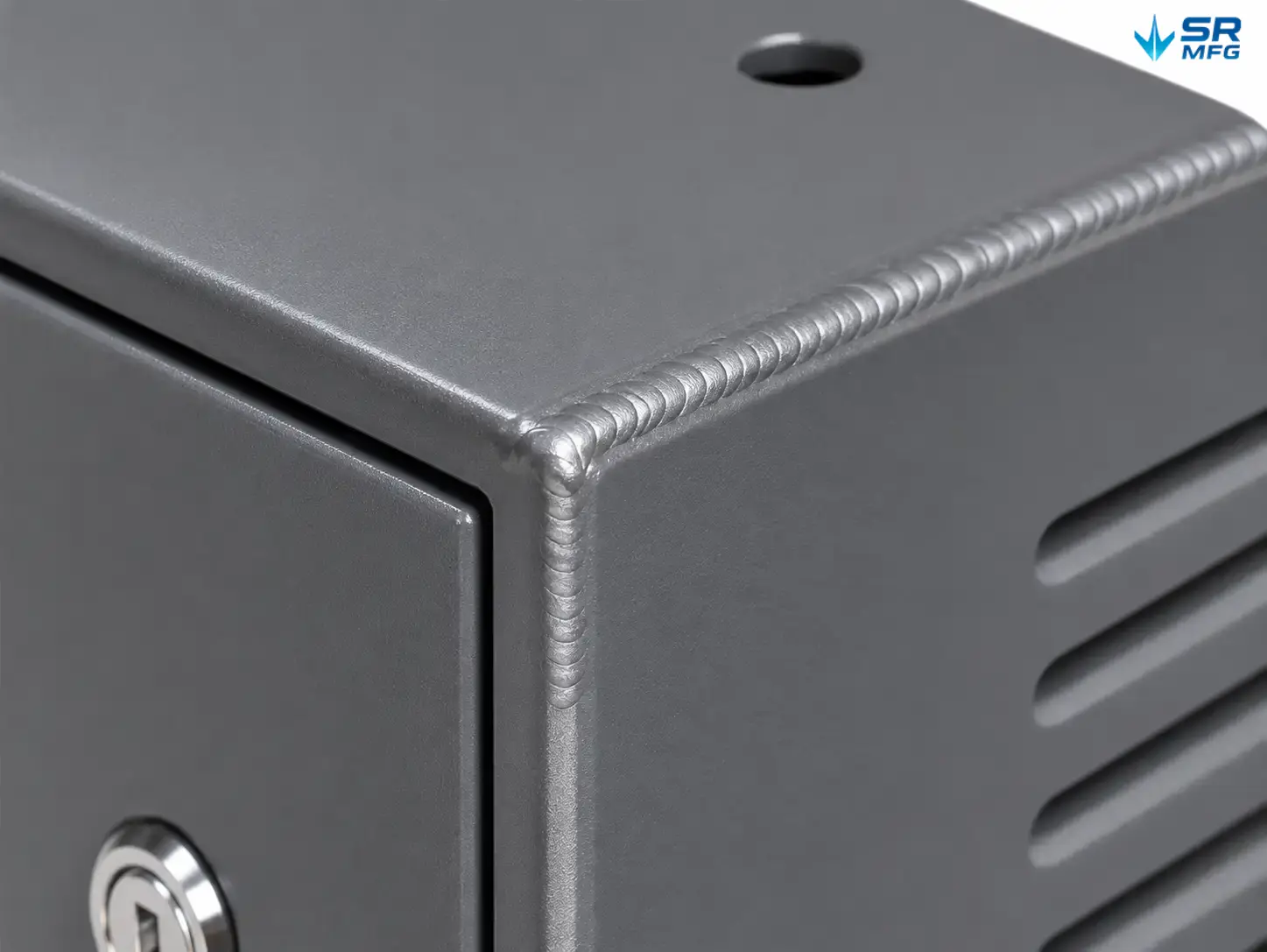
| Welding Methods | TIG, MIG, spot welding (material-dependent) |
| Weld Inspection | Visual per project standard; dye penetrant on request |
| Assembly Hardware | PEM fasteners, weld studs, rivet nuts, hinge assemblies, lock mechanisms |
| Prototype Lead Time | 7 – 15 business days |
| Mass Production Lead Time | 15 – 30 business days |
| MOQ | Project-based; flexible for first orders |
| Drawing Formats | STEP, IGES, DWG, DXF, PDF |
| Packaging | Anti-rust paper, EPE foam corner protection, wooden pallet or crate |
| Quality Documentation | Dimensional inspection reports, coating thickness records, material certificates (on request) |
EV Charger Enclosure Configurations
The enclosure structure you choose determines how the charging station mounts, where cables run, and what protection level it achieves. We manufacture four primary configurations for EV charging equipment:
| Configuration | Typical Application | Structural Notes |
|---|---|---|
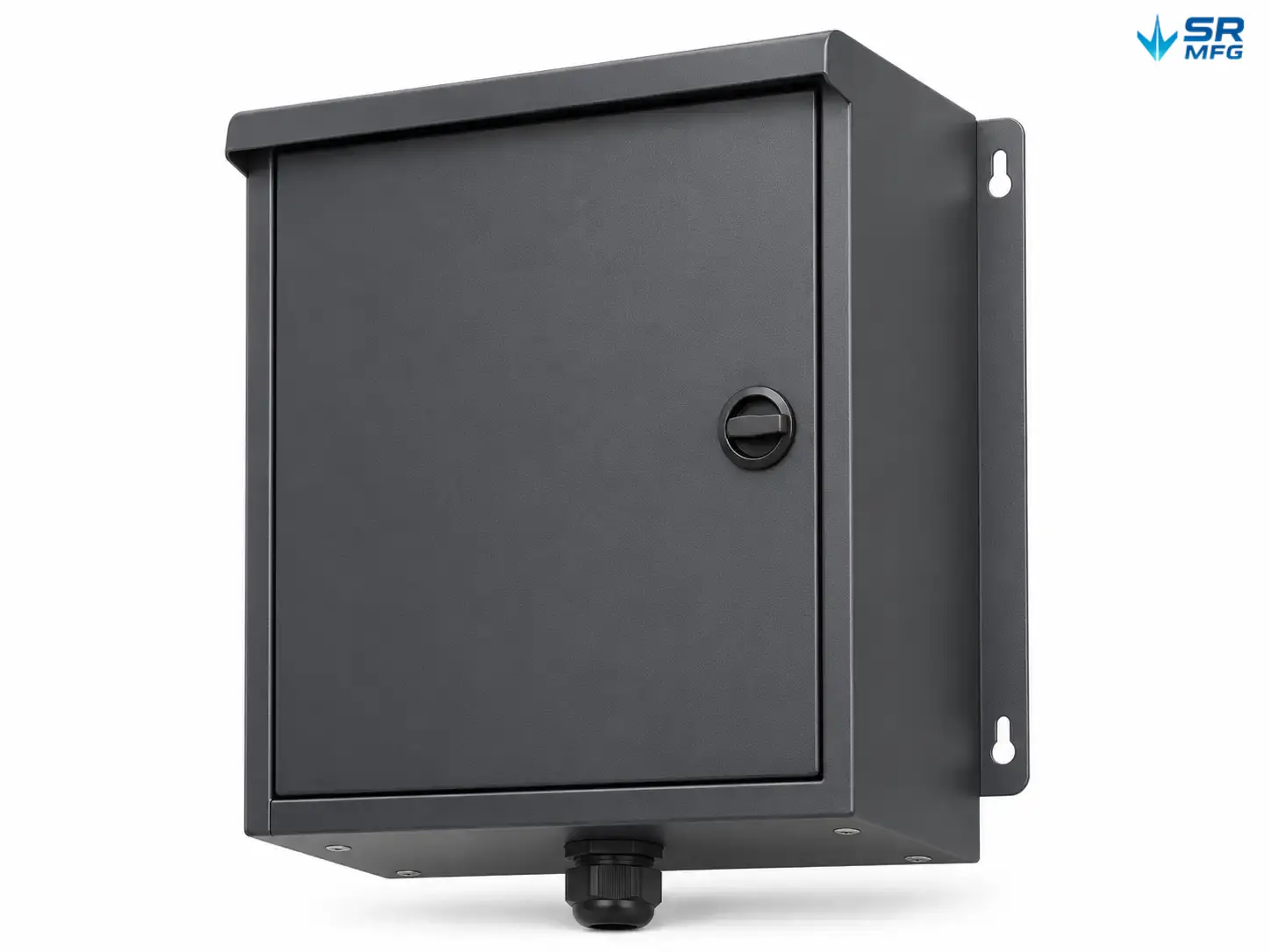
| Wall-Mount Housing | Residential garages, covered parking, indoor stations near walls | Backplate with mounting holes; compact depth; front-access door |
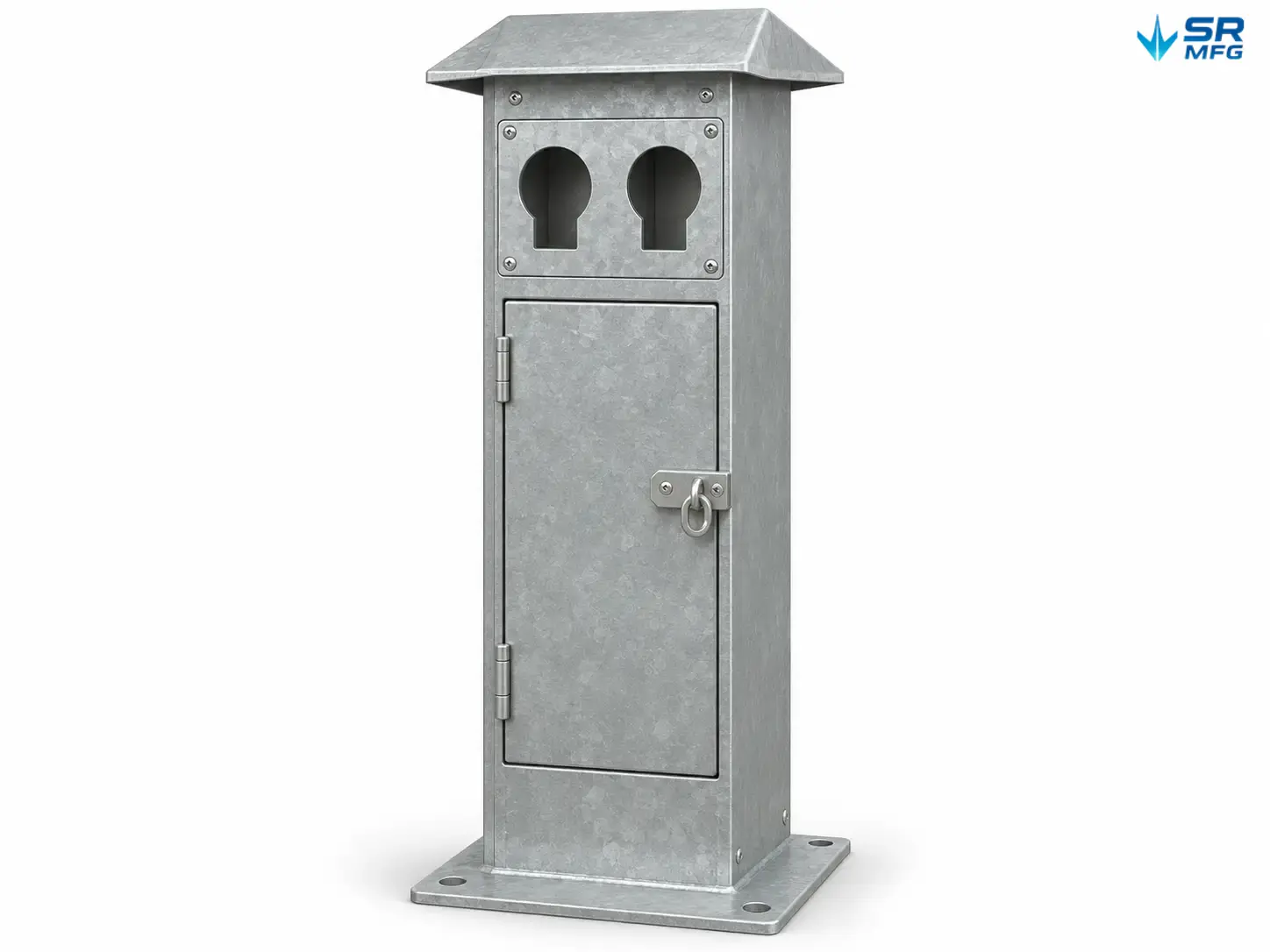
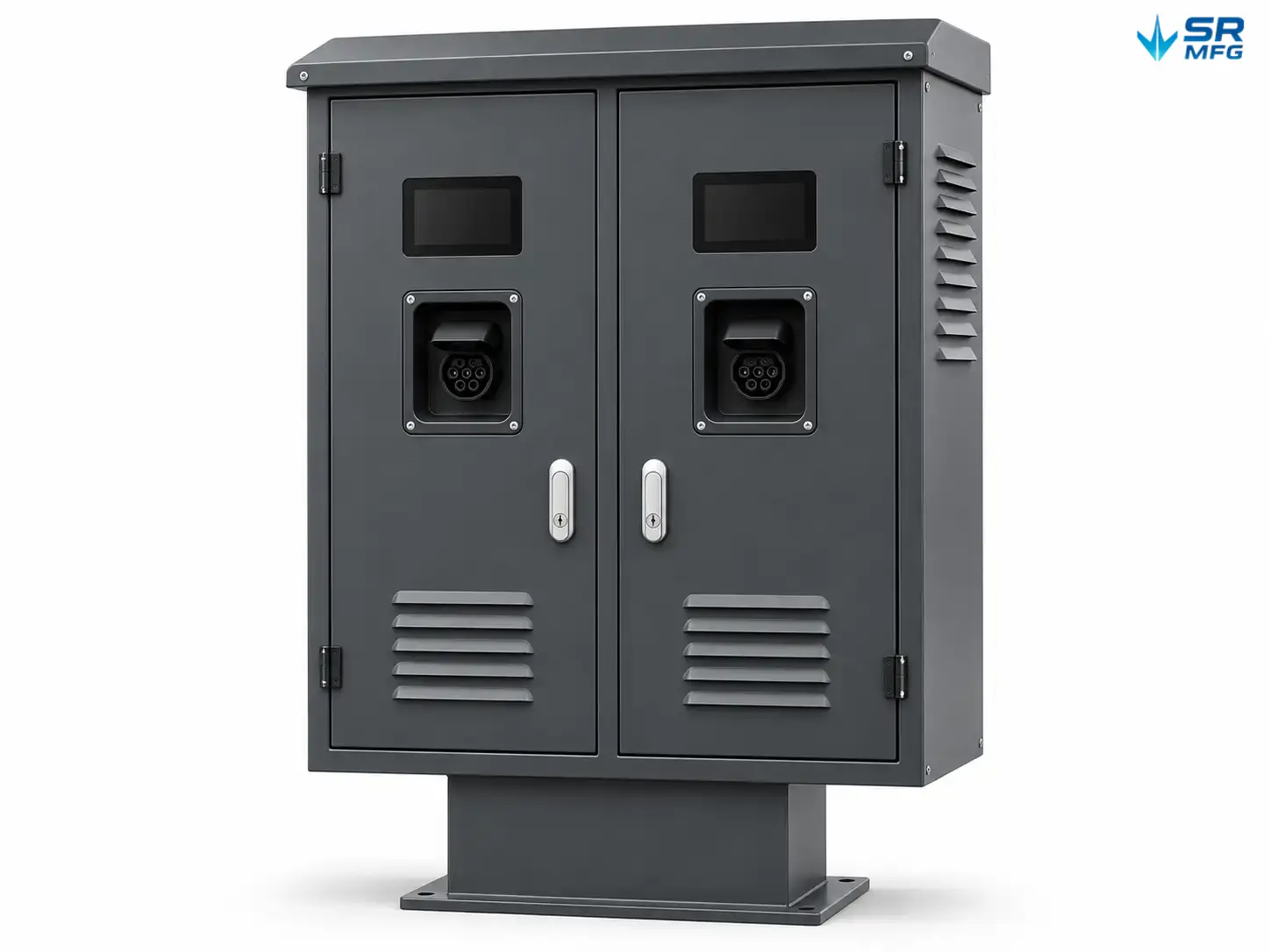
| Pedestal Cabinet | Open-air parking lots, workplace charging, multi-unit housing | Floor-anchored flange; upright column; weather-shielded top |
| Dual-Port Enclosure | Commercial sites, fleet depots — two vehicles charging simultaneously | Central divider panel; dual front panels; shared cable management |
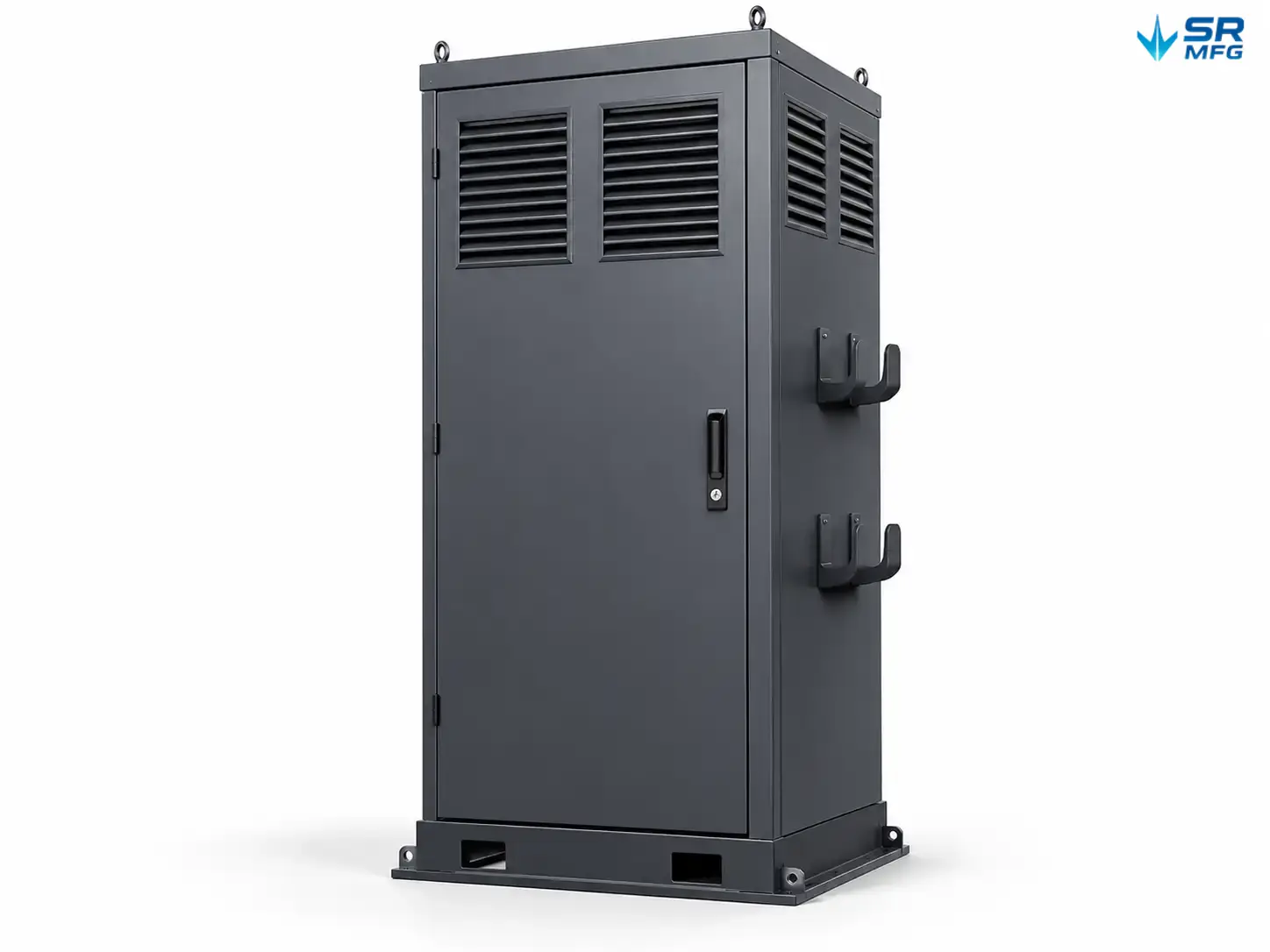
| Floor-Standing Cabinet | DC fast charging, high-power stations, public corridors | Full-height frame; heavy-gauge base; rear or side access panels |
Every configuration can be scaled in height and width to fit your charging module, connector panel, and cable management requirements. Mounting hole patterns, door swing direction, and cable entry locations are set to your drawing.
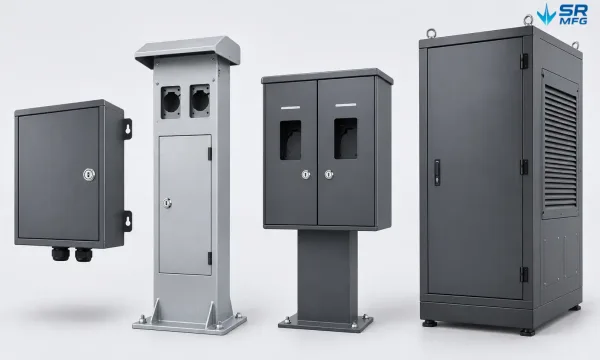
Shows four sheet metal enclosure configurations for EV charging stations side by side: a wall-mount housing, a pedestal cabinet, a dual-port enclosure, and a floor-standing cabinet.
What We Fabricate
We manufacture the metal housing that surrounds your EV charging electronics — not the charger itself. Our enclosures protect the power module, control board, connectors, and cabling from weather, dust, impact, and unauthorized access.
Core fabrication processes:
- CNC laser cutting — precise cutouts for connectors, displays, cable glands, and ventilation. Positional accuracy held to drawing tolerances.
- Precision bending — clean flange edges and consistent angles for doors, panels, and internal brackets.
- Welding (TIG / MIG / spot) — sealed structural joints on steel and stainless enclosures. Weld appearance and penetration inspected per batch.
- Surface finishing — powder coating, galvanizing, painting, or anodizing applied on in-house lines with coating thickness verification.
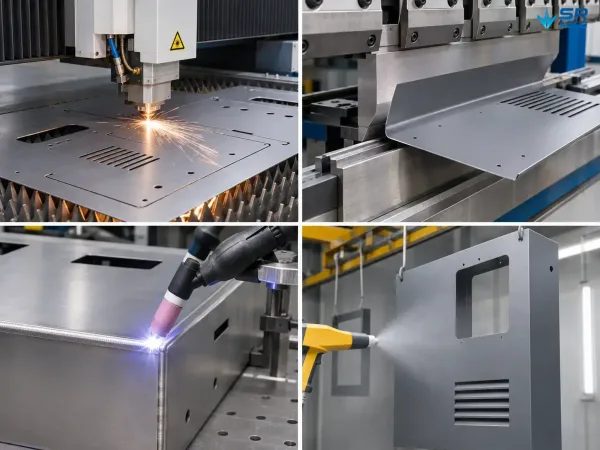
Shows the four core fabrication stages for EV charger enclosures: CNC laser cutting of sheet panels, precision bending, TIG/MIG welding of structural joints, and powder coating application.
We work from your 3D model or 2D drawing. If your design is still in concept stage, our engineers can propose a sheet metal structure that meets your protection and installation requirements.
Materials & Surface Protection
Material and finish selection depends on where the enclosure is installed, how long it needs to last, and what budget you are working with. Below is a practical comparison:
| Material | Strength-to-Weight | Corrosion Resistance | Finish Compatibility | Typical Use |
|---|---|---|---|---|
| Cold-Rolled Steel (SPCC) | High | Requires coating | Powder coat, paint | Indoor or covered installations; cost-sensitive programs |
| Galvanized Steel (SGCC) | High | Good (zinc layer) | Powder coat over galvanized | Outdoor commercial sites; moderate budget |
| Stainless Steel (SUS304) | High | Excellent | Brushed, passivated, electropolished | Coastal or chemical environments; premium appearance |
| Stainless Steel (SUS316) | High | Superior (molybdenum-alloyed) | Brushed, passivated | Marine, industrial, or extreme weather |
| Aluminum Alloy (5052 / 6061) | Moderate | Good (anodized) | Anodizing, powder coat | Weight-sensitive pole-mount; architectural installations |
Surface finish reference:
| Finish | Protection Level | Appearance | Notes |
|---|---|---|---|
| Powder coating | High (50–120 μm film) | Wide RAL color range | Most common for outdoor EV enclosures; impact-resistant |
| Hot-dip galvanizing | Very high | Matte gray | Industrial sites; heavy corrosion exposure |
| Painting (liquid) | Moderate | Custom colors | Lower volume or indoor use |
| Anodizing (aluminum) | Moderate to high | Silver, black, custom | Aluminum enclosures; maintains electrical conductivity |
| Brushed stainless | Cosmetic + inherent alloy resistance | Satin metallic | No coating required; premium look |
For coastal or industrial sites, we recommend stainless steel or galvanized steel with a powder coat top layer. For standard commercial parking, powder-coated cold-rolled steel is the cost-effective choice. We provide salt spray test reference data to support your selection.
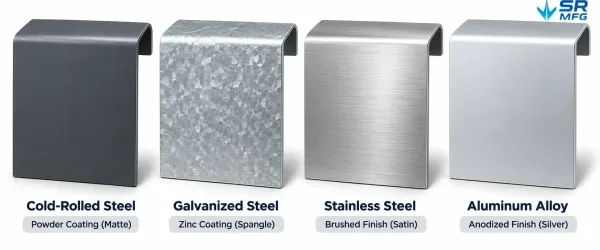
Shows material and finish options for EV charger enclosures: cold-rolled steel with powder coating, galvanized steel with matte zinc surface, brushed stainless steel, and anodized aluminum panels.
Custom Cutouts & Interface Design
EV charging enclosures require precise openings for connectors, displays, buttons, cable glands, and airflow. We cut these features during the fabrication process — no secondary machining needed in most cases.
Common custom features:
- Connector panel cutouts — rectangular or circular openings sized to your connector model and mounting flange.
- Display windows — transparent or open cutouts for LCD/LED status displays, with optional bezel frames.
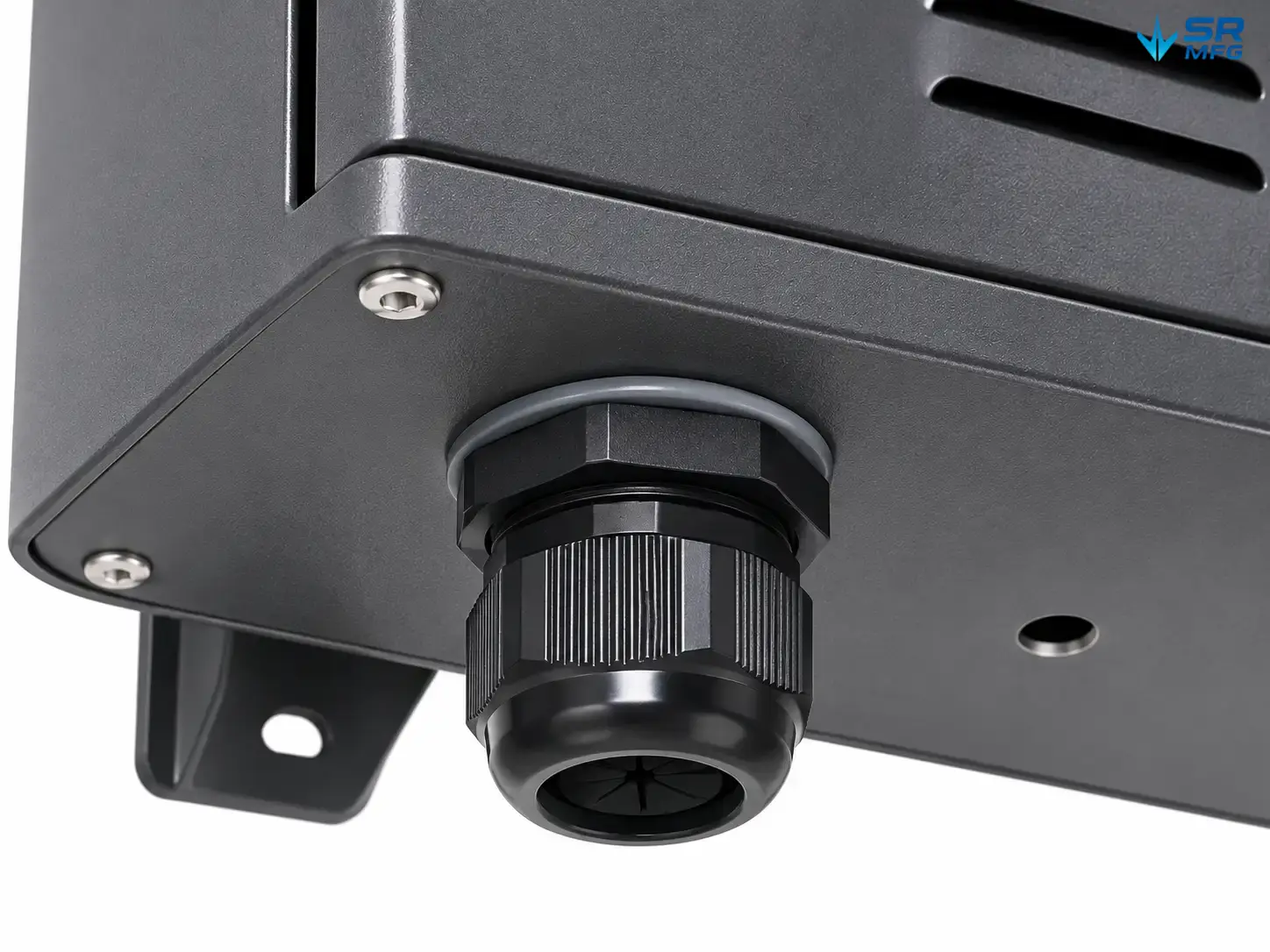
- Cable gland holes — PG or M-series threaded entries for power and communication cables. Sealed with IP-rated glands.
- Ventilation louvers — stamped or laser-cut louver patterns for passive cooling of internal power modules.
- Button and indicator holes — precision-drilled or punched holes for emergency stops, LED indicators, and RFID readers.
- Grounding points — dedicated threaded studs or grounding bars inside the enclosure for electrical safety compliance.
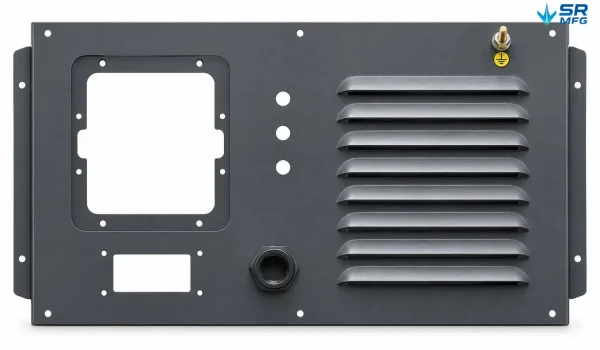
Shows a fabricated enclosure panel with custom laser-cut openings: connector panel cutout, display window, cable gland hole, ventilation louvers, button and indicator holes, and an internal grounding stud.
All cutout dimensions, positions, and tolerances are confirmed against your drawing before production begins.
Internal Structure & Assembly
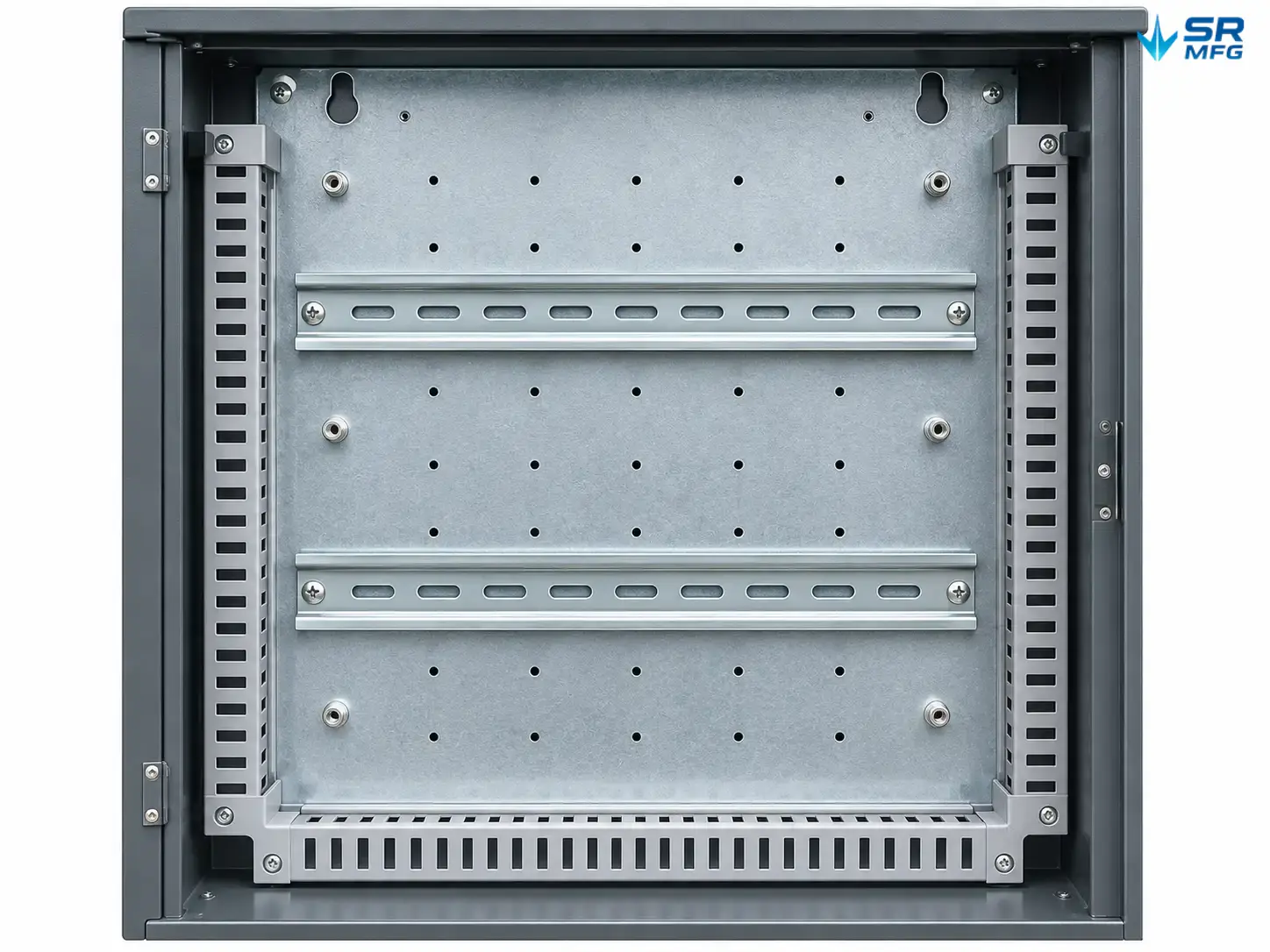
The inside of the enclosure matters as much as the outside. We design and fabricate internal sheet metal components that organize your electronics and simplify field installation:
- Mounting backplates — flat or formed plates that support your power module, contactors, and control boards. Pre-drilled to your component layout.
- DIN rail slots — punched or welded rails for standard electrical components (breakers, relays, terminal blocks).
- Cable management channels — formed sheet metal troughs or brackets that route wiring neatly and prevent chafing.
- Terminal block areas — designated zones with mounting holes for field wiring connections.
- Fan and heat sink mounting — punched fan guards or mounting patterns for forced-cooling assemblies in high-power cabinets.
Internal hardware (PEM fasteners, weld studs, rivet nuts) can be installed during fabrication. We supply matching fastener kits on request.
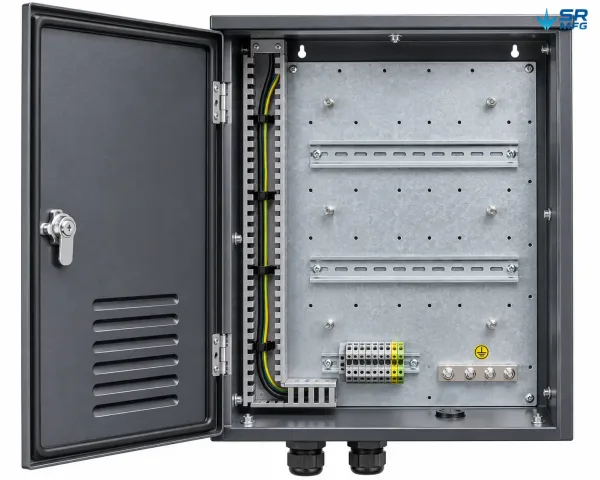
Shows the interior of an EV charger enclosure with a mounting backplate, DIN rail slots, formed cable management channels, terminal block mounting area, and welded PEM fastener studs.
Application Scenarios
Residential & Multi-Unit Housing
Wall-mount housings in powder-coated steel, rated for garage or carport installation. Cable entry from the bottom; compact depth for near-wall mounting. A typical project uses NEMA 3R-equivalent protection with a simple latching door.
Commercial Parking & Workplace
Dual-port pedestal enclosures or wall-mount units with custom connector panels. Galvanized or powder-coated steel handles daily public use. Antivandal lock provisions and IK-rated door panels are available for unattended sites.
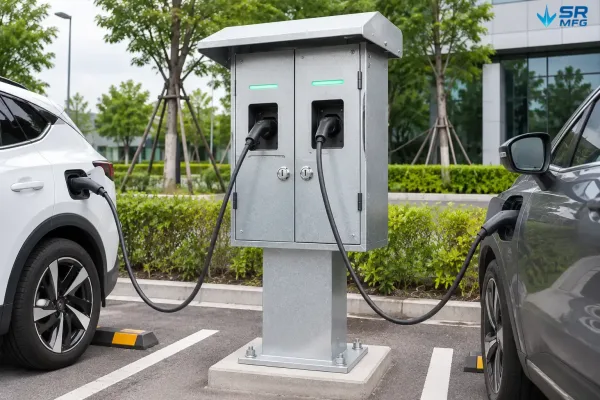
Shows a dual-port pedestal EV charging enclosure installed in an outdoor commercial parking lot, with two electric vehicles plugged in and charging.
Fleet & Logistics Depots
Floor-standing cabinets for multi-charger installations. Heavy-gauge base frames; rear-access panels for maintenance; internal cable management for high-current runs. Stainless steel or hot-dip galvanized for outdoor yards.
Public Charging Corridors & DC Fast Charging
Large-format floor cabinets with high protection ratings. Reinforced frames for wind loading; integrated cable management hooks; drainage and pressure-equalization provisions for exposed sites. Aluminum construction available where pole-mount weight is a constraint.
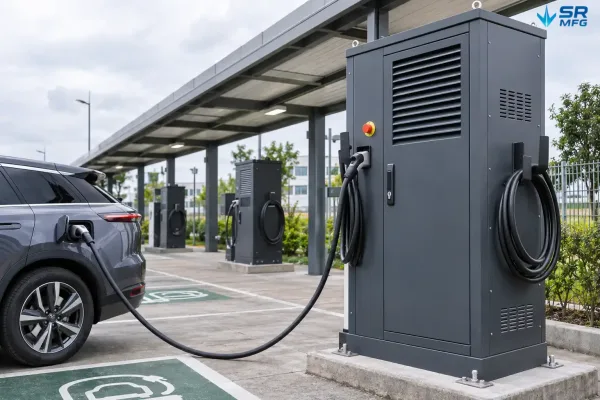
Shows a large floor-standing DC fast charging cabinet installed in a public EV charging corridor, with reinforced frame construction, side ventilation panels, and integrated cable management hooks.
Industrial & Special Environments
Stainless steel enclosures with chemical-resistant finishes for coastal, chemical-plant, or marine-adjacent sites. Custom sealing (multi-layer gaskets) and special cutouts for non-standard connector panels.
Why Partner With SR-MFG
Built to your drawing. Every enclosure is manufactured from your drawing. Dimensions, cutouts, internal layout, and finish requirements are confirmed before the first cut — no guesswork involved.
Full process in one facility. Laser cutting, bending, welding, surface finishing, assembly, and inspection all happen under one roof. This keeps lead times short and dimensional consistency high.
Export-ready packaging. Overseas shipments use anti-rust wrapping, foam corner protection, and wooden crate packing. Packing lists and inspection documents travel with every order.
Sampling before production. We build first-article samples from your drawing so you can verify fit, finish, and function before committing to a production run.
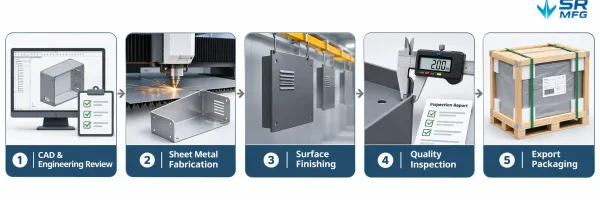
Shows the custom enclosure manufacturing workflow: drawing review, sheet metal fabrication, surface finishing, quality inspection, and export packaging with anti-rust wrapping and wooden crate.