
In just two years, prices for intermediate products in the international tungsten supply chain have risen by about ninefold. Recently, the United States, the United Kingdom, Vietnam, Zimbabwe, and other countries have introduced or proposed changes to tungsten-related policies, intensifying the global competition for tungsten resources.
What Is Tungsten?
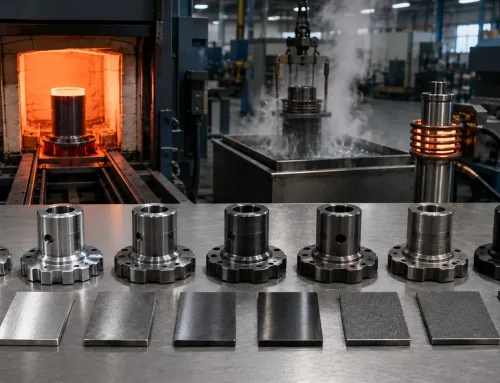
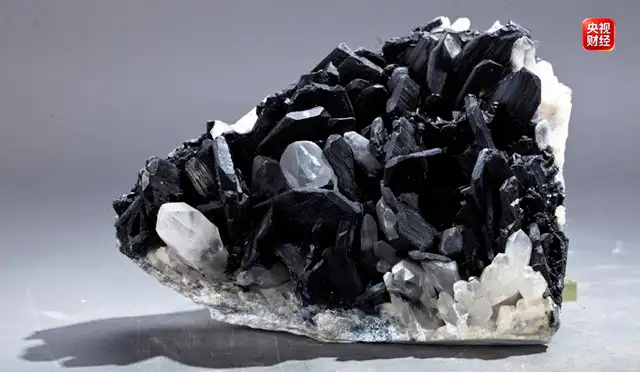
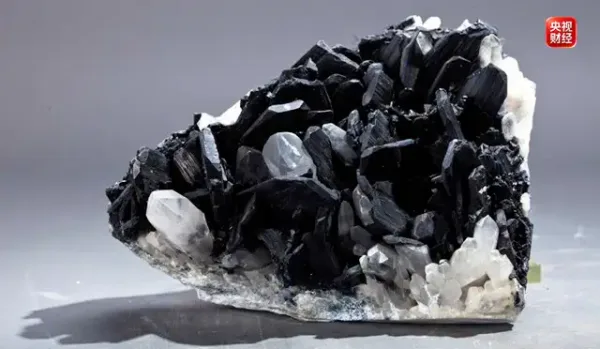
Tungsten is a rare metal with an exceptionally high melting point of 3,422°C, the highest of any naturally occurring metal. Thanks to its extreme hardness, heat resistance, and corrosion resistance, it is often referred to as the “teeth of industry.”
Tungsten is an irreplaceable critical mineral used in defense, semiconductors, and AI computing infrastructure.
According to a report released by S&P Global last month, global tungsten demand, measured in tungsten trioxide, stood at approximately 162,000 metric tons in 2025. Demand is expected to grow by around 2% annually, exceeding 180,000 metric tons by 2030 and reaching 202,000 metric tons by 2035.
Just How Tight Is the Tungsten Market?
As a key intermediate product in the tungsten supply chain, ammonium paratungstate (APT) has experienced a rapid increase in international market prices.
Data show that in mid-2024, APT prices in the Rotterdam market were approximately $300 per metric ton unit. By May 2026, prices had climbed to around $3,000 per metric ton unit — an increase of roughly ninefold in just two years.
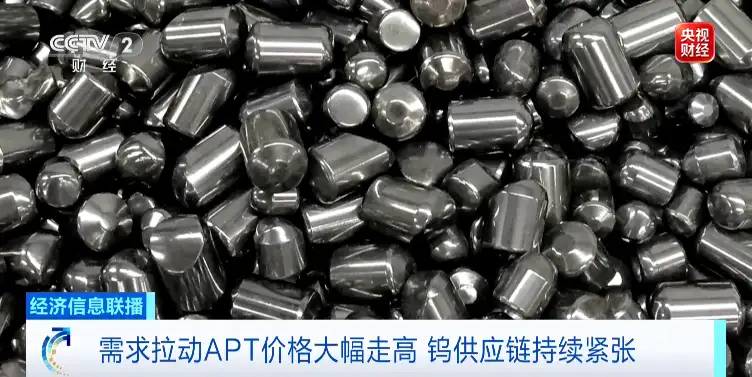
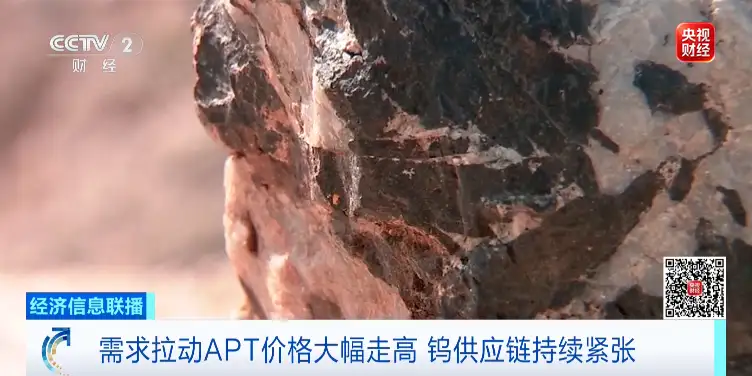
As of early September this year, prices remained elevated at between $2,900 and $3,100 per metric ton unit.
A “metric ton unit” is a pricing unit commonly used for ores, metals, and other commodities, referring to the amount of pure material contained in one metric ton.
Behind the sustained price increase is growing global demand for tungsten resources and mounting pressure on the supply chain.
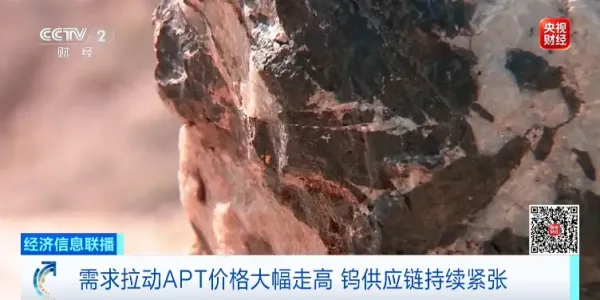
“Demand for Tungsten Is Increasing”
Tungsten has not only become more expensive. Its strategic importance has also risen sharply.
The United States, the United Kingdom, the European Union, Japan, and several other major economies have designated tungsten as a critical mineral and are building strategic reserves.
United States Imposes Export Ban While Domestic Tungsten Mine Output Is Virtually Nonexistent
At the end of August this year, the U.S. government introduced a one-year export ban on tungsten scrap and battery scrap, with the aim of retaining strategic resources domestically. The policy has also directly affected Asian import markets, particularly Japan.
From a resource-supply perspective, the United States has limited domestic tungsten mining capacity. Data show that by 2025, U.S. domestic tungsten mine production had fallen to zero.
In addition, beginning on January 1, 2027, the United States will further tighten restrictions on the procurement of tungsten and other critical metals for defense applications.
However, Reuters reported that as the 2027 policy deadline approaches, domestic U.S. tungsten mining and processing capacity remains clearly insufficient.
European Union Plans to Increase Internal Supply
The European Union has established a framework for strategic critical raw material projects and plans to increase internal supply through mining, processing, and recycling.
United Kingdom Invests in Restarting an Old Mine to Build a Domestic Tungsten Supply Channel
Around the same time that the U.S. ban came into effect, the UK National Wealth Fund announced a major support package.
The fund plans to provide up to £71 million to support domestic mining company Tungsten West in restarting the Hemerdon tungsten-tin mine in Devon.
Once the mine reaches full production, it is expected to produce more than 3,000 metric tons of tungsten concentrate annually.
The UK government also plans to discuss offtake agreements with the company, creating a domestic tungsten supply channel to secure resources for strategic use.
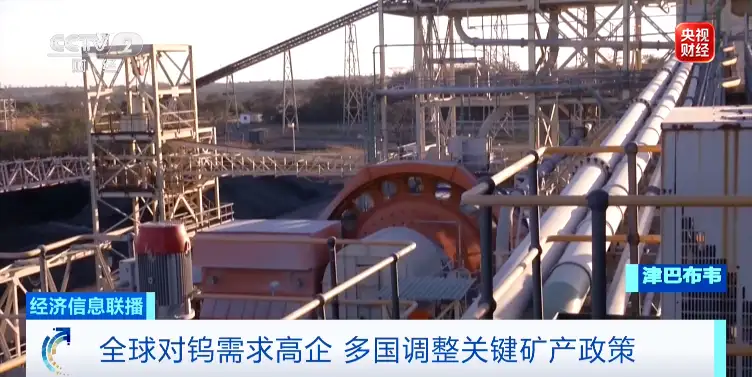
Vietnam and Zimbabwe Tighten Export Policies
It is not only the United States and Europe. A number of resource-producing countries are also tightening controls on tungsten exports.
Vietnam’s Ministry of Industry and Trade has proposed removing tungsten from the list of minerals permitted for export.
The proposal forms part of the country’s draft strategic critical minerals policy. Although no specific implementation schedule has been announced, its core objective is to protect the development of Vietnam’s domestic tungsten deep-processing industry.
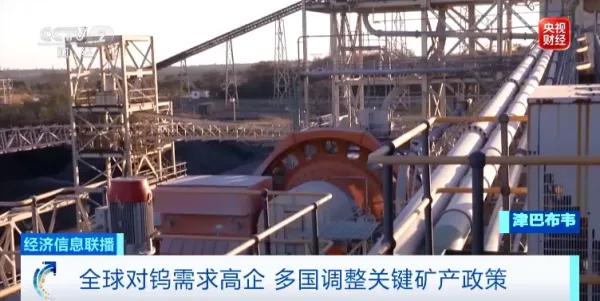
Zimbabwe has adopted even stricter controls, completely suspending exports of antimony and tungsten in all forms.
The country had previously designated antimony and tungsten as critical minerals and explicitly prohibited the direct export of raw ores and minimally processed mineral products, requiring more processing to take place domestically.
China Continues to Dominate Global Tungsten Production
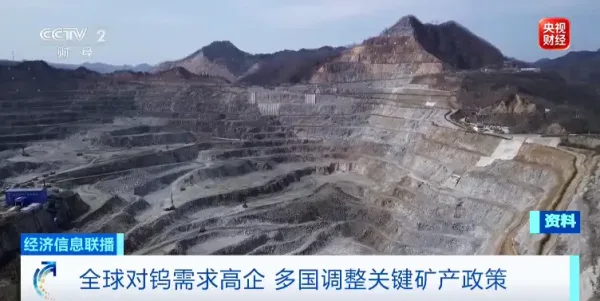
Global tungsten resources are not exceptionally scarce, but production capacity is highly concentrated.
China has long accounted for around 80% of global tungsten mine production.
As tungsten’s strategic importance continues to rise, capital markets are increasingly looking for tungsten assets that can provide “non-single-source” supply alternatives.
Almonty Industries has become one of the companies attracting the greatest investor attention.
The company is a major tungsten producer headquartered in the United States, with tungsten assets in South Korea, the United States, Portugal, and Spain.
- In June this year, the company completed an oversubscribed $800 million convertible bond financing.
- In July, its tungsten processing plant at the Sangdong mine in South Korea officially began operations, entering the tungsten concentrate production and sales stage.
- In August, the company announced plans to repurchase up to $300 million of its shares over the following 36 months.
In the capital markets, the tungsten producer has delisted from exchanges in Australia and Canada, concentrating its trading activity on the U.S. Nasdaq.
On September 11, the company’s shares closed at $15.49.
In early September, Jefferies Financial Group initiated coverage of the company with a “Buy” rating and a target price of $26.25. Analysts said the company plays an important role in the Western tungsten supply chain.
Other companies attracting market attention include Tungsten West in the United Kingdom, EQ Resources in Australia, and American Tungsten in the United States.
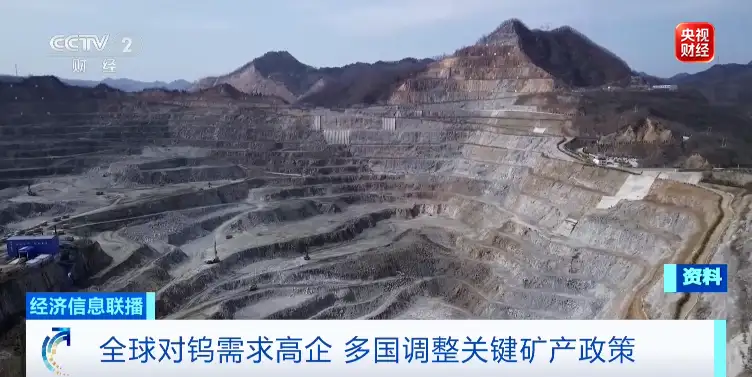
Some analysts have pointed out that investors are not primarily buying these companies based on current financial performance. Instead, they are buying into an investment thesis — and that thesis may be more volatile than the underlying balance sheets.
Industry observers warn that the tungsten supply shock is far from over, while Western efforts to restructure supply chains face high costs and long development cycles.
Competition surrounding this “teeth of industry” metal is likely to continue reshaping the global competitive landscape for advanced manufacturing.
According to the China Mineral Resources Report 2026, recently released by the Ministry of Natural Resources, China ranked first globally in reserves of 14 minerals, including tungsten and tin, as of 2025.
China’s tungsten mine production accounted for nearly 79% of total global output.