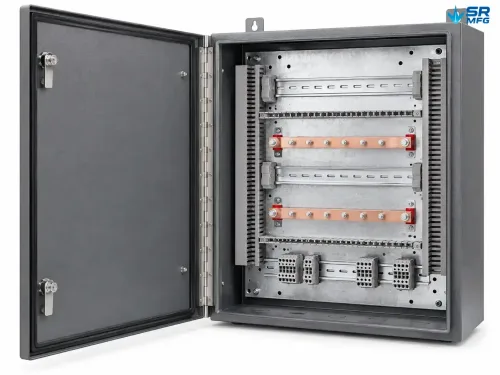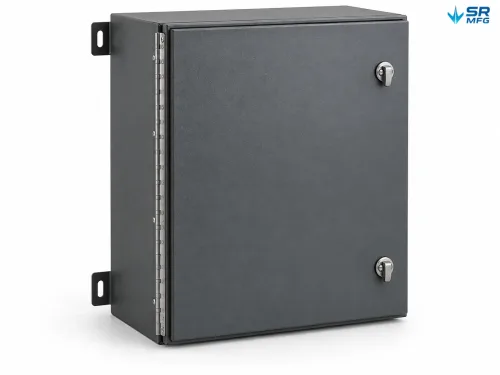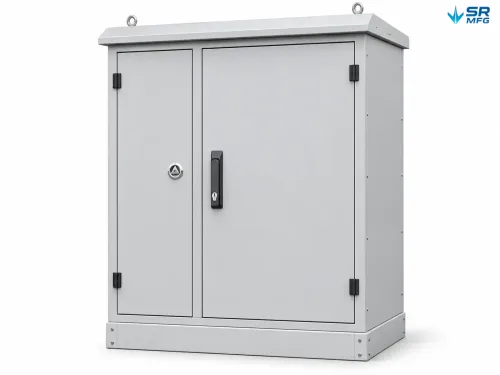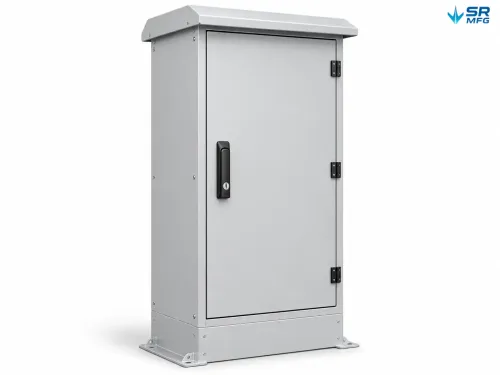
Battery Storage Cabinets
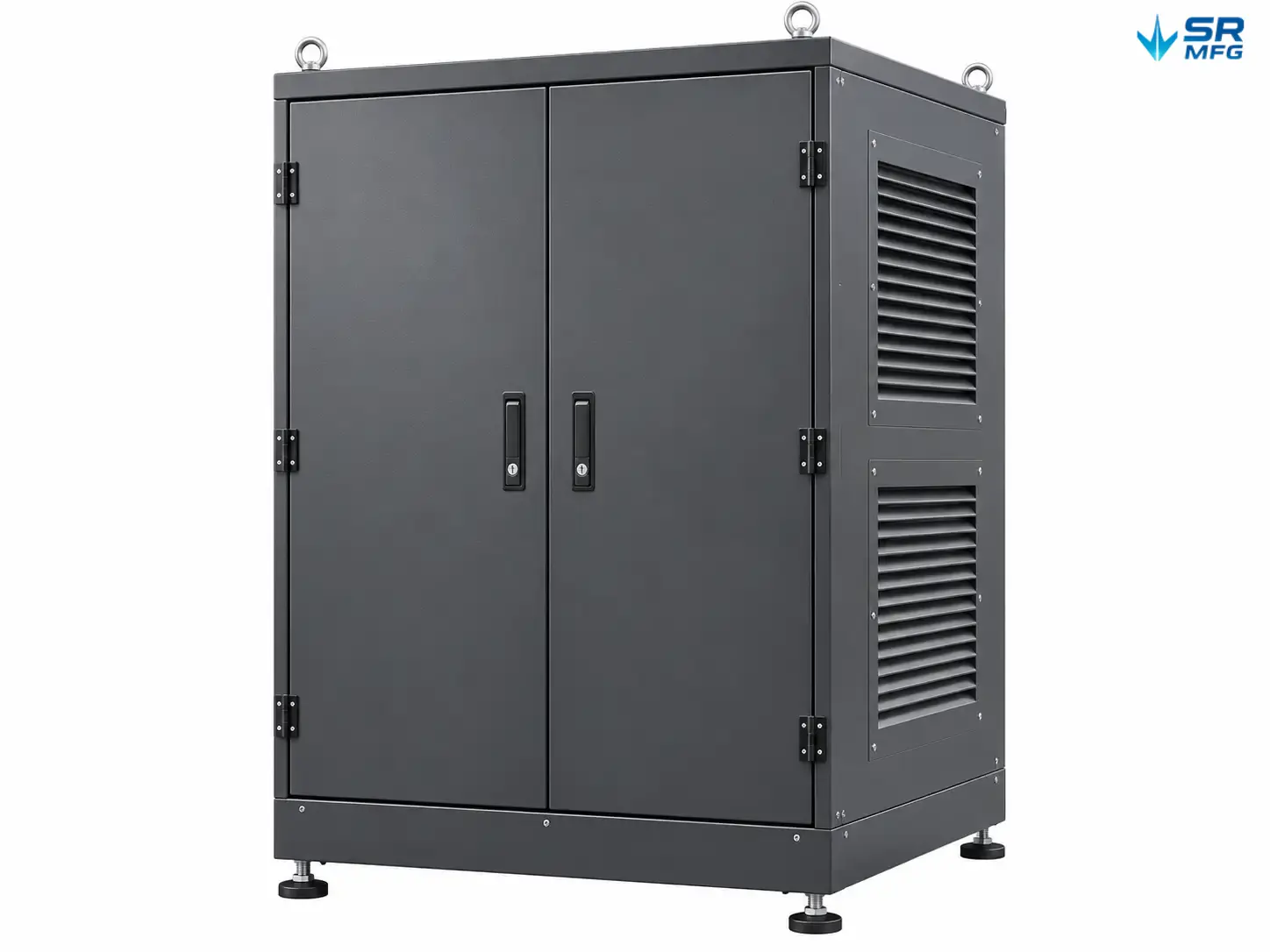
SR-MFG manufactures custom sheet metal cabinets for safe lithium-ion battery storage and charging in industrial environments. Double-wall steel construction with an engineered thermal barrier provides fire containment. Shelf layout, door configuration, ventilation design, and electrical integration are all configurable to your requirements.
- Construction: Double-wall welded steel with engineered thermal air gap
- Configurations: Passive storage / storage & charging / charging with suppression-ready structure
- Manufacturing: CNC cutting, precision bending, welded assembly, powder coating — all in-house
- Custom work: Exterior dimensions, shelf quantity, vent placement, electrical layout, color, and mounting format
- Compliance design: Engineered with reference to applicable workplace battery storage safety requirements
→ Send your drawings or technical specifications for a custom quote within 2 business days.
Product Details
| Specification | Value |
|---|---|
| Product Type | Battery storage / charging cabinet — sheet metal safety enclosure |
| Usage Configurations | Passive storage, storage & charging, charging with suppression-ready structure |
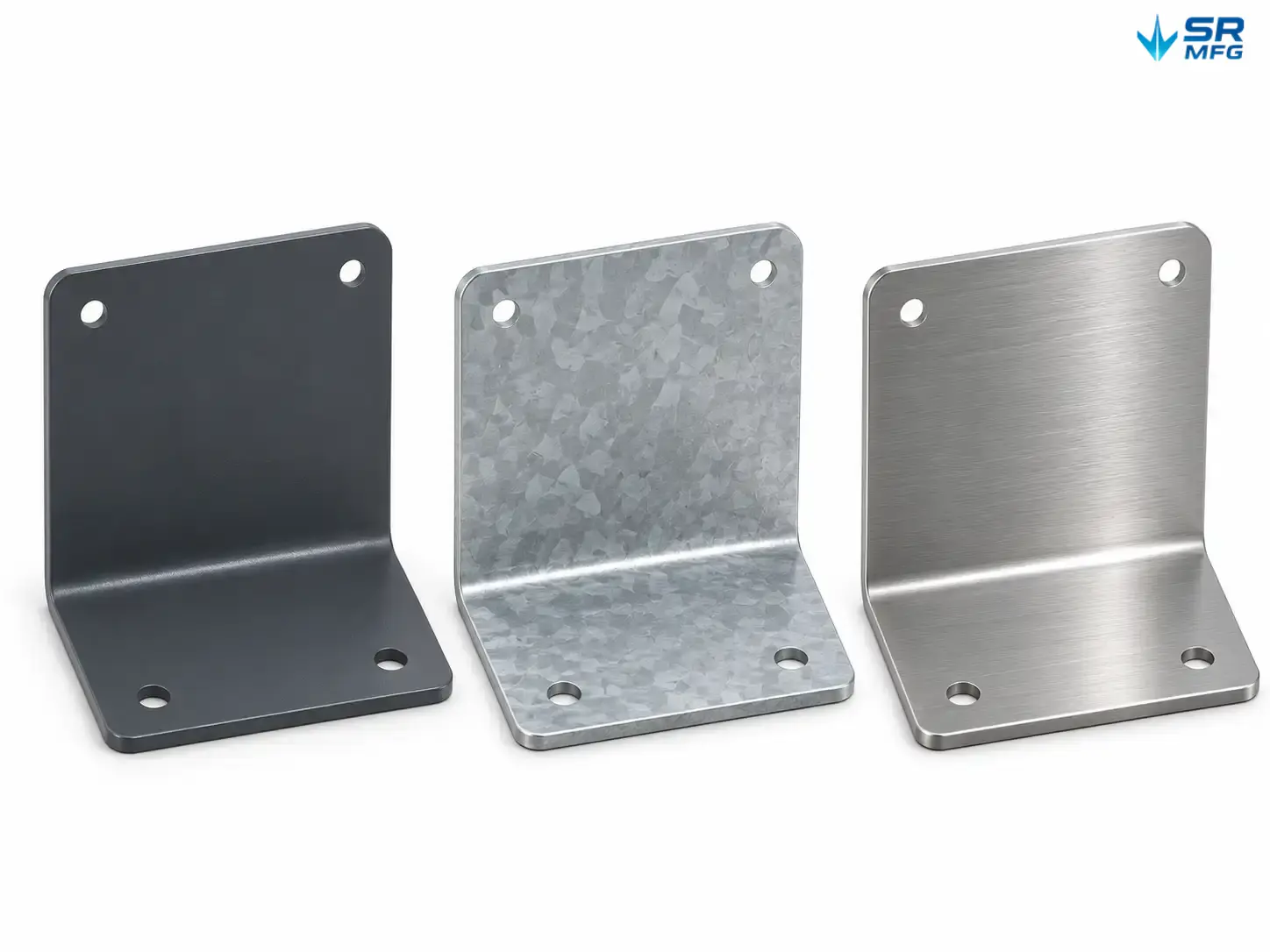
| Body Material Options | SPCC cold-rolled steel / SGCC galvanized steel / SUS304, SUS316 stainless steel |
| Wall Construction | Double-wall with engineered thermal air gap |
| Wall Thickness | 1.0 – 3.0 mm per wall (configured to structural and thermal requirements) |
| Exterior Dimension Range | Customizable per project; standard sizes available |
| Internal Clear Height | Configurable shelf spacing and number of levels |
| Shelf Load Capacity | Per project requirement (standard ratings available on request) |
| Door Options | 1-Door or 2-Door; self-closing (oil-damped) or manual close |
| Door Sealing | Intumescent seals / EPDM gasket / welded flange |
| Locking Options | Key lock, padlock hasp, three-point latch, electronic lock |
| Ventilation Options | Passive louvered vents / fan-ready cutouts / flame-arrestor vent structure |
| Electrical Integration | None / pre-wired power strip / custom layout (breaker, grounding, cable routing) |
| Bottom Containment | Welded liquid-tight sump (sealed weld construction) |
| Installation Formats | Floor-standing / wall-mounted / under-bench / benchtop / outdoor-rated |
| Outdoor Features | Weather-resistant roof panel, drainage provisions, anti-corrosion coating system |
| Surface Finish | Powder coating (RAL color range); custom color; anti-corrosion primer + topcoat system |
| Powder Coating Thickness | 50 – 120 μm (verified per batch) |
| Welding Methods | MIG / TIG / spot welding (material-dependent) |
| Dimensional Tolerance | Per drawing; standard sheet metal tolerances (general ±0.2 mm) |
| Fabrication Capabilities | CNC laser cutting, CNC turret punch, precision press brake, welded assembly |
| Inspection | Dimensional check, door mechanism test, coating adhesion, structural review |
| Quality Documents | Dimensional inspection report, coating thickness record, material certificate (on request) |
| Prototype Lead Time | 7 – 15 business days after drawing confirmation |
| Production Lead Time | 15 – 30 business days (volume-dependent) |
| MOQ | Project-based; flexible for first orders |
| Drawing Formats | STEP, IGES, DWG, DXF, PDF |
| Packaging | Anti-rust wrapping, foam corner protection, export wooden crate or pallet |
| Design Reference | Engineered with reference to applicable workplace battery storage safety requirements |
Product Overview & Application Scope
Battery storage cabinets are purpose-built steel enclosures for the safe containment of lithium-ion batteries in the workplace. They isolate battery stock from surrounding operations, slow thermal event propagation, and provide a controlled environment for storage or charging.
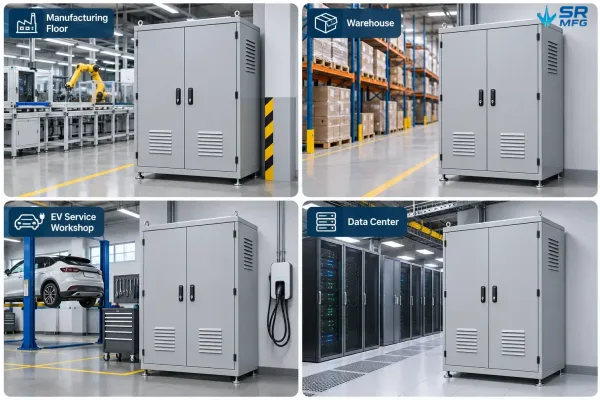
A composite scene showing battery storage cabinets in four industrial settings: a manufacturing floor, a warehouse aisle, an EV service workshop, and a data center equipment room.
These cabinets are suited to the following environments:
- Manufacturing floors — tool battery storage near assembly lines and maintenance stations
- Warehouses & distribution centers — centralized battery inventory for forklifts, scanners, and handheld equipment
- EV service & repair shops — isolated storage of damaged or suspect battery packs
- Data centers & telecom facilities — backup battery staging near UPS and power distribution rooms
- Laboratories & R&D facilities — controlled storage of test cells and prototype battery packs
- Battery charging stations — supervised charging of multiple packs with ventilation and electrical integration
In any of these environments, uncontrolled lithium-ion storage creates both fire risk and compliance exposure. A dedicated battery cabinet addresses both.
Structural Design & Safety Architecture
The cabinet body is a double-wall welded sheet metal structure. An engineered air gap between the inner and outer steel walls slows heat transfer during a thermal event. Gap width and wall thickness are configured to the protection level your application requires.
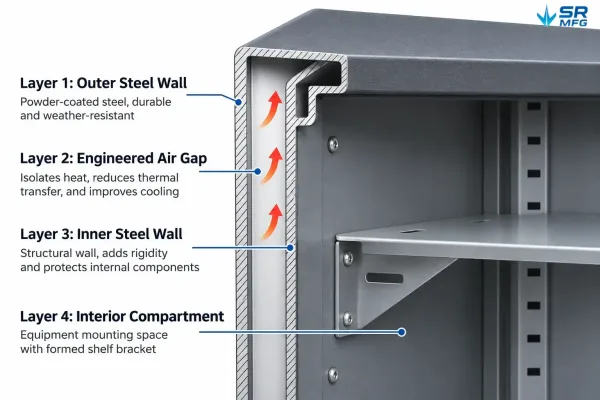
Cross-section view showing the outer steel wall, engineered thermal air gap, inner steel wall, and interior compartment with shelf bracket.
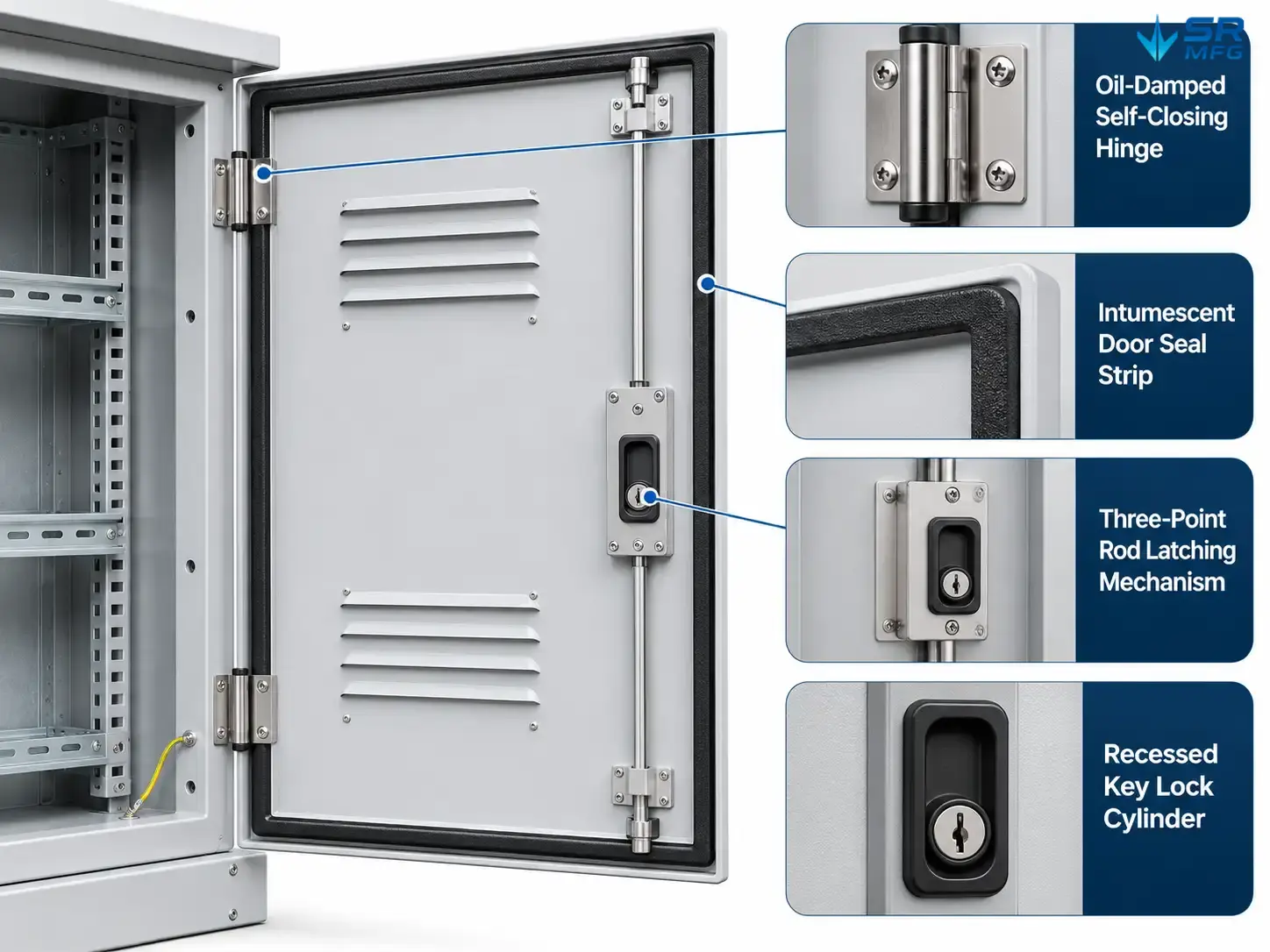
Door system. Doors are fabricated with the same double-wall construction. Self-closing models use oil-damped hinges that pull the door shut without manual action. Intumescent seals around the door perimeter expand under heat, closing the gap between door and frame. Multi-point latching (three-point rod or equivalent) keeps doors sealed under internal pressure.
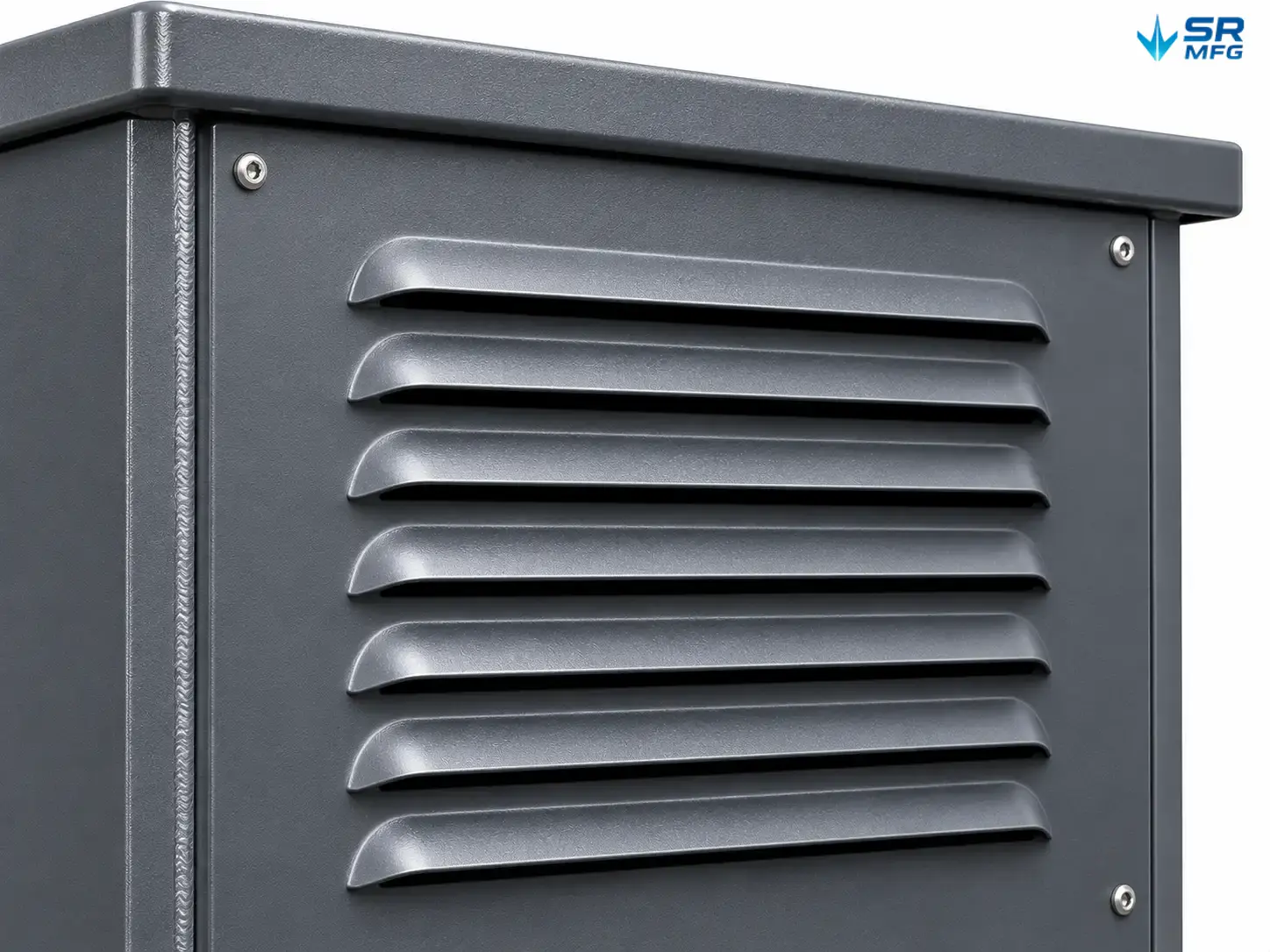
Ventilation & pressure relief. Heat buildup inside a sealed cabinet accelerates thermal runaway. We design passive louvered vents, fan-ready cutouts, or flame-arrestor vent structures into the cabinet walls — positioned and sized to your airflow requirements. Vent openings are laser-cut or punched during fabrication, giving full placement flexibility.
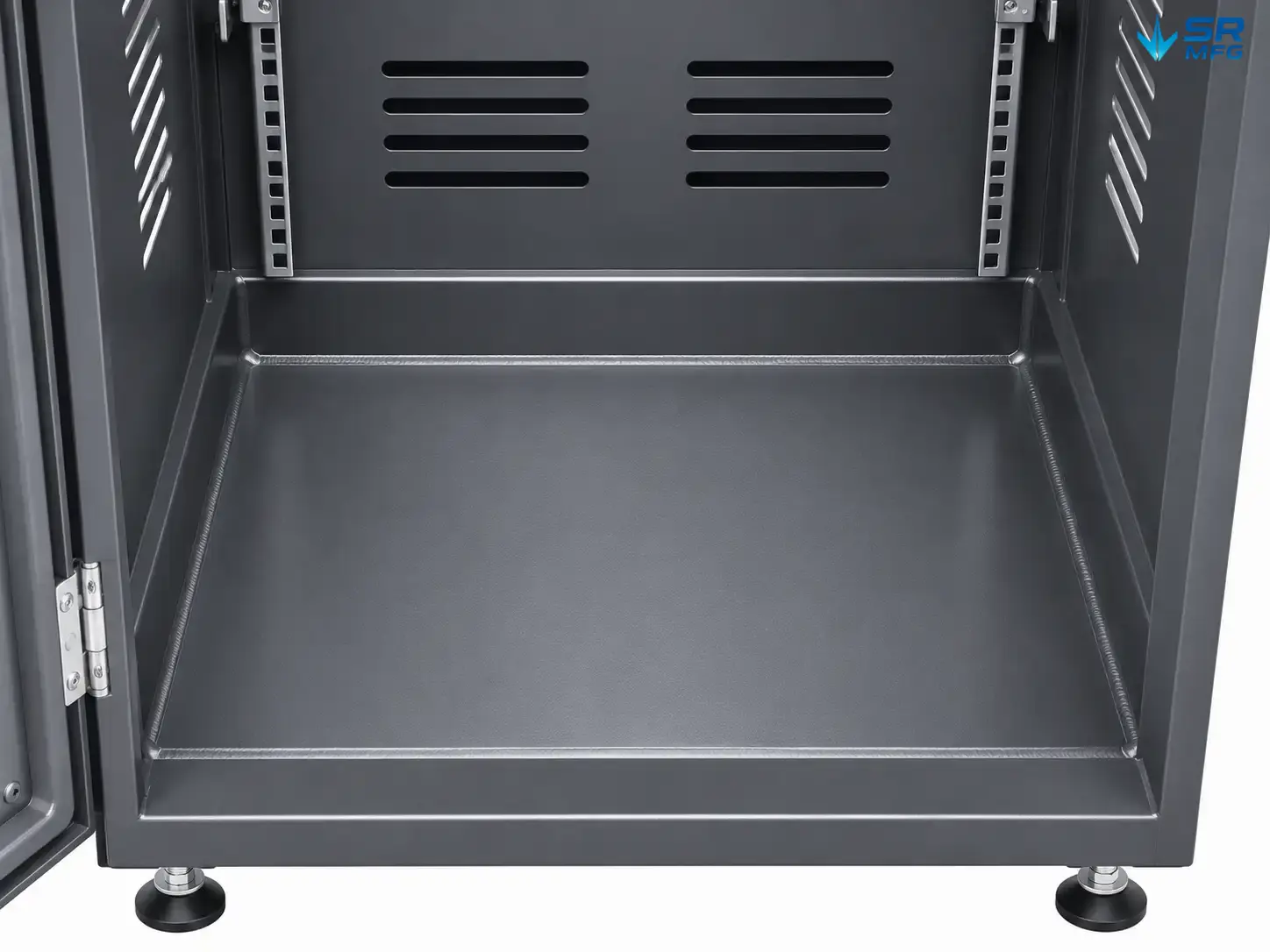
Bottom containment. A welded liquid-tight sump at the cabinet base collects electrolyte leakage or suppression agent runoff. The sump is sheet-metal-formed with sealed perimeter welds — no bolted seams.
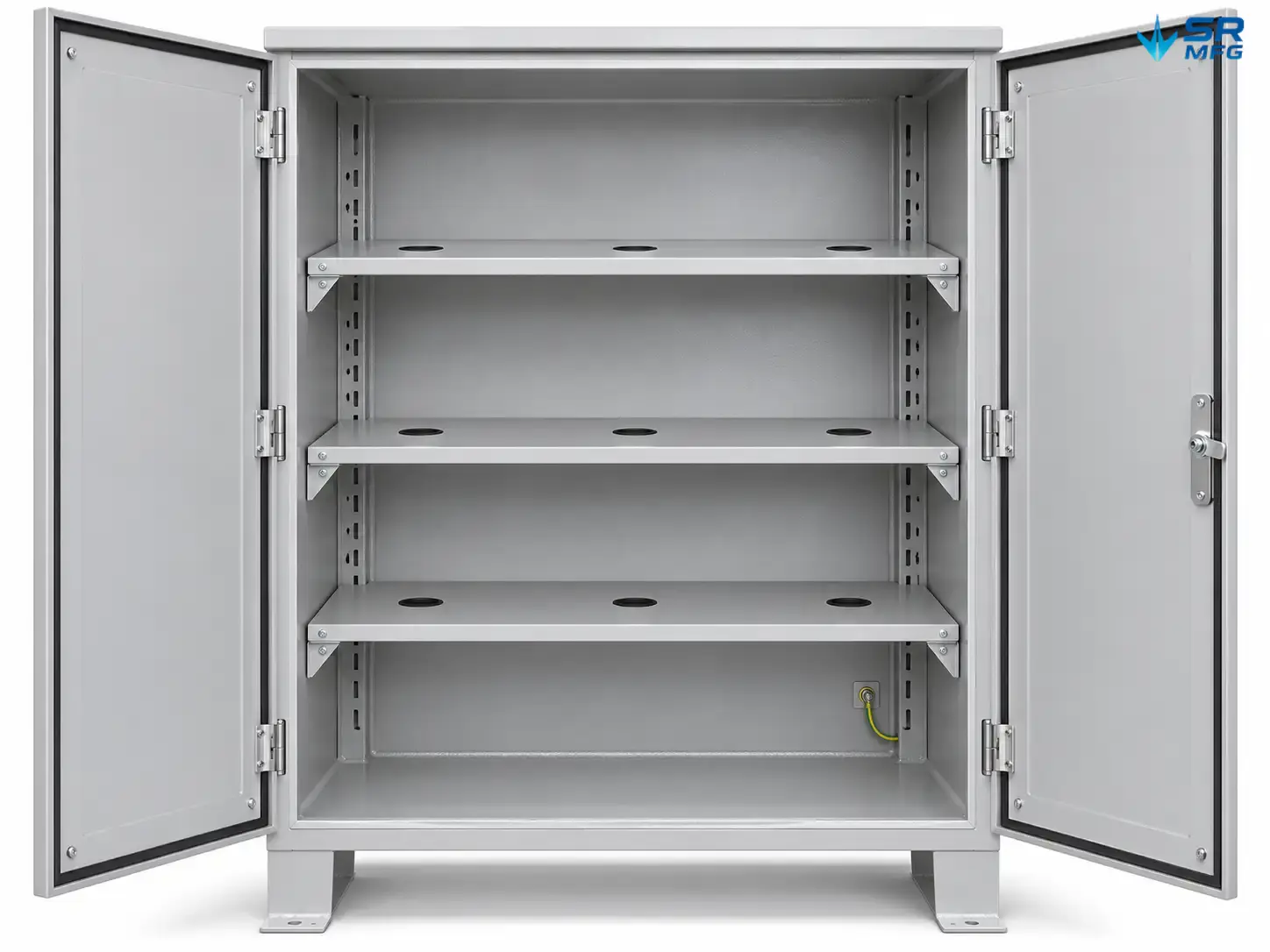
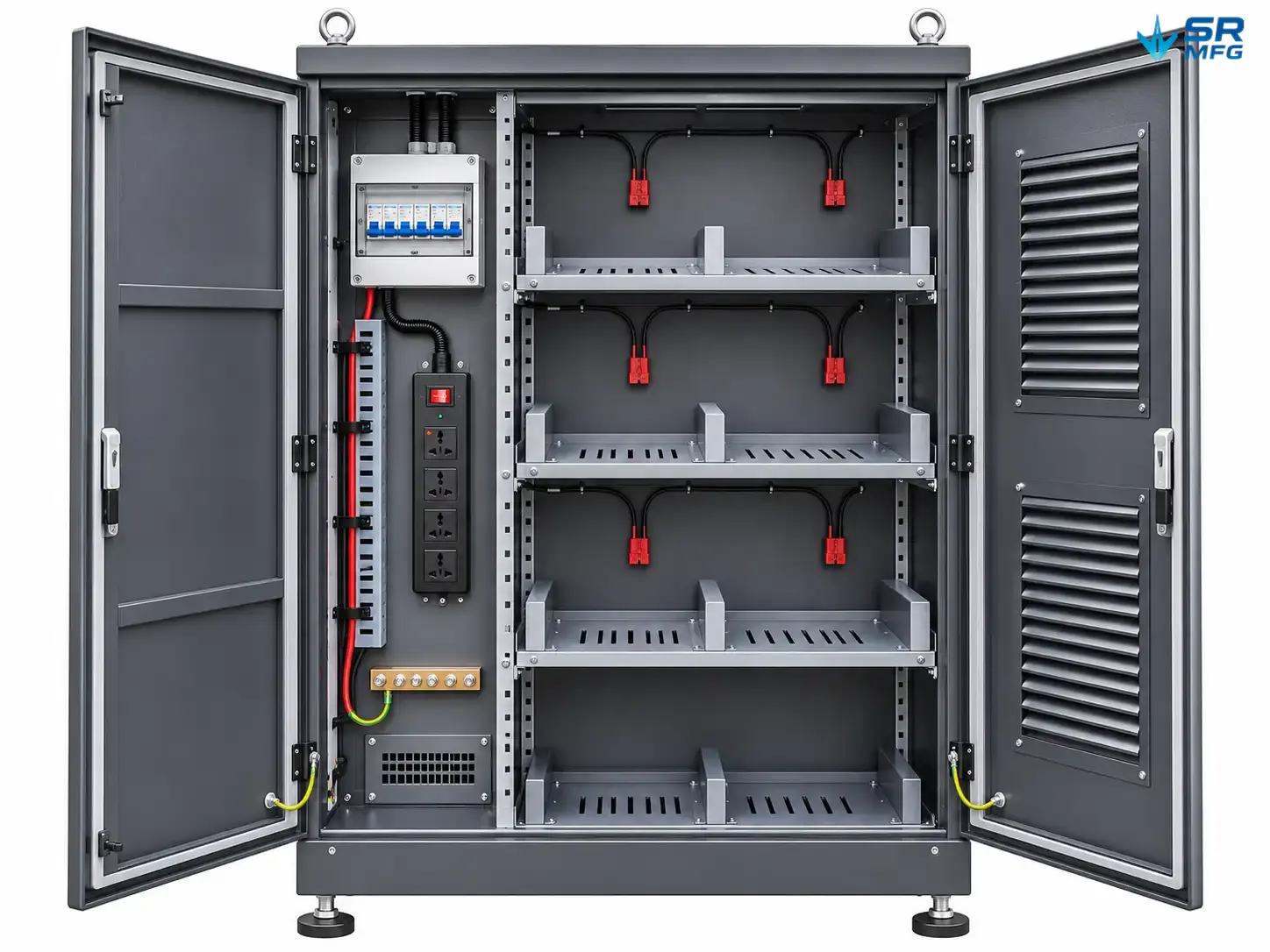
Internal layout. Shelves are supported on formed sheet metal brackets or adjustable rail systems. Spacing, quantity, and load rating are set to your battery dimensions and weight. Cable pass-throughs and grounding points can be integrated into the shelf or wall structure.
Safety System Details
Each safety subsystem in the cabinet addresses a specific failure mode during a lithium-ion thermal event.
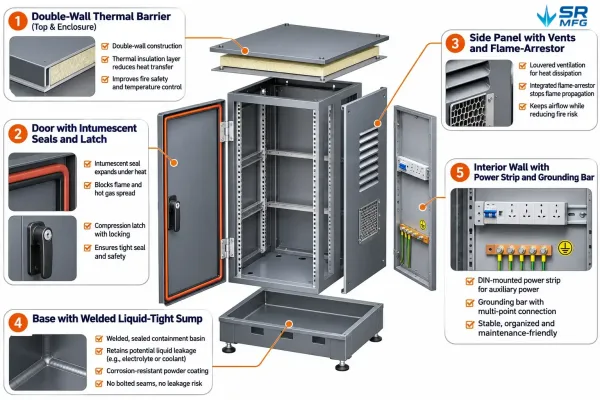
Exploded-view diagram labeling five safety subsystems: thermal barrier walls, door sealing system, ventilation and pressure relief, liquid-tight containment sump, and electrical safety integration.
Thermal Barrier
The double-wall structure delays heat transfer between the inner compartment and the outer shell. Air gap width is engineered to the protection duration your application requires. Wall thickness and gap dimensions are confirmed at the drawing review stage — they are not fixed across all models.
Door Safety System
Self-closing hinges (oil-damped type) prevent the door from being left open. Intumescent door seals expand as surface temperature rises, filling the gap between the door panel and frame. A three-point latching system keeps the door engaged under internal pressure. Key locks, padlocks, or electronic locks control access to battery stock.
Ventilation & Pressure Relief
A sealed cabinet under thermal stress builds internal pressure. Passive louvered vents allow controlled airflow during normal operation. Fan-ready cutouts accept forced-cooling assemblies for charging configurations. Flame-arrestor vent structures (available on request) slow flame propagation along the vent path. Vent position and size are determined by your airflow calculations.
Leak Containment
The welded liquid-tight sump at the cabinet base collects electrolyte leakage or suppression agent runoff. Perimeter welds are sealed — no bolted seams. Sump depth and volume are configured to the quantity and type of batteries stored.
Electrical Safety (Charging Models)
Charging configurations integrate a power strip, cable routing, and optional circuit protection. Grounding points are built into the cabinet structure. Temperature-responsive ventilation control (fan or damper shutdown above a set point) is available as an add-on system. Electrical layout is confirmed to your charger specifications and local wiring requirements.
Manufacturing Process & Quality Control
We manufacture battery storage cabinets as complete sheet metal assemblies — cutting, forming, welding, surface finishing, and inspection all in one facility.
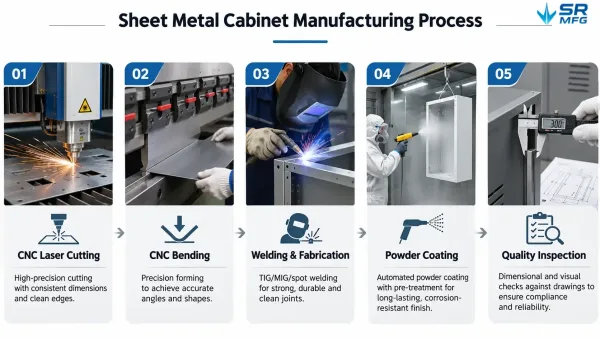
A five-step process flow showing CNC laser cutting, precision press brake forming, MIG/TIG welding, powder coating application, and dimensional inspection of the finished cabinet.
Material selection. Cold-rolled steel (SPCC) is the standard body material for indoor cabinets. Galvanized steel (SGCC) adds zinc-layer corrosion protection for covered or semi-exposed installations. SUS304/316 stainless steel is available for chemical, coastal, or washdown environments. Material grade and thickness are confirmed against structural and thermal requirements.
Forming & welding. Panels are cut on CNC laser or turret punch systems, then bent on precision press brakes. Structural joints are welded (MIG, TIG, or spot) depending on material and joint design. Weld quality is visually inspected per project standard; dye penetrant testing is available on request.
Surface treatment. Powder coating is the standard finish, applied on an in-house line with film thickness verified per batch. Standard RAL colors are available; custom color matching is supported. For corrosive environments, anti-corrosion primer systems and multi-layer coating builds are available.
Inspection. Every cabinet passes dimensional verification against the drawing, door mechanism function test (self-closing, latch engagement, lock function), coating adhesion check, and structural integrity review. Inspection reports and coating thickness records are available with every shipment.
Configuration & Custom Engineering
Battery storage cabinets are rarely one-size-fits-all. The following items are all customizable:
A five-step process flow showing CNC laser cutting, precision press brake forming, MIG/TIG welding, powder coating application, and dimensional inspection of the finished cabinet.
| Custom Dimension | What We Adjust |
|---|---|
| Overall dimensions | Height, width, depth — to your available floor or wall space |
| Shelf configuration | Quantity, spacing, load rating, adjustable or fixed |
| Door setup | 1-door or 2-door, self-closing or manual, hinge position, lock type |
| Ventilation | Vent type, louver size, position, fan-ready cutout layout |
| Electrical integration | Power strip placement, cable routing, breaker mounting, grounding |
| Installation format | Floor base, wall brackets, under-bench legs, outdoor roof |
| Surface & marking | Color, anti-corrosion coating system, silkscreen or laser-engraved labels |
Custom project process:
- Send your drawing, sketch, or written specification
- Our engineers review manufacturability and propose structure options
- You receive a quote covering material, finish, and lead time
- Optional first-article sample for fit and function validation
- Production, inspection, and export packaging
We accept STEP, IGES, DWG, DXF, or PDF files. If your design is not yet finalized, we can develop the sheet metal structure from your battery dimensions and site constraints.
Accessories & Upgrades
| Accessory | Function | Compatibility |
|---|---|---|
| Additional shelf | Adds storage levels; adjustable or fixed bracket type | All cabinet formats |
| Extractor / cooling fan kit | Forced-air heat removal during charging operations | Fan-ready cabinet models |
| Mobile dolly / caster kit | Relocates floor-standing cabinets for layout changes | Floor-standing models |
| Cable management kit | Organizes charging cables; reduces clutter and trip hazards | Charging configurations |
| Suppression module mount | Structural bracket for aftermarket fire suppression units | Suppression-ready models |
| Observation window | Reinforced viewing panel (glass or polycarbonate) in door or side wall | Custom fabrication |
| External label plate | Silkscreen or laser-engraved nameplate (model, warnings, contact info) | All models |
| Lock upgrade | Electronic keypad, RFID, or master-key system | All models |
| Outdoor roof extension | Extended weather hood for protruding fans or vents | Outdoor-rated models |
Accessories are fabricated in-house as sheet metal or hardware assemblies. Specific compatibility per cabinet format is confirmed at the quote stage.
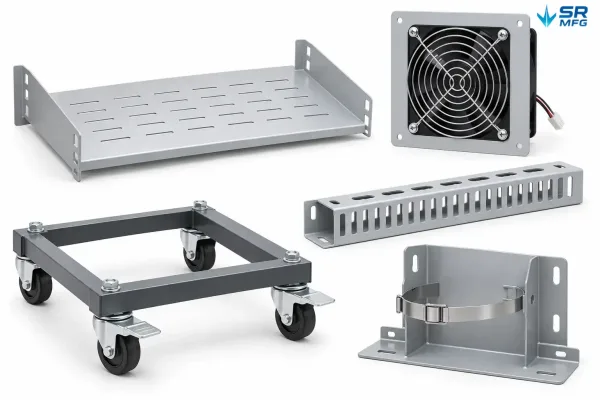
A group shot showing compatible accessories: an additional steel shelf, a cooling fan kit, a caster dolly base, a cable management tray, and a suppression module mounting bracket.
FAQs