Solar Panel Mounting Brackets for Metal, Tile, Flat, RV & Pole Installation
Sheet-metal mounting brackets for fixing framed PV modules to metal roofs, tile, flat surfaces, RV roofs, poles, and strut channels. Available in aluminum alloy, stainless steel, or coated carbon steel, with anodized, powder-coated, or galvanized finishes.
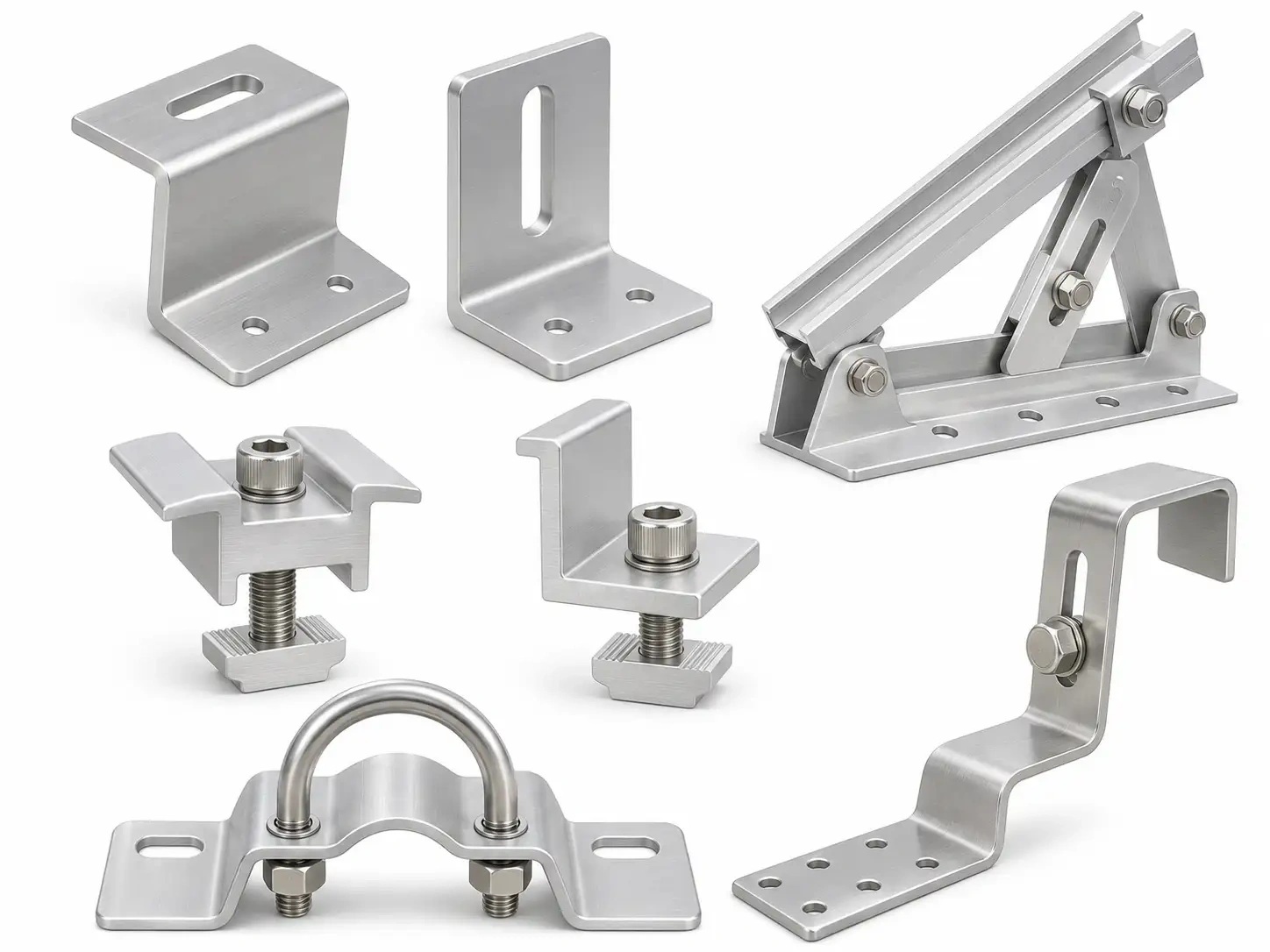
- Bracket range: Z, L, adjustable tilt, mid/end clamps, pole brackets, roof hooks, ballast plates
- Fit: Common framed modules and small-to-mid panels; custom clamp openings to drawing
- Manufacturing: CNC blanking, precision press-brake bending, hardware assembly, surface treatment — all in-house
- Kits: Brackets with matched stainless fasteners; substrate anchors specified to suit
- Custom work: Hole pattern, length, tilt range, finish class, pack quantity, logo, packaging
→ Send panel size, mounting surface, and quantity for a quote within 2 business days.
Product Details
| Specification | Value |
|---|---|
| Product Type | Sheet-metal solar panel mounting brackets and hardware kits |
| Bracket Types | Z, L, adjustable tilt, mid/end clamps, pole brackets, roof hooks, ballast plates |
| Manufacturing Route | CNC laser or turret-punch blanking → press-brake forming → assembly → surface treatment |
| Material Options | Aluminum alloy sheet / SUS304 / SUS316 stainless steel / coated carbon steel |
| Sheet Thickness | 1.5–4.0 mm typical; set by span and duty class |
| General Dimensional Tolerance | ±0.2 mm (non-critical features); critical positions per drawing |
| Bend Angle Control | Per drawing callout; press-brake formed, angle-checked on first article |
| Hole / Slot Position | Blanked in one setup; slot length set to substrate tolerance |
| Surface Finish Options | Mill / anodized / powder coated / black zinc / hot-dip galvanized |
| Powder Coating Thickness | 60–120 μm (batch verified) |
| Anodizing Thickness | 10–20 μm typical (class confirmed per project) |
| Fastener Class | A2 / A4 stainless hardware for bracket-to-panel joints |
| Frame Fit Range | Common framed modules, approx. 30–50 mm frame height; custom openings available |
| Tilt Adjustment | Fixed / slotted adjustable / bolt-locked tilt; angle range per design type |
| Pole / Anchor Interface | U-bolt-class round-pole fit; strut-channel clamps; timber and sheet-metal anchor patterns |
| Load / Duty Class | Set by bracket type, span, and site wind/snow condition; confirmed at quote stage |
| Inspection | Dimensional check, bend and hole verification, coating thickness, visual standard, pack count |
| Quality Documents | Dimensional inspection report, surface thickness record, material certificate (on request) |
| Prototype Lead Time | 7–15 business days after drawing confirmation |
| Production Lead Time | 15–30 business days, depending on quantity and finish |
| MOQ | Project-based; prototypes and small batches supported |
| Drawing Formats | STEP / IGES / DWG / DXF / PDF |
| Packaging | Labeled sets, anti-rust wrap where required, export cartons and pallets |
Designed Around How PV Modules Are Actually Fixed
A mounting bracket is the load path between a PV module frame and whatever holds it: roof sheet, rafter, pole, strut, or ballast base. Ours are sheet-metal parts — blanked, bent, and finished in-house — sold as single brackets or matched kits.
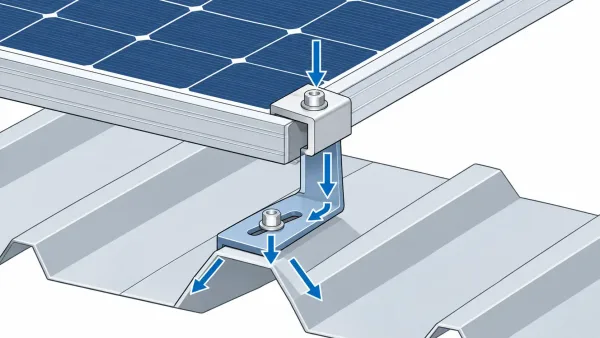
A diagram showing a framed solar module mounted on a roof surface, with the sheet-metal bracket highlighted as the load path between the module frame and the roof structure.
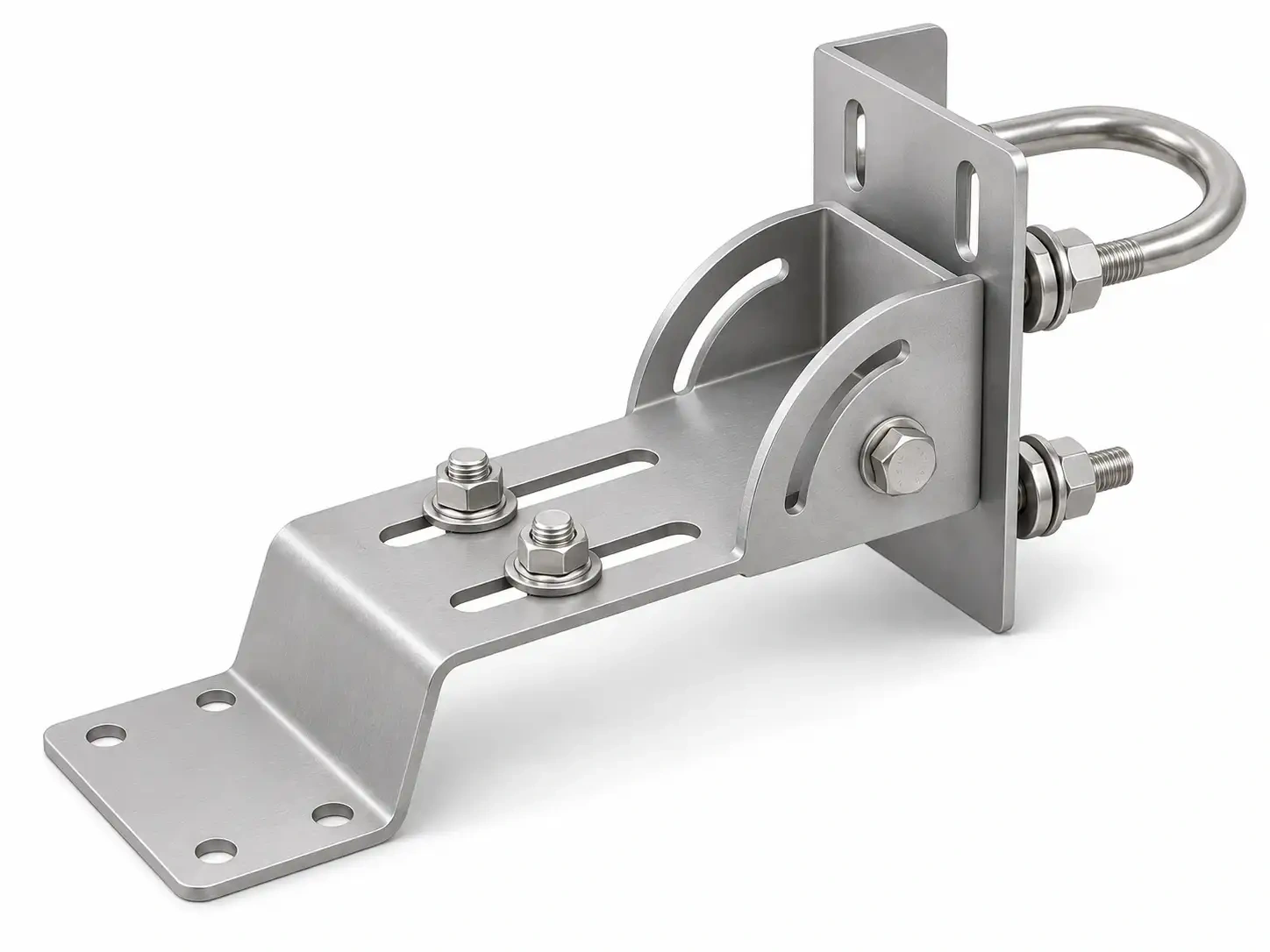
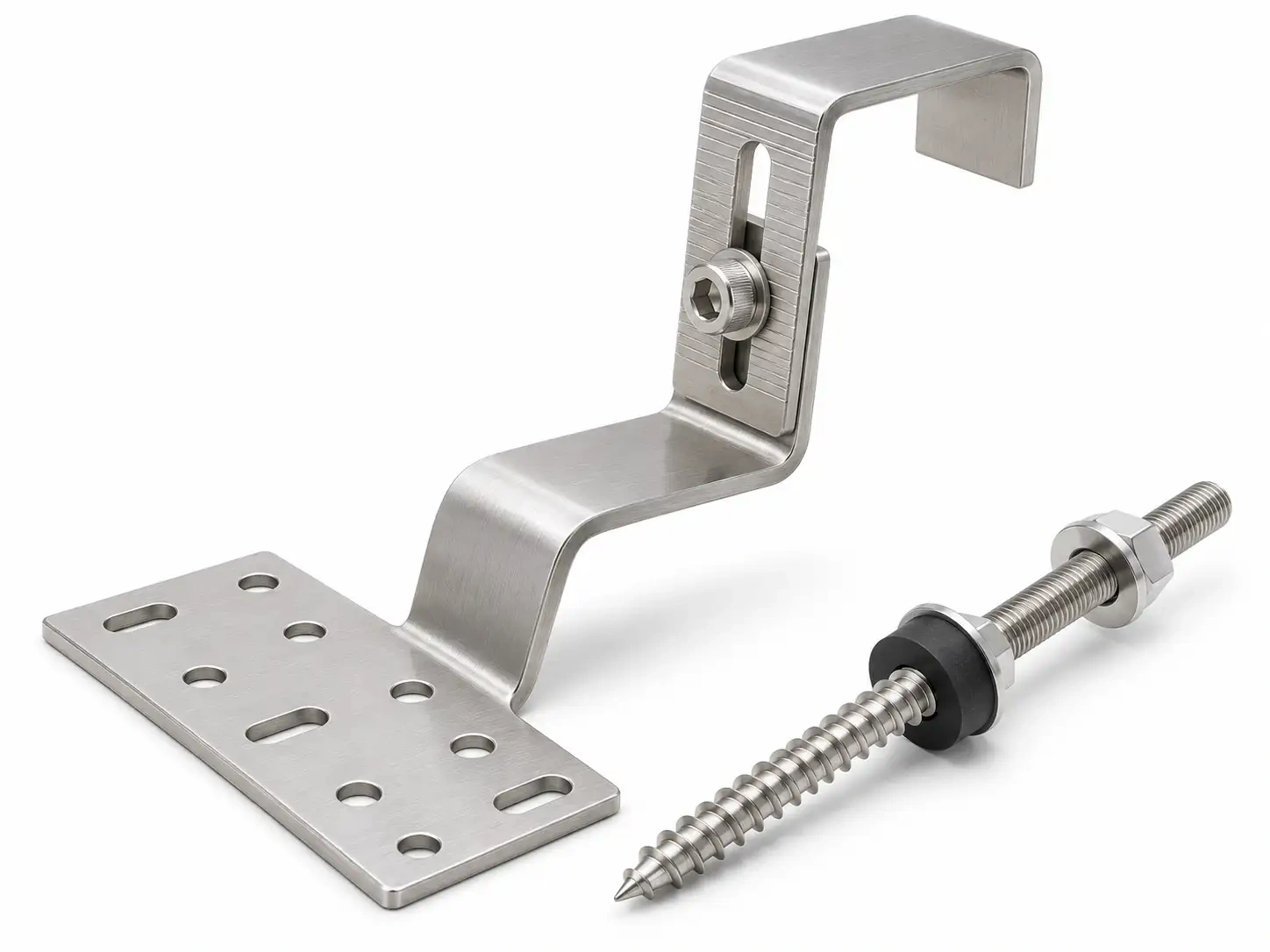
The range covers low-profile fixed mounting (Z and L brackets), angle control (tilt brackets), clamping onto rails or strut, pole and wall attachment for small arrays, roof-penetration hardware (hooks and hanger-bolt interfaces), and drill-free options where the surface cannot be drilled.
Each type is sized to a real fixing problem: frame height, substrate thickness, anchor spacing, and site weather loads. If your layout is not on the standard list, send the drawing — most brackets here are one press-brake program change away from a custom run.
Choose by Mounting Surface
Start from the surface, not the panel. The substrate rules out most options before price enters the picture.
| Mounting Surface | Recommended Bracket Type | Design Points That Matter |
|---|---|---|
| Trapezoidal or corrugated metal roof | Mini-rail kits, Z brackets, sheet-metal roof clamps | Rib spacing, sheet gauge, sealing at fastener points |
| Standing seam metal roof | Seam clamps (non-penetrating) + rail or clamp interface | Seam profile match, clamp grip range, no sheet penetration |
| Tile and slate roof | Roof hooks, hanger-bolt interface + rail | Rafter fixing, tile clearance, weather sealing |
| Flat roof | Tilt brackets, ballast plates, L brackets on rails | Tilt angle, ballast weight, wind exposure, drainage paths |
| RV, van, and vehicle roof | Z brackets, corner mounts, tilt brackets, drill-free mounts | Roof skin thickness, vibration, sealing, low profile |
| Pole and wall | Pole brackets (U-bolt class), single- or double-arm types | Pole diameter range, arm length, panel count, wind area |
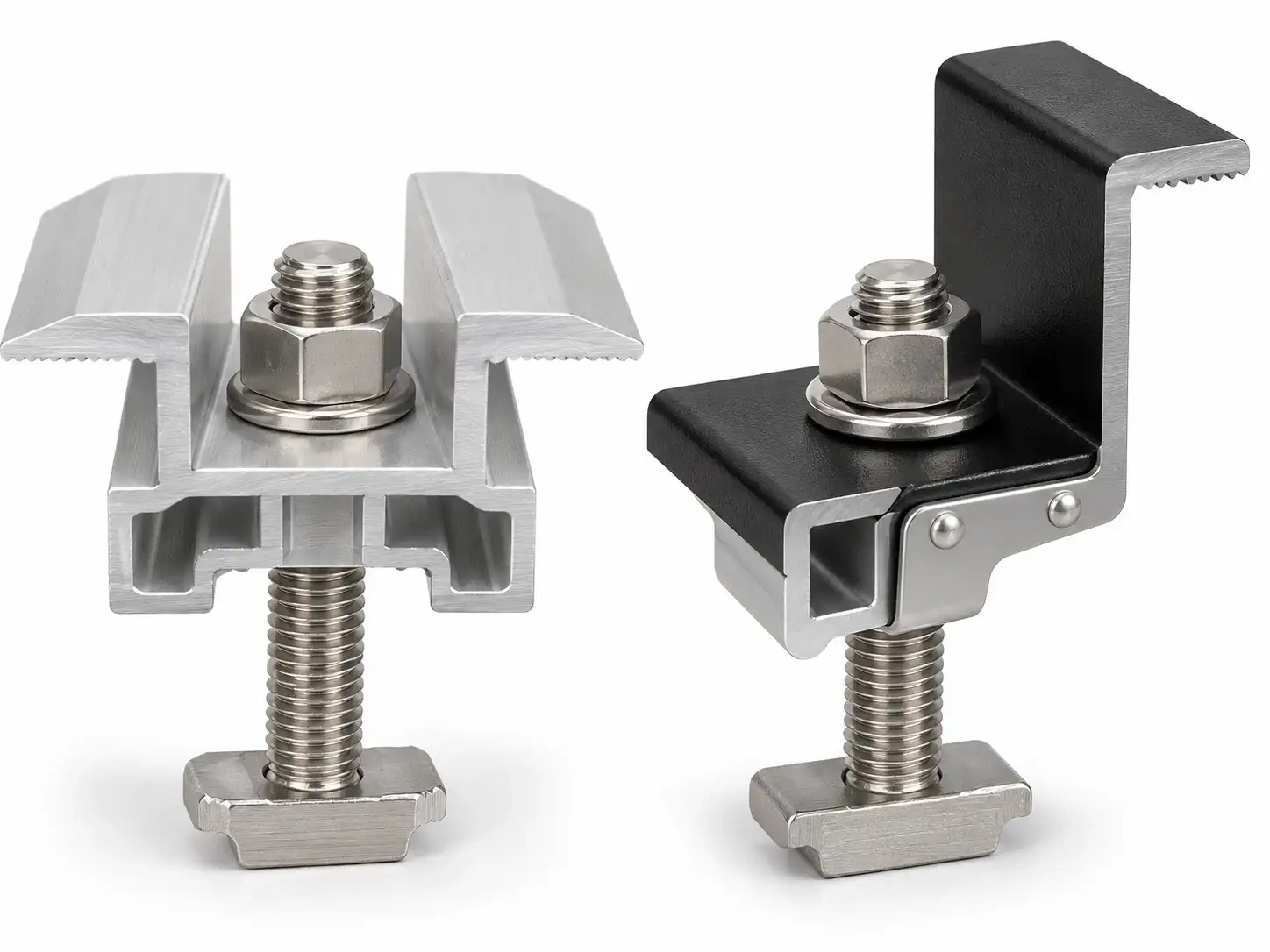
| Strut channel (Unistrut class) | Mid clamps, end clamps, strut clamp kits | Strut size, frame height, clamp opening |
| Ground pad or lawn | Ballast frames, ground-screw interfaces, anchor plates | Soil or concrete base, tilt angle, seasonal wind and snow |
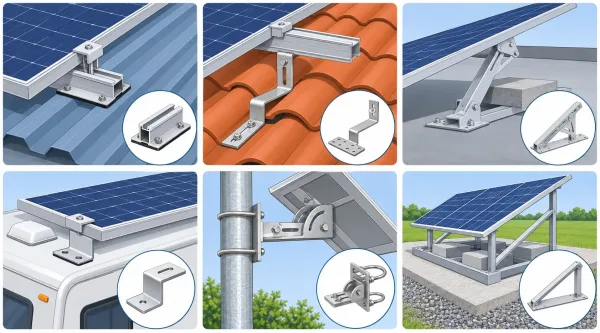
A single overview graphic pairing each mounting surface — trapezoidal metal roof, tile roof, flat roof, RV roof, pole, and ground pad — with its matching bracket type.
Two checks close the selection: frame height must sit inside the clamp or bracket opening, and fixing-point count must match panel size — four points for small panels, rails or more anchors for longer spans.
Structural Design and Fixing Logic
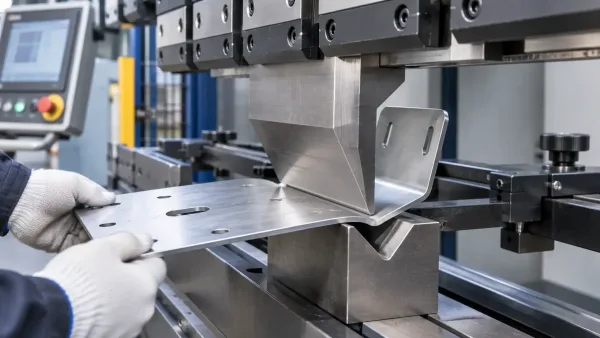
These brackets are bend-formed sheet metal, not castings or machined blocks. That choice shapes every design decision.
Bend-formed sections. Z, L, and tilt brackets use bent flanges to turn flat sheet into load-carrying angles. Flange height, bend radius, and sheet thickness set stiffness. As span increases, we add a return flange or a formed rib before reaching for thicker stock — better strength-to-weight, lower material cost.
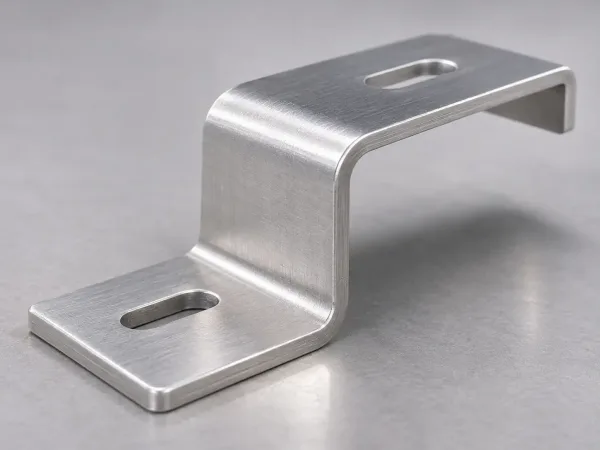
A close-up of a formed sheet-metal bracket showing the bent flange, bend radius and formed stiffening edge that turn flat sheet into a load-carrying angle.
Fixing points and slots. Mounting holes are punched or laser-cut during blanking. Slotted holes absorb installation tolerance: roof ribs are never perfectly straight, and vehicle roofs move. Slot length is set to the expected misalignment of your substrate, not to a generic guess.
Three connection logics. Brackets transfer load one of three ways:
- Clamping — mid and end clamps grip the module frame onto a rail or strut
- Through-fixing — Z brackets, hooks, and hanger bolts carry load into rafter, sheet, or pole
- Wrapping — pole brackets and U-bolt assemblies wrap the support member
One composite graphic with three panels: a clamp gripping a module frame on a rail, a Z bracket through-fixed into a roof sheet, and a U-bolt bracket wrapping a round pole.
Pick the logic that matches the substrate, then size the part around it.
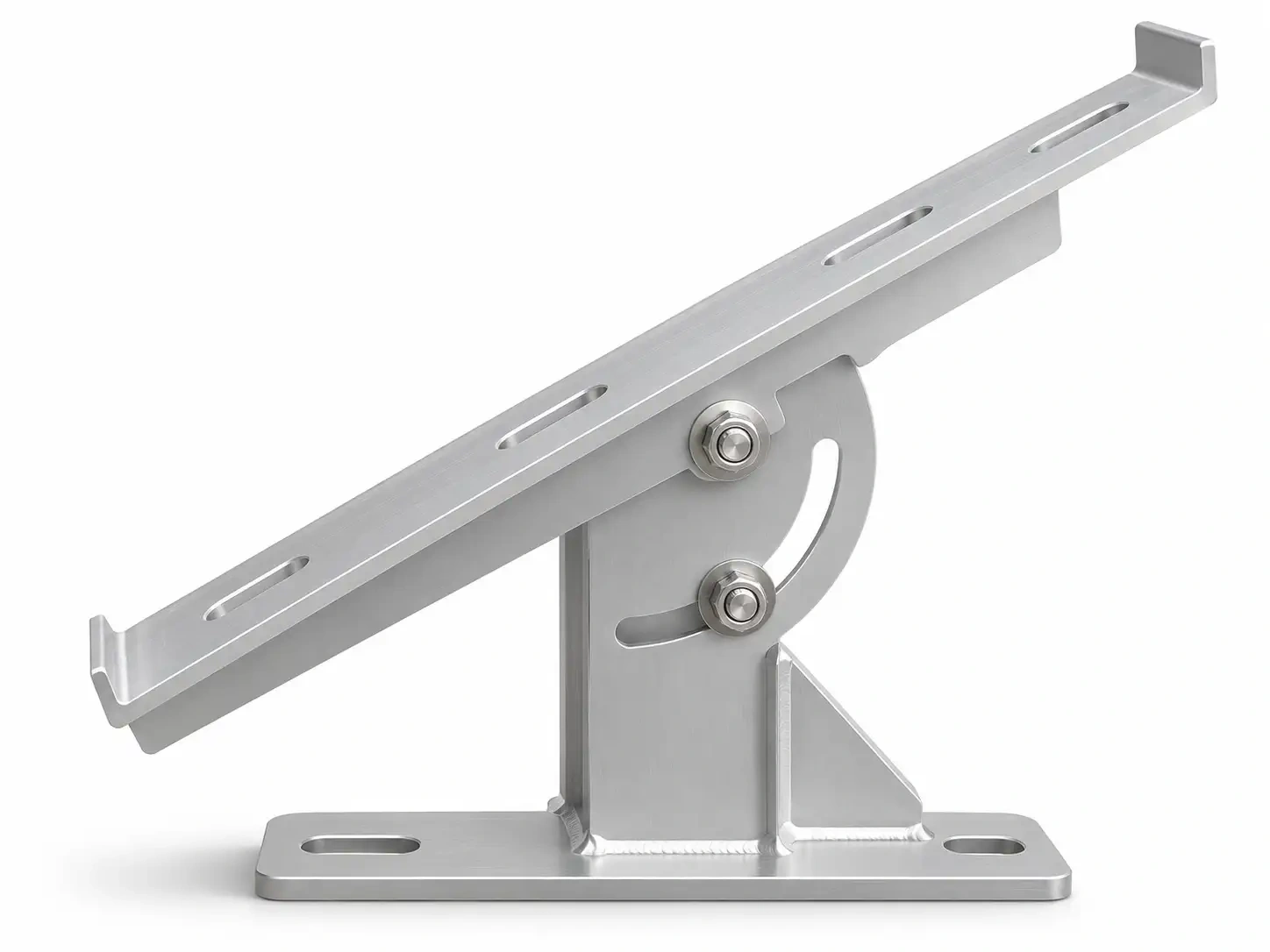
Adjustable types. Tilt brackets set angle with a pivoted leg or slotted arc. The lock is a bolted joint or formed detent — both serviceable with hand tools. Angle ranges are fixed per design (see Specifications); custom arcs are available to drawing.
Materials and Surface Treatment
Material and finish are chosen together, against the site environment.
| Material | Why Use It | Typical Finish Pairing |
|---|---|---|
| Aluminum alloy sheet | Light, corrosion-resistant, bends and anodizes cleanly; standard for RV, marine, and general rooftop work | Mill, anodized, powder coated |
| Stainless steel (SUS304) | Higher strength and toughness; good for clamps, hooks, and fasteners in damp sites | Mill, passivated, powder coated |
| Stainless steel (SUS316) | Coastal and marine exposure where chloride attack drives the decision | Passivated or coated |
| Coated carbon steel | Cost-effective for ground structures, ballast plates, and sheltered spans where weight matters less | Black zinc, hot-dip galvanized, powder coated |
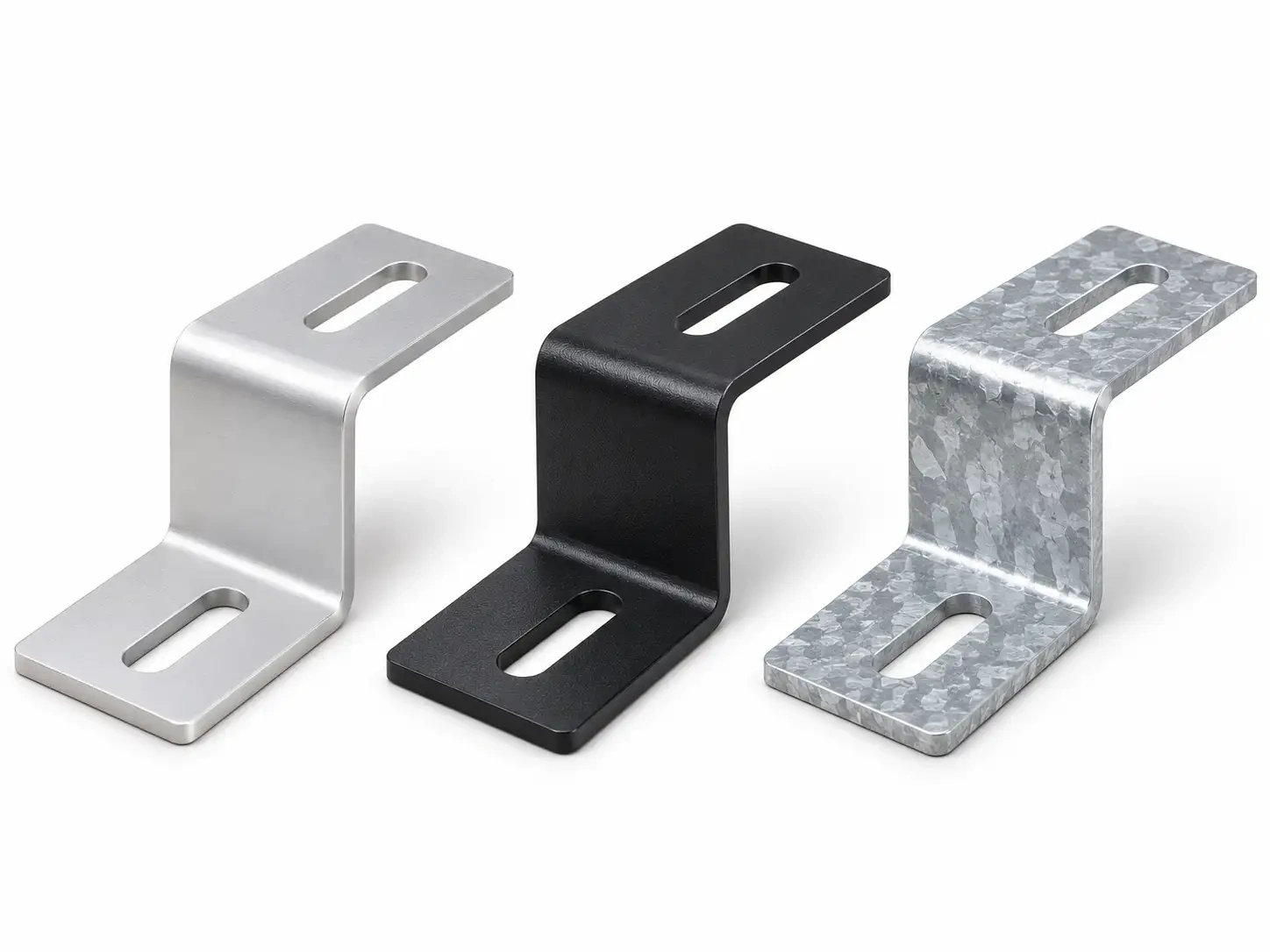
Three brackets side by side comparing material and finish: anodized aluminum, stainless steel, and hot-dip galvanized carbon steel.
Finish logic in one line: anodizing suits aluminum parts that stay visible; powder coating suits any substrate where color match and impact resistance matter; zinc and galvanizing suit carbon steel where sacrificial protection beats aesthetics.
On mixed-metal joints — an aluminum bracket on a steel structure, for example — we isolate contact surfaces or specify compatible fasteners. Galvanic corrosion at a joint is a design failure, not a maintenance issue.
Fabrication, Tolerance, and Inspection
The full route runs in-house: material verification → CNC blanking (laser or turret punch) → precision press-brake forming → hardware assembly → surface treatment → inspection.
| Control Point | What We Check |
|---|---|
| Blanking | Hole and slot position, blank flatness, edge condition |
| Forming | Bend angle, flange length, formed height against drawing |
| Assembly | Fastener class and torque reference, clamp fit on a sample frame |
| Surface | Coating or anodizing thickness, adhesion, color consistency per batch |
| Outgoing | Dimensional report, visual standard, pack count and labeling |
General sheet-metal tolerance runs at ±0.2 mm on non-critical features. Hole position, slot width, and bend angle follow the drawing callout — tighter control is available where alignment across multiple brackets matters. Inspection reports and surface-thickness records ship on request with every order.
Kit Contents and Fastener Scope
One of the most common sourcing mistakes: buying brackets, then finding the fastener set does not match the roof.
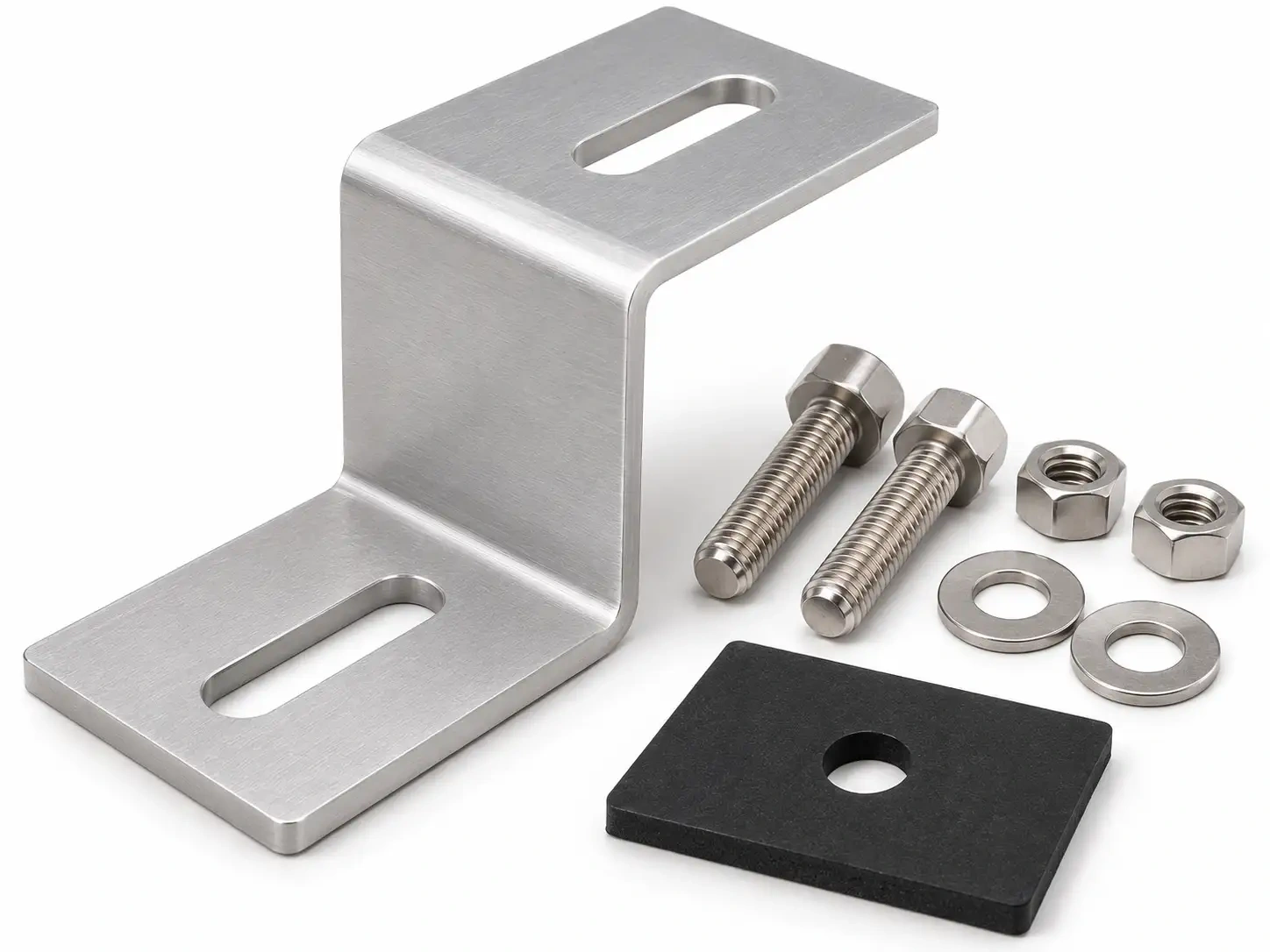
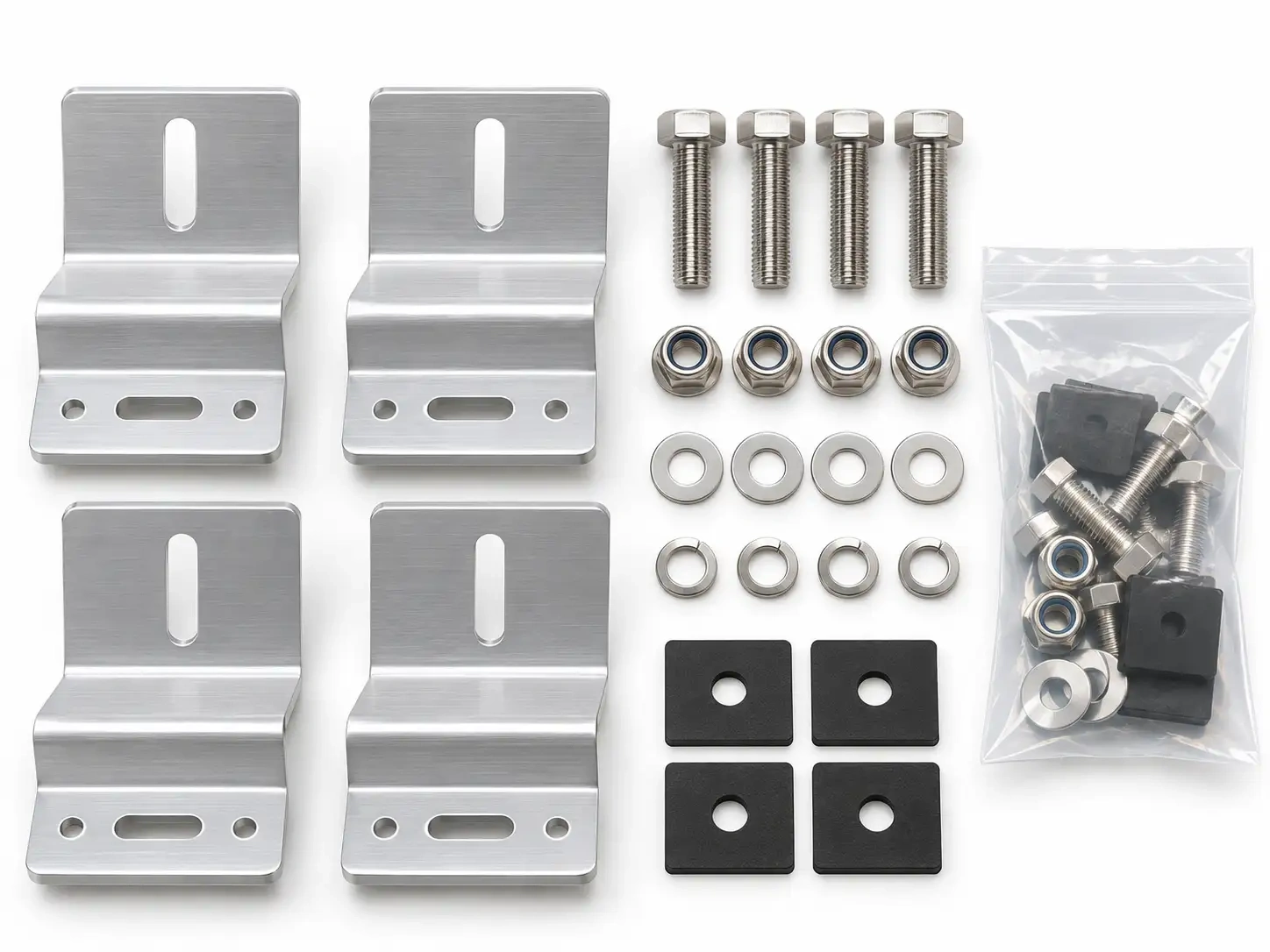
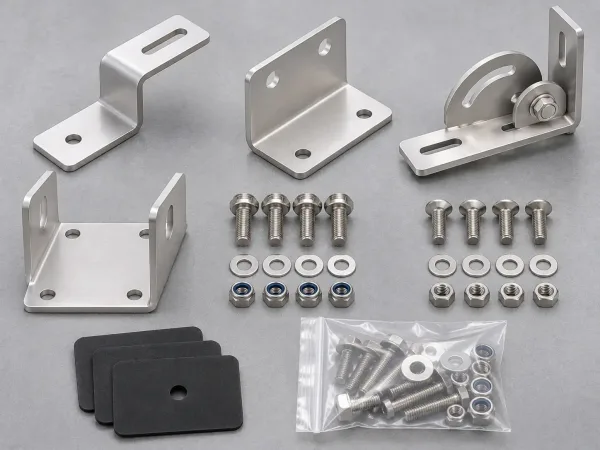
Standard kits include: brackets + matched stainless fasteners for bracket-to-panel joints + washers or EPDM pads where sealing is required.
A kit layout showing brackets, matched stainless fasteners, washers and EPDM sealing pads arranged as supplied in a standard set.
Usually sold separately: substrate anchors — roof screws, hanger bolts, seam-clamp set screws, pole U-bolts, or concrete anchors. These depend on the substrate (sheet gauge, rafter size, pole diameter), so they are specified per site rather than packed blind.
Send substrate details and we will quote a complete fixings list — or supply brackets only if your installer stocks anchors.
ypical Application Scenarios
Trapezoidal metal roof, small commercial building. Mini-rail kits and roof clamps spread load across the ribs. Short rails suit compact arrays where full-length rails add cost without adding anchors.
RV or van roof. Z brackets or corner mounts with stainless fasteners and sealing pads. Low profile matters here — brackets must clear roof vents and stay under common height limits.
Pole-mounted small PV for cameras, sensors, or remote loads. Single- or double-arm pole brackets sized to panel wattage and pole diameter. Slotted adjustment sets tilt toward the seasonal sun angle.
Flat-roof tilt layout. Adjustable tilt legs or ballast frames where penetration is restricted. Angle range and ballast mass are confirmed against local wind exposure.
Ground array on soft or mixed terrain. Ballast plates and ground-screw interfaces avoid concrete where site access is limited.
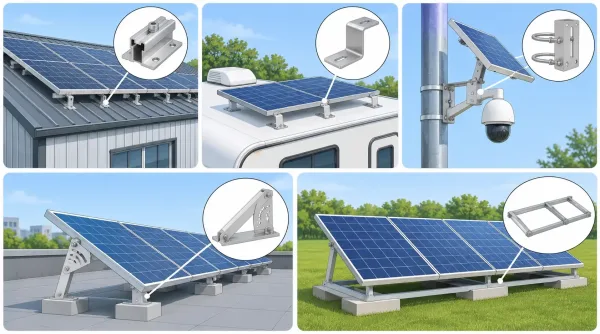
One overview graphic showing five application scenes: brackets on a trapezoidal metal roof, on an RV roof, on a pole-mounted small panel, in a flat-roof tilt layout, and on a ground ballast array.
Custom and OEM Manufacturing
Most bracket work here is semi-custom: a standard family, adjusted to your panel and substrate.
| Custom Dimension | What We Adjust |
|---|---|
| Hole pattern and slot layout | Position, slot length, hole diameter — to your frame or rail drawing |
| Length and flange size | Bracket span, leg length, formed height |
| Angle range | Tilt arc or fixed bend angle per site latitude or design |
| Material and finish | Grade, thickness, coating class — to environment and budget |
| Pack quantity and kitting | Set counts, mixed-type kits, labeled bags for installer drops |
| Marking and packaging | Logo embossing or stamping, labels, export cartons and pallets |
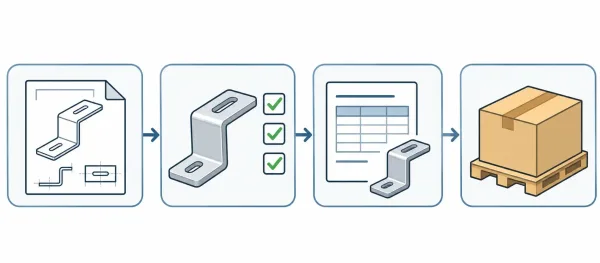
How custom projects run: send a drawing, sketch, or panel + substrate description → we review formability and propose structure options → quote with material, finish, and lead time → optional first-article sample → production and export packing.
We work from STEP, IGES, DWG, DXF, or PDF. If the design is not final, we can develop the bracket from your panel dimensions, substrate, and load notes.