Weatherproof Electrical Box Covers
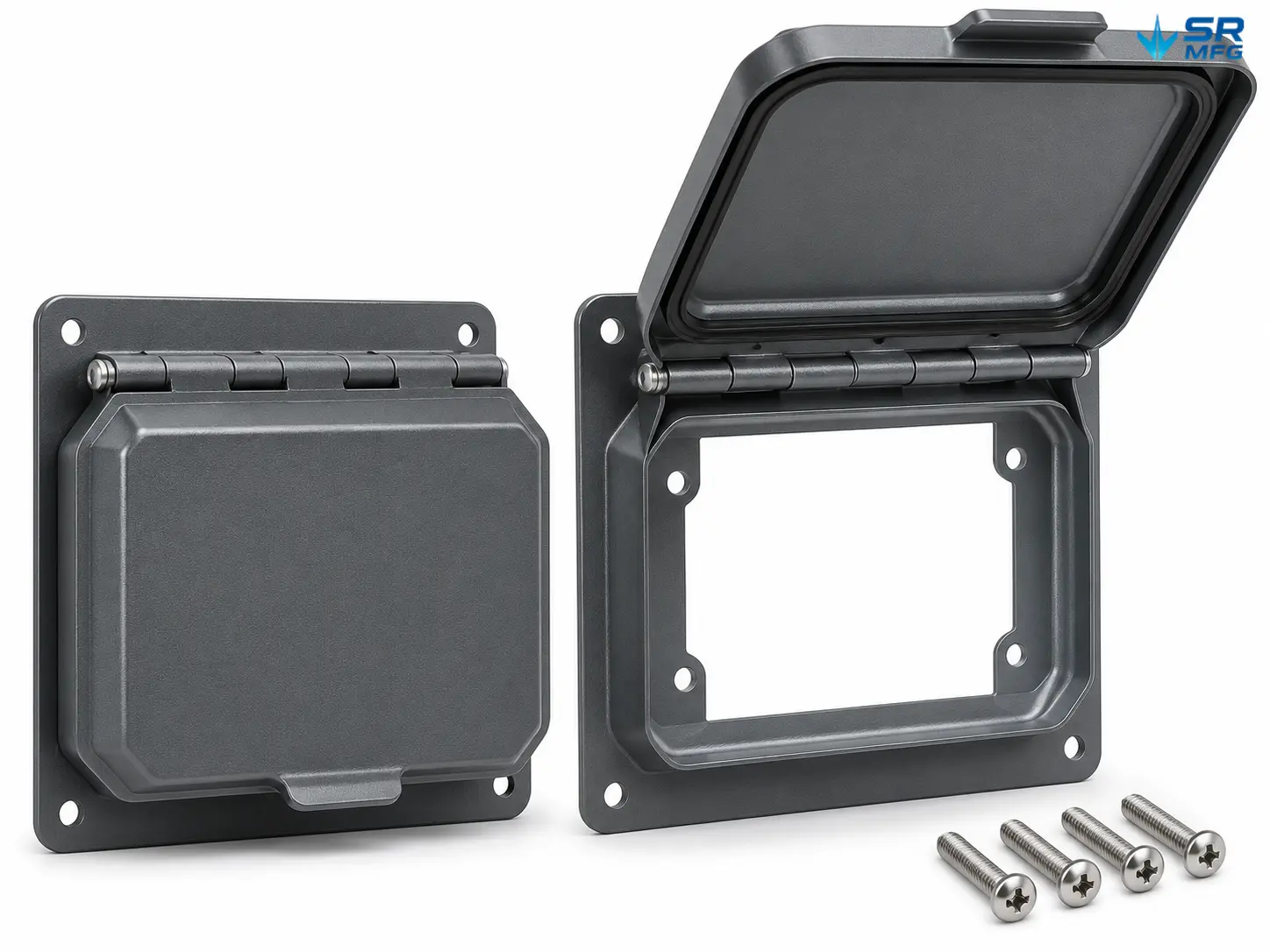
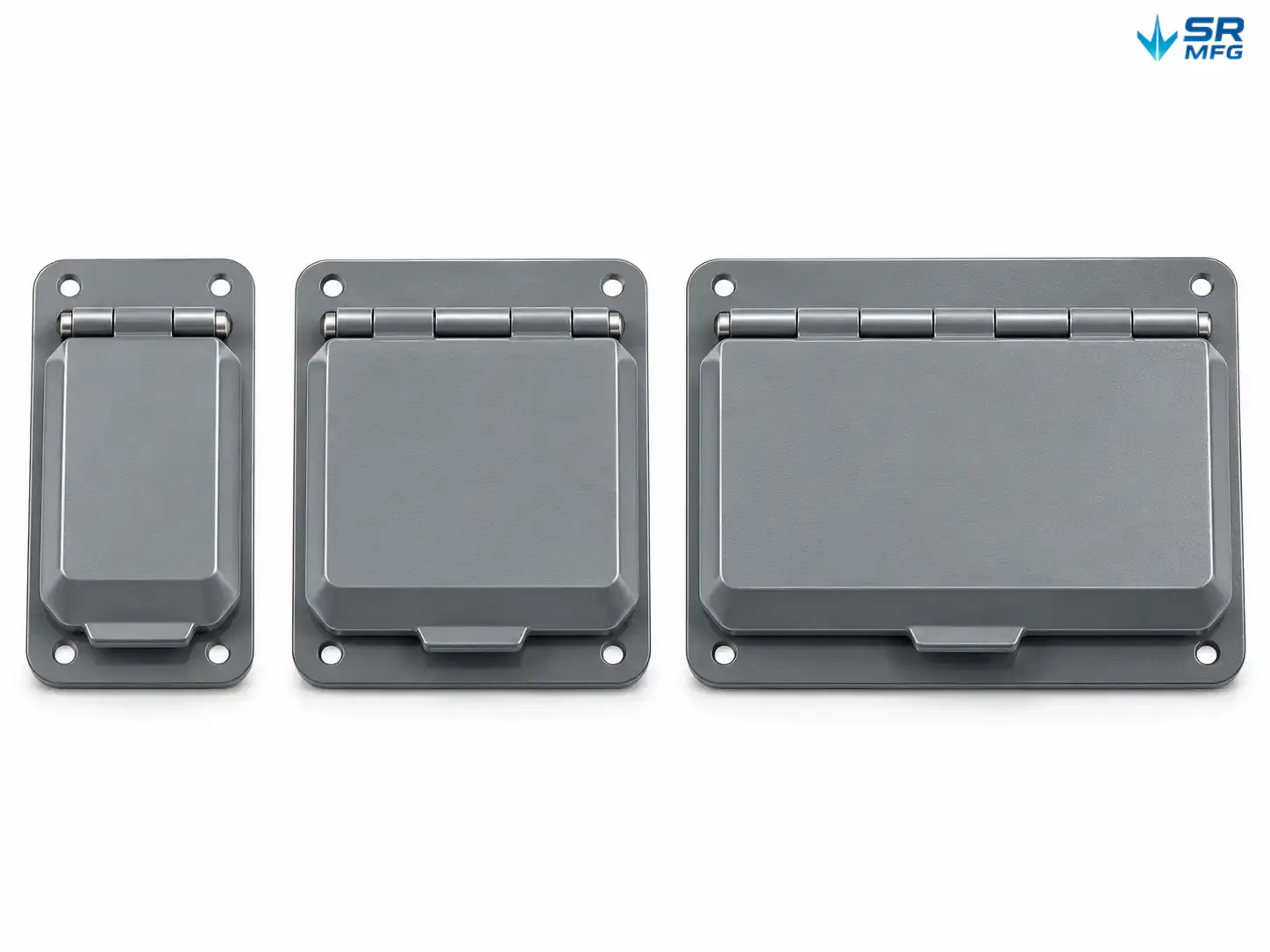
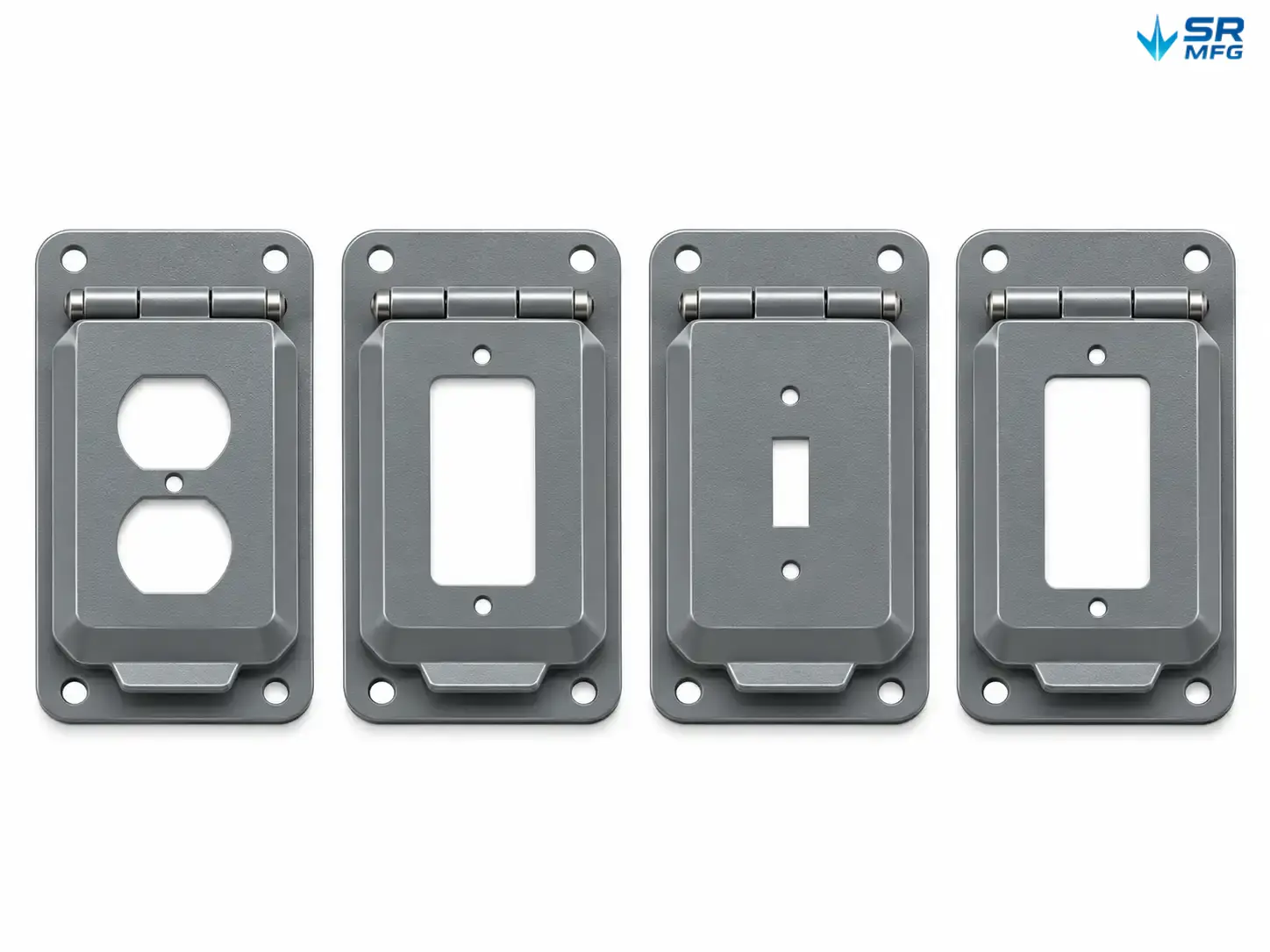
Sheet-metal weatherproof covers for outdoor electrical boxes in damp and wet locations. Available in 1-, 2-, and 3-gang formats with flip-lid, self-closing, blank, and while-in-use configurations. Body options include powder-coated cold-rolled steel, stainless 304/316, and aluminum — formed by laser cutting and CNC bending, or progressive stamping for volume runs. Supplied with pre-fitted gasket sealing and stainless mounting hardware. Standard device cutouts cover duplex, GFCI, toggle, and decorator devices. Non-standard openings and outlines are made to drawing. Project quantities — request a quote.
Product Details
| Item | Detail |
|---|---|
| Body Material | Cold-rolled steel, stainless 304, stainless 316, aluminum 5052 |
| Material Thickness | Specified per structural and span requirement; confirmed at quotation |
| Fabrication Process | Laser cutting + CNC bending (samples / mid-volume); progressive stamping (volume) |
| Gang Configuration | Standard 1-, 2-, and 3-gang; other counts on request |
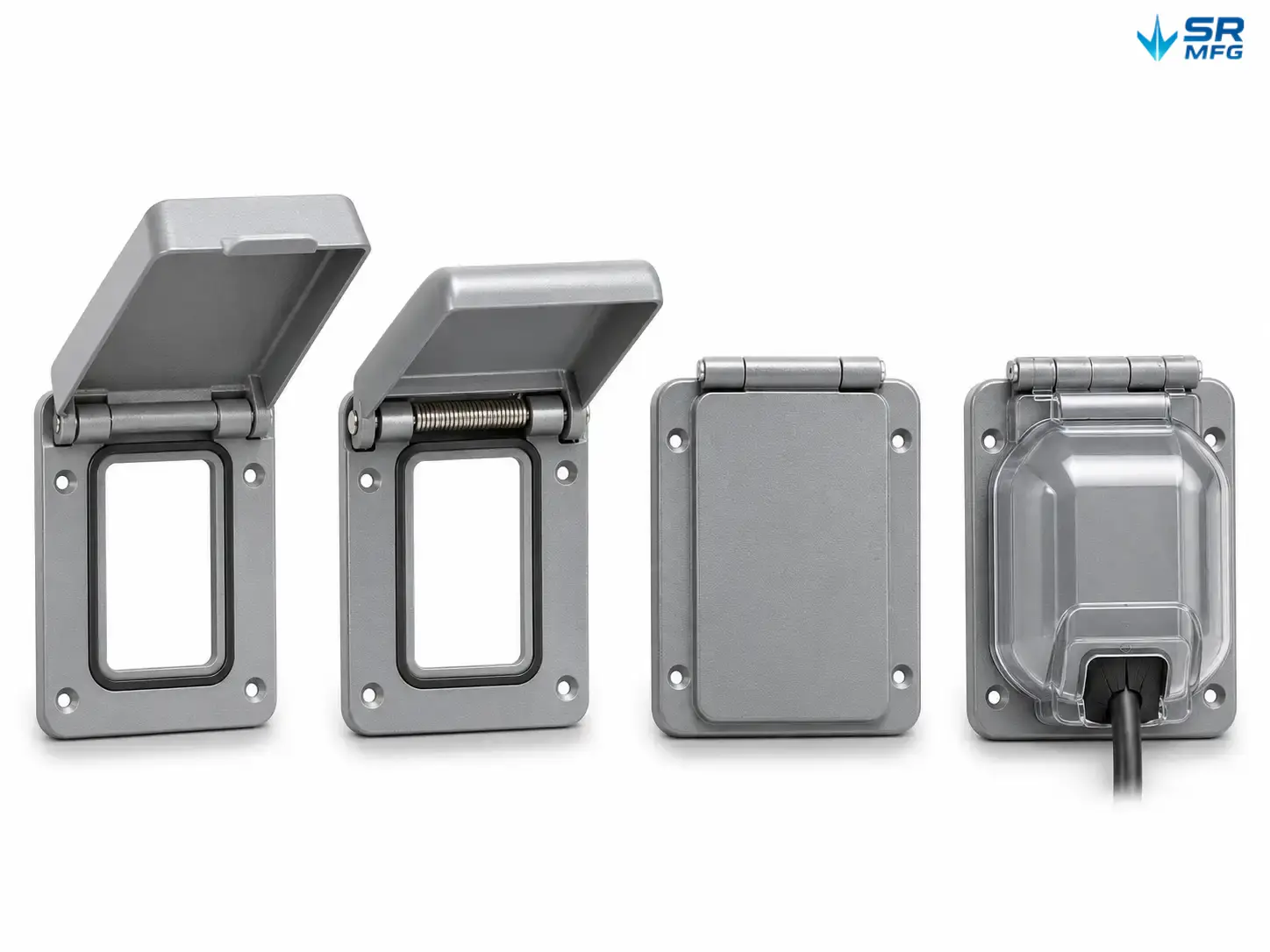
| Cover Style | Flip lid, self-closing, blank, bubble, while-in-use shield |
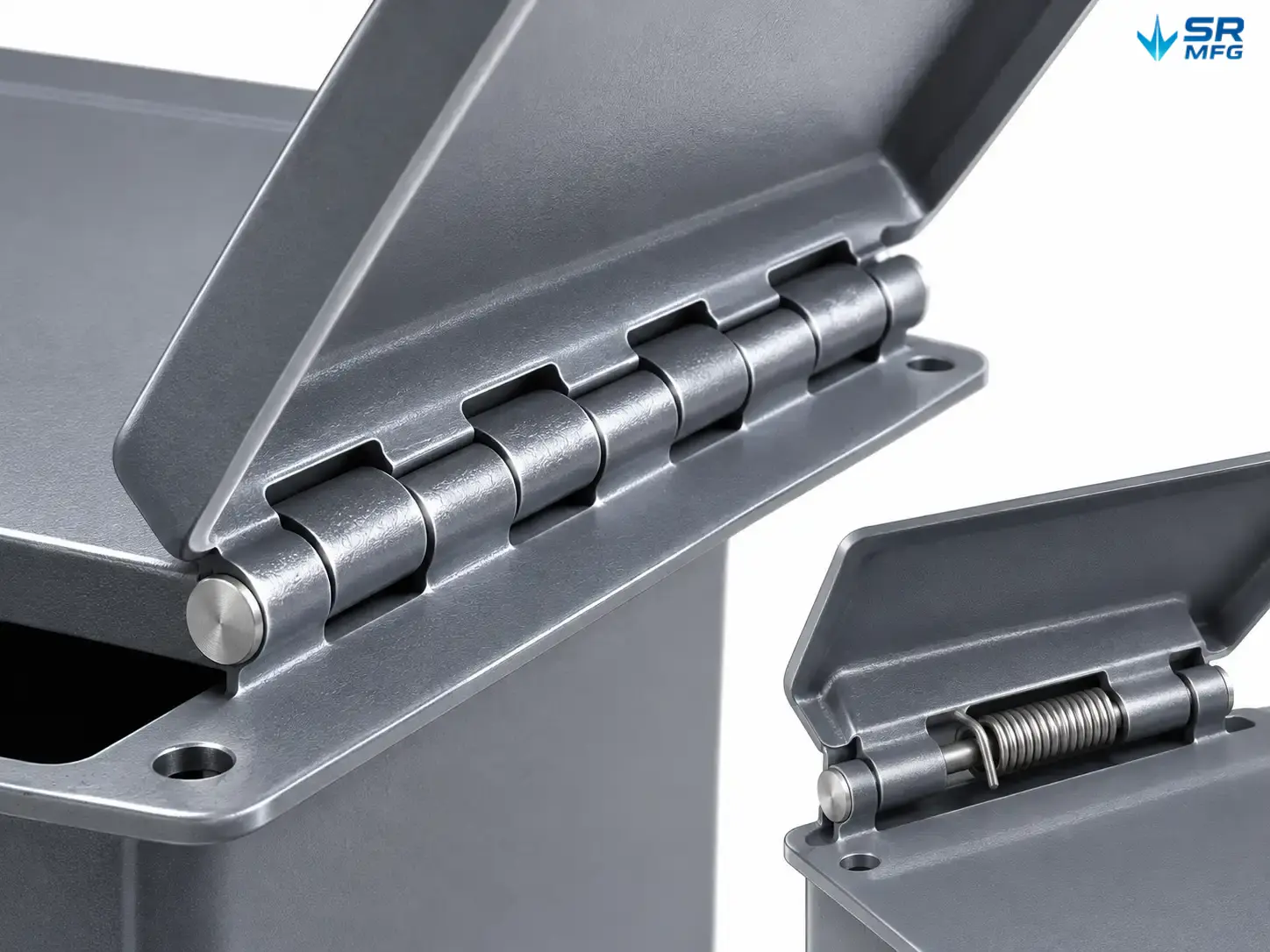
| Hinge | Stamped continuous hinge or spring-assisted self-closing hinge; open/close cycle testing available per design |
| Gasket | EPDM / closed-cell foam / silicone; groove formed in the flange; pre-fitted on specified configurations |
| Finish Options | RAL powder coating, anodizing, hot-dip galvanizing, brushed / passivated stainless |
| Powder Coat Film Thickness | Standard service tier and heavy-duty tier; confirmed per project |
| Corrosion Validation | Salt-spray exposure available per finish tier; test reports on request |
| Dimensional Tolerance | ISO 2768 medium class (m) unless the drawing states otherwise |
| Protection Design Target | Outdoor damp / wet-location duty (NEMA 3R class); formal ratings pursued per project via third-party testing |
| Included Hardware | Stainless mounting screws, grounding screw, gasket (where applicable) |
| Optional Assembly | PEM inserts, welded nuts, custom fasteners, captive screws |
| Inspection | First-article dimensional report, in-process gauge checks, film-thickness checks, packing inspection |
| Packaging | Individual sleeve or bulk carton; export palletizing and custom labeling on request |
| MOQ | Flexible by part type — prototype quantities for new work, standard pack quantities for stock items |
| Lead Time | Samples and prototypes quoted per drawing; production lead confirmed per order volume |
| Custom Capabilities | Non-standard openings, embossed logo, special hardware, project-specific packaging |
Built for Outdoor Electrical Boxes
Outdoor electrical boxes usually fail from the outside in. Rain works past a warped lid. Dust piles up on live terminals. A cord flap freezes open in winter. This cover exists to shut those paths down.
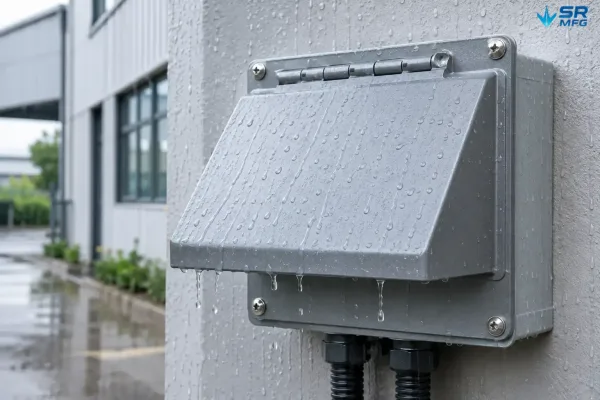
A sheet-metal weatherproof cover installed on an outdoor junction box on an exterior wall, with rain rolling off the closed lid.
It mounts on junction boxes, receptacle boxes, and switch boxes on exterior walls, eaves, and equipment shelters — keeping rain, snow, dust, and condensation away from the device behind it. The design targets damp and wet locations where an open or poorly fitting lid is not an option. Typical installs include exterior receptacles on commercial buildings, service entrance points, rooftop junctions, and control boxes on remote equipment pads.
Application note: A coastal warehouse retrofit swapped out plastic lids that chalked and cracked after two seasons. Powder-coated steel covers with EPDM gaskets went onto the same box pattern — no new drilling. The salt-air duty is handled by the finish system, not by frequent replacement.
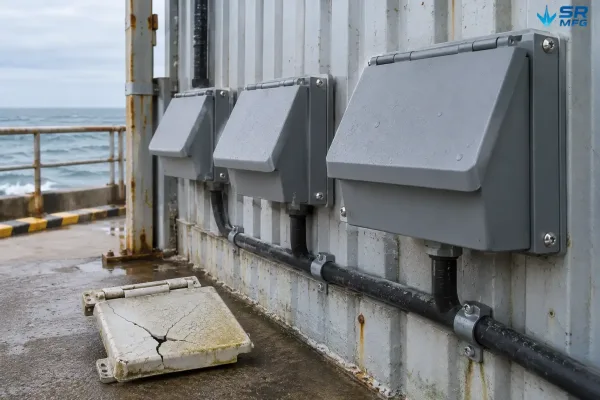
Powder-coated steel weatherproof covers fitted on existing box patterns at a coastal warehouse, with corroded plastic lids removed.
Sheet Metal Construction & Cover Design
The body is sheet metal, not cast — which matters for geometry control and lead time. Flat patterns are laser-cut or stamped, then CNC-braked or die-formed to final profile. Flanges, ribs, and hinge knuckles form in the same sequence, so the cover holds its shape across the full box span without oil-canning or corner spread.
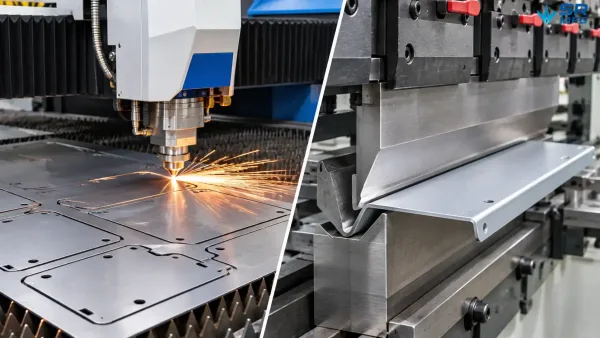
Laser-cut sheet-metal blanks on the left and a CNC press brake forming a cover flange on the right.
| Construction Element | Function | Buyer Value |
|---|---|---|
| Formed flange | Stiffens the perimeter and seats the gasket | Flat lids flex; a flanged lid stays sealed |
| Reinforcement ribs | Raise stiffness on 2- and 3-gang spans | Less sag over wide openings |
| Hinge knuckle | Stamped or spring-assisted hinge line | Controls lid travel and closing force |
| Closed lid profile | Sheds water away from the seam | Water exits the cover instead of entering the box |
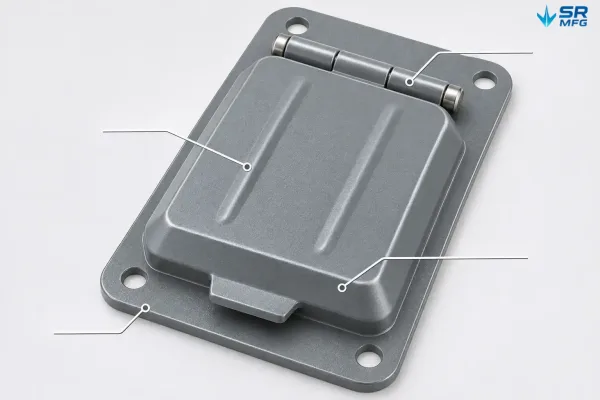
One sheet-metal cover shown with arrows pointing to the formed flange, reinforcement ribs, hinge knuckle, and water-shedding closed lid profile.
Cover style follows device duty. Blank covers close unused openings. Flip and self-closing lids serve switches and receptacles. While-in-use shields keep plugged-in cords covered. On frequently operated devices, spring-assisted self-closing lids return to the sealed position without user attention.
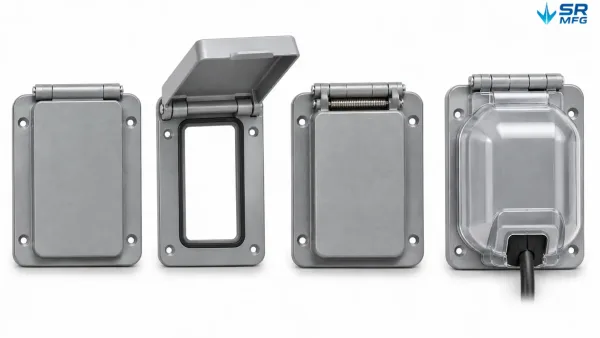
Four cover styles side by side: blank cover, flip-lid cover, self-closing cover, and while-in-use shield with a cord flap.
Gasket Sealing & Weather Protection
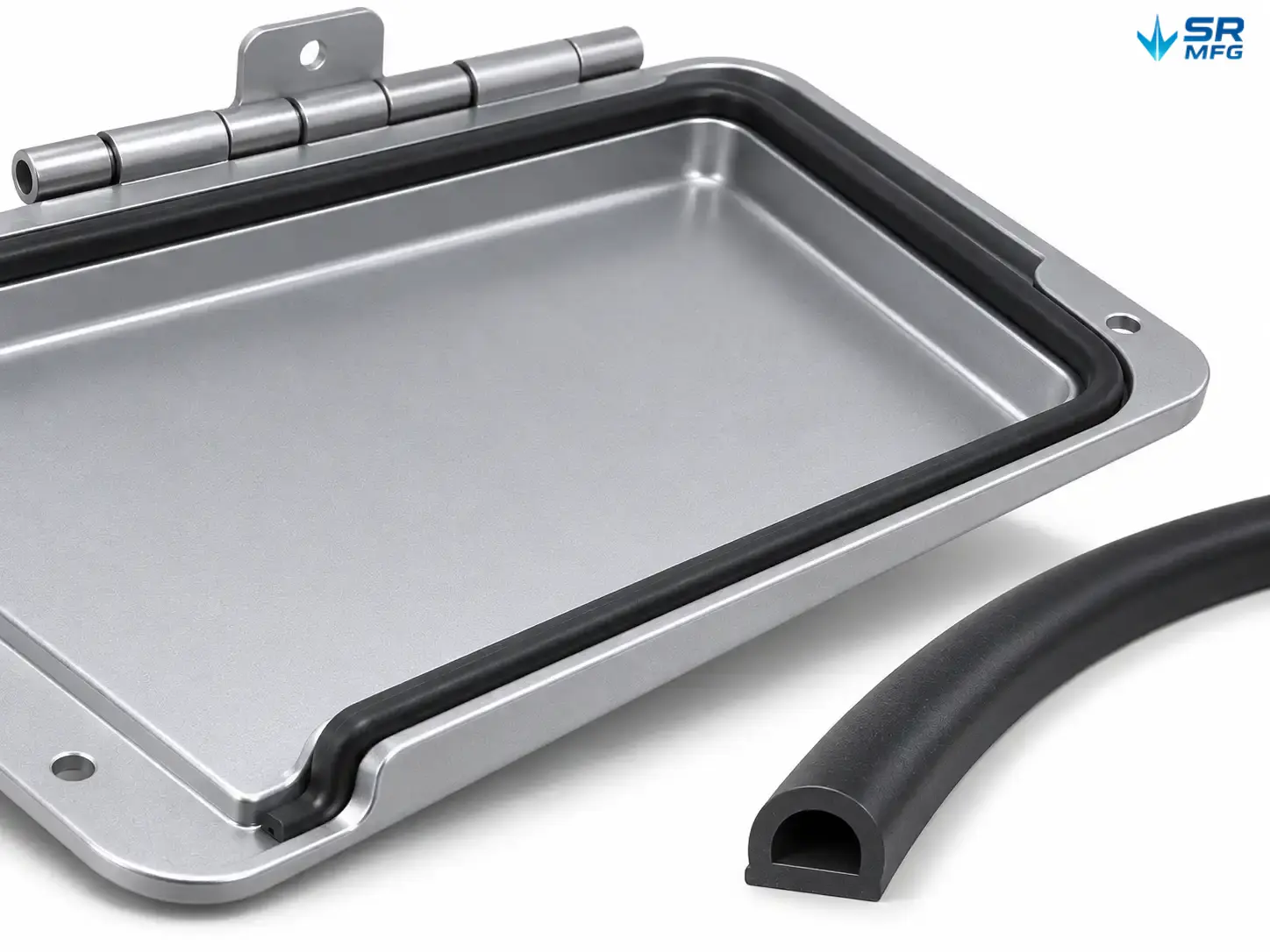
Sealing is groove-and-compression work — not a tape line applied afterwards. The gasket channel forms in the cover flange during fabrication, so seal geometry repeats part to part. Gasket stock is matched to environment: EPDM for general outdoor duty, closed-cell foam for economical dry-type sealing, silicone where temperature swing is wide.
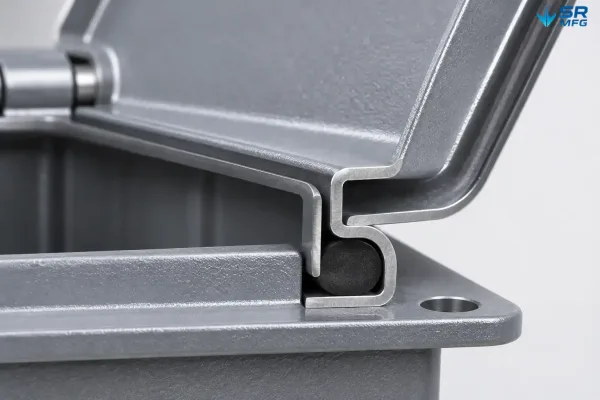
A cutaway close-up of the cover flange showing the formed gasket groove and the EPDM gasket compressed between lid and box face.
Water management runs on three details: a compressed perimeter seal at the flange, a cord exit that keeps a plugged-in cable covered, and a lid profile that directs runoff away from the seam. Covers are designed for wet-location enclosure duty in the NEMA 3R class; formal ratings are pursued per project through third-party testing.
Application note: Rooftop HVAC junction boxes sit in standing snow for weeks each winter. Extended-depth covers with silicone gaskets clear large in-use plugs, and the groove-formed seal keeps the gasket compressed through freeze-thaw cycles — instead of relying on a flat lid and hope.
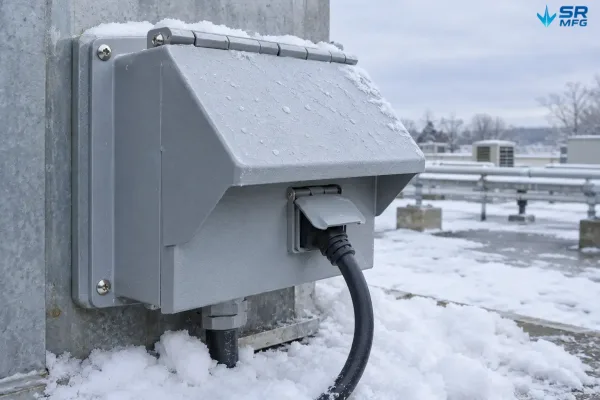
An extended-depth sheet-metal cover with a plugged-in cable on a rooftop junction box surrounded by snow.
Installation & Included Hardware
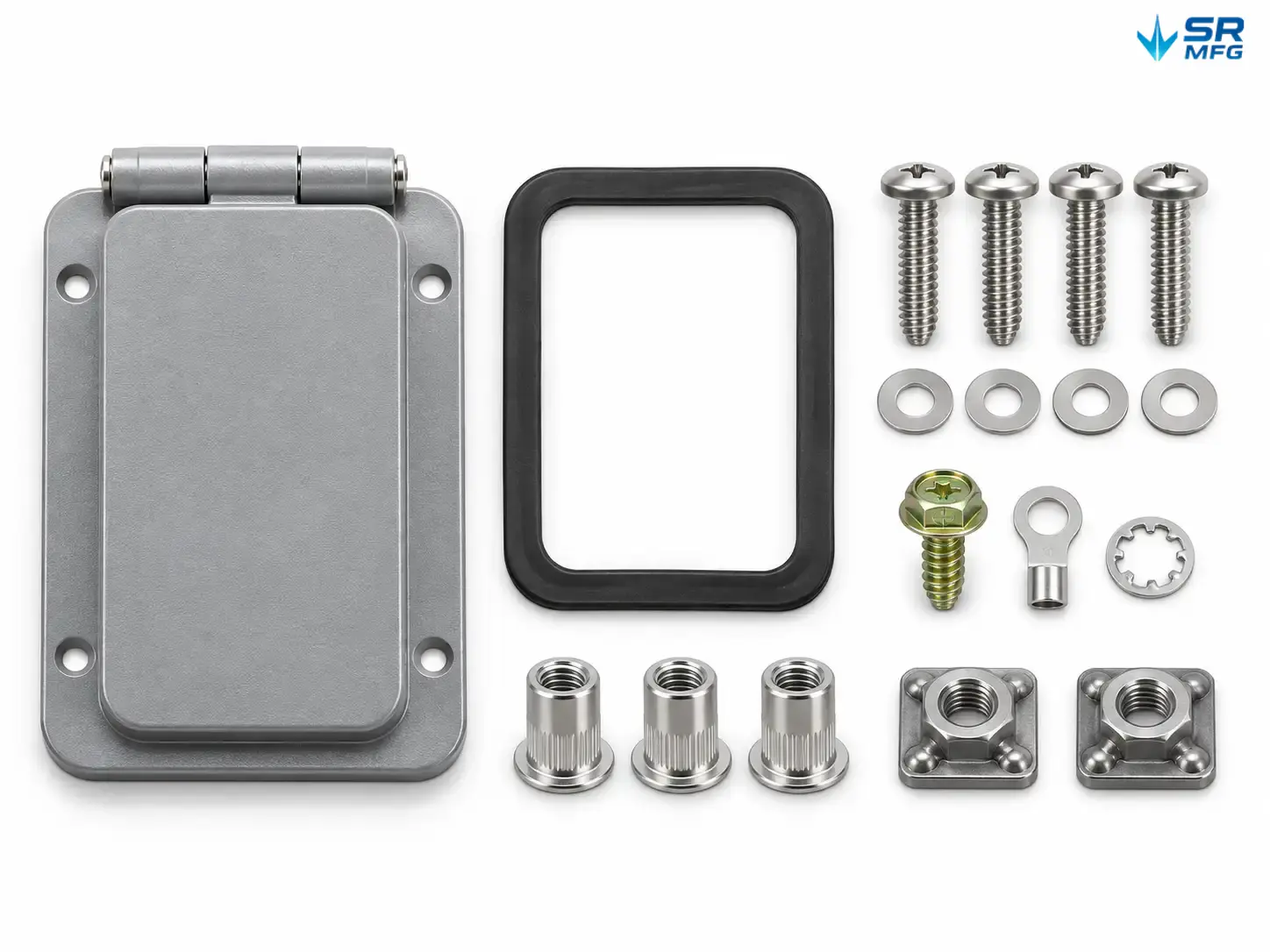
The cover bolts to the device or box on the standard screw pattern — no proprietary bracket, no field drilling. Stainless mounting screws and a grounding screw ship with each cover; gaskets arrive pre-fitted where the configuration calls for one. For high-volume panels and OEM assembly, PEM inserts or welded nuts can be added so the installer drives one side only.
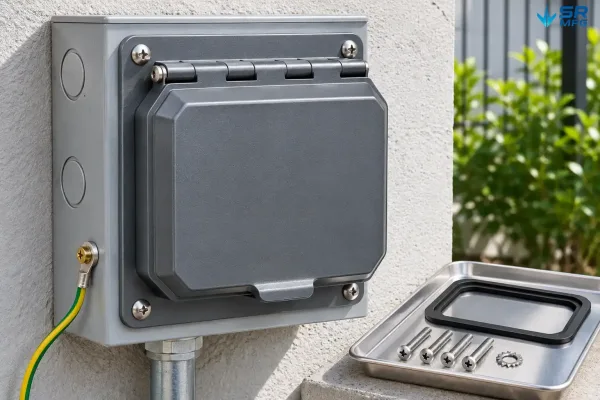
A cover mounted on an electrical box with the standard screw pattern, and its included hardware — screws, grounding screw, and gasket — laid out beside it.
Orientation is selected at order time: horizontal, vertical, or dual-orientation patterns where one cover serves both mounting directions. Hole spacing and depth are confirmed against the target box before production.
Finishes & Corrosion Protection
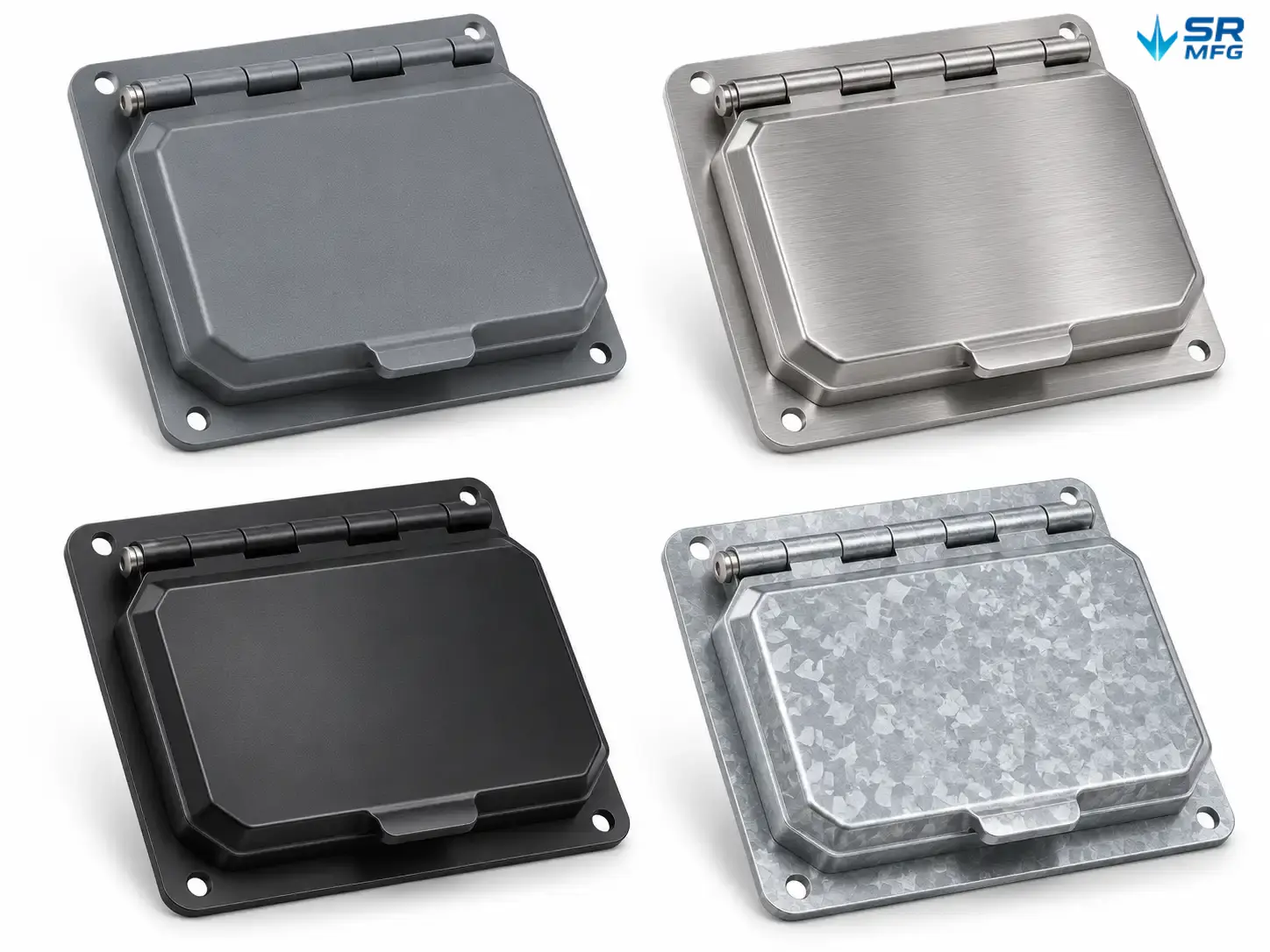
Finish is chosen by environment, not by habit. Powder coating (RAL colors) covers most commercial and coastal installs and is applied over proper pre-treatment for adhesion. Aluminum bodies can be anodized — thin, hard, color-stable. Stainless 304 and 316 bodies come brushed or passivated, using the base metal as the corrosion barrier. Carbon-steel covers in aggressive industrial atmospheres can be hot-dip galvanized.
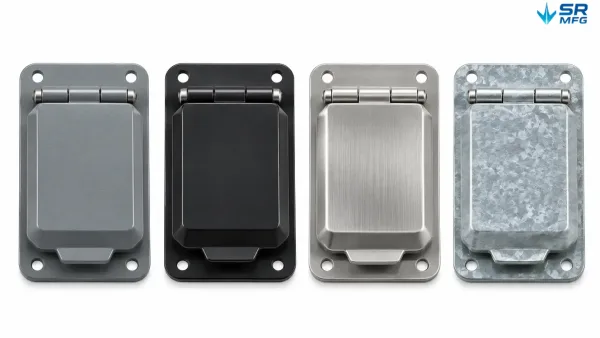
Four cover surface finishes side by side: RAL powder coating, black anodized aluminum, brushed stainless steel, and hot-dip galvanized steel.
Selection guide: coated carbon steel is the cost-efficient default on sheltered and standard outdoor sites. Stainless 316 earns its premium in salt-air and chemical exposure. Anodized aluminum balances weight and corrosion on large or frequently handled covers.
Request a Quote / Send Your Drawing
Tell us the box type, gang count, device cutout, and finish — or upload a DXF/STEP file and we will quote direct. Samples, project quantities, and OEM orders follow the same path: send the spec, and we respond with price, lead time, and any design notes within one business day.