
What Is an Order Confirmation Date?
Definition in Procurement and ERP Systems
In most procurement systems, the order confirmation date is a separate field on a purchase order line.
Infor LN defines it as the date when a supplier confirms a purchase order, or when a sales order is confirmed to the customer.
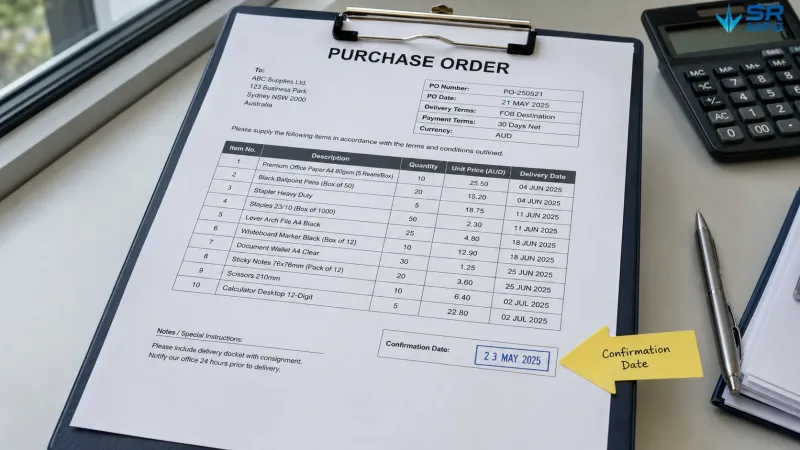
In most ERP and procurement systems, the order confirmation date is recorded as a separate field on the purchase order line — distinct from the order date or delivery date.
In SAP, Oracle, and other ERP or procurement systems, similar purchase order confirmation or order acknowledgment processes also exist. A supplier may confirm, reject, or, where the workflow allows, propose changes to quantity, price, delivery date, or other order details.
Different ERP systems may use different field names, record levels, and approval rules. Therefore, the actual meaning of the field should always follow the company’s internal ERP configuration.
An order confirmation date is not just a timestamp. When used correctly, it can become a key driver for procurement, production planning, and supplier performance tracking.
Definition in Contracts and Sales Terms
In B2B procurement, the order confirmation date is often treated as one form of written evidence that the supplier has accepted the purchase order.
It may affect contract effectiveness, lead time calculation, delivery responsibility, and supplier obligations, depending on the purchase order terms, contract clauses, and applicable laws.
As mentioned earlier, any lead time calculation should be based on the assumption that the required technical, commercial, and payment conditions have already been satisfied.
What an Order Confirmation Date Is Not
An order confirmation date is not the same as the date printed on a consumer order confirmation email.
Many B2C platforms show an estimated delivery date in logistics tracking, but that is usually only a predicted arrival time. It does not always guarantee delivery on that exact date.
In B2B procurement, however, the order confirmation date usually represents a more formal acceptance with clearer obligations between the buyer and supplier.
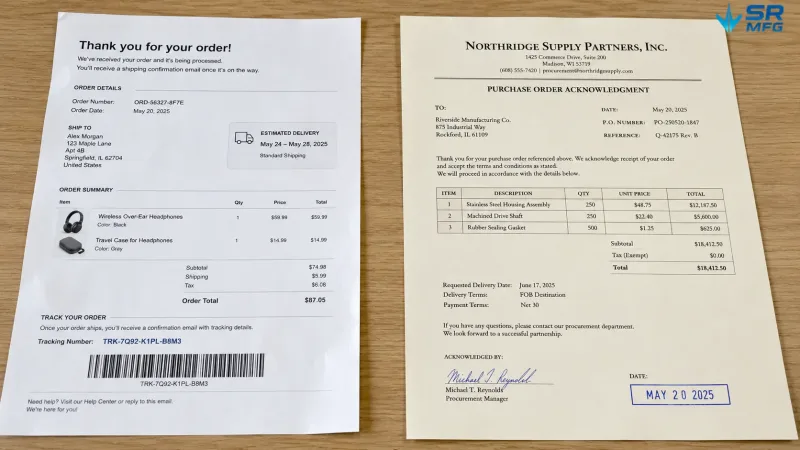
A B2C order confirmation email and a formal B2B purchase order acknowledgment serve very different purposes — the latter carries contractual weight between buyer and supplier.
Order Confirmation Date vs. Other Order Dates
One common issue in procurement is that a single order may contain several different dates. These dates should not be treated as the same thing.
| Date Term | Definition | Set By | Main Purpose |
|---|---|---|---|
| Order Date | The date when the buyer submits or places the purchase order | Buyer | Internal tracking and order reference |
| PO Date | The date printed on the purchase order document; often the same as the order date | Buyer | Document reference |
| Order Confirmation Date | The date when the supplier formally confirms the order | Supplier | Contract execution, delivery scheduling, supplier performance tracking |
| Acknowledgment Date | The date when the supplier sends an acknowledgment of receiving the purchase order | Supplier | Communication tracking |
| Confirmed Delivery Date | The delivery date committed by the supplier during order confirmation | Supplier | MRP, production planning, project scheduling |
| Estimated Delivery Date | A projected delivery date that has not yet been firmly confirmed | Either party | Buyer expectation management |
| Desired Delivery Date | The delivery date requested by the buyer | Buyer | Must be confirmed by the supplier |
| Ship Date | The date when goods leave the supplier’s factory | Supplier | Logistics booking and transportation planning |
| Receipt Date | The date when the buyer receives the goods | Buyer | Warehouse receipt, invoice matching, payment trigger |
For standard products, these dates may be very close to each other. But in custom sheet metal fabrication projects, they can be significantly different.
A common project timeline may look like this:
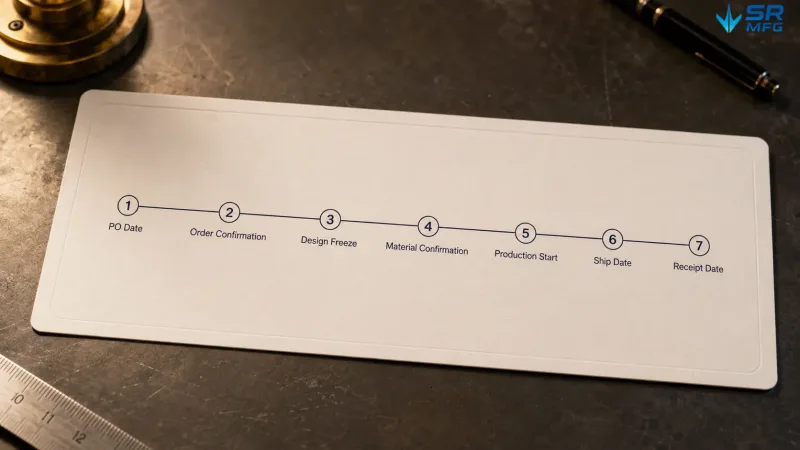
In custom sheet metal fabrication, a single order may involve seven or more distinct dates — each serving a different planning and accountability purpose.
Why Is the Order Confirmation Date Important in Sheet Metal Fabrication?
It Marks the Supplier’s Formal Acceptance
Before a purchase order is formally confirmed, the buyer may only have issued a purchasing request, accepted a quotation in principle, or discussed commercial terms with the supplier.
Once the supplier confirms the buyer’s order, both parties have a clearer reference point for future actions. This helps reduce disputes over key issues such as:
- Which price should apply
- Which drawings and product specifications should be used
- Which sheet metal manufacturing process or inspection standard should be followed
- When the delivery schedule officially starts and ends
From this perspective, the order confirmation date has value beyond being a simple date field. It helps define the basis of execution for the entire order.
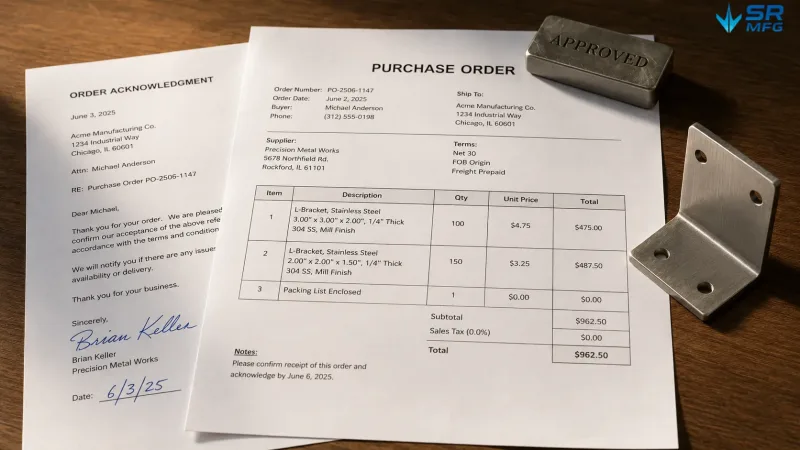
The order confirmation date marks the moment both parties align on drawings, materials, price, and delivery — forming the execution basis for the entire project.
It May Affect Lead Time Calculation
Delivery time is one of the main reasons buyers care about the order confirmation date.
In practice, some manufacturers may calculate lead time from the order confirmation date. Others may calculate lead time from another milestone, such as:
- Receipt of the first deposit
- Final drawing approval
- Sample approval
- Material availability
- Process confirmation
- Surface treatment specification approval
For this reason, buyers should not automatically assume that lead time starts the day after the contract is signed.
In custom sheet metal manufacturing, even after a supply agreement is signed, some technical or commercial details may still require buyer approval. Many suppliers only begin production scheduling for sheet metal projects after all critical information has been confirmed.
It Supports Supplier Performance Tracking
From a procurement and internal management perspective, the order confirmation date can also be used to evaluate supplier performance.
For example, buyers can compare the time between order confirmation and first shipment across different suppliers to see which supplier responds and delivers faster.
This helps project managers build a clearer procurement-to-receipt timeline and identify bottlenecks in the supply chain.
What Is Usually Confirmed During Order Confirmation?
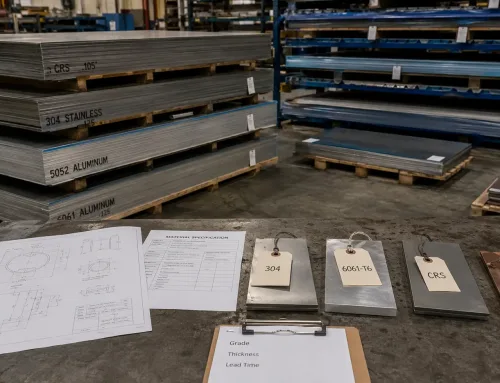
A confirmed sheet metal fabrication order should not contain only basic commercial information. It should include a complete set of product, technical, quality, and delivery requirements.
Common confirmed items include:
- Buyer and supplier information
- Product name and intended application
- Final approved drawings
- Quantity and price
- Material grade and thickness specification
- Secondary fabrication process requirements
- Packaging and inspection standards
- Delivery schedule
- Acceptance criteria and payment terms
For buyers, the most important point is not the order confirmation date itself, but what has been agreed upon by both parties at the time of confirmation.
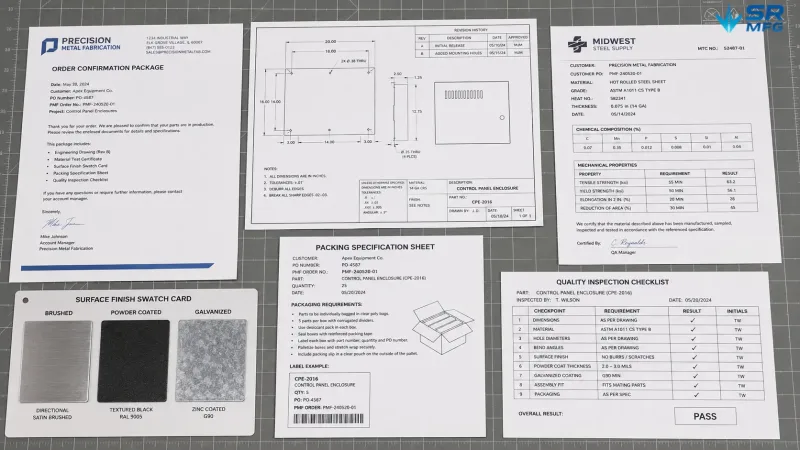
A thorough order confirmation should cover commercial terms, approved drawings, material specs, surface treatment, packaging, and acceptance criteria — not just the price and date.
When Does Lead Time Actually Start?
The start of lead time depends on the specific agreement between the buyer and supplier.
In sheet metal fabrication, lead time may start from different points, such as:
- When materials arrive at the factory
- When the sample is approved
- When the final drawing is approved
- When the deposit is received
- When written order confirmation is completed
Many contracts include a clause such as:
“Production lead time starts after final drawing approval, deposit receipt, and written order confirmation.”
This type of clause is useful because it helps both parties avoid misunderstandings and reduces disputes about the final delivery schedule.
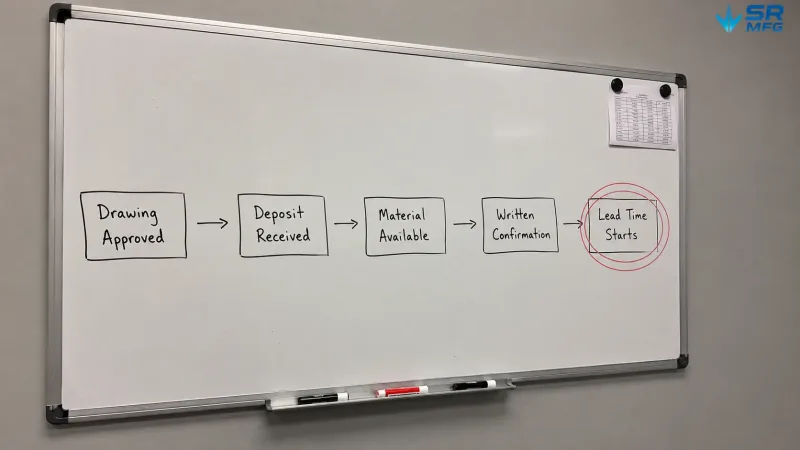
Lead time does not always start from the order confirmation date — it often depends on multiple prerequisites such as drawing approval, deposit receipt, and material availability.
Common Problems Related to Order Confirmation Date
Treating the Quotation Date as the Order Confirmation Date
A quotation is usually issued by the supplier based on the buyer’s sheet metal RFQ, drawings, and commercial requirements. It may include price, lead time, and payment terms.
However, a quotation is not necessarily a final order.
Only after the buyer issues a purchase order and the supplier formally confirms it does the order usually enter a clearer execution stage.
Starting Lead Time Before Technical Details Are Finalized
If technical drawings, material requirements, inspection standards, or surface finish details are incomplete during negotiation, the supplier may not be able to prepare production properly.
This can directly affect the actual delivery schedule.
Not Updating the Confirmation After Order Changes
Any major change to the order should be reviewed and confirmed again.
This may include changes to:
- Drawings
- Materials
- Tolerances
- Surface treatment
- Quantity
- Packaging
- Shipping requirements
In stricter projects, even small changes in dimensions, tolerances, or packaging methods may require a new confirmation.
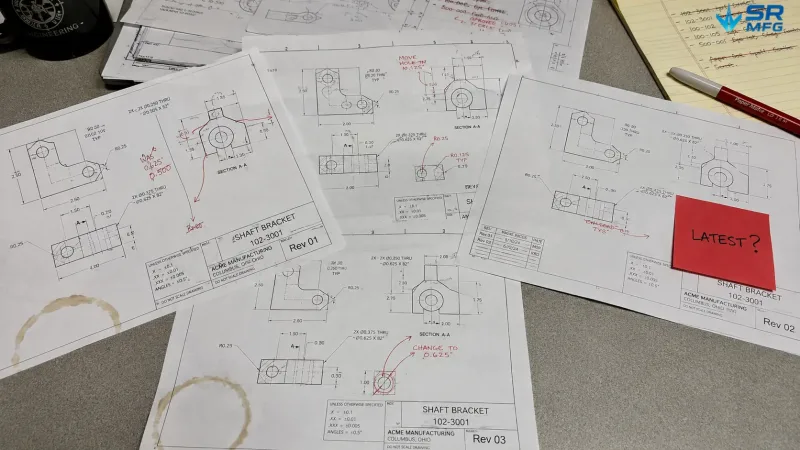
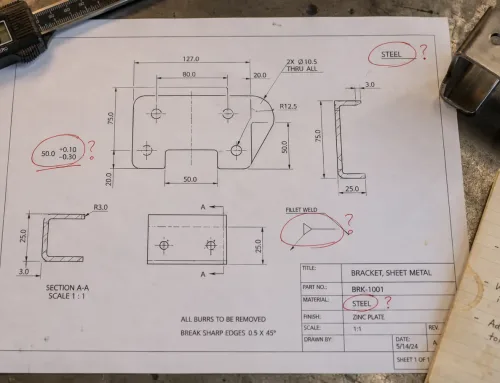
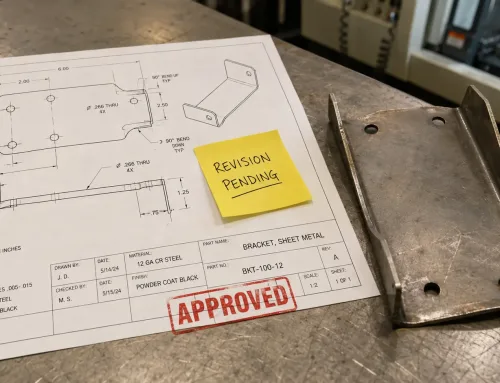
When drawings, tolerances, or specifications change but the order confirmation is not updated, version confusion can lead to production errors and delivery delays.
Confusing Estimated Delivery Date with Confirmed Delivery Date
An estimated date is only a rough projection.
Buyers should not place an order based only on a vague delivery signal. Instead, they should ask the supplier to review the requirements carefully and provide a clear confirmed delivery date.
How Should Buyers Use the Order Confirmation Date in Sheet Metal Procurement?
If buyers want to use the order confirmation date as an important milestone in sheet metal procurement, they should take the following steps:
- Ask the supplier to provide written confirmation.
This can be a signed contract, purchase order acknowledgment, or a clear email confirmation. - Confirm drawings, materials, price, quantity, payment terms, and quality requirements.
These details should be checked carefully before production scheduling begins. - Define the starting point of lead time in writing.
For example, clarify whether lead time starts after deposit receipt, sample approval, final drawing approval, or written order confirmation. - Record every important delivery milestone.
This helps buyers evaluate supplier delivery performance and identify potential risks early.
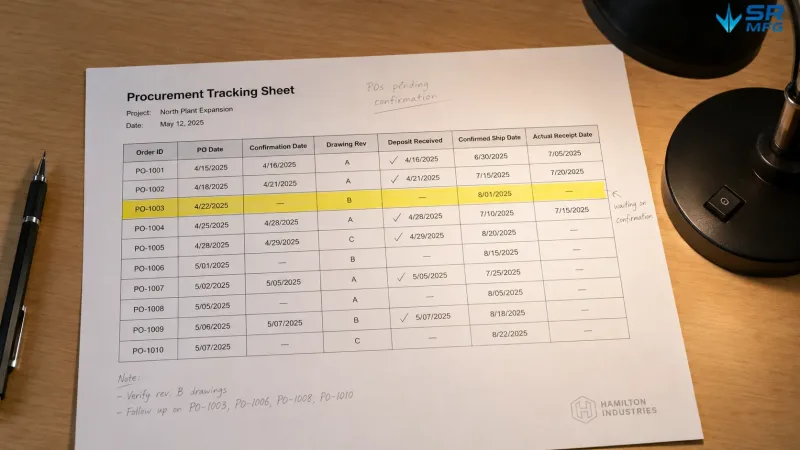
Tracking the order confirmation date alongside other milestones helps buyers evaluate supplier performance, spot delays early, and maintain a clear procurement timeline.
If any abnormal order change occurs, buyers should communicate with the supplier immediately. Such changes may affect not only delivery time, but also cost, production sequence, material preparation, and quality responsibility.
Example: Order Confirmation Date in a Sheet Metal Project
Suppose a buyer sends an RFQ for a custom sheet metal part made from stainless steel. After reviewing the RFQ, the supplier provides a quotation. The buyer then issues a purchase order on June 1.
However, the supplier later finds that a specific paint color required for the surface finish specification is not available in stock. The supplier needs to source the coating material before confirming the full delivery plan.
On June 4, the supplier sends written confirmation to the buyer and includes the final delivery schedule.
In this case, the correct order confirmation date is June 4.
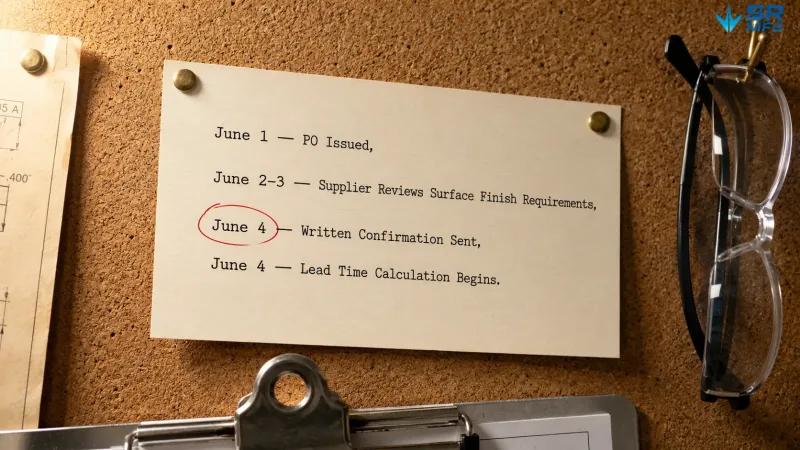
In this example, the supplier confirmed the order on June 4 after resolving a surface finish material issue — making June 4, not June 1, the correct order confirmation date.
If both parties agreed that lead time starts from written confirmation, then the production lead time should be calculated from June 4, not June 1.
If the buyer later changes the order requirements, the lead time may need to be adjusted again, because the previous confirmation may no longer reflect the final agreed scope.