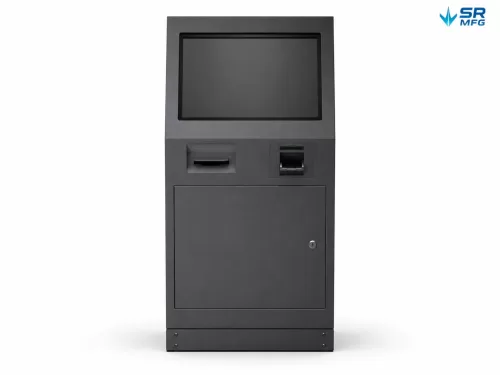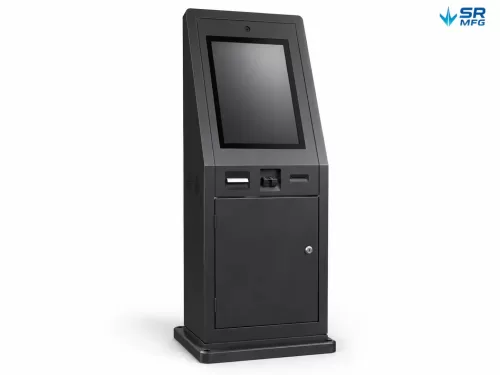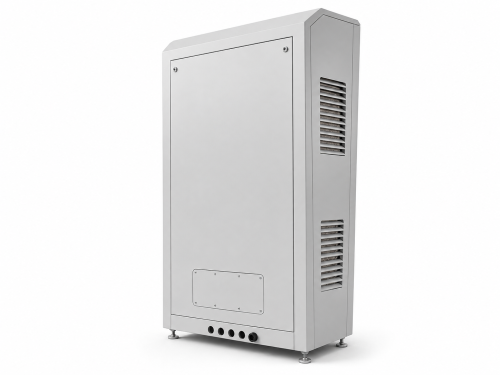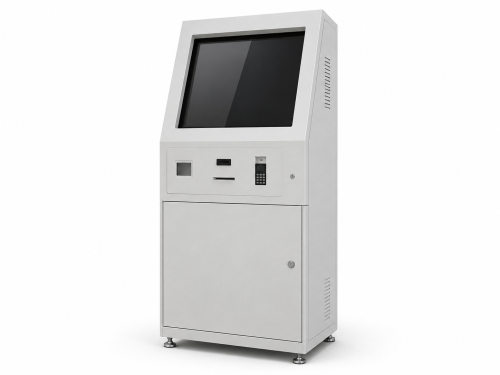
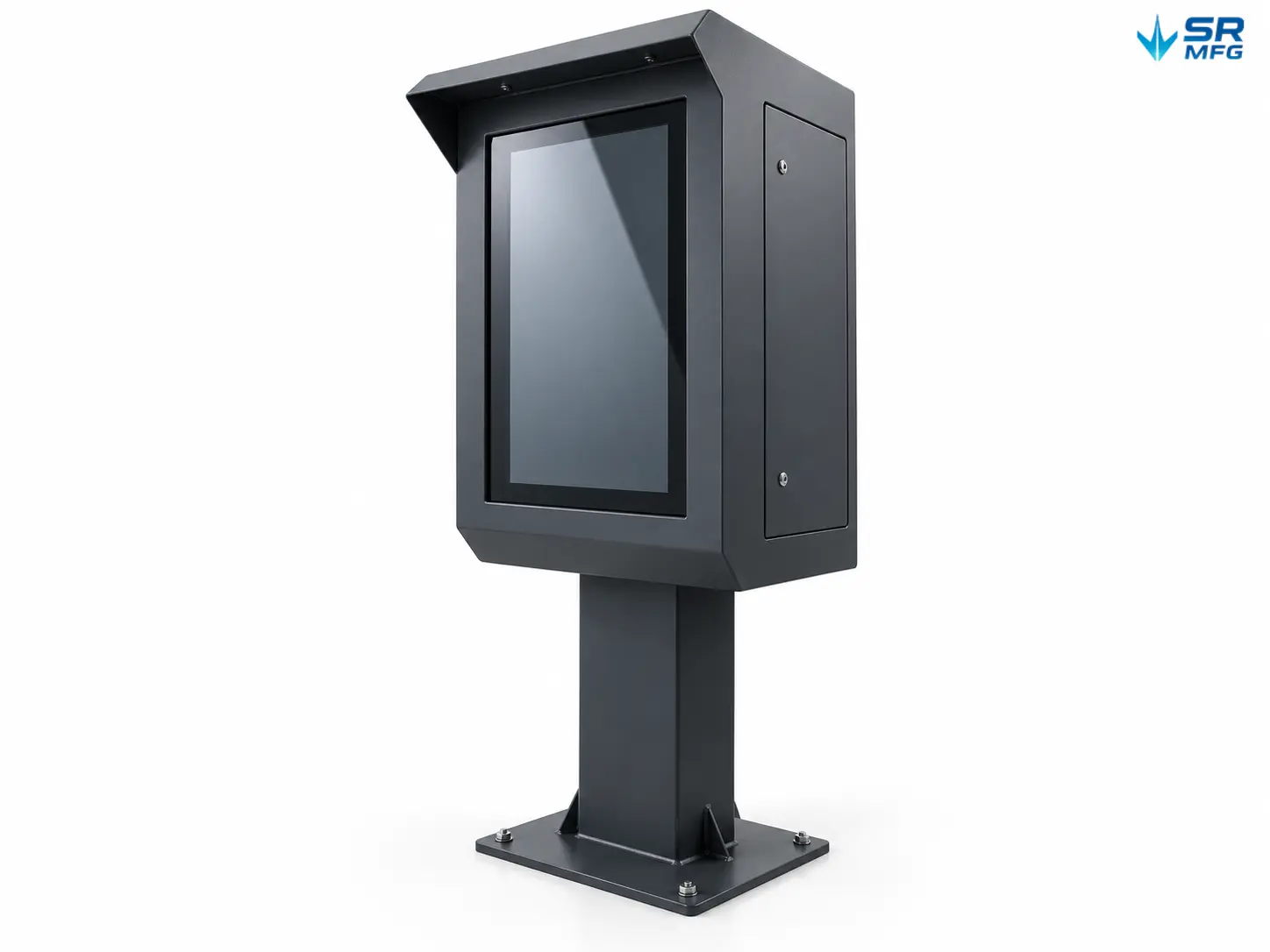
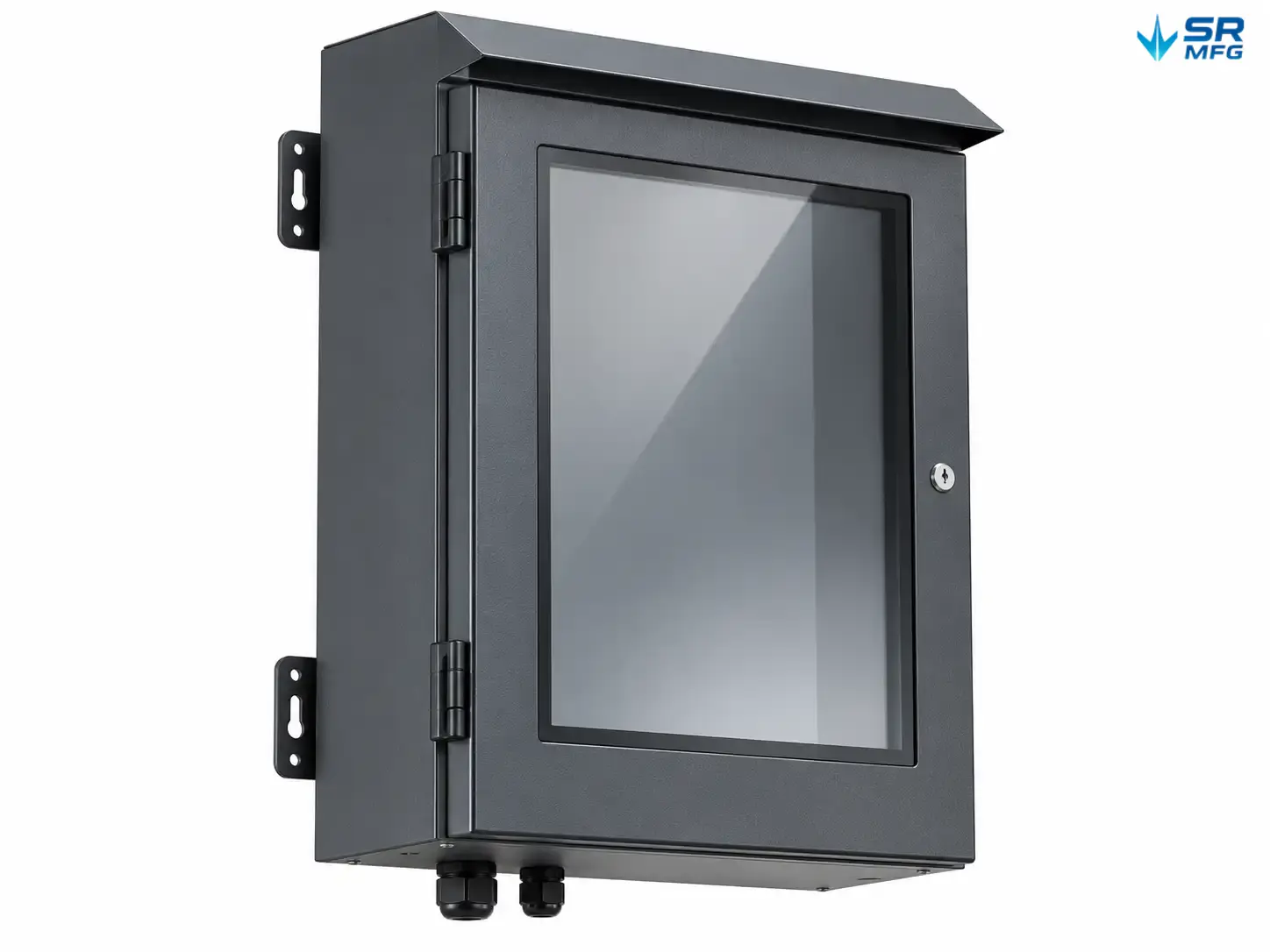
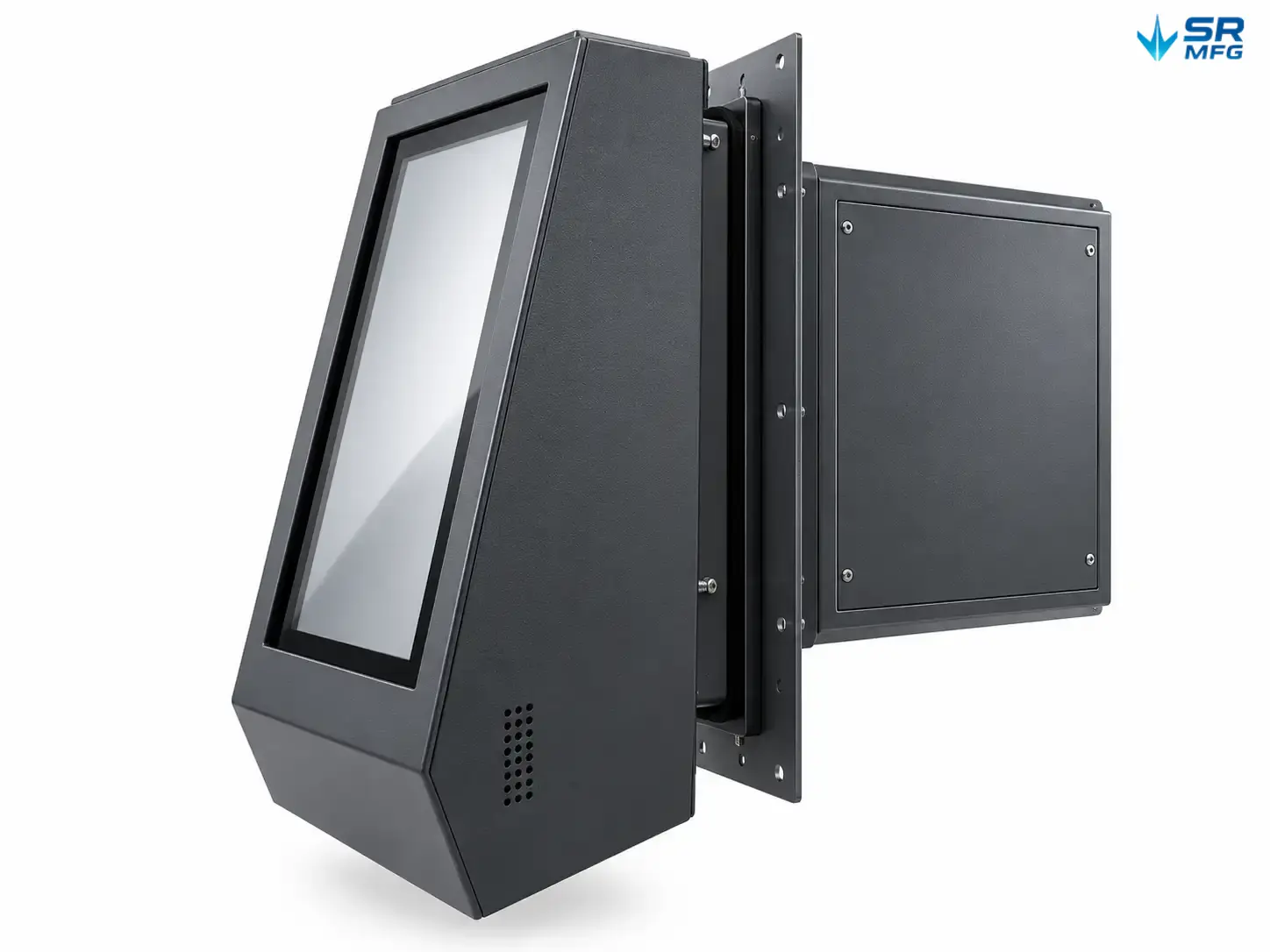
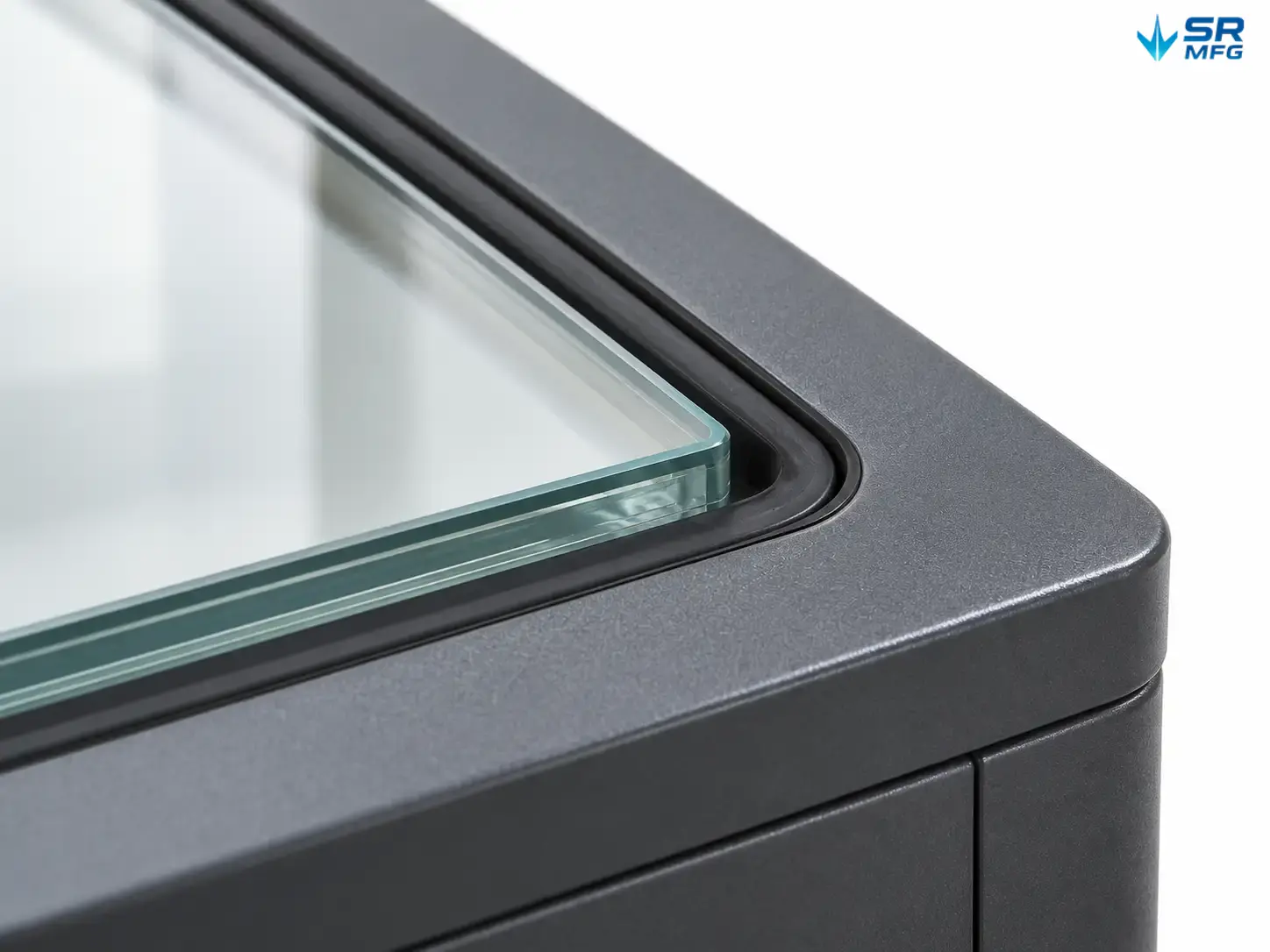
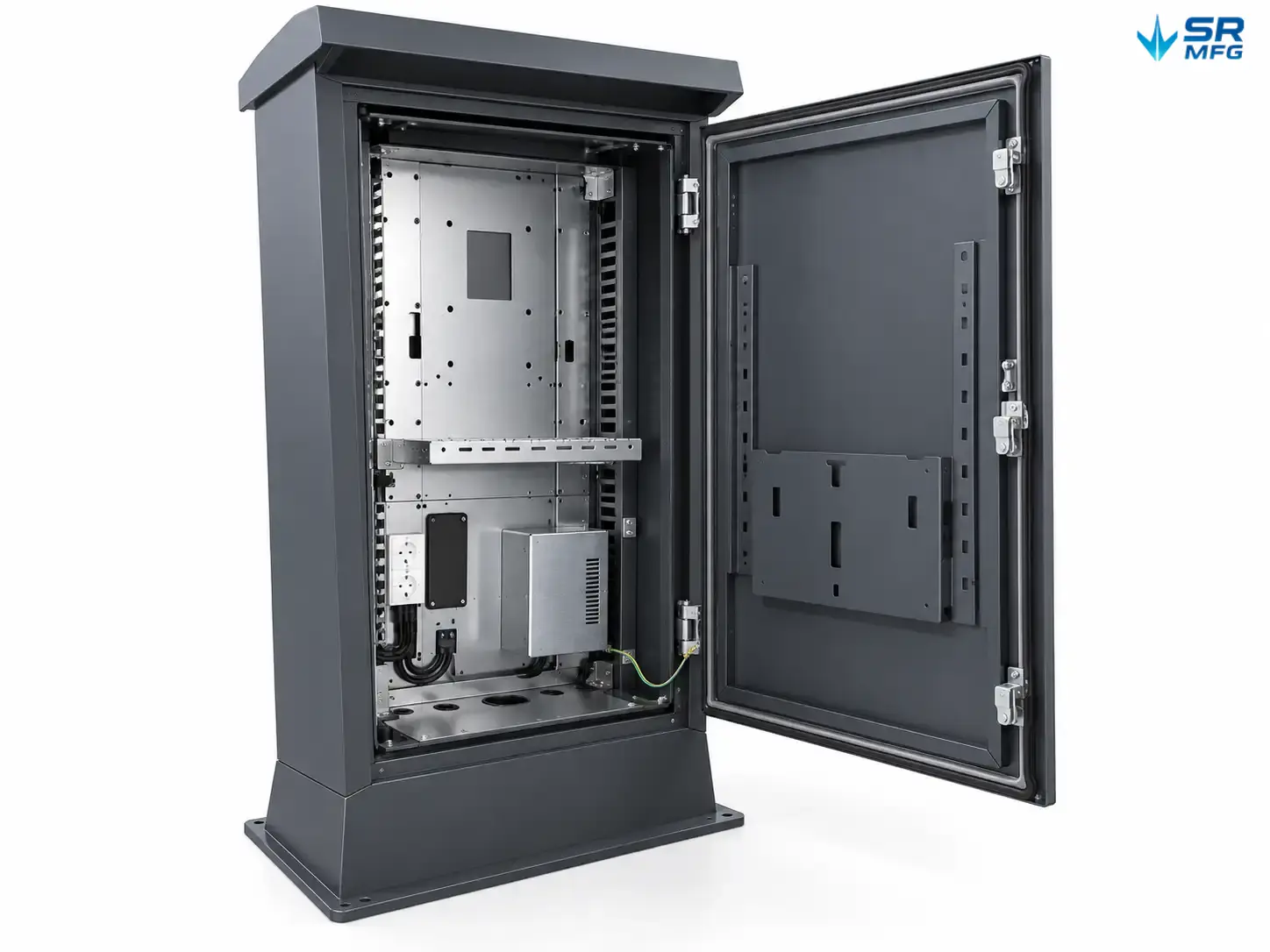
Weatherproof Kiosk Enclosures
Custom sheet metal weatherproof kiosk enclosures for outdoor digital signage, self-service terminals, wayfinding displays, and public interactive stations.
- Construction: Laser-cut, CNC-bent, and welded sheet metal body with a safety-glass viewing window and service access door
- Materials: Powder-coated carbon steel, galvanized steel, or stainless steel, selected by exposure level
- Protection: Weather-sealed structure against rain, dust, humidity, direct sun, and public-area tampering
- Mounting: Pedestal, wall-mount, through-wall, or freestanding — load structure engineered to site conditions
- Equipment integration: VESA display interface, internal equipment space, and sealed cable entry
- Custom options: Screen opening size, functional cut-outs, service door design, thermal package, RAL color, branding
Send your display model, install environment, and quantity for a fabrication-ready quote. Prototypes and production runs supported.
Product Details
| Specification | Value / Range | Notes |
|---|---|---|
| Product Type | Outdoor weatherproof kiosk enclosure | Sheet metal fabricated; display supplied by customer |
| Body Material | Carbon steel / Galvanized steel / Stainless steel | Grade selected by service environment |
| Body Fabrication | Laser cutting + CNC bending + welded assembly | Seams sealed and finished before coating |
| Viewing Window | Laminated safety glass / Tempered glass / Touch-ready window | Mounted in a sealed frame |
| Panel Thickness | Set individually by panel span and load | Body, door, and base may use different gauges |
| Screen Opening | Custom to display; standard size bands available | Sized to visible area and bezel retention |
| Display Mounting | VESA hole pattern or machined custom plate | Pattern confirmed to display specification |
| Protection Design | Weather-sealed enclosure; target IP class set per application | Seals, entries, and vents designed to site conditions |
| Mounting Format | Pedestal / Wall mount / Through-wall / Freestanding | Structure and anchoring designed to the install base |
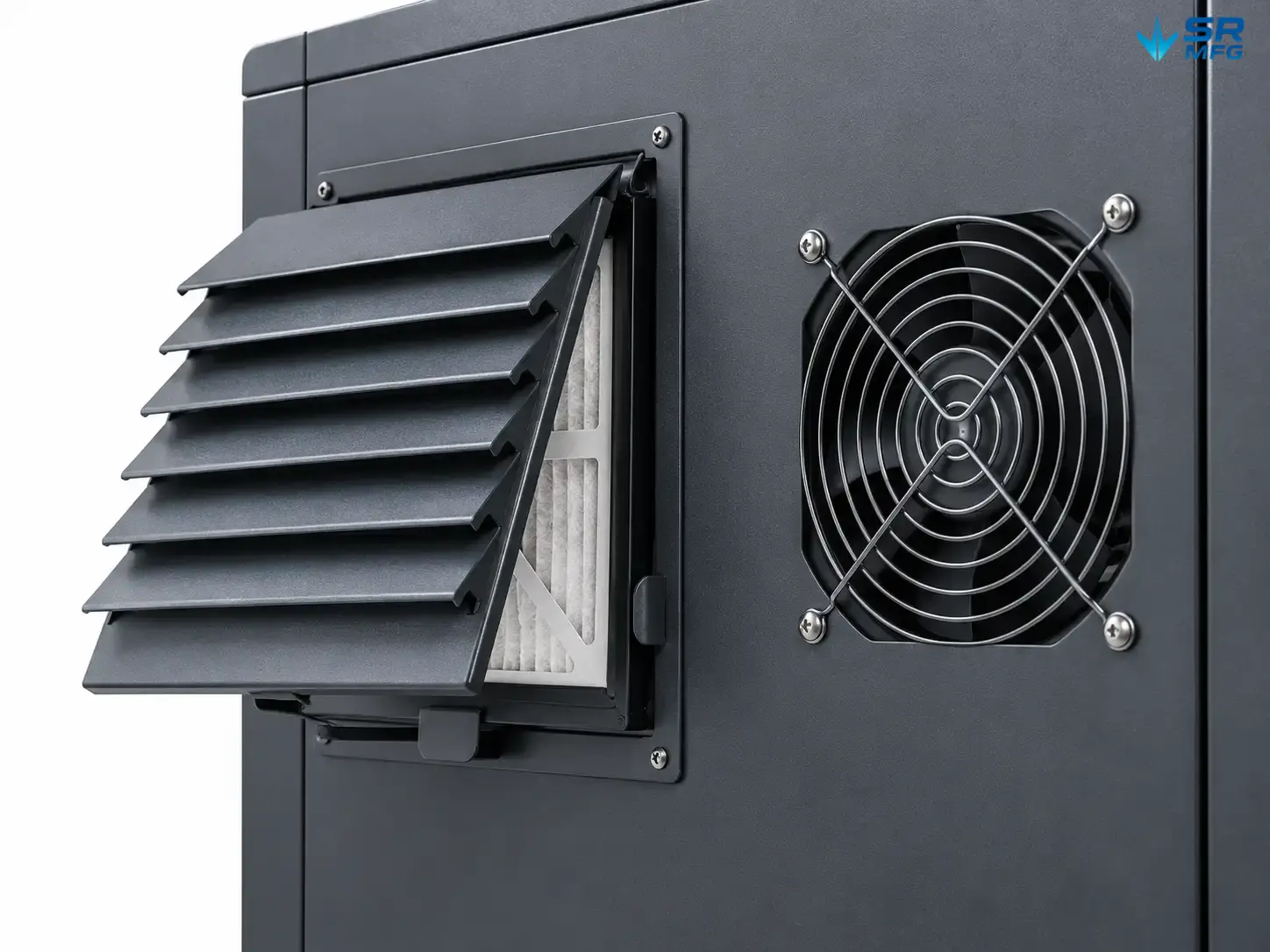
| Thermal Options | Passive vents / Fan-filter unit / Heater-ready / AC-ready | Configured to climate and internal heat load |
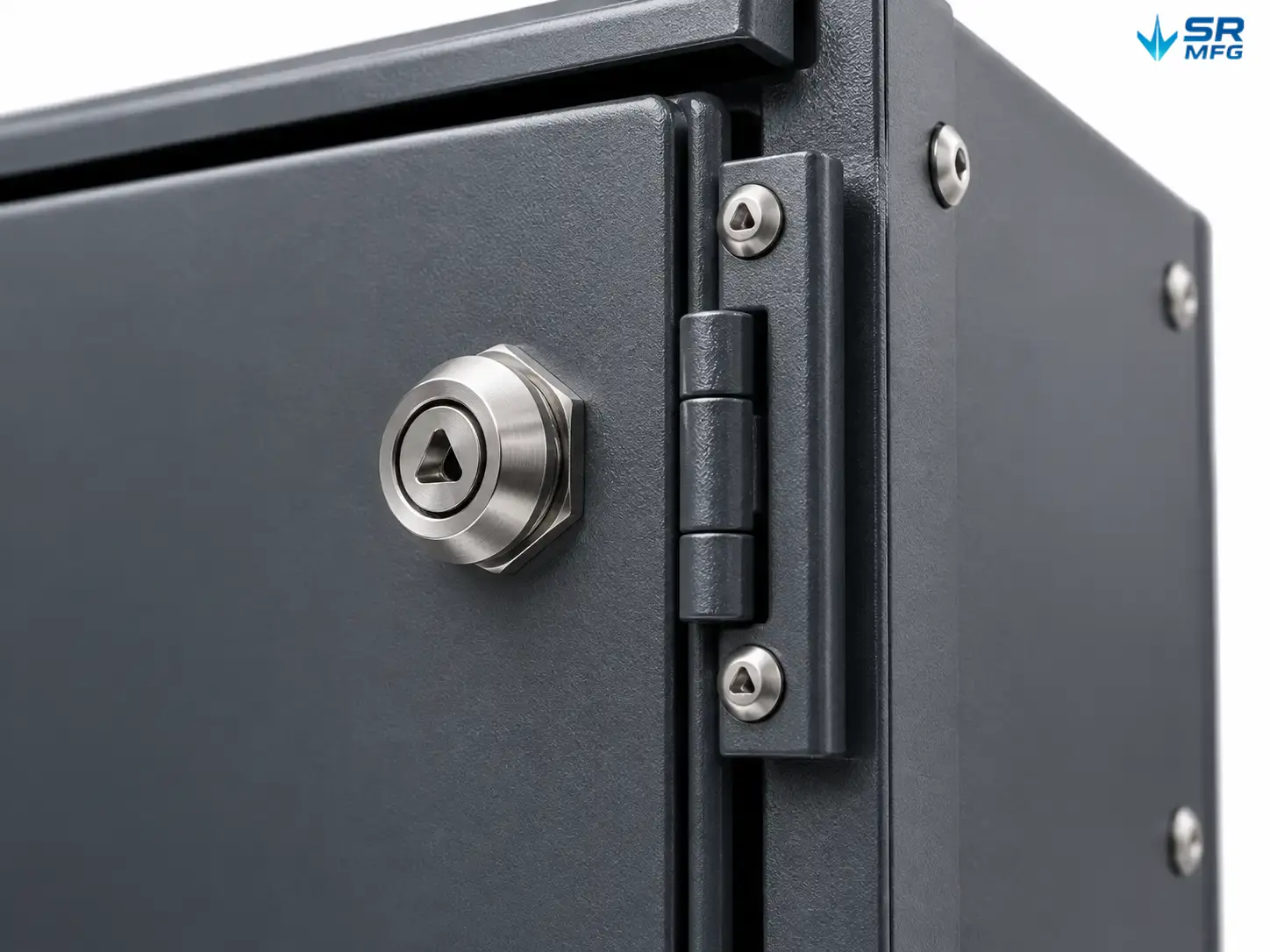
| Locking Options | Tamper-resistant fasteners / Compression lock / Keyed lock | Selected for the access-control requirement |
| Sealing System | Continuous gasket with drip edges | Gasket compression verified at sample stage |
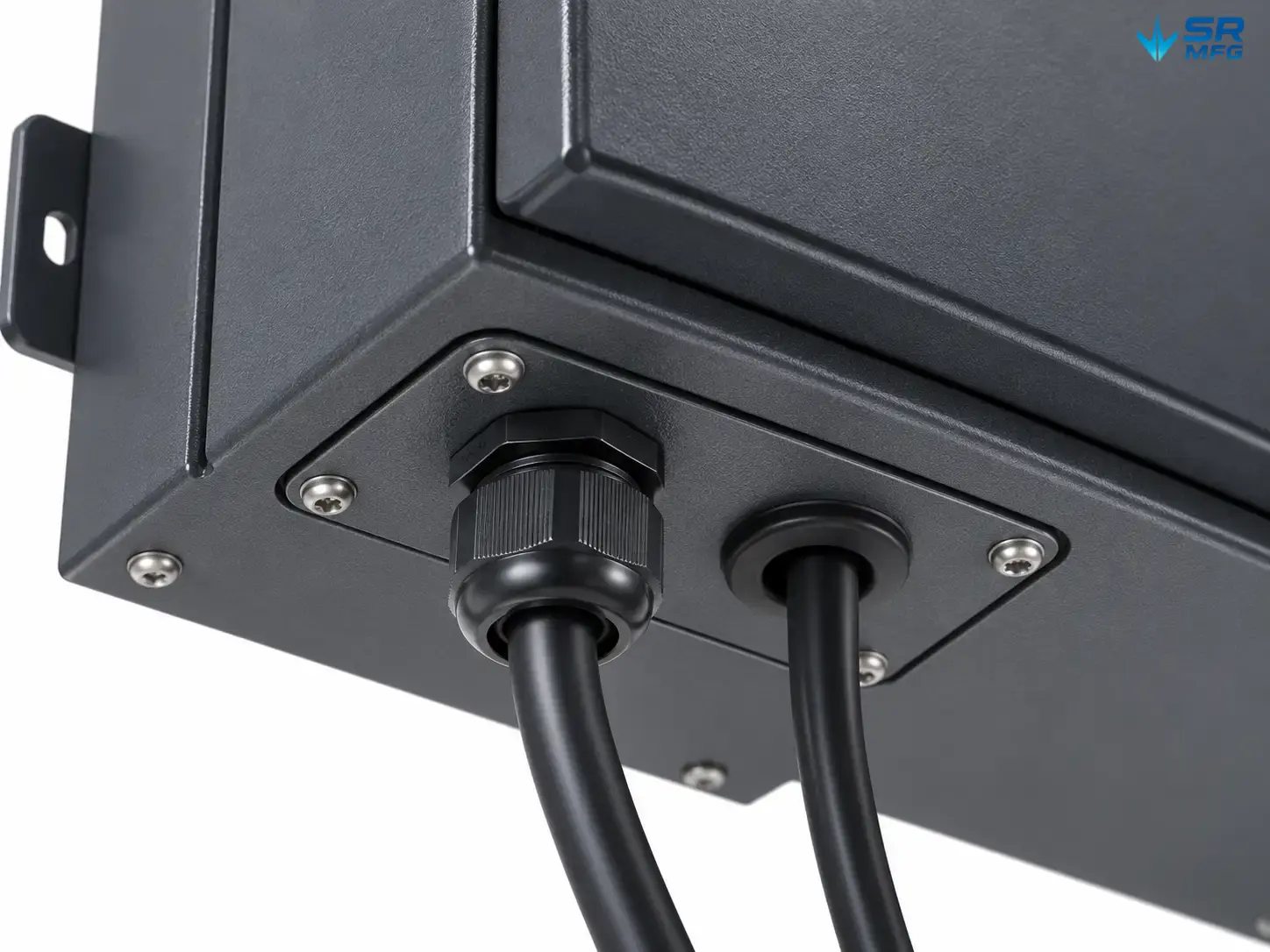
| Cable Entry | Sealed bottom or rear entry; grommets or gland plates | Position set by field cable stub-up |
| Internal Equipment Space | Provisions for media player, power, and network gear | Internal layout to customer equipment list |
| Surface Finish | Powder coating (RAL) / Galvanized / Stainless finish | Outdoor durability prioritized |
| Structural Reinforcement | Stiffener and weld layout engineered per enclosure size | Meets expected wind and impact loads |
| Custom Cut-outs | Card readers, printers, cameras, speakers, windows | Machined to drawing coordinates |
| Fabrication Capability | Laser cutting, bending, welding, drilling, tapping, assembly | Complete sheet metal process chain |
| Inspection Scope | Dimensions, glass fit, seal, finish, assembly | First-article and lot inspection options |
| Supply Scope | Enclosure structure only | Display, electronics, and installation by customer |
| Drawing Formats | STEP, DXF, DWG, PDF, SolidWorks | 2D and 3D drawings accepted |
| Prototype Lead Time | Confirmed after drawing release | Depends on size and finish requirements |
| Production Lead Time | Confirmed by order quantity and capacity | Include your target on-site date in the inquiry |
| Order Quantity | Prototype through repeat production | MOQ negotiated per configuration |
Weatherproof Enclosures Built for Outdoor Displays and Self-Service Terminals
Outdoor kiosks work in demanding conditions. Rain tracks along sheet metal seams. Direct sun adds heat load on the viewing glass. Dust finds its way in through vents. In public areas, equipment takes pushes, leans, and the occasional attempt to force a service door.
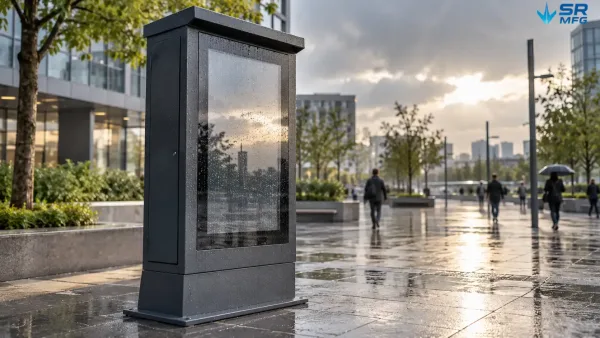
Weatherproof kiosk enclosures in an outdoor public environment exposed to sun, rain, and public use.
An outdoor kiosk enclosure has to protect the display and the electronics inside while staying readable, serviceable, and acceptable in a public space.
We fabricate weatherproof kiosk enclosures in sheet metal for outdoor digital signage, self-service terminals, wayfinding stations, and interactive displays.
Our supply scope is the enclosure structure. You provide the display and the computing hardware; we design and build the metal housing around them.
Pedestal, wall-mount, through-wall, and freestanding enclosures are produced to project drawings.
1. What the Enclosure System Includes
A kiosk enclosure is a complete structural assembly — not just a bent metal box. The parts have to work together for the equipment to run reliably.
| Component | Main Function |
|---|---|
| Enclosure body | Structural support and weather barrier for the internal equipment |
| Viewing window | Safety glass or touch panel isolating the display from the public side |
| Service door | Controlled maintenance access without exposing the display face |
| Mounting structure | Pedestal, wall plate, or through-wall flange transferring loads to the install base |
| Display interface | VESA bracket or machined plate positioning the display in the opening |
| Equipment cavity | Space reserved for media player, power distribution, and network gear |
| Sealing system | Gasket path, drip edges, and sealed cable entries keeping water out |
Displays, payment devices, and printers are supplied and configured by the customer. We design the openings, brackets, and clearances around the equipment you plan to install.
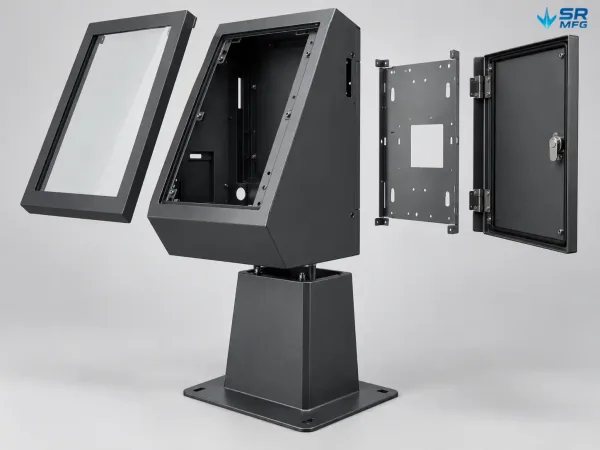
Main components of a kiosk enclosure system: body shell, viewing window, service door, mounting structure, and sealing.
2. Fabrication Process and Structural Design
Kiosk enclosures rarely fail because of the sheet metal itself. The more common causes are a sagging service door, a gasket that never fully compresses, or a cable entry that leaks in wind-driven rain.
We treat those areas as structural design work — not as afterthoughts.
Panel Design
Body and door gauges are selected by panel span and expected load. A tall freestanding front panel and a compact wall-mount unit do not share the same thickness strategy.
Stiffening
Stiffeners or reinforcement plates are laid out on large flat panels to limit flex under wind load or external impact.
Welding
Weld positions and seam layout balance joint strength and appearance. Visible seams are dressed before coating.
Door Frame
The frame and hinge set are engineered to door mass so the gasket stays in compression over years of service.
Service Layout
Doors and access panels are placed around real maintenance work — connector reach, filter changes, and media-player swaps without removing the display.
On pedestal units, the base carries both enclosure weight and field loads. Anchor pattern, base-plate thickness, and pedestal gauge are confirmed to the actual install base — concrete pad, slab, or structural steel.
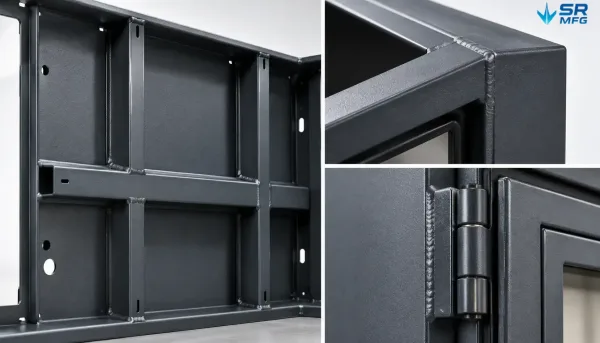
Panel stiffening, welded seams, and door frame construction on a fabricated sheet metal kiosk enclosure.
3. Weather and Impact Protection
Every weatherproof kiosk enclosure is designed as a system against its site — not against a single rating number.
| Site Demand | Enclosure Response |
|---|---|
| Wind-driven rain | Continuous gasket, door overlap, drip edges, sealed cable entries |
| Dust and debris | Filtered vents or sealed configuration; cable glands at entry points |
| Condensation | Ventilation options, heater-ready provisions, or insulated panels in swing climates |
| Direct sun and UV | Powder-coated or stainless body; glass selected for the thermal load |
| Public impact | Laminated safety glass, tamper-resistant fasteners, reinforced viewing frame |
| Tampering and theft | Compression or keyed locks, hidden hinges, service door kept off the public face |
The target IP class is confirmed per application. A sheltered transit platform and a fully exposed coastal plaza do not share the same seal, vent, or fastener strategy. We set the design to the conditions you describe.
Scenario examples:
A wayfinding terminal on a sunny retail plaza may need a high-bright display behind laminated safety glass, a thermal package sized for solar heat load, and a lock layout that keeps the service door off the public face.
A payment terminal at a municipal service window may need a through-wall body, a smaller opening, and a seal strategy designed around the wall penetration.
Same product family — clearly different engineering priorities.
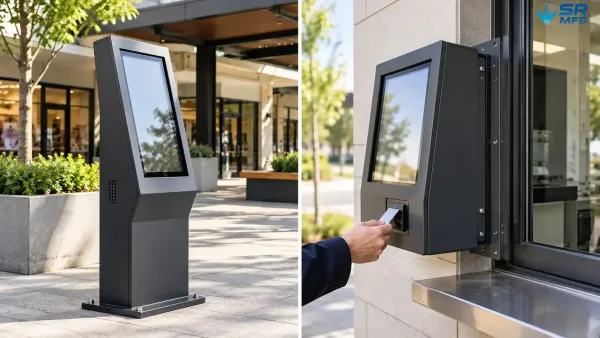
Two typical deployment patterns: open-plaza wayfinding kiosk and through-wall payment terminal.
4. Display Mounting and Equipment Integration
The enclosure has to fit the display you are actually installing — not a generic reference model.
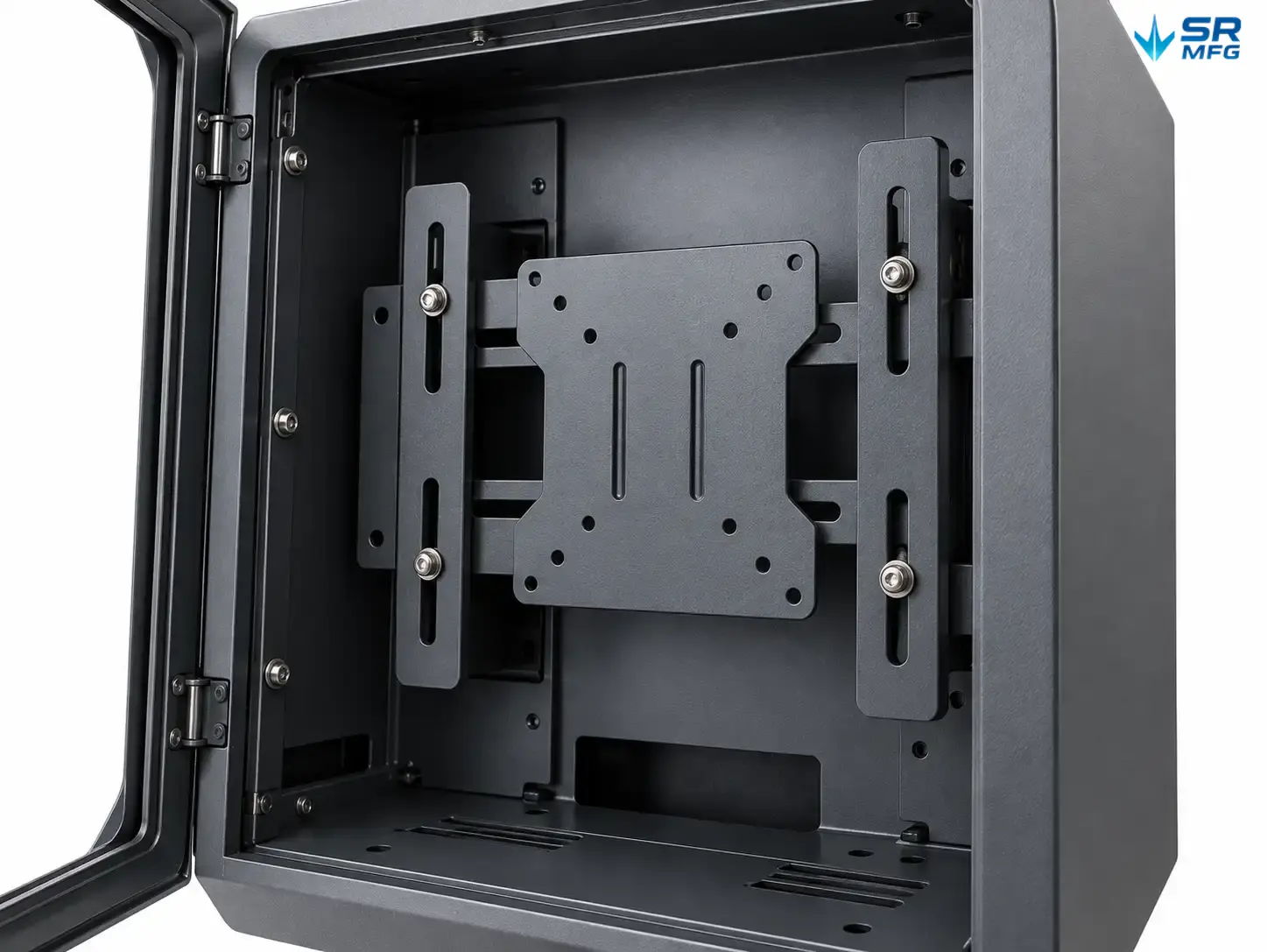
VESA Mounting and Custom Brackets
Standard VESA hole patterns are supported, and custom mounting plates can be machined to your display’s interface.
Screen Opening and Bezel
Opening size follows the display’s visible area. Bezel width is set by glass retention and weather sealing requirements.
Internal Equipment Space
Enclosure depth and internal mounting positions are planned around media players, small industrial PCs, power modules, and network gear.
Cable Management
Internal routing paths and strain relief keep field-wiring pull off the connectors.
Sealed Cable Entry
Bottom or rear entries with grommets or gland plates; hole position follows the field cable stub-up.
Peripheral Cut-outs
Openings for card readers, printers, speakers, cameras, or intercom modules are cut to your module dimensions.
Provide the display model and a simple equipment list early in the project. Screen opening size, bracket position, and cavity depth are the three items most likely to cause rework when they are confirmed late.
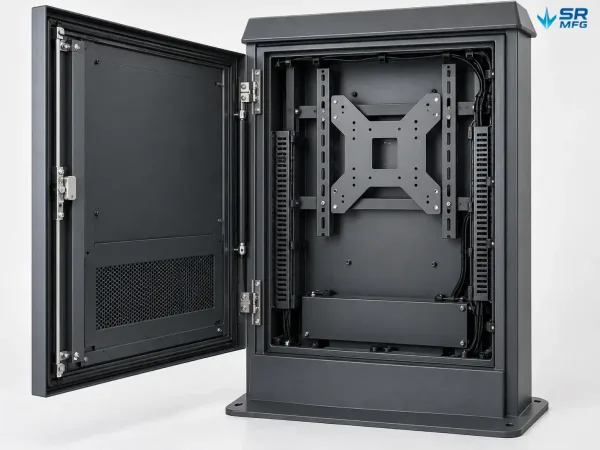
Interior view showing VESA mounting interface, equipment cavity space, and cable routing.
5. Custom Enclosure Engineering
We manufacture to your drawing instead of asking you to redesign the project around a catalog box.
| Custom Item | What You Provide | What We Control |
|---|---|---|
| Overall size | Target envelope or H × W × D | Bend feasibility, stiffener layout, ship dimensions |
| Screen opening | Display model or visible area | Glass retention, bezel seal, bracket interface |
| Functional cut-outs | Hole chart or marked drawing | Cut quality, edge spacing, seal integrity |
| Mounting | Pedestal / wall / through-wall + site conditions | Base design, anchor pattern, load path |
| Thermal package | Climate description and internal heat load | Vents, fan-filter, heater or AC-ready provisions |
| Surface finish | RAL code and exposure conditions | Coating system and pre-treatment sequence |
| Branding | Logo artwork and placement | Decal zones, engraved plates, or color match |
Standard production flow:
Drawing review → quote and clarification → prototype or first article → production → inspection and packing.
Accepted drawing formats: STEP, DXF, DWG, PDF, SolidWorks.
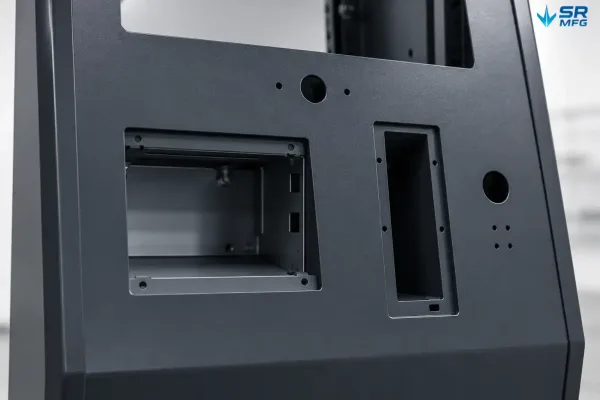
Example of custom functional cut-outs machined to drawing coordinates on the enclosure body.
6. Ordering, Lead Time, and Warranty
Minimum Order Quantity (MOQ)
Confirmed per configuration. Prototype builds are supported for fit verification and field testing.
Production Lead Time
Confirmed after drawing review, depending on enclosure size, finish requirements, and quantity. Include your target on-site date so capacity can be planned.
Packing
Crated or palletized for export transport. Glass components are protected, and the enclosure is blocked against movement in transit.
Warranty
Coverage period and scope for fabrication and finish defects are confirmed per order.
Supply Scope
The enclosure structure only. Displays, electronics, field wiring, anchoring, and installation are handled by other parties unless agreed otherwise in the contract.
7. Application Scenarios
Outdoor Digital Signage
Advertising and information displays in commercial plazas, transit areas, and retail exteriors. Wall-mount or pedestal enclosures with laminated glass, thermal packages sized for sun load, and finishes coordinated with the surrounding architecture.
Self-Service and Payment Terminals
Through-wall or freestanding enclosures with cut-outs for card readers, printers, and intercoms. Service doors positioned so crews maintain internal hardware without removing the display.
Municipal Wayfinding and Public Information
Freestanding kiosks for parks, civic spaces, and streetscapes. Tamper-resistant hardware, vandal-resistant glazing, and layouts planned around viewing distance and ADA approach requirements.
Transit Hubs and Campus Directories
High-duty enclosures for stops, stations, and campus paths. Bracket vibration behavior, sealed cable entries, and thermal packages for equipment running continuously.
These are common configuration patterns, not fixed packages. Final design follows your display, site, and install method.
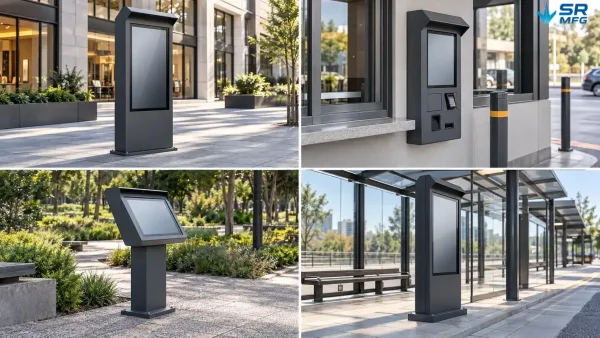
Common application patterns for weatherproof kiosk enclosures across signage, self-service, wayfinding, and transit.
Request a Quote for Your Kiosk Enclosure Project
Send the project information you already have. Incomplete packages are fine — we will confirm the remaining technical details.
Information that helps:
- Display: Model number or visible screen area
- Mounting: Pedestal, wall, through-wall, or freestanding — plus the install base type
- Site conditions: Sun exposure, temperature range, rain, dust, salt air, public contact level
- Cut-outs: Card readers, printers, cameras, speakers, or intercom modules
- Thermal needs: Cooling requirements or internal heat load
- Material and finish: Your specification, or let us recommend based on exposure
- Commercial requirements: Quantity, target on-site date, and any inspection requirements
Before production release, our engineering review covers bend feasibility, glass and sealing approach, stiffener layout, and the main cost drivers.