
Note: In some industries, especially construction and government services, RFQ may also mean Request for Qualifications. That process focuses on evaluating supplier capability rather than pricing. This article focuses on the meaning of RFQ in manufacturing procurement.
What Is an RFQ?
An RFQ is a procurement document used when the buyer already knows exactly what they need. The design is finalized, the material is selected, and the quantity is confirmed or estimated. The main purpose is to collect comparable information from different suppliers, including price, quality capability, factory conditions, certifications, and lead time.
An RFQ helps buyers make a rational, data-based sourcing decision instead of choosing a supplier based only on instinct or the lowest visible price.
However, an RFQ is not a contract. It is a request for information and pricing. A legally binding agreement is usually formed only after the buyer issues a purchase order (PO) and the supplier accepts it.
Key Differences Between RFQ, RFI, RFP, and PO
| Document | Purpose | When to Use It |
|---|---|---|
| RFI — Request for Information | Collect general information about suppliers and their capabilities | Early research stage, before the design is finalized |
| RFP — Request for Proposal | Ask suppliers to propose a solution for a defined problem | The buyer knows the goal but is not sure about the exact method or design |
| RFQ — Request for Quotation | Obtain pricing for a product with fully defined specifications | The design, material, quantity, and requirements are already clear |
| PO — Purchase Order | Confirm the order and agreed terms with the selected supplier | After the RFQ process is completed and a supplier has been selected |
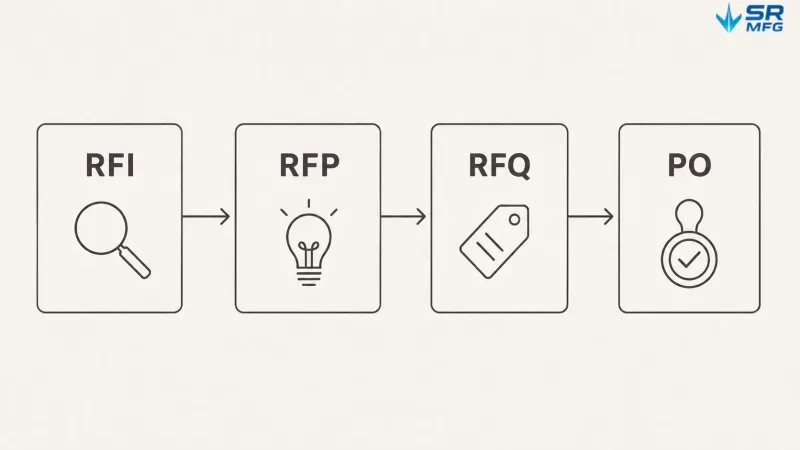
The four key procurement documents serve different purposes: RFI gathers supplier information, RFP requests proposed solutions, RFQ obtains pricing for defined specifications, and PO confirms the order.
When Should You Use an RFQ?
You should use an RFQ when all of the following conditions are met:
- The part design has been finalized, and dimensioned technical drawings are available.
- The material type, grade, and thickness have been confirmed.
- The quantity, or at least the estimated production volume, is known.
- The surface finish, tolerances, and quality requirements are clearly defined.
If the design is still at the concept stage and you need the supplier to provide manufacturability advice, cost optimization suggestions, or alternative solutions, an RFI or RFP may be more suitable.
Sending an RFQ with incomplete information often leads to inaccurate pricing, repeated communication, and wasted time.
What Should a Sheet Metal RFQ Include?
The accuracy of a supplier’s quotation depends heavily on the quality of the RFQ package provided by the buyer. A well-prepared RFQ can significantly reduce back-and-forth communication and prevent quotation errors.
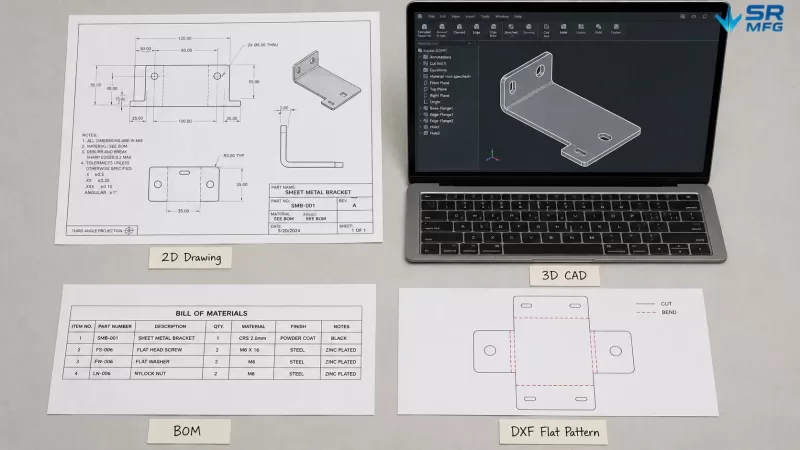
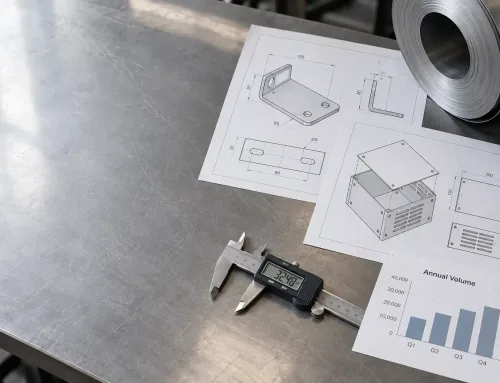
A complete sheet metal RFQ package should include 2D dimensioned drawings, 3D CAD files, a Bill of Materials, and DXF flat patterns when applicable — each file type serves a different purpose in the quotation and manufacturing process.
Engineering Drawings and CAD Files
Provide a 2D dimensioned technical drawing in PDF format for reference and a 3D CAD file, such as STEP or IGES, for manufacturing review. For laser cutting and other flat-pattern processes, such as punching or stamping, a DXF flat pattern file may also be required.
Without proper drawings, suppliers may misunderstand the geometry, which can result in incorrect quotations or production deviations.
Bill of Materials — BOM
For assemblies or multi-part orders, include a Bill of Materials (BOM). The BOM should list each part number, description, material, quantity, and revision level.
A missing or outdated BOM is one of the most common causes of quotation mistakes in sheet metal projects.
Material Specifications
Writing only “steel” or “aluminum” is not enough. A complete material specification should include:
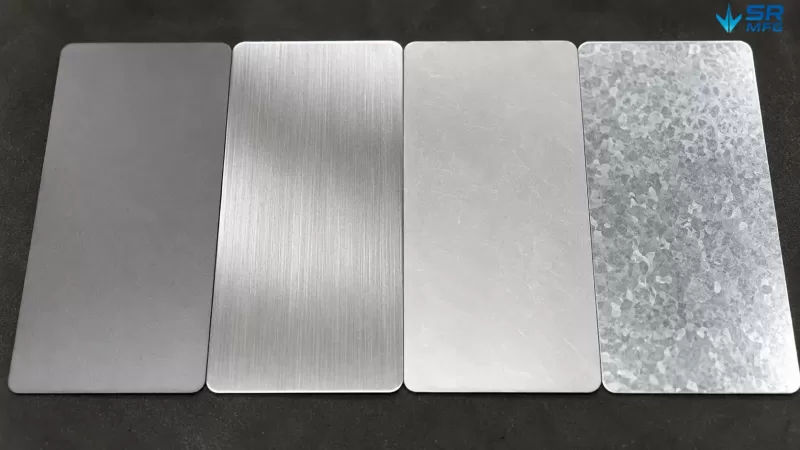
Different sheet metal materials have distinct surface appearances, cost levels, and manufacturing characteristics. Specifying the exact material grade in an RFQ — not just “steel” or “aluminum” — helps suppliers provide accurate and comparable quotations.
- Material grade, such as 304 stainless steel, 5052-H32 aluminum, or SGCC galvanized steel
- Material thickness
- Applicable standard, such as ASTM, EN, or JIS
- Special requirements, such as rolling direction or surface quality grade
Material selection directly affects cost, manufacturability, surface finish compatibility, and lead time.
Quantity and Order Pattern
Clearly state the quantity required for quotation. It is also helpful to provide additional context, such as:
- Is this a 5-piece prototype order?
- Is it a 200-piece first production batch?
- Is it a 10,000-piece annual production order?
Unit prices can vary significantly between quantity levels because programming, setup, tooling, fixture costs, and material utilization are distributed differently.
If repeat orders are expected, mention this in the RFQ. Suppliers may offer better pricing based on the annual volume.
Tolerances and Dimensional Requirements
Separate general tolerances from critical dimensions that require tighter control. General tolerances are often based on standards such as ISO 2768.
If certain features require GD&T controls, such as flatness, perpendicularity, or position tolerance, these should be clearly marked on the drawing.
The tighter the tolerance, the higher the manufacturing and inspection cost. Tolerances should only be tightened when the function of the part truly requires it.
Surface Finish Requirements
When defining sheet metal surface finishing requirements, specify the required surface treatment, such as powder coating, anodizing, galvanizing, brushing, passivation, e-coating, or electroplating.
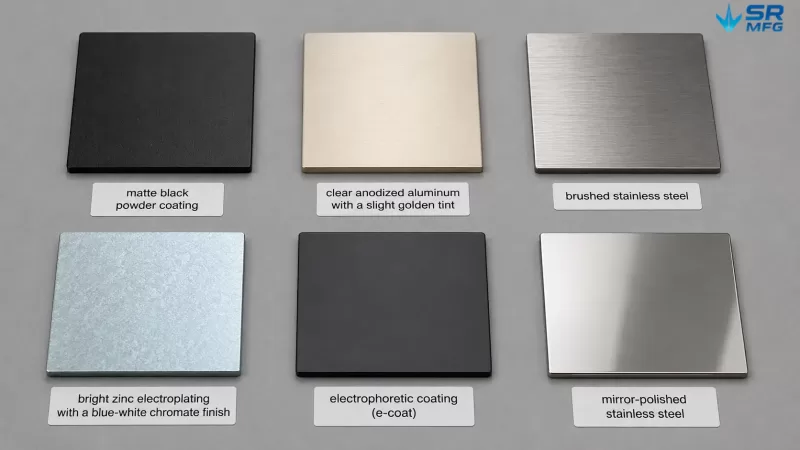
Common sheet metal surface finishes vary widely in appearance, cost, and lead time. Clearly specifying the finish type, color code, coating thickness, and masking requirements in an RFQ helps prevent miscommunication and ensures accurate pricing.
Also provide the color code, such as RAL or Pantone, coating thickness, texture requirements, and masking requirements.
If some surfaces are cosmetic and others are functional, mark them clearly on the drawing. Surface finishing can have a major impact on both cost and lead time.
Welding and Hardware Requirements
If welding is required, specify the sheet metal welding method, such as TIG welding, MIG welding, spot welding, or laser welding. The RFQ should also define welding locations, quality standards, and inspection requirements, such as visual inspection or dye penetrant testing.
For sheet metal parts with PEM nuts and threaded inserts, provide the part numbers, quantities, and installation positions.
Assembly Requirements
If the RFQ involves an assembly instead of a single part, provide an assembly drawing or assembly instructions.
List all fasteners, adhesives, or joining methods. Also clarify whether the supplier should quote individual parts only or a fully assembled product.
Quality and Inspection Requirements
Define the expected inspection level, such as:
- Dimensional sampling inspection
- Full dimensional inspection
- CMM measurement
- Functional testing
If a First Article Inspection (FAI) report is required before mass production, mention it in the RFQ.
Also state whether you need material certificates, RoHS or REACH compliance documents, inspection reports and other quality records.
Packaging and Shipping Requirements
Clarify whether the parts require individual packaging or bulk packaging. Also specify cosmetic surface protection, export packaging, palletizing requirements, and applicable trade terms such as FOB, CIF, or DDP.
Unclear packaging requirements often lead to damaged parts on arrival. These problems can usually be prevented during the RFQ stage.
Commercial Terms
Include quotation validity, payment terms such as Net 30 or Net 60, currency, and how one-time engineering costs or tooling costs should be handled.
If you have a target unit price or budget range, sharing it may help the supplier optimize the manufacturing solution. Whether to disclose this information depends on your purchasing strategy.
How Does the Sheet Metal RFQ Process Work?
A typical sheet metal RFQ process works as follows:
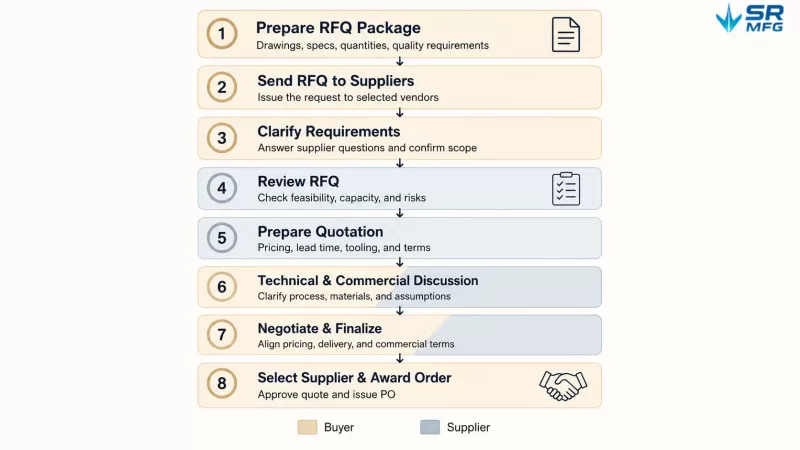
The sheet metal RFQ process typically follows eight steps — from the buyer preparing the RFQ package, through supplier quotation and DFM review, to final supplier selection and purchase order issuance.
| Step | Action |
|---|---|
| 1 | The buyer prepares the RFQ package, including drawings, BOM, material specifications, quantities, surface finish requirements, tolerances, and commercial terms |
| 2 | The buyer screens and selects qualified suppliers |
| 3 | The RFQ is sent to selected suppliers with a quotation deadline |
| 4 | Suppliers review the drawings, perform a DFM check, and calculate costs |
| 5 | Suppliers submit quotations, including unit price, tooling cost, lead time, and terms |
| 6 | The buyer compares quotations based on total cost, not only unit price |
| 7 | Clarification and negotiation take place; DFM feedback may lead to design adjustments |
| 8 | The buyer selects a supplier and issues a purchase order |
Quotation response time depends on part complexity.
For welded machine base frames and similar complex assemblies involving welding, multiple surface treatments, and tight tolerances, the quotation process may take 5–10 business days.
Key Factors That Affect Sheet Metal Quotation Pricing
Material Cost
Sheet metal material grade, thickness, and market price all affect the base cost. Thicker sheet metal usually increases material cost, while specialty alloys such as 316L stainless steel or 5083 aluminum are more expensive.
Material utilization also matters. This refers to how efficiently parts can be nested on a standard sheet. It can have a noticeable impact on cost, especially for small-batch orders.
Manufacturing Process and Complexity
The more bends a part has, the smaller the bend radius, and the more complex the geometry, the longer the manufacturing time.
A part that requires laser cutting, press brake bending, TIG welding, and hardware insertion will cost more than a simple flat laser-cut bracket. If special tooling or custom fixtures are required, those costs will also be included in the quotation.
Surface Treatment
Different surface treatments have different cost structures.
Powder coating is often priced by surface area. Anodizing may be affected by immersion time and process requirements. Electroplating may be priced by weight or surface area, depending on the supplier.
Masking requirements, which prevent certain surfaces from being coated, also increase labor cost.
Tolerance Requirements
Parts with general tolerances, such as ±0.5 mm or ISO 2768-m, are usually easier and less expensive to manufacture.
When critical dimensions require ±0.1 mm or tighter, suppliers may need to reduce cutting speed, add secondary machining, use dedicated fixtures, or perform 100% inspection. These steps increase cost.
Quantity and Batch Size
The unit price for 5 prototype parts may be 3–10 times higher than the unit price for 5,000 production parts. This is because programming, setup, equipment preparation, and tooling costs are spread across fewer parts.
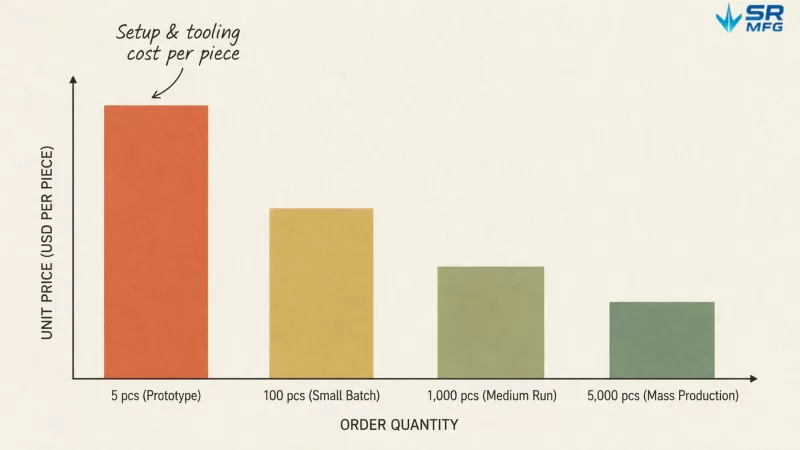
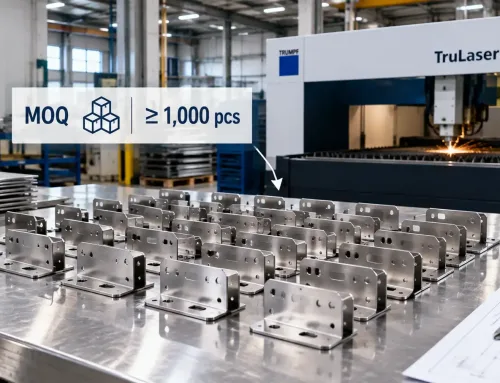
Sheet metal unit prices drop significantly as production volume increases, because setup time, programming, and tooling costs are amortized across more parts. Including quantity breaks in an RFQ helps suppliers provide optimized pricing at each level.
Including multiple quantity breaks in the RFQ, such as 10 / 100 / 1,000 / 5,000 pieces, allows suppliers to provide optimized pricing at each production level.
Lead Time Requirements
Standard lead times allow suppliers to plan production efficiently. Urgent orders may require overtime, priority material purchasing, or air freight, all of which increase cost.
If your schedule is flexible, tell the supplier. Flexibility may help improve pricing.
Why Is DFM Feedback Important During the RFQ Stage?
DFM, or Design for Manufacturability, is the process of reviewing a design to determine whether it can be manufactured efficiently, reliably, and cost-effectively.
In simple terms, before a factory accepts an order and finalizes the quotation, it should check whether the part can be produced in a practical way and whether there are opportunities to reduce cost, time, or manufacturing risk.
Common DFM findings in sheet metal manufacturing include:
- Bend sequences that are physically impossible
- Flanges that are too short for existing tooling
- Holes located too close to bend lines, which may cause deformation
- Welds that can be eliminated by changing the part geometry
- Tight tolerances that are not necessary for the part’s function
- Surface finish requirements that conflict with the selected material
When suppliers provide DFM feedback during the sheet metal process flow, buyers can often obtain a better manufacturing solution during the quotation stage.At the same time, suppliers can reduce production risks and avoid unnecessary problems later.
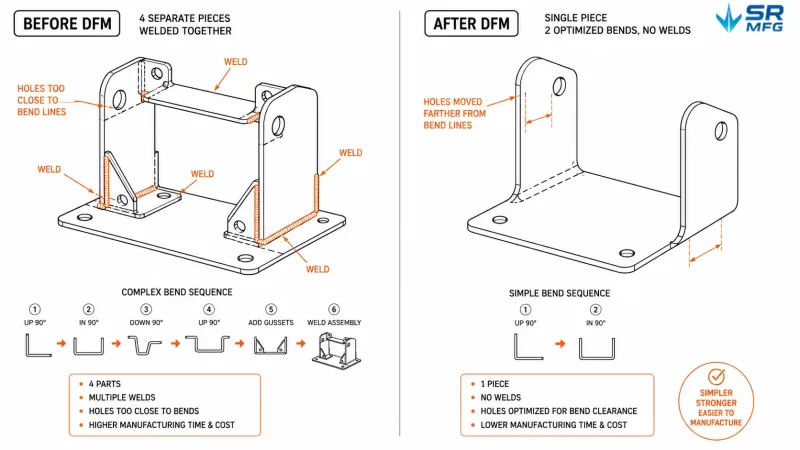
DFM feedback during the RFQ stage can simplify part geometry, reduce the number of welds, and lower production cost — without changing the part’s function. In this example, a four-piece welded bracket was redesigned as a single bent part.
In many cases, strong DFM feedback during the RFQ stage can increase the buyer’s confidence and help the supplier win the project.
How to Compare Sheet Metal Quotations Beyond Unit Price
When selecting a supplier, buyers should not focus only on the lowest unit price. The full cost of the entire purchasing process should be considered.
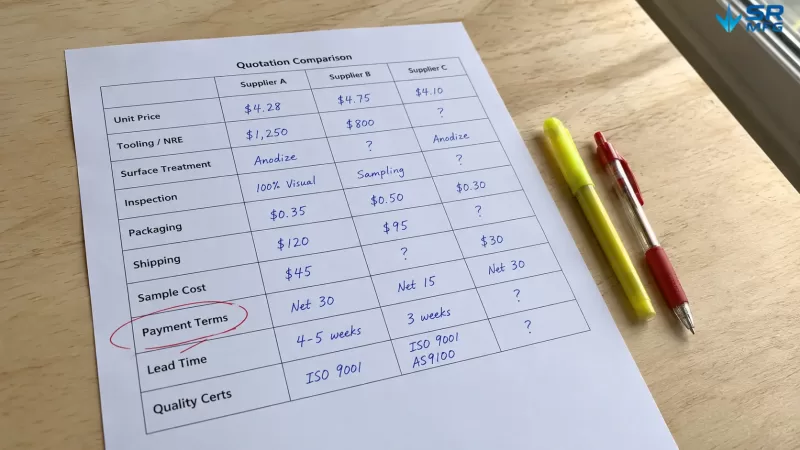
Comparing sheet metal quotations requires looking beyond unit price. A structured comparison checklist covering tooling, surface treatment, inspection, packaging, shipping, and payment terms helps buyers evaluate total cost of ownership.
A complete quotation comparison should include:
- Prototype or sample manufacturing cost
- Tooling, programming, fixture, or setup fees
- Surface treatment and other secondary process costs
- Hidden quality inspection costs
- Packaging and transportation costs
- Payment terms, deposit requirements, and payment cycle
- Supplier stability and long-term manufacturing capability should also be considered when comparing sheet metal quotations.
- DFM support and engineering communication quality
- Documentation support, such as inspection reports and material certificates
- Risk of rework, delay, or quality rejection
Only by considering these visible and hidden costs can buyers understand the true cost of sourcing a sheet metal part.
Choosing the lowest unit price without reviewing the full cost structure may lead to higher costs later.
Common Mistakes in the Sheet Metal RFQ Process
Common Mistakes Made by Buyers
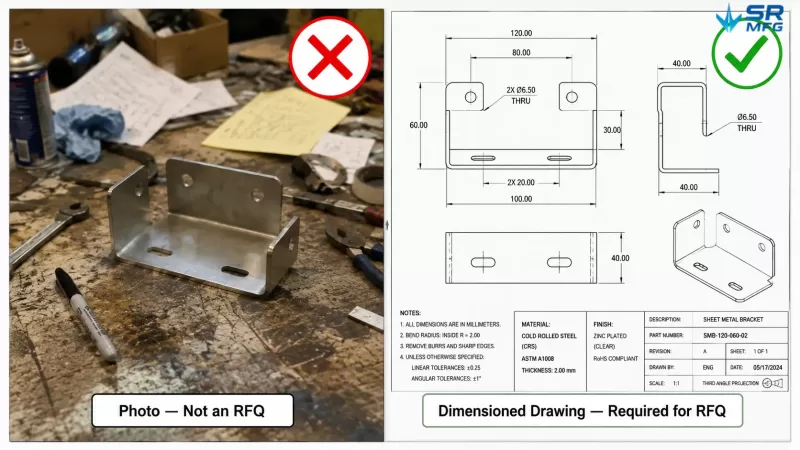
One of the most common buyer mistakes is sending a photo instead of a dimensioned drawing. A photo cannot convey accurate dimensions, tolerances, material specifications, or surface finish requirements — all of which are essential for an accurate quotation.
- Sending photos instead of dimensioned drawings
A photo cannot replace a technical drawing with accurate dimensions, tolerances, and material specifications. - Using vague material descriptions
Terms such as “steel” or “iron” are not specific enough. Buyers should provide the exact material grade and applicable standard. - Not defining tolerances and cosmetic acceptance criteria
Without clear tolerance and appearance requirements, suppliers may quote based on different assumptions. - Providing unclear quantities or unrealistic delivery requirements
If the purchase quantity and delivery schedule are not clear, suppliers may be unable to quote accurately or accept the order. - Failing to provide the latest file revision
Outdated drawings, BOMs, or CAD files can lead to incorrect pricing and production errors.
Common Mistakes Made by Suppliers
- Quoting immediately without confirming the drawing details
Suppliers should review unclear items before submitting a price. - Forgetting secondary process costs
Surface treatments such as electroplating, powder coating, anodizing, or passivation should not be omitted from the quotation. - Not clarifying ambiguous RFQ information before quoting
Unclear materials, tolerances, finish requirements, or assembly scope should be confirmed first. - Providing an unclear cost breakdown
If the quotation does not separate unit price, tooling cost, surface treatment, packaging, and shipping, later cost disputes are more likely to occur.