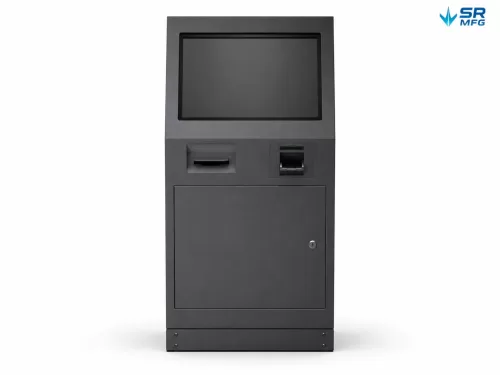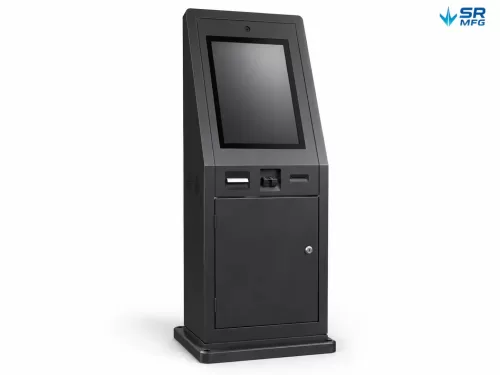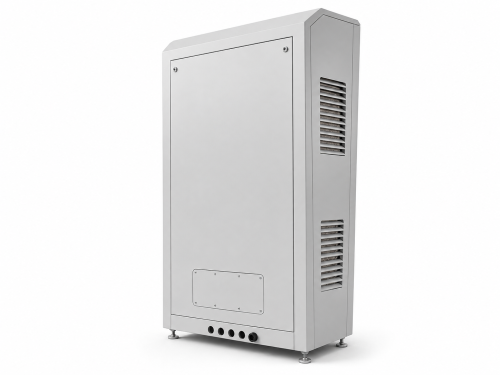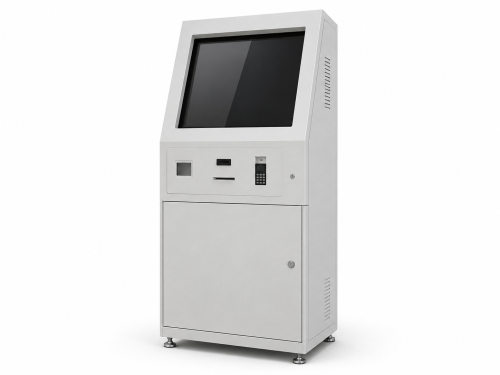
Anti Vandal Kiosk Cabinets
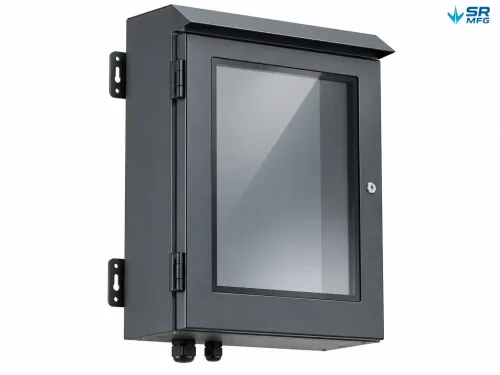
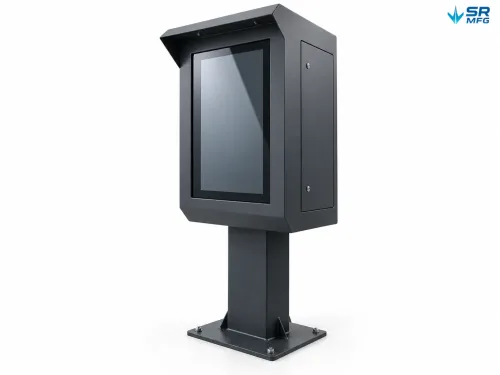
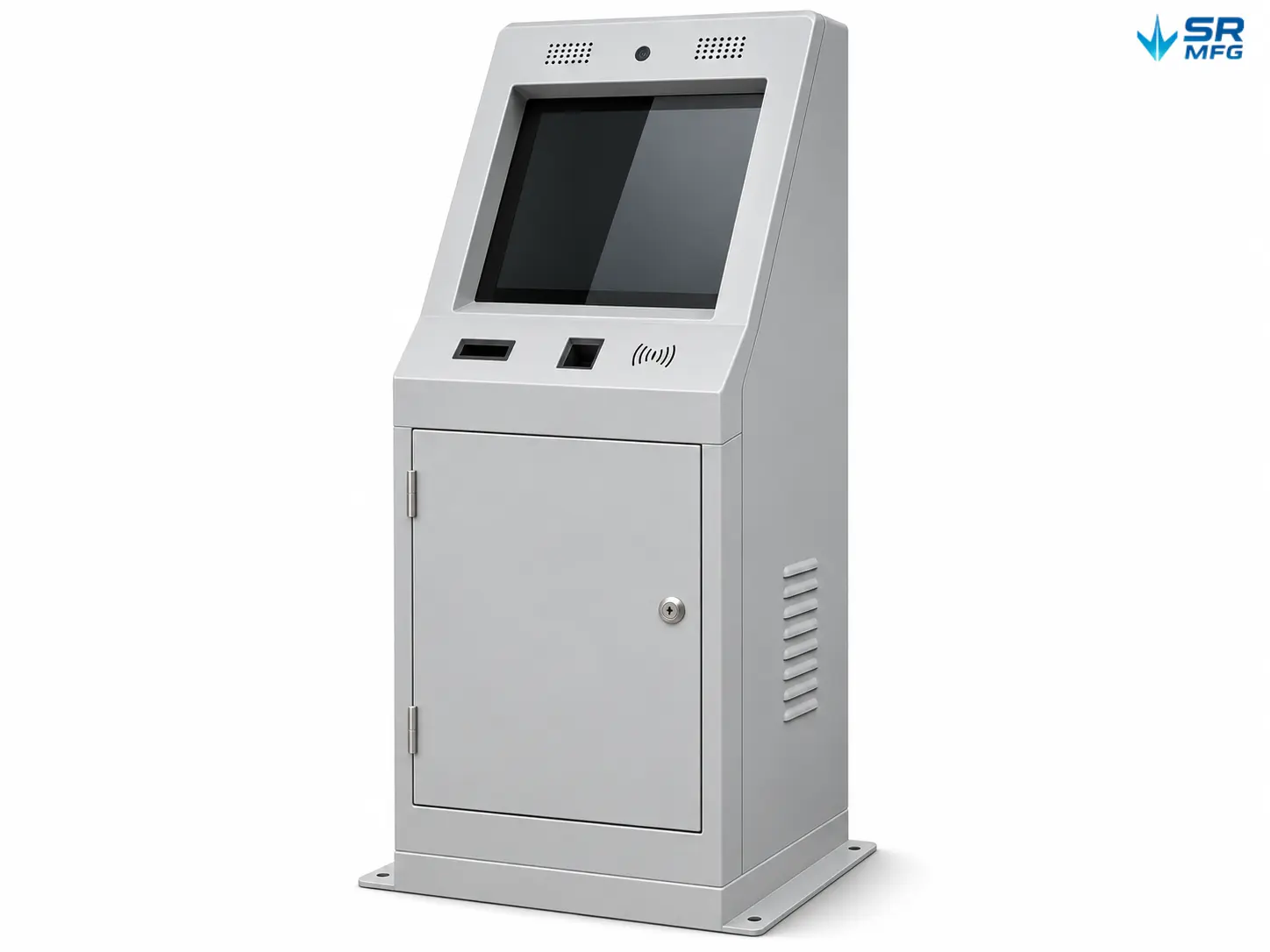
Custom-built anti-vandal kiosk cabinets for self-service terminals, payment stations, ticketing machines and public information displays.
Welded sheet-metal construction in cold-rolled steel, galvanized steel, stainless steel or aluminum, fabricated to your drawings. Display and peripheral cutouts, pry-resistant locking, sealed doors and a serviceable internal layout are built in. Optional pre-assembly and functional test before shipment.
Typical trade terms: prototype from 1 unit · production MOQ set per project · drawings accepted in DXF / DWG / STEP / PDF · quote response within 24 hours, with free DFM feedback.
Product Details
| Item | Value / Range |
|---|---|
| Construction | Fully welded sheet-metal cabinet, welds ground smooth; sectional assembly available for oversized units |
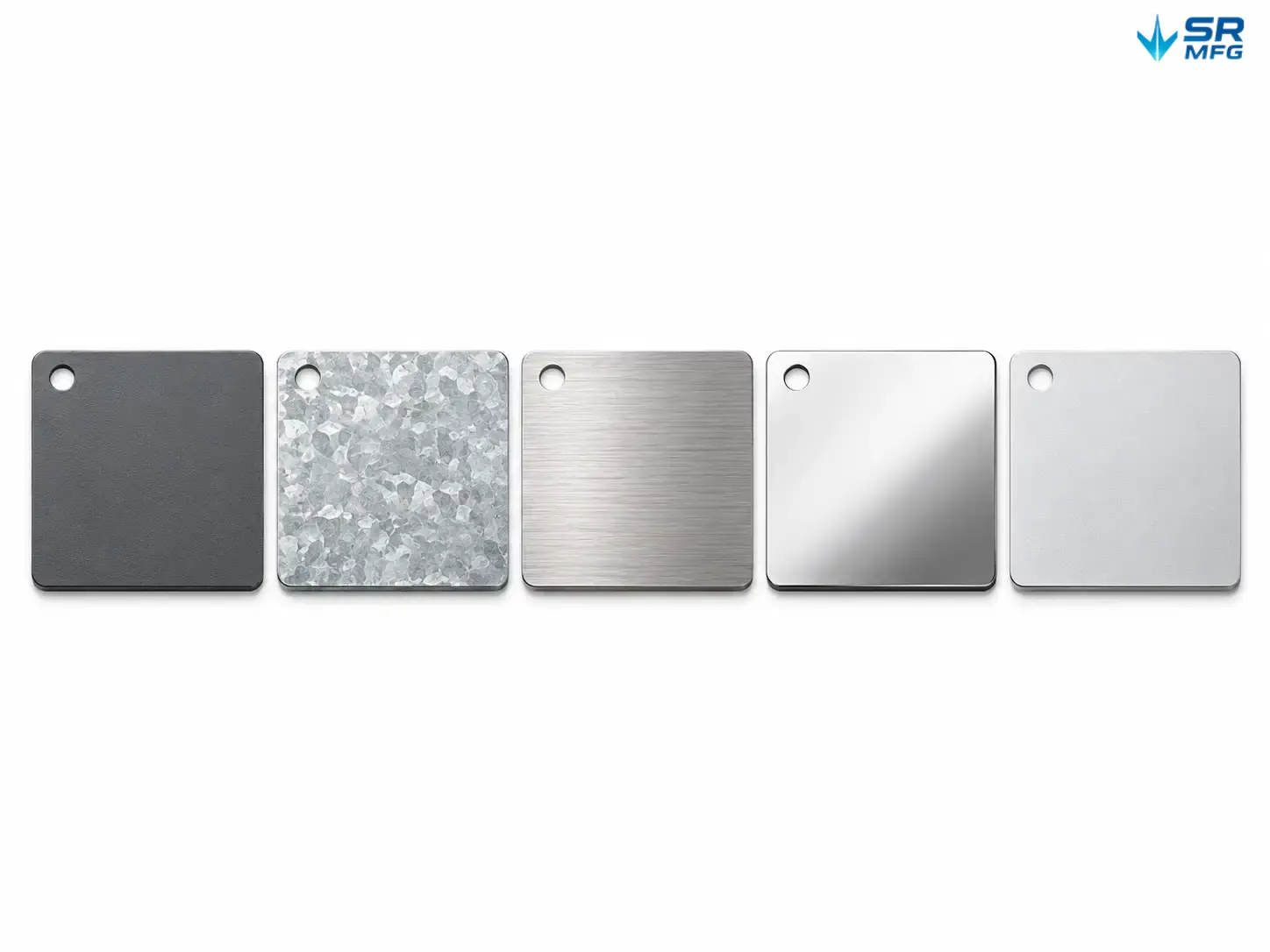
| Material Options | Cold-rolled steel, galvanized steel, stainless 304, stainless 316, aluminum alloy |
| Sheet Thickness | Set by cabinet span, door size and impact case (common design band 1.0–3.0 mm; confirmed per project) |
| Custom Size Range | Within sheet-metal fabrication envelope; larger cabinets as welded sections. Minimum size subject to design review |
| Dimensional Tolerance | ISO 2768-m (medium) as default; tighter classes available when the drawing requires |
| Ingress Protection | IP54–IP66 per IEC 60529, verified against the selected sealing system |
| Impact Resistance | IK options per IEC 62262; rating applies to the assembly zone stated in the order |
| Surface Finish | Powder coat with specified dry-film thickness (standard or enhanced system); brushed, polished, passivation or anodizing by material |
| Corrosion Validation | Salt-spray duration set by coating system and site category; test reports available on request |
| Operating Temperature | Standard range for temperate sites; extended range and heater provision for cold sites |
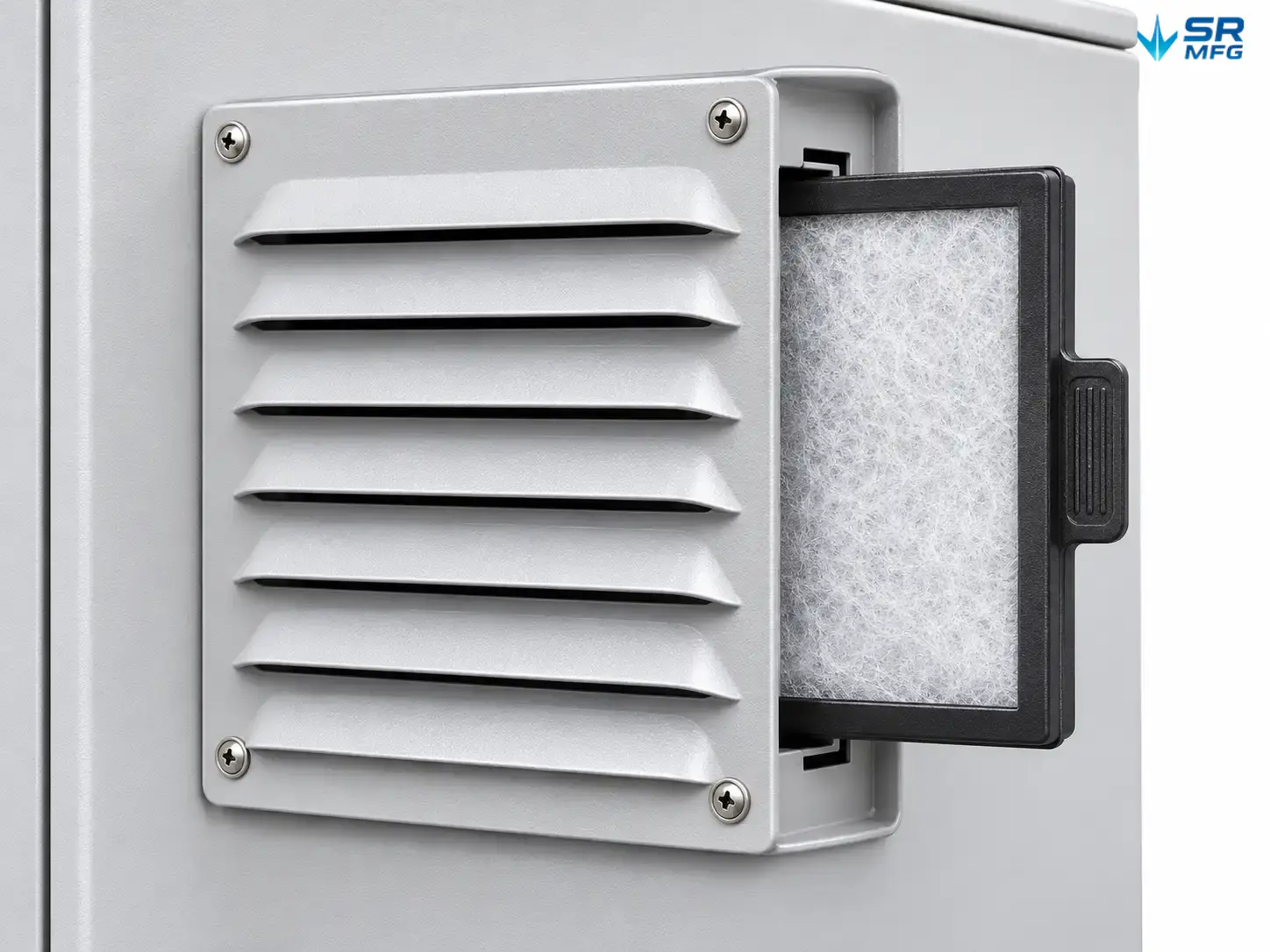
| Thermal Options | Natural ventilation with removable G-class filters, fan compartment, sunshade, thermostatic heater |
| Display Integration | Cutouts and mounting to your display model; VESA-compatible provision available |
| Peripheral Integration | Openings, brackets and knockouts to drawing for printers, readers, scanners, payment and sensor modules |
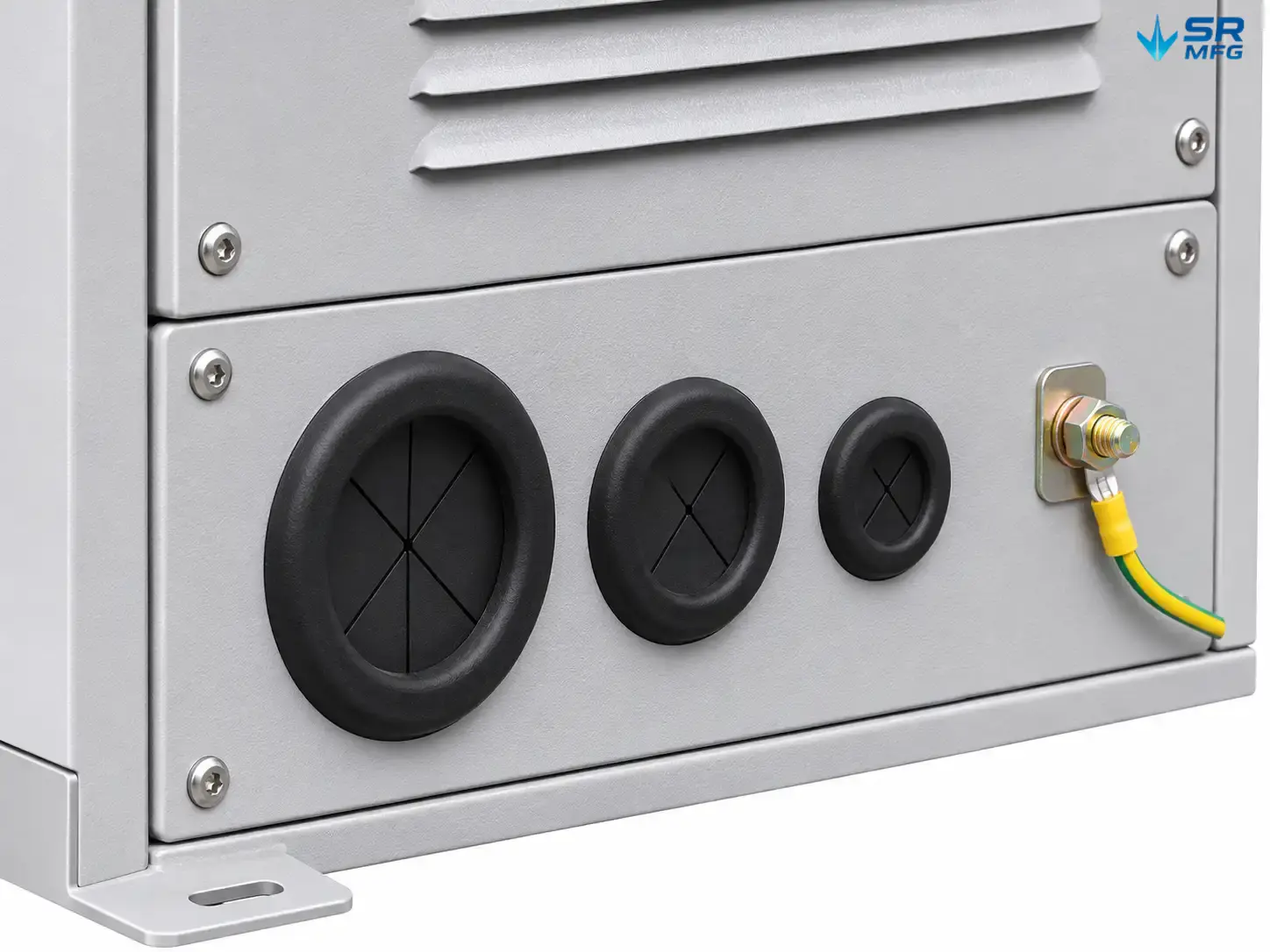
| Electrical Safety | Grounding terminal and bonding point included as standard |
| Drawing Formats | DXF, DWG, PDF, STEP, IGES, SolidWorks; concept sketches with dimensions accepted for review |
| Prototype Lead Time | Typically 2–4 weeks after drawing confirmation |
| Mass Production | Scheduled by quantity, complexity and finish system |
| MOQ | Prototype from 1 unit; production MOQ set per project |
| Packaging | Foam and carton / wooden crate / plywood pallet, export standard |
| Quality Inspection | Dimensional, visual, coating, sealing and door-operation checks; quality documents on request |
Cabinet Architecture & Standard Configuration
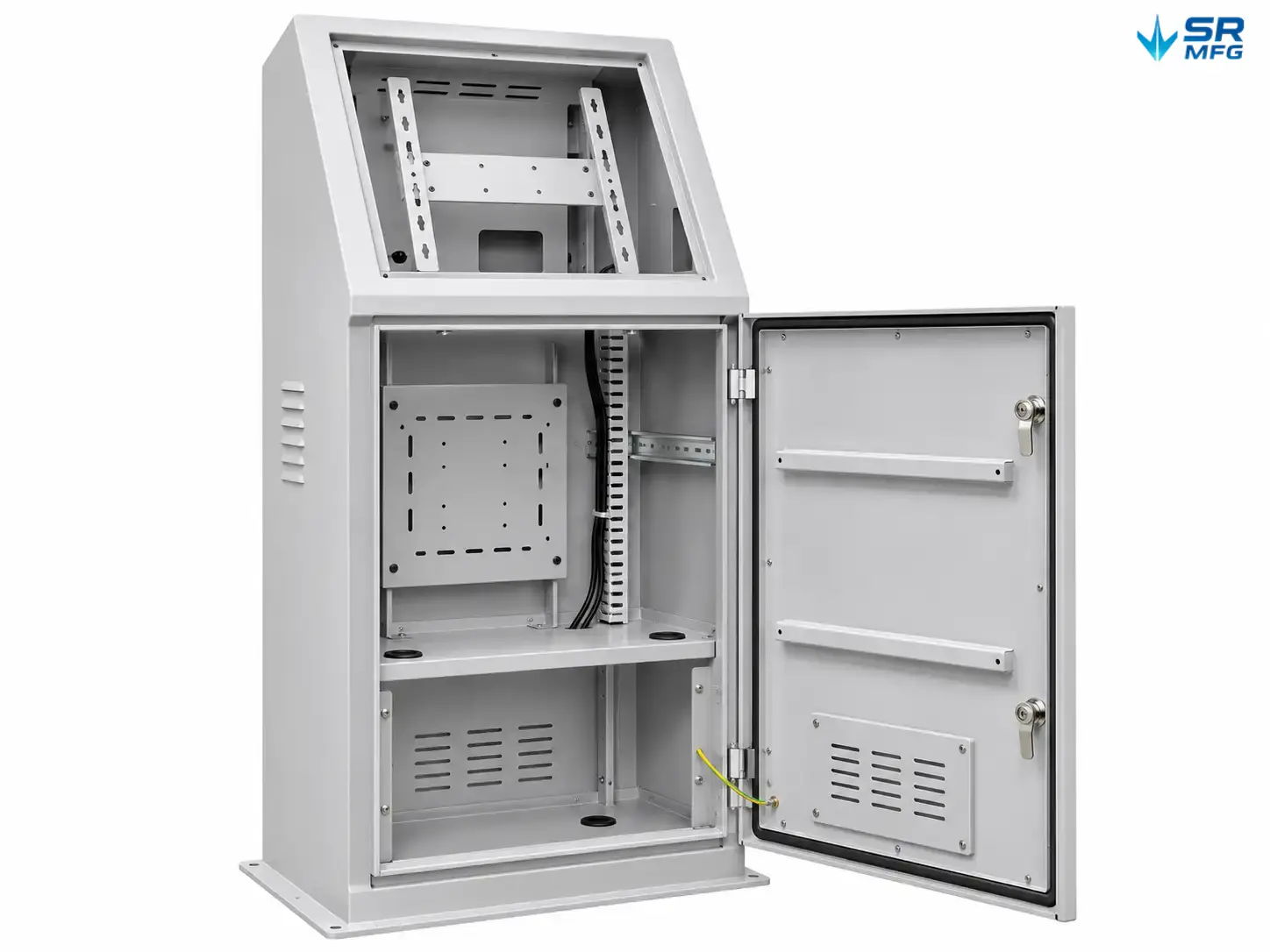
A kiosk cabinet works as three independent zones — not as one empty box. The display area holds the screen and protective glazing. The equipment bay takes the PC, media player, router and control boards. The service bay holds power supplies, printers, coin modules or UPS units behind its own lockable door.
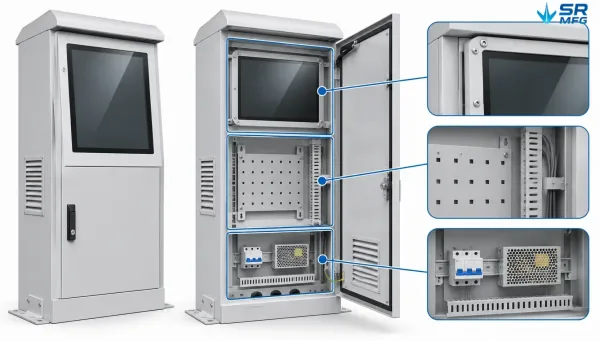
Cutaway view of a kiosk cabinet showing the display zone, equipment bay and service compartment as three separate areas.
That split matters on site. A technician can open the service door during business hours without exposing the display zone or the network hardware. It also cleans up the build: each zone is fabricated and fitted on its own, then integrated in final assembly.
Standard configuration on every cabinet:
- Fully welded sheet-metal frame, welds ground smooth
- Internal mounting plate (galvanized or stainless, per material route)
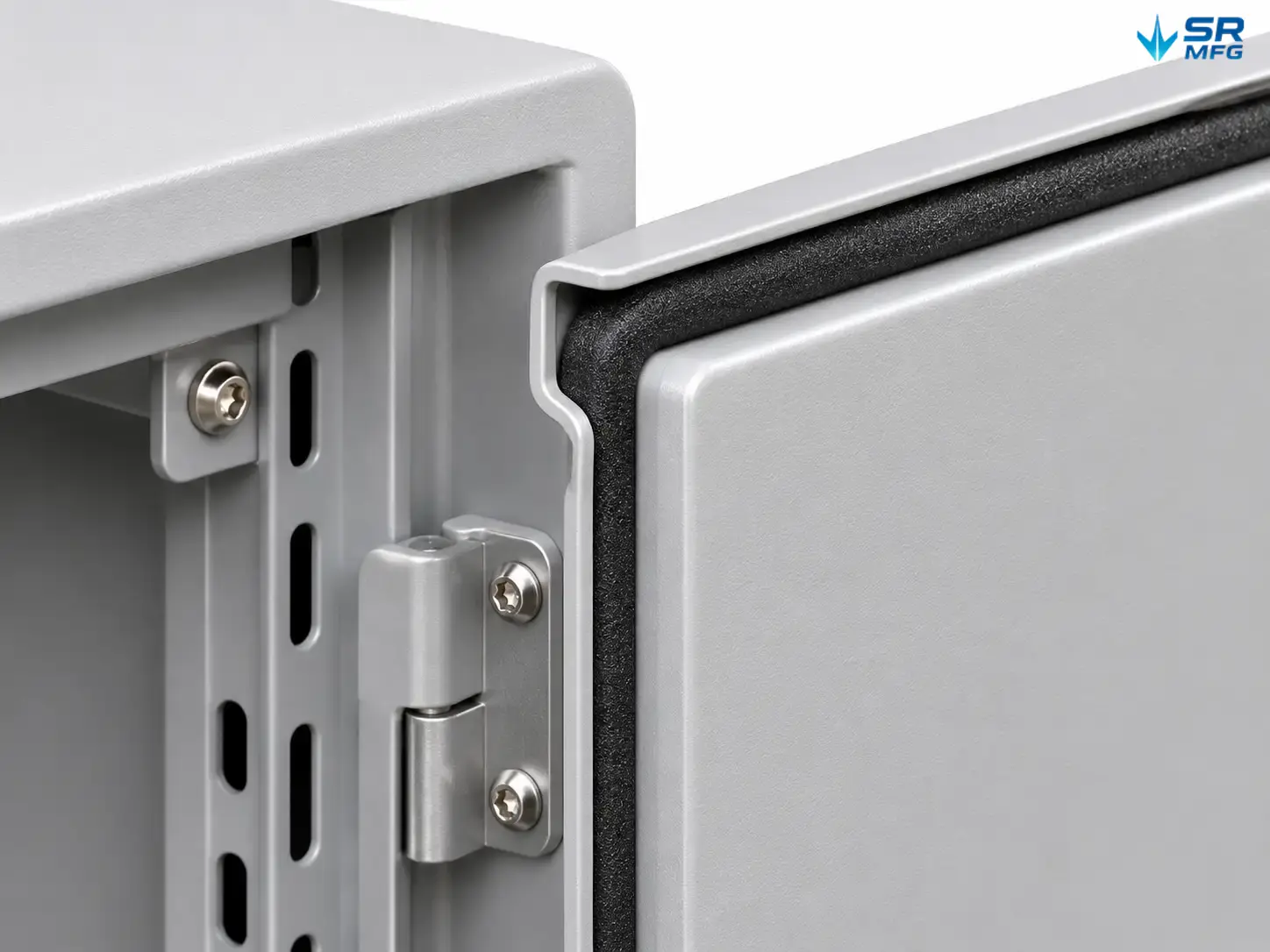
- Continuous EPDM perimeter gasket for dust and water sealing
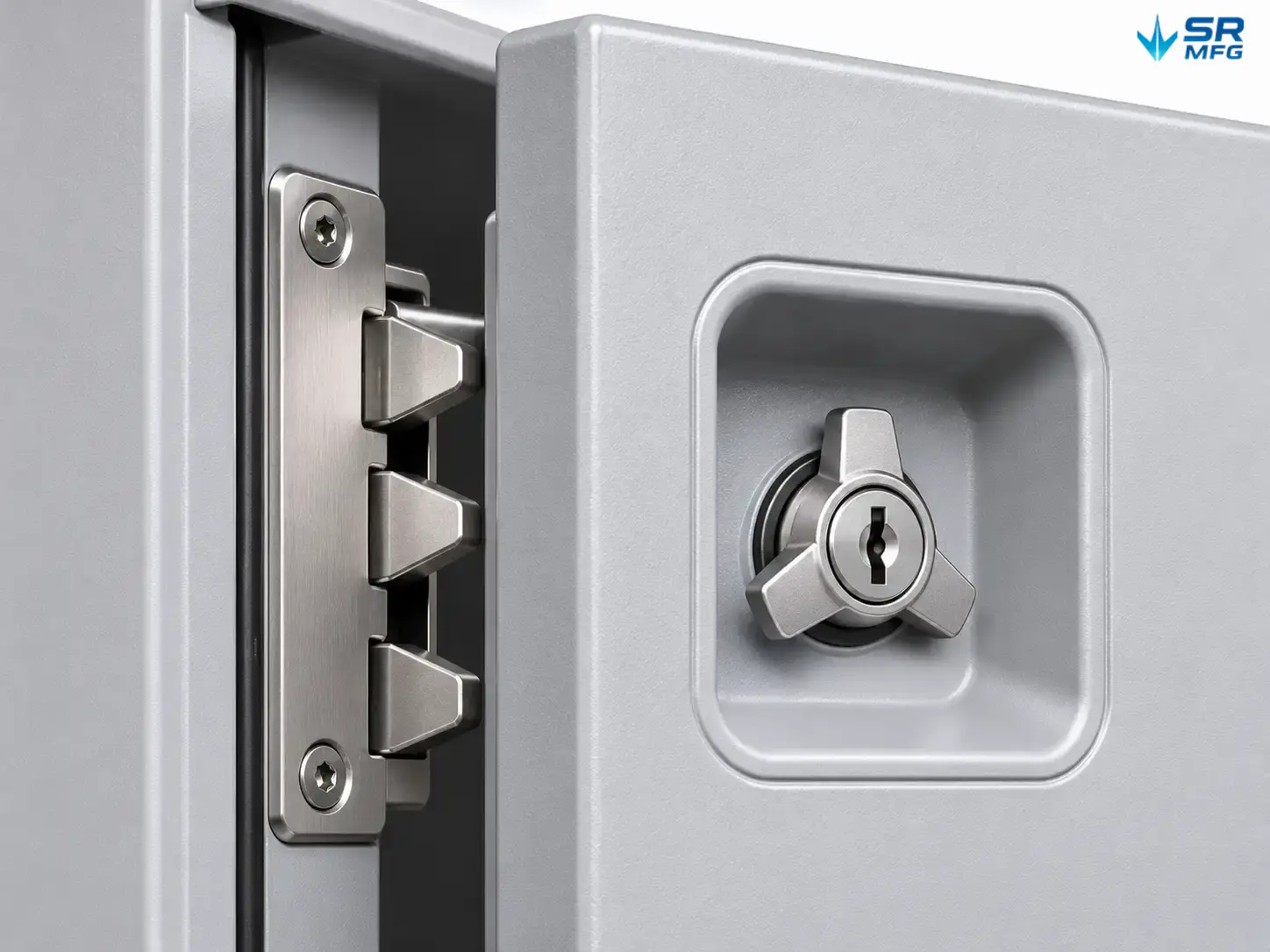
- Security lock with reinforced latch plate
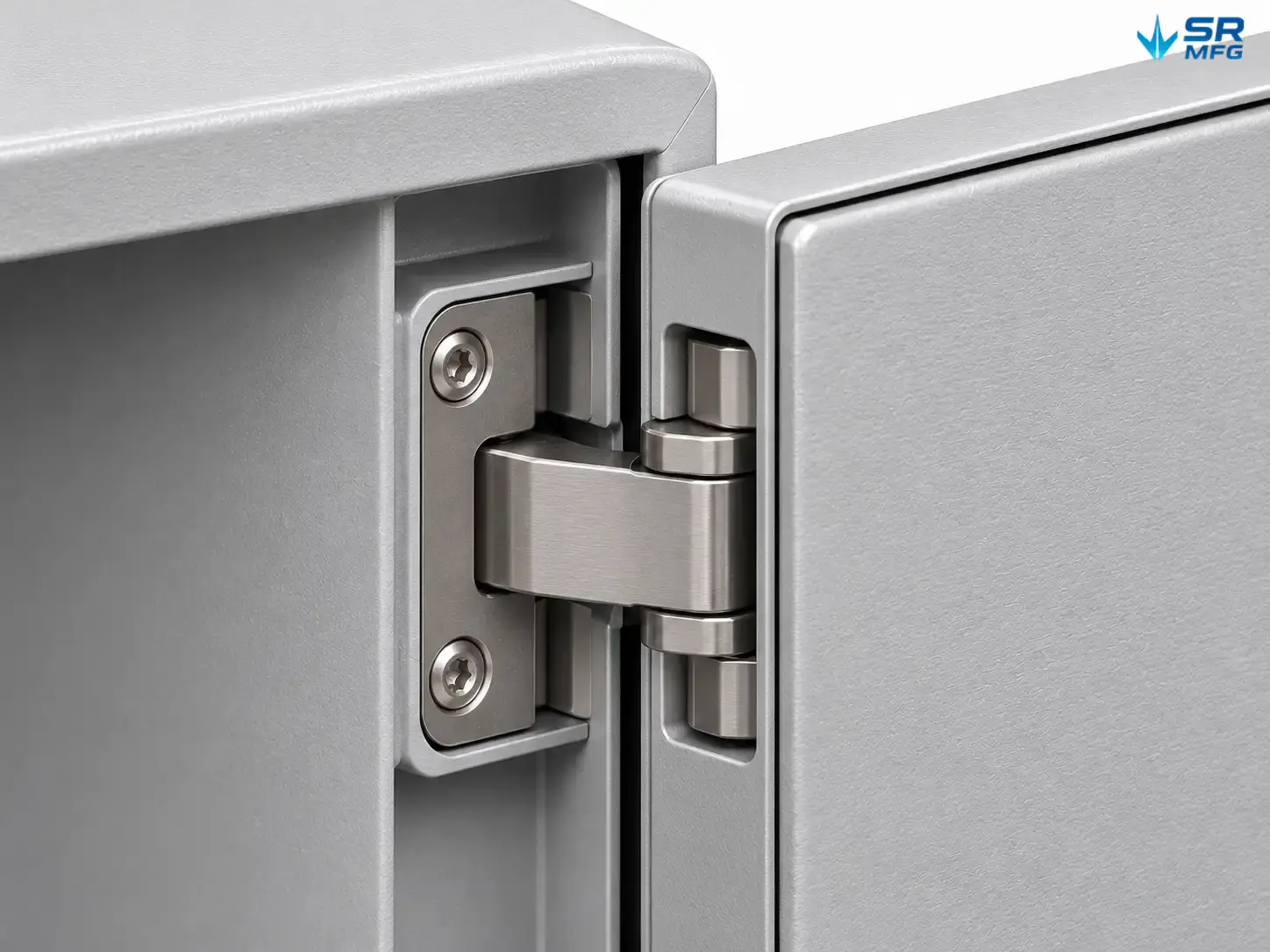
- Heavy-duty hinges, door hold-open at 90°
- Grounding terminal and bonding point
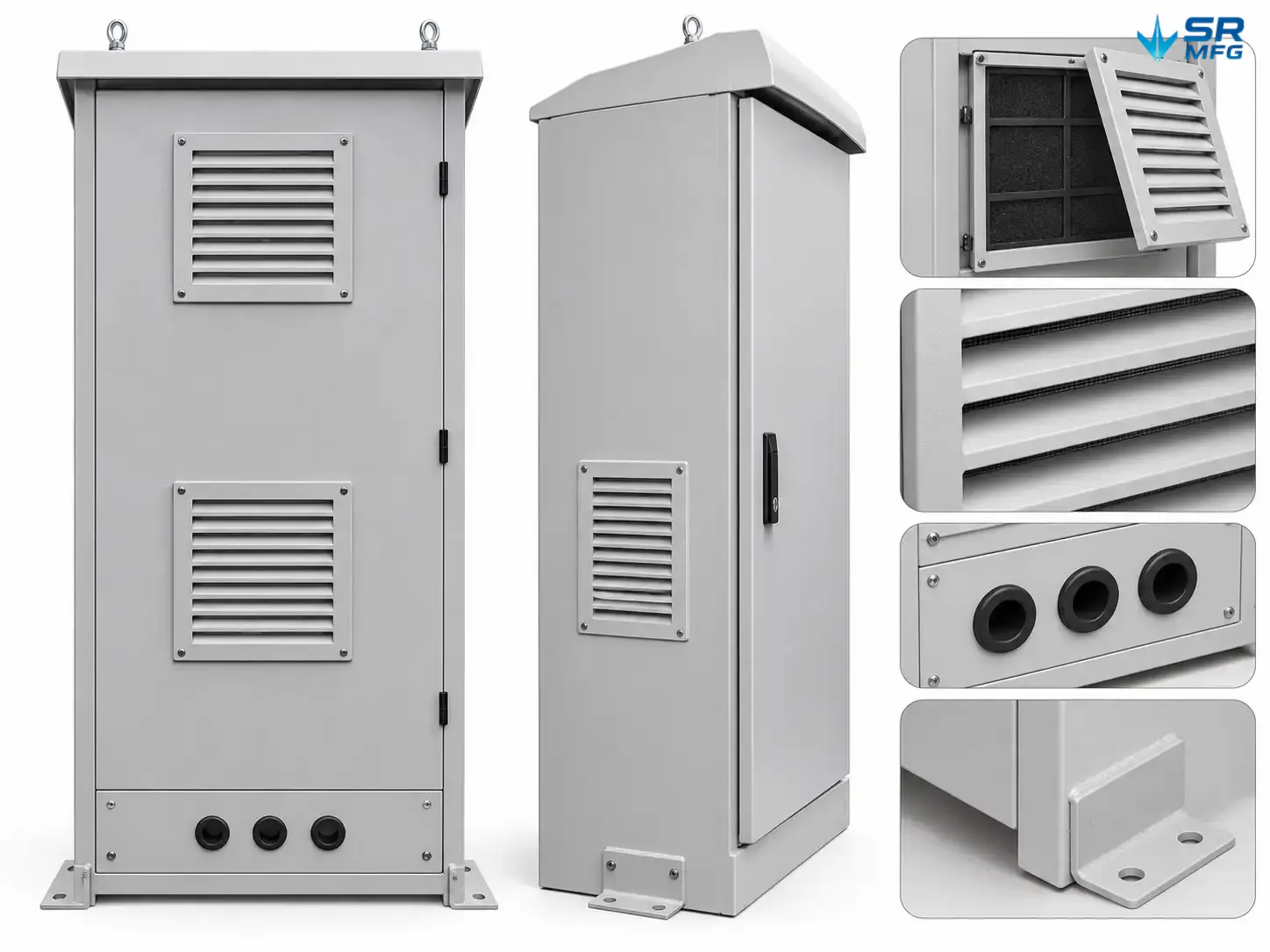
- Louvered vents with removable dust filters
- Cable-entry knockouts with rubber grommets, placed to your layout
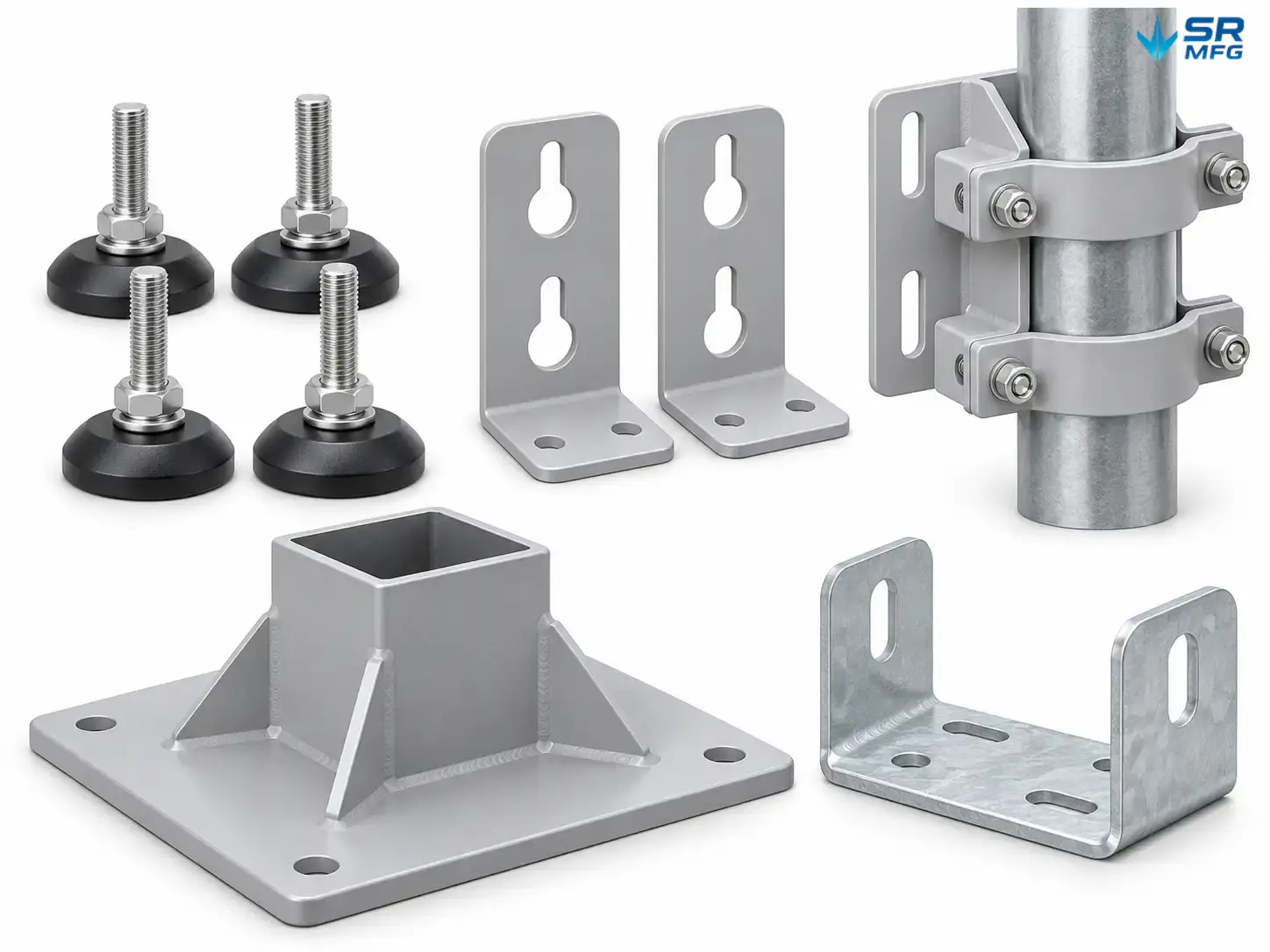
- Adjustable feet (floor-standing) or anchor brackets (wall-mounted)
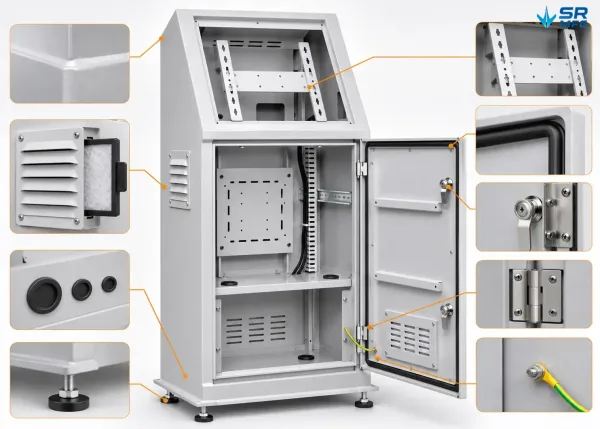
Overview of standard cabinet components: welded frame, mounting plate, perimeter gasket, security lock, hold-open hinges, grounding point, filtered louvers, cable knockouts and mounting feet.
Optional items quoted on request: fan assemblies with filtered intake, sunshades, internal DIN rails, cable glands, surge protectors, heaters.
Custom Sheet Metal Fabrication & Device Integration
Every cabinet is built to your drawing. Send a 2D or 3D file — or a sketch with critical dimensions — and our engineers return manufacturability notes before quotation.
Cutouts are CNC laser-cut; panels are formed on the press brake. Display openings follow your screen model. VESA-pattern brackets can be welded or bolted inside. Peripheral openings cover receipt printers, card readers, NFC modules, scanners, coin acceptors, cameras, speakers and fingerprint units. Cable routes are punched and formed in the sheet-metal stage — not added after the shell is closed.
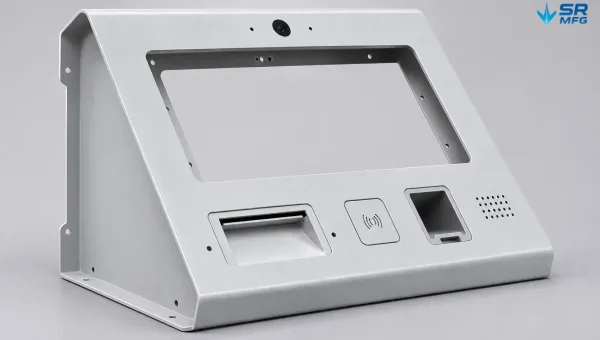
Formed sheet-metal panel with CNC laser-cut openings for a display, receipt printer, card reader and camera.
If the project needs more than a bare shell, we can fit mounting plates, DIN rails and cable ducts, complete wiring, install fans and locks, and run a functional check before shipment.
Scenario. A wall-mounted ticketing terminal in a transit hall commonly runs a galvanized-steel shell, laminated glazing, a tri-point lock, a printer opening behind the service door, and filtered louvers on opposing faces. Change the base, the door count and the internal mounting plate, and the same shell logic covers a floor-standing payment kiosk.
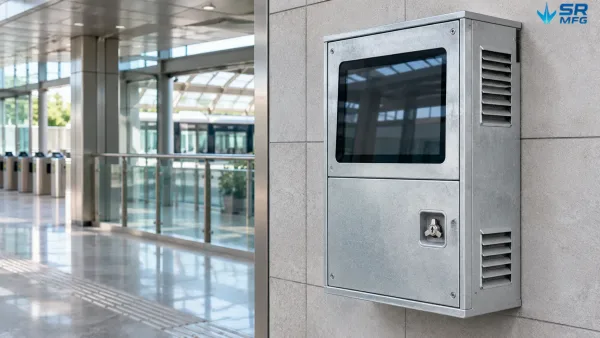
Wall-mounted ticketing kiosk with laminated glazing and filtered louvers installed in a transit hall.
Typical Application Environments
- Transit and ticketing stations — impact risk, daily public access
- Public information and wayfinding — long unattended hours
- Retail payment and self-checkout — high touch frequency, short maintenance windows
- Municipal and government service points — tampering and graffiti exposure
- Industrial control interfaces — dust, washdown or plant-floor conditions
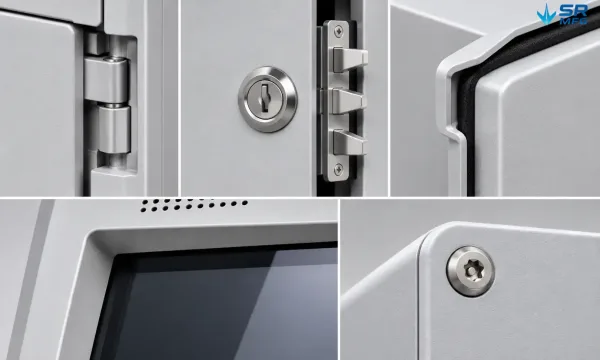
Kiosk cabinet applications across transit ticketing, retail payment, public information and municipal service points.
The install site sets material grade, coating system and protection level. Send us the environment and we will propose the combination.
Security Design
Public-space cabinets fail at openings and access points — not in the middle of a panel. This section covers how the enclosure slows down and discourages tampering.
- Locks. Tri-point cam locks spread holding force across the door. Cylinder locks suit standard commercial sites. Electronic locks add access logs. Keyed-alike or keyed-different management available.
- Hinges. Concealed or continuous hinges remove exposed pins. Hinge-side tabs keep the door captured even if a hinge is attacked.
- Door edges. Folded returns and tight panel gaps leave no lip for a pry bar.
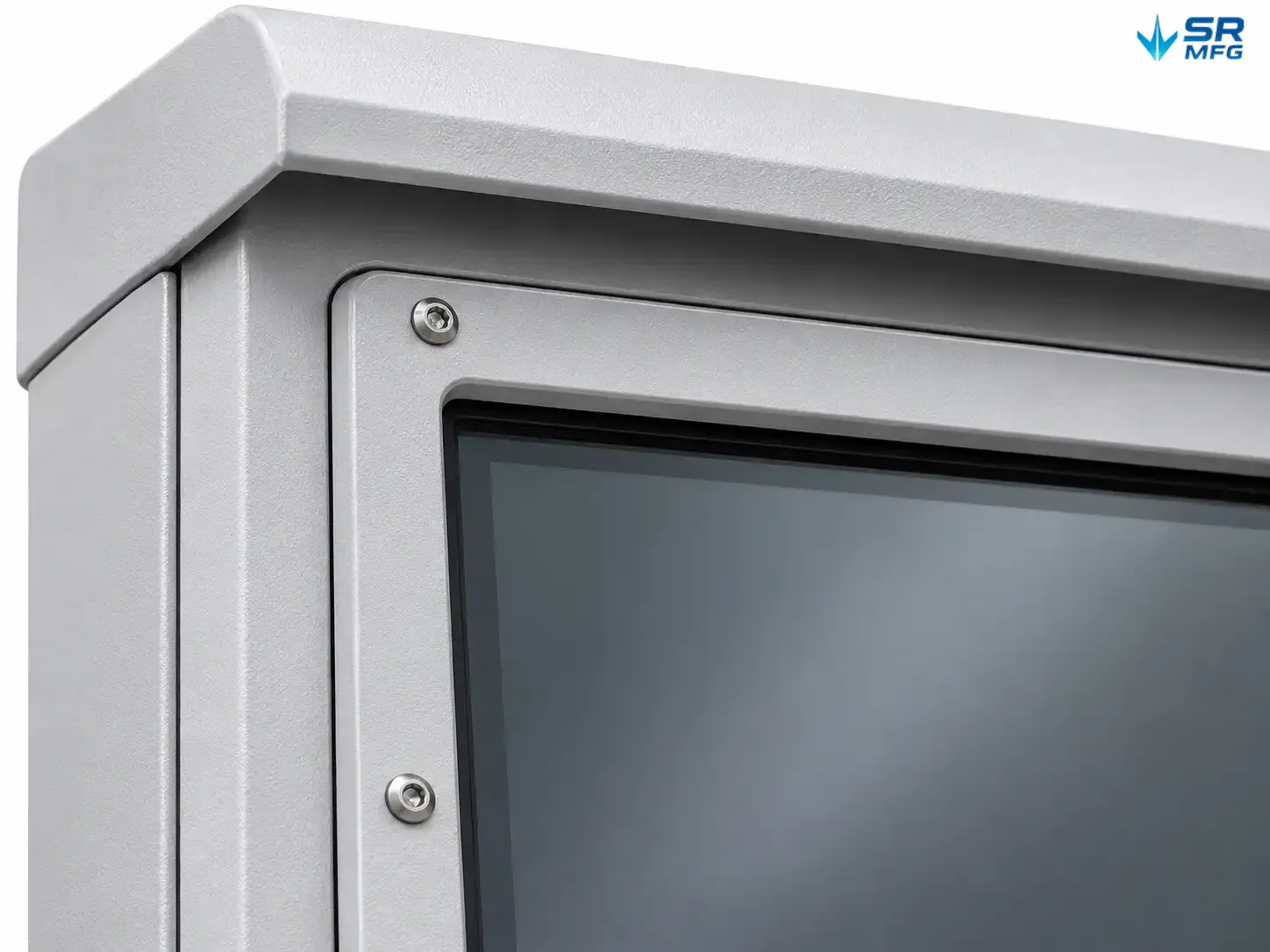
- Viewing window. Glazing sits recessed behind a metal bezel, captured on all sides by a mechanical frame. Strikes land on steel first.
- Fasteners. Exposed fasteners use security drive types. Ideally, no external screw grants access to the interior.
- Cable entry. Knockouts and glands can route through concealed channels or armored conduit to reduce cut-and-grab risk.
- Compartment separation. Cash modules, printers and consumables can sit behind a higher-security door than the general service bay.
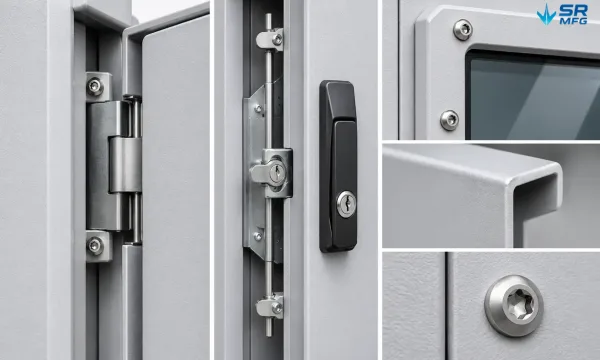
Door security details: concealed hinge, tri-point cam lock, folded door edge and mechanically captured glazing.
FAQs