
The factory has confirmed your sheet metal parts are ready. Your freight forwarder is asking for the commercial invoice, the packing list, and a draft bill of lading. Somewhere between the factory gate and your warehouse, a shipment can pick up delays, damage, or costs that nobody planned for.
Sheet metal parts carry their own shipping risks. Carbon steel rusts after weeks in a humid container. Powder-coated surfaces scratch where parts touch. Welded frames arrive with crushed corners. Customs holds a shipment when the documents do not match the cargo. Most of these problems are preventable — but only if the checks happen before the container leaves.
This checklist covers six checkpoints for shipping fabricated metal parts out of China: inspection evidence, packaging, export documents, freight terms, hidden costs, and arrival inspection.
Confirm the Inspection Evidence Before Anything Is Packed
The first checkpoint happens before the first carton is taped shut. Ask what evidence exists that the parts were built to the approved drawing, and request it in writing rather than relying on a verbal “quality is no problem.”
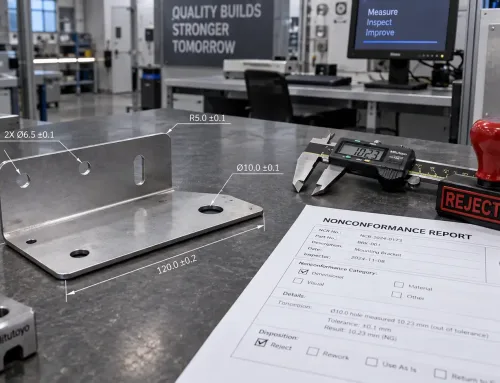
For a new part or a first batch, define the First Article Inspection (FAI) requirements and request a report covering measured dimensions against the drawing, material confirmation, and surface finish results. For repeat orders, batch inspection records and photos may be sufficient. If the parts are critical to your assembly or carry tight tolerances, a third-party inspection report adds an independent layer of verification.
Material test certificates (MTCs, also called MTRs) matter for stainless steel and structural parts. They confirm the grade actually purchased, ideally with a heat number or lot link back to the raw material. A generic certificate with no traceability proves very little, so ask how the certificate connects to your specific order.
Also ask for packing photos before the cartons are sealed. A photo of the packed crate, the protective film, and the strapping is the cheapest insurance you will buy this quarter. Once goods leave the factory, disputes are decided by evidence, not by memory, and a written record at this stage protects both you and the supplier.
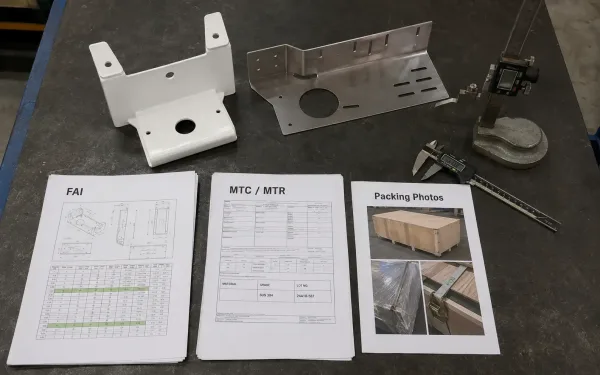
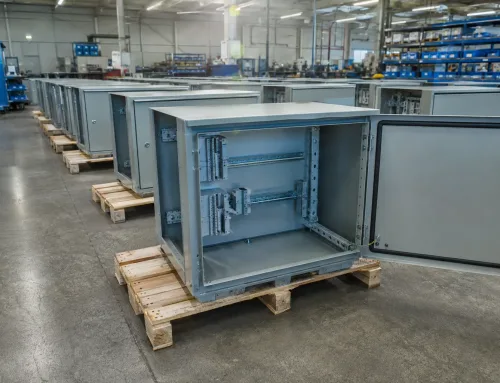
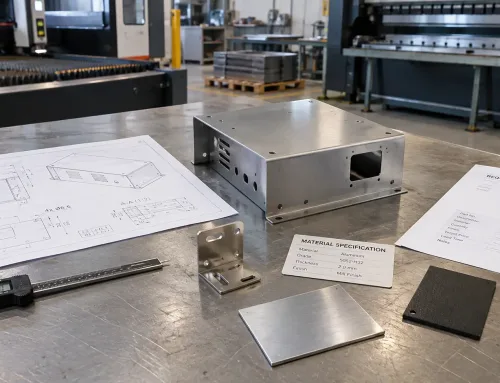
Fabricated sheet metal parts shown with FAI records, material certificates, inspection measurements, and packing photos before shipment.
Pack for the Material and the Finish
The packaging decision starts with the material and the surface finish — not with the carton size. Two parts with identical geometry can need completely different protection, and leaving the packing method to the supplier’s default is where most damage begins.
Rust protection for carbon steel
Cold-rolled steel (SPCC, CRS) rusts quickly inside a container that cycles through humidity for 30 days. Standard sheet metal moisture protection for carbon steel typically uses VCI (volatile corrosion inhibitor) paper or bags, which release a vapor that forms a protective layer on the metal surface, plus desiccants inside sealed packaging. Some suppliers add rust-preventive oil for long voyages. Stainless steel and aluminum resist rust but are not immune: galvanized parts can develop white rust, and aluminum can show water staining if packed wet. Confirm the moisture protection plan in writing before production finishes.
Scratch and impact protection for finished surfaces
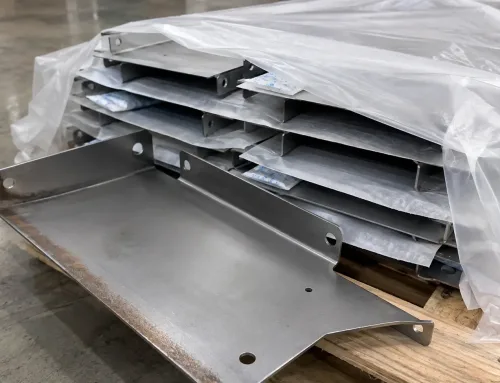
Powder-coated and anodized surfaces are cosmetic surfaces — every scratch is a visible defect. Parts need protective film on contact faces, corrugated cardboard or foam separators between parts, and corner protectors on edges. Welded assemblies are most vulnerable at corners and weld seams, where handling damage shows first. If parts are nested or stacked, verify that no metal-to-metal contact is possible during transit.
Load and fixation for heavy parts
Weight drives the crate and pallet specification. A pallet must be rated for the load, and a crate must be sized so contents cannot shift during port handling. Strapping and blocking keep parts in place when containers are moved or vessels pitch at sea. For multi-part-number orders, each part number should be separated and labeled, because mixed lots are a common source of arrival disputes. If the order uses wooden packaging, confirm it is ISPM-15 compliant — heat-treated or fumigated and stamped — since many destinations reject unmarked wood at entry.
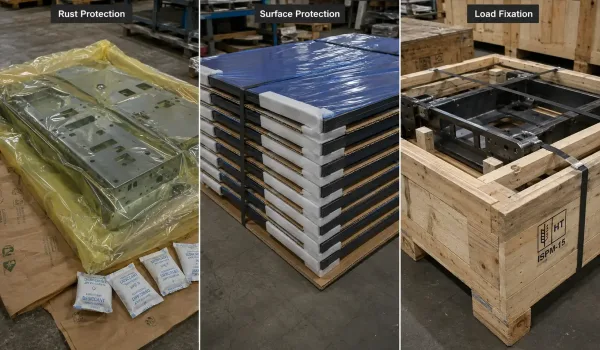
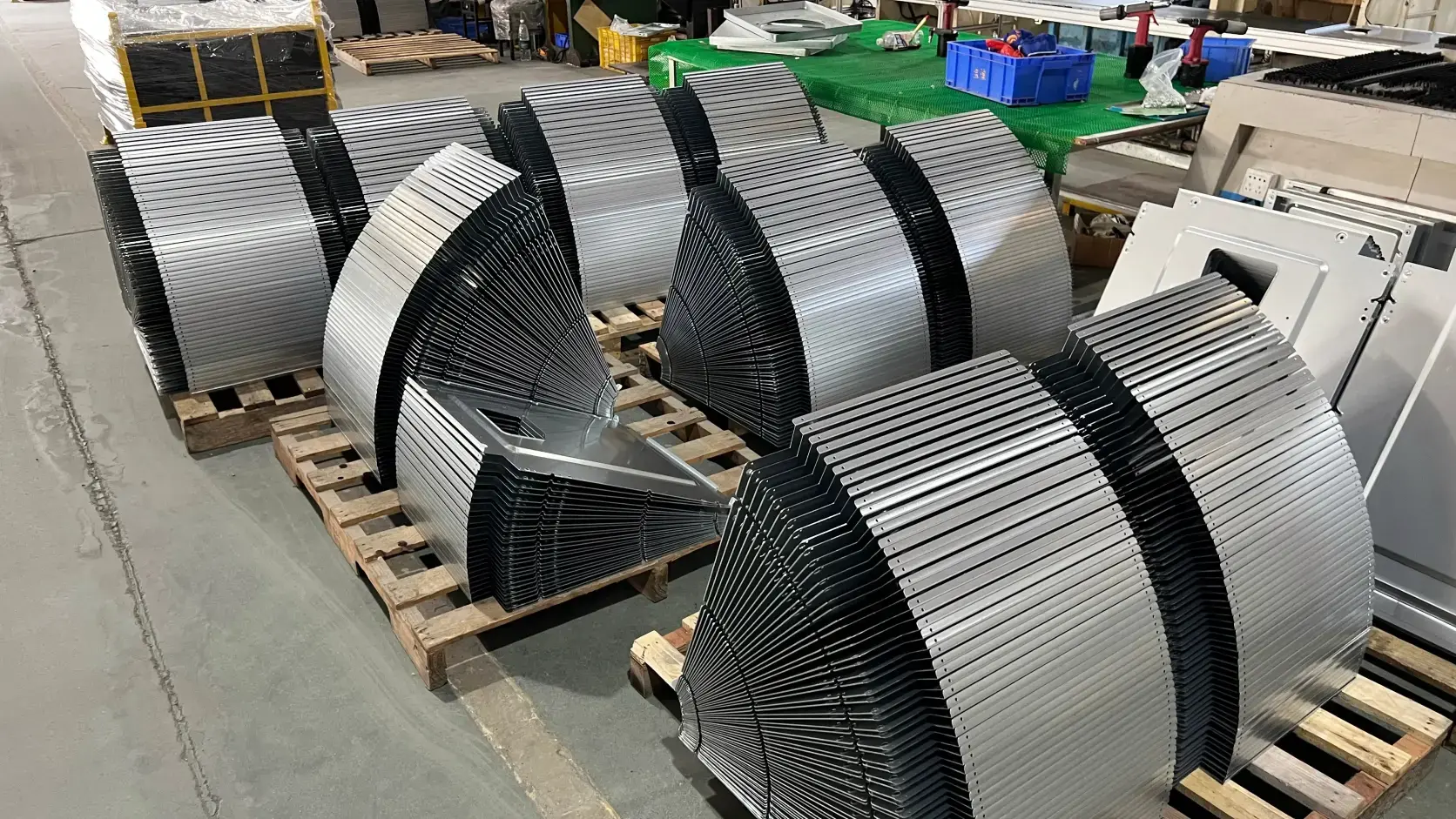
Three export packaging methods showing rust protection, surface protection, and load fixation for different sheet metal parts.
The Documents That Clear Customs — and How to Verify Them
The core export documents for a sea shipment are:
- Commercial invoice — describes the goods, quantities, unit prices, total value, and Incoterms
- Packing list — carton or crate count, dimensions, gross and net weight, contents
- Bill of lading (B/L) or air waybill — the transport document issued by the carrier or forwarder
- Certificate of origin — confirms where the goods were manufactured
- Fumigation certificate — required when wooden packaging is used
The real risk is not missing documents. It is documents that do not match the cargo. Customs compares the invoice, the packing list, and the bill of lading against each other and against the goods themselves. Common failures include a gross weight on the packing list that differs from the forwarder’s booking, an incorrect declared volume, or a description too vague to classify — “metal parts” instead of “powder-coated steel enclosure.” The HS code matters too: a fabricated sheet metal part and a finished product can fall into different classifications with different duty rates, so confirm the code with your forwarder before the shipment is booked.
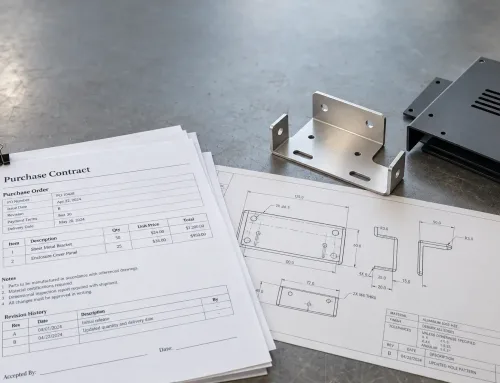
Before shipment, ask for the final commercial invoice and packing list, then check three numbers: total gross weight, carton count, and total volume. If the packing list says 2,000 kg and the booking says 2,400 kg, the mismatch will surface at customs, either at export in China or at your destination. Fix it on paper now, not at the port, because correcting a document after departure costs time and money on both ends.
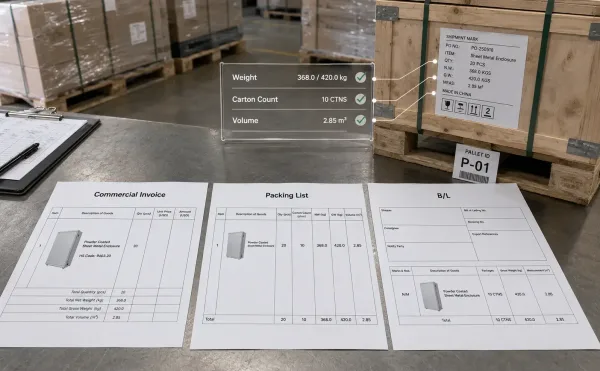
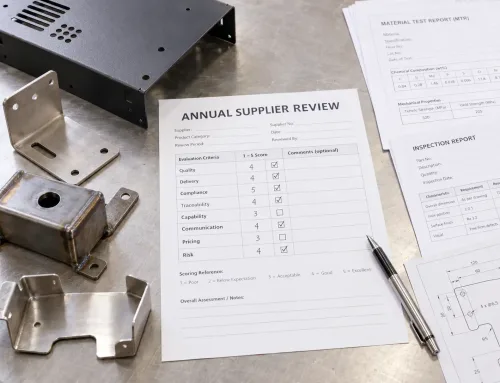
Commercial invoice, packing list, bill of lading, and cargo details checked for matching weight, carton count, and shipment volume.
Freight Mode and Incoterms: Know the Risk Handover Points
Sheet metal parts are heavy and bulky, so sea freight is the default choice. Air freight costs roughly four times as much and makes sense only for urgent prototypes or light, high-value parts, while express courier is practical for small samples. Base the decision on weight, volume, and how quickly the parts are actually needed — not on the supplier’s recommendation alone.
The Incoterms you agree on determine who arranges freight and who owns the risk at each stage. Two terms cover most first orders from China:
| Checkpoint | FOB (Free on Board) | DDP (Delivered Duty Paid) |
|---|---|---|
| Freight arrangement | Buyer | Supplier |
| Freight cost | Buyer | Supplier |
| Risk transfers | When goods are loaded on the vessel | When goods are delivered to the buyer |
| Export customs (China) | Supplier | Supplier |
| Import customs and duties | Buyer | Supplier |
| Visibility for buyer | Higher — buyer controls the shipment | Lower — supplier controls the shipment |
FOB gives you control: you choose the forwarder, see the costs, and track the shipment. DDP is simpler — one price, delivered to your door, with duties included. The trade-off is that DDP prices can carry hidden margins, and you depend on the supplier’s logistics quality end to end. For a first order, many buyers choose FOB with their own forwarder, because the control is worth the extra coordination.
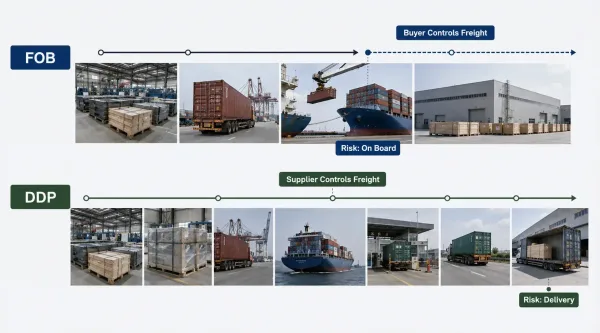
A simplified comparison showing freight control and risk handover under FOB and DDP for exported sheet metal parts.
Hidden Costs: What the Quote May Not Include
Part prices from Chinese suppliers often exclude logistics-related items that appear later in the process. The common ones are:
- Export packing and protective materials
- Wooden crates and pallets
- ISPM-15 fumigation
- Palletizing and container loading
- LCL (less-than-container-load) consolidation fees
- Export documentation fees
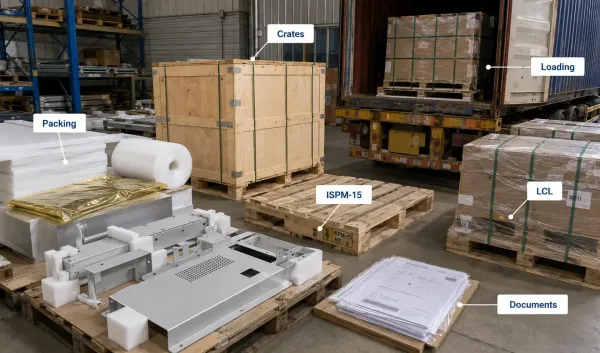
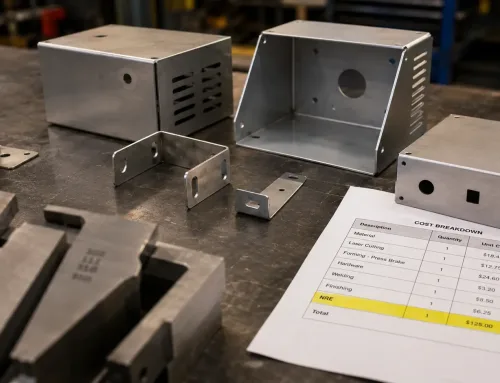
Common additional export costs including protective packing, wooden crates, fumigation, loading, LCL consolidation, and documentation.
These items are not necessarily unreasonable — they are real costs that someone has to bear. The problem is discovering them after the order is placed, when there is no room left to compare or negotiate. Before production finishes, confirm what the quoted price includes: Does it cover export packing? Fumigation? Is the price based on a specific Incoterm? A low unit price with vague logistics terms can result in a much higher total landed cost, so getting these answers in writing is the whole point of a checklist.
Arrival Inspection: What to Check Before You Sign Off
When the shipment arrives, the receiving process matters as much as the shipping process. Work through these checks in order:
- Count the cartons or crates against the packing list before signing for the delivery
- Photograph any damaged packaging before unloading — the photos are what support a claim
- Inspect for rust, dents, scratches, and deformation; check critical dimensions on a sample of parts
- Confirm the paperwork arrived: MTCs, FAI report, packing list
- Report discrepancies to the supplier and forwarder in writing within the claim window — usually a set number of days after receipt, so check the terms in advance
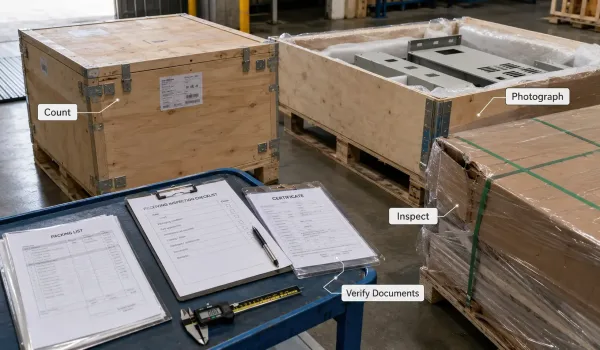
An arriving sheet metal shipment checked for crate count, packaging damage, surface defects, dimensions, and accompanying documents.
Most suppliers will correct a legitimate problem if it is documented in time. They cannot help if the issue is discovered two months later with no evidence of when the damage occurred, which is why the inspection and the paperwork have to happen at the dock, not in the warehouse.
Three Rules That Prevent Most Shipping Disputes
If you remember nothing else from this checklist, keep three rules:
- Evidence before packing — inspection reports, material certificates, and packing photos exist before the goods move.
- Packaging matched to material and finish — rust protection for carbon steel, surface protection for coated parts, proper load fixation for heavy parts.
- Costs and responsibility fixed before departure — Incoterms, packaging fees, and document requirements confirmed in writing.
None of these steps requires special equipment or a logistics degree. They require asking the right questions before the container leaves the factory, when a fix costs a message rather than a claim.
At SR-MFG, we confirm packaging and export assumptions in writing before production starts. If you are planning a custom sheet metal fabrication order, raise these questions at the quotation stage — every issue is easier to solve on paper than inside a shipping container.