
Many engineering teams treat temper as a footnote. After they settle on an aluminum alloy for a cosmetic enclosure, they stamp 6061-T6 on the drawing and move on. That default is common—and on appearance-critical sheet metal or machined housings, it is often the wrong call.
Temper is not a minor suffix. It controls how the metal bends, how it responds to anodizing or coating, and how consistently parts look from the first sample to the production lot. For cosmetic enclosures, those three effects matter more than chasing the highest strength number.
This guide explains how to select aluminum temper when appearance yield is part of the requirement: what temper actually controls, which paths fit formed sheet metal versus machined or extruded housings, how temper interacts with surface finishing, and how to specify the choice on drawings and RFQs so suppliers can execute it.
Why Temper Decides Cosmetic Outcomes More Than Alloy Grade
Alloy chemistry defines what the metal is—copper content in 2xxx, magnesium in 5xxx, magnesium and silicon in 6xxx. Temper defines what has been done to that metal after casting and rolling or extrusion: cold work, solution heat treatment, aging, or stabilization.
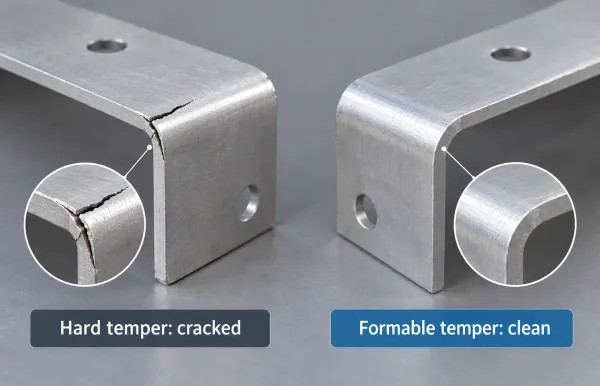
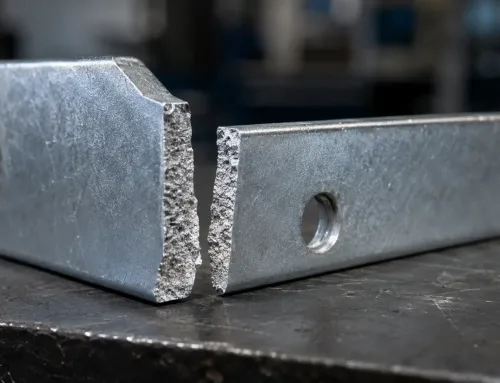
Left: cracked flange from an over-hard temper on a tight bend. Right: clean bend in a formable temper at the same radius.
That processing state sets strength, ductility, springback, and surface response. Two parts cut from the same alloy family can behave very differently in a press brake or under an anodizing line solely because of temper.
A few practical consequences:
- A 5052-H32 sheet typically bends cleanly around moderate radii. The same alloy in a harder temper (for example H38) is far more likely to crack at the same radius.
- 6061-T6 is strong and dimensionally stable for machining, but it has low formability. Tight flanges or sharp hem features often crack unless the design allows a larger inside radius or the material is processed in a softer condition first.
- Soft tempers improve blanking edge quality and tool life, but they dent more easily during handling—relevant when every scratch is a cosmetic reject.
For cosmetic work, the decision is therefore not “which alloy number sounds strongest.” It is “which temper keeps the part formable where it must form, stable where it must hold tolerance, and compatible with the finish that defines appearance.”
The Cosmetic Enclosure Constraint: Form, Finish, and Consistency
“Cosmetic enclosure” is a design constraint, not a style preference. It usually means visible class-A or near-class-A surfaces, controlled color or gloss, and limited allowance for dents, die lines, weld discoloration, or coating defects. Temper selection has to satisfy three demands at once.
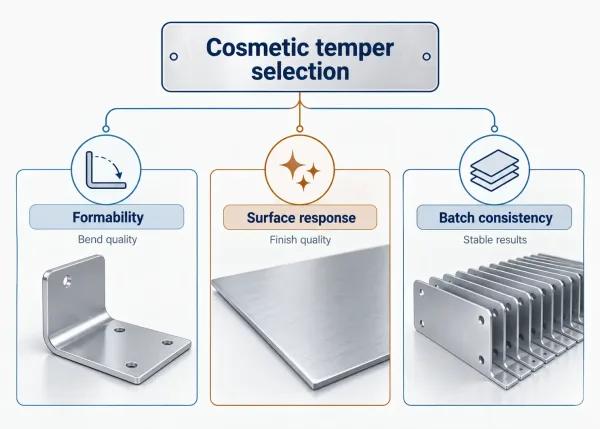
A simple diagram showing the three constraints that temper selection must balance for cosmetic enclosures.
Formability
Enclosures need bends, flanges, louvers, and sometimes welds. The temper must allow the required deformation without cracking or excessive springback. Over-specifying a hard temper to “look premium” often shows up as cracked corners or distorted panels after forming.
Surface response
The finish—clear or colored anodizing, powder coat, liquid paint, or brushed mechanical finish—does not sit on top of an independent layer. It grows from or bonds to the aluminum surface. Temper influences grain structure and how uniformly that surface accepts treatment, which shows up as color consistency, staining, or coating adhesion issues.
Batch-to-batch visual consistency
Cosmetic programs fail when sample parts look right and the 5,000-piece lot does not. Temper is one input among several (stock source, process sequence, racking, cleaning), but if the drawing leaves temper open to substitution, finish variation becomes almost unavoidable.
A workable temper choice is the one that holds all three constraints—not the one that maximizes tensile strength on a datasheet.
Temper Paths by Manufacturing Route
Ranked SERP content often mixes extrusion guides, CNC enclosure posts, and general temper primers. In practice, the useful starting point is how the enclosure is actually made.
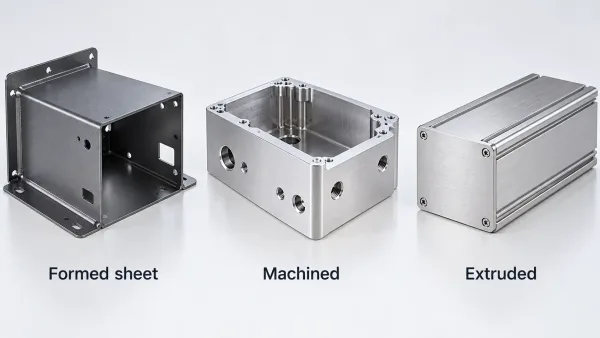
Three enclosure routes—formed sheet, CNC machined, and extruded—each with a typical temper path.
Sheet-metal formed enclosures
For folded and welded sheet housings (instrument covers, control cabinets, equipment bezels), the common working choices are:
| Route | Typical Tempers | Why It Appears | Watch-Outs |
|---|---|---|---|
| Non-heat-treatable sheet (3003, 5052) | H14, H32 (sometimes H34) | Good bend performance, widely available, cost-effective | 5xxx anodizing can look less uniform than 6xxx; harder H tempers crack at tight radii |
| Heat-treatable sheet (6061) | T4 (formable), then sometimes aged; T6 if little forming | Better anodize color consistency when appearance is anodized aluminum | T6 sheet cracks on tight bends; confirm minimum inside radius with the fabricator |
| Mixed construction | Form in softer condition, age or accept T6 only on non-formed features | Balances formability and final strength | Requires clear process sequence on the PO |
Rule of thumb for formed cosmetic sheet: pick the softest temper that still meets dent resistance and fastener loads, then match the finish to that alloy–temper pair—not the reverse.
Machined and extruded enclosures
Machined billets and extruded profiles for high-end audio, medical, or electronics housings often run in T6 (or T651-style stress-relieved plate). Here temper selection is less about bend limits and more about:
- Machining stability and burr behavior
- Anodize uniformity on milled faces
- Residual stress and flatness after heavy material removal
T6 is often correct for these routes—but it is correct because the process does not demand severe forming, not because T6 is a universal cosmetic grade.
What to do when the route is still open
If industrial design wants a smooth extrusion look but mechanical engineering needs folded sheet, resolve the route before finalizing temper. Locking “6061-T6” early can eliminate a better sheet-metal path (5052-H32 + powder coat) that would form cleaner and cost less at volume.
How Temper Affects Anodizing and Coating Results
Surface finish is where cosmetic yield is won or lost. Temper matters here in specific, predictable ways.
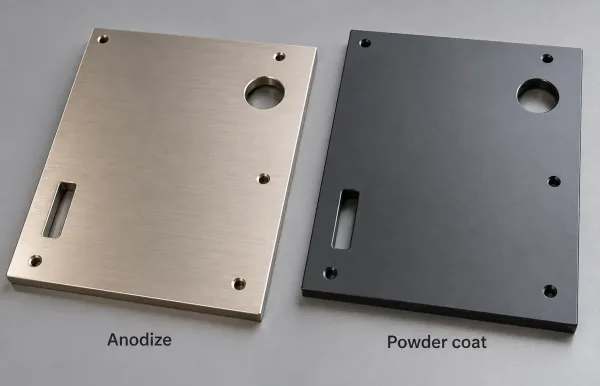
Left: anodized aluminum with even metallic color. Right: powder-coated aluminum with uniform paint coverage.
Anodizing. The anodic layer grows from the substrate. Alloys and tempers that produce cleaner, more uniform microstructures generally anodize with more consistent color. Heat-treatable 6xxx alloys (often in T6) are widely used for clear or colored anodized enclosures because they tend to color more evenly than some 5xxx sheet tempers, which can read greyer or mottled depending on thickness and process control. Hardness alone does not guarantee better appearance—cold-worked tempers can show more response variation if the surface was heavily deformed.
Powder coat and liquid paint. These coatings can mask modest substrate variation, so temper selection can favor formability (for example 5052-H32) when the design is painted rather than anodized. The risk shifts to edge coverage on sharp bends, outgassing if the part is welded after coating planning changes, and denting in soft stock during handling.
Mechanical finishes. Brushed or bead-blasted faces show flow lines and die marks more readily on some tempers. If the drawing calls a cosmetic mechanical finish, the stock surface condition (and temper) should be agreed before cutting.
Two engineering points keep this practical:
- Specify the finish class and acceptance criteria (gloss units, Ra range, color standard or master sample), not only “anodize” or “black paint.”
- Ask the supplier how temper interacts with their line—racking, etch time, and aging state all affect color lot-to-lot.
Choosing Temper: A Working Decision Framework
Use the following decision order instead of a single “best temper” ranking.
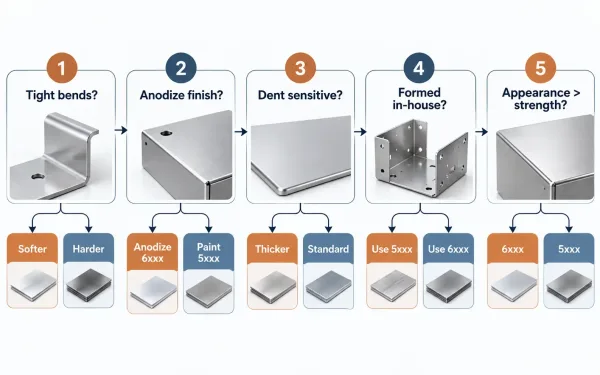
A five-step decision flow for temper selection: bends, finish, dent risk, forming source, then appearance versus strength.
| Priority | Question | If yes → lean toward | If no → lean toward |
|---|---|---|---|
| 1 | Does the part need tight bends or severe flanges? | Softer tempers (5052-H14/H32; 6061-T4 for limited cases) | Harder/stable tempers (T6, H32 where radii allow) |
| 2 | Is the primary cosmetic finish anodizing? | 6xxx in a condition that anodizes consistently (often T6 on non-formed parts) | 5xxx sheet + paint/powder is often more robust |
| 3 | Are cosmetic surfaces high-touch / dent-sensitive? | Slightly harder temper or thicker gauge; controlled handling | Softer temper acceptable with packaging plan |
| 4 | Is the supplier forming in-house before finishing? | Temper that survives the stated bend chart | Avoid T6 on severe forms without a process review |
| 5 | Is appearance more critical than peak strength? | Optimize for finish yield and formability | Structural T6 paths when load dominates |
Recommendation pattern for sheet-metal cosmetic enclosures: 5052-H32 (or H14 for lighter form) when painted or powder-coated; 6061 in a condition matched to anodize requirements when color consistency dominates and forming is moderate; reserve full T6 for mainly flat or lightly formed panels and machined details.
Recommendation pattern for machined/extruded cosmetic enclosures: T6 remains the default when forming is not in the process—but document finish expectations and allow a named substitute only if anodize color and strength are validated.
Specifying Temper on Drawings and RFQs
A correct temper choice fails if the purchase package does not lock it. At RFQ and drawing release, include:
- Alloy and temper together (for example, 5052-H32 or 6061-T6)—never alloy alone on a cosmetic part.
- Finish specification with measurable acceptance (e.g., clear anodize per a named standard, thickness range, color master or ΔE limit; powder coat thickness and gloss).
- Cosmetic criteria—class-A zones, allowed defects, scratch/dent limits, and inspection lighting or sample method.
- Substitution rules—whether alternate tempers are allowed, who approves them, and whether first-article re-approval is required.
- Process sequence assumptions—form, weld, then finish; or machine, then anodize—because sequence changes both appearance and dimensional results.
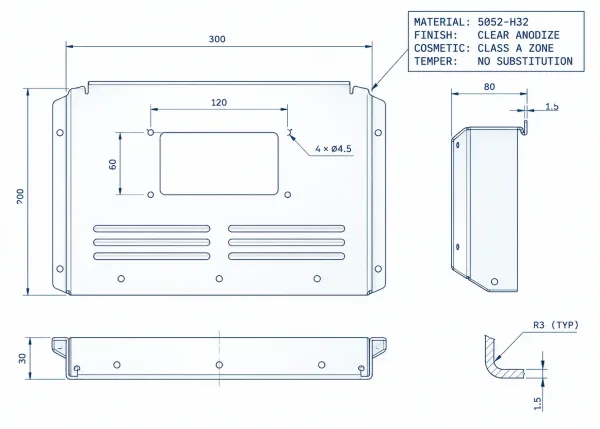
A drawing callout block for a cosmetic enclosure panel: alloy and temper, finish, and acceptance notes.
On the supplier side, incomplete temper callouts trigger technical clarification or silent defaults. Both outcomes add days. On the buyer side, reviewing this package before quoting is cheaper than sorting color rejects after shipment.
From First Article to Production: Holding Cosmetic Consistency
Temper selection is only the first link. To keep sample and production parts looking the same:
- Freeze the full stack: alloy + temper + stock source + forming parameters + finishing vendor and line settings.
- Approve appearance against a master sample or written criteria, not against a photograph emailed after the first parts ship.
- Control handling and packaging for soft tempers and finished faces—cosmetic defects are often logistics defects.
- Plan change management: if temper, gauge, or finish line changes, treat it as a drawing-level change and re-approve appearance.
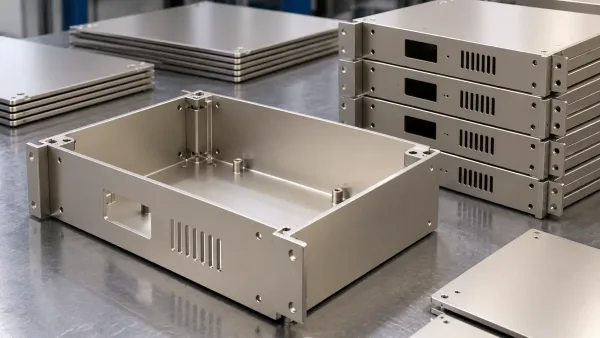
A first-article enclosure and matching production panels with the same finish and color.
When first articles pass and the production lot drifts, the investigation usually finds a split in one of those links—not a mysterious “aluminum quality” problem.
Practical Guidance
If you remember four points:
- Temper controls formability and surface response; alloy controls chemistry and baseline corrosion/mechanical character.
- Choose temper from the manufacturing route and finish, not from a generic “strongest grade” rule.
- For painted formed sheet, prioritize formability (often 5052-H32). For anodized appearance parts, prioritize finish consistency (often 6xxx with a forming-compatible condition).
- Write alloy, temper, finish, and acceptance criteria into the drawing and RFQ so the quote and the first article test the same definition of “good.”
For best results, involve the fabricator at RFQ: ask for their bend charts and anodize experience on the proposed alloy–temper pair before the design freeze. A short DFM review at that stage prevents most cosmetic yield surprises later.
FAQ