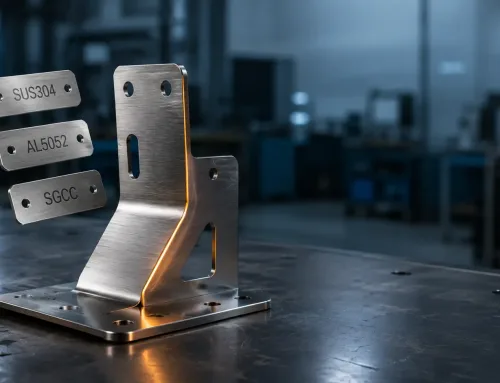

A purchase order line reads: 304 stainless steel, 1.5 mm, 2B, pickled and oiled, PE protective film. The grade and thickness are clear. The rest looks like decoration language—and that assumption is where material orders start to fail.
Where the Confusion Starts: Surface Condition Is Not Surface Finish
Surface condition is the as-delivered state of raw sheet, plate, or coil before it is cut, formed, or welded. It describes what the mill or service center actually ships: oxide scale removed or retained, oil present or dry, protective film applied or not, and which mill designation (such as 2B or BA) the surface carries.
Surface finish, by contrast, usually refers to the appearance or functional layer of a finished part—brushed, polished, painted, or coated after fabrication. Those treatments are real engineering topics, but they are not what a surface-condition field is asking for on a material order.
This page stays on the raw-stock side of that line. If the specification is about how the metal arrives at the fabricator, it belongs to surface condition. If it is about how the part should look after assembly, it does not.
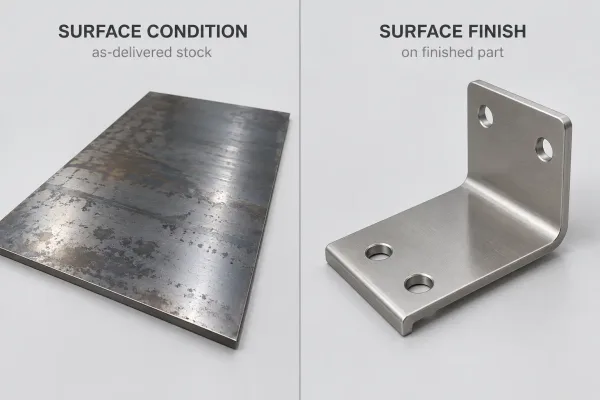
Side-by-side diagram: left, raw sheet as delivered under surface condition; right, fabricated part under surface finish.
What Surface Condition Actually Covers
On a quote or drawing, surface condition is a supply-state specification, not an aesthetic score. In practice it combines a few checkable attributes:
- Mill designation — a coded cold-rolled or hot-rolled state (for example 2D, 2B, BA, or a generic mill finish).
- Cleanliness and oxide state — whether scale has been pickled away, and how clean the sheet is.
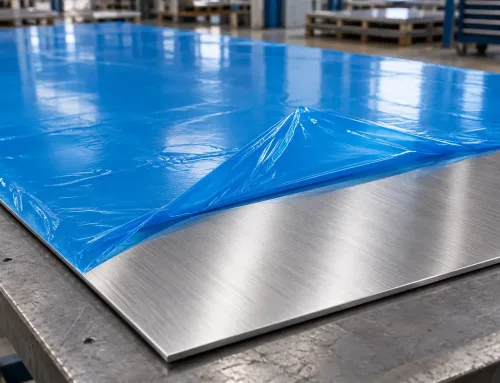
- Temporary protection — oil film, dry film, or plastic protective film used to limit rust and handling damage.
- Related callouts — which face is cosmetic, whether oil must be removed before welding or coating, and whether one mill batch is required for matched panels.
Industry standards such as ASTM A480 and EN 10088 define common stainless designations mainly by how the surface was produced, not by a single guaranteed roughness number. That is why two coils both labeled 2B can look slightly different, and why a purchase order still needs a clear condition line.
Common Surface Conditions on Quotes and POs
The codes below are the ones engineers and buyers meet most often on sheet and coil. They describe the starting surface, not the final look of a fabricated part.
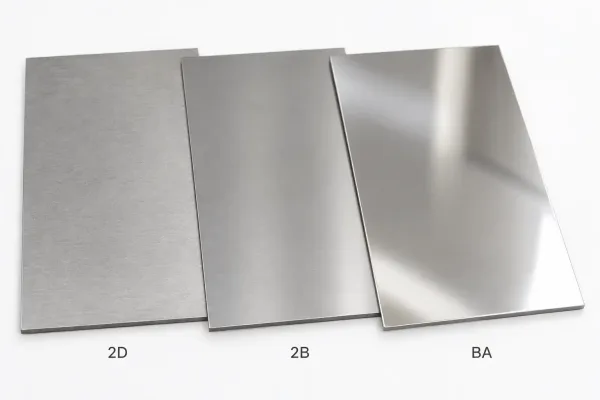
Three stainless sheet samples labeled 2D, 2B, and BA showing dull, moderately reflective, and bright mill finishes.
Stainless mill finishes: 2D, 2B, and BA
| Condition | How it is produced (brief) | What it looks like | Typical use |
|---|---|---|---|
| 2D | Cold rolled, annealed, pickled; no final bright pass | Smooth, dull, non-reflective | Hidden parts, deep drawing, low-glare uses |
| 2B | Same as 2D, then a light skin pass on polished rolls | Smooth, moderately reflective gray | Most general sheet work; common base before coating |
| BA (bright annealed) | Cold rolled, annealed in a protective atmosphere (usually no pickling) | Bright, reflective, smooth | Visible interiors, hygienic equipment, when a clean bright start matters |
2B is the most widely used mill condition on stainless sheet. It is economical, corrosion-resistant after pickling, and friendly to later forming. It is not a mirror surface, and mill batches do not always match in shade across large visible panels.
BA skips acid pickling and keeps a bright skin. It can save polishing effort later, but it is more sensitive to handling marks and is not always stocked in every grade or thickness.
Carbon steel supply states: mill finish, pickled, and oiled (HRPO)
On carbon steel, surface condition is often written in words rather than stainless codes:
- Mill finish — hot-rolled or cold-rolled surface as it leaves the mill. Hot-rolled stock often carries dark mill scale (iron oxides formed at high temperature).
- Pickled — acid-cleaned to remove scale, rust, and surface impurities, leaving a cleaner, duller surface.
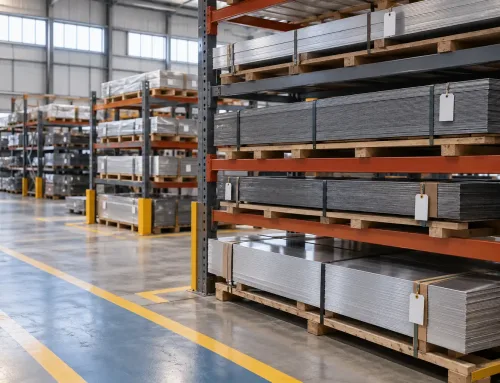
- Oiled / HRPO (hot rolled, pickled and oiled) — pickled steel coated with a thin oil film to slow flash rusting during storage and transit. HRPO is a common supply state for sheet that must be painted, welded, or formed without heavy scale.
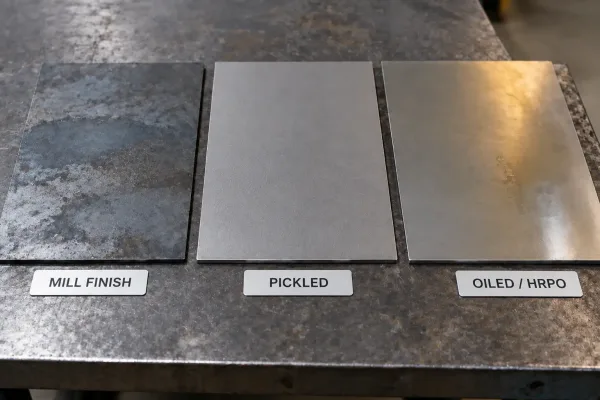
Carbon steel samples labeled mill finish, pickled, and oiled (HRPO) showing scale, clean matte, and oil-protected surfaces.
Pickling improves cleanliness for welding and coating. Oil protects that clean surface until fabrication—so the two steps are usually specified together, not as competing options.
Temporary protection: oil film and protective film
Oil film and plastic film are temporary shields, not permanent finishes.
- Oil film reduces flash rust on clean steel but must be accounted for before welding, painting, or some laser-cutting setups. Degreasing may add cost and time if it is not planned.
- Protective film (typically PE) is applied to reduce scratches during handling, cutting, and shipping. For laser cutting, the film should be a laser-grade product; ordinary packaging film can melt and bond to the sheet.
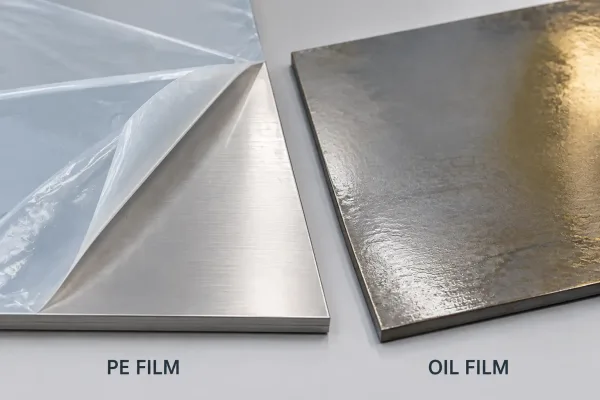
Temporary protection on raw stock: PE film on stainless and light oil film on clean carbon steel.
Protective film is often listed next to surface condition because it changes how the material must be handled on arrival. It is still packaging and handling control—not a coating the customer is buying for the life of the part.
What Surface Condition Changes on the Shop Floor
Surface condition is not only a paperwork field. It changes process risk, cost, and lead time.
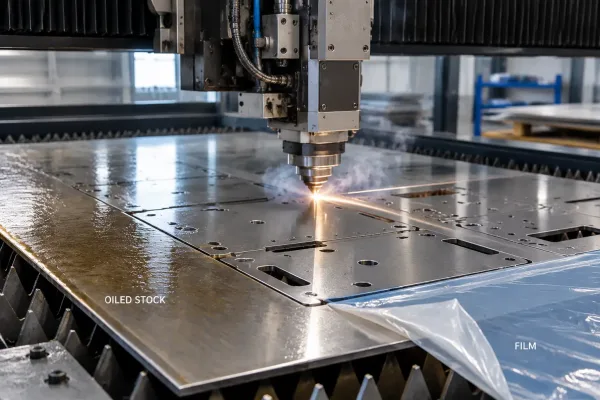
Laser cutting on raw sheet: oil residue and film handling affect cut quality and pre-weld cleanliness.
Cutting. Oiled sheet can smoke more and leave residue near the kerf; dry, pickled sheet can flash-rust if storage is poor. Film that is not laser-safe can melt into the cut.
Welding. Oil, film residue, and contamination weaken weld quality and add pre-clean time. Mill surface texture in the heat-affected zone cannot be put back after welding—so cosmetic expectations must match the chosen condition.
Coating prep. A clean mill surface can be a good substrate for paint or powder, but oil, scale, or film residue can cause adhesion problems. The purchase order should say who removes oil and to what cleanliness level.
Storage and handling. Uncorrected dry steel rusts faster in humid storage; oiled or filmed stock needs different packing and inspection. When panels will sit side by side in view, mixed mill batches can show visible shade differences even when every sheet is “2B.”
Unspecified conditions often show up later as degreasing charges, rust disputes, rework, or rejected cosmetics—not as a line item on the original quote.
How to Specify Surface Condition Before You Order
Treat surface condition like any other material specification: write it so two people can inspect the same thing.
A practical condition line usually includes:
- Grade and thickness (for example 304 stainless, 1.5 mm).
- Mill condition or supply state (2B, BA, pickled, HRPO, mill finish—use the supplier’s or standard’s term).
- Oil and cleanliness (oiled for storage, dry, or oil-free after degrease at the supplier).
- Protective film (none, standard PE, or laser-grade PE on a named face).
- Cosmetic face, if only one side is visible.
- Batch matching, if multiple sheets must look consistent.
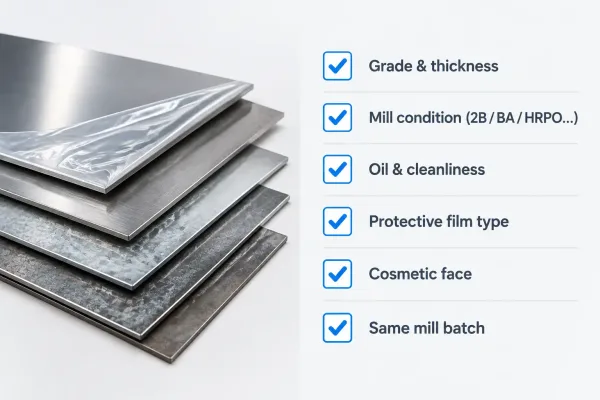
Spec fields to lock before ordering: grade, thickness, condition, oil/cleanliness, film, cosmetic face.
Example callout (illustrative):
Material: 304 SS, 1.5 mm | Surface condition: 2B | PE laser-grade film on A-side | Supplier degrease before shipment | Same mill batch for visible panels
On arrival, check the condition label, film integrity, oil presence, and any flash rust before cutting. If the drawing only says “mill finish,” ask what that means for your material—mill finish on stainless is not automatically 2B, and mill finish on hot-rolled carbon steel still has scale.
When the condition line is incomplete, send it back for clarification at RFQ. That one review step is cheaper than rework after the first cut.
FAQ
Before you release the PO: confirm grade, thickness, mill condition, oil/cleanliness, and film in one place—and ask your fabricator to review the material note if any term is ambiguous. Clear surface-condition language is one of the lowest-cost ways to protect schedule, cost, and appearance at receiving.