
You have finalized the design for a perforated sheet metal panel — hole pattern selected, material specified, surface finish approved. The next question your project manager asks is the one that determines whether the rest of the schedule holds: When can we get it?
The answer is not a single number. Lead time for perforated sheet metal ranges from a few days for standard stock panels to several weeks for custom orders, depending on material availability, hole geometry, production method, and post-processing requirements. Understanding these variables before you place an order helps you set realistic delivery expectations and avoid costly schedule surprises.
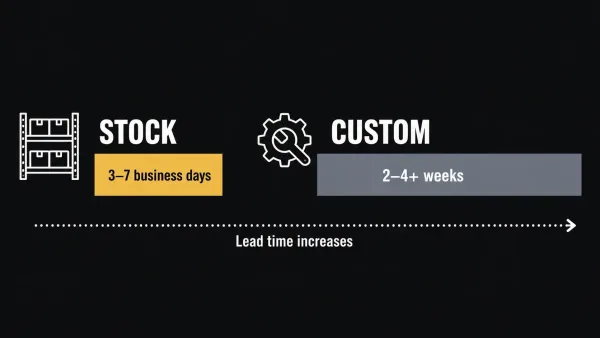
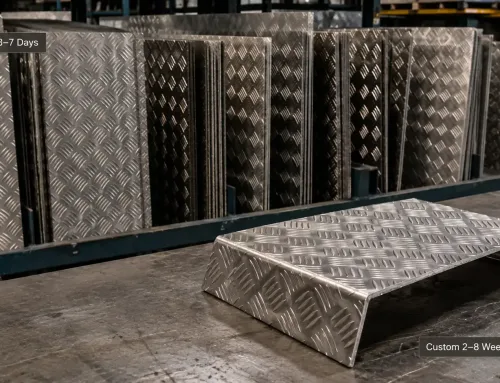
A visual comparison of lead times: stock perforated sheets ship in 3–7 business days, while custom orders typically require 2–4 weeks or more.
What Determines Lead Time for Perforated Sheet Metal
Lead time is not a fixed quote from the supplier — it is the sum of multiple steps, each with its own variability. A typical perforated sheet metal order passes through material sourcing, tooling setup, perforation, surface treatment, quality inspection, and packaging. Any one of these steps can become the bottleneck.
For stock perforated sheets in common materials and standard hole patterns, suppliers often ship within 3 to 7 business days. Custom orders — non-standard hole sizes, specialty alloys, or complex surface finishes — typically require 2 to 4 weeks, and sometimes longer for thick plates or high-density perforation patterns.
The sections below break down the four main factors that drive these timelines.
Material and Stock Availability
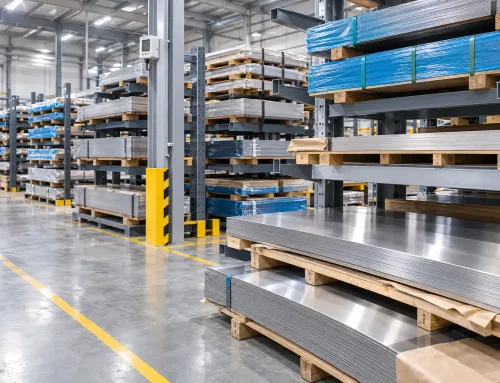
Material availability for custom parts is often the single biggest variable in lead time. Stainless steel 304 in standard sheet sizes is widely stocked by metal distributors worldwide, which means sourcing takes days rather than weeks. Stainless steel 316, aluminum 5052, and galvanized steel are also commonly available but may require longer procurement windows depending on regional supply and current market conditions.
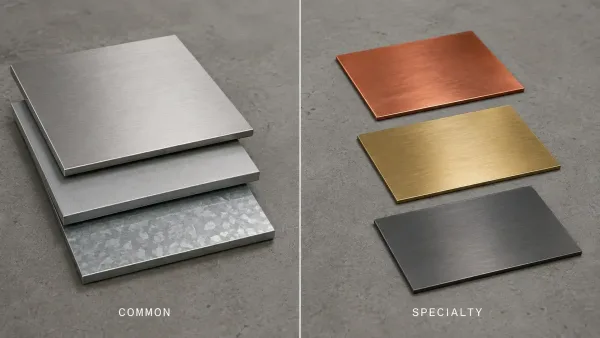
Common alloys like 304 stainless and aluminum are widely stocked and sourced in days, while specialty metals like titanium and Inconel require 1–3 additional weeks of procurement.
Specialty alloys — copper, brass, titanium, or Inconel — are rarely kept in stock by perforation shops. Ordering these materials from a mill or specialty distributor can add 1 to 3 weeks before production even begins.
If your project allows material flexibility, choosing a widely available alloy can significantly reduce total lead time.
Hole Pattern and Sheet Thickness
The geometry of the perforation pattern directly affects how long the production run takes. Standard patterns — round holes in staggered or straight-line arrangements with diameters of 3 mm to 10 mm — are the fastest to produce. Many perforation shops keep tooling for these patterns on hand, eliminating setup delays.
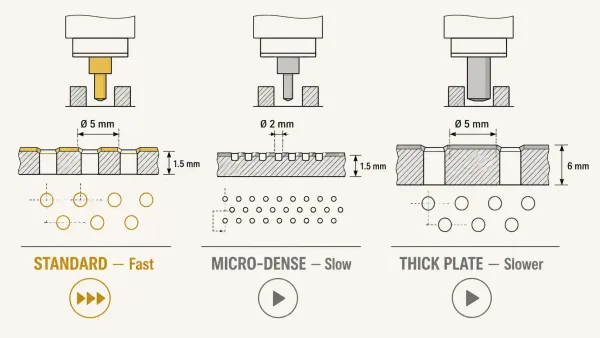
Standard round-hole patterns (3–10 mm) perforate fastest with existing tooling, while small-diameter, high-density, or thick-plate patterns significantly reduce production speed.
Non-standard patterns add time in two ways:
- Tooling preparation. Custom punch tools or dies may need to be ordered or manufactured, which can take 5 to 10 working days depending on complexity.
- Perforation speed. Small-diameter holes (below 2 mm), high-density patterns (open area above 60%), and thick plates (above 3 mm) all reduce the speed of the punching or laser process. A sheet that takes 2 minutes to perforate with a standard pattern might take 8 to 10 minutes with a dense micro-perforation layout.
Sheet thickness plays a dual role. Very thin sheets (below 0.5 mm) require careful handling to avoid warping during perforation, which slows production. Thick plates (above 3 mm) require more force per punch, reducing throughput.
Surface Treatment and Post-Processing
Perforation is rarely the final step. Most perforated sheets undergo at least one sheet metal finishing process before they are ready for use. Each treatment adds its own lead time:
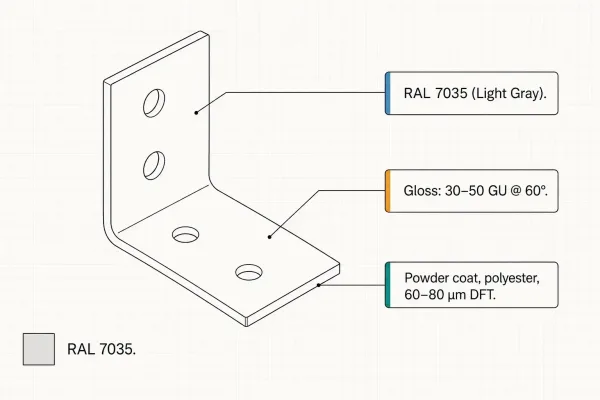
Surface treatments such as hot-dip galvanizing, powder coating, anodizing, electropolishing, and painting each add 3–10 business days to the total lead time.
| Surface Treatment | Typical Additional Lead Time |
|---|---|
| Hot-dip galvanizing | 3–5 business days |
| Powder coating | 5–7 business days |
| Anodizing (aluminum) | 5–10 business days |
| Electropolishing (stainless) | 3–5 business days |
| Painting or wet coating | 3–5 business days |
These timelines assume the treatment is done by a subcontractor, which is common for most perforation shops. If the galvanizing or coating facility has a backlog — which happens frequently during peak construction season — the wait can extend by another week.
Planning for surface treatment from the start, rather than adding it as an afterthought, is one of the easiest ways to keep your delivery date on track.
Stock vs. Custom Perforated Sheet Metal — Lead Time Comparison
For many projects, the first decision is whether to order from stock or commission a custom sheet metal fabrication run. The right choice depends on your specifications, volume, and how much schedule flexibility you have.
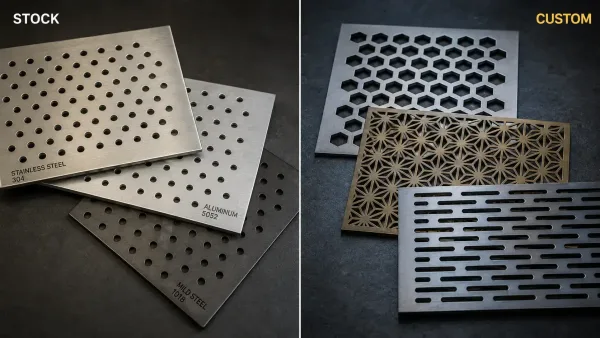
Stock perforated sheets offer fast delivery (3–5 days) with standard patterns, while custom orders match exact design specifications but require 2–4 weeks.
When Stock Perforated Sheets Make Sense
Stock perforated sheets are pre-manufactured panels in common materials (typically steel, stainless steel, or aluminum) with standard round-hole or slotted patterns. They are available from metal distributors and perforation suppliers in standard sheet sizes — often 4 ft × 8 ft (1219 mm × 2438 mm) or 1 m × 2 m.
Stock sheets ship fast, often within 3 to 5 business days. They work well when:
- Your design accepts standard hole sizes (typically 3 mm to 10 mm diameter)
- Material grade is common (304 stainless, mild steel, aluminum 5052)
- Sheet size matches standard dimensions or can be cut down from them
- Volume is moderate and does not justify a custom tooling investment
The trade-off is limited customization. You cannot specify exact hole pitch, non-standard hole shapes, or unusual sheet dimensions with stock panels.
When Custom Perforated Sheets Are Necessary
Custom perforation is required when your design calls for:
- Non-standard hole shapes (hexagonal, square, decorative patterns)
- Specific hole diameter, pitch, or open area percentage
- Non-standard sheet sizes or thicknesses
- Materials not stocked in perforated form
- Tight tolerances on hole placement or edge distances
Custom orders typically require 2 to 4 weeks from the order confirmation date to shipment, depending on the factors outlined in the previous section. The timeline includes material procurement (if not in stock), tooling setup, perforation, surface treatment, and inspection.
For high-volume projects, the upfront tooling cost is amortized across the order quantity, making custom perforation cost-effective at scale. For low-volume runs, the tooling cost per part is higher, but the ability to meet exact design requirements often justifies the premium.
A Decision Framework
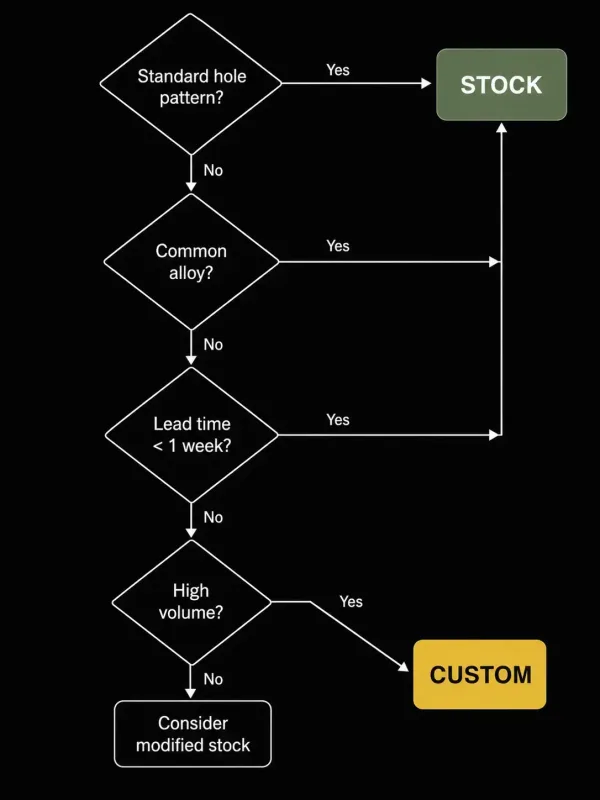
A step-by-step decision guide: evaluate hole pattern, material, lead time, and volume requirements to determine whether stock or custom perforated sheets are the right choice.
| Factor | Choose Stock | Choose Custom |
|---|---|---|
| Hole pattern | Standard round/slotted | Non-standard or decorative |
| Material | Common alloys (304 SS, aluminum) | Specialty alloys or specific grades |
| Lead time available | Less than 1 week | 2+ weeks |
| Volume | Low to moderate | Moderate to high |
| Design flexibility | Can adjust to available specs | Must match exact drawings |
If your timeline is tight and your design can tolerate minor adjustments to hole size or pitch, ask your supplier whether a stock panel can be modified — for example, cut to size or deburred — to meet your needs faster than a fully custom order.
How Material Choice Affects Availability
Material selection is often driven by corrosion resistance, strength, or weight requirements. But supply availability should also factor into the decision, especially when lead time is critical.
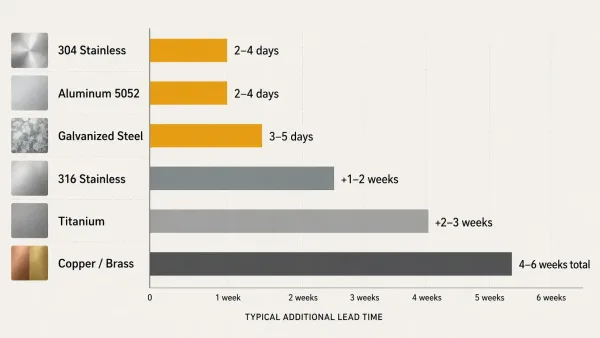
304 stainless steel and aluminum source in days, while 316 stainless adds 1–2 weeks, and specialty metals like copper and brass can extend total lead time to 4–6 weeks.
Stainless Steel 304 vs. 316 — Which Is Easier to Source?
Type 304 stainless steel is the most widely available stainless grade globally. Metal distributors and perforation suppliers stock it in a broad range of sheet sizes and thicknesses. If your application does not require the enhanced chloride resistance of 316, choosing 304 typically shortens material procurement to a few days.
316 stainless steel offers superior corrosion resistance, particularly in marine or chemical environments. However, it is less commonly stocked in sheet form, and specialty thicknesses may need to be ordered from the mill. Expect an additional 1 to 2 weeks for 316 procurement compared to 304, depending on the required thickness and sheet size.
Aluminum, Galvanized Steel, and Specialty Metals
Aluminum (commonly 5052-H32 or 6061-T6) is widely available and perforates well. Aluminum sheets are lighter than steel, which can reduce shipping costs and lead time for the logistics leg. Anodizing — a common surface treatment for aluminum — adds 5 to 10 days to the total timeline.
Galvanized steel is available in pre-galvanized form (galvanized before perforation) or can be galvanized after perforation (post-galvanized). Pre-galvanized sheets are faster to source but may show minor coating disruption around the punched holes. Post-galvanizing ensures full coating coverage but adds the galvanizing lead time to the total.
Copper and brass are specialty materials for perforation. They are not commonly stocked in perforated form and require sourcing from non-ferrous metal distributors. Combined with slower perforation speeds (copper is softer and requires adjusted punch parameters), total lead times for copper perforated sheets can reach 4 to 6 weeks.
How Hole Pattern and Thickness Impact Production Time
Not all perforation jobs are equal from a manufacturing perspective. Two designs that look similar on paper — say, a 5 mm round-hole pattern and a 2 mm round-hole pattern — can have dramatically different production times.
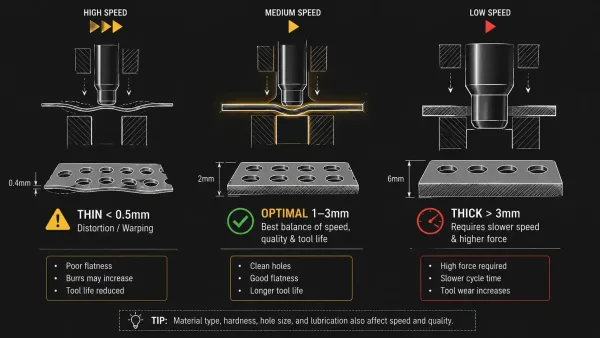
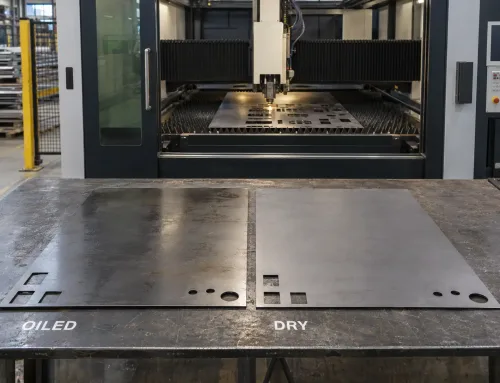
Sheets between 1 mm and 3 mm thickness offer the fastest production — thick enough to handle cleanly, thin enough to perforate efficiently.
Standard vs. Non-Standard Hole Patterns
Standard patterns use commonly available tooling. Round holes in staggered rows, with diameters between 3 mm and 12 mm and open areas below 50%, fall into this category. Many perforation shops maintain a library of standard punch tools for these patterns, meaning no tooling lead time.
Non-standard patterns — including hexagonal holes, decorative shapes, custom slot dimensions, or very high open areas (above 60%) — require custom tooling. The tooling itself may take 5 to 10 working days to manufacture. Once the tooling is ready, the perforation process is slower because custom patterns often require more punches per sheet and tighter alignment control.
If your design allows it, selecting a hole diameter and pitch that matches your supplier’s existing tooling library can eliminate the tooling lead time entirely.
Thin Gauge vs. Thick Plate
Thin sheets (below 0.5 mm) perforate quickly in terms of punch force, but they are prone to warping and distortion during the process. Operators run thinner sheets at slower speeds and may need additional flattening steps afterward, which adds time.
Thick plates (above 3 mm) require significantly more punch force, reducing the number of holes the machine can punch per minute. For plates above 6 mm, some suppliers switch from mechanical punching to laser perforation, which is more precise but slower for high-volume runs.
The sweet spot for fast production is typically 1 mm to 3 mm thickness in standard materials — thick enough to handle cleanly, thin enough to perforate efficiently.
Practical Tips to Shorten Your Perforated Sheet Metal Lead Time
Understanding the variables is the first step. The second is acting on that knowledge when you plan your order. Here are strategies that procurement teams and engineers can use to reduce delivery time:
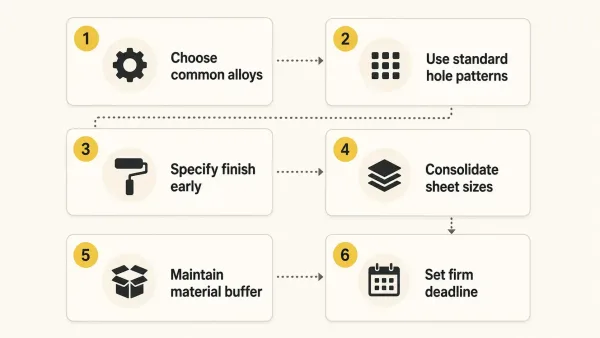
Six actionable strategies including choosing common materials, using standard patterns, specifying surface treatment early, consolidating sizes, maintaining material buffers, and communicating deadlines upfront.
- Choose widely available materials. If 304 stainless meets your corrosion requirements, avoid specifying 316 unless necessary. Material sourcing is often the largest single variable in total lead time.
- Use standard hole patterns when possible. Matching your supplier’s existing tooling library eliminates tooling preparation time entirely. Ask your supplier for their standard pattern catalog before finalizing your design.
- Specify surface treatment early. Adding galvanizing or powder coating after the order is placed extends the timeline. If you know the finished part needs a coating, include it in the original specification so the supplier can schedule it in parallel with perforation.
- Consolidate sheet sizes. If your project requires multiple perforated panels, standardizing on one or two sheet sizes allows the supplier to batch production runs, which is faster than processing each size separately.
- Maintain a material buffer. For recurring orders, consider working with your supplier to maintain a small stock of your specified material. This eliminates procurement lead time for repeat orders and can reduce delivery to the perforation and finishing cycle alone.
- Communicate your deadline upfront. Suppliers prioritize orders differently based on confirmed delivery dates. Providing a firm target date at the quoting stage allows the production team to plan capacity and flag potential conflicts early.