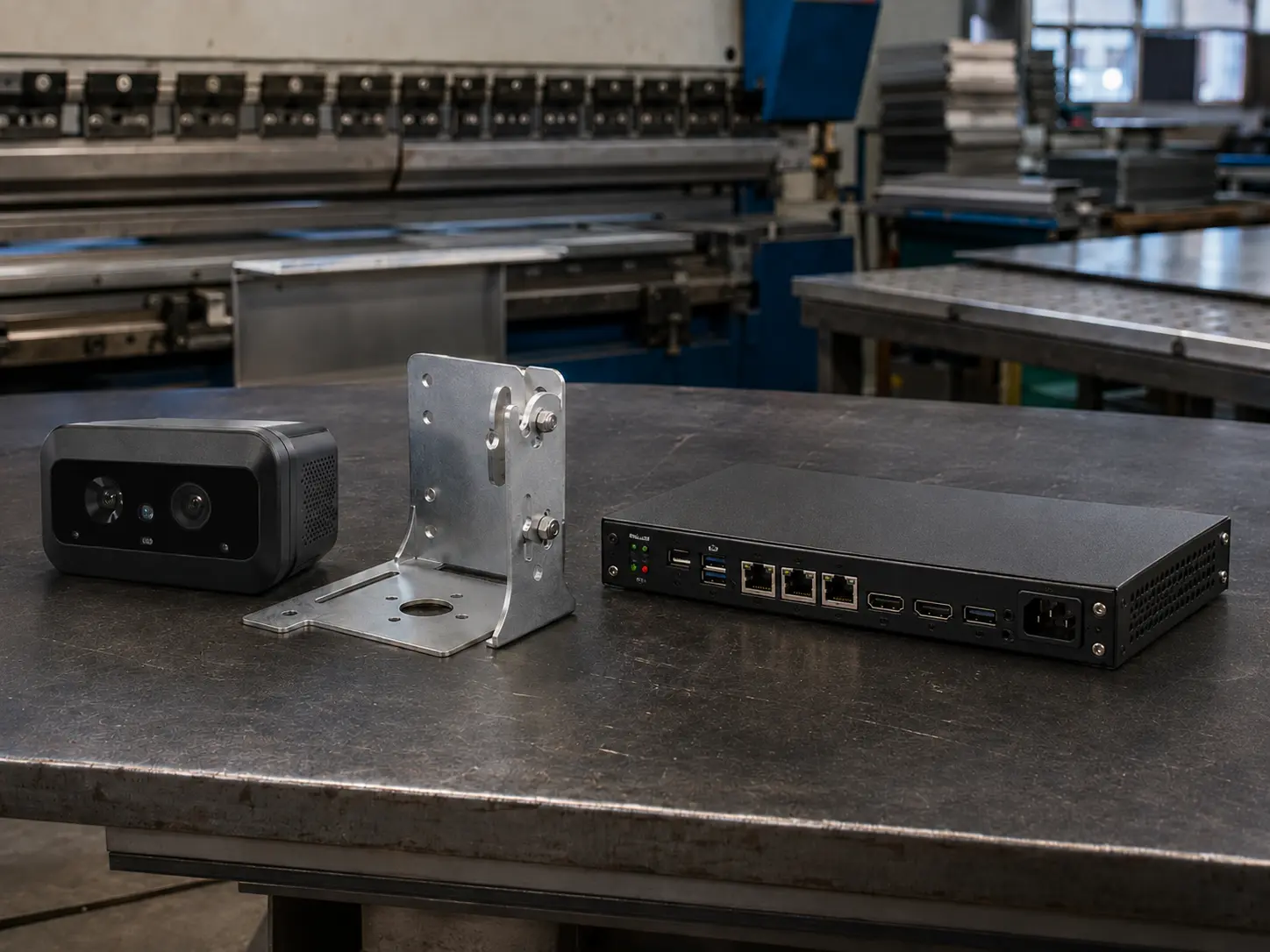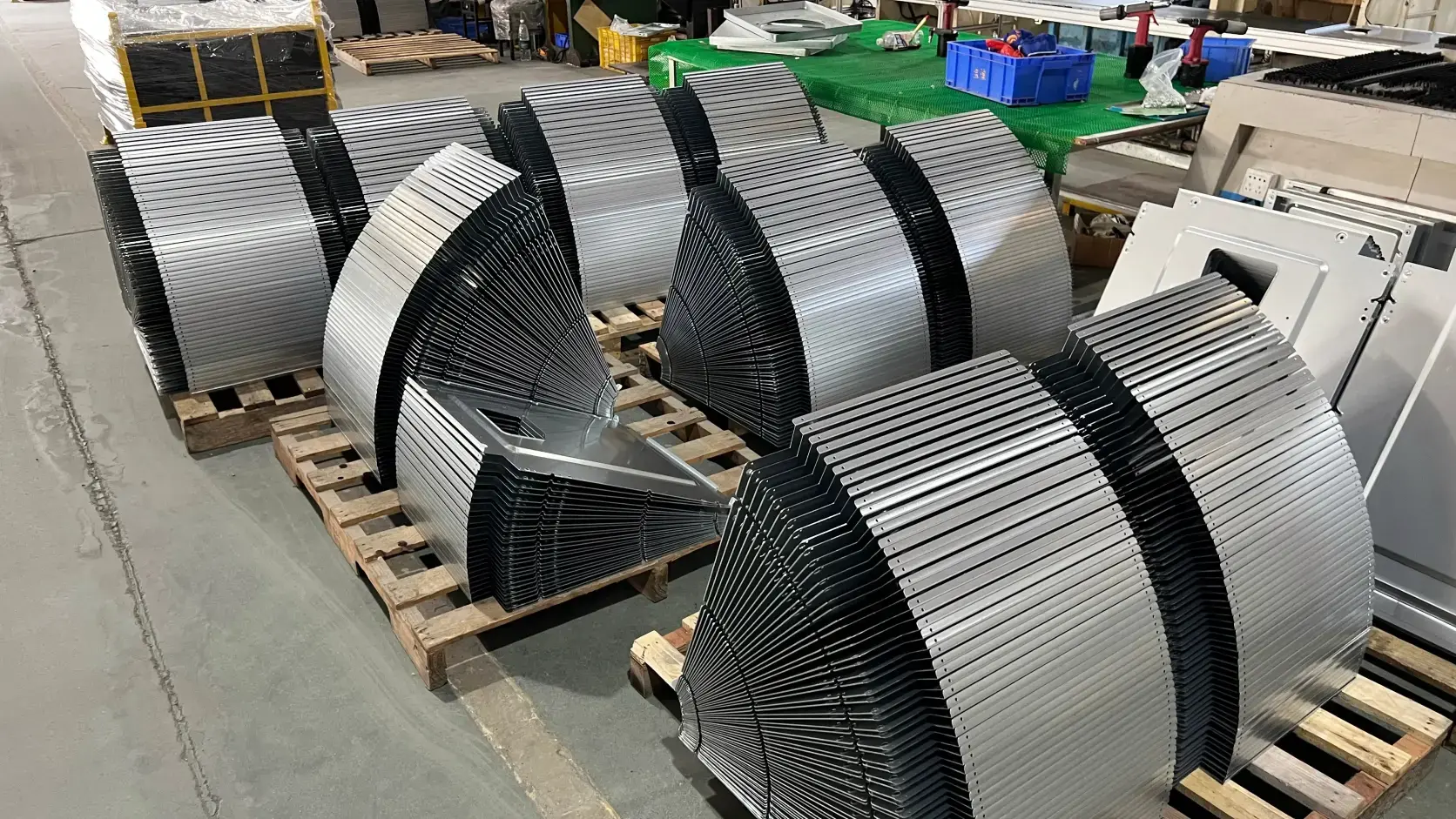

When you send a drawing to a sheet metal supplier, someone on the shop floor has to answer a basic question: how do we turn this flat pattern into a finished part? The answer lives in a document called a route sheet.
Every manufacturing order has one. It defines the sequence of operations, the machines involved, and the checkpoints that keep quality on track. Yet most buyers never see it—or only see it when something goes wrong.
This guide explains what a route sheet is, what it contains, and why it directly affects your quote, lead time, and part quality. A real sheet metal example runs through the entire article.
What Is a Route Sheet?
A route sheet (also called a routing sheet or route card) is a manufacturing document that lists every operation required to produce a part, in the exact order those operations must be performed. It is typically created by a process engineer before production begins.
The terms route sheet, traveler, work order, and BOM are often confused. They serve different purposes:
| Document | What It Does | Who Creates It | When It’s Used |
|---|---|---|---|
| Route sheet | Defines the operation sequence and process parameters | Process engineer | Before production (planning stage) |
| Traveler | Follows the part through the shop, recording actual results | Production floor | During production (execution stage) |
| Work order | Authorizes production and tracks quantities and due dates | Planning / procurement | Before production (authorization stage) |
| BOM | Lists all raw materials and components needed | Design engineer | Design and procurement stage |
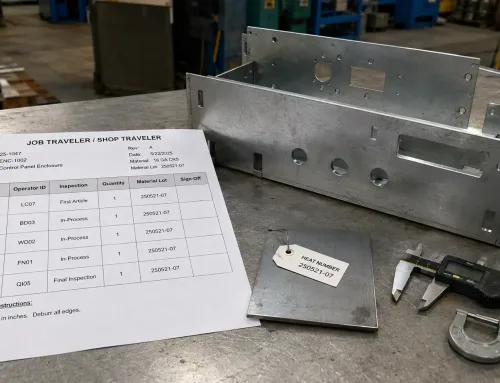
The route sheet is the planning document. The traveler is its execution-time counterpart. One says “do these steps in this order”; the other records “here is what actually happened at each step.”
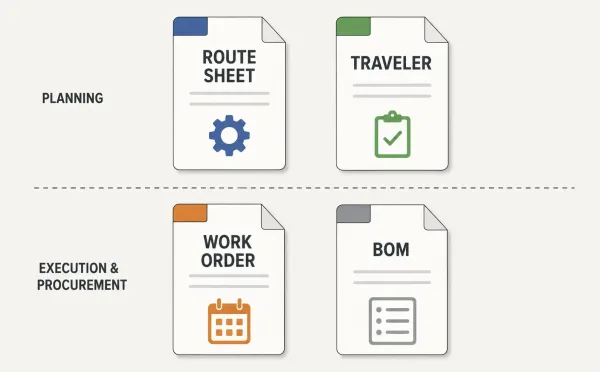
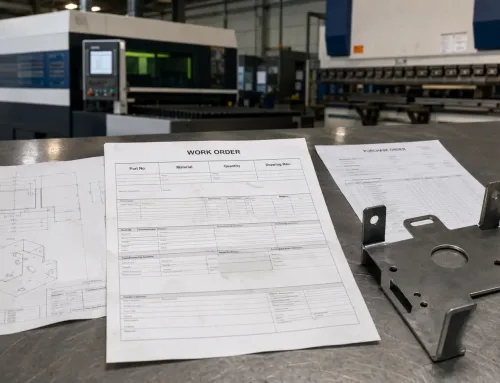
A side-by-side comparison of the four key manufacturing documents — route sheet, traveler, work order, and BOM — showing their distinct roles in the production process.
What’s on a Route Sheet?
A route sheet contains the information a shop floor operator needs to perform each operation correctly and consistently. Typical fields include:
| Field | What It Tells the Operator |
|---|---|
| Operation number | The sequence—step 1, step 2, and so on |
| Operation description | What to do at this step (e.g., “Laser cut outer profile”) |
| Work center or machine | Which equipment to use (e.g., “Trumpf 3030 fiber laser”) |
| Setup time | How long to prepare the machine for this job |
| Run time per piece | Expected cycle time for each part |
| Tools or fixtures | Any special tooling, dies, or jigs required |
| Inspection point | Whether a quality check is needed at this step, and what to measure |
| Notes | Special instructions—bend direction, grain orientation, surface finish callouts |
Not every route sheet includes all these fields. A simple bracket may need six lines. A complex welded assembly with multiple sub-components may run to twenty. The level of detail depends on part complexity and the shop’s quality system.
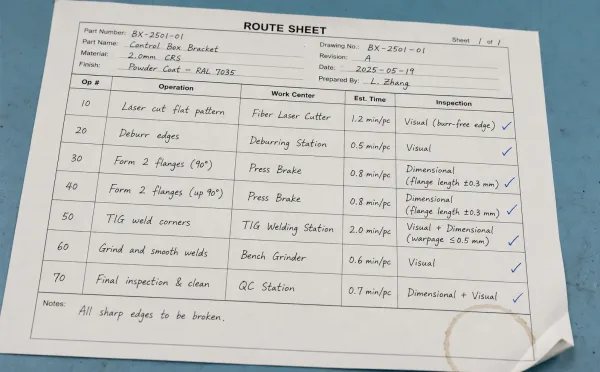
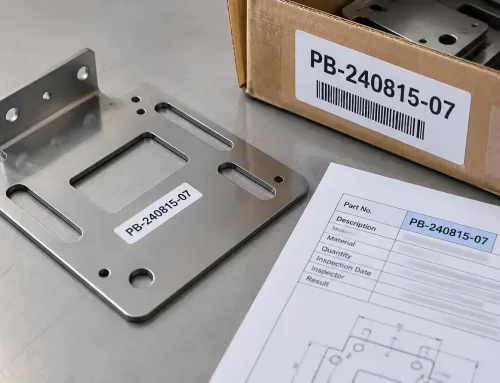
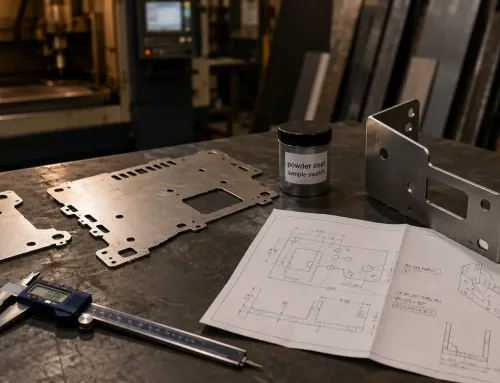
A detailed view of a completed route sheet, showing the key fields — operation sequence, work center assignments, time estimates, and inspection checkpoints — that guide shop floor production.
For buyers, the most telling fields are operation description and inspection point. If a route sheet skips an inspection between welding and coating, defects may not be caught until the part arrives at your dock.
A Route Sheet in Practice: Following a Sheet Metal Bracket Through the Shop
Consider a mounting bracket made from 2 mm cold-rolled steel (CRS), with a laser-cut profile, two bends, a fillet weld, and a powder-coated finish. Here is what its route sheet looks like:
| Op # | Operation | Machine / Work Center | Est. Time | Inspection |
|---|---|---|---|---|
| 10 | Laser cut flat pattern | Fiber laser cutter | 1.2 min/part | Visual (burr-free edge) |
| 20 | Deburr edges | Manual deburring station | 0.5 min/part | — |
| 30 | Bend two flanges at 90° | Press brake | 0.8 min/part | Dimensional (flange length ±0.3 mm) |
| 40 | TIG weld fillet joint | TIG welding station | 2.0 min/part | Visual + dimensional (warp check) |
| 50 | Grind and smooth weld seam | Bench grinder | 0.6 min/part | Visual |
| 60 | Powder coat, RAL 7035 | Powder coating line | Batch | Coating thickness (60–80 μm) |
| 70 | Final inspection | QC station | 1.0 min/part | Full dimensional + visual + adhesion |
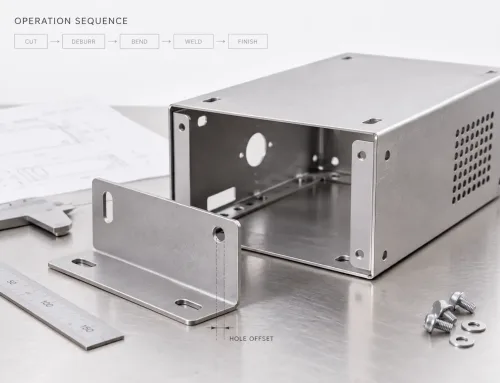
The sequence matters. In custom sheet metal fabrication, laser cutting comes first because the blank must exist before anything can be bent or welded. Bending precedes welding because welding a flat sheet and then bending it would distort the weld. Powder coating comes after all metalworking because heat from welding or grinding would damage the finish.
This is not arbitrary. Each step depends on the geometry and state of the part after the previous step. A route sheet that reorders these operations without a technical reason is a red flag—it suggests the process engineer may not have reviewed the drawing carefully.
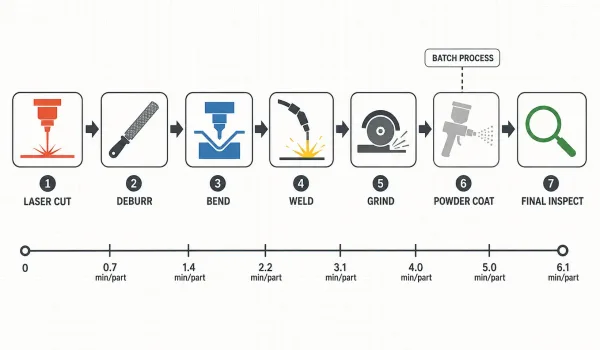
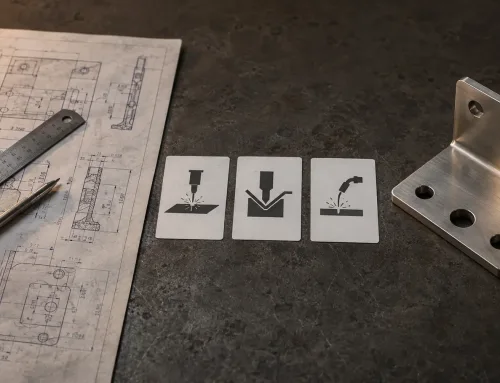
A step-by-step process flow illustrating the seven operations on the route sheet — laser cutting, deburring, bending, welding, grinding, powder coating, and final inspection — for a sheet metal mounting bracket.
How the Route Sheet Affects Your Quote, Lead Time, and Quality
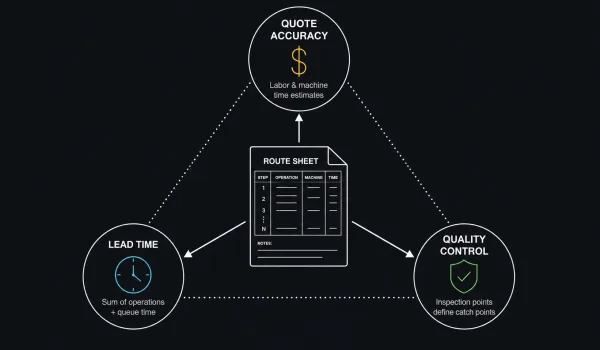
A triangular diagram illustrating the three areas directly shaped by the route sheet — quote accuracy, lead time, and quality control — and how each connects back to the manufacturing plan.
The route sheet is not just a shop-floor instruction. It is the foundation of three things buyers care about.
Quote accuracy. A supplier’s quote is built on estimated labor and machine time. Those estimates come directly from the route sheet. If the route sheet lists eight operations but only six are truly necessary, you are paying for two extra steps. Conversely, if a supplier quotes a suspiciously low price, check whether their route sheet omits operations you expect—like a deburring step or an inspection point.
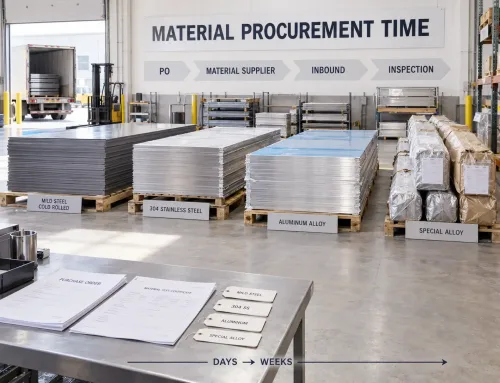
Lead time. The total production time is the sum of all operation times plus queue time between steps. Operations that require outside processing—such as plating, anodizing, or specialty coatings—add three to seven business days to the schedule. A route sheet that sequences an external process between two internal ones creates a bottleneck. Understanding the route sheet helps you ask realistic delivery questions.
Quality control. Inspection points on the route sheet define where and how quality is verified. If a critical dimension is only checked at final inspection, a defect introduced at an earlier step—say, a bend angle out of tolerance—may propagate through welding and coating before anyone catches it. Well-written route sheets place inspection points immediately after the operations most likely to introduce variation.
What to Check When You Receive a Route Sheet
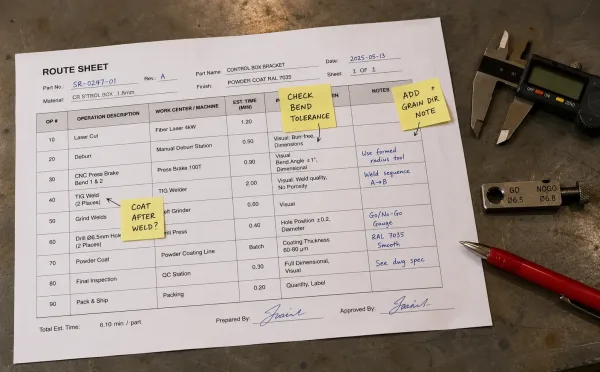
A route sheet being reviewed before production, with sticky-note callouts marking critical areas to verify — inspection checkpoints, operation sequencing, and missing special instructions.
If your supplier shares the route sheet, or if you request one during the quoting stage, here is what to look for:
- Operation sequence makes sense. Each step should logically follow from the previous one. Ask yourself: could this operation have been done earlier without causing a problem? Could it be combined with another step?
- Inspection points cover critical features. If your sheet metal fabrication drawing calls out a tight tolerance on a bent dimension, there should be an inspection step immediately after bending—not just at final inspection.
- Surface treatment is sequenced after all metalwork. Coating, plating, or anodizing should come after cutting, bending, welding, and grinding. If the route sheet shows coating before welding, something is wrong.
- Operation count matches part complexity. A flat laser-cut bracket with no bends and no welds should not have ten operations. Extra steps may indicate inefficiency—or that the supplier is padding the quote.
- Special requirements are noted. Grain direction, bend orientation, masking for selective coating, and thread protection during surface treatment should appear in the notes column. If they are missing, the floor operator has to guess.
- Outside processes are identified. Any step that requires sending the part to a subcontractor—such as zinc plating or heat treatment—should be clearly marked with an estimated turnaround time.
A route sheet is a communication tool. When it is clear and complete, production runs smoothly. When it is vague or missing details, the shop floor fills in the gaps—and the results may not match your expectations.
FAQ
Understanding how your parts are built gives you better control over cost, schedule, and quality. If you would like a route sheet summary included with your next quote from SR-MFG, or if you want our engineering team to review a route sheet for an existing project, contact us to get started.