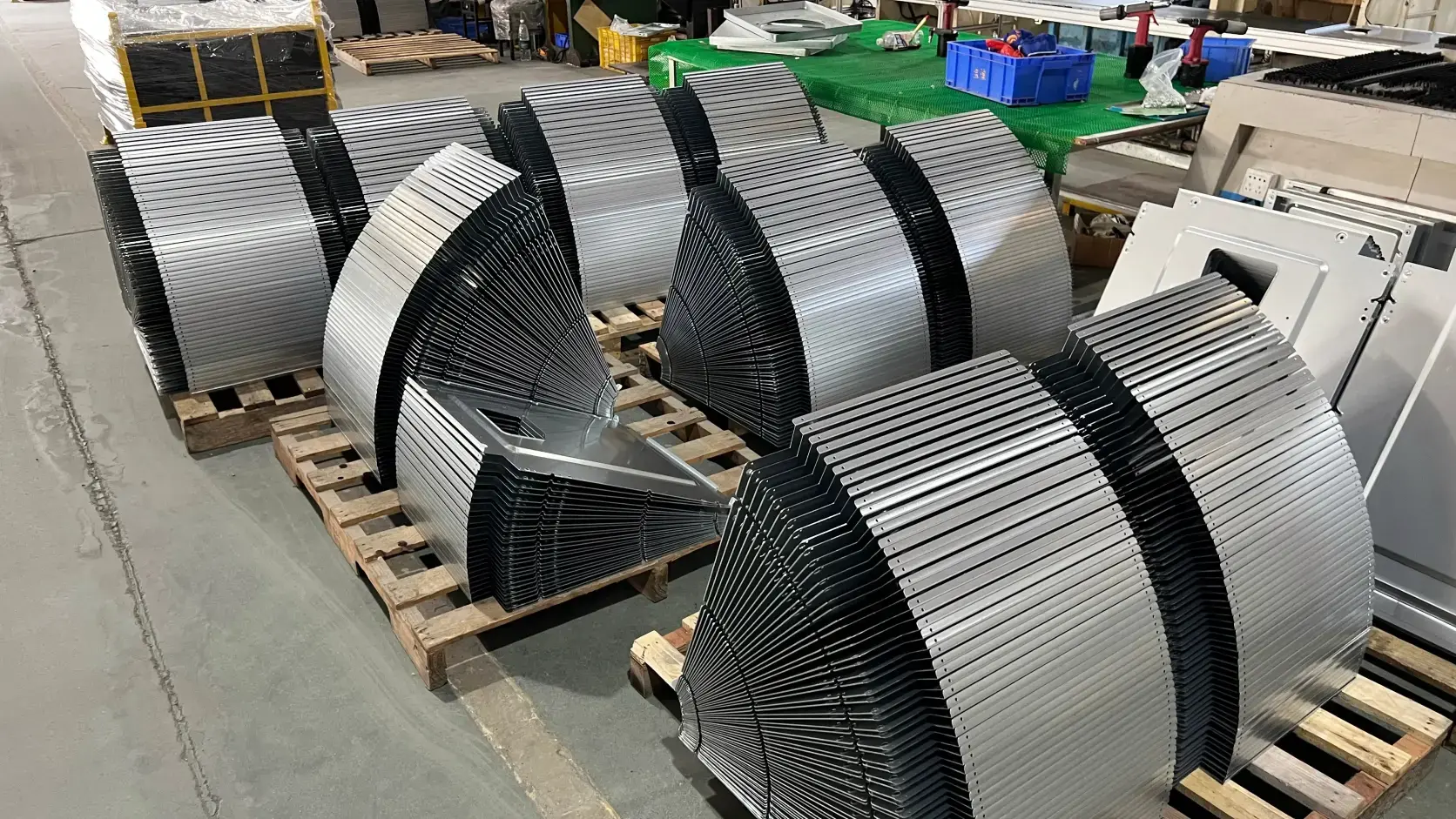

What Are Stainless Steel and Galvanized Steel?
Stainless steel is an iron-based alloy containing at least 10.5% chromium (Cr). The chromium reacts with oxygen in the air to form a dense chromium oxide passive film on the steel surface.
This film is extremely thin but highly stable. It prevents oxygen and moisture from reaching the underlying steel, thereby protecting it against corrosion. More importantly, if the surface is scratched or worn, the passive film can repair itself in the presence of oxygen. This self-healing property is the primary reason stainless steel can provide long-term corrosion resistance.
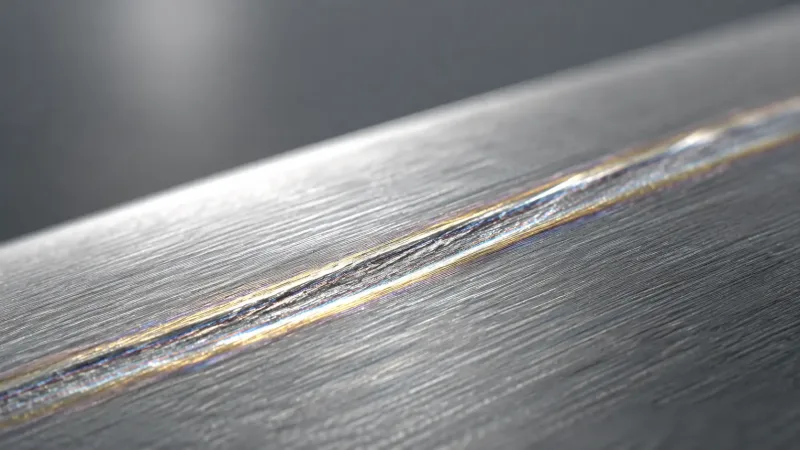
A shallow scratch on a stainless steel surface — the chromium oxide passive film reforms spontaneously when exposed to oxygen, which is why stainless steel maintains its corrosion resistance even after minor surface damage.
The two stainless steel grades most commonly used for metal enclosures are SUS304, which contains approximately 18% chromium and 8% nickel, and SUS316, which adds approximately 2% molybdenum to the 304 composition for improved resistance to chloride corrosion.
Galvanized steel, by contrast, is carbon steel or cold-rolled steel coated with a layer of zinc. The zinc does more than simply isolate the steel from the surrounding air. It acts as a sacrificial anode. Even if the galvanized coating is scratched or damaged, the zinc reacts with oxygen and moisture before the underlying steel does, protecting the steel substrate from corrosion. The carbon steel begins to rust only after the zinc coating has been completely consumed.
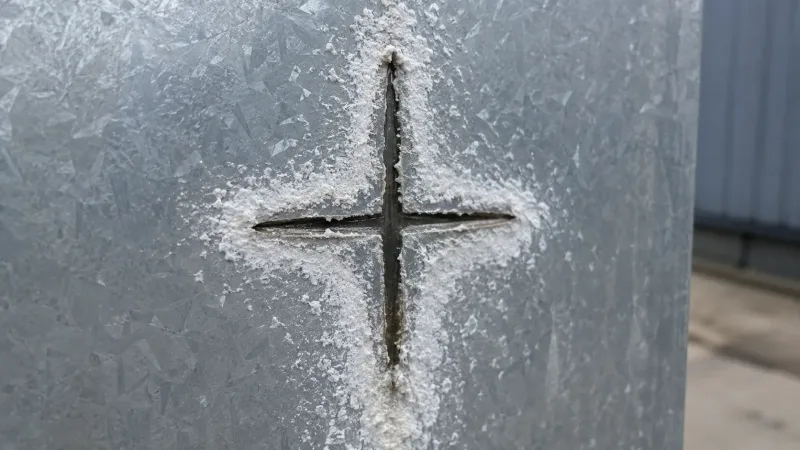
Where the zinc coating on galvanized steel is scratched, the surrounding zinc corrodes preferentially instead of the exposed steel — this sacrificial protection is the key advantage of galvanized steel over simple barrier coatings.
Galvanized steel is primarily produced using two processes:
Hot-Dip Galvanized Steel (SGCC)
The steel sheet is immersed in molten zinc to form a coating that is typically 10–30 μm thick. The surface usually has a visible zinc spangle pattern and a relatively rough texture. It provides strong corrosion protection and is suitable for outdoor and semi-exposed environments.
Electrogalvanized Steel (SECC or EG)
Electrogalvanized steel sheet, also known as SECC or EG, receives a thin zinc coating through an electrolytic process. The coating is generally only 1–3 μm thick. The surface is smooth and uniform, with no visible zinc spangle, giving it an appearance closer to that of cold-rolled steel.
Its corrosion resistance is lower than that of hot-dip galvanized steel, but it offers better coating compatibility and is well suited to indoor products and applications with higher appearance requirements.
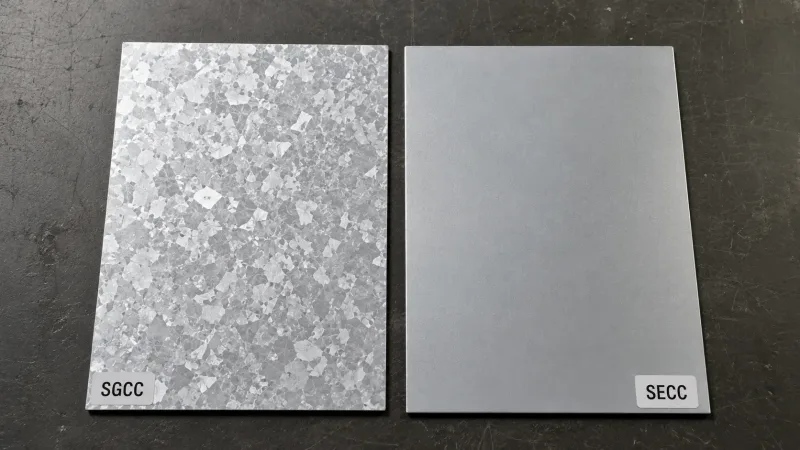
Left: hot-dip galvanized steel (SGCC) showing its characteristic zinc spangle crystalline pattern. Right: electrogalvanized steel (SECC) with its smooth, uniform surface that resembles cold-rolled steel. The two coatings differ by roughly 10x in thickness.
Corrosion Resistance: How Each Material Protects Your Enclosure
Stainless steel and galvanized steel rely on completely different corrosion-protection mechanisms. These mechanisms directly determine the environments in which each material is most suitable.
Stainless steel provides what can be described as built-in material protection. Chromium is present throughout the steel, and the chromium oxide passive film forms from the material itself. As long as oxygen is available, the passive layer can continue protecting the surface.
In theory, the corrosion-resistant service life of stainless steel mainly depends on whether the material is penetrated by the corrosive medium. In most conventional environments, this means an extremely long service life.
Type 304 stainless steel for enclosure applications can withstand many atmospheric environments as well as mildly acidic and alkaline conditions. Molybdenum-bearing 316-series stainless steel performs better than 304 in chloride-containing environments, including coastal areas, chemical facilities, and offshore platforms.
Galvanized steel provides consumable protection. Its zinc layer is gradually consumed over time, typically at a rate of approximately 1–2 μm per year in ordinary atmospheric environments.
A hot-dip galvanized coating can generally provide 10–25 years of protection in a typical outdoor environment. Under the same conditions, an electrogalvanized coating may last only 1–3 years. Once the zinc layer has been fully consumed, the underlying carbon steel substrate can quickly begin to corrode and rust.
Salt spray testing provides a useful quantitative reference. Based on commonly cited industry test data:
- Hot-dip galvanized coatings can generally achieve 500–1,000 hours in a neutral salt spray test (NSS) without red rust.
- Electrogalvanized coatings typically achieve approximately 100–300 hours.
- SUS304 stainless steel can exceed 1,000 hours.
These figures can be used as reference points during material selection. However, actual service environments are more complex than standardized salt spray testing. Temperature, humidity, chemical exposure, and other operating conditions must also be evaluated.
Simple Selection Summary
- Dry indoor environments: Galvanized steel, especially electrogalvanized SECC, is generally sufficient.
- Typical outdoor environments: Hot-dip galvanized steel is generally one of the most economical sheet metal materials for outdoor applications.
- Coastal, high-humidity, chemical, or food-grade environments: Stainless steel is usually the better choice.
Cost Comparison: More Than Just Material Price
When comparing stainless steel and galvanized steel, many purchasing professionals first look at the material price. This is reasonable, but it does not provide the complete picture. The true cost difference between the two materials must be evaluated from several perspectives.
Raw Material Cost
Galvanized steel is significantly less expensive than stainless steel.
Using the common enclosure sheet thickness range of 1–2 mm as a reference, the raw material cost of galvanized steel is generally 40%–60% lower than that of SUS304 stainless steel. This is one of the main reasons galvanized steel is widely used for enclosure manufacturing.
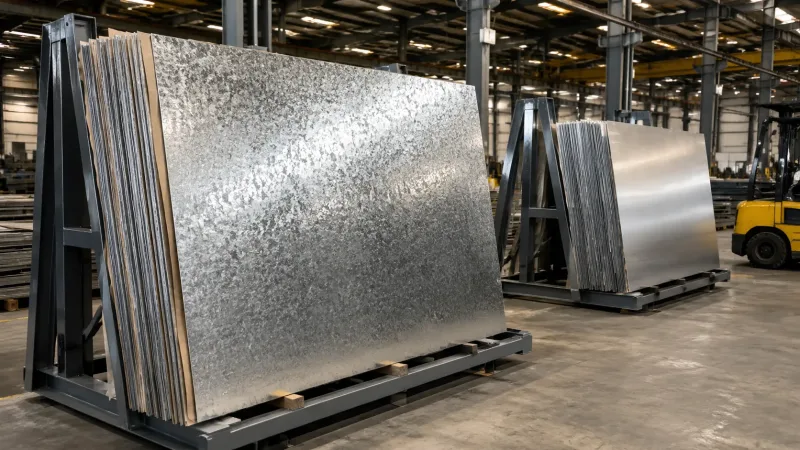
Raw material inventory in a sheet metal fabrication facility — stainless steel sheets (rear) cost roughly 40–60% more than galvanized steel sheets (front) at equivalent thickness, a gap that drives many enclosure material decisions.
Actual prices will vary depending on zinc coating thickness, stainless steel grade, and raw material market conditions.
Fabrication Cost
Stainless steel is more expensive to process than galvanized steel.
Because stainless steel work-hardens quickly, bending requires higher machine tonnage. Laser cutting consumes more assist gas, and cutting speeds are generally around 20%–30% slower than for galvanized steel.
For an enclosure with the same structure, stainless steel therefore has higher fabrication costs across several processing stages.
The processing characteristics of galvanized steel are relatively close to those of ordinary cold-rolled steel. In most cases, it can be processed with little or no major adjustment to standard fabrication parameters.
However, galvanized steel has one frequently overlooked hidden cost: welding.
If the enclosure design includes continuous welds or seal welding, galvanized steel introduces three additional costs.
1. Zinc Coating Burn-Off
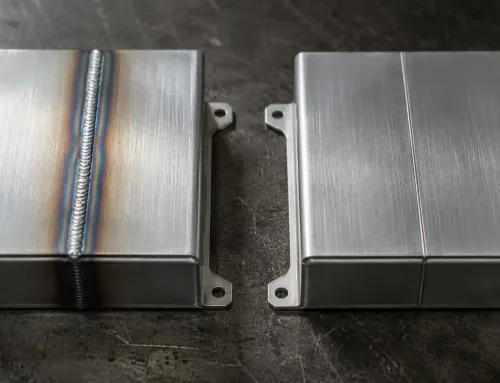
The high temperature generated during welding completely burns away the zinc coating around the weld, leaving an exposed area without zinc protection.
After welding, this area requires secondary corrosion protection, usually through the application of anti-rust paint. Without this treatment, the welded area is likely to become the first part of the enclosure to rust.
2. Welding Fumes and Safety Costs
At high temperatures, zinc evaporates and produces zinc oxide fumes, which present a significant health risk to welders.
Factories welding galvanized components must use forced ventilation systems and appropriate personal protective equipment. These requirements increase the cost of maintaining a safe processing environment.
3. Welding Parameter Adjustments
When welding galvanized steel, the welding current and travel speed must be adjusted to reduce the extent of zinc coating damage.
These adjustments increase welding time and reduce overall welding efficiency.
If the enclosure design requires no welding or only a small number of spot welds, galvanized steel offers a clear cost advantage. If the product requires extensive continuous welding, stainless steel is generally the more suitable option.
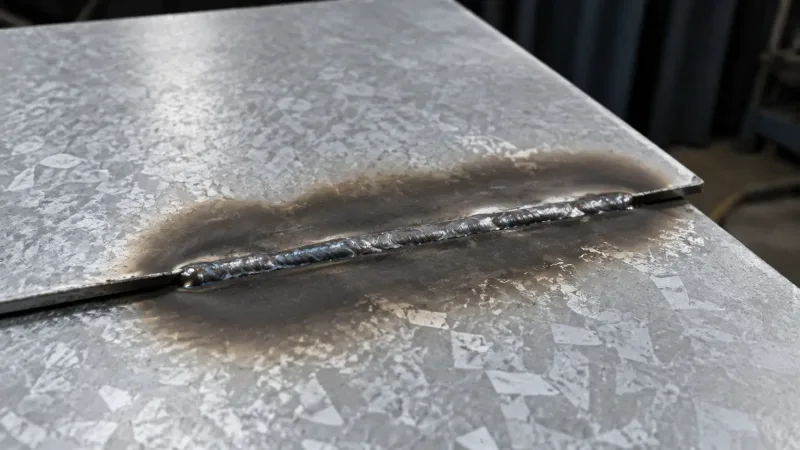
A weld joint on galvanized steel — the heat of welding has completely burned away the zinc coating in a wide band around the weld bead, exposing bare carbon steel that will require secondary anti-rust treatment to restore corrosion protection.
Surface treatment must also be included in the total cost calculation. Three material and surface-treatment combinations commonly used in metal enclosure manufacturing can be ranked as follows:
| Option | Material | Surface Treatment | Overall Cost |
|---|---|---|---|
| Option A | Cold-rolled steel (SPCC) | Pretreatment, including pickling or phosphating, plus powder coating | Lowest: inexpensive material, but more pretreatment processes are required |
| Option B | Galvanized steel (SGCC/SECC) | Light pretreatment plus powder coating, or no additional coating | Medium: slightly higher material cost, but fewer pretreatment processes |
| Option C | Stainless steel (SUS304) | Brushing or passivation, usually without coating | Highest: more expensive material, although eliminating coating can reduce finishing costs |
Engineers should confirm the surface-treatment plan during the design stage and evaluate it together with the material selection. Surface treatment should not be considered only after the material has already been selected, because the two decisions directly affect each other.
Surface Treatment and Coating Compatibility
Coating Galvanized Steel Requires Proper Pretreatment
Hot-dip galvanized steel, or SGCC, has a visible zinc spangle pattern and relatively high surface roughness. This gives powder coating applied to galvanized steel enclosures good mechanical adhesion. However, pretreatment is still recommended before powder coating to prevent the coating from peeling during long-term use.
Electrogalvanized steel, or SECC, has a smoother surface and therefore provides less mechanical adhesion. A dedicated etching primer or phosphating treatment is usually required to achieve reliable coating adhesion.
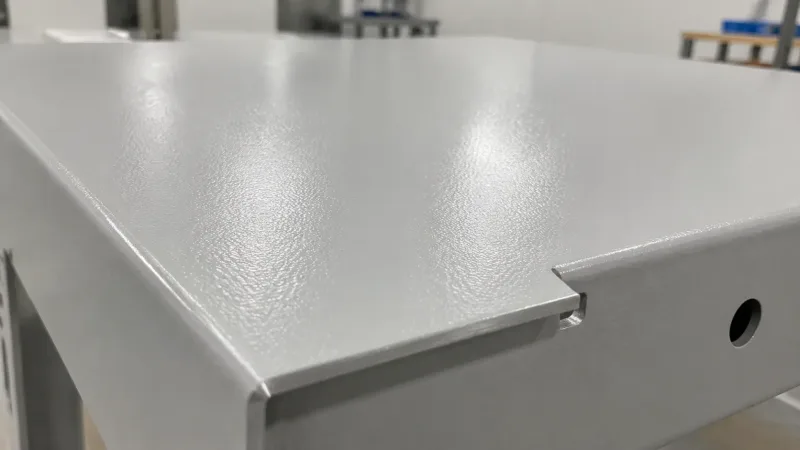
A powder-coated sheet metal panel showing the characteristic smooth, uniform semi-gloss finish — powder coating is the most common surface treatment for galvanized and carbon steel enclosures used outdoors, adding 60–120 μm of protective polymer film.
Stainless Steel Usually Does Not Require Coating
Stainless steel already offers strong corrosion resistance and an attractive surface appearance. Common surface finishes include brushing, mirror polishing, and passivation.
For products requiring a high-quality appearance, brushed stainless steel can be used as the final surface without any additional coating.
Strength, Weight, and Mechanical Properties
For sheet metal enclosures, the differences in strength and weight between stainless steel and galvanized steel are generally not significant.
- SUS304 stainless steel has a yield strength of approximately 205–215 MPa and a tensile strength of approximately 520 MPa.
- The substrate of galvanized steel generally has a yield strength of approximately 140–280 MPa, depending on its cold-rolling condition and annealing process.
The densities of the two materials are also very similar:
- Stainless steel: approximately 7.93 g/cm³
- Galvanized steel: approximately 7.85 g/cm³
At the same sheet thickness, the weight difference is practically negligible.
However, the factor that most strongly influences enclosure structural design is not the material itself but the selected sheet thickness.
Many electrical enclosures and industrial cabinets require only 1–2 mm sheet metal to meet their structural strength requirements. If the enclosure must withstand higher loads, stiffness should be increased by adding reinforcement ribs or using thicker sheet metal.
Bending, Fabrication, and Zinc Coating Integrity
Zinc Coating Condition During Bending
When hot-dip galvanized steel sheet used for enclosures is bent, the zinc coating on the outside of the bend is subjected to tensile stress. If the inside bend radius is too small, the zinc layer may crack or flake off along the outside of the bend.
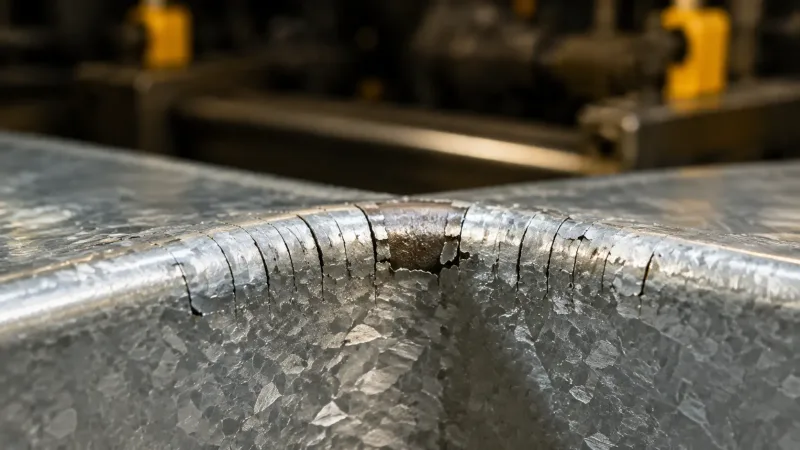
The outside surface of a tight bend on hot-dip galvanized steel — when the bend radius is too small, the zinc coating develops visible micro-cracks and flaking due to tensile stress, which can compromise the long-term corrosion protection at the bend.
Our engineering recommendation is to use an inside bend radius of at least 1.5 times the sheet thickness to reduce tensile damage to the zinc coating.
If the component structure requires a smaller bend radius, local zinc removal in the bending area can be considered, followed by corrosion-protection touch-up after bending.
Stainless Steel Work Hardening and Springback
The main fabrication challenges associated with stainless steel are work hardening and springback.
Stainless steel hardens rapidly during cold working, and its bending springback angle is approximately 1°–2° greater than that of carbon steel. Angle compensation is therefore required during bending.
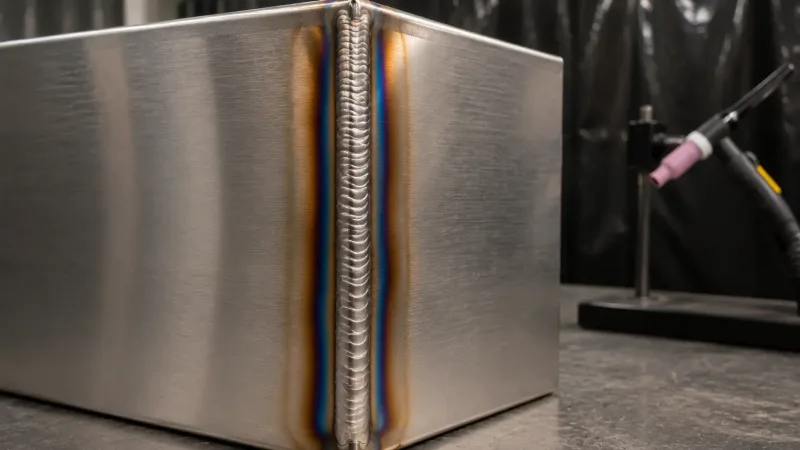
A TIG weld bead on a stainless steel enclosure panel — stainless steel welds cleanly but requires careful heat control. The straw-colored heat tint near the weld indicates the chromium oxide layer was affected by heat and should be passivated afterward.
Application Matching: Which Material Should Be Used for Each Enclosure?
Indoor and Controlled Environments
Examples include server cabinets, electrical distribution boxes, control panels, and indoor instrument enclosures.
Electrogalvanized steel, or SECC, with powder coating is recommended.
Indoor temperature and humidity conditions are generally stable, so the corrosion resistance of galvanized steel is usually sufficient. With powder coating, the enclosure can achieve a high-quality appearance at a cost significantly lower than stainless steel.
If an appearance similar to brushed stainless steel is required, hot-dip galvanized SGCC with a textured powder coating can also be selected.
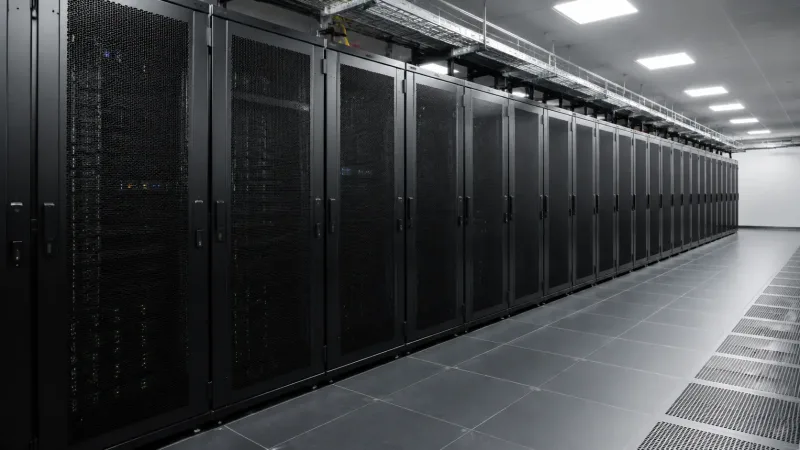
Indoor server enclosures in a climate-controlled data center — in stable indoor environments, electrogalvanized steel (SECC) with powder coating provides sufficient corrosion protection at a significantly lower cost than stainless steel.
Typical Outdoor Environments
Examples include telecommunications cabinets, security monitoring boxes, custom outdoor control box enclosures, and IoT equipment enclosures.
Hot-dip galvanized steel, or SGCC, with powder coating is recommended.
The hot-dip galvanized coating provides the initial corrosion protection, while the powder coating adds a second protective layer. In typical environments, this combination can provide 15–25 years of effective protection.
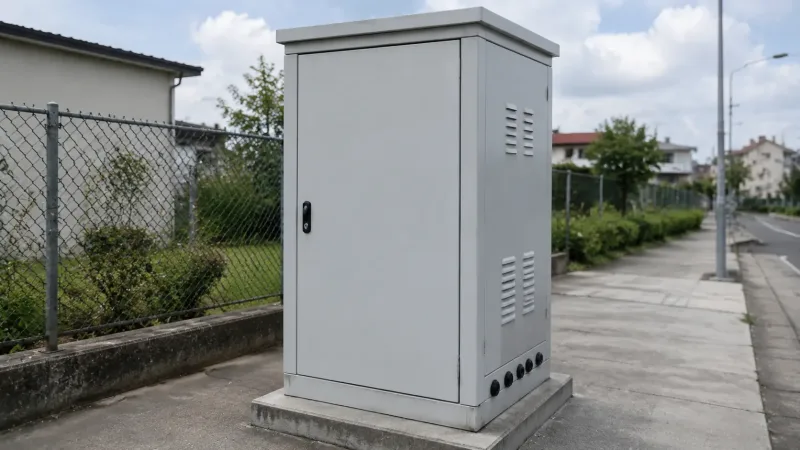
A typical outdoor telecommunications cabinet made from hot-dip galvanized steel with powder coating — this dual-layer protection system can provide 15–25 years of effective service in standard outdoor environments.
Coastal, High-Humidity, or Chemical Environments
Examples include seaside facilities, coastal telecommunications base stations, and control boxes used in chemical plants.
SUS304 or SUS316 stainless steel is recommended.
Coastal environments contain high levels of salt, which can significantly reduce the service life of ordinary galvanized steel. SUS304 can handle moderately saline environments, while SUS316 is more suitable for severe marine and chemical environments.
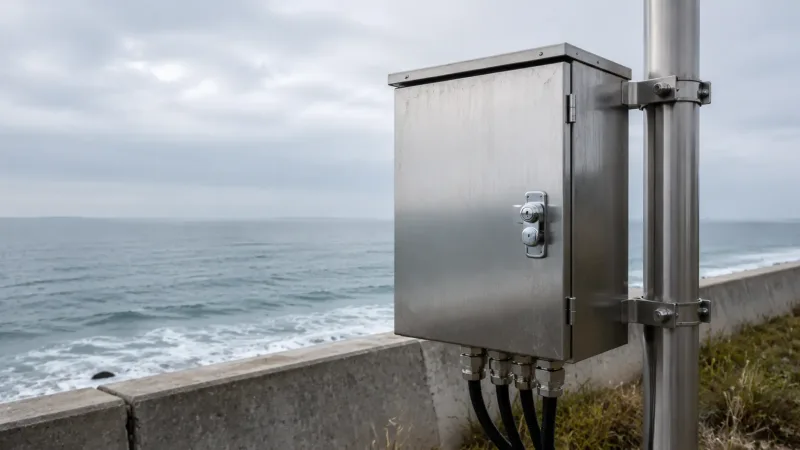
A SUS316 stainless steel enclosure installed at a coastal facility — stainless steel is the recommended material for seaside and high-salt environments because it resists chloride-induced pitting that would rapidly degrade galvanized steel.
Food, Pharmaceutical, and Hygienic Applications
Examples include food-processing equipment enclosures, pharmaceutical equipment housings, and cleanroom equipment.
SUS304 or SUS316 stainless steel must be used in these applications.
Zinc coatings are rapidly consumed in acidic or alkaline environments, and zinc ions may contaminate food or pharmaceutical products, making galvanized steel unsuitable for hygienic standards.
Stainless steel has a smooth, easy-to-clean, corrosion-resistant surface and is the standard choice for these applications.
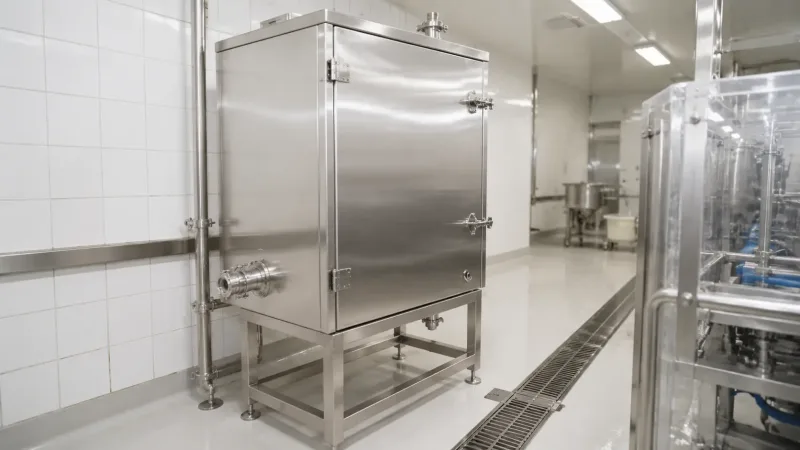
A SUS304 stainless steel equipment enclosure in a food processing environment — the smooth, non-porous stainless surface is easy to clean, resists chemical cleaning agents, and will not leach zinc ions into food products, making it the mandatory choice for hygienic applications.
Quick Material Selection Table:
| Service Environment | Recommended Material | Recommended Surface Treatment | Neutral Salt Spray Test Target | Relative Cost |
|---|---|---|---|---|
| Indoor or controlled environment | SECC, electrogalvanized steel | Powder coating | 100–300 hours | Low |
| Indoor environment with higher appearance requirements | SGCC, hot-dip galvanized steel | Textured powder coating | 500–800 hours | Low to medium |
| Typical outdoor environment | SGCC, hot-dip galvanized steel | Powder coating | 500–1,000 hours | Medium |
| Coastal or high-humidity environment | SUS304 | Brushing or passivation | 1,000+ hours | Medium to high |
| Chemical or offshore environment | SUS316 | Brushing or passivation | 1,500+ hours | High |
| Food or pharmaceutical applications | SUS304 or SUS316 | Electropolishing or passivation | 1,000+ hours | High |
How SR-MFG Supports Your Enclosure Project
SR-MFG provides custom sheet metal fabrication for enclosure projects, from drawing review through volume production and delivery.
Whether you select stainless steel or galvanized steel, our engineering team can provide material-selection recommendations and design-for-manufacturability feedback during the quotation stage.
This includes bend-radius optimization, welding-plan evaluation, surface-treatment recommendations, and standardized material callout suggestions for your drawings. These reviews can generally be completed during the RFQ stage, helping identify and eliminate manufacturing risks before the formal order is placed.
SR-MFG provides a complete range of sheet metal fabrication processes, including laser cutting, CNC bending, TIG and MIG/MAG welding, self-clinching, tapping, powder coating, brushing, and passivation.
For projects requiring consistent volume production, we provide incoming material inspection, in-process inspection, and outgoing inspection to ensure that the material, dimensions, and surface quality of every production batch comply with your drawing specifications and acceptance standards.
If you are evaluating enclosure materials or preparing to submit an RFQ, you are welcome to send us your CAD files. Based on your operating environment, structural requirements, and project budget, we will provide targeted material recommendations and a complete quotation.