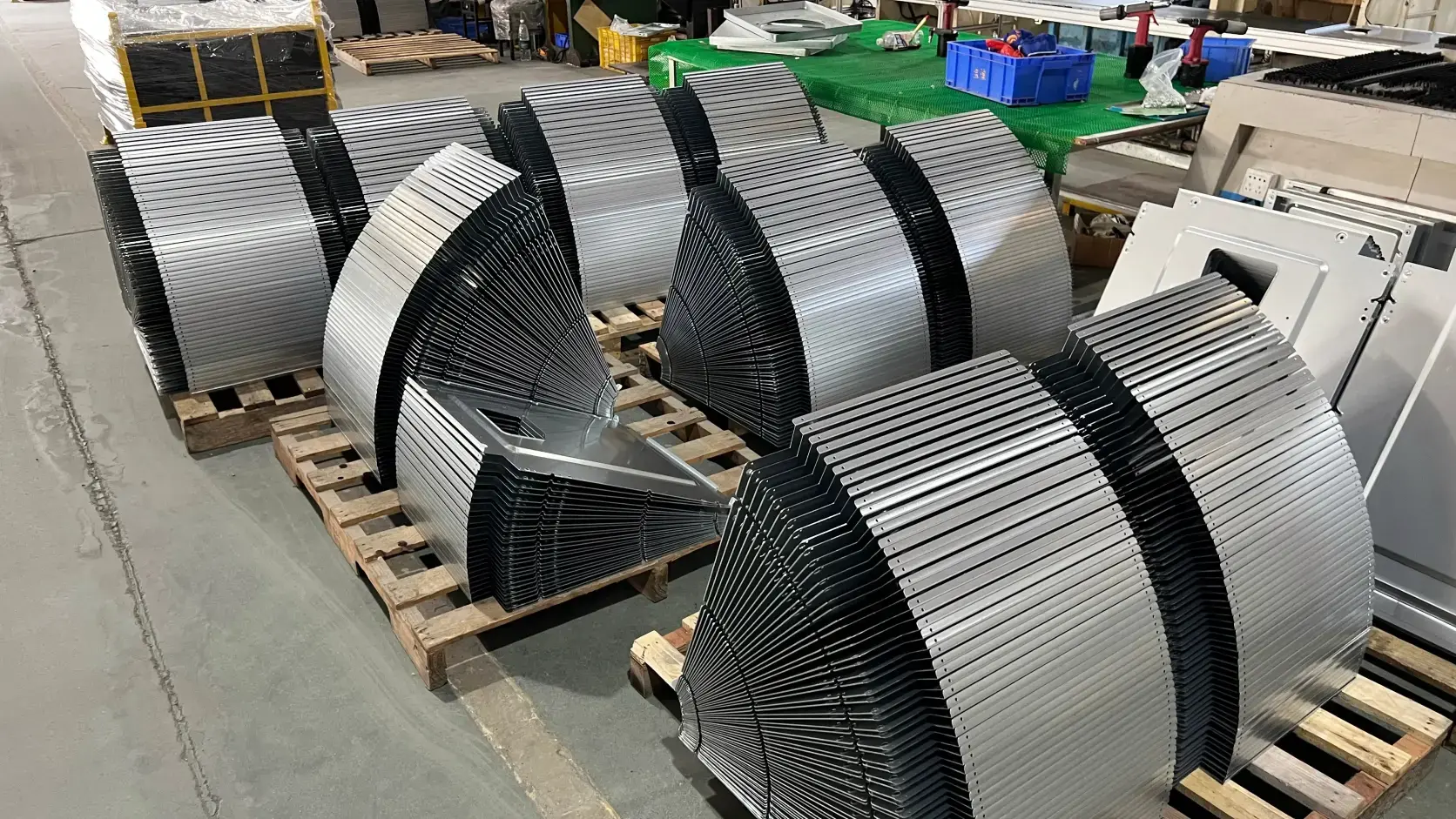

You have designed a custom enclosure for a new electronic product. The design is finalized, including specific hole locations, bend angles, flange lengths, and a powder-coated finish matching your brand color.
You send the drawings to three sheet metal fabricators as part of the sheet metal RFQ process. One supplier asks:
“Would you like these parts made to order, or should we hold inventory for your repeat orders?”
The question may come as a surprise. If the parts are custom, how can they be stocked?
The fabricator is proposing a blanket order: you commit to purchasing 500 units over the next 12 months, while the supplier produces batches of 100 and ships them according to your schedule.
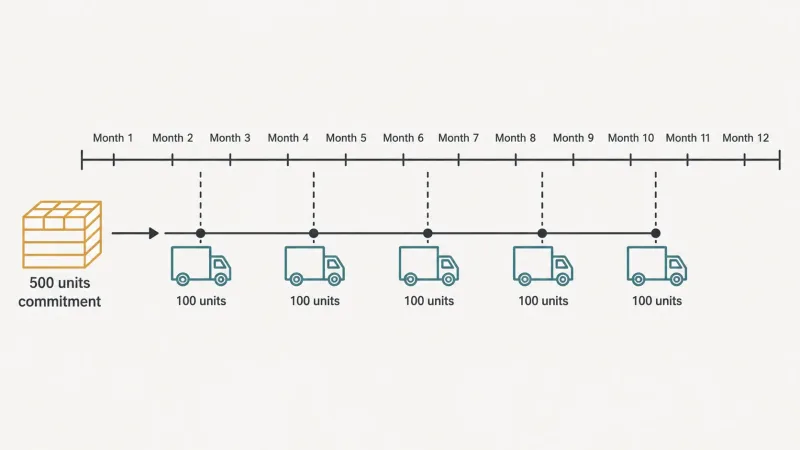
A blanket order spreads delivery over time. The buyer commits to a total quantity, and the supplier ships smaller batches on a scheduled cadence.
This can reduce the unit price by 15% and shorten repeat-order lead times from three weeks to five days.
This is how make-to-order and make-to-stock strategies differ in real-world projects.
Understanding when each strategy works—and when a hybrid approach is more suitable—can help you reduce costs, shorten lead times, and avoid inventory management problems.
What Does Make-to-Order Mean for Sheet Metal Parts?
Make-to-Order (MTO) means that a sheet metal fabricator begins production only after receiving a customer order.
The supplier does not hold finished goods in advance. Instead, raw sheet metal is processed through laser cutting, bending, finishing, and assembly according to the customer’s specific requirements.
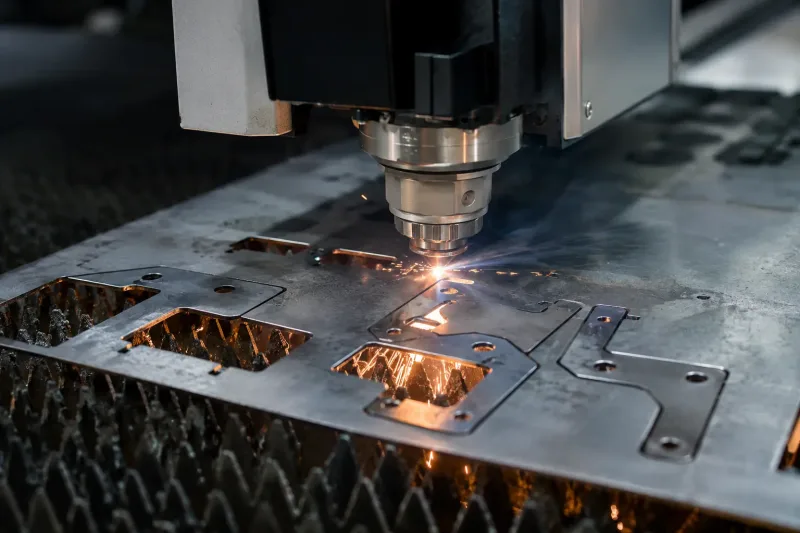
In a make-to-order workflow, the laser cutting program is prepared only after the customer places an order, based on their specific CAD files.
MTO is the most common production model in sheet metal fabrication.
After you submit CAD files and request a quotation, the supplier prepares the laser cutting program, sets up the press brake, and schedules the order for production. Every part is manufactured according to your drawings.
Make-to-order sheet metal parts typically have the following characteristics:
- Lead time: Usually 1–4 weeks, depending on part complexity and order quantity
- Minimum order quantity: Often as low as one unit
- Design flexibility: High; each order can use a different design
- Unit cost: Higher for small batches, competitive for medium-volume production
- Inventory risk: The buyer does not carry finished-goods inventory
MTO is suitable for custom structures, prototypes, low- to medium-volume production, specified materials and finishes, and parts with tight tolerances.
Most sheet metal parts fall into this category.
What Does Make-to-Stock Mean for Sheet Metal Parts?
Make-to-Stock (MTS) means that a manufacturer produces standardized parts in advance, stores them as inventory, and ships them when customers place orders.
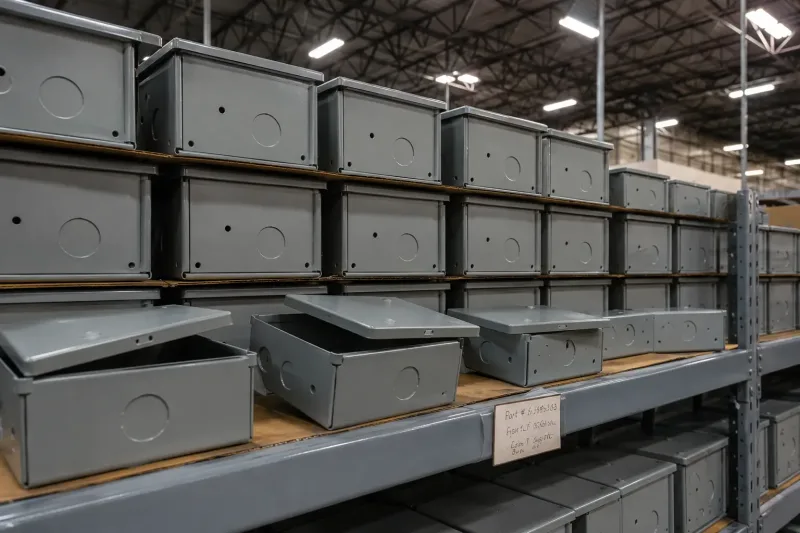
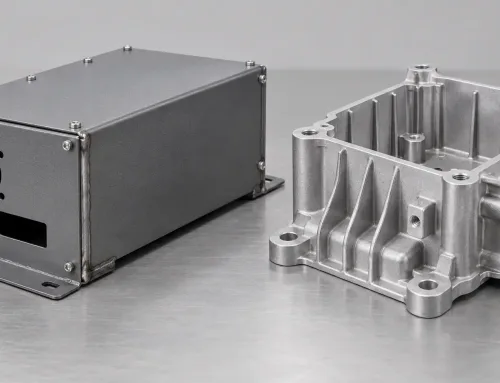
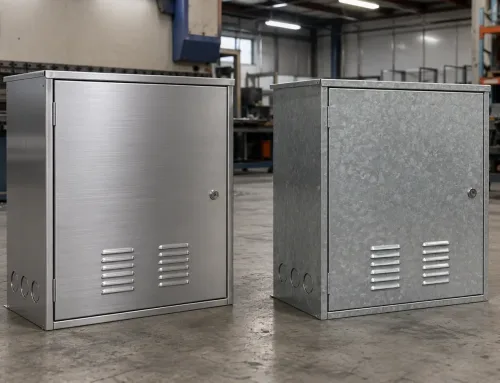
Make-to-stock products like standard junction boxes are manufactured in advance and stored on shelves, ready for immediate shipment.
In the sheet metal industry, this model is mainly used for highly standardized products, such as:
- Standard enclosures
- Electrical boxes
- Cable trays
- HVAC ductwork
- Off-the-shelf brackets
MTS is only practical when a part is sufficiently standardized and many customers require the same product.
Examples include 19-inch rack-mount enclosures, junction boxes, and standard L-brackets, whose designs usually remain unchanged between orders.
Make-to-stock sheet metal parts typically have the following characteristics:
- Lead time: Usually ships within 1–5 days when inventory is available
- Minimum order quantity: Often hundreds or thousands of units
- Design flexibility: None; limited to standard catalog products
- Unit cost: Lower for high-volume purchases
- Inventory risk: Inventory is held by the manufacturer
For SR-MFG’s typical customers—engineers and product designers developing custom products—MTS is generally unsuitable for core custom sheet metal parts.
However, some standard components within a larger assembly may still be purchased through MTS.
Five Factors That Determine the Right Production Strategy
Choosing between MTO and MTS depends on more than order quantity. The right production model is determined by the following five factors.
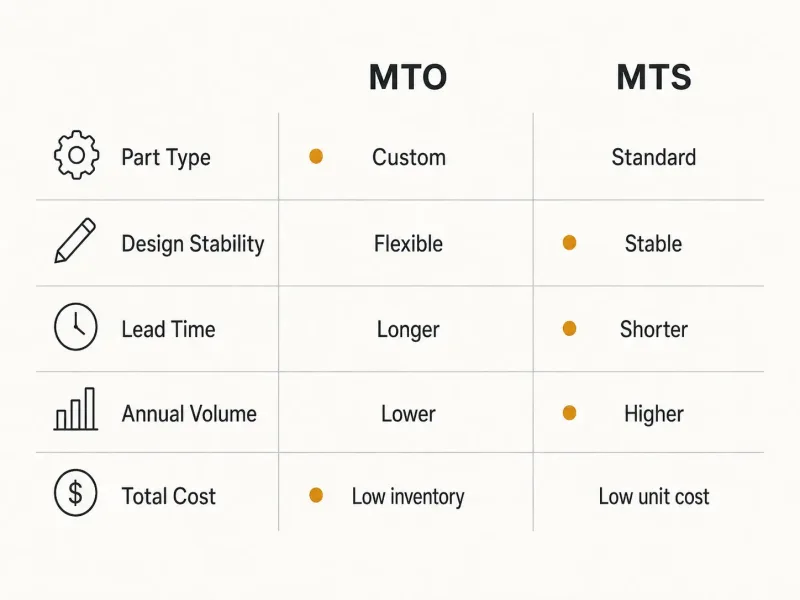
Choosing between MTO and MTS is not just about order volume. These five factors together determine the right production strategy for your project.
1. Is Your Part Custom or Standard?
If the part has unique features, such as:
- Custom hole locations
- Non-standard bend angles
- Specific flange lengths
it is unlikely to exist in any supplier’s inventory. MTO is the only practical option.
If the part exactly matches a standard catalog product, such as a standard junction box, universal bracket, or common duct connector, MTS may be worth considering.
How to decide: Can you find an identical product from a catalog supplier, including the same material, dimensions, and finish?
If yes, evaluate MTS. If not, use MTO.
2. How Stable Is Your Design?
Designs that change frequently are not suitable for advance production.
Every design revision may make existing inventory obsolete or create rework costs.
- Design changes during every purchasing cycle → Choose MTO
- Design has been stable for more than six months → Consider MTS or a blanket order
- Design is mostly stable but may require minor adjustments → Use MTO with a long-term order
3. What Lead Time Do You Require?
- Parts required within 1–5 days → Choose MTS, provided inventory is available
- A 2–4 week lead time is acceptable → Choose MTO
- Custom parts are needed quickly → Choose expedited MTO, usually at a higher price
4. What Is Your Annual Purchase Volume?
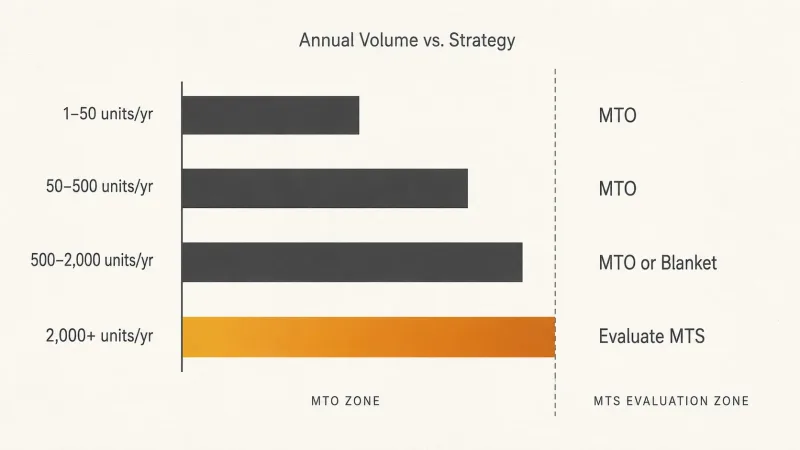
Annual purchase volume is one of the most practical starting points for deciding between MTO, blanket orders, and MTS. Most custom parts fall in the MTO range.
| Annual Purchase Volume | Recommended Strategy |
|---|---|
| 1–50 units per year | MTO |
| 50–500 units per year | MTO |
| 500–2,000 units per year | MTO or blanket order |
| More than 2,000 units per year | Evaluate MTS |
5. What Is Your Total Cost Structure?
Unit price is only one part of the total cost.
You should also consider:
- Inventory carrying costs
- Minimum purchase commitments
- Inventory obsolescence and scrap risks
- Payment terms and cash flow
When Should You Clearly Choose MTO?
For most custom sheet metal parts, MTO is the only reasonable choice.
The Part Has a Unique Structure
Custom enclosures, brackets with specific hole locations, and parts with non-standard bend angles cannot be stocked in advance because they do not exist until the customer completes the design.
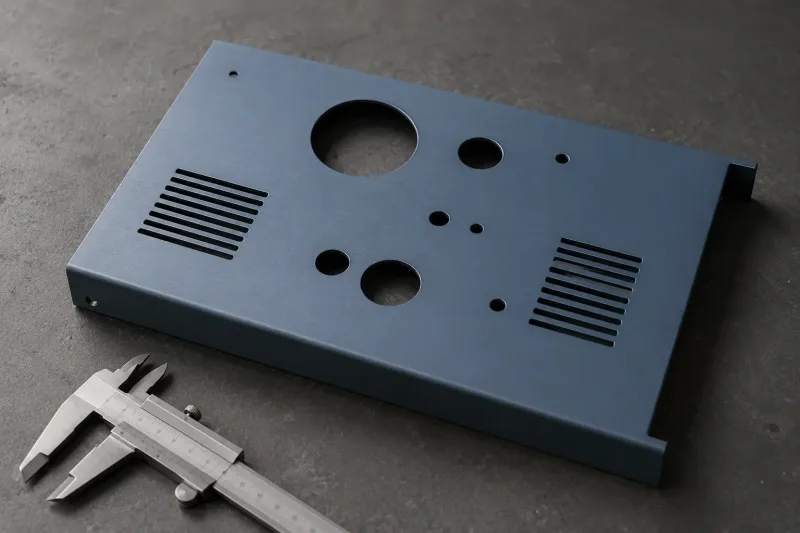
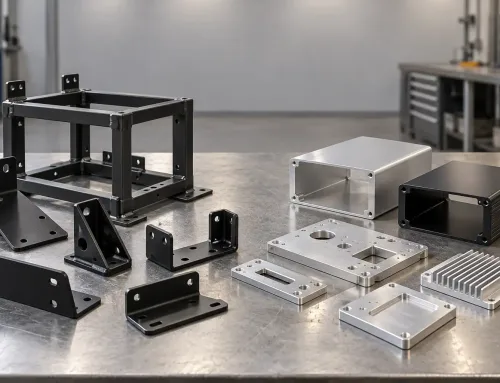
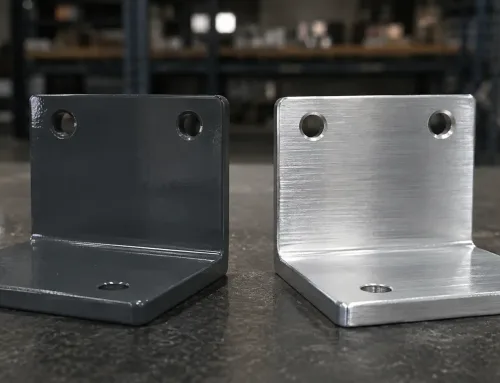
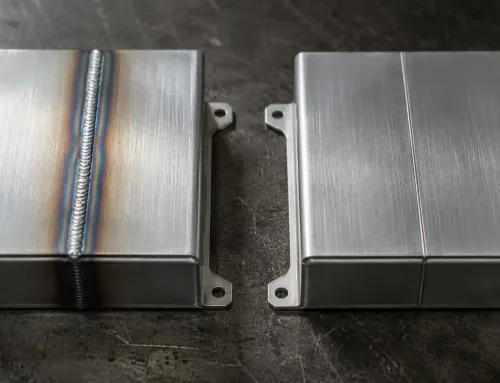
A custom enclosure panel with specific hole locations, non-standard bend angles, and a brand-specific powder-coat finish — features that make it impossible to source from standard inventory.
The Project Is in the Prototype Stage
During design iteration, you may need to change dimensions, add structural features, or switch materials between batches.
MTO allows you to adjust the design without scrapping previously produced inventory.
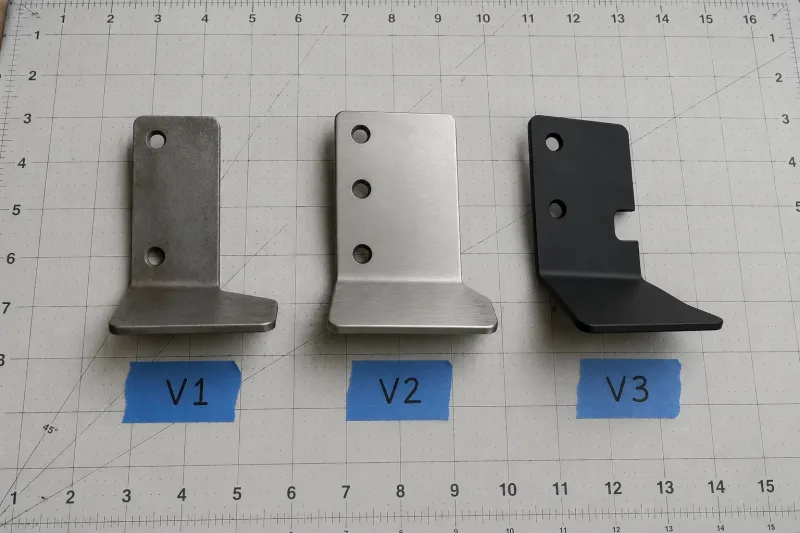
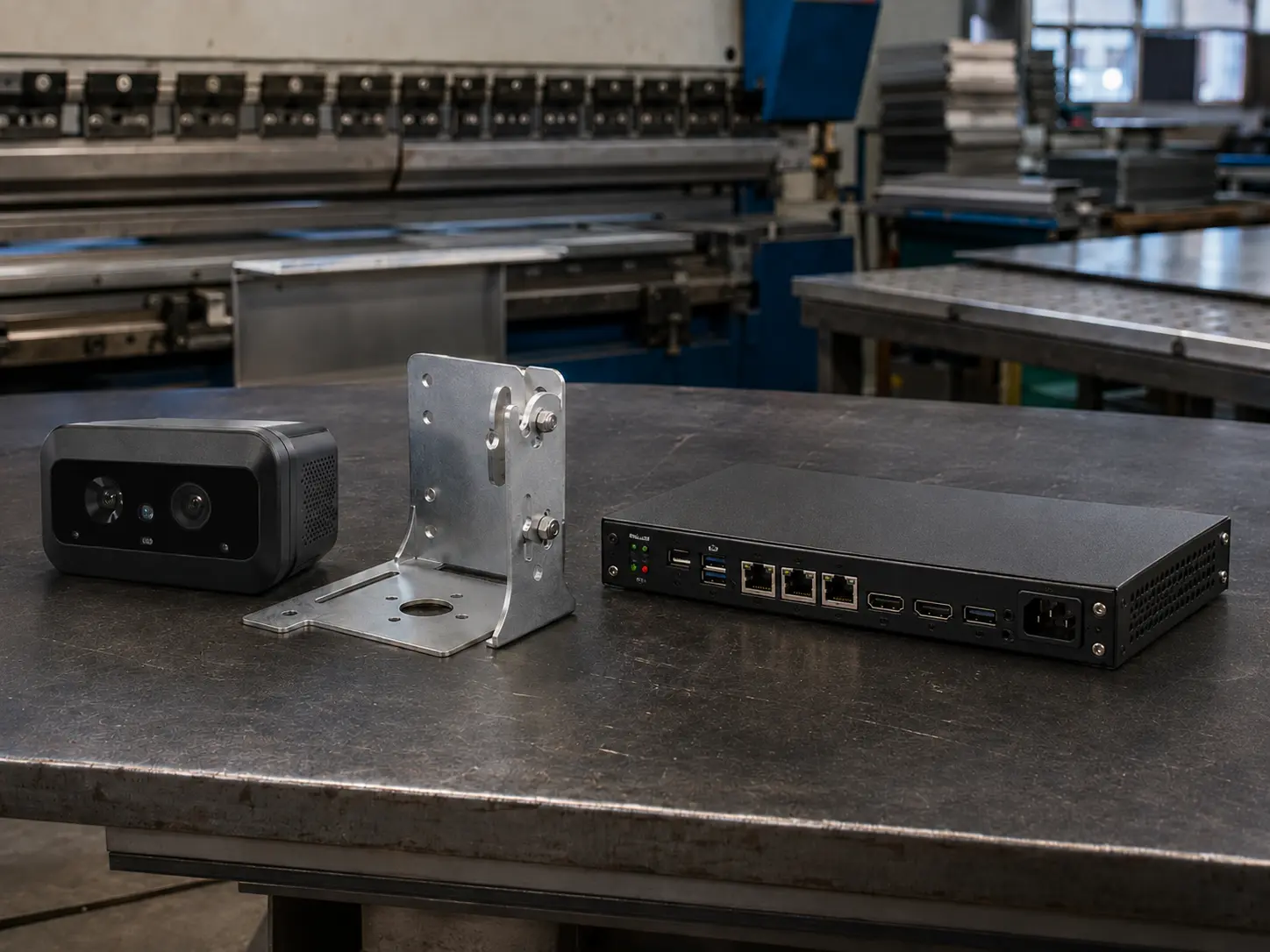
During prototyping, each iteration may introduce new hole patterns, flange widths, or material changes. MTO lets you adjust without wasting previously produced inventory.
Specified Materials or Finishes Are Required
If a project requires 5052-H32 aluminum with a specified powder-coat color, or 316 stainless steel with a brushed finish, MTO allows you to define the exact material and finishing requirements.
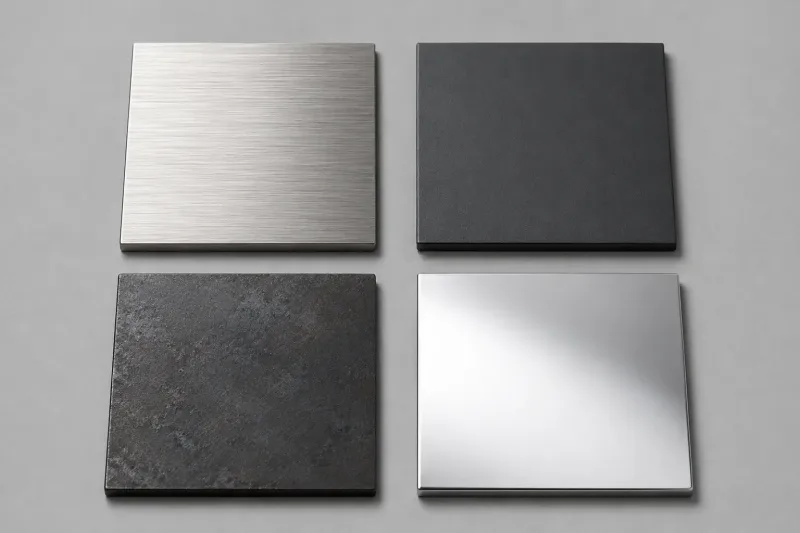
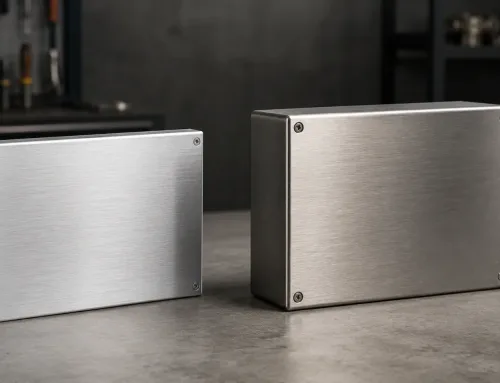
MTO allows you to specify exact materials and surface finishes — from brushed 316 stainless steel to custom powder-coat colors — rather than accepting whatever is on the shelf.
Tight Tolerances Are Required
Custom parts with tolerances of ±0.005 inches usually require order-specific inspection. Standard MTS production typically does not provide this level of individual part control.
When Is MTS Suitable for Sheet Metal Parts?
MTS is suitable for standardized, high-volume components.
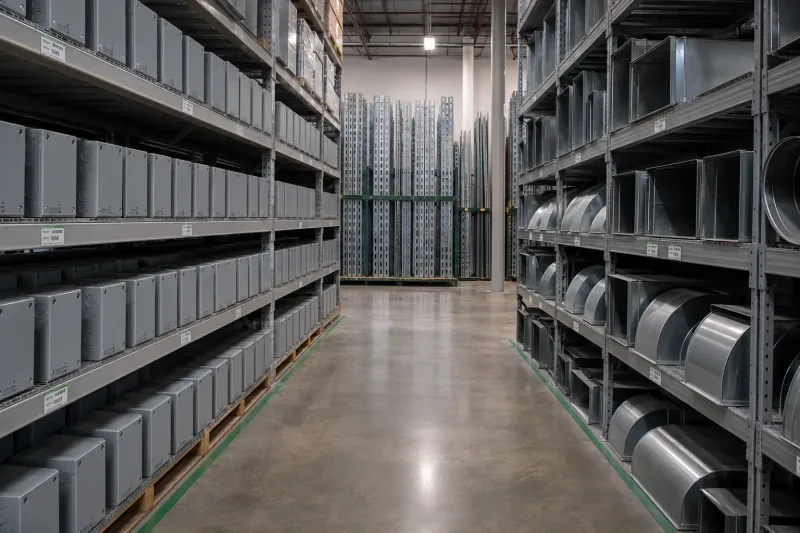
Standard electrical boxes, cable trays, and HVAC duct fittings are typical make-to-stock products — high-volume, catalog-standardized, and available for same-week delivery.
Standard Electrical Boxes, Cable Trays, and Duct Fittings
These are general-purpose products that can usually be purchased directly from standard catalog suppliers.
Universal Brackets and Mounting Hardware
If the part exactly matches a catalog product and is required repeatedly in high volumes, MTS usually provides a lower unit price.
Lead Time Is Extremely Short and the Part Is Standard
If you need the parts within two or three days and the design matches an existing catalog product, MTS is usually the only way to meet the required lead time.
Hybrid Option: Blanket Orders
Many buyers are unfamiliar with this option, but a blanket order is often the most suitable solution for repeatedly purchased custom parts.
Under a blanket order, the buyer commits to a total purchase quantity—for example, 500 units over 12 months—while the manufacturer ships smaller batches according to the buyer’s delivery schedule.
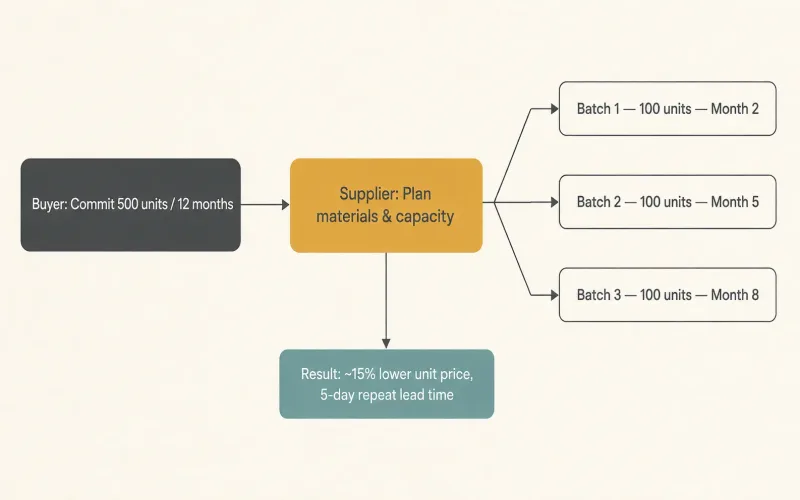
A blanket order lets the supplier plan raw materials and production capacity upfront, which lowers unit costs and reduces repeat-order lead times to as few as five days.
Because the manufacturer can plan the sheet metal production workflow, including raw materials, equipment, and production capacity, in advance, the buyer can receive pricing close to MTS.
At the same time, the parts are delivered in batches, so the buyer does not need to hold the entire inventory at once and retains flexibility similar to MTO.
Blanket orders are suitable when:
- The same custom part is purchased regularly
- The design is stable and unlikely to change significantly for at least six months
- A better unit price is required without purchasing a large quantity at once
- Faster delivery is needed for repeat orders
Blanket orders are unsuitable when:
- The design changes frequently
- Purchase timing and quantities are irregular or difficult to predict
- Total purchase volume is too low to support a long-term commitment
Ask your sheet metal fabricator whether blanket orders are available. Many suppliers offer this arrangement but may not propose it proactively.
How Should You Communicate Your Purchasing Strategy to a Supplier?
Regardless of the production model, clear communication reduces errors and shortens lead times.
For MTO Orders
Provide:
- Complete 2D engineering drawings
- Dimensional tolerances
- Material specifications
- Surface finish requirements
- Quantity required for each order
- Assembly drawings if multiple parts must fit together
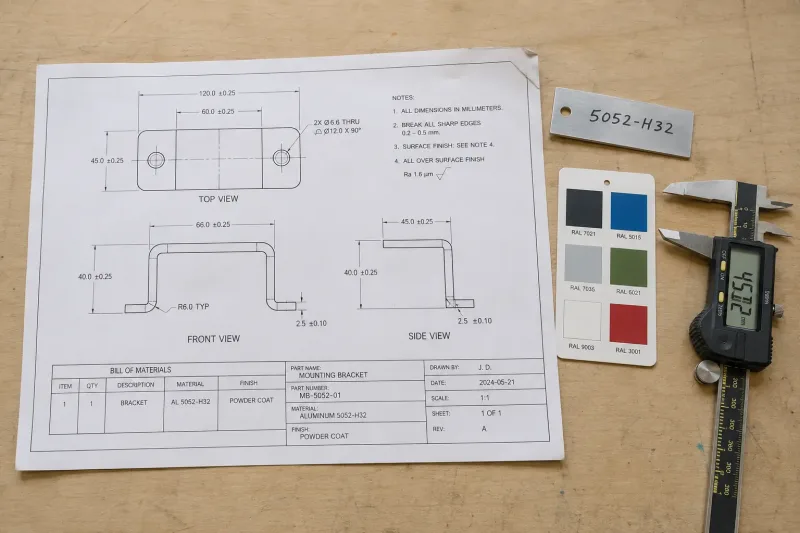
For MTO orders, providing complete 2D drawings with tolerances, material specs, and finish requirements reduces errors and shortens the quoting-to-production cycle.
For Blanket Orders
Provide:
- Estimated annual purchase volume
- Batch delivery schedule
- Price-lock period
- Whether design changes are allowed between delivery batches
For MTS Orders
Provide:
- Product model or part number
- Quantity required per delivery
- Delivery schedule
- Confirmation that the catalog specifications fully meet the project requirements
Ready to Discuss Your Sheet Metal Purchasing Strategy?
Upload your CAD files for a quotation, or contact our engineering team to evaluate whether MTO, MTS, or a blanket order is the best option for your project.