
A $14.20 per-part quote lands in your inbox for a sheet metal enclosure. Two weeks later, an engineering change notice (ECN) — the formal document that releases a design change to manufacturing — shifts one bend radius by 1.5 mm. The supplier comes back with a revised price, a tooling charge, and a two-week delay. None of that was in the original quote, because none of the assumptions it rested on were written down anywhere.
A quote is not a promise to hold a number forever. It is a price built on a specific snapshot: one drawing revision, one material, one quantity, one finish. When an ECN changes any of those, the original price no longer applies. How expensive that gap becomes depends almost entirely on how well the change was managed.
What a Sheet Metal Quote Actually Commits To
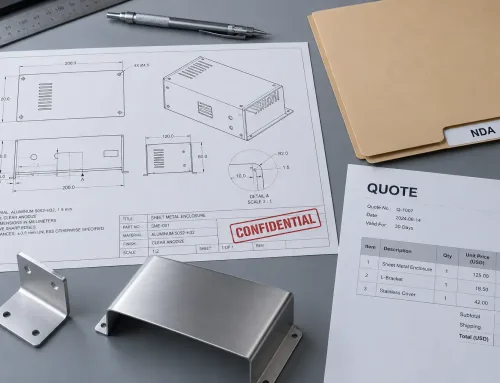
Before an ECN can keep a quote accurate, the quote itself has to be understood for what it is: a set of engineering assumptions priced as a single number. Most disputes start here, because buyers see one line item while fabricators see a stack of conditions.
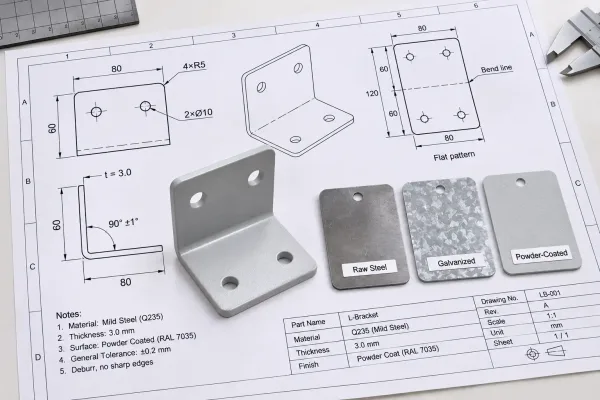
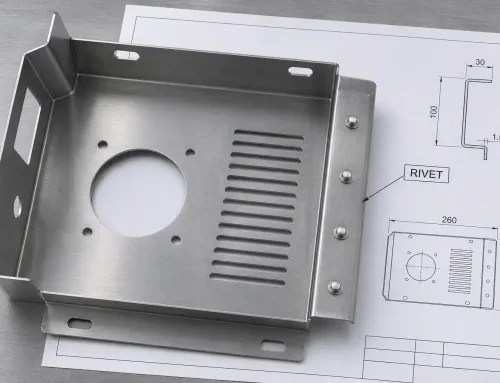
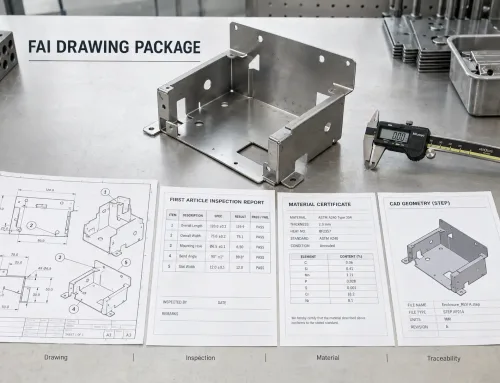
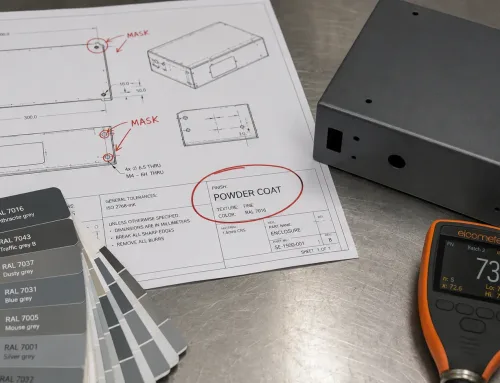
What a sheet metal quote is priced from: drawing geometry, material grade, thickness, quantity, and finish.
Drawing revision and feature set
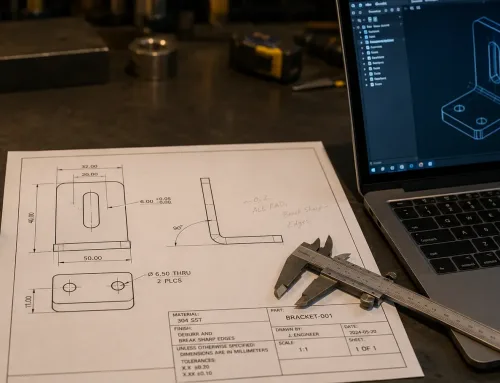
Every quote is anchored to a specific drawing or model revision. Hole patterns, flange lengths, bend angles, and cutouts are priced from that geometry. Change the geometry, and the nesting layout, program paths, and inspection plan can all shift — even when the part “looks almost the same.”
Material, thickness, and quantity assumptions
Material grade and thickness drive both raw cost and process selection. A 1.5 mm mild steel blank is cut, bent, and welded differently from a 1.5 mm 304 stainless blank: different cutting parameters, different bend allowance behavior, different finishing response. Quantity matters just as much, because setup time is amortized across the lot — change the lot size and the unit price is quietly rewritten.
Finish, hardware, and process routing
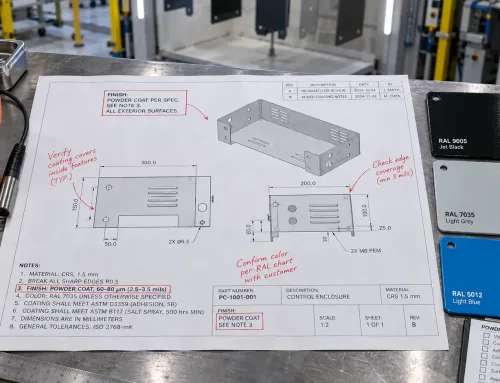
Powder coating, anodizing, welding, and hardware installation each carry their own sequence and cost. A quote assumes a process route — typically cut, form, weld, finish, assemble. When an ECN changes the finish or adds a hardware callout, that route is no longer valid, and the price that came with it is no longer valid either.
What Does an Uncontrolled ECN Cost?
The gap between “small change” and “small cost” is where budgets break. Uncontrolled ECNs — those released without full field data or without timing awareness — show up as four distinct charges.
Re-quote labor and revision fees
When a fabricator cannot tell what changed or why, the estimating team has to re-read the entire package, re-check manufacturability, and rebuild the quote. That labor is real and is often billed as a revision or re-quote fee. A complete ECN reduces the work to a delta review: a comparison of what changed, not a re-analysis of the whole part.
Tooling and fixture modification charges
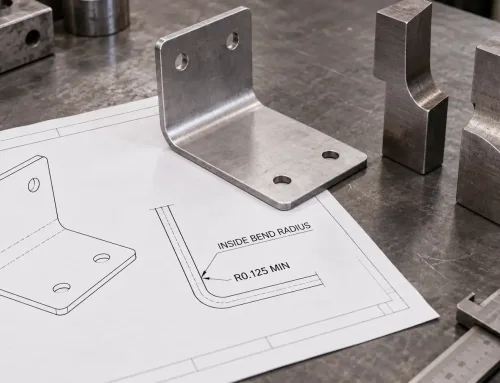
Bend dies, welding fixtures, and inspection gauges are built around the geometry that was quoted at the time of order. A bend radius change can force a new die; a hole relocation can force a fixture rework. These charges look large relative to the part price because tooling is a one-time structural cost, not a per-unit cost.
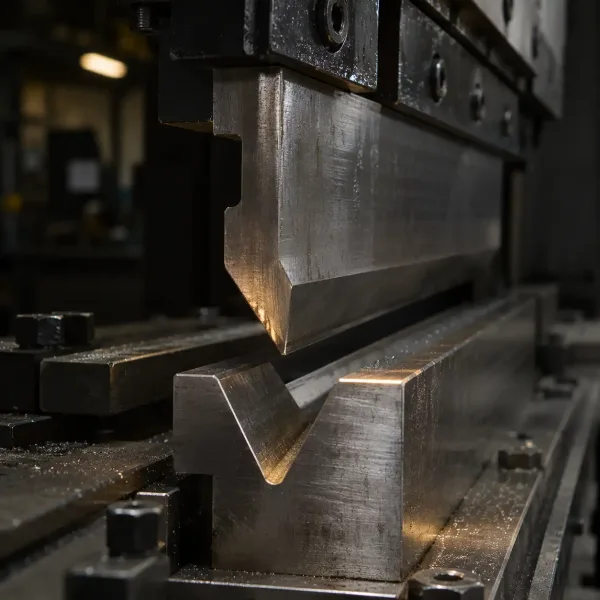
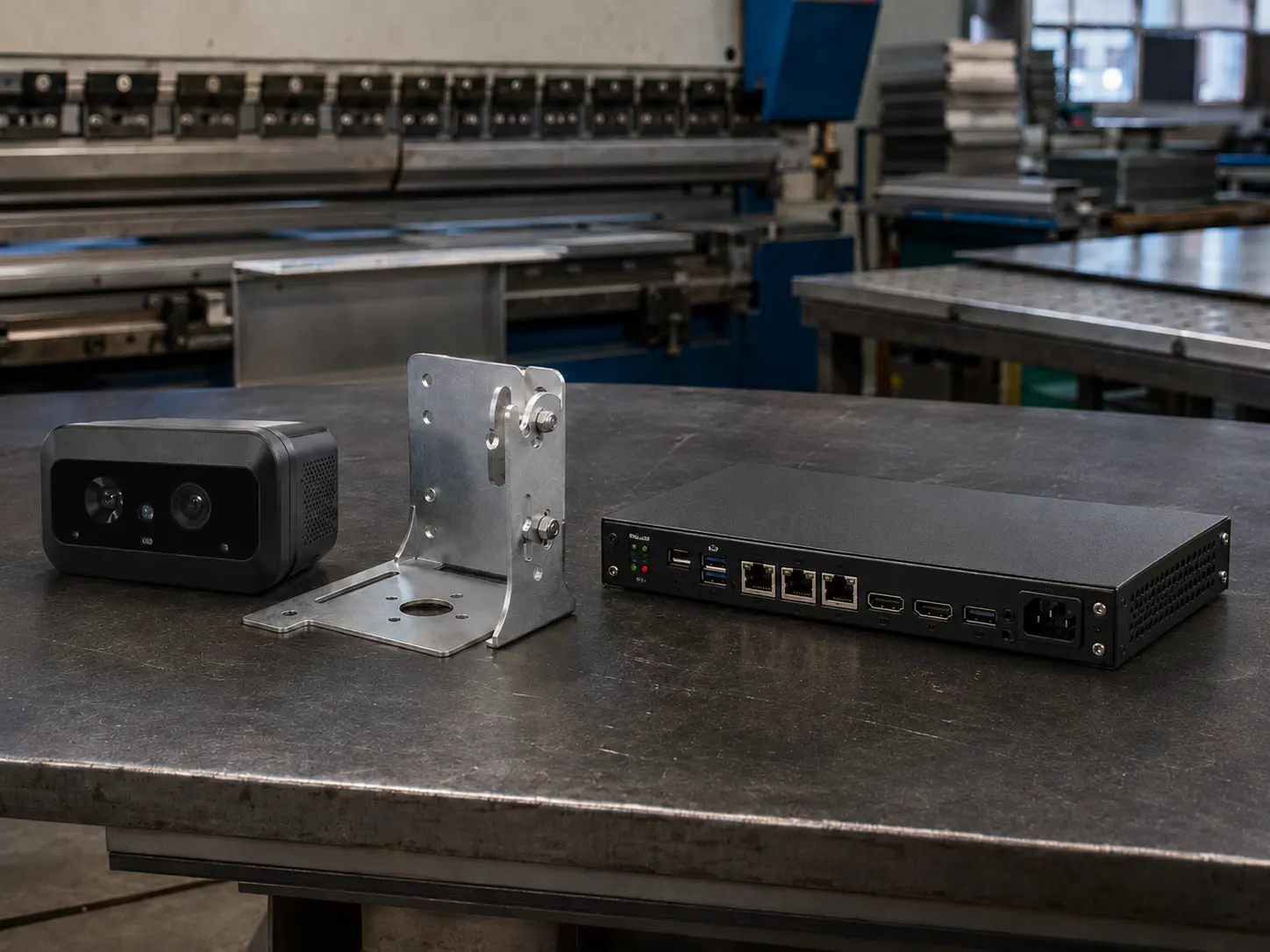
Bend tooling built for one geometry — a radius or flange change can force a new die and add cost.
Scrap, rework, and lead-time slip
If production has already started, the cost shifts from engineering to the shop floor. Semi-finished parts that no longer match the new revision are either reworked or scrapped. Rework consumes machine time; scrap consumes material and labor already spent. Both push the delivery date.
Which change types cost most
Not all changes are equal. Fabricators triage them by how deep they reach into the process chain, and that triage determines whether the result is a small price adjustment or a tooling conversation.
| Change type | Typical quote impact | Why |
|---|---|---|
| Material or thickness | Full re-quote | Raw cost, cutting parameters, bend behavior, and finishing all shift |
| Bend or flange geometry | Moderate to high | Possible die or fixture change; flat pattern must be reworked |
| Hole pattern or cutout | Low to moderate | Nesting and program update; usually no tooling impact |
| Finish or coating | Moderate | New process step, masking, and inspection criteria |
| Quantity | Unit price re-calculation | Setup amortization changes |
| Tolerance tightening | Moderate | Inspection method and possibly process capability change |
This is the judgment call most estimating teams make within the first hour of receiving an ECN: which bucket the change falls into, and what that does to the number.
Required ECN Fields — and What Each One Protects
A useful ECN is not a description of the change. It is a package that lets the supplier re-price without asking questions. Six fields do most of that work.
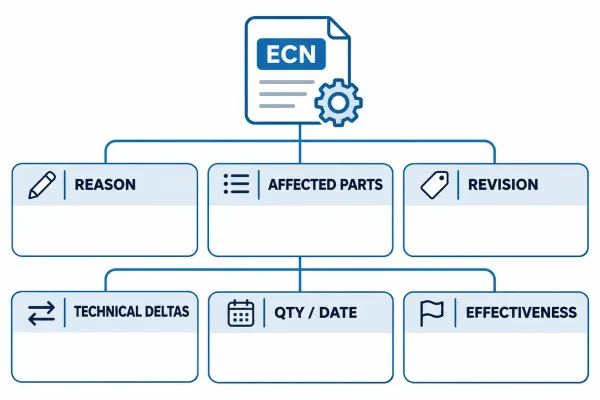
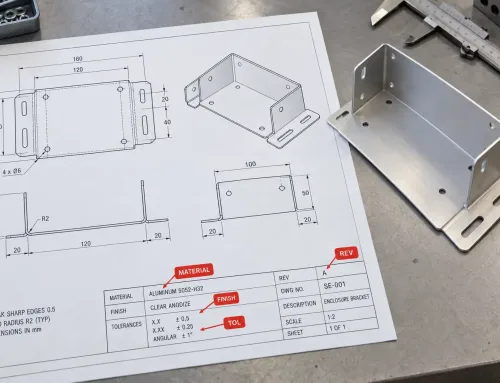
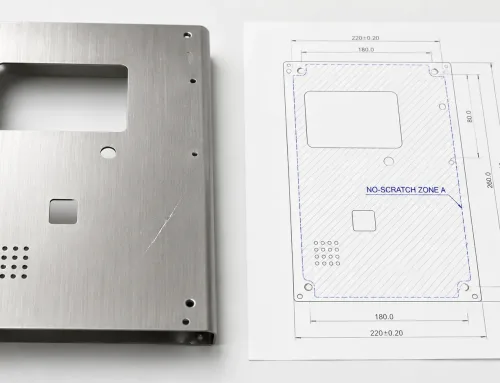
The six fields a complete ECN must carry so the supplier can re-price from the delta.
Change reason and affected part/drawing list
The reason tells the supplier whether this is a functional fix, a cost reduction, or a cosmetic tweak, and that shapes how carefully the package gets reviewed. The affected list removes the guesswork: which part numbers, which drawing sheets, which assemblies. Without it, suppliers either assume too much or start asking.
Revision and file identity
A revision letter or number on the ECN and on every attached file removes ambiguity about which version is now current. It also gives receiving inspection a reference when the first article arrives. Loose file names like “final_v3_updated” create exactly the disputes ECNs are supposed to prevent.
Technical deltas: material, dimensions, finish, tolerance
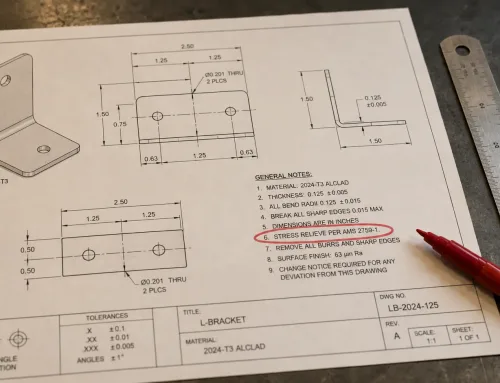
This is where the cost lives. Each delta should state what changed and what it changed from — “bend radius from R2.0 to R3.0” is actionable; “adjust bend radius” is not. Finish and tolerance changes belong here too, since either can add process steps or inspection work.
Commercial deltas: quantity and schedule
A quantity change is a pricing event, not a footnote. If the lot size drops from 500 to 200, the unit price rises because setup time spreads over fewer parts. If the delivery date moves earlier, capacity may need to be re-allocated — which is also a pricing event.
Effectiveness: first affected lot or order
The ECN must say where the change starts: after a specific lot, from a specific PO, or immediately. Without that boundary, suppliers do not know what to do with parts already in process, and buyers do not know what they will receive. This single line prevents a large share of post-delivery disputes.
When the Change Lands: Timing Windows and WIP
The same ECN can cost almost nothing — or nearly double the order — depending on when it arrives. Timing is not a scheduling detail; it is the main cost multiplier.
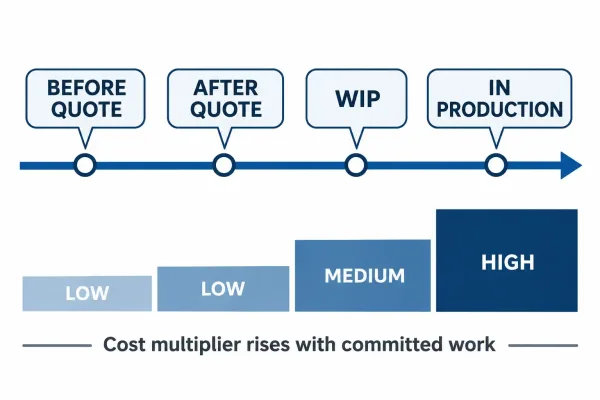
Where the ECN lands determines the cost multiplier — earlier is cheaper.
Four cost windows
- Before quote. The change is absorbed into the original price. Cost impact is close to zero. This is the reason design reviews exist.
- After quote, before production. A re-quote is needed, but no physical material is at risk. Cost is limited to engineering time and a possible price adjustment.
- Work in progress. Parts are cut, formed, or partially assembled. The change now includes rework or scrap decisions plus re-scheduling.
- In production or after shipment. Change management becomes a quality and logistics problem: sorting good stock from obsolete stock, and possibly field returns.
The earlier the window, the cheaper the change. That is not a slogan — it is a direct consequence of how much committed work the ECN invalidates.
Disposing of WIP, semi-finished, and finished stock
An ECN should instruct what happens to material already moving through the shop: use as-is, rework, hold, or scrap. For sheet metal parts, “use as-is” is often feasible for cosmetic or tolerance-only changes but rarely for geometry changes that affect assembly. Making this call explicitly — and assigning the cost — is part of the ECN, not an afterthought.
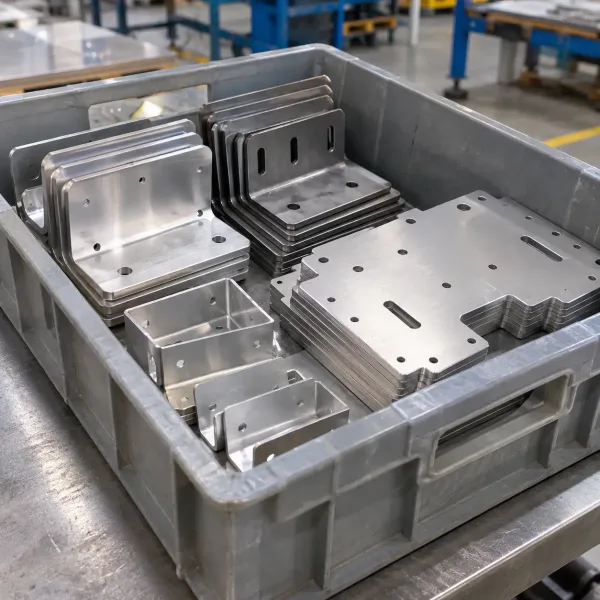
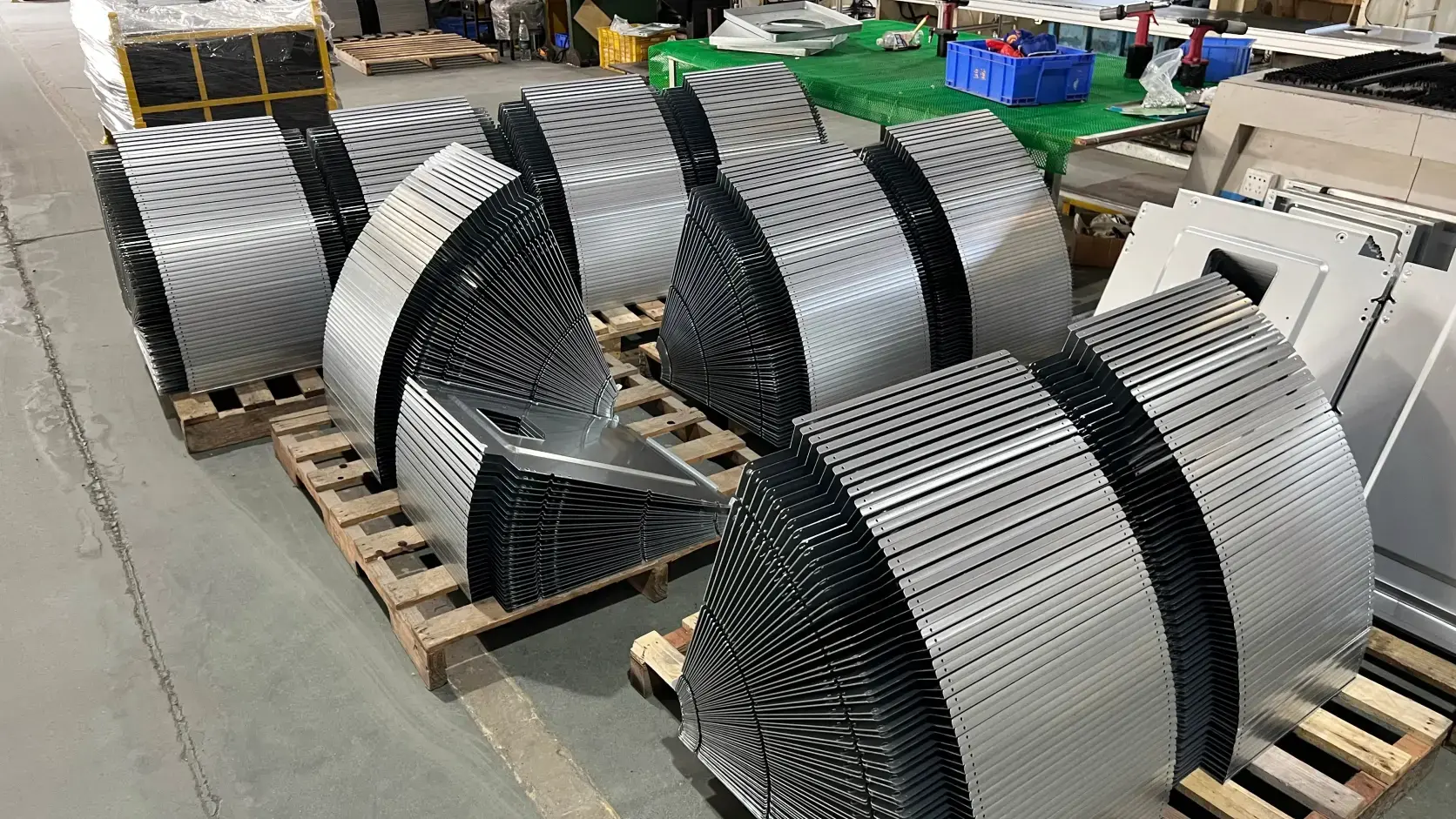
Work-in-process parts that must be assigned use-as-is, rework, hold, or scrap when an ECN arrives.
How to Review a Re-Quote Before You Accept It
If the ECN was complete, the re-quote should be auditable. That is the practical test of whether the requirements above were actually met.
Line-item comparison against the baseline quote
Compare the new quote to the original line by line. A material adjustment should be explainable from the grade change. A tooling charge should reference a specific die or fixture. A delivery extension should map to a process change. Unexplained movements are questions, not conclusions.
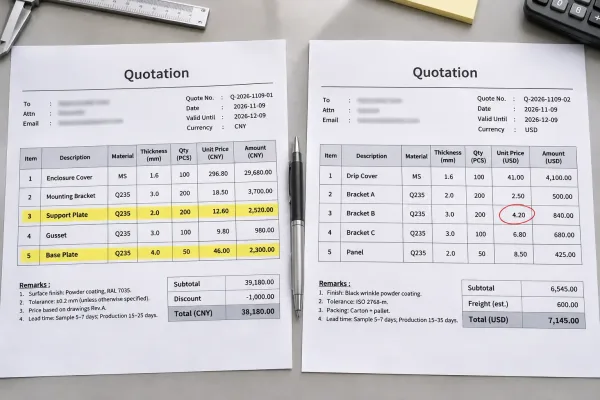
Reviewing a re-quote line by line against the baseline separates explainable changes from bundled risk.
Red flags: bundled lump sums, unexplained tooling fees
A single “engineering changes” lump sum with no breakdown is a signal that the supplier is covering risk rather than pricing work. Ask for the split. Tooling fees without a stated scope — what is being modified, what is being replaced — make it impossible to judge whether the charge is one-time or recurring.
Pre-Release Checklist: What to Confirm Before an ECN Goes Out
Before the ECN leaves engineering, confirm these seven items. Each one replaces a future email chain:
- Reason stated — a functional, cost, or cosmetic rationale is written down.
- Affected list complete — part numbers, drawings, and assemblies are identified.
- Revision marked — the ECN and all attached files carry matching revision identifiers.
- Technical deltas explicit — each change states the old value and the new value.
- Quantity and date updated — commercial impact is stated, not implied.
- Effectiveness defined — the first affected lot, order, or serial number is named.
- WIP disposition assigned — use-as-is, rework, hold, or scrap is specified.
A missing field is not a formatting issue. It is an invitation for the supplier to price uncertainty into the next quote.
FAQs
If you are preparing an ECN for a sheet metal part and want a manufacturability read before release, SR-MFG reviews drawings and change packages at the RFQ stage — the point where corrections are still free.