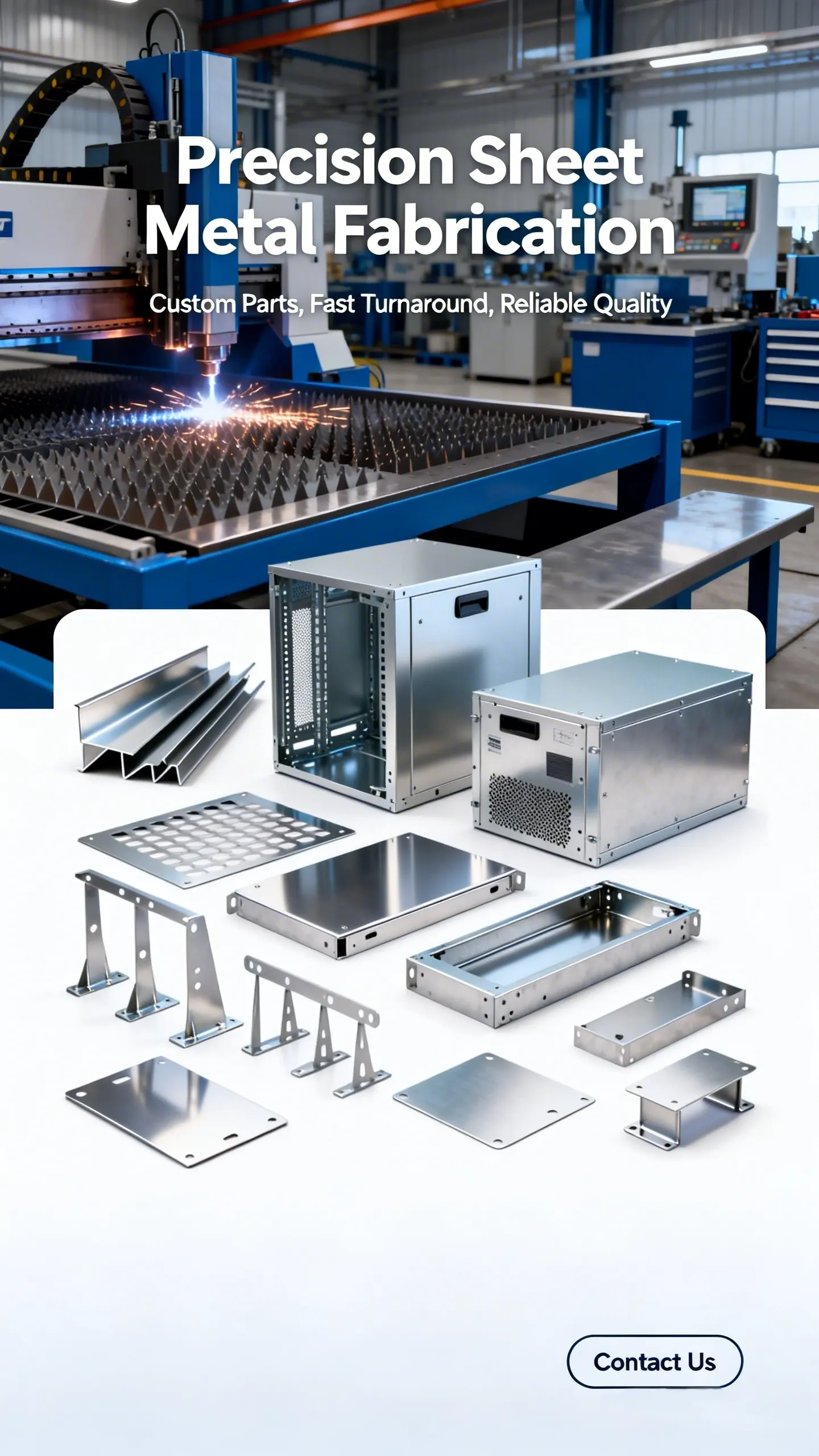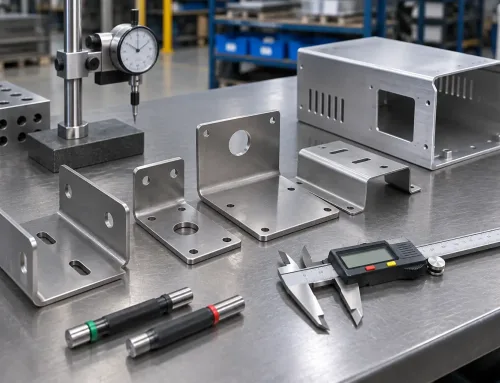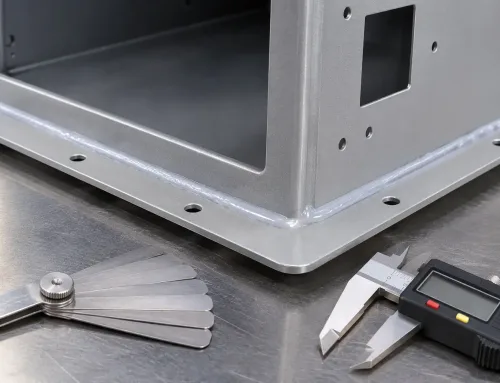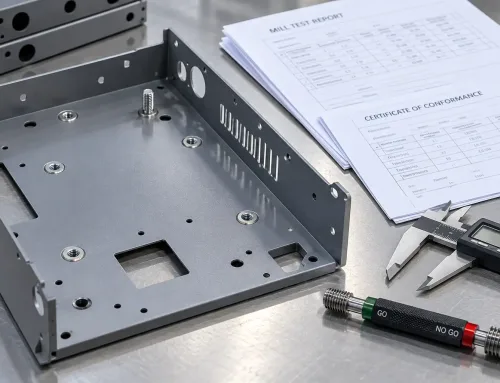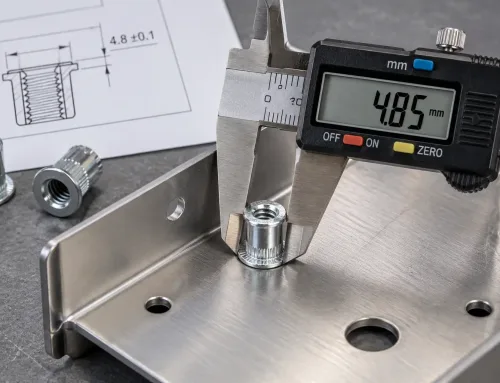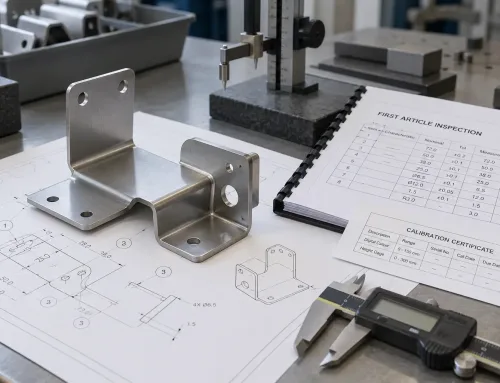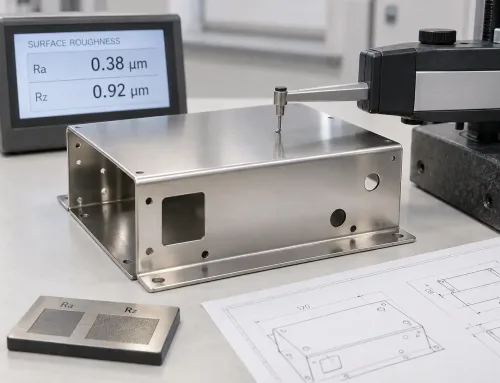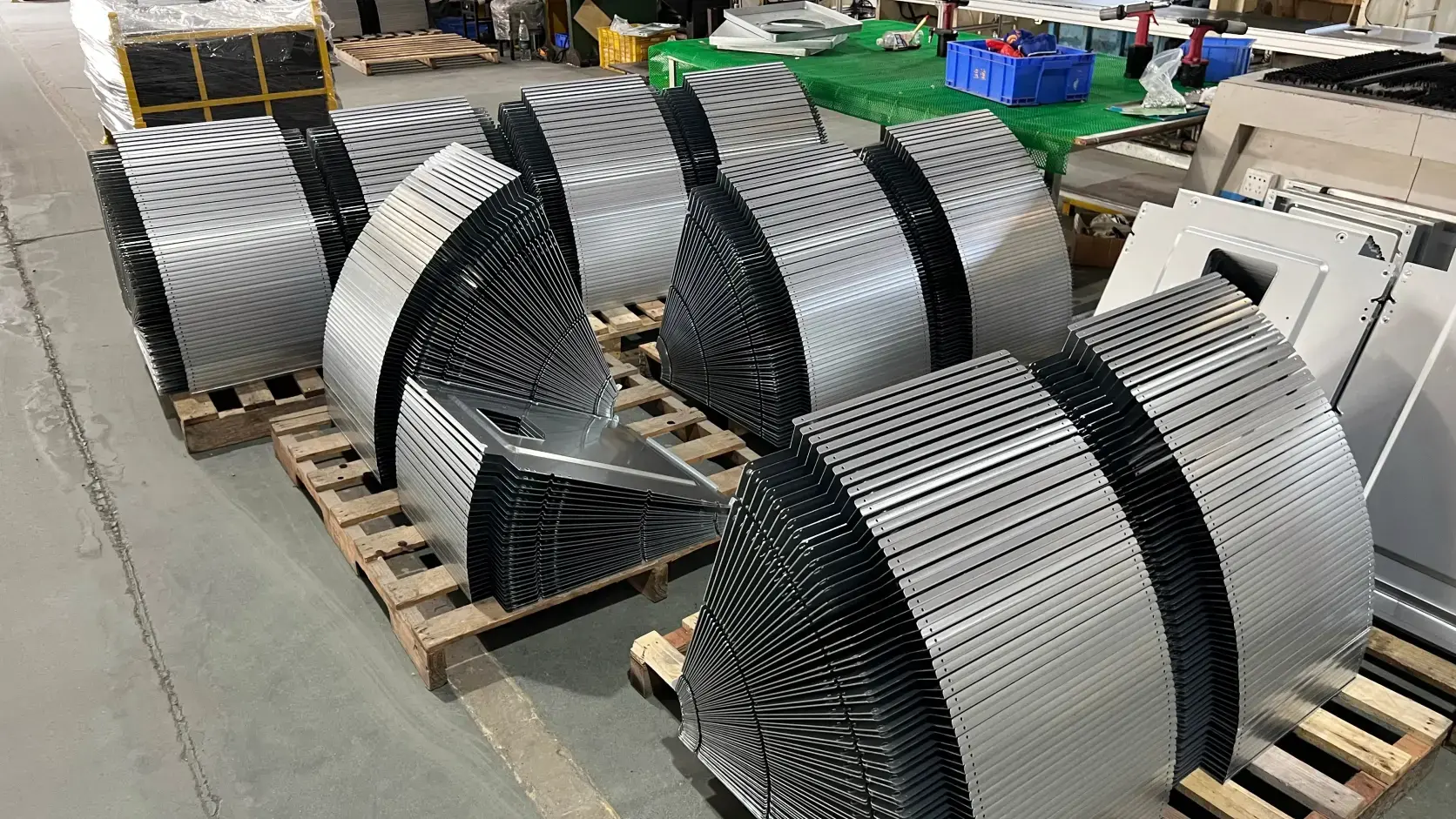

You release a formed sheet metal enclosure drawing that says “protect finished surfaces.” The first batch comes back with drag marks across the brushed front panel. When you raise the issue, the supplier points at the drawing: it never called for a protective film, never named a film type, and never said who removes it or when. The damage is real, but from the shop floor’s point of view nothing in the file was violated.
A protective film callout closes that gap. Unlike surface finish or weld symbols, protective film has no standard symbol in ASME Y14.5 or ISO drawing practice — the requirement lives entirely in the wording you write. That wording is not one sentence. It is an information set: what film, on which surfaces, applied and removed at which points, and to what acceptance condition.
Why “Protect the Surface” Is Not an Executable Callout
A drawing note is a manufacturing instruction, not a wish. A shop can execute only a note that answers three practical questions: what to do, where to do it, and to what result. “Protect finished surfaces” answers none of them. It names no material, does not identify which faces count as finished, and sets no acceptance condition.
Faced with that wording, a fabricator has three options: apply nothing, apply whatever standard film the shop stocks, or send an engineering question and wait. Only the third option reliably protects the part, and it costs communication cycles and lead time. Precision in the callout keeps the decision on the drawing instead of in an email thread.
What Happens on the Shop Floor When the Drawing Is Silent
Most sheet metal suppliers stock one or two standard protective films — typically a polyethylene (PE) film in the 40–80 μm range with a low-tack adhesive, suited to laser cutting and bending. “Tack” means the grab strength of the adhesive: low-tack films release cleanly, while high-tack films hold through heavy forming but can leave residue. Without a callout, that stock film goes on only when local routing habits call for it, and removal before shipping becomes a shop convention rather than your requirement.
The Four Elements of an Executable Film Callout
A complete callout answers four questions, in one note or in a short note cluster. Each element closes a specific failure mode.
Film Type, Thickness, and Tack
Name the film family, a thickness band, and a tack level — for example, “PE protective film, 50–80 μm, low tack.” Specifying only “protective film” leaves the choice to the shop, and their default may not survive your process window: a film rated for flat-sheet handling can tear after deep forming, while a heavy-duty forming film adds cost on a flat panel. If appearance is critical, add a color indicator, commonly blue or clear, so removal is easy to verify.
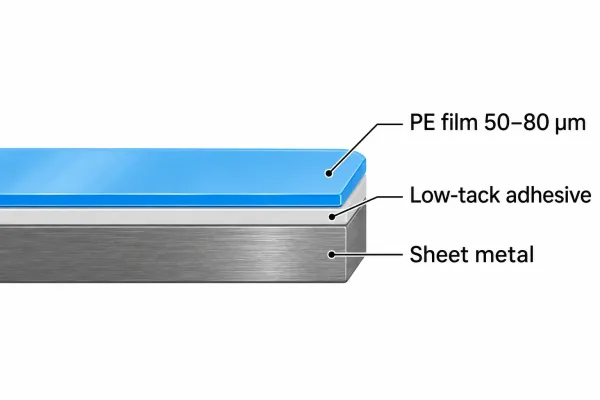
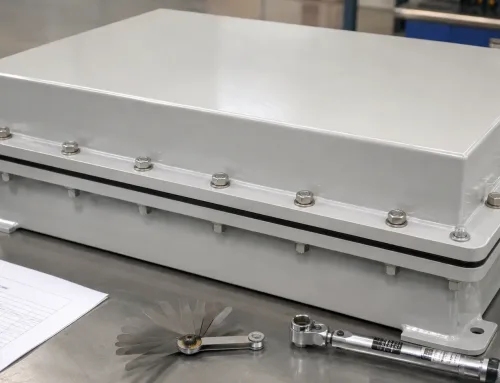
Cross-section of protective film on sheet metal, showing the film thickness, adhesive layer, and sheet substrate named in a callout.
Coverage: Which Surfaces and Which Sides
Identify the protected faces in terms an inspector can use: “both sides of all exterior faces shown in views A and B,” or “cosmetic face of the front panel only.” Avoid phrases like “as required” or “visible surfaces” unless visibility is formally defined elsewhere on the drawing. One-sided coverage is common and legitimate — many parts are at risk only on their cosmetic face. When the film must sit on one specific face, state the side explicitly.
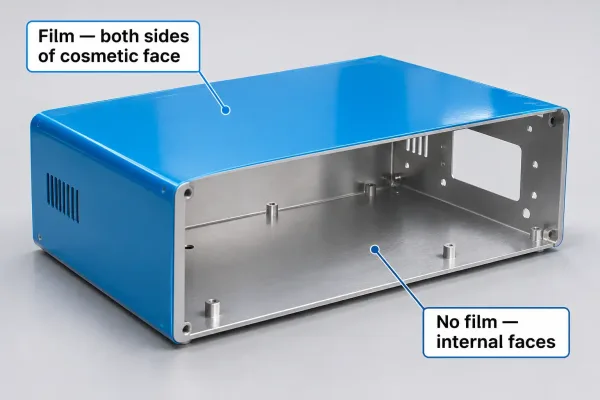
Film applied to the cosmetic outer face of an enclosure while internal structural faces stay bare.
Application and Removal Points
Say when the film goes on and when it must come off: “apply after forming and surface finishing; remove before final inspection” is a usable level of detail. The removal instruction matters as much as the application instruction. Film left on through shipping protects the surface; film left on through a weld or a cure oven causes defects. If the film is needed only for transport, say so.
Residue and Acceptance Limits
Define the acceptance condition after removal: “no adhesive residue; if residue remains, remove with isopropyl alcohol only — no abrasives,” or “film to peel cleanly without staining.” This is where brushed, mirror, and anodized surfaces diverge. Aggressive adhesive on a brushed stainless face can leave a visible shadow in the grain if it bakes on in a warm container during shipment. If appearance is a pass/fail criterion, link the film note to the visual inspection standard on the drawing.
Where the Callout Belongs on the Drawing
General Note vs Surface Flag
Two placements cover most situations. A general note in the notes block applies to every surface unless overridden, which is efficient when film is wanted broadly and risky when you need it on one face only. A surface flag with a leader line points at the exact face and pairs well with finish callouts on that face. Keep in mind that a film callout does not replace a surface finish symbol: Ra controls roughness, the film note controls handling protection.
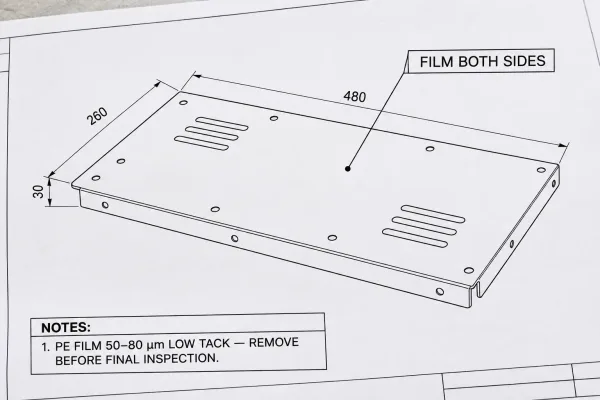
Drawing placement options shown together: a film general note in the notes block and a leader flag on the protected face.
Callout Text Formats You Can Adapt
Three formats cover most sheet metal cases. General note: “All exterior surfaces to be protected with PE film, 50–80 μm, low tack, applied after finishing; remove before final inspection. No adhesive residue permitted.” Surface flag: “PE film, 50–80 μm, low tack, both sides — this face,” with a leader to the cosmetic face. Transport-only note: “Apply PE film after cleaning; remove at assembly.” Pick the shortest format that still answers the four elements.
Film Timing Across the Fabrication Sequence
Before Cutting or After Forming?
Most laser-cut sheet metal orders take film before cutting: the supplier laminates standard sheet stock, and the laser cuts through thin PE film cleanly while the film protects the face through deburring, bending, and handling. Applying film only after forming is the better choice when heavy forming, welding, or a coating line follows, because those operations tear, cook, or contaminate early film anyway. If the drawing does not say which sequence you expect, the shop uses whichever fits its floor routing.
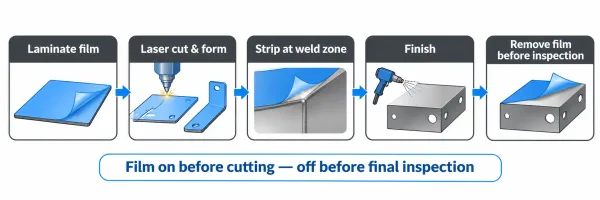
Process flow diagram showing when protective film is applied and removed in sheet metal fabrication
Welding and Finishing: Where Film Cannot Stay
Film cannot remain across weld zones: the heat carbonizes adhesive and contaminates the weld pool, and most fabricators strip film around joints regardless of what the drawing says. The same applies to powder coating and paint lines, which require bare, clean metal for adhesion. In these cases the callout shifts from full coverage to a masking instruction. State explicitly whether film must survive shipping after finishing, or whether a separate packaging spec applies.
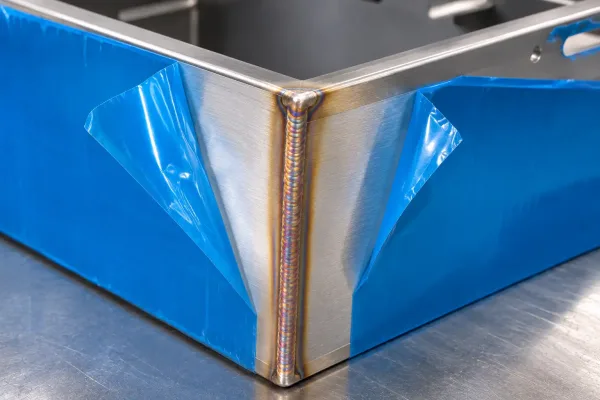
Protective film stripped back around a weld seam; heat discoloration marks the zone where film cannot stay.
Vague Note vs Full Spec: Quote, Lead Time, and Damage Claims
The difference between a one-line wish and a four-element note shows up in four places:
| Outcome | Vague note (“protect surfaces”) | Four-element callout |
|---|---|---|
| Quoting assumption | No film operations priced; material and labor excluded | Film stock, apply/remove labor, and inspection built into the quote |
| Shop behavior | Shop default, or an engineering query before production | Production follows the note without extra rounds |
| Lead time | Query cycles add days; rework adds more | Quoted lead time holds |
| Damage disputes | Responsibility contested — the drawing did not require protection | Acceptance is measurable; responsibility follows the note |
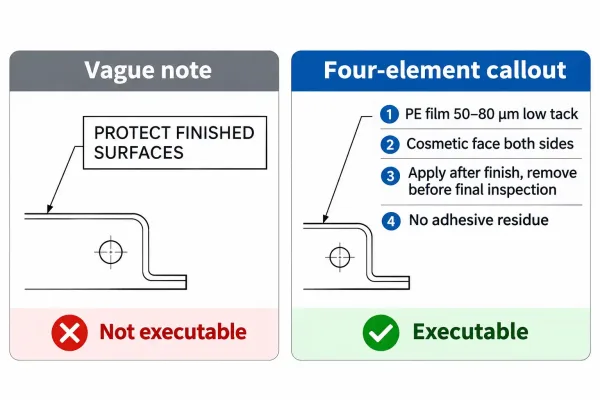
Left: a note the shop cannot execute. Right: a note that answers film, coverage, timing, and residue.
What the Quote Assumes When the Drawing Is Silent
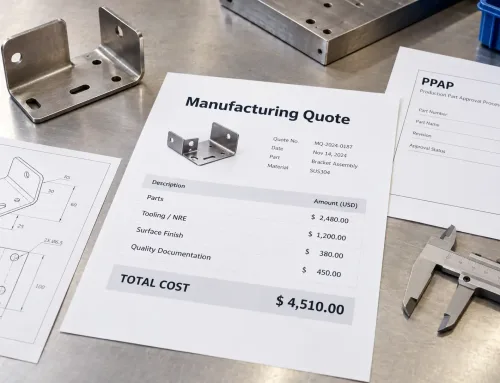
Fabricators price what the file states. A silent drawing is quoted as a no-film job: no film material, no application or removal labor, no residue inspection. Adding the requirement after quotation is a change order — a modest adder on a prototype, and a reschedule for a production order already in the queue. The cheapest film decision is the one made before the RFQ goes out.
Who Pays When Parts Come Back Scratched
When the drawing is silent, scratches are argued as handling damage rather than nonconformance, and the buyer usually absorbs the loss or the rework. A complete callout converts the same event into an inspectable requirement: the supplier either protected the surface to the stated condition or did not. This is not about assigning blame. It is about making the expectation measurable before production starts.
Cases Where a Film Callout Should Be Left Off
Film is handling protection, not a universal requirement. Internal structural faces, weldment assemblies headed straight to a coating line, and parts that will be abrasive-finished after forming usually gain nothing from a film callout, and every unnecessary note line adds cost and interpretation risk.
Surfaces and Processes Where Film Causes Problems
Leave film off when heat or chemistry makes it counterproductive: weld zones and heat-affected areas, surfaces going to powder coat or e-coat, and high-temperature cure or stress-relief operations. If the real concern is corrosion in storage, a rust-preventive oil or VCI (vapor corrosion inhibitor) packaging spec is the right tool — a film callout answers a different question.
Pre-Release Checklist for Film Requirements
Before the drawing goes out with the RFQ, confirm these seven items:
- Film family, thickness band, and tack level are stated
- Protected faces are identified in view terms, including the side
- Application point in the process is stated
- Removal point, or “leave on for shipping,” is stated
- Residue and acceptance condition are stated
- Note placement, general note or surface flag, matches the coverage intent
- The film requirement is consistent with the PO and the packaging spec
If any item is missing, the shop fills the gap with its own default, and that default stays invisible until parts arrive.
FAQs
Sending a drawing out for quotation is the right moment to have the film callout reviewed alongside tolerances and finish requirements. A short DFM pass at that stage catches silent gaps while changes are still free — it is where SR-MFG’s engineering team flags these points before production starts.