Sheet Metal Solutionsfor Industrial Machinery& Equipment
SR MFG provides sheet metal fabrication services for industrial machinery and equipment projects, turning your requirements for structural stability, dimensional accuracy, and consistent appearance into reliable manufacturing outcomes.
I am very glad to have gained their trust.

















Why Precision Matters inIndustrial Equipment Sheet Metal
Industrial equipment sheet metal parts must maintain dimensional accuracy, structural stability.
fit-up consistency, and surface durability under long-term operating conditions.
Dimensional
Deviation
- Misaligned holes and bend positions
- Poor fit-up during assembly
- Higher rework risk
Assembly
Fit-Up Issues
- Inconsistent panel and frame matching
- Gap and alignment problems
- Slower downstream installation
Welding
Distortion
- Deformation after welding
- Reduced flatness and stability
- Affects final assembly accuracy
Surface &
Corrosion Risk
- Coating adhesion or finish inconsistency
- Corrosion exposure in harsh environments
- Shorter service life
Rework &
Delivery Delay
- Repeated adjustment and correction
- Extended production lead time
- Increased project cost
Long-Term
Reliability
- Structural accuracy impacts performance
- Inconsistent quality affects maintenance
- Lower product reliability over time
SR MFG reviews structure, tolerance, material, welding, finishing, and assembly requirements early to reduce downstream manufacturing risks.
Common Manufacturing RisksWe Help Reduce
Industrial equipment sheet metal parts involve multiple processes and strict requirements.
We identify potential risks early and control key factors to ensure quality, delivery, and cost stability.
Structural Rigidity Risk
Insufficient structural strength affects equipment stability.
Key Causes
- Incorrect material thickness
- Inadequate reinforcement
- Poor joining design
Impact
- Reduced equipment stability
- Weaker overall appearance
Assembly Fit-Up Risk
Poor fit-up leads to installation problems and rework.
Key Causes
- Inadequate springback control
- Weld distortion accumulation
- Unclear assembly datums
Impact
- More trial fitting and rework
- Longer on-site adjustment time
Surface Quality Risk
Poor surface finish affects appearance and durability.
Key Causes
- Inadequate pretreatment
- Unsuitable finishing method
- Poor detail control
Impact
- Affects acceptance
- Reduces corrosion resistance
- Impacts overall machine appearance
Delivery Schedule Risk
Unstable delivery disrupts project milestones.
Key Causes
- Fragmented process chain
- Weak production coordination
- Excessive outsourcing
Impact
- Slows development
- Delays transition to mass production
Cost Overrun Risk
High cost reduces project profitability.
Key Causes
- Unoptimized structure
- Too many processes
- Poor material utilization
Impact
- Increases project budget
- Reduces future profitability
Why Choose SR MFG?
We do more than fabricate parts. We help industrial equipment makers reduce risk,improve manufacturability, and ensure every part fits into the complete machine.
Early Drawing
Review
We review your drawings at the beginning to identify features that affect assembly, weld distortion, appearance, and manufacturability.
Prototype
Result Focus
We focus on the end result for prototypes—ensuring fit, structure, and surface requirements are validated before moving forward.
Volume
Consistency Control
We focus on consistency in volume production—maintaining stable dimensions, appearance, and quality across every batch.
Assembly-Oriented
Manufacturing
Our parts are designed and built for seamless integration into complete machine assemblies, not just standalone components.
Process
Coordination
We coordinate cutting, bending, welding, finishing, and assembly to reduce downstream issues and keep your project on track.
SR MFG helps industrial equipment customers move from prototype validation to stable batch production with better manufacturability and lower project risk.
Our Manufacturing Capabilities
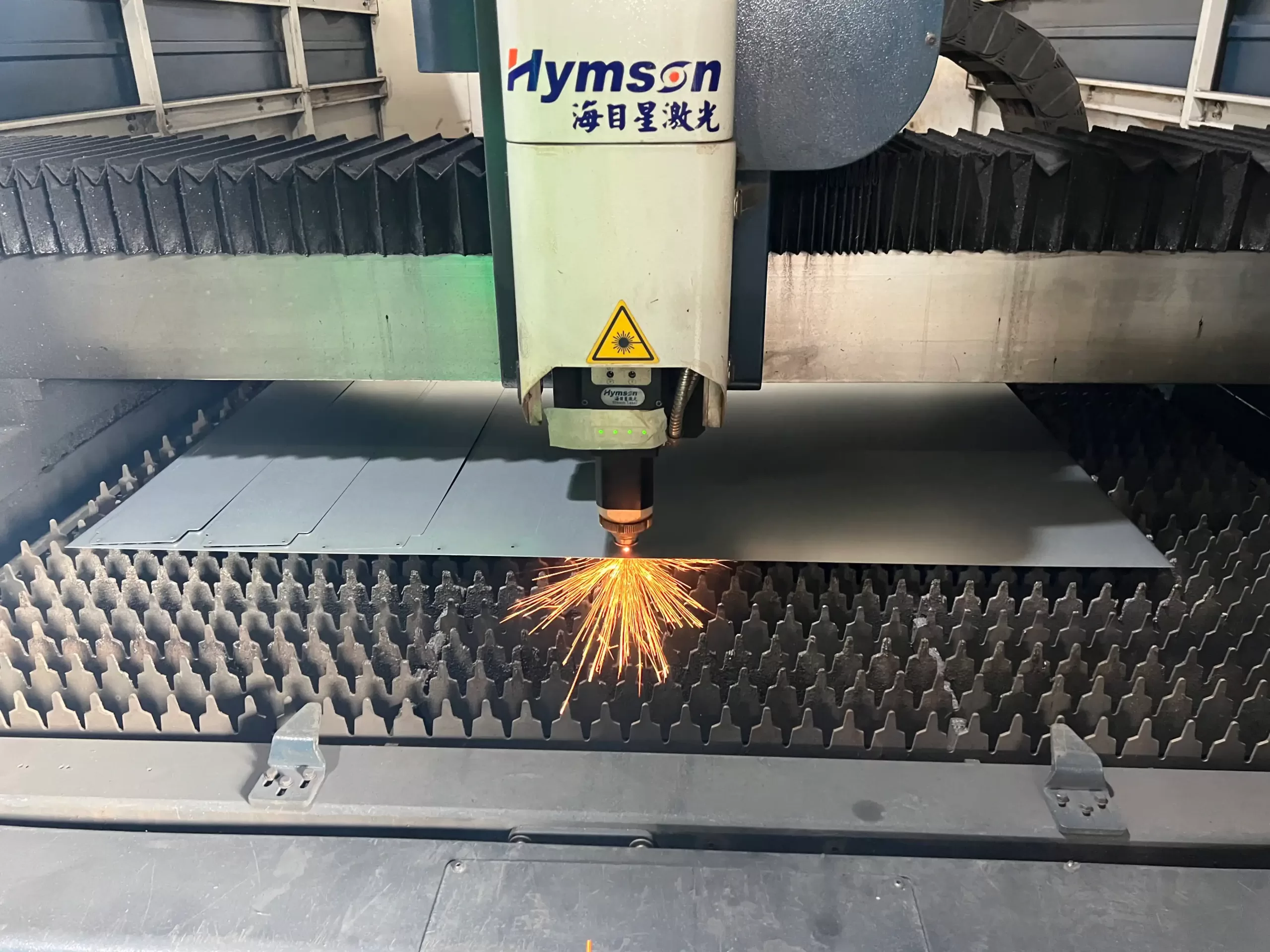
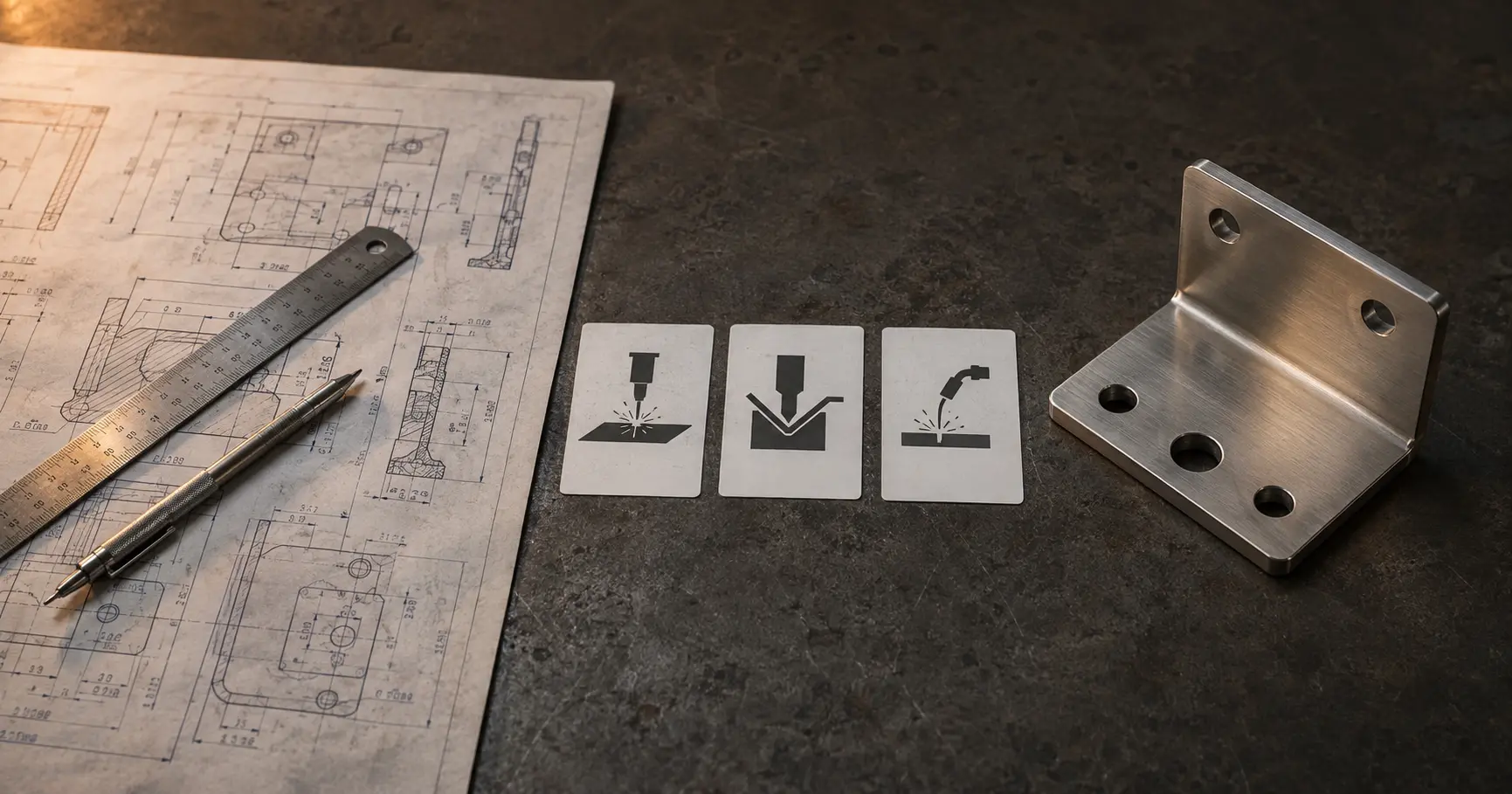
Laser Cutting
Laser cutting is well suited for machine enclosures, mounting plates, support plates, base blanks, and a wide range of custom-shaped structural parts. For projects involving multiple holes, long dimensions, complex contours, or thicker materials, cutting quality has a direct impact on downstream bending, welding, and assembly accuracy.
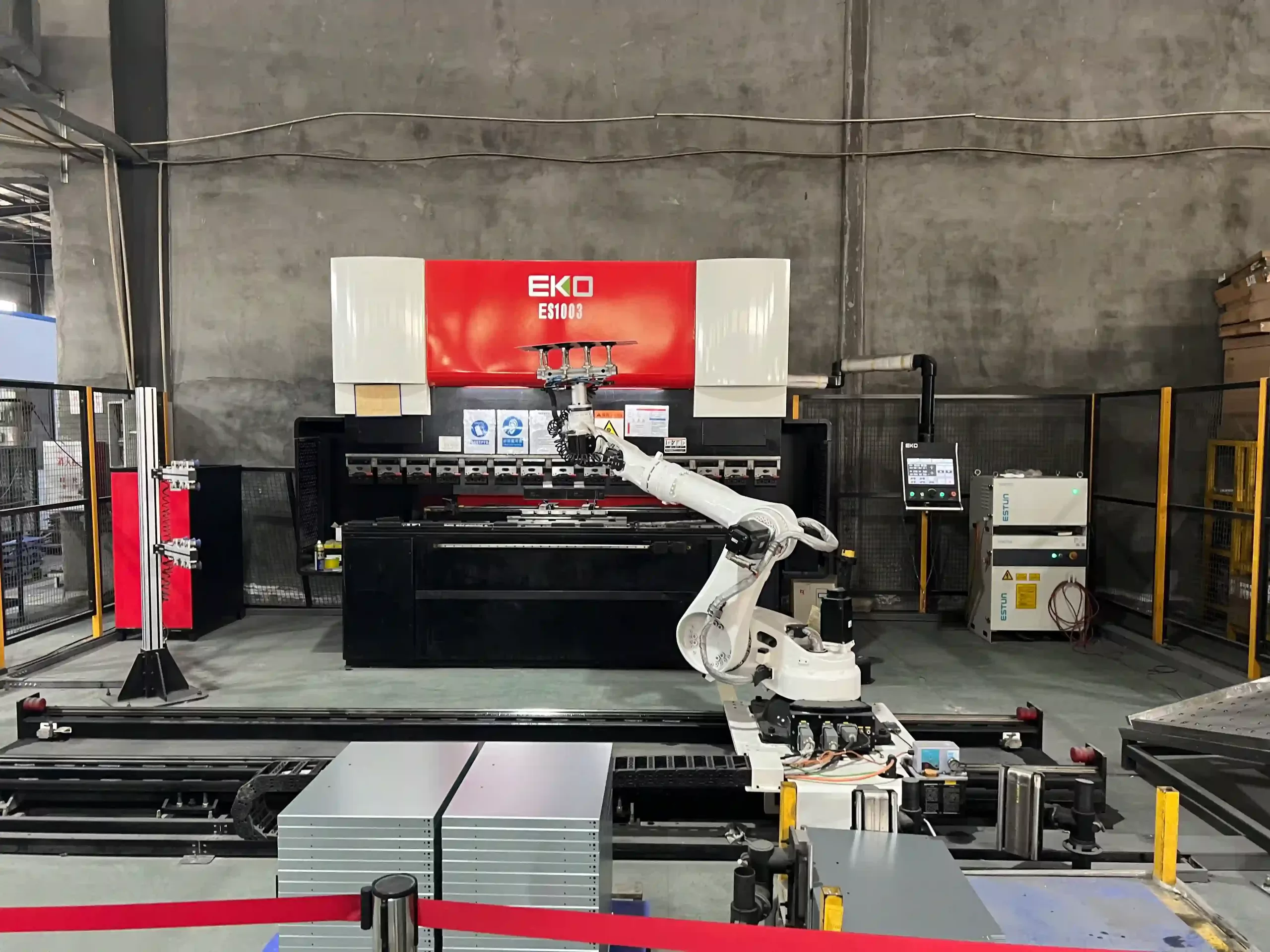
CNC Bending
Door panels, guards, enclosure panels, reinforced edges, and hemmed structures all require tight control of bend sequence and dimensions. If springback, edge distance, and assembly relationships are not properly managed at the bending stage, problems such as uneven doors, shifted hole positions, and poor edge alignment often show up during prototype assembly.
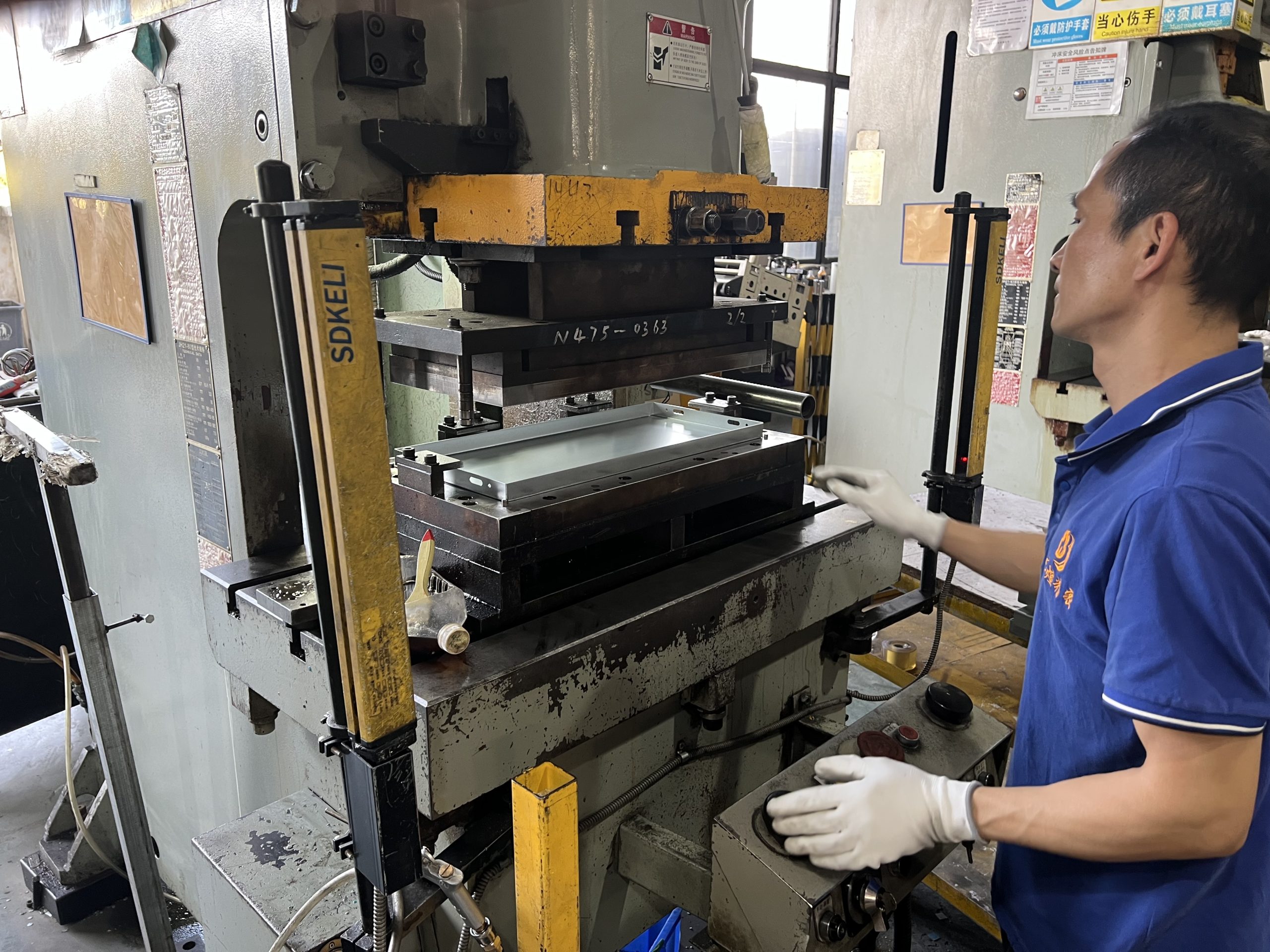
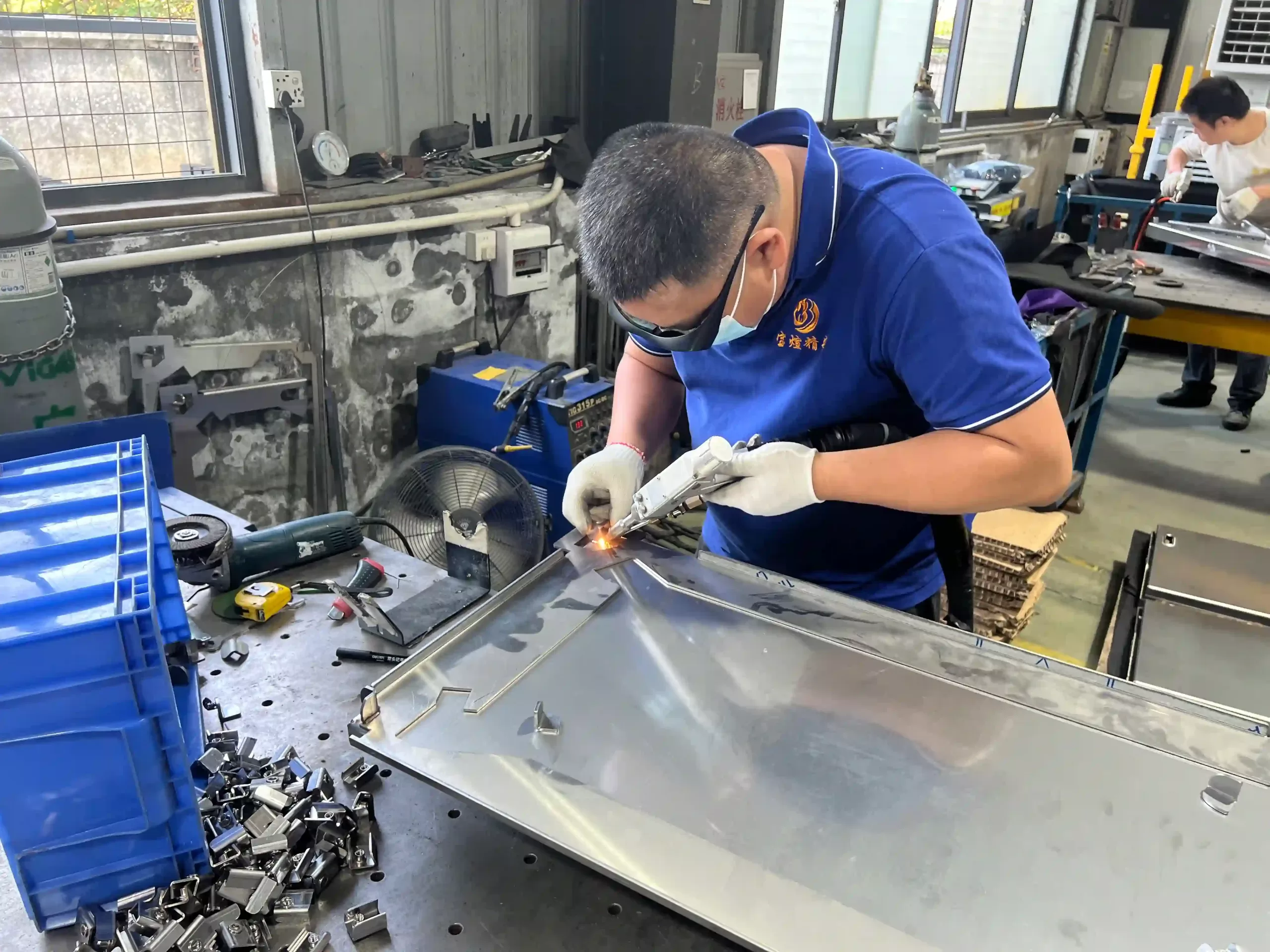
Precision Welding
For welded frames, machine bases, support components, and built-up assemblies, positioning, weld sequence, and post-weld correction all need to be considered together. If welding is not handled properly, the most common issues are mounting surface distortion, edge misalignment, and damaged assembly relationships.
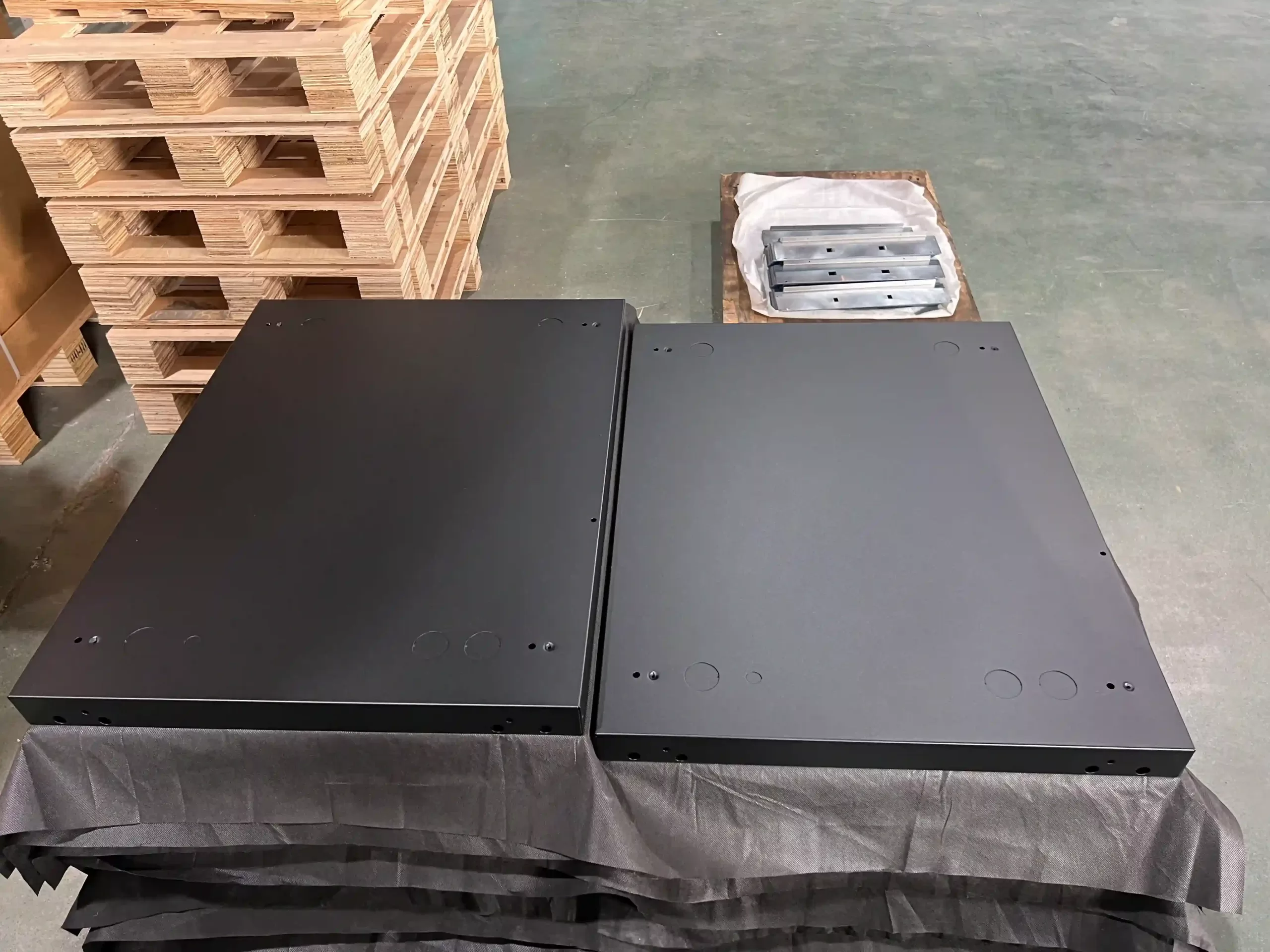
Surface Finishing
In industrial equipment projects, surface finishing is about much more than color. Powder coating, wet painting, anodizing, and stainless steel finishing all affect wear resistance, corrosion protection, ease of cleaning, and final appearance. If finishing is not properly coordinated with earlier processes, prototypes and production batches can easily end up with color variation, unstable adhesion, or inconsistent details.
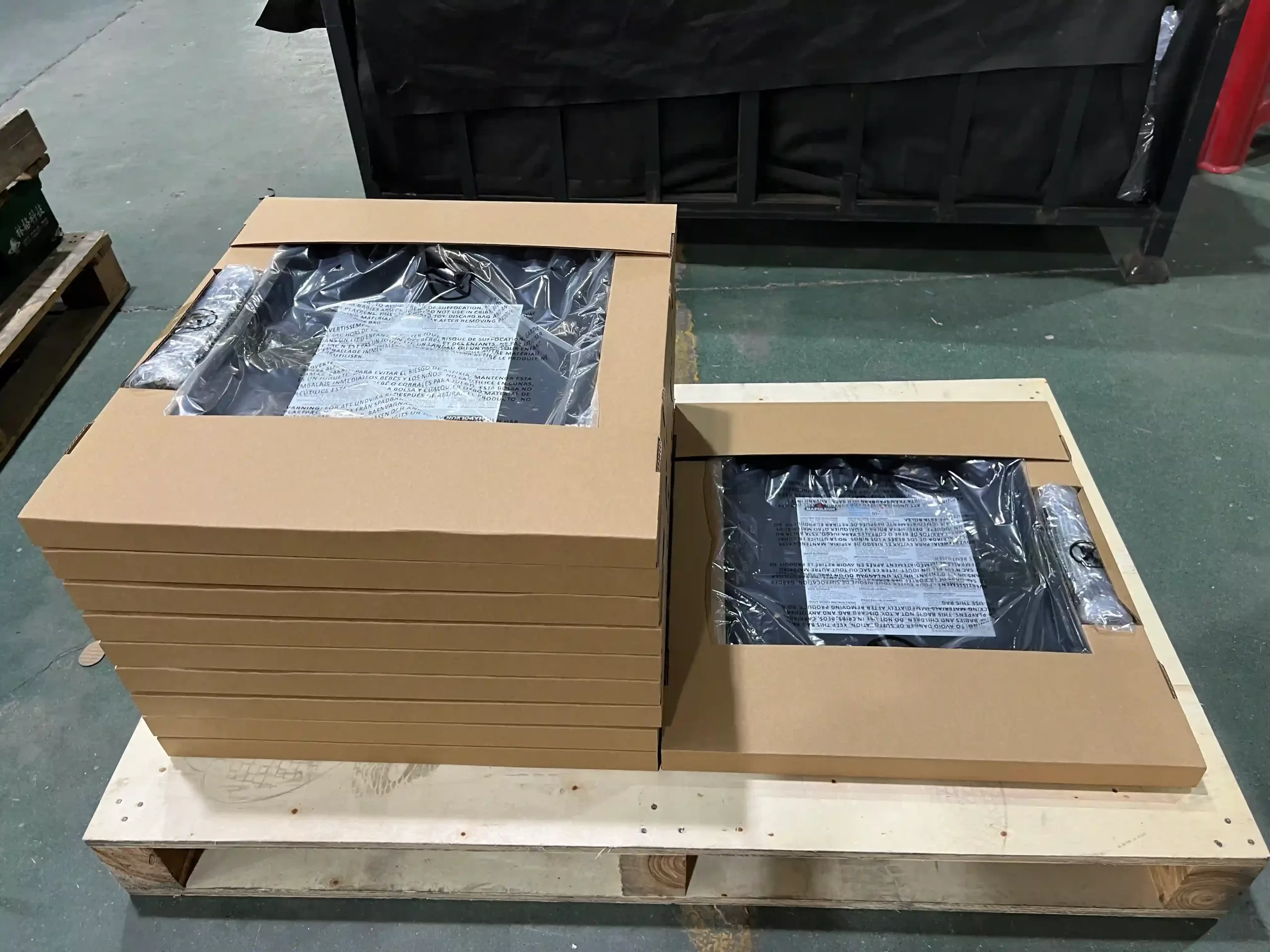
Assembly and Pre-Assembly Services
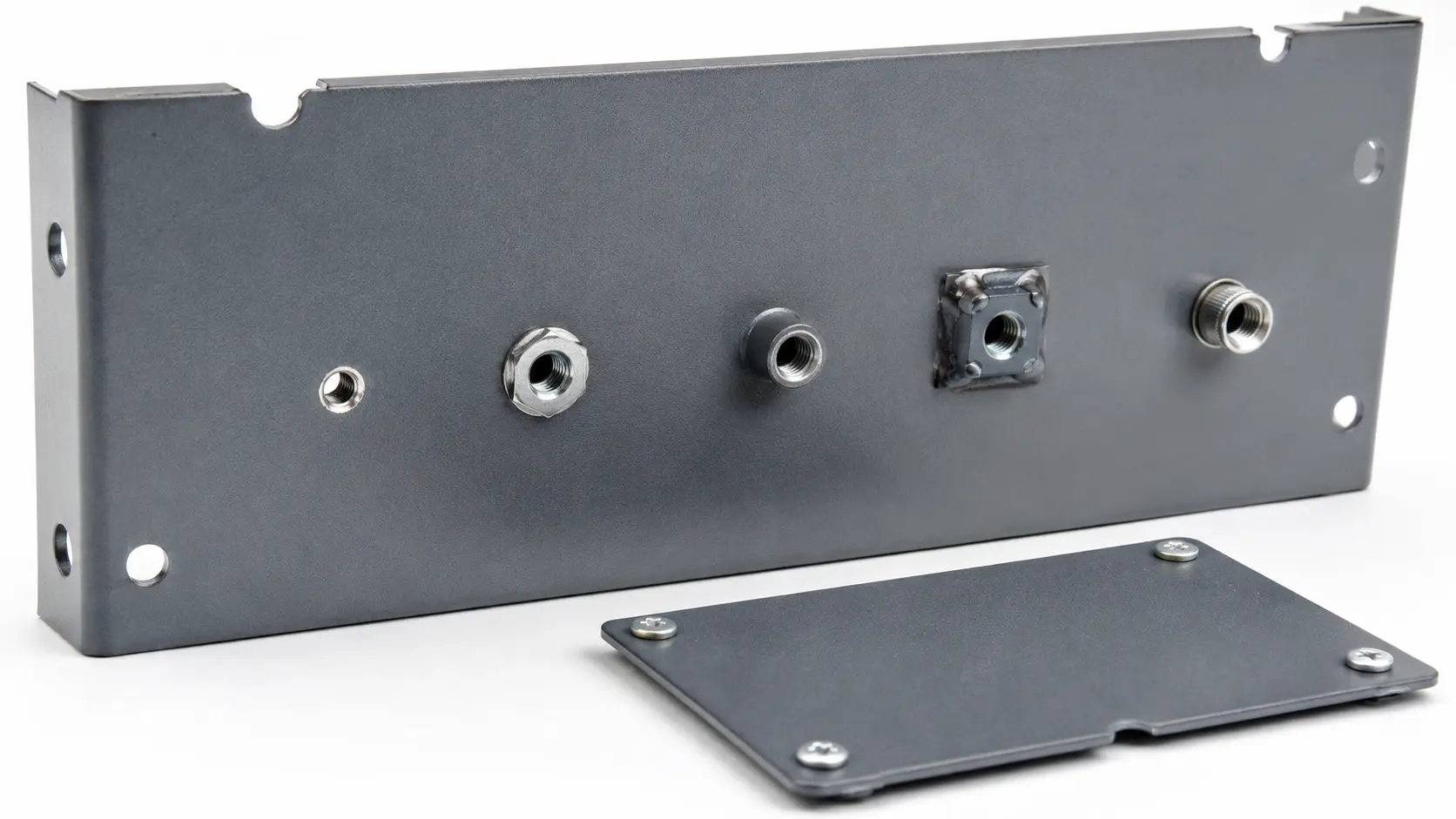
Many sheet metal parts used in industrial equipment are not ready for direct use after fabrication alone. PEM insertion, tapping, hinges, handles, locks, viewing windows, casters, seals, and standard hardware often need to be installed with the final assembly relationship in mind.
Sheet Metal Solutions for Industrial Equipment
We provide end-to-end sheet metal solutions that help your equipment perform better, assemble easier, and last longer.
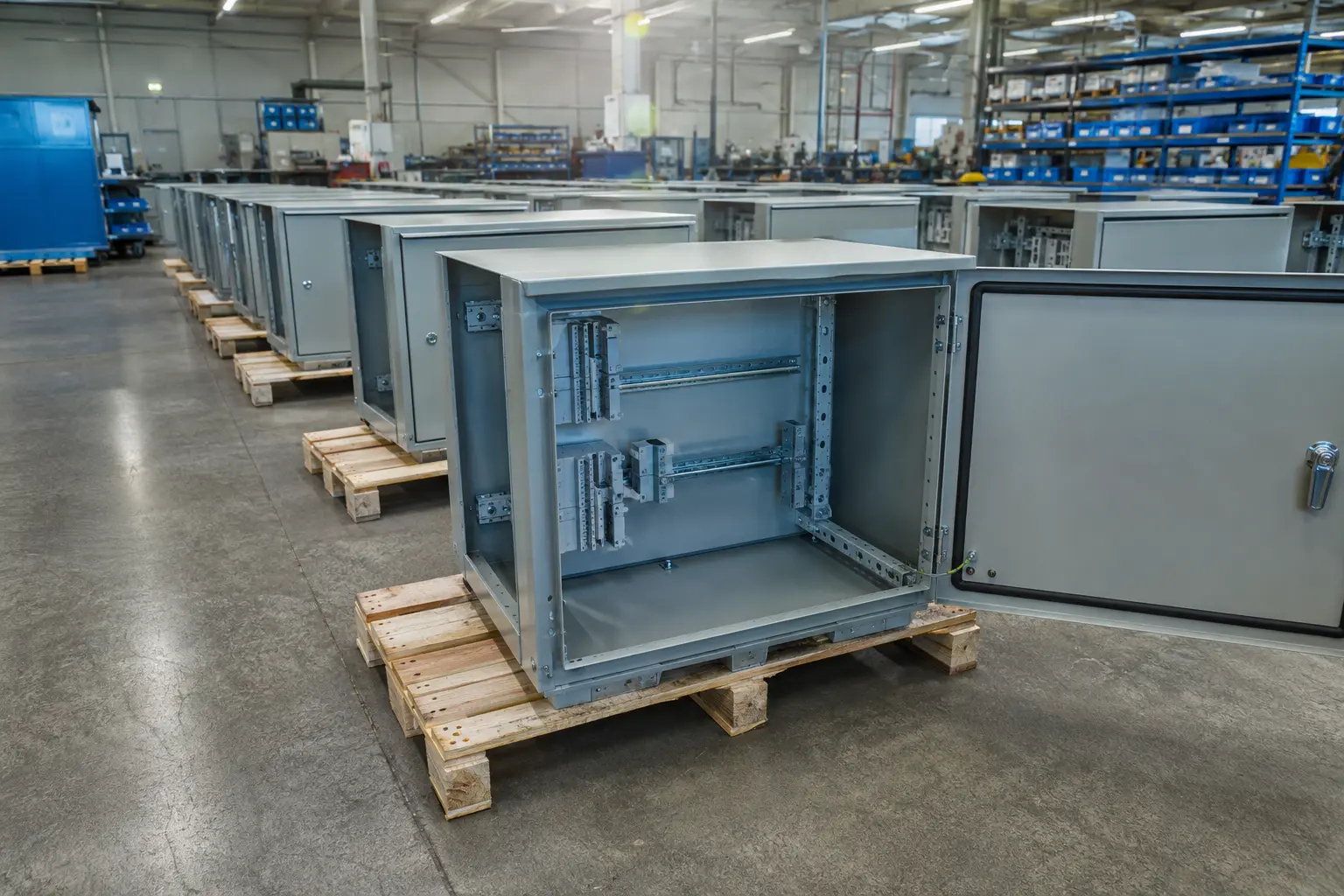
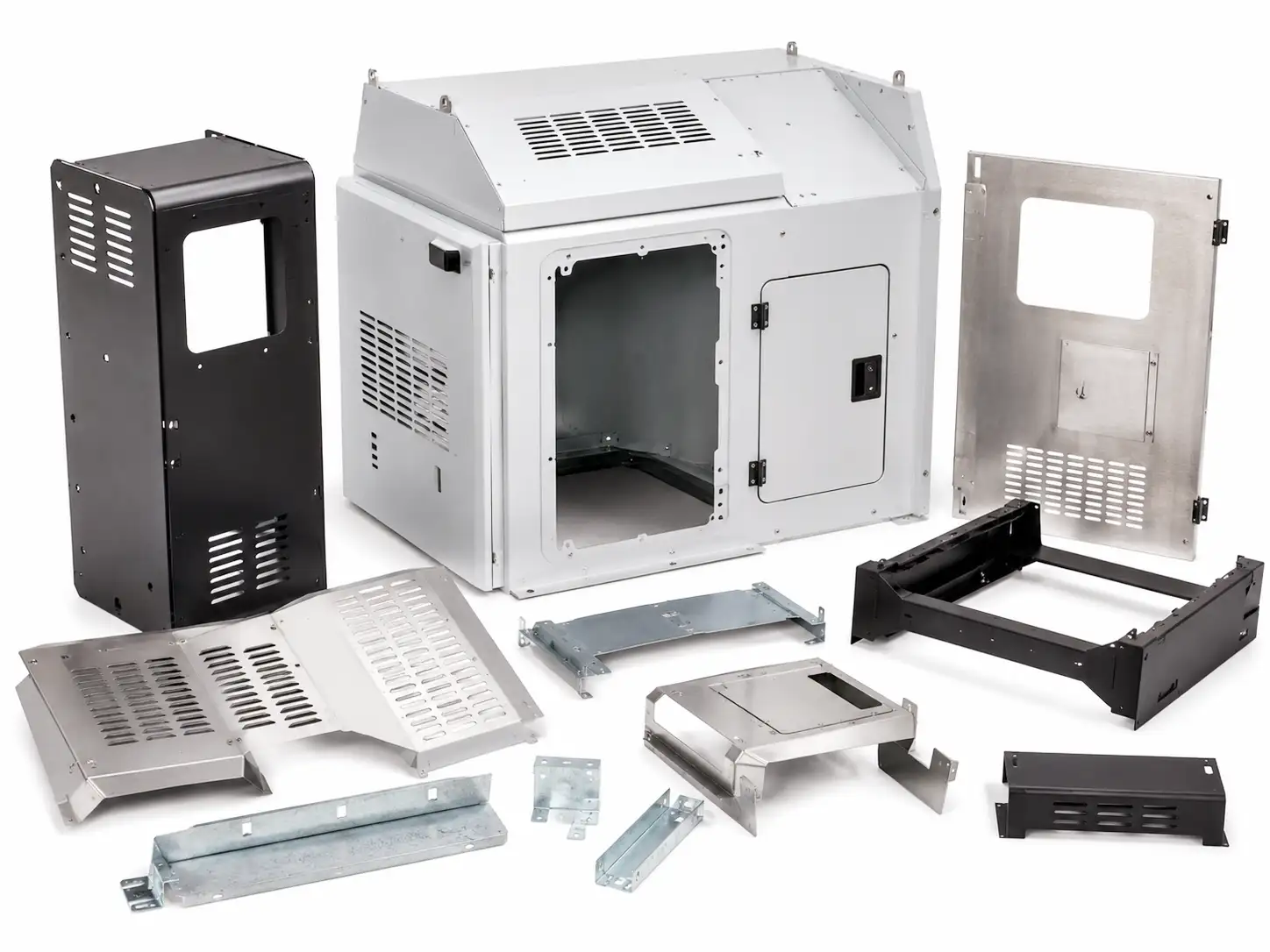
Equipment Covers &
Protective Structures
- Outer panels and equipment covers
- Viewing windows and access openings
- Ventilation and service panel designs
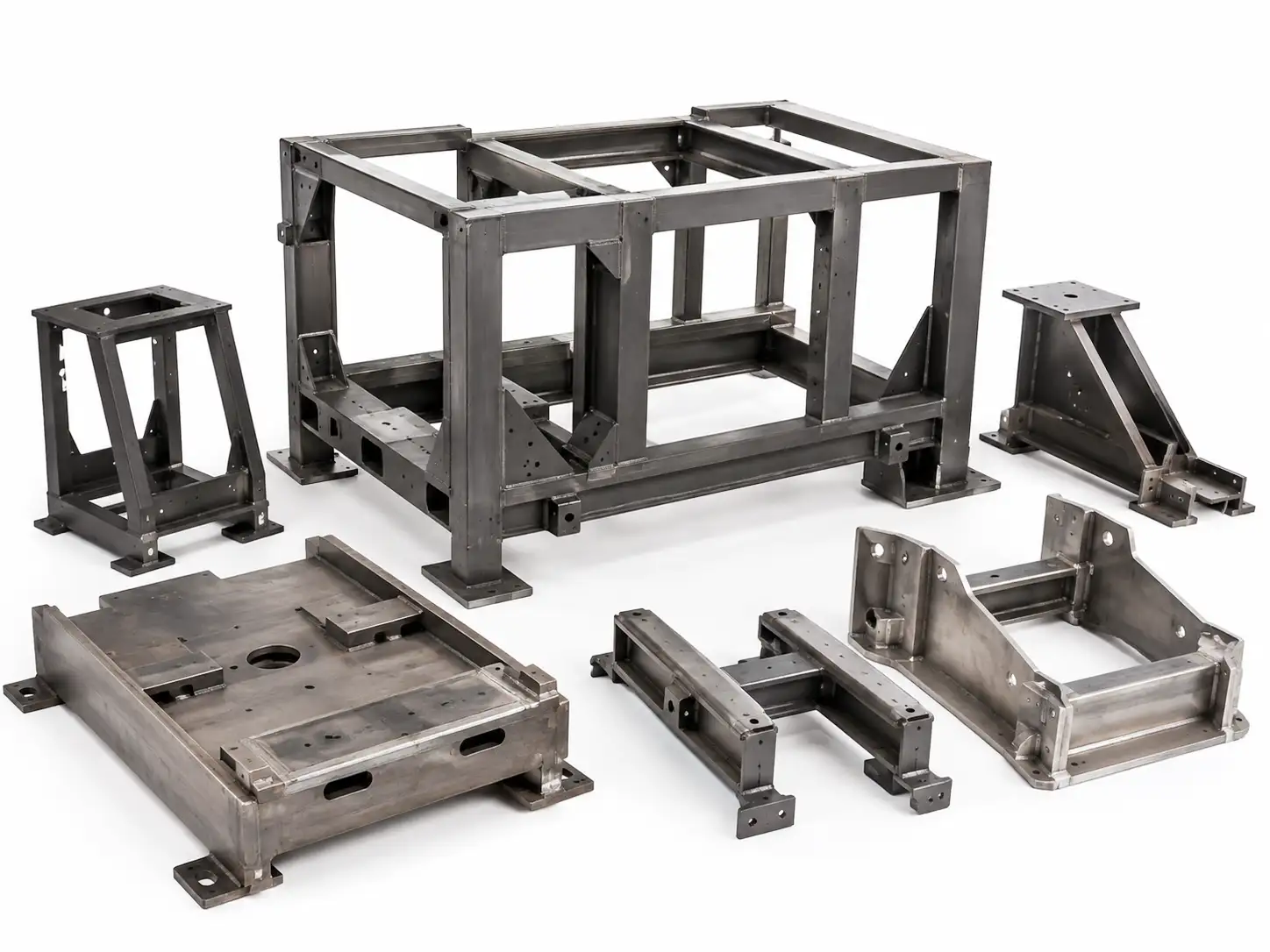
Welded Frames &
Machine Bases
- Custom automation machine base frames with precision mounting references
- Welded machine base frames for load-bearing equipment structures
- Rigidity and dimensional stability
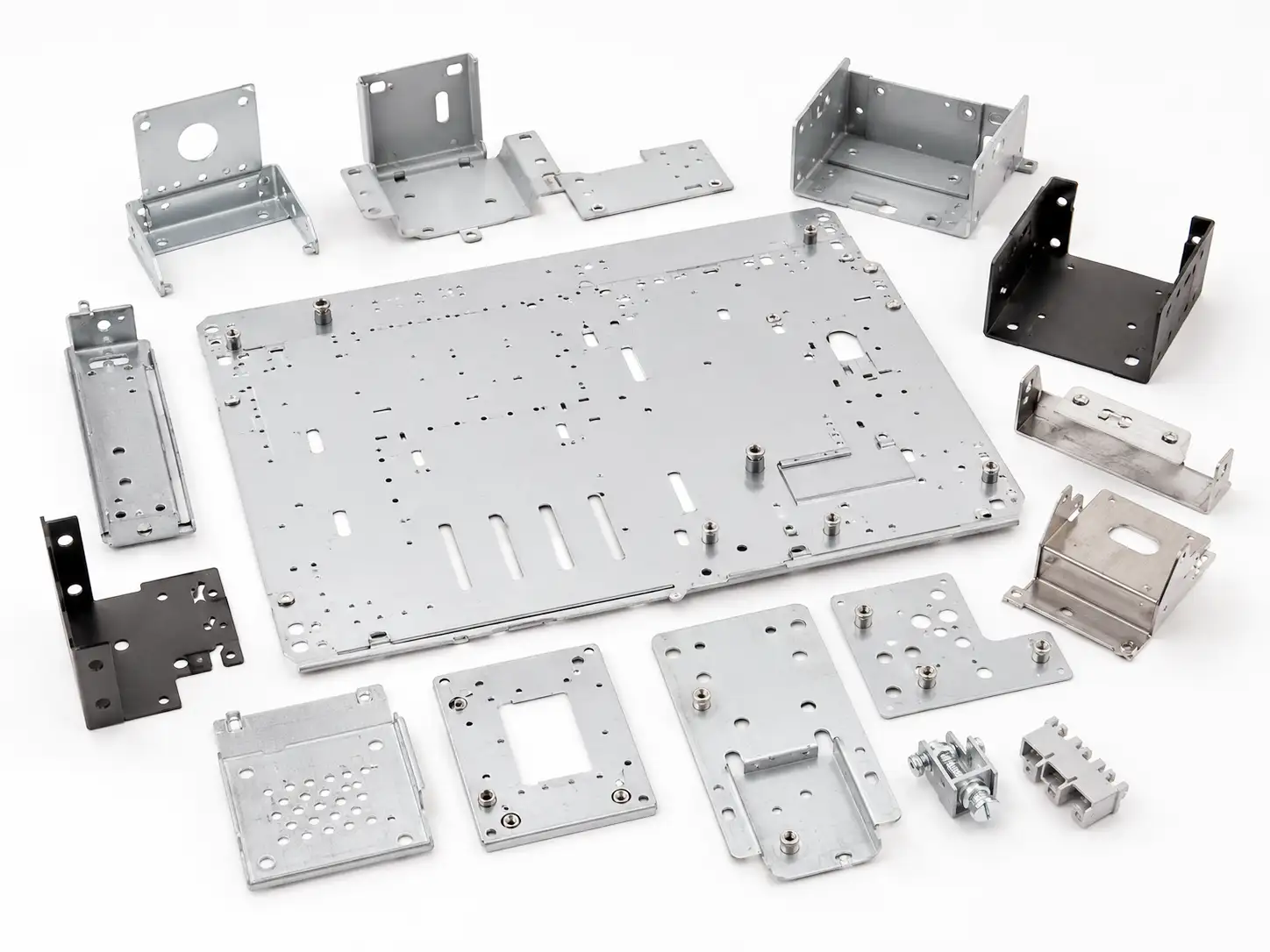
Mounting Plates &
Support Parts
- Module and component mounting
- Internal equipment layout support
- Accurate connection and positioning
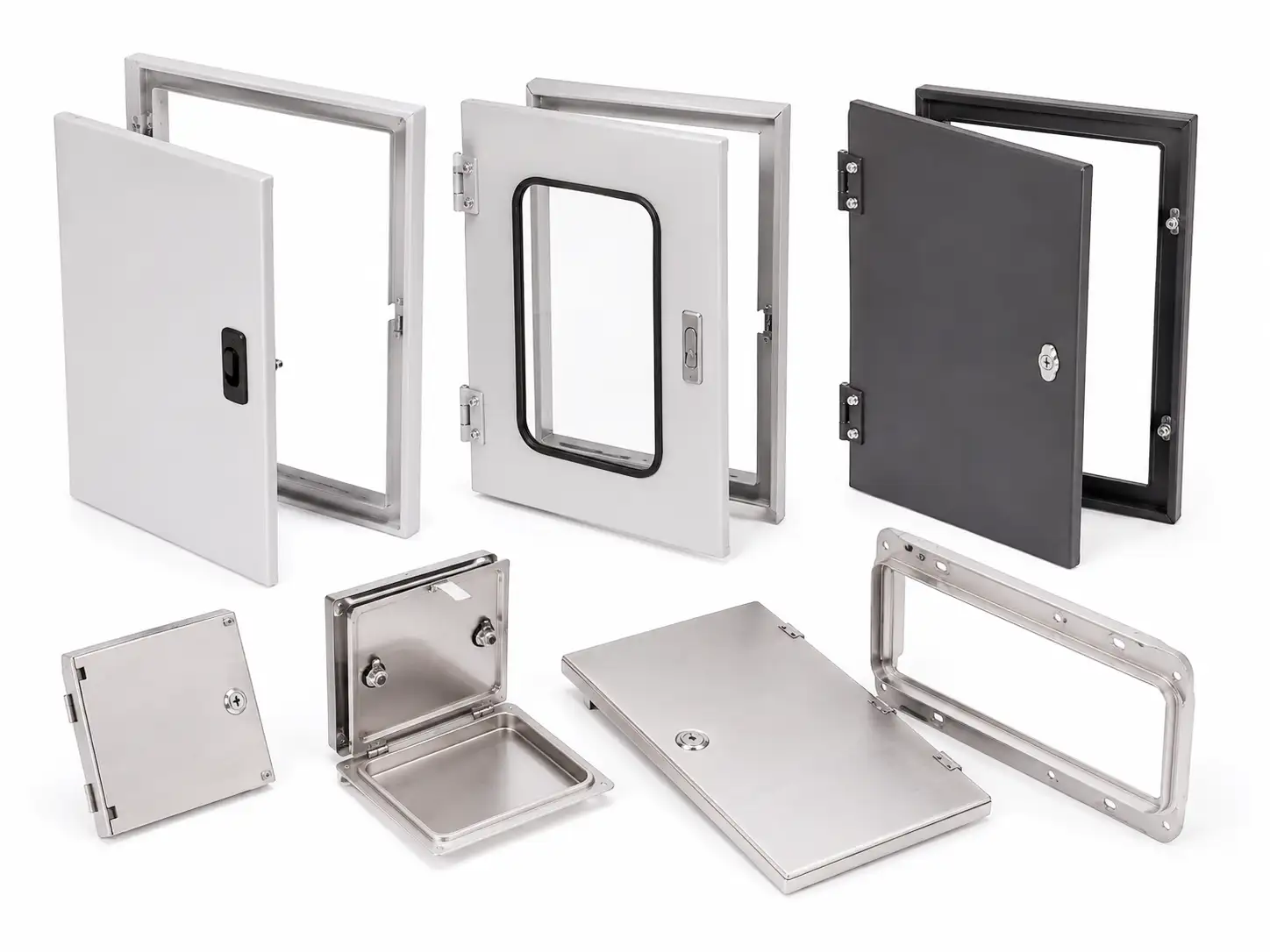
Access Doors &
Service Structures
- Service doors and access panels
- Lock and hinge installation
- Maintenance access and operator safety
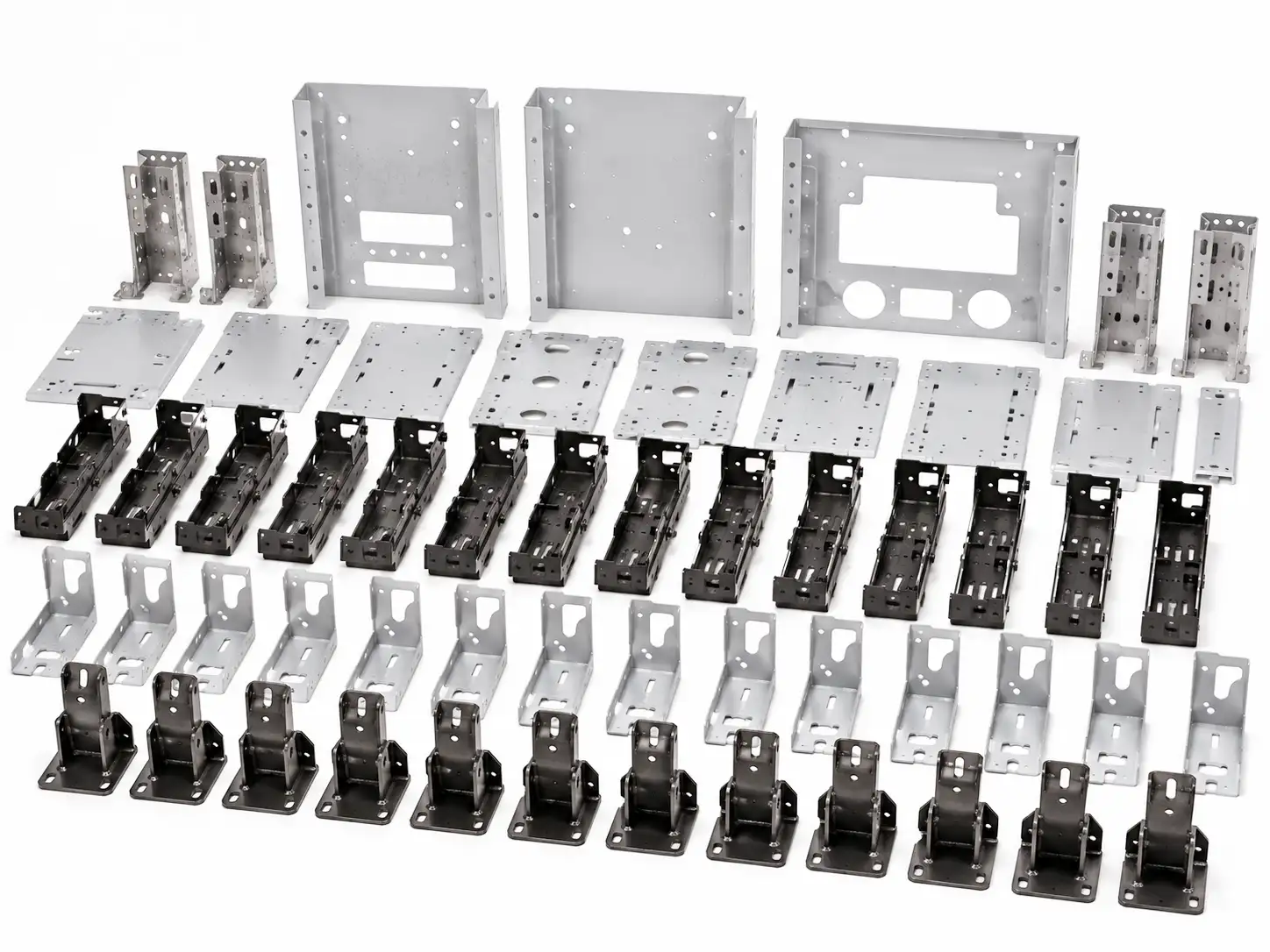
Batch Production of
Structural Parts
- Coordinated multi-part production
- Sequenced delivery for equipment projects
- Consistent quality across production batches
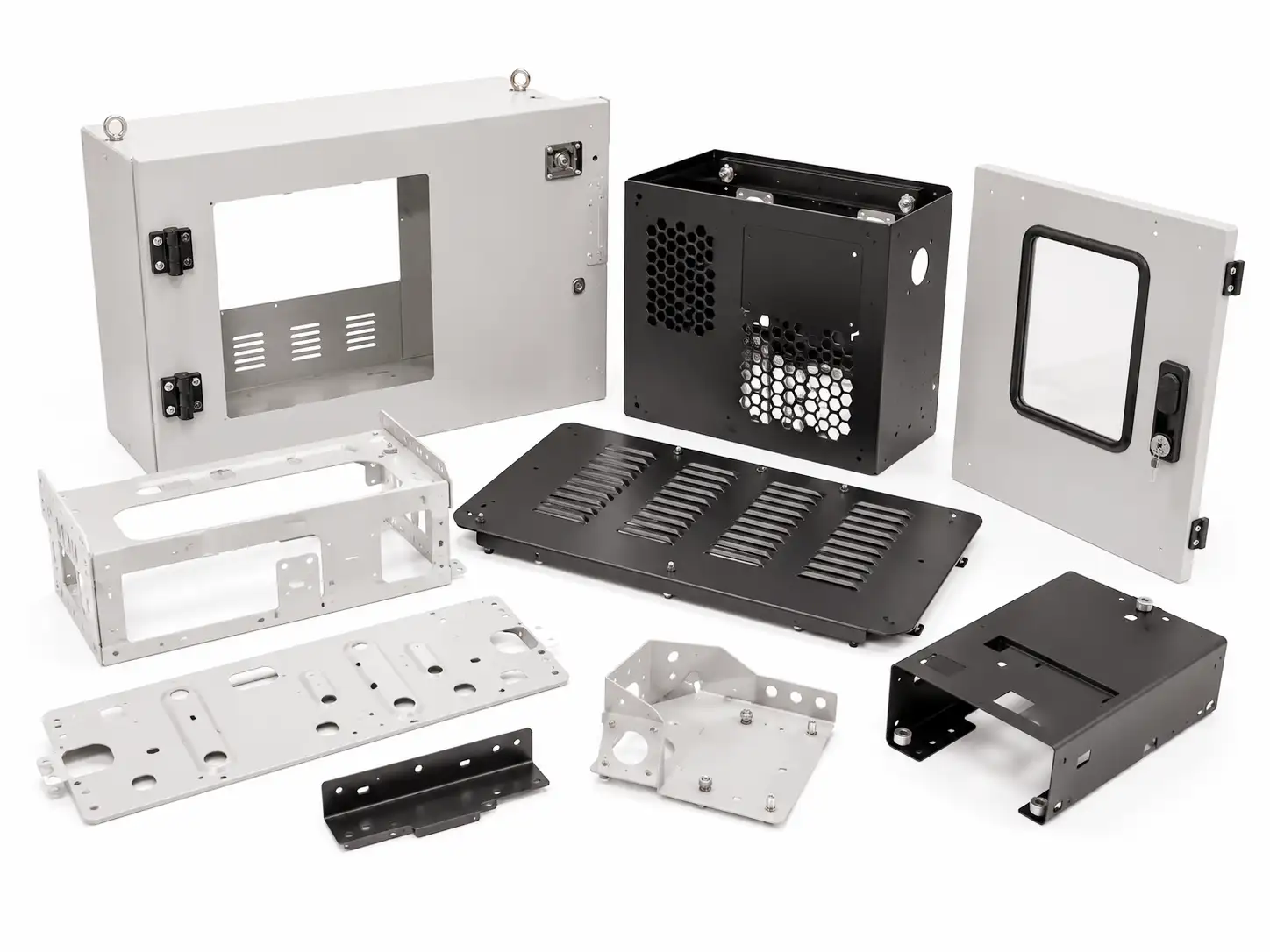
Surface Finishing &
Pre-Assembly
- Powder coating and surface finishing
- Pre-assembly of hardware and components
- Reduced final equipment assembly workload
Explore Sheet Metal Parts for Industrial Automation
Explore equipment covers, welded frames, mounting plates, access structures, and other custom sheet metal parts for industrial automation systems.
Material Selection Guide
Material choice depends on the part’s function, operating environment,and downstream manufacturing process.
Cold-Rolled Steel
Grades: SPCC, DC01
- Smooth surface
- Good formability
- Excellent paint compatibility
Covers, door panels, side panels, mounting plates.
Carbon Steel
Grades: Q235B, S235
- Good strength
- Good weldability
- Suited for load-bearing structures
Bases, frames, support parts, welded structures.
Stainless Steel
- Strong corrosion resistance
- Suited for wet / washdown / clean environments
- Easy to clean and maintain
Food machinery enclosures, medical equipment structures, corrosion-resistant parts.
Aluminum Alloy
- Lightweight
- Corrosion-resistant
- Suitable for bent or structural parts depending on grade
Guards, panels, aluminum housings, lightweight structural parts.
| Quick Material Comparison | Cold-Rolled Steel | Carbon Steel | Stainless Steel | Aluminum Alloy | Galvanized Steel |
|---|---|---|---|---|---|
| Formability | |||||
| Weldability | |||||
| Corrosion Resistance | |||||
| Weight Reduction | |||||
| Cost Control | |||||
| Surface Finishing Compatibility |
Need deeper grade-level guidance?
Explore the SR MFG Material Library for detailed material pages and selection support.
Quality Control Program
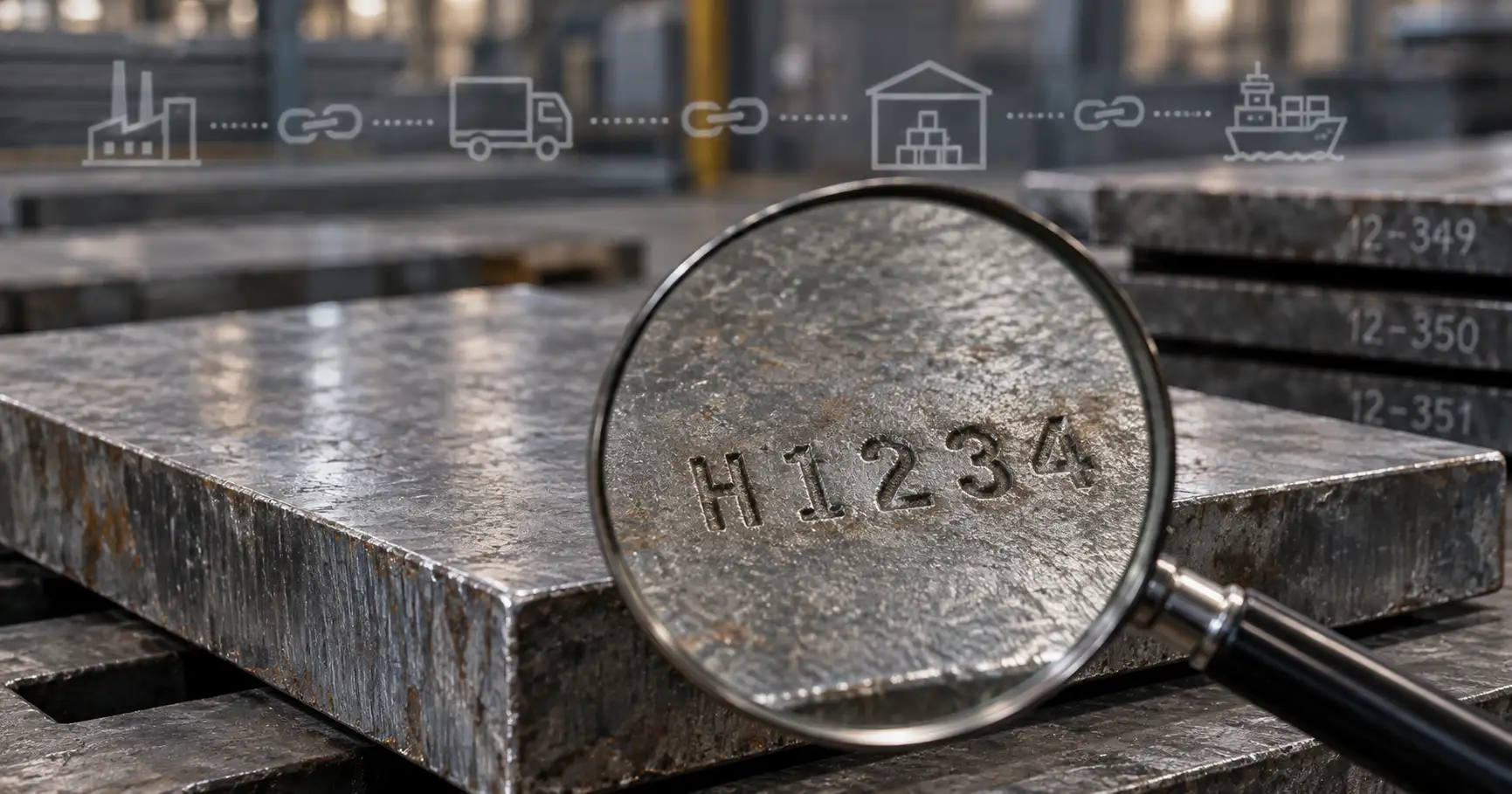
Quality is built into every step of our sheet metal manufacturing process.We check and verify at every stage-from incoming materials to final inspection-with complete traceability and documentation. This ensures consistent qualityand on-time delivery for every order.
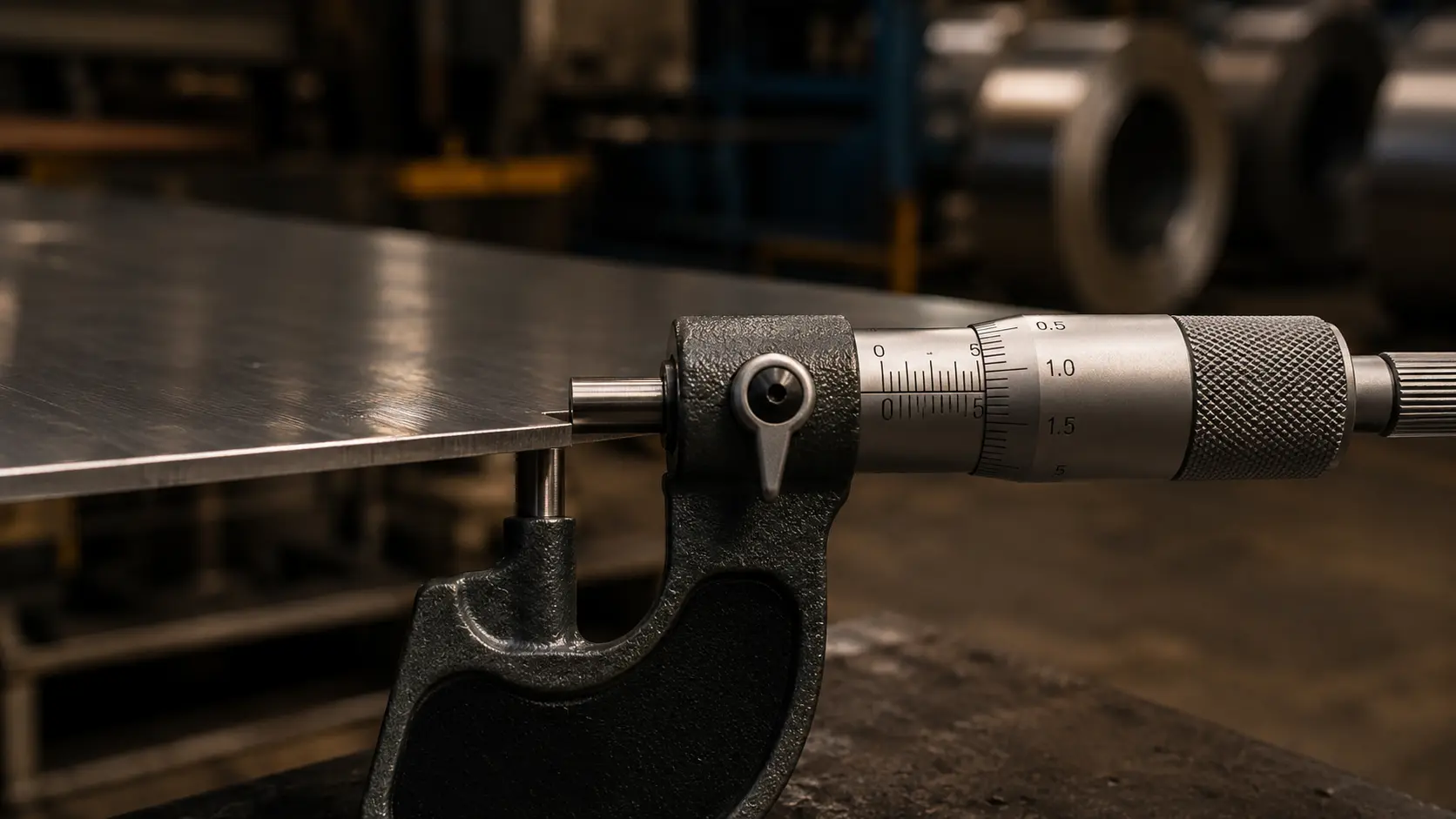
Incoming Material Check
Verify material grade, thickness, surface condition, and specification compliance.
First Article Inspection
Confirm key dimensions and critical features before production release.
In-Process Inspection
Monitor bend angles, hole positions, fit-up, and process stability during manufacturing.
Final Inspection
Review appearance, assembly criteria, and shipment readiness before delivery.
Inspection Workflow
Material Check
Verify material and specifications.
FAI
Confirm key dimensions and critical features.
In-Process Inspection
Monitor processes and product consistency.
Final Release
Review and approve for shipment.
Material certificates, dimensional inspection reports, appearance inspection reports, and other related quality documents can be provided when required.
Lead Time and Cost Control
When it comes to lead times and cost control in sheet metal fabrication, we follow an approachthat is practical, disciplined, and aligned with the realities of industrial equipment manufacturing.
Lead Time Guidelines
Production lead time depends on process complexity, degree of customization, and order volume.
Prototype parts
3–5 working days for simple structures;
6–10 working days for complex welded assemblies.
Small batches (1–50 units)
7–15 working days for standard structures;
10–20 working days for parts requiring welding and surface finishing.
Volume production (50+ units)
Evaluated based on structural complexity, welding workload, and finishing requirements.
Expedited Service
For urgent orders, we can prioritize key production stages while maintaining delivery visibility.
Priority evaluation
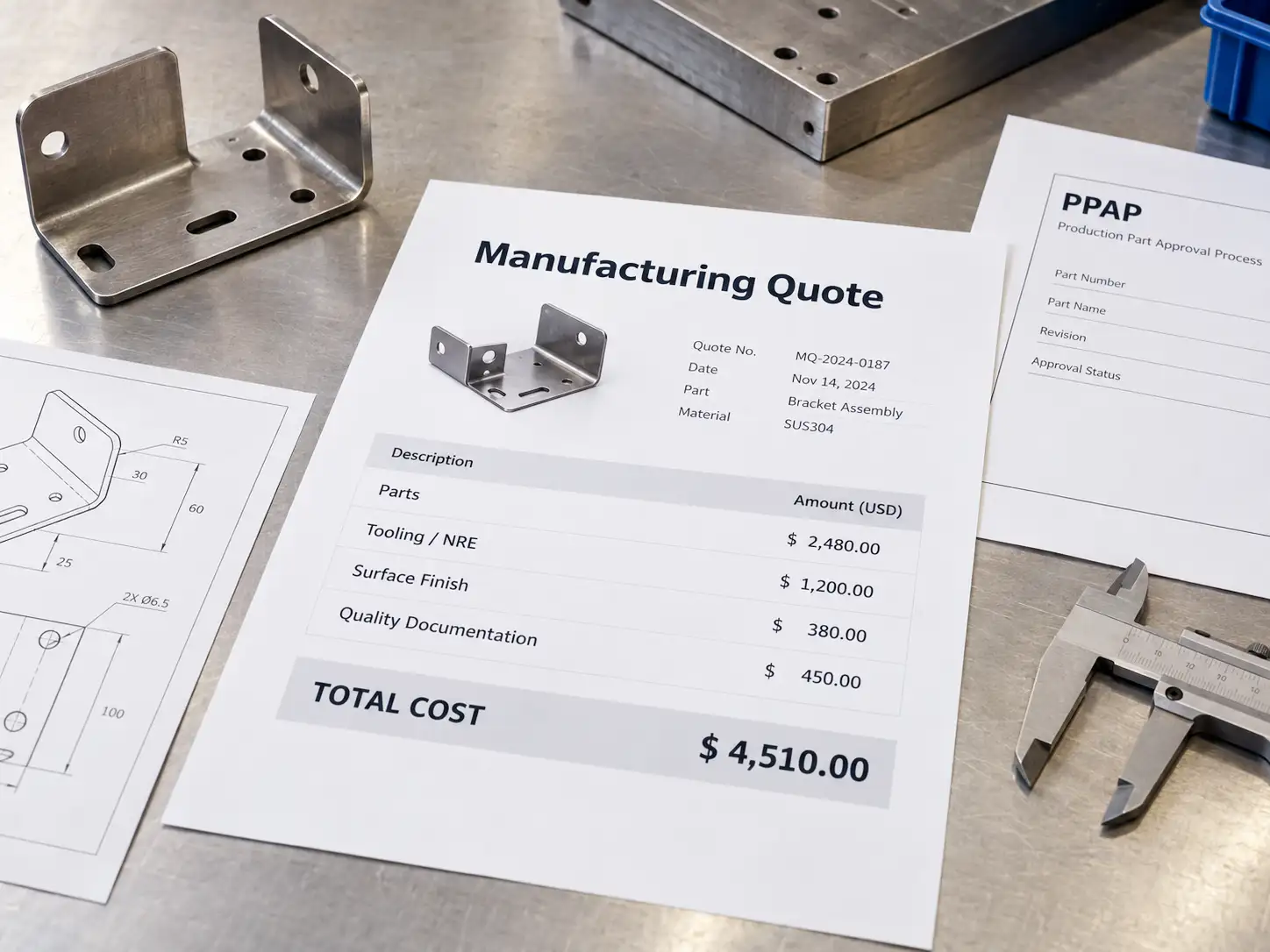
Fast quotation review for urgent manufacturing projects.
Key-stage scheduling
Critical fabrication and assembly steps can be prioritized when capacity allows.
Supplier coordination
Outsourced processes such as welding or coating are coordinated in advance.
Additional expedite charges may apply depending on urgency and process requirements.
Cost Control
In industrial equipment projects, cost control is driven by structural efficiency and production coordination.
Structure optimization
Reduce unnecessary complexity before fabrication.
Process integration
Improve efficiency through better coordination across cutting, bending, welding, and finishing.
Material utilization
Support better yield and reduce avoidable waste.
Pre-assembly planning
Lower downstream assembly workload and improve delivery efficiency.
Lead times may vary depending on material availability, structural complexity, welding workload, finishing requirements, and production scheduling.
Get a Quote →