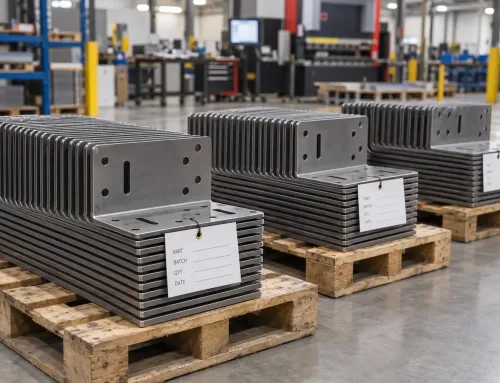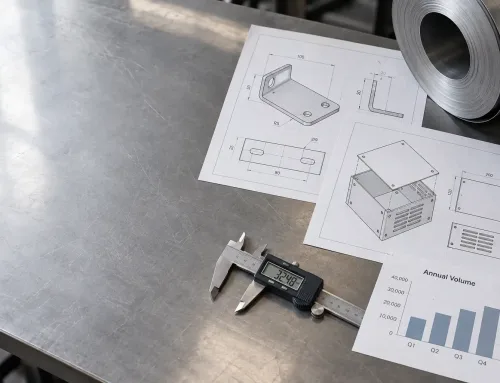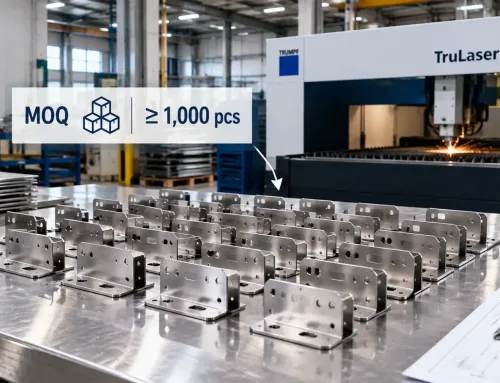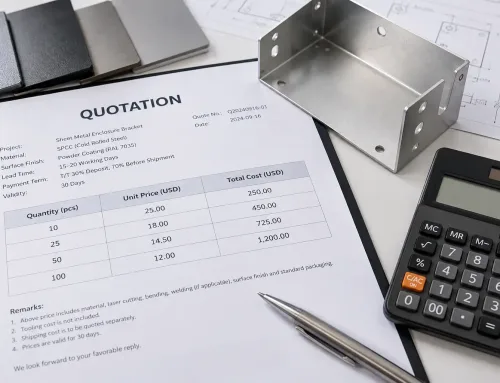

The design is frozen. Sample parts have been measured against the drawing and approved. The open items from the trial run are closed. Now your project manager asks the question everyone has been waiting for: when can regular supply start?
The answer is not a date. It is a mass production order — the order stage that releases stable series manufacturing after design and sample confirmation. It converts everything proven during sampling into a locked baseline for repeatable output. When the order is complete, the factory runs without repeated clarification. When it is vague, the assumptions nobody wrote down return as rework, scrap, or schedule disputes.
What Is a Mass Production Order?
A mass production order is the buyer’s formal authorization to produce a defined quantity of a part under stable, repeatable conditions. It names a drawing revision, a material and finish specification, an acceptance standard, a delivery schedule, and a packaging requirement. In custom manufacturing, it marks the shift from “we can make this part” to “make it consistently, in series.”
The term is often confused with a purchase order (PO) — the commercial document that commits the buy — and with a work order, the shop-floor instruction that schedules operations. A mass production order describes the stage and the technical baseline. It is executed through those documents, but it answers a different question: against which proven configuration does series production run?
“Mass Production Order” vs. Mass Processing of Production Orders
Search results for this term are dominated by a different meaning. In ERP systems such as SAP and Microsoft Dynamics, “mass processing of production orders” means bulk system actions — creating, releasing, or closing many production orders at once. That is a software-operations topic. The manufacturing meaning used here is the order that begins regular series supply after design and sample approval. One is a transaction inside a system; the other is a project gate with engineering consequences.
Where the Order Sits in the Manufacturing Order Lifecycle
Custom parts rarely jump straight from CAD to series output. The commercial path usually has four stages, and the mass production order is the fourth.
- Design freeze — drawings and specifications are released at a defined revision.
- Sample order — a small quantity proves the part can be made to the drawing.
- Trial order — a short run proves the process holds at batch conditions, not just in a one-off setup.
- Mass production order — series manufacturing is released against the proven baseline.
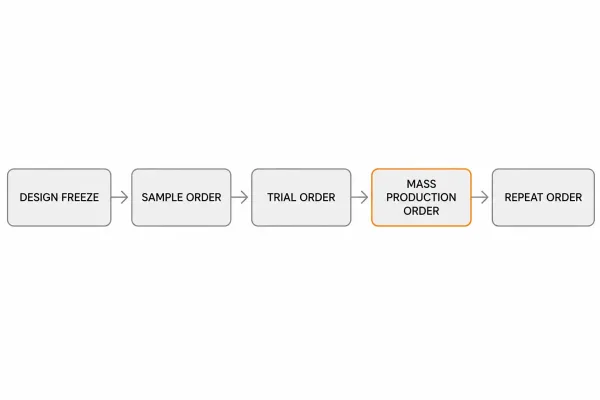
The order lifecycle as a five-step flow, with the mass production order stage highlighted.
Repeat orders follow once series output is stable; they reuse the same baseline and typically move faster. Each order type proves something different, and blurring them shifts risk to whoever receives the parts.
| Order type | Primary purpose | Typical quantity | What it confirms |
|---|---|---|---|
| Sample order | Verify design and specification | A few pieces | The part can be made to the drawing |
| Trial order | Verify process at batch conditions | A short run | The process holds under production conditions |
| Mass production order | Release stable series supply | Full project quantity, often in scheduled shipments | The proven baseline is now the production standard |
| Repeat order | Continue supply of an unchanged part | Per shipment | The baseline remains unchanged |
What the Order Must Specify Before Production Starts
A mass production order is only as strong as the information it locks in. Three groups of items decide whether the factory can run without coming back with questions.
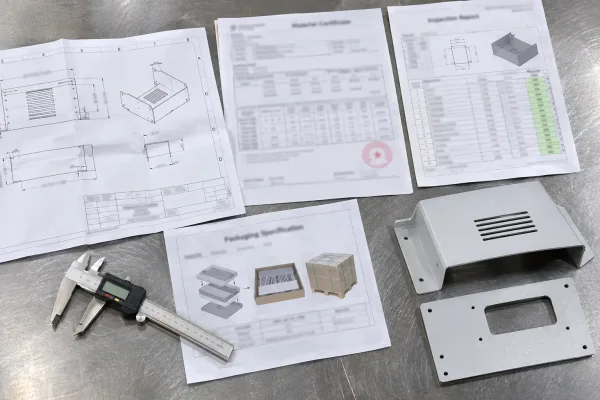
An order package laid out: revision-controlled drawing, material certificate, inspection report, and packaging specification.
Drawing revision and specification baseline
The order must name the exact drawing revision — not “the latest drawing,” but the revision identifier (for example, Rev C) with its release date. It must also carry the material specification (grade, condition, thickness where applicable), the surface finish, and any process callouts confirmed during trial. Sample and trial builds often absorb clarifications verbally; if those clarifications never reach the order package, series production will follow the drawing literally, including any instruction quietly overridden during sampling.
Quantity, delivery cadence, and packaging
Series orders need more than a total number. The order should state the total quantity, the shipment split (monthly releases, for example), the delivery cadence, and the packaging standard. Packaging deserves explicit attention for finished sheet metal parts: surface condition, protective film, stacking limits, and labeling are frequent sources of damage claims, and defining them at the order stage is cheaper than negotiating after the first shipment arrives scratched.
Acceptance criteria and inspection agreement
The order should carry the acceptance standard used to approve the trial parts: which dimensions are critical, what surface defects are acceptable, and what documentation travels with the shipment (inspection reports, material certificates). Many series-production disputes are not about manufacturing capability; they are about which standard was supposed to apply. Writing the inspection agreement into the order removes that ambiguity.
What Changes on the Shop Floor After Trial Production
Releasing a mass production order is not paperwork. It changes how the fabricator works.
Tooling and the process window
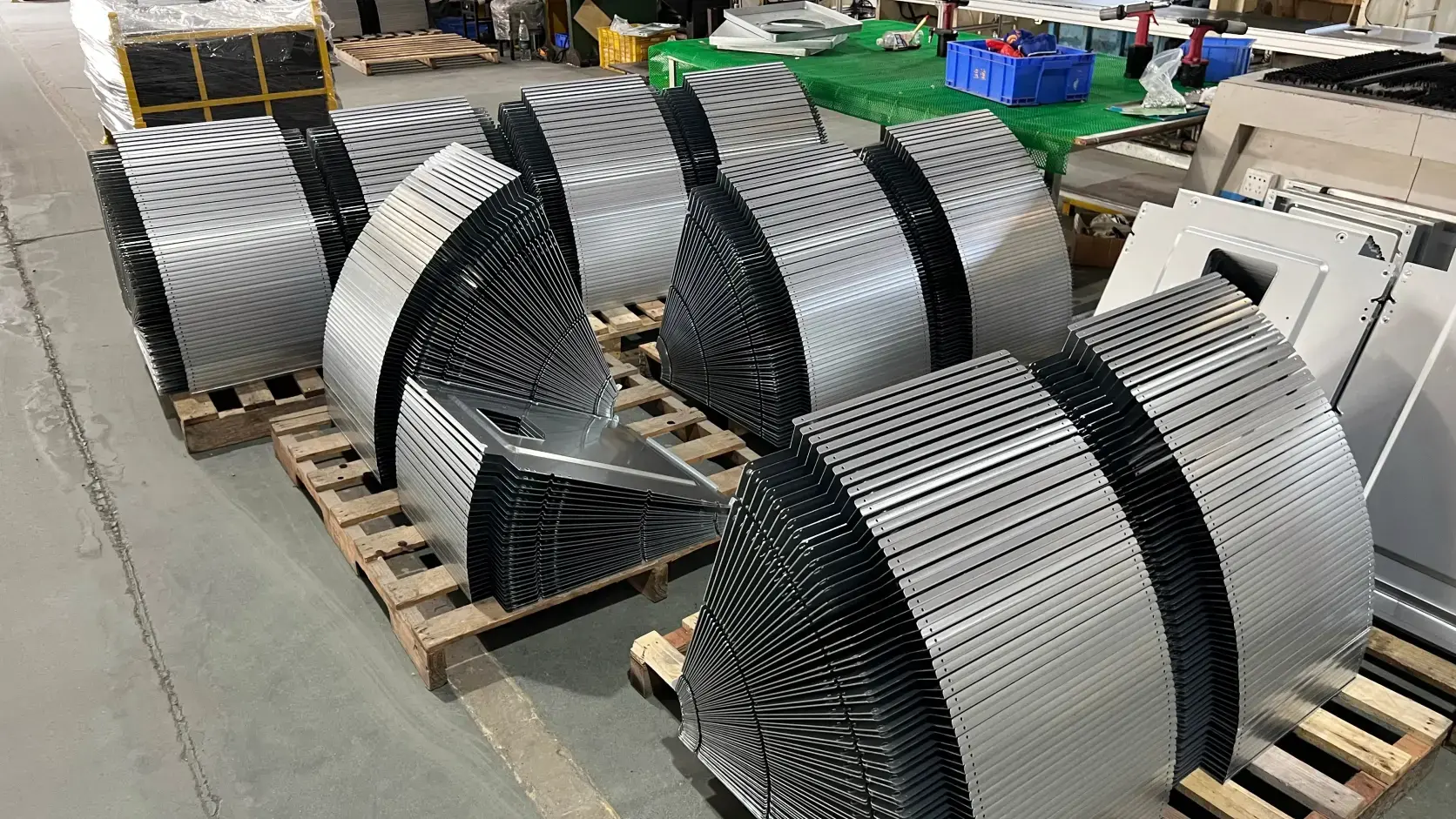
During trial, process settings are still adjustable; series production locks them. For sheet metal fabrication, forming tooling is dedicated, bend programs are fixed, and cutting nests are optimized for material utilization rather than setup speed. A process window — the range of machine settings that produces conforming parts — is established during trial, and series production runs inside it. Once it is locked, changing a single feature can require tooling modification or re-validation, which is why design changes after release are expensive.
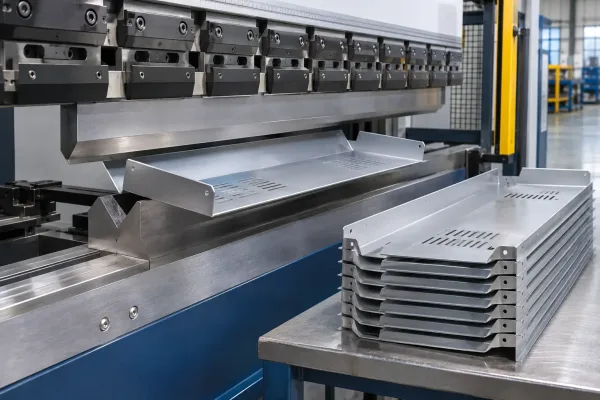
A press brake with dedicated tooling and a run of identical formed panels stacked beside the machine.
Inspection: from FAI to in-process and outgoing checks
FAI (first article inspection) — a full dimensional verification of the first piece off a new setup — is the right tool for samples and trial parts. Series production shifts the emphasis: FAI still runs at the start, but ongoing control moves to in-process checks at key operations and outgoing sampling at shipment. Requiring FAI-level documentation on every piece of a large batch is rarely economical; requiring no ongoing checks removes the safety net.
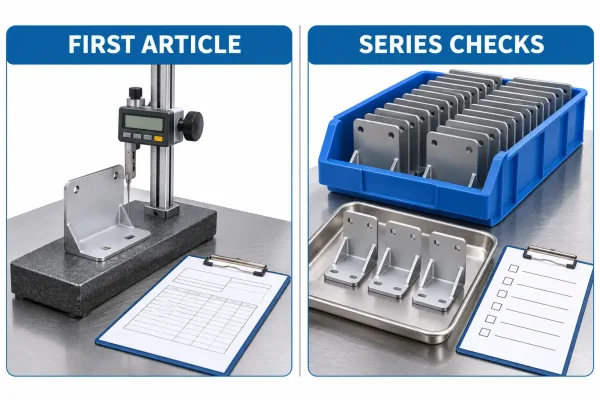
Left: one part under first article inspection. Right: sampling checks across a production batch.
Material procurement and scheduling at batch scale
A trial order can often run on material already in the fabricator’s stock. A mass production order triggers planned procurement: sheet or coil of the specified grade is reserved against the schedule, and capacity is committed to the promised cadence. Quoted delivery assumes material is available at the specified specification, and substituting a similar grade without approval can shift mechanical properties or surface behavior — so the order must pin the material specification exactly.
When to Release the Order After Sample Approval
Release the mass production order when the following four items are confirmed. If any one is open, the order will carry an assumption into series production.
- Revision consistency — the drawing revision in the order matches the revision the trial parts were built and approved against, and no change request is in flight.
- Trial acceptance closed — all non-conformances from sample and trial builds are dispositioned and closed, not merely “accepted for now.”
- Quantity and cadence agreed — total quantity, shipment split, and delivery dates are confirmed by both sides, and the fabricator has acknowledged capacity.
- Acceptance and packaging defined — inspection criteria, documentation requirements, and the packaging standard are written into the order.
If any item is unclear, a manufacturing review of the order package before release costs far less than the same review after parts are in production.
What Goes Wrong When the Order Is Released Too Early
Design changes after tooling and the process window are locked
The most expensive failure mode is a design change after release. A moved mounting hole, a revised bend angle, or a new finish requirement arriving after tooling is dedicated and the process window is validated is no longer an edit — it carries cost and schedule impact, because the fabricator must assess tooling rework, re-validation, and the disposition of parts already produced. Most of these changes were visible during trial but never written into the released baseline.
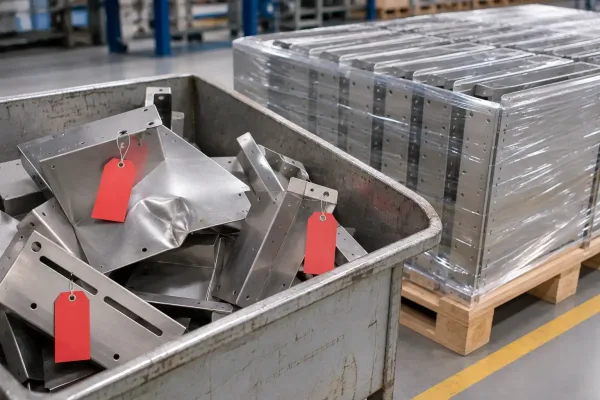
Rejected sheet metal parts with nonconformance tags in a bin, next to conforming parts in protective film.
Unconfirmed assumptions resurface as rework and delay
The second failure mode is quieter. An assumption made during sampling — a tolerance interpreted loosely, a surface defect tolerated on the sample, a material note left informal — becomes the production standard by default. When receiving inspection applies a stricter reading, the batch is rejected or sorted at the buyer’s cost. Series disputes are rarely about what the factory can do; they are about what the order actually said.
Key Takeaways
- A mass production order releases stable series manufacturing after design freeze and sample or trial approval. It is a project gate, not just a larger purchase order.
- Its value comes from what it locks: drawing revision, material and finish specification, quantity and cadence, acceptance criteria, and packaging.
- Series production changes tooling, inspection, and material planning, so the order must carry the proven baseline rather than the memory of the trial.
- Release only when revision consistency, closed trial acceptance, agreed quantity and cadence, and defined acceptance and packaging are all in place.
FAQs