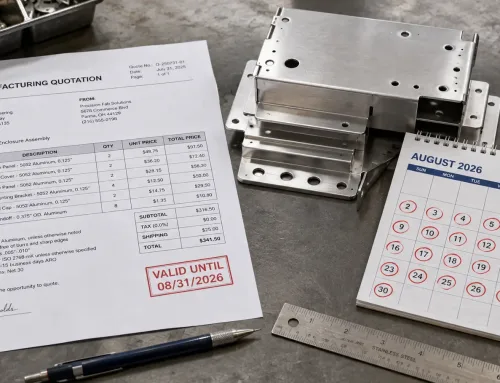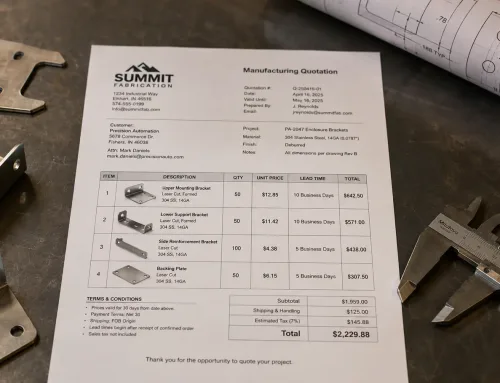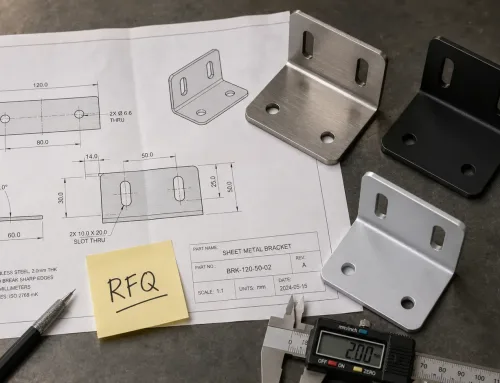

A trial order is easy to file mentally as a larger sample order. That shortcut is exactly what makes trial orders fail at their real job. A sample answers one question: can this part be made to print? A trial order answers a different set of questions — whether the process repeats across a real batch, whether quality stays inside the specification without special attention, and whether the order arrives complete, protected, and on time.
This glossary entry defines what a trial order means in custom manufacturing, what it must prove, and what evidence justifies releasing mass production.
What a Trial Order Means in Custom Manufacturing
A trial order is a limited production run placed before a larger commitment, built with production-intent tooling, processes, and material lots, to verify that a supplier can repeat the result at batch scale. (In court language, a “trial order” is a judge’s directive before a trial; in manufacturing procurement it means the validation run defined here.)
The term sits between a sample order and a release to mass production. It is the first order that exercises the full production route — real nesting and setups, real inspection sampling, real packaging and shipping.
Where It Sits: Sample → Trial → Mass Production
A typical order sequence for a custom sheet metal part runs through three stages, each answering a different risk:
- Sample order — one to a handful of pieces, often built with extra supervision. Confirms the design is manufacturable and the drawing is interpreted correctly.
- Trial order — a small batch under normal production conditions. Confirms the process repeats, quality holds, and delivery works.
- Mass production — repeat supply at committed volumes and lead times.
Skipping the middle stage transfers untested assumptions directly into production, where the cost of a wrong assumption is a batch or a program instead of a box.
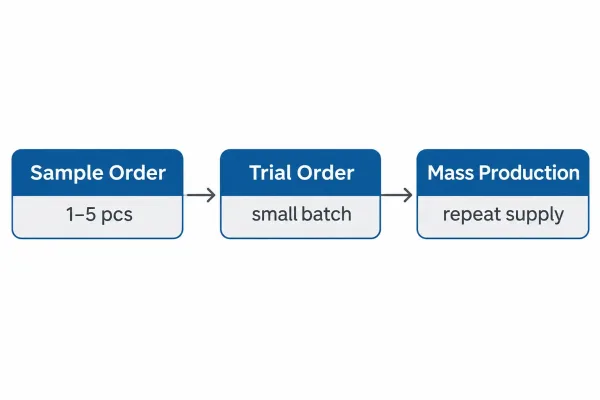
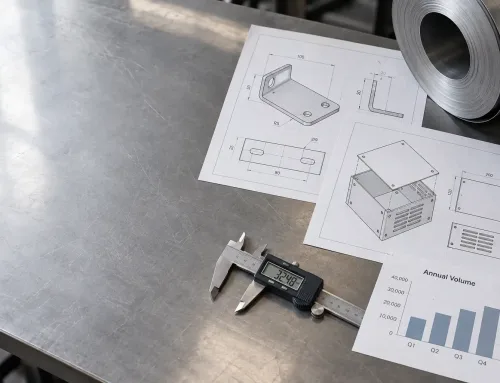
The three-stage order sequence: sample, trial, and mass production.
Trial Order vs. Sample Order vs. Pilot Run
These three terms overlap in conversation but not in function. The distinctions matter when you write them into a purchase order (PO):
| Sample order | Trial order | Pilot run | |
|---|---|---|---|
| Primary question | Can the part be made to print? | Does the process repeat at batch scale? | Does the line run at rate? |
| Typical quantity | One to a handful | Enough to cover setups and one material lot | Near production lot |
| Conditions | Extra supervision | Normal production | Full routing and staffing |
| Main evidence | First-article measurements | Batch records, packaging, delivery | Cycle time and rate stability |
“Pilot run” is sometimes used as a synonym for trial order and sometimes for a first run at full production rate. If your program uses the term, state which meaning applies in the PO — otherwise two teams will sign off on different expectations.
Why a Sample Cannot Stand In for a Trial Order
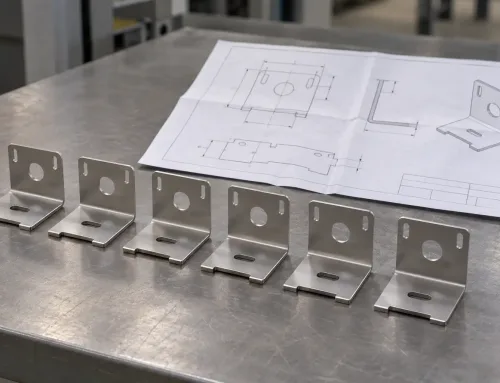
Samples receive special attention. They are often built one at a time, with the programmer, inspector, or shop lead watching closely, and anything borderline is corrected before it leaves the cell. This proves the part can be made. It does not prove the process is stable.
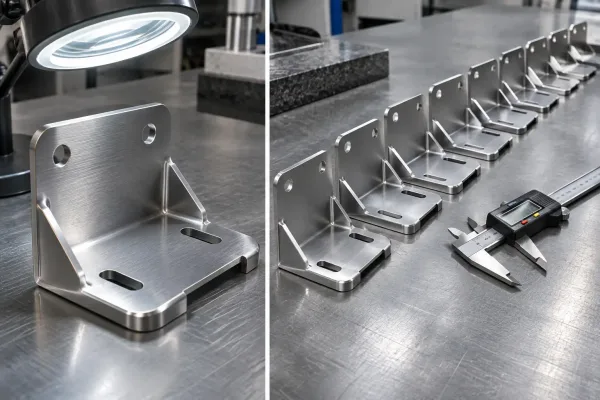
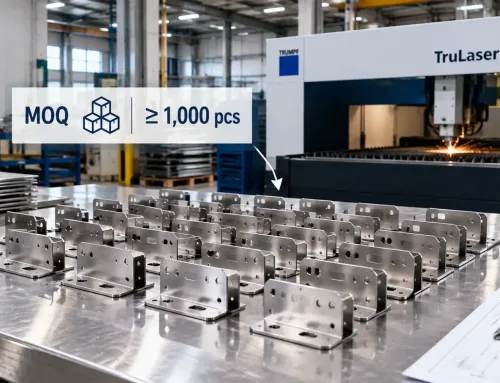
A sample proves one part can be made; a trial batch shows whether every part matches.
From One Good Part to Consistent Parts
Batch manufacturing introduces variables that single-piece work hides: material lot variation, setup repeatability between shifts, tool wear within a run, sequence effects (a bend that clears on the first piece can crack on a later one if the grain direction of the incoming sheet changes between lots), and inspection that samples rather than measures every dimension on every part.
A trial order exists to make those variables visible while the cost of failure is still a batch — not a full program.
What a Trial Order Should Prove
Most trial orders are judged with one question: did the parts pass inspection? That is necessary but not sufficient. A useful trial order proves three separate things: batch capability, quality stability, and delivery performance.
Batch Capability: Does the Process Repeat Across the Run?
Batch capability is the ability of the process to hold the same result from the first piece to the last. In sheet metal, the usual pressure points are bend angle drift across a run, cut edge quality changing as laser nozzles or parameters wear, weld appearance and strength varying between fixtures or operators, and hardware insertion force drifting as hole conditions or fastener lots change.
To test it, measurement points should be spread across the batch: a first piece, defined in-process checks (start, middle, and end of the run is a common pattern), and a last piece, recorded on the critical-to-quality (CTQ) dimensions — the dimensions that carry function, assembly, or safety consequences. A single first-article inspection (FAI) report on piece number one proves nothing about piece number 200.
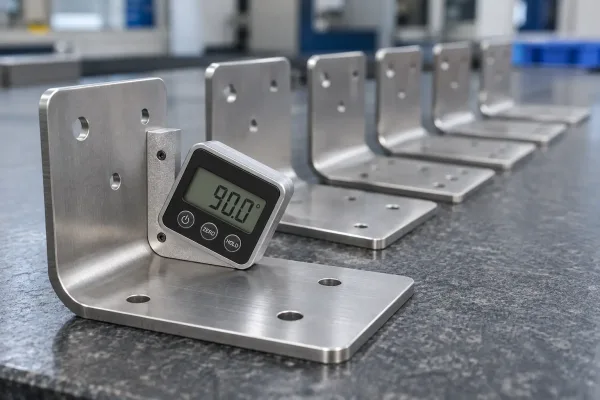
Bend angle checked across first, middle, and last pieces of a run.
Quality Stability: Does Every Part Stay Inside the Spec?
Quality stability is about variation between parts and between batches, not just the conformance of one part. The evidence worth requesting includes dimensional results across the sampled pieces rather than a single measurement, material certificates tied to the lot actually used (EN 10204 3.1 is the common mill certificate for steel and aluminum), and a written record of any deviation or rework — undocumented rework is where later field problems hide.
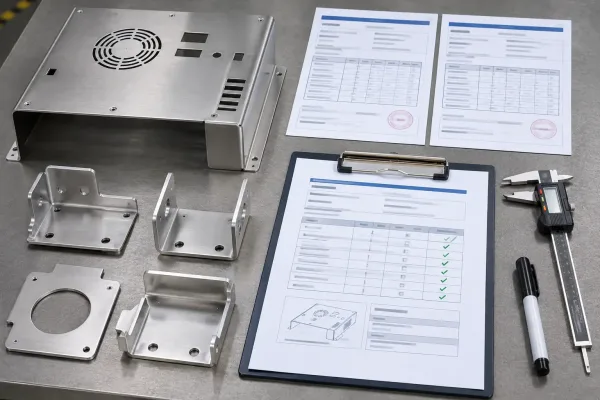
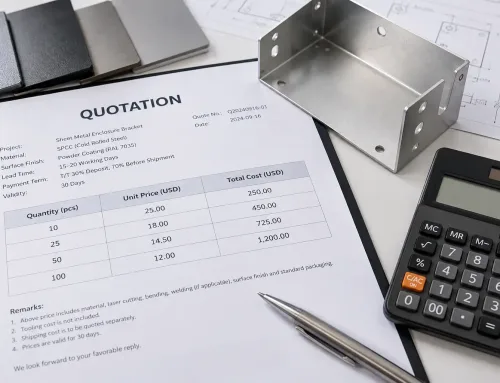
Inspection results and material certificates tied to the production lot.
Acceptance criteria should be agreed before production starts: which dimensions are checked, on how many pieces, and what happens when a value lands outside tolerance.
Delivery Performance: Does the Order Arrive Complete and Protected?
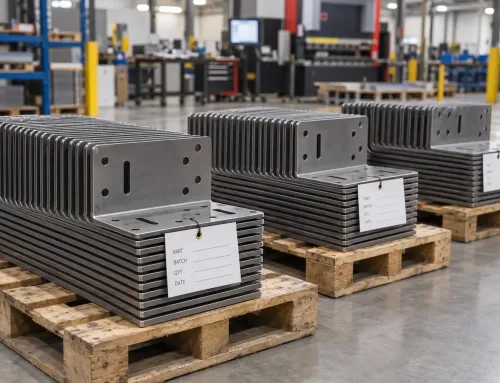
Delivery performance is the part of the trial most buyers forget to score. It covers count accuracy against the packing list, packaging suited to the surface condition (protective film on finished faces, VCI paper or desiccant for corrosion-prone steel, dunnage that survives the transit), documentation completeness (certificate of conformance, inspection reports, material certs), and schedule behavior — did the order ship when the supplier said it would, and if it slipped, how early were you told?
A trial that proves geometry but delivers scratched parts two weeks late has not validated the supply chain.
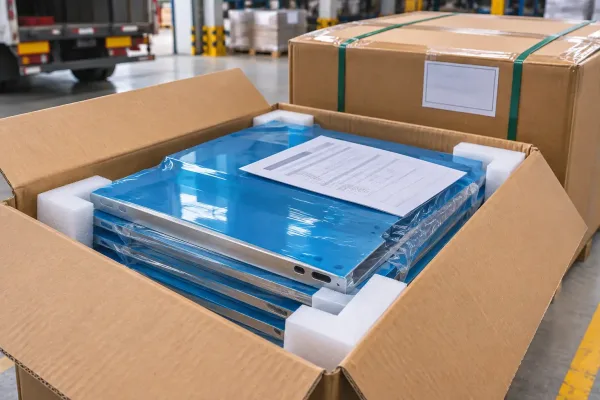
Parts packed with protective film, counted, and documented before shipment.
Scoping the Trial Order: Quantity, Features, and Records
Setting the Quantity by Risk, Not by Habit
There is no universal trial quantity. The right number is the smallest one that exercises the production route the way mass production will: multiple setups where setups matter, at least one full material lot, and enough pieces for meaningful in-process sampling. A trial of three parts proves a setup; a trial sized to a real batch flow proves a process.
As a planning rule, increase the quantity when the part carries high-risk features (tight bend radii, cosmetic faces, welded assemblies) or when the supplier is new to you, and keep it lean when the part is simple and the supplier already runs the same process for your other parts. The goal is evidence per part, not parts per dollar.
Choosing What the Run Must Exercise
The trial must include the features that carry risk, in proportion to that risk. If a chassis is 80% simple flanges and 20% deep hems on cosmetic faces, a trial that samples only the flanges will pass and prove nothing. List the CTQ features before the order is quoted and require them to appear in the trial quantity.
Include at least one assembly or welding operation if welding is in the production scope. “We skipped welding on the trial because it is not efficient on small batches” is one of the most common gaps between what a trial proves and what production needs.
Records to Require Before the Order Ships
Write the deliverables into the PO before the trial is placed, not after it arrives:
- First-piece/FAI report on CTQ dimensions
- Inspection results across the sampled pieces
- Material certificates tied to the lot used
- Certificate of conformance and packing list with piece count
- A deviation log covering every rework, repair, or substitution, with disposition
Agreeing these in writing is the cheapest way to avoid the “send us the report nobody asked for” loop.
Release Gates: Reading the Results Before Mass Production
Findings That Should Block Release
Treat the trial as a gate, not a formality. Findings that should block a mass-production release include:
- CTQ dimensions out of specification without an approved disposition
- Missing or mismatched records (certificates that do not tie to the lot, absent inspection data)
- Packaging damage, rust, or scratches that appear in transit
- Unexplained schedule slips or undocumented rework
- Drift inside the trial itself, where first-off and last-off results sit far apart
The question is not whether you like the parts. It is what the evidence says about the next thousand.
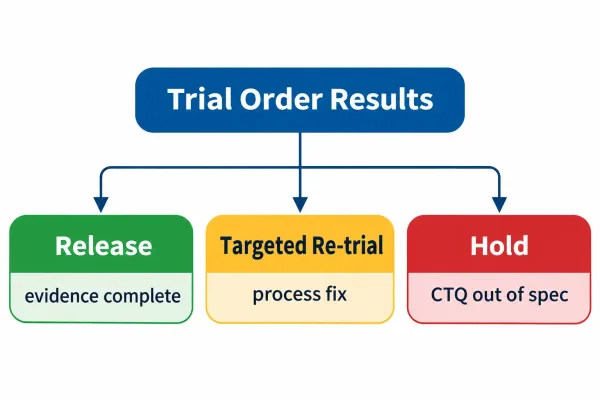
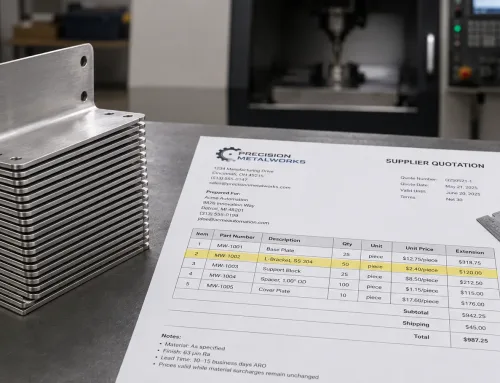
Trial results read as release evidence: what passes, what blocks, what needs rework.
When the Trial Fails: Rework, Adjust, or Change Supplier
Not every failure means walking away. A practical decision order: first, check whether the problem originates in the drawing — an unmanufacturable radius or an over-tight tolerance — and fix the design before re-running the affected features. Second, if the design is sound but results vary, treat it as a process-discipline problem: request corrective actions and a targeted re-trial of the affected operations rather than a full repeat. Third, if the supplier still cannot hold spec after correction, that is a capability gap, and it is cheaper to resolve it before tooling, fixtures, and program history accumulate on their floor.
Keep one boundary clear: rework restores a part to its specification; a concession accepts a documented deviation. Decide in advance which deviations you will accept on a trial order and which you will not.
FAQs
The cheapest time to define what a trial order must prove is at RFQ. If you are planning a validation run before a production release, a manufacturability and quality-plan review with the fabricator’s engineering team turns the trial from a shipment into a decision — and keeps the first production order from becoming the experiment.