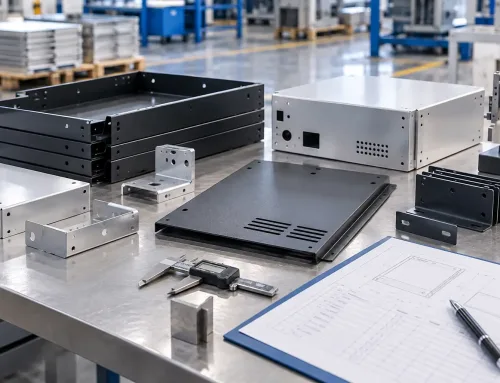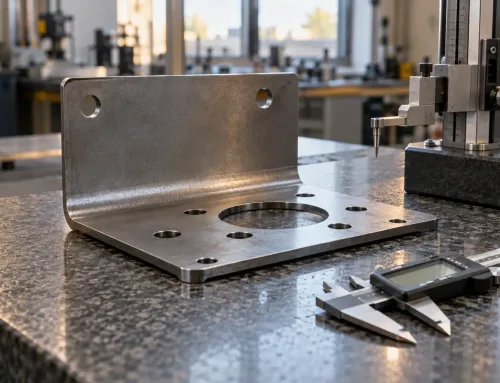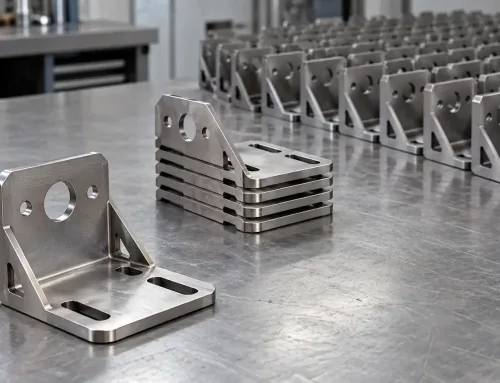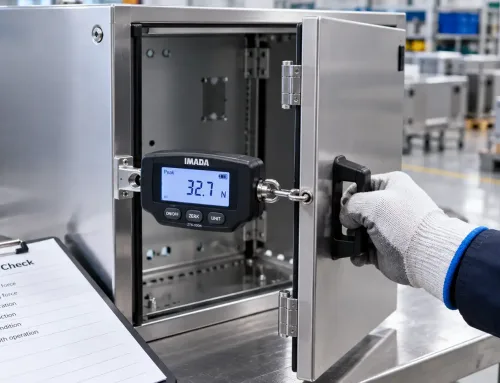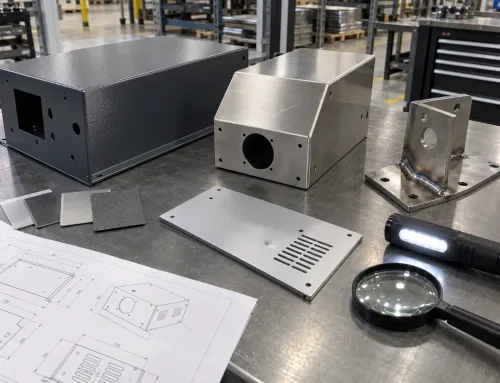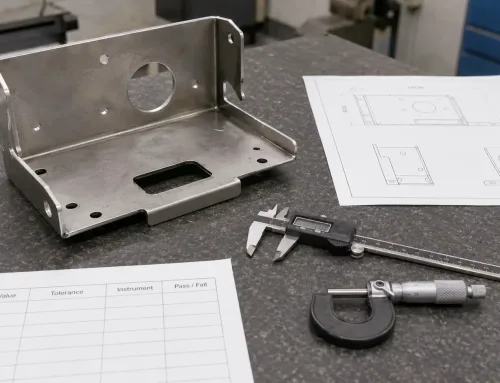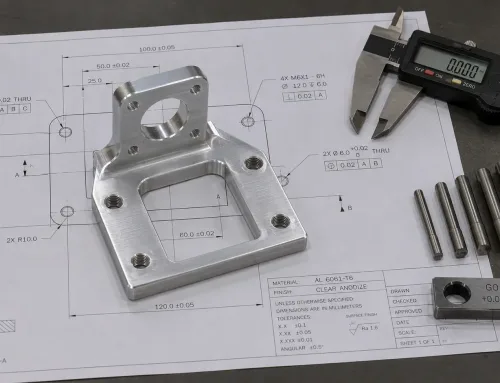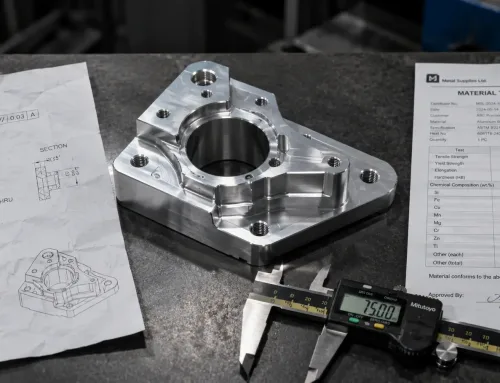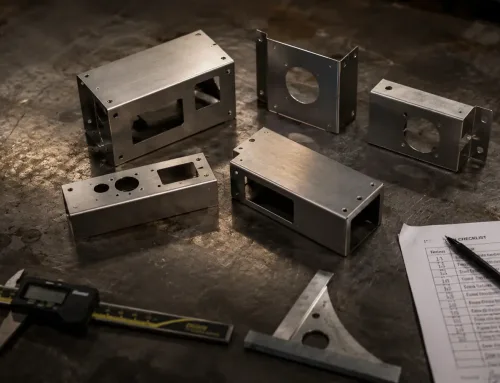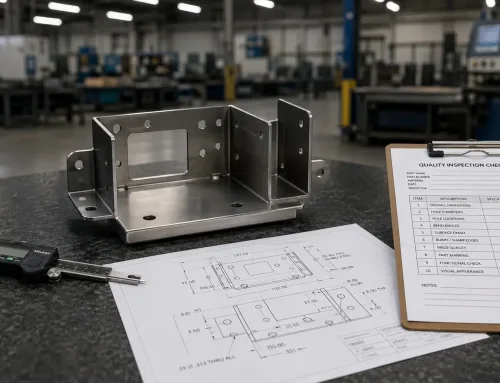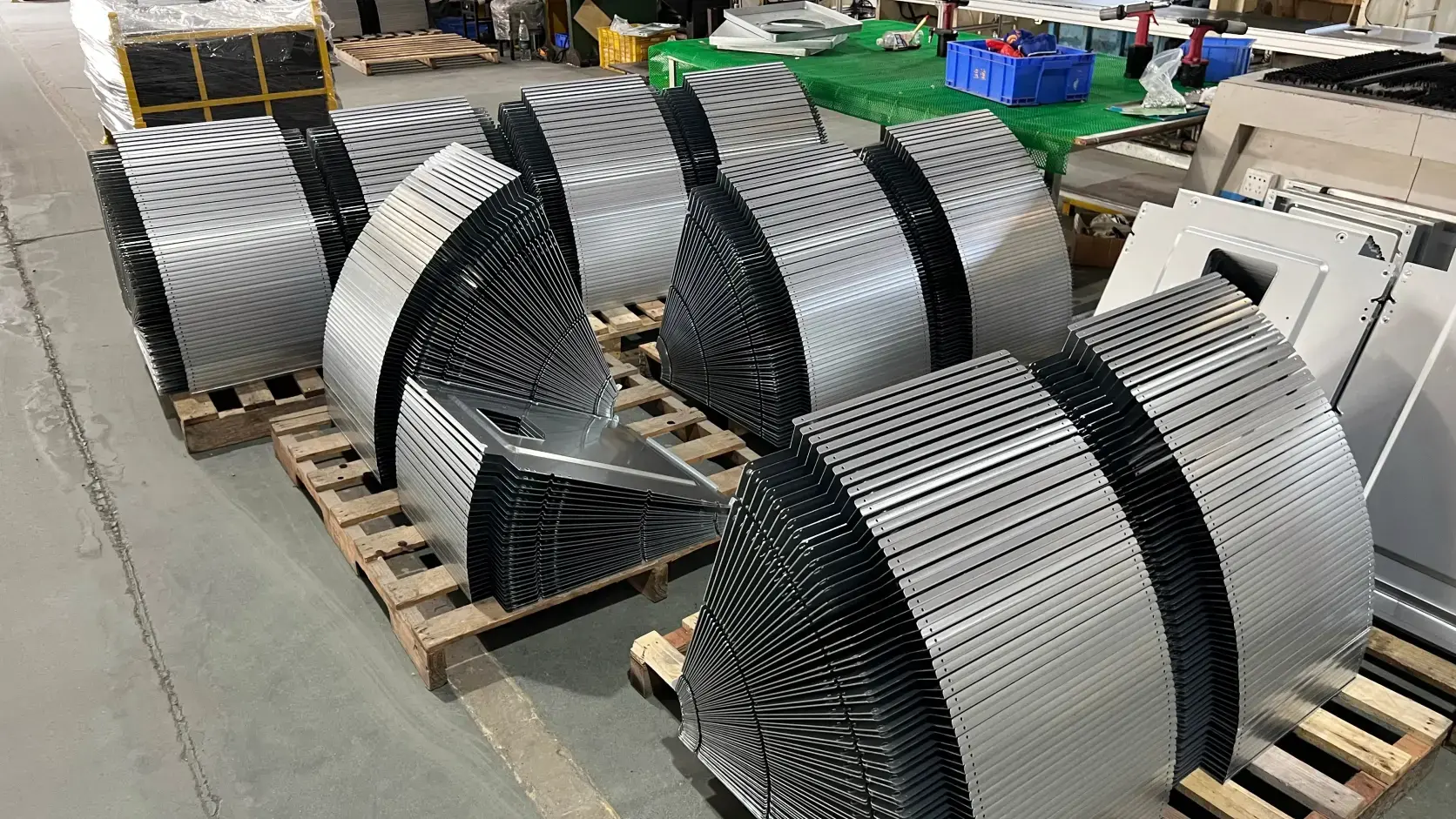

A shipment of 2,400 sheet metal brackets reaches the receiving dock. The purchase order says nothing about how the batch will be checked. One inspector is available for the afternoon, and checking every bracket would consume days. The question is not whether each piece is perfect — it is whether this batch is good enough to accept.
Sampling inspection answers exactly that question: it judges a defined batch by examining only part of it.
Why Not Just Inspect Every Piece?
Checking every characteristic of every piece — 100% inspection — sounds like the safest option, and for a handful of safety-critical parts it often is. At production volumes it stops being practical: inspection labor scales with quantity, and accuracy drops as inspectors fatigue over repetitive checks. On a routine production lot, that cost rarely buys proportional risk reduction.
Manufacturing trade is organized around lots: quantities produced, shipped, and accepted as one unit. Buyers and suppliers therefore need a shared rule for judging a whole unit from partial evidence. Acceptance sampling, formalized in ISO 2859-1 and its North American counterpart ANSI/ASQ Z1.4, has been that rule for decades.
What Is Sampling Inspection?
Sampling inspection is a method of lot acceptance: samples are drawn from a defined inspection lot — the quantity agreed as one batch — and examined, and the result measured against a sampling plan determines whether the entire lot is accepted or rejected. This is not a smaller version of full inspection — the unit of judgment moves from the piece to the batch.
The Lot Is the Unit of Judgment
The verdict applies to the lot; the sample only supplies evidence. A passing sample can accept a lot that still contains defective pieces, and a failing sample can reject a lot whose majority is conforming. That trade is inherent to the method: a decision at a fraction of full-inspection cost, paid for with statistical risk.
From Sample to Verdict: The Decision Chain
Most lot-acceptance schemes follow the same six-step sequence:
- Define the inspection lot (what “one batch” means).
- Draw a random sample of the planned size from across the lot.
- Check the sample pieces against the drawing or specification.
- Count nonconformities or nonconforming pieces.
- Compare the count with the plan’s acceptance number (Ac) and rejection number (Re).
- Accept the lot if the count is at or below Ac; reject it if it reaches Re.
Ac is the largest defect count that still allows acceptance; Re is the count that forces rejection. The sample size and the Ac/Re pair come from the sampling plan itself.
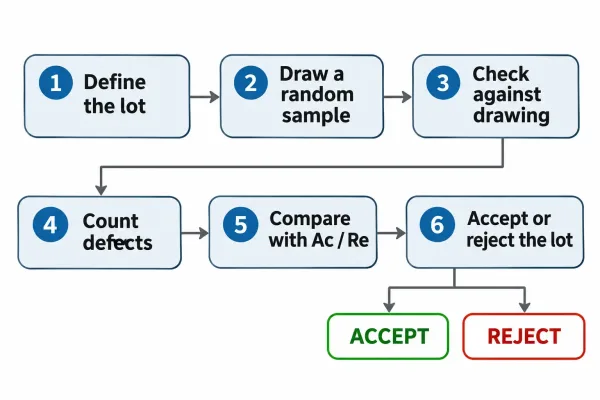
A six-step flowchart showing how a sample result decides acceptance of the whole lot.
Where Sample Sizes and Accept Numbers Come From
Sample size and verdict numbers are not negotiated shipment by shipment. They come from a plan built on three inputs: inspection level, lot size, and AQL.
Inspection Level: How Deep to Look
Inspection levels (I, II, and III in ISO 2859-1) express how much scrutiny a lot receives relative to its size. Level II is the default for routine industrial work. Level I reduces sample sizes where the supplier’s record is strong; Level III increases them where closer discrimination is needed. The level is chosen once in the contract, not per lot.
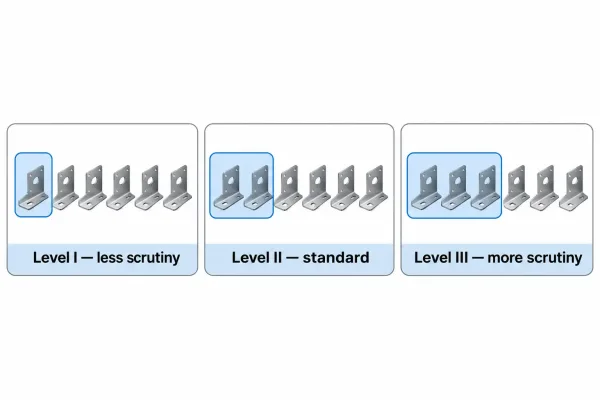
Inspection Levels I, II, and III compared by how much of the lot gets examined.
AQL and How It Sets Sample Size and Ac/Re
AQL — Acceptable Quality Level — is the quality level a sampling plan is designed to accept most of the time. It is a contract term expressed as a percentage; common values for mechanical parts include 2.5 for major defects and 4.0 for minor defects. An AQL of 2.5 does not mean the supplier may ship 2.5% defective parts — it means lots at that quality level will usually pass this plan, and worse lots will increasingly fail it.
Combined with lot size and inspection level, the AQL selects the sample size and the Ac/Re pair from standard lookup tables. Those tables belong in the standard, not in the specification; what a buyer needs on the PO is the three inputs and the standard they belong to.
Single, Double, and Multiple Sampling
Single sampling draws one sample and issues one verdict — the simplest plan to administer and audit. Double and multiple sampling allow a first sample to end the judgment or trigger further samples, reaching a verdict with less average inspection when quality is clearly good or bad. For most sheet metal orders, single sampling is enough; lot sizes rarely justify sequential plans.
When Is a Sampling Verdict Actually Valid?
What Counts as One Lot
A sampling verdict is only as good as the lot behind it. A sound lot contains parts of one part number, one material batch where material matters, and one production run or defined period under a single process route. Tail quantities merged from several runs or mixed material heats blur what the sample represents, and the link between sample and batch breaks down.
Random Selection, Not Convenience Picking
Sample pieces must be drawn at random across the lot: different pallets, different points in the run, different packing positions. Taking the top layer of the first skid is convenient sampling, and it biases the evidence — usually toward the best pieces. Record how many were drawn, from where, and by whom.
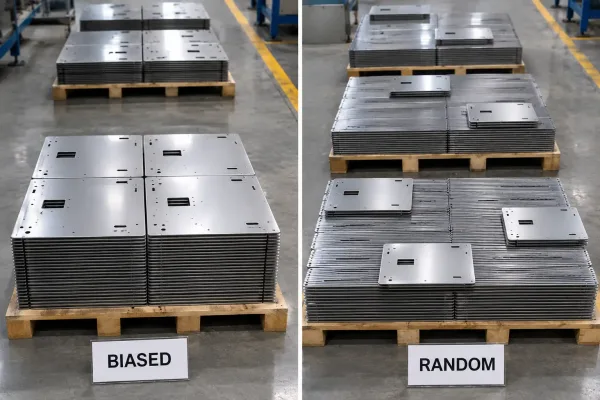
Top-layer picking versus random picking across pallets of the same lot.
Sampling Inspection or 100% Inspection: How to Choose
The choice is situational, and both directions carry a cost. The table below summarizes where each mode typically fits.
| Situation | Lean toward sampling | Lean toward 100% inspection |
|---|---|---|
| Process maturity | Stable process, consistent history | First run, new supplier, recent process change |
| Characteristic risk | Appearance, general dimensions | Safety-critical, sealing, critical fits |
| Lot size | Large lots where full checks are unaffordable | Small lots where full checks stay quick |
| Quality history | Clean records, low escape rate | Recent complaints or escapes |
Two risks sit underneath every sampling plan. The producer’s risk is that a good lot gets rejected on an unlucky sample; the consumer’s risk is that a bad lot gets accepted. Tighter AQL values and larger samples shift the balance toward the buyer, but no plan eliminates both risks.
Where Sampling Fits Among FAI, In-Process, and Final Inspection
Sampling is one layer of the inspection chain, not a replacement for the others. FAI — first article inspection — verifies the first pieces from a new or changed process and locks the acceptance standard before volume starts. In-process inspection catches drift while correction is cheap. Sampling at outgoing or incoming acceptance governs the lot that ships.
Put simply: FAI sets the standard, in-process inspection guards the run, and sampling decides the shipment. A passing sample proves little if the process was never qualified.
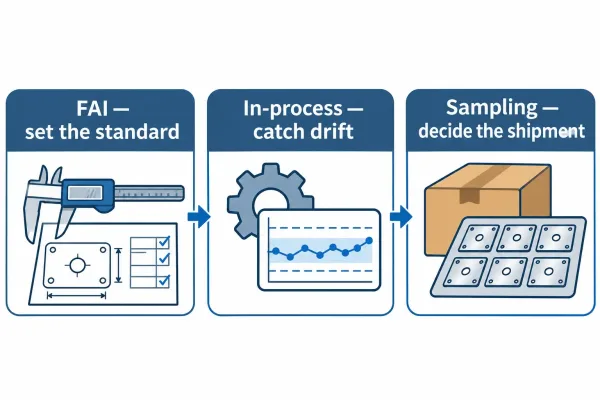
How FAI, in-process inspection, and sampling inspection divide the acceptance work.
What Happens After the Lot Is Accepted or Rejected?
Acceptance releases the lot, with sampling records retained as evidence. Rejection opens a short list of practical paths: rework to specification, 100% sorting with defective pieces removed, a formal concession request if the nonconformity does not affect function, or scrap. Each path carries a different cost owner, and that ownership should be settled in the PO before the lot is in dispute.
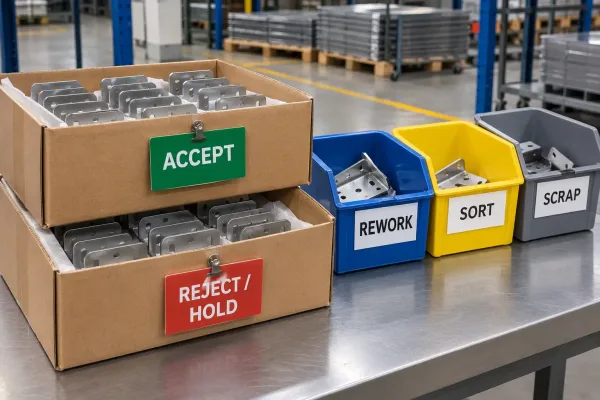
Tagged lots and bins showing the four paths after accept or reject.
How to Write Sampling Requirements Into an RFQ or PO
What the Clause Must State
A usable sampling clause on the RFQ or purchase order includes the following items:
- Part number(s) and the lot definition — how one lot is formed
- Sampling standard: ISO 2859-1 or ANSI/ASQ Z1.4
- Inspection level (II unless there is a reason otherwise)
- AQL value per defect class
- Sampling type: single or double
- Who draws the sample and performs the inspection — supplier, buyer, or third party
- Records to be kept and the disposition path on rejection
Defect Classes CR, MA, MI: What Can Be Sampled at All
Before choosing any AQL value, classify the characteristics. CR (critical) defects affect safety or regulatory function and are normally handled by zero-acceptance rules or 100% screening, not by AQL sampling. MA (major) defects affect fit or function and typically take tighter AQL values such as 1.5–2.5. MI (minor) defects affect appearance and take looser values such as 4.0–6.5. Sampling is the right tool where some defect risk is tolerable, and the wrong tool where none is.
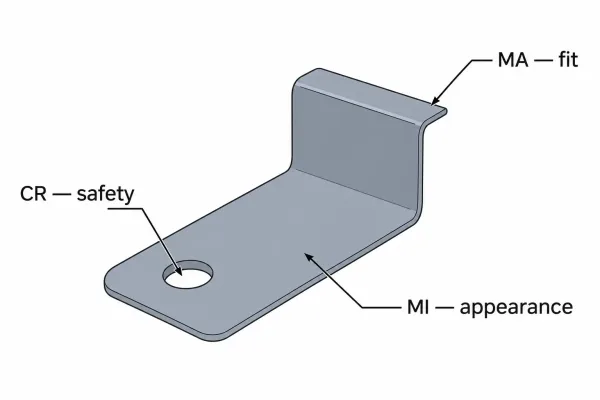
A bracket marked with CR, MA, and MI defect classes.
FAQs
Final Advice
Before the next order goes out, settle three things in writing: how a lot is formed, which AQL applies to which defect class, and what happens when a lot is rejected. Those three lines prevent more disputes than any inspection technique applied after the fact. If the clause is hard to phrase, ask the fabricator’s engineering team to review it with the quote — one conversation is cheaper than one sorting operation.