
Finding a shop that will polish stainless steel looks like a simple question: is there a minimum order? Then the quote comes back with a finish charge that only makes sense at 500 pieces, or a note that “polishing is available with production,” and the prototype schedule slips. The hidden challenge is that polishing minimums are rarely written as a single number. They are shaped by how the finish is made, how the appearance is judged, and how small batches are loaded, cleaned, and inspected.
For engineers and buyers running prototypes or low-volume programs, the practical goal is not to eliminate every minimum. It is to understand which minimums are real process constraints, which are commercial habits, and how to structure an RFQ so a polished part can be priced at the quantity you actually need.
Why Polishing MOQ Is Not the Same as Part MOQ
Fabrication and finishing often move on different economics. A sheet metal supplier can laser cut, bend, and weld a one-off part because those steps scale down cleanly to a single setup. Polishing is different: the part still needs to be held, protected in non-appearance zones, cleaned, finished, and inspected against a surface standard. Those steps cost time whether the batch is two pieces or two hundred.
That is why some suppliers advertise “no MOQ on parts” while still applying a minimum charge or a finish-only MOQ on polishing. The part quantity and the finish quantity are not always the same line item. When you compare quotes, separate them on purpose: base fabrication quantity, finishing quantity, and any minimum charge that applies if the finishing quantity is below the shop’s preferred run.
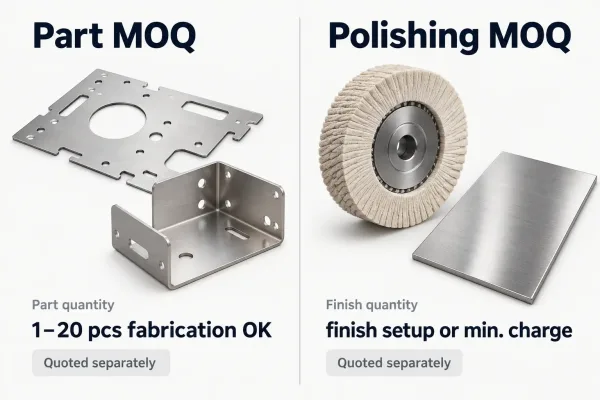
Compares part quantity and polishing quantity as two separate cost lines on a quote.
A useful mental model is that fabrication tolerates one-off work well, while surface finishing behaves more like a process with batch setup. If the appearance requirement is strict, the shop may still accept five pieces—but the price per piece will reflect full setup, not a diluted production rate.
What “MOQ” Really Means on a Polishing Quote
On a finishing quote, MOQ usually stands in for several costs that do not vanish at low volume. Setup and minimum-charge logic is the most common: tooling or fixture preparation, bath or compound changeover, protective masking, and a final appearance check. Shops use minimums so these fixed steps are not absorbed into a two-piece order at a loss.
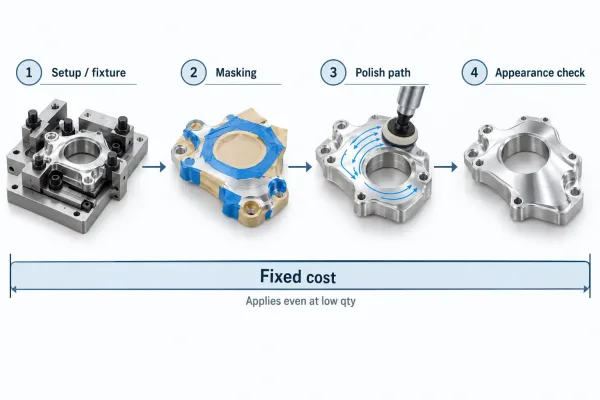
Lists fixed polishing steps—setup, masking, handling, inspection—that drive minimum charges.
Polishing also creates handling risk. A mirror or fine satin finish on stainless steel shows fingerprints, edge nicks, and over-polish. Low-volume work often uses more hand control, which is slower and more variable than a fixtured production path. Suppliers protect that labor with minimum run sizes, minimum invoice values, or “finish available from X pieces” language.
When a quote says “MOQ 100 for polishing,” ask what that number is protecting. If it is a fixture or bath economy, a lower quantity may still be possible at a higher unit rate. If it is a house rule for inspection or packing, the number may be negotiable once appearance zones and acceptance criteria are defined. Do not treat every published minimum as a physical limit of the process.
Prototype Runs (Typically 1–10 Pieces)
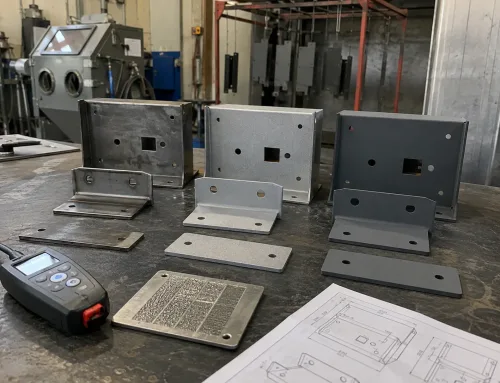
Prototype polishing is often accepted because the path is manual. Parts are held in soft jaws or on padded supports, finished by hand or with portable tools, and judged against a sample, a photo, or a written gloss/Ra target. That path works without a production fixture, which is why many shops will polish a single stainless housing or bracket for a design review.
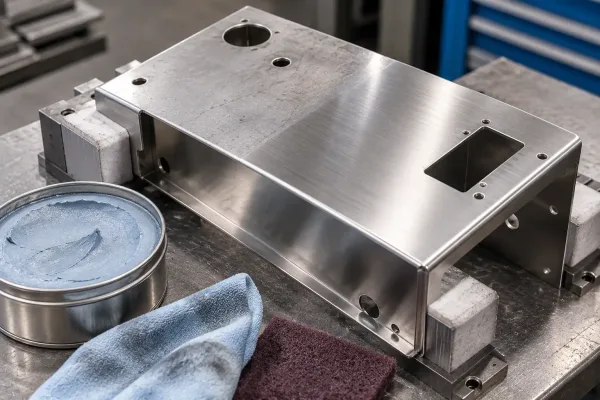
Shows a single polished stainless prototype in soft jaws, representing the hand-polish path at 1–10 pcs.
What it costs is consistency. Two prototype pieces polished by hand can look slightly different at corners and around welds. If your prototype only needs to prove fit and general appearance, that variance is usually acceptable. If the prototype is also a cosmetic golden sample for marketing or customer sign-off, say so early: shops will spend more time on edge blending and uniform direction of polish, and the quote will rise accordingly.
Prototype polish typically includes basic deburr and surface cleanup plus the requested appearance level. It usually does not include the process controls used in production—fixed polish paths, dedicated fixtures, or lot-based appearance sampling. Clarify which of those you need before you freeze the sample as a standard.
Low-Volume Runs (Roughly 10–500 Pieces)
Low-volume polishing is where quantity tiers start to matter. Between roughly ten and five hundred pieces, shops often still use semi-manual or light-fixtured methods. Setup is spread over more parts, so unit price drops, but only if the part geometry allows repeatable holding and a consistent polish path.
To quote without inflating batch size, give real production quantities—not a single “target” number if you expect phased builds. Ask for a tier structure: for example, price at 25, 100, and 250 pieces, and state whether tooling, masking, and inspection are included at each tier. If a supplier proposes a higher MOQ, ask which cost driver forces it. Geometry that cannot be fixtured, multi-side appearance requirements, or tight gloss matching can justify a higher minimum; a generic “we prefer 200+” may not.
Sheet metal parts with long flanges, visible weld seams, or tight bend radii are harder to polish uniformly than simple flat panels. Those features increase handling time and rework risk at every quantity. Factor that into DFM discussions before you lock the finish callout.
Mechanical Polishing vs. Electropolishing for Small Batches
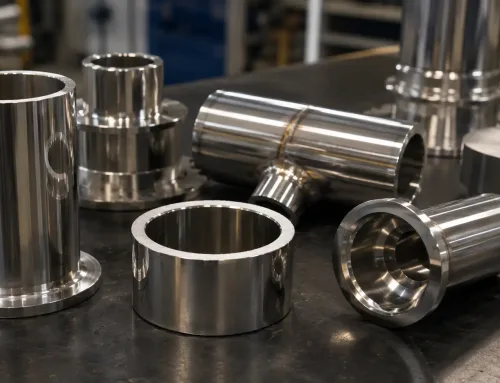
Mechanical polishing uses abrasives and compounds to level and brighten the surface. It is flexible at low volume, shows clear visual progress, and works well when appearance zones are limited. The trade-off is operator skill: edges, welds, and recesses can be over-polished if the path is not defined.
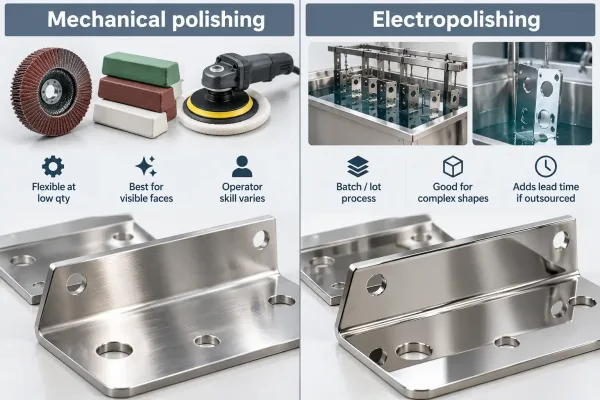
Contrasts mechanical polishing and electropolishing methods, best-fit use, and small-batch considerations.
Electropolishing (EP) removes a thin surface layer electrochemically after the part is cleaned and racked. It can improve cleanliness and micro-smoothness on stainless steel, including complex shapes that are hard to buff mechanically. For small batches, EP economics depend less on hand labor and more on bath access, racking, and lot processing. If the shop outsources EP, add transit and lot timing to your schedule; if they run it in-house, ask for typical lot sizes and whether small prototype lots are run separately.
Choose mechanical polishing when appearance is the main goal and quantities are very low or parts are large/awkward. Prefer electropolishing when you need consistent micro-finish, easier cleaning, or coverage in areas that mechanical buffing cannot reach reliably. Many programs use both: mechanical for visible surfaces, EP where function or hygiene matters.
What to Put on Drawings and the RFQ So the Finish Can Be Priced
Vague callouts such as “polish to mirror” or “satin finish” leave shops to guess grit, direction, and acceptance. That guesswork becomes RFQ delay or price padding. Define exterior versus non-appearance zones first: mark which faces customers see, which faces mate to gaskets or labels, and which can remain as-machined or as-formed.
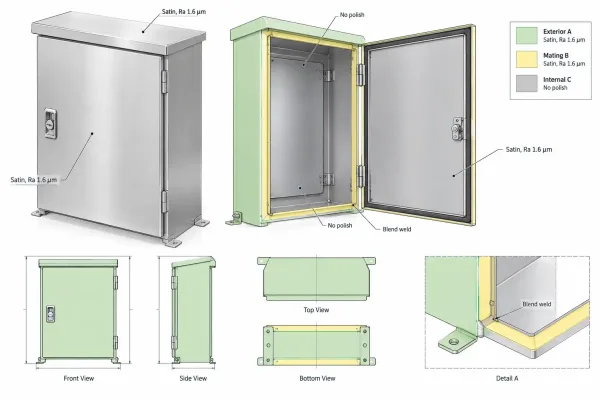
Marks exterior appearance zones and finish callouts on a stainless steel enclosure drawing for RFQ.
On the RFQ and drawing, state the finish target in measurable or reference terms—Ra range, gloss units if you use them, or a physical reference sample with a photo and description. Also list quantity per release, inspection level (visual only vs. sampled Ra), packaging needs for polished surfaces, and whether weld seams on appearance faces must be blended.
The following fields remove most polishing ambiguity at quote time:
| Field | What to specify | Why it affects polishing MOQ or price |
|---|---|---|
| Appearance zones | Exterior / mating / internal | Limits hand work to critical faces |
| Finish target | Ra, gloss, or reference sample | Determines method and rework risk |
| Weld treatment | Blend, leave, or hide | Drives extra labor on visible seams |
| Quantity tiers | e.g. 25 / 100 / 250 | Lets shops price setup correctly |
| Acceptance | Visual AQL, Ra check, golden sample | Sets inspection time and dispute risk |
Buyers who send this package usually get a usable unit price at true low volume instead of a blanket production MOQ.
Prototype First, Then Scale: When a Sample Batch Is the Better Path
Sometimes the cleanest commercial path is a deliberate sample step. Order a small polished lot, approve appearance in writing, then release a low-volume run against that standard. This works well when design is still moving or when the finish callout has never been produced on your specific geometry.
A sample proves look and feel, not full production capability. It may not prove lot-to-lot gloss matching, fixture marks in new locations, or packing that protects large polished faces in transit. Before you scale, freeze three things: the appearance zone map, the acceptance method (photo standard, Ra limits, or signed golden sample), and the polish path notes the shop used on the approved pieces.
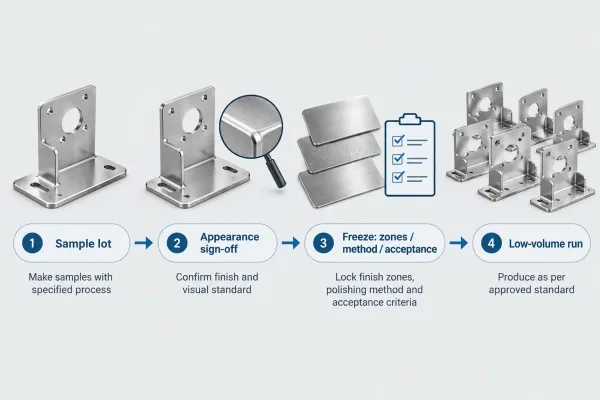
Traces sample polish approval through three freeze points before low-volume release.
If those freeze points are missing, the first production lot becomes another prototype—and you pay for polishing learning twice. If they are present, the low-volume order can be quoted against a known method, which often lowers the effective minimum.
Practical Checklist Before You Request Stainless Steel Polishing Quotes
Use this list before you send drawings. It is designed for RFQ stage, not for the shop floor.
- Split part quantity from finish quantity on the quote request.
- Mark appearance zones and non-critical faces on the drawing.
- Define finish with Ra/gloss numbers or a controlled reference sample.
- State weld-seam expectations on visible faces.
- Ask for price at multiple quantity tiers, not a single MOQ.
- Confirm whether polishing is in-house or outsourced (add lead time if outsourced).
- Agree on inspection method and packaging for polished surfaces.
- Decide if you need a signed sample before production release.
Polishing minimums will not disappear. What changes is whether they are opaque barriers or understood process costs you can plan around. When appearance, quantities, and acceptance are explicit, prototype and low-volume stainless steel polishing becomes a normal line item instead of a schedule risk.
If you are preparing a stainless sheet metal package and want a second set of eyes on finish callouts, quantity tiers, and RFQ completeness before you request quotes, contact SR-MFG’s engineering team for a drawing review.