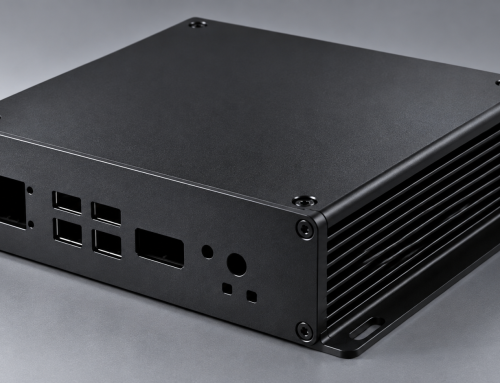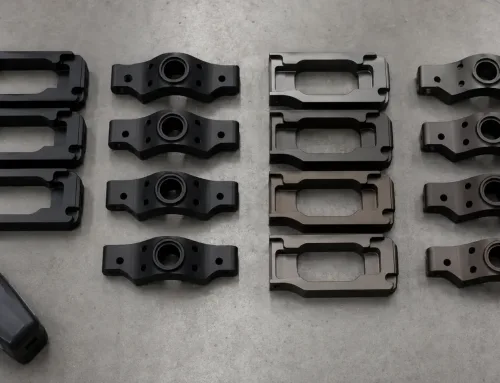

Whether a sheet metal enclosure is used to house electrical components or communication equipment, it needs a surface treatment that balances corrosion resistance and durability. However, simply knowing that powder coating for sheet metal enclosures is a good solution is not enough. Engineers also need to understand how the process works at each stage and which resin chemistry is more suitable for their application. This is because it can provide a uniform, wear-resistant coating in a single application, produces almost no volatile organic compound (VOC) emissions, and offers a wide range of color and texture options.
However, simply knowing that powder coating is a good solution is not enough. Engineers also need to understand how the process works at each stage and which resin chemistry is more suitable for their application.
What Is Powder Coating? Why Is It Suitable for Sheet Metal Enclosures?
How Electrostatic Powder Coating Bonds with Sheet Metal
Powder coating is a dry surface treatment process. Its principle is to charge finely ground resin powder particles, usually with a diameter of 30–50 microns, and spray them onto a grounded metal surface.
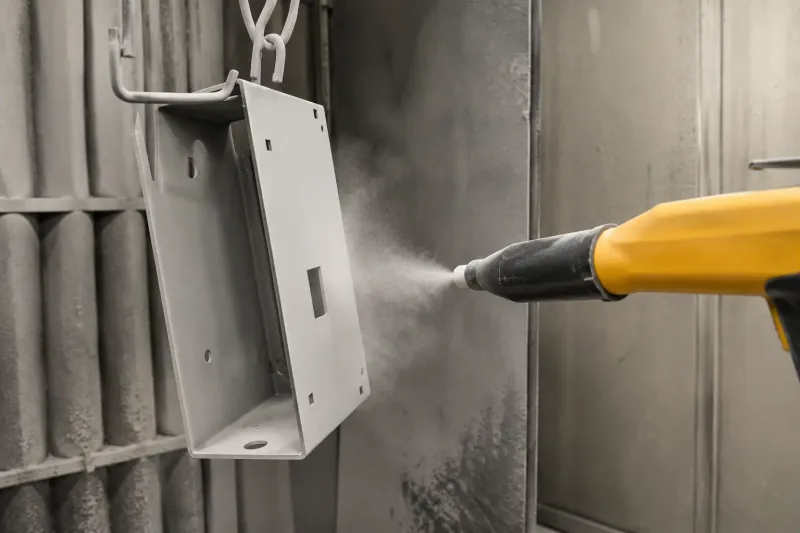
Electrostatic spraying allows charged powder particles to attach evenly to grounded sheet metal surfaces before curing.
The electrostatic charge allows the powder particles to attach evenly to the substrate, including edges, flat surfaces, and moderately recessed areas.
After spraying is completed, the coated part is moved into a curing oven. During this process, the powder melts, flows out, and undergoes a chemical cross-linking reaction, forming a continuous thermoset coating film.
For sheet metal enclosures, powder coating offers many practical advantages over liquid painting. For example, the electrostatic coating process allows the powder to wrap around panel edges and reach into corners and recessed areas more effectively than spray painting. It also reduces weak areas that can easily become corrosion starting points in salt spray environments. The typical thickness of powder coating is generally between 60–120 microns, which is much thicker than traditional wet paint films.
Most importantly, the powder coating process does not use solvents. This eliminates the VOC emissions and flammability risks associated with wet paint lines, simplifies facility requirements, and complies with strict environmental regulations in most regions worldwide.
Coating Process Flow: From Bare Metal to Finished Enclosure
Surface Pretreatment
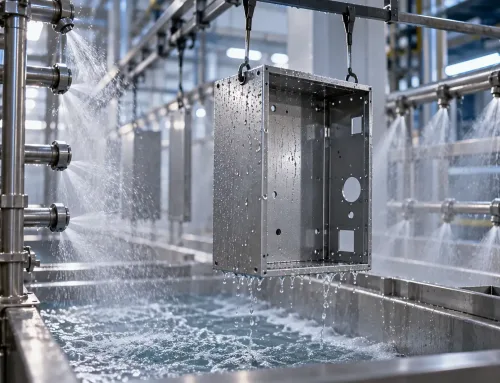
The first step performed on every powder coating line is cleaning and pretreatment. The bare metal enclosure is first degreased to remove oil stains, workshop dust, and lubricants generated during sheet metal cutting, bending, and welding.
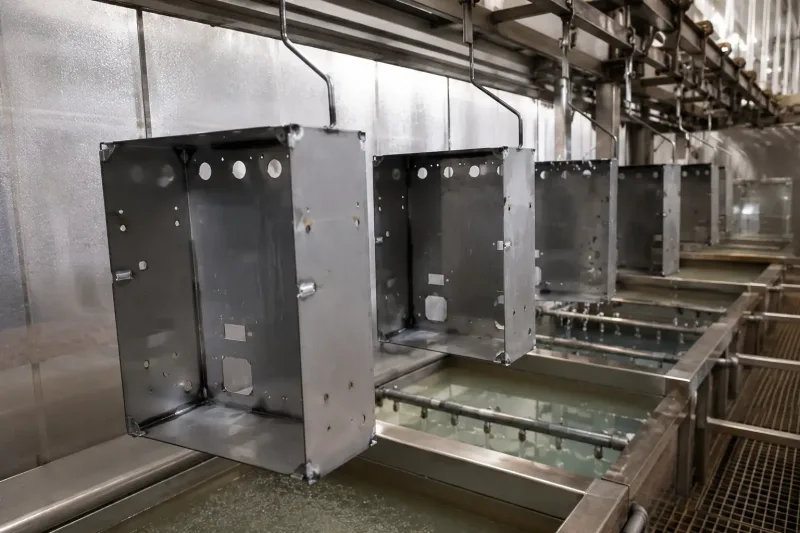
Cleaning and pretreatment remove oil, dust, and fabrication residue so the powder coating can bond reliably to the metal surface.
Depending on the project material and performance requirements, it then goes through one or more powder coating pretreatment processes:
Iron phosphate — Forms a crystalline conversion coating on carbon steel sheet metal surfaces, improving powder adhesion and providing the first layer of corrosion protection.
Zinc phosphate — A thicker conversion coating, suitable for carbon steel enclosures used in outdoor or industrial environments.
Chromate or chrome-free conversion coating — Used for aluminum sheet metal enclosures to promote adhesion and reduce the interference caused by the natural oxide layer on aluminum.
Sandblasting — Used as an alternative or supplement to chemical pretreatment, especially for welded structures where surface contamination is difficult to remove chemically.
However, it is important to note that if pretreatment is omitted or shortened, the coating may fail very quickly.
Electrostatic Spraying Application
After pretreatment is completed, the enclosure is hung on a conveyor line or fixture and sent into the spray booth. An electrostatic spray gun is used to give the powder particles a negative charge, usually around 60–100 kV. At the same time, compressed air pushes the powder toward the grounded workpiece. The charged particles are attracted to the metal surface and adhere to it until the workpiece enters the oven.
Of course, during the spraying process on a metal enclosure surface, the spray pattern and gun distance are very important. Corners and recessed areas can create “Faraday cage” effect zones. If the electrostatic field is weak, the coating deposition may become relatively thin. However, skilled operators at SR mfg will adjust the gun angle, air pressure, and powder flow rate to compensate. The enclosure geometry still has a clear impact on coating uniformity. This point will be discussed further in the design section below.
Baking, Curing, and Cross-Linking Reaction
After coating, the sheet metal enclosure is sent into a convection oven. The temperature is generally set between 180–200°C, which is 360–400°F.
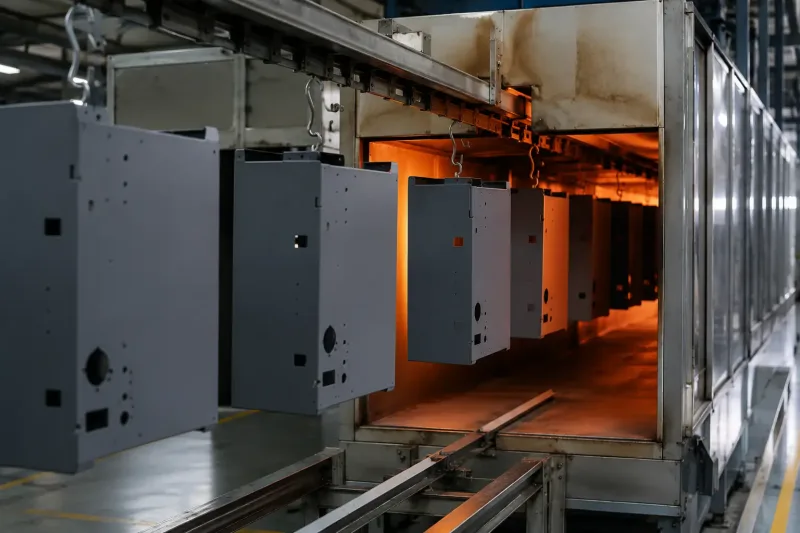
During oven curing, the powder melts, flows, and cross-links into a hard thermoset coating film.
A dwell time of 10–20 minutes at the target metal temperature allows the powder to melt into a continuous liquid film and undergo a thermoset chemical cross-linking reaction, forming a hard, insoluble coating. However, once curing is complete, the coating can no longer be melted or reshaped.
Choosing the Right Powder: Resin Types, Colors, and Textures
Thermoset vs. Thermoplastic Powders
Many metal enclosures basically use thermoset powders for coating. Once cured, these coatings form an irreversible chemical reaction and cannot be melted again. This is both a limitation and an advantage. This approach also gives them excellent heat resistance, chemical resistance, and hardness, which are very important properties for sheet metal enclosures used in outdoor environments.
Resin Chemistry: Epoxy, Polyester, Epoxy-Polyester Hybrid, and Acrylic
Within the thermoset category, the resin system determines most of the coating’s performance characteristics:
| Resin Type | Main Advantages | Typical Limitations | Common Enclosure Applications |
|---|---|---|---|
| Epoxy | Excellent chemical resistance and adhesion; strong corrosion barrier | Chalking and fading under UV exposure — not suitable for outdoor use | Indoor electrical panels, junction boxes, control cabinets |
| Polyester (TGIC or HAA) | Good UV stability and weather resistance; rich color options | Chemical resistance is slightly lower than epoxy | Weather-resistant sheet metal enclosures, HVAC housings, and industrial equipment |
| Epoxy-polyester hybrid | Balanced indoor performance; good leveling and appearance | Moderate UV resistance — only suitable for indoor or sheltered environments | Indoor enclosures with higher appearance requirements than pure epoxy |
| Acrylic | Excellent clarity and gloss retention; smooth surface | Higher cost; more sensitive to application parameters | Consumer product enclosures or medical enclosures with high appearance requirements |
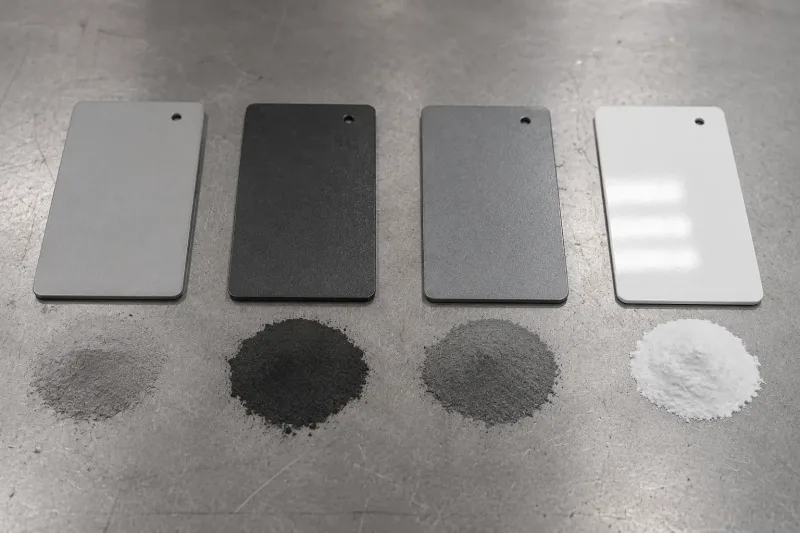
Different powder resin systems offer different balances of adhesion, UV stability, chemical resistance, and appearance.
Many sheet metal projects are actually about one question: Is the enclosure used indoors or outdoors? For indoor metal enclosures, epoxy or hybrid systems can generally meet the requirements. For outdoor sheet metal enclosures, it is best to use polyester TGIC or HAA or an acrylic topcoat because UV stability, weather resistance, and long-term corrosion protection become much more important than appearance alone.
Color Systems and Texture Selection for Enclosures
In the B2B manufacturing industry, color cannot be expressed with vague words. It must be communicated through standardized systems. The RAL Classic color chart is the most widely used color standard in European and international sheet metal manufacturing.
Among them, color codes such as RAL 7035 light gray and RAL 9005 jet black often appear on electrical enclosure drawings.
Pantone color codes are often seen in consumer products in North America.
When no specific standard is specified, the powder coating supplier will usually provide color samples for customer confirmation before production.
Surface finish texture and gloss requirements are specified separately from color:
Smooth / high gloss — 80+ gloss units at a 60° angle: clean appearance, but more likely to show fingerprints and scratches.
Semi-gloss / satin — 20–60 gloss units: the most common choice for industrial enclosures; balances appearance and practicality.
Matte — below 20 gloss units: hides surface defects well; used for medical sheet metal enclosures and laboratory equipment.
Textured surface — orange peel, sand texture, wrinkle texture: increases mechanical grip and hides slight surface irregularities on the metal substrate.
Specifying both the RAL or Pantone color code and the gloss value, in gloss units GU, on the drawing can avoid ambiguity and prevent time being wasted on color samples that are “close but not exactly right.”
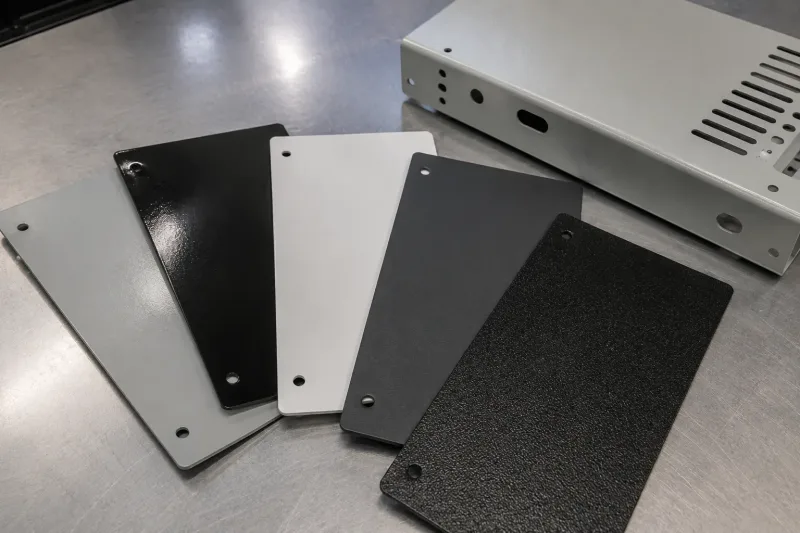
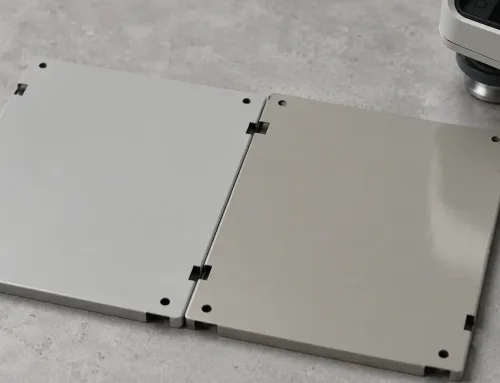
Color codes and gloss levels help manufacturers confirm the exact appearance before production.
Powder Coating vs. Wet Paint vs. Plating: Choosing the More Suitable Coating Solution
When comparing surface treatment options for sheet metal enclosures, powder coating, wet paint, and plating should be evaluated together. Each of these three processes has different trade-offs.
| Comparison Dimension | Powder Coating | Wet Paint | Plating |
|---|---|---|---|
| Typical Film Thickness | 60–120 μm | 25–50 μm | 5–25 μm |
| Corrosion Protection | High — a single-layer coating can form a barrier | Medium — usually requires primer + topcoat | Varies by process — zinc/nickel plating provides a good barrier; decorative chrome is thinner |
| UV and Weather Resistance | Polyester resin systems perform excellently | Automotive-grade systems perform well | Limited — the plated layer itself does not provide UV protection |
| Color and Texture Options | Very wide range: RAL, Pantone, custom colors | Very wide range: custom color matching | Limited to metallic tones: zinc, nickel, chrome, tin |
| Environmental Performance | Very low VOC; overspray powder can be partially recycled | Solvent-based systems emit VOCs; water-based options are available | Chemical baths require wastewater treatment |
| High-Volume Cost | Competitive cost per color above 50 pieces | Competitive for small batches or frequent multi-color changes | Higher unit cost; only used when justified by functional or decorative needs |
| Dimensional Impact | Adds 60–120 μm per side — significant impact on thin sheet metal parts | Adds 25–50 μm per side — smaller impact on tolerances | Adds 5–25 μm per side — minimal dimensional change |
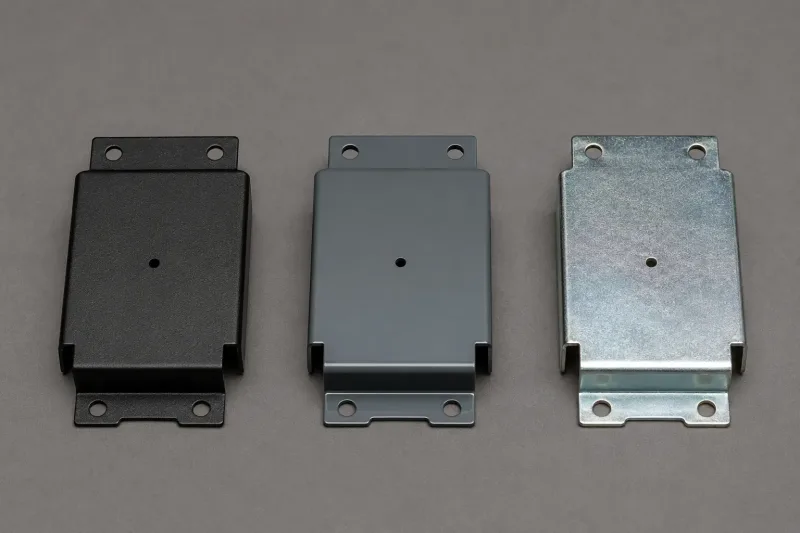
Powder coating, wet paint, and plating create different surface thicknesses, appearances, and protection levels.
However, what we need to pay attention to is that for many metal enclosures, especially those in the 1.0–2.0 mm range, powder coating can achieve the best balance between protection, appearance, and production efficiency.
Wet paint still has advantages in thin coatings.
As for plating, it can only be used for functional requirements that organic coatings cannot meet, such as electrical conductivity, weldability, and specified chemical resistance.
How Does Enclosure Design Affect Coating Quality?
The following common design features may affect coating quality if they are not addressed in time during the design review stage.
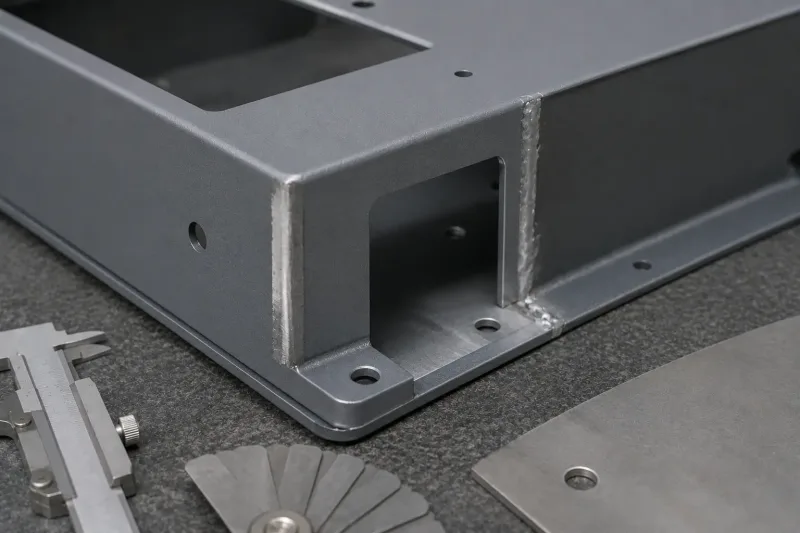
Bend radius, sharp edges, weld seams, and recessed areas can all influence powder coating coverage and long-term performance.
Bend radius: The outer surface is stretched when the panel is bent. When the inner radius is smaller than the material thickness, stress lines can occur and may cause coating cracks under thermal cycling conditions. Specifying a minimum radius equal to 1× the material thickness, preferably 1.5×, can provide a stable foundation for the coating film.
Weld seams: Welding spatter, porosity, and uneven weld beads will show through the powder coating. Before the part enters the coating line, grind the welds smooth and remove all spatter. Please remember that this issue is very important for stainless steel!
Sharp edges: At sharp outside corners, the electrostatic field initially attracts excess powder. But once a thin layer builds up, it shields the surface and repels later particles. The result is thinner edge coverage, exactly in the area where the enclosure is most vulnerable to impact and corrosion. Simply rounding the edge to a 0.5 mm radius can improve coverage. Internal corners are affected by the Faraday cage effect; a minimum 1.0 mm radius helps the spray gun reach these areas.
Deep cavity structures: Recessed mounting cavities or reinforcing rib channels may block airflow and prevent powder penetration. Adding process holes at the back of the cavity can improve airflow and coating coverage. If sealing is required, silicone caps can be used after coating.
Masking: Which Areas Should Not Be Coated
Threaded holes, grounding contact surfaces, precision-fit mounting surfaces, and sealing grooves must remain exposed. Powder coating will fill threads and cause fasteners to seize; the insulating film will also block electrical continuity; the 60–120 micron coating build-up will interfere with the assembly of tolerance-fit parts.
Masking methods include:
- Use high-temperature silicone plugs for threaded holes;
- Use adhesive-backed polyester film tape for flat surfaces;
- Use custom silicone masking fixtures for repeat production.
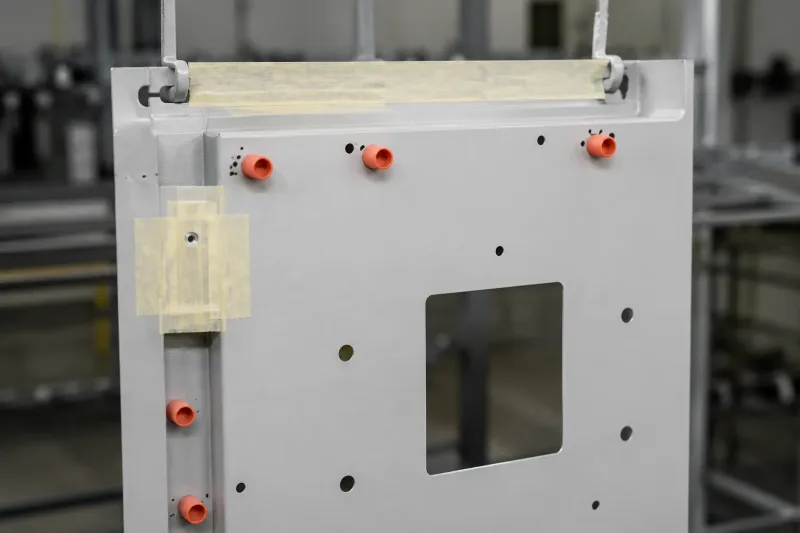
Masking keeps threaded holes, grounding surfaces, and precision-fit areas free from coating buildup.
The key is to define the masking locations on the engineering drawing, identifying which surfaces must remain bare and where the coating boundary is. Otherwise, the coating shop will either coat everything, causing assembly failure, or guess the masking locations, introducing inconsistency.
Inspection Standards and Methods
| Method | Standard | What It Measures | Typical Requirement |
|---|---|---|---|
| Dry Film Thickness (DFT) | ASTM D7091 / ISO 2360 | Coating thickness | 60–120 μm, according to the drawing |
| Cross-cut Adhesion Test | ASTM D3359 / ISO 2409 | Bond strength between coating and substrate | 4B or 5B, ASTM |
| Salt Spray Test | ASTM B117 / ISO 9227 | Corrosion resistance | Indoor 500h; outdoor 1,000–3,000h; with primer 5,000h |
| Gloss Measurement | ASTM D523 / ISO 2813 | Surface reflectance | Within the specified GU range |
| Color Difference ΔE | ASTM D2244 | Deviation from color standard | ΔE ≤ 1.5 |
| Impact Resistance | ASTM D2794 / ISO 6272 | Resistance to deformation | No cracking under specified energy |
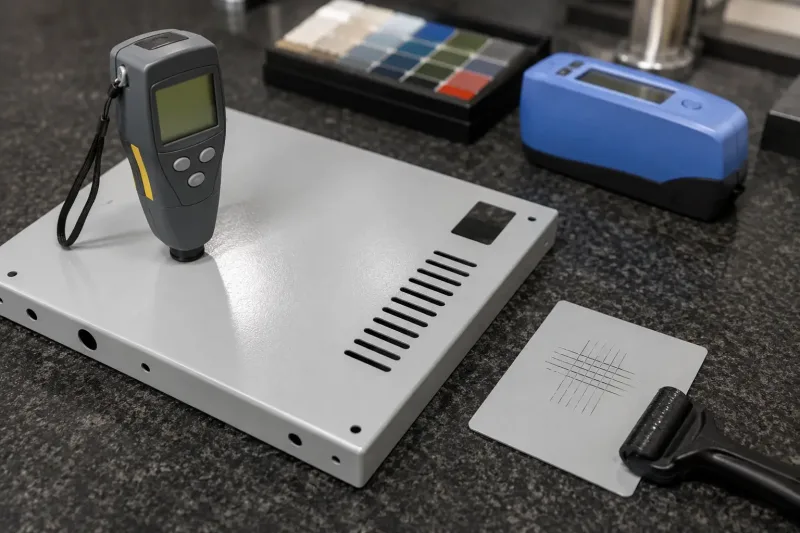
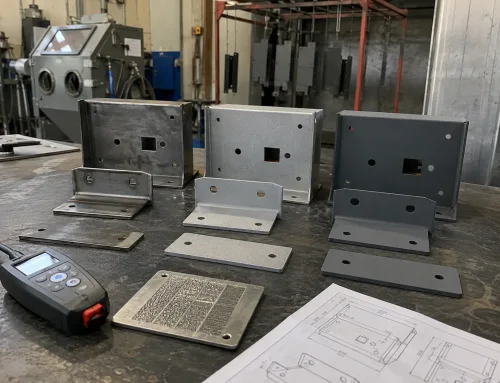
Dry film thickness and adhesion checks confirm whether the coating meets the drawing and quality standards.
For more severe environments, a two-coat system can be used, which means a zinc-rich primer plus a polyester topcoat. This process system can extend the product’s salt spray performance from about 1,000 hours to more than 5,000 hours without red rust.
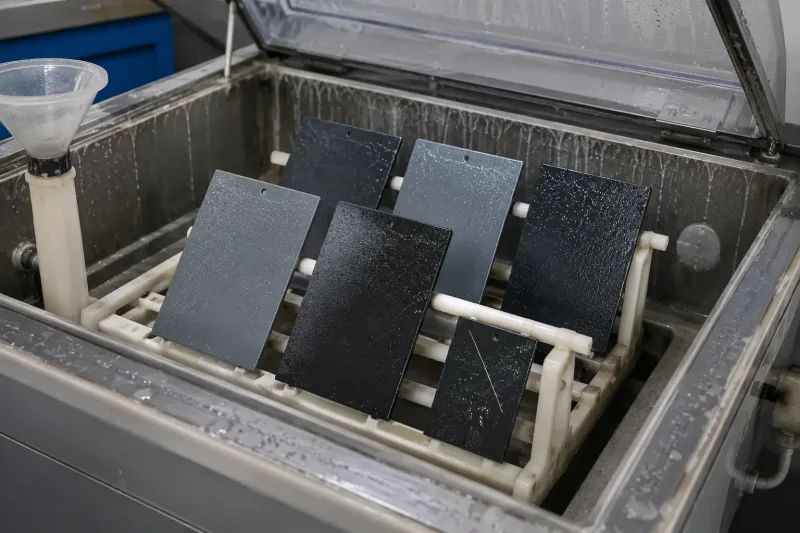
Salt spray testing evaluates how well powder-coated parts resist corrosion in harsh environments.
After Coating — Packaging and Shipping
Powder-coated surfaces are harder than wet paint, but they can still chip under sharp impact or wear under continuous friction.
Each finished enclosure should be separated with PE film or corrugated paper dividers. Bare metal must never be stacked directly against the coated surface.
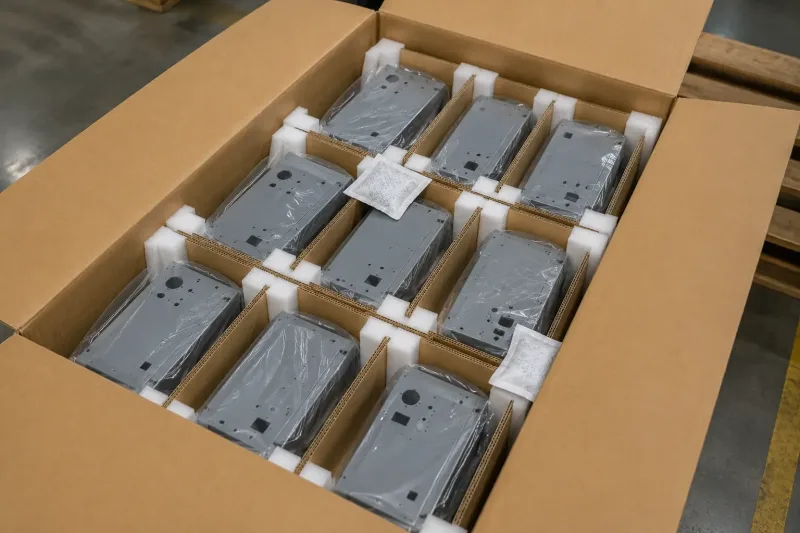
Proper packaging prevents scratches, chips, and coating damage during storage and transportation.
Foam corner protectors should protect the most fragile areas. For sea freight, desiccant packs should be placed inside to prevent condensation stains. Adding a simple label on the outer carton saying “Powder-coated parts, handle with care” sets expectations for every handler in the logistics chain.
The cost of dealing with coating damage found at the customer’s factory is far higher than the cost of proper packaging at the source.
How SR-MFG Supports Your Powder-Coated Enclosure Project
SR-MFG integrates powder coating into the complete manufacturing process. From laser cutting, bending, welding, hardware installation, coating, inspection, and packaging. At the quotation stage, the engineering team reviews drawings for coating compatibility and flags potential issues before production begins. During production, the team manages controlled pretreatment chemical parameters, calibrated oven curves, and first-article inspection for each shipment batch, including DFT, adhesion, gloss, and color difference.
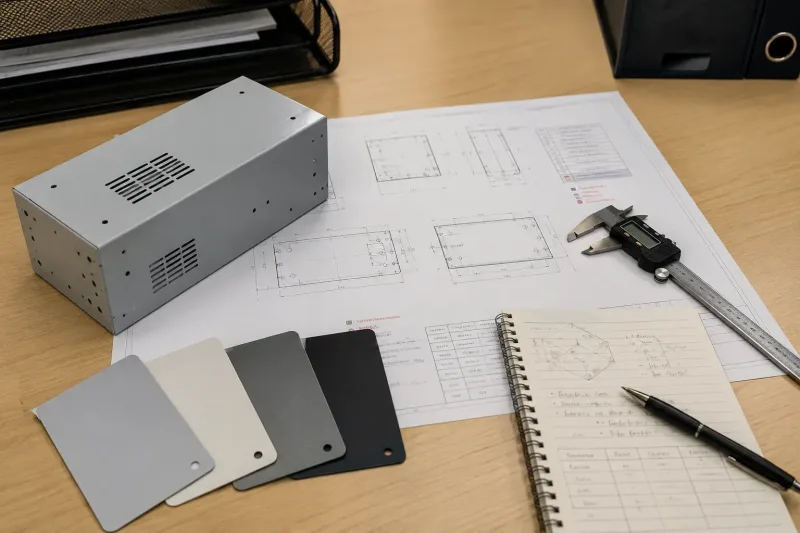
Reviewing drawings before production helps identify coating risks such as masking areas, sharp edges, cavities, and tolerance-fit surfaces.
To get started, please send your 2D drawings or 3D models, along with material, sheet thickness, quantity, surface treatment specifications, environmental requirements, tolerance notes, and packaging preferences. SR-MFG will return a detailed quotation and manufacturability review.