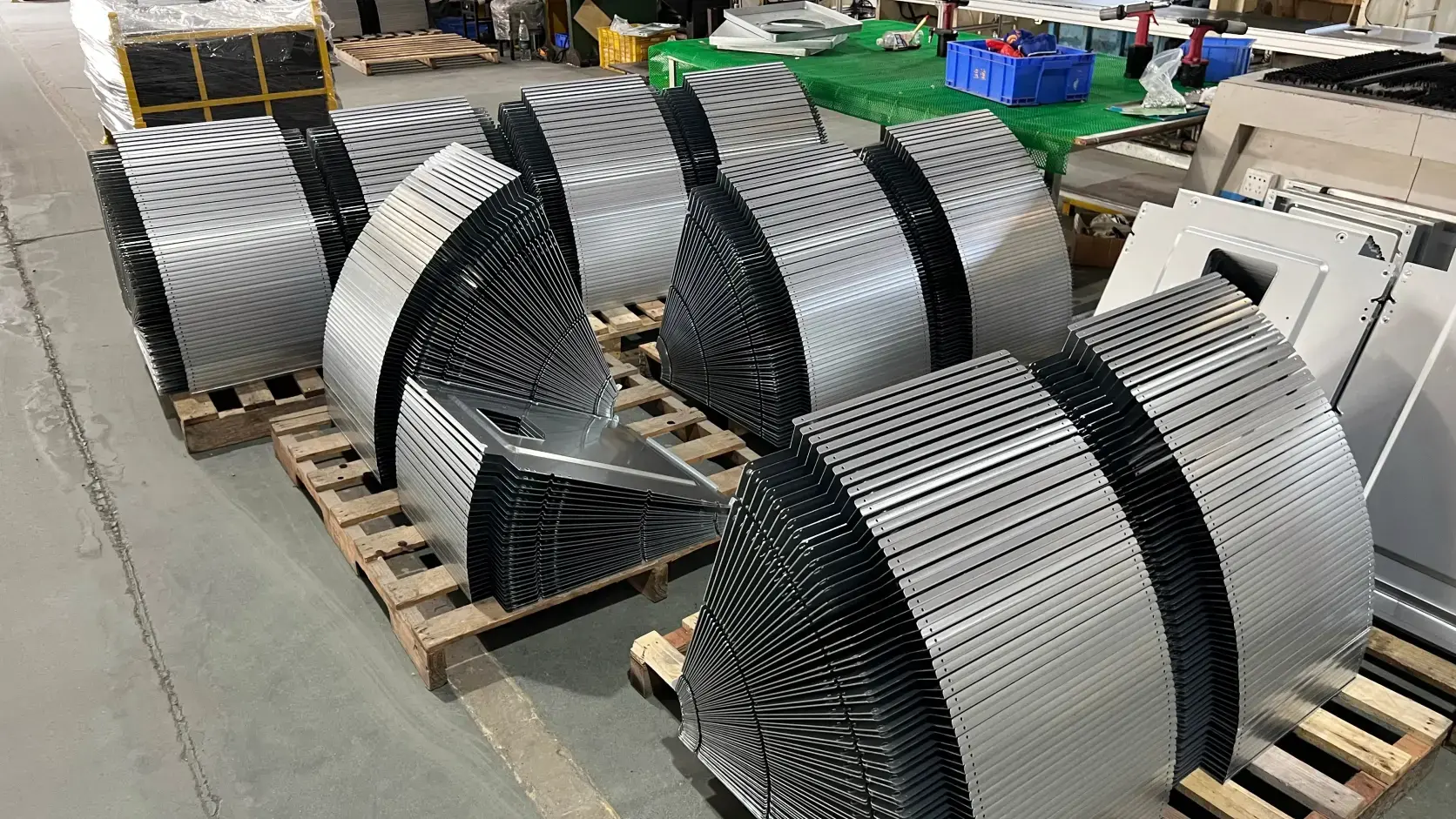

Grain direction is easy to file under “things carpenters worry about.” On sheet metal, that shortcut fails. The same orientation that looks harmless on a flat blank can change how a brushed panel reads under light, whether a bend cracks at the radius, and whether two doors on one enclosure still match after assembly.
If a drawing does not state the requirement, the fabricator will still pick a direction—usually whatever the coil, nest, or setup favors. That default is rarely written down, and it is even more rarely what the buyer imagined.
What People Get Wrong About Grain Direction
Three beliefs show up often in RFQs and design reviews.
“It is a wood term.” Wood grain is the most common teaching example, so the phrase travels there first. Sheet metal has a real equivalent: an orientation created when the coil or plate is rolled thin. The mechanism is different from timber, but the practical result is similar—the material behaves differently along one axis than across it.
“Bend against the grain and you are fine.” That rule is a useful first filter, not a complete specification. It says little about visible texture, multi-part assemblies, hard alloys, or tight inside radii. Teams that stop at the slogan still get cosmetic mismatches and occasional cracking.
“It only matters for strength.” Structural risk is real, especially in forming. Appearance is equally real on brushed, anodized, painted, or large cosmetic panels. Grain direction is one of the few material variables that can fail a part for looks even when every dimension is in tolerance.
The manufacturing takeaway is simple: grain direction is a drawing-level control, not a shop-floor myth.
What Grain Direction Means on Sheet Metal
Grain direction is the dominant orientation of the metal’s working texture and crystal alignment after rolling. As sheet is reduced through the mill, grains elongate in the direction of rolling. Surface marks from work rolls often run the same way. The result is a preferred axis for forming, and often a visible lay on the face of the sheet.
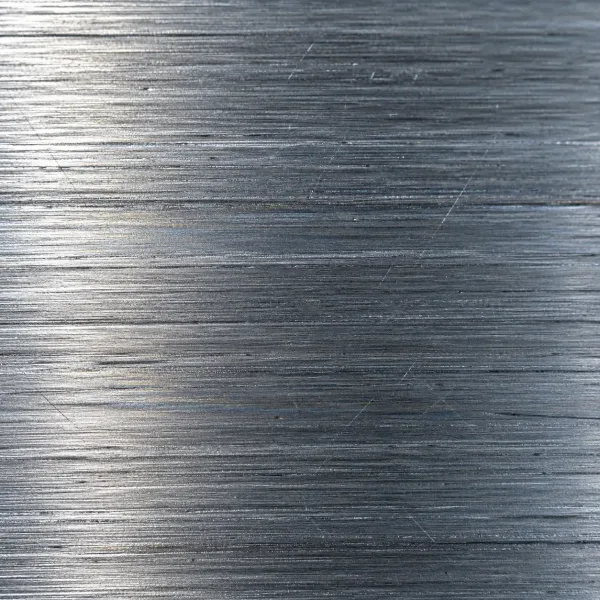
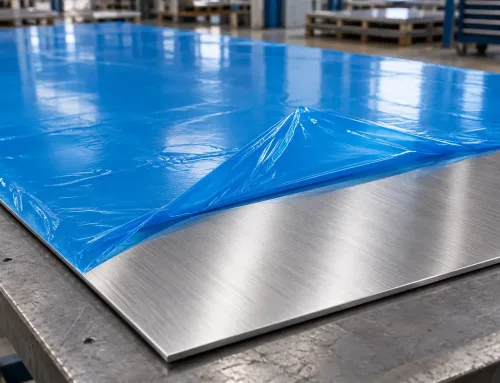
Macro view of a cold-rolled sheet metal face with fine parallel grain lines running in the rolling direction.
Two practical consequences follow:
- Mechanical response is anisotropic—not identical in every direction.
- Cosmetic surfaces can show a directional texture that is easy to see once parts are assembled.
You do not need a metallurgy lecture to use this correctly. You need to know which way the stock was rolled, which faces are cosmetic, and how bends are oriented relative to that axis.
Grain Direction vs. Rolling Direction
These terms overlap, and suppliers sometimes use them interchangeably.
| Term | What it usually means | How buyers should treat it |
|---|---|---|
| Grain direction | The functional/forming axis of the material; the “way the grain runs” | The engineering requirement you control on the drawing |
| Rolling direction (RD) | The mill’s production axis—the direction the coil or plate traveled through the rolls | The physical origin of grain direction on that coil or sheet |
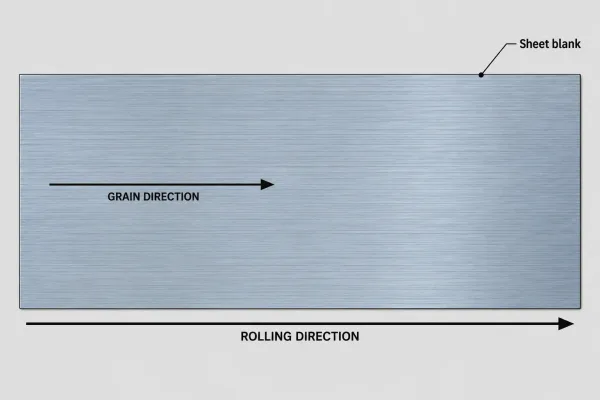
Simple sheet metal blank diagram with arrows labeling rolling direction along the coil travel axis and grain direction along the visible texture axis.
For most sheet-metal work, specifying grain direction relative to a drawing edge is enough. Call out rolling direction only when the supplier must document mill orientation for traceability or for a process that is sensitive to the original coil axis. Keep the distinction brief on the drawing; do not turn a glossary note into a mill certificate field unless the project truly needs it.
How Grain Direction Shows Up in Appearance
On a blank on the bench, grain can be hard to notice. Under shop lighting, on a finished assembly, it is often obvious.
Common cosmetic cases include:
- Brushed or directional finishes — the brush lay runs one way; panels with mixed orientation read as different parts.
- Cold-rolled mill texture — subtle directional sheen on 2B or similar surfaces, more visible on large flat areas.
- Machined or ground marks — secondary operations can impose their own lay; if that lay fights the original grain, the surface can look uneven after coating.
- Paint, powder, and anodize — thin coatings copy substrate texture. Directional grain can show through as shading, especially on dark or semi-gloss colors.
Appearance risk rises with panel size, gloss level, and the number of visible faces in one view. A small bracket can hide mixed grain. A two-door cabinet cannot.
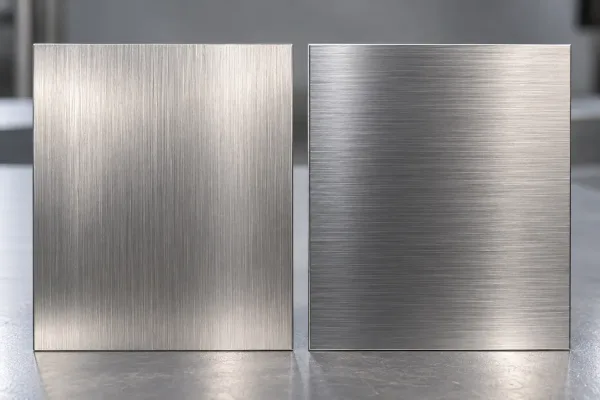
Two brushed metal panels under identical lighting: left panel grain runs vertically, right panel grain runs horizontally, producing a visible mismatch.
When appearance matters, treat grain direction as part of the cosmetic specification—not as an invisible material property.
What Grain Direction Changes in Bending
Bending is where grain direction turns from a look issue into a scrap issue.
Metal is generally more reliable when the bend line runs across the grain (perpendicular to rolling direction) than when it runs with the grain. Forming with the grain asks the material to stretch along its weakest elongated path. Cracks, orange peel at the radius, and unpredictable springback become more likely.
Bending Across vs. Along the Grain
| Bend line vs. grain | Typical risk | Design response |
|---|---|---|
| Across the grain | Lower cracking risk; more predictable radius behavior | Preferred default for formed sheet parts |
| Along the grain | Higher cracking and surface-distress risk, especially on hard or thin material | Use only when layout forces it; verify radius and temper |
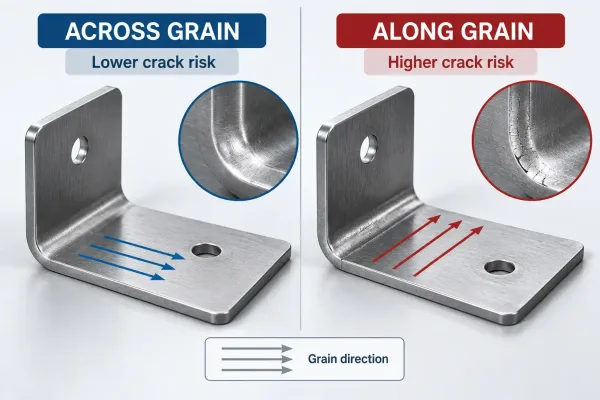
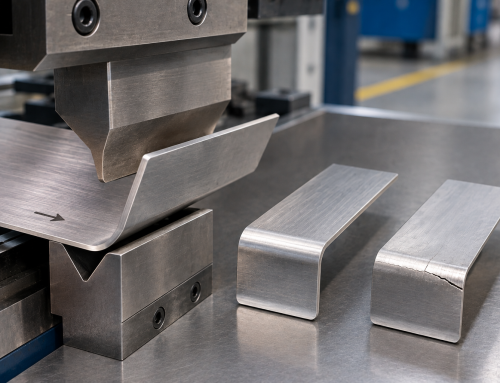
Side-by-side bend comparison: bend line across the grain stays clean; bend line along the grain shows cracking risk at the radius.
When Grain Matters More
Grain orientation deserves extra attention when any of the following are true:
- Inside bend radius is tight relative to thickness (many shops treat R < 2t as a watch condition, depending on material and temper).
- The alloy is less forgiving—high-strength aluminum, some stainless grades, or heavily worked cold-rolled steel.
- The part has multiple bends, hems, or embossed features near an edge.
- The surface is cosmetic and the bend is visible after assembly.
Across-grain bending is not a guarantee against all forming defects. It is the safer default when the flat pattern allows it.
Why the Same Assembly Needs One Grain Direction
Single-part drawings often omit grain and still pass. Assemblies expose the omission.
If one enclosure door runs grain vertical and the other runs horizontal, both parts can be dimensionally perfect and still look wrong side by side. The same problem appears in multi-panel housings, trims, and any set of parts that share a sightline.
Inconsistent grain direction can also create subtle performance differences in production: one panel forms cleanly, another work-hardens differently at the same radius; one powder-coated surface reads even, its neighbor shows directional shading.
For parts that ship as one visual or mechanical set, specify grain direction as a group requirement, not a per-sheet accident. That usually means:
- One reference direction on the assembly or common note.
- The same orientation rule applied to every matching cosmetic part.
- Nesting and blanking that protect that rule, even if material yield drops slightly.
Sample approval is the right place to lock this. If the first article looks right only because one nest happened to run clean, the production batch may not.
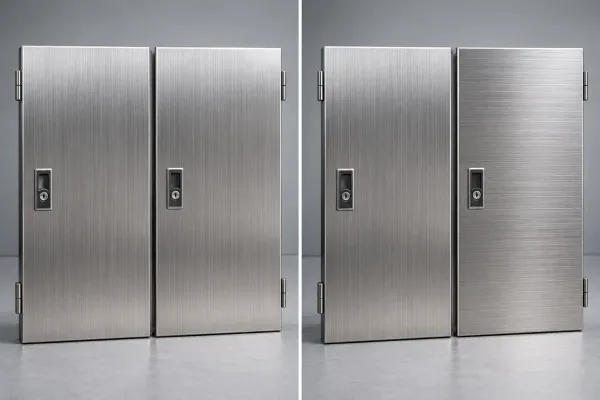
Enclosure door set with matched grain direction on the left, and the same set with mismatched panel grain on the right.
How to Specify Grain Direction on a Drawing
A usable callout answers three questions: which way, relative to what, and for which parts.
What to Include in the Callout
Keep the note short and inspectable:
- Direction — grain shall be parallel or perpendicular to a named drawing edge, view, or datum.
- Applies to — part number(s), cosmetic face(s), or “all matching panels in assembly X.”
- Priority — cosmetic match, bend performance, or both; if yield conflicts with appearance, say which wins.
- Verification — visual check on first article, or a simple method the shop can repeat (for example, compare lay against a marked reference edge).
Example language for a drawing note:
Grain direction: Grain shall run parallel to edge A on all exterior panels in this assembly. Cosmetic match takes priority over nest utilization. Confirm direction on first article before release.
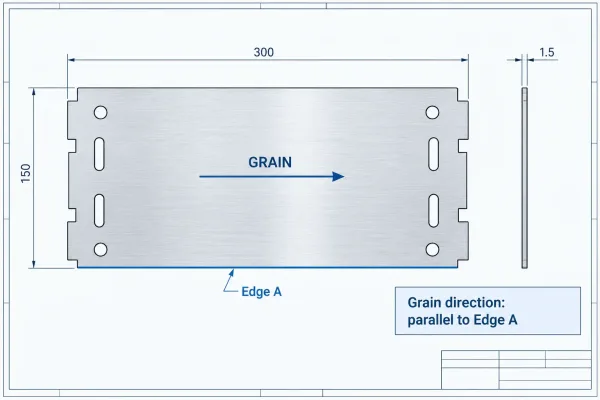
Simplified sheet metal drawing with a grain direction note tied to edge A and an arrow showing the required grain orientation.
You do not need a universal symbol. Clear text tied to a drawing edge is more reliable than an unexplained arrow.
What Happens If You Leave It Off
Unspecified is not neutral. The fabricator will still orient parts somehow:
- Coil and sheet delivery — blanks may follow the incoming rolling direction because that is how material is loaded and sheared.
- Nesting for yield — software and programmers often rotate parts to save sheet. That rotation can flip grain relative to your intent.
- Setup convenience — bends may be oriented for brake access, not for appearance.
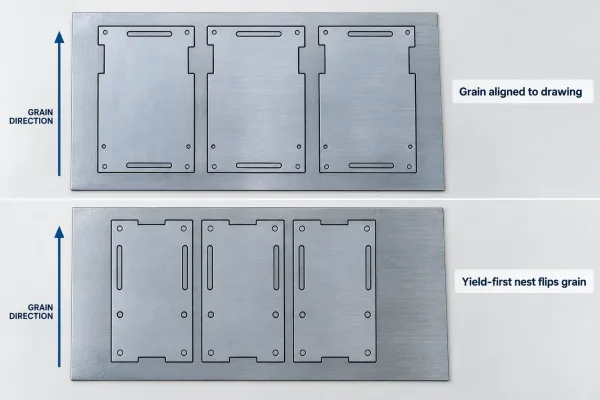
Two nesting layouts on the same sheet: one keeps grain aligned, the other rotates parts for yield and flips grain direction.
None of these defaults are malicious. They are simply optimized for cost and throughput unless the drawing says otherwise. If grain direction is a requirement, write it before the quote—not after the first cosmetic rejection.
Buyer Checklist: Lock Grain Direction Before Production
Use this list at RFQ or drawing release:
- Name the cosmetic faces — which surfaces will the end user actually see?
- Choose a reference edge — grain parallel or perpendicular to a dimensioned edge, not “looks vertical.”
- Apply the rule to assemblies — matching panels share one grain direction.
- Separate appearance from strength if needed — state whether bend performance or visual match has priority.
- Flag tight radii and hard materials — call out special forming risk where R is small or temper is high.
- Put the note on the drawing and in the RFQ — not only in email after quoting.
- Lock it on first article — approve direction and lay before releasing the batch.
Grain direction is cheap to specify and expensive to discover late. Treat it like any other controlled requirement on the part.
FAQs